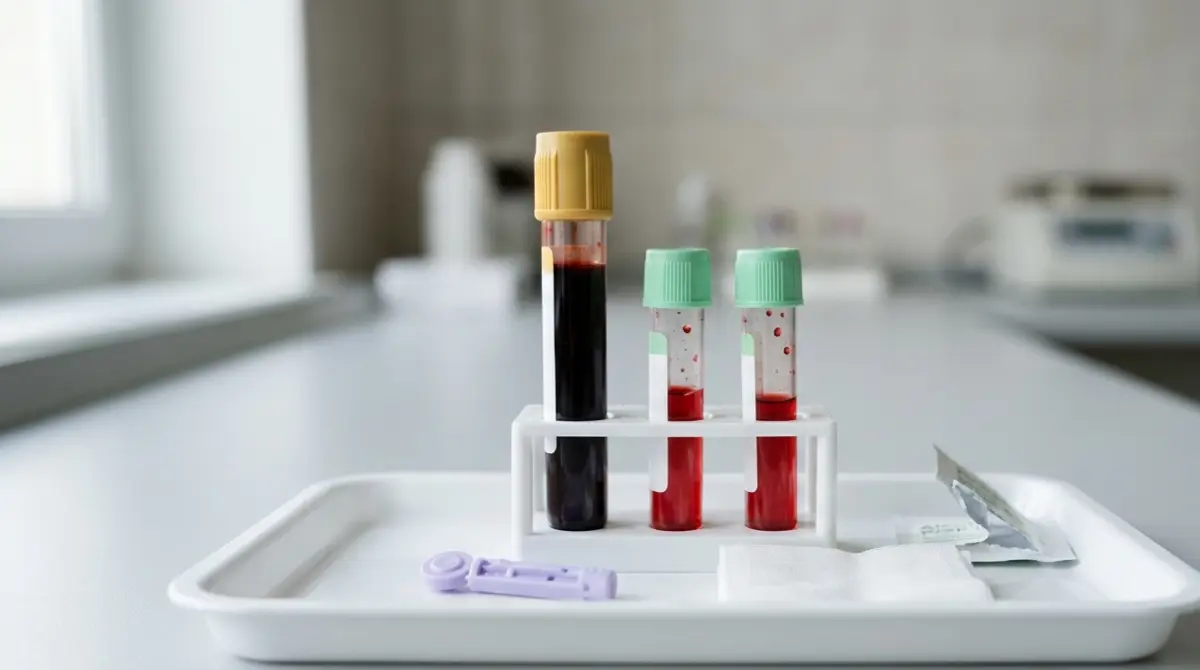

On This Page – Quick Medical Summary
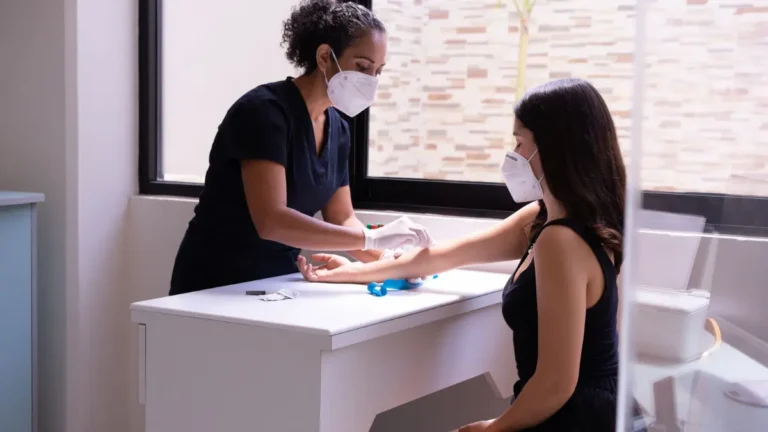
A full comprehensive metabolic panel (CMP) can be done at home only when someone draws the blood from your arm there. At Quest’s posted self-pay prices, that comes to about $134: $49 for the test, a $6 physician service fee and $79 for the home visit.
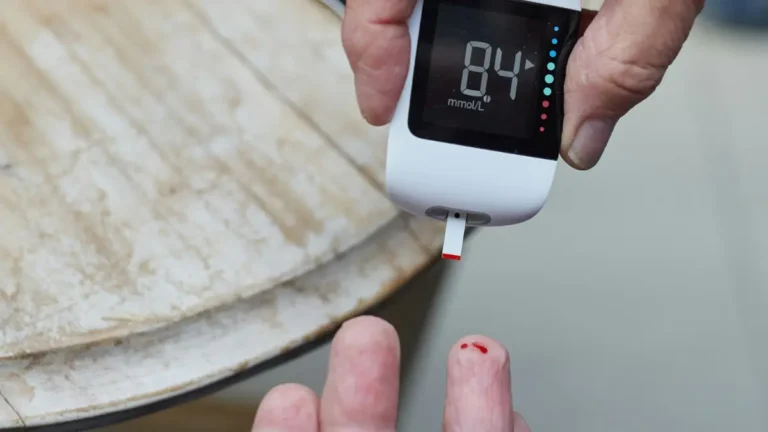
Mail-in finger-prick kits skip the visit, but a few drops of capillary blood change during a day in the mail. In a Dutch study of home-collected samples, potassium and AST drifted too far from the venous results to trust.
Four things sold as an at-home CMP
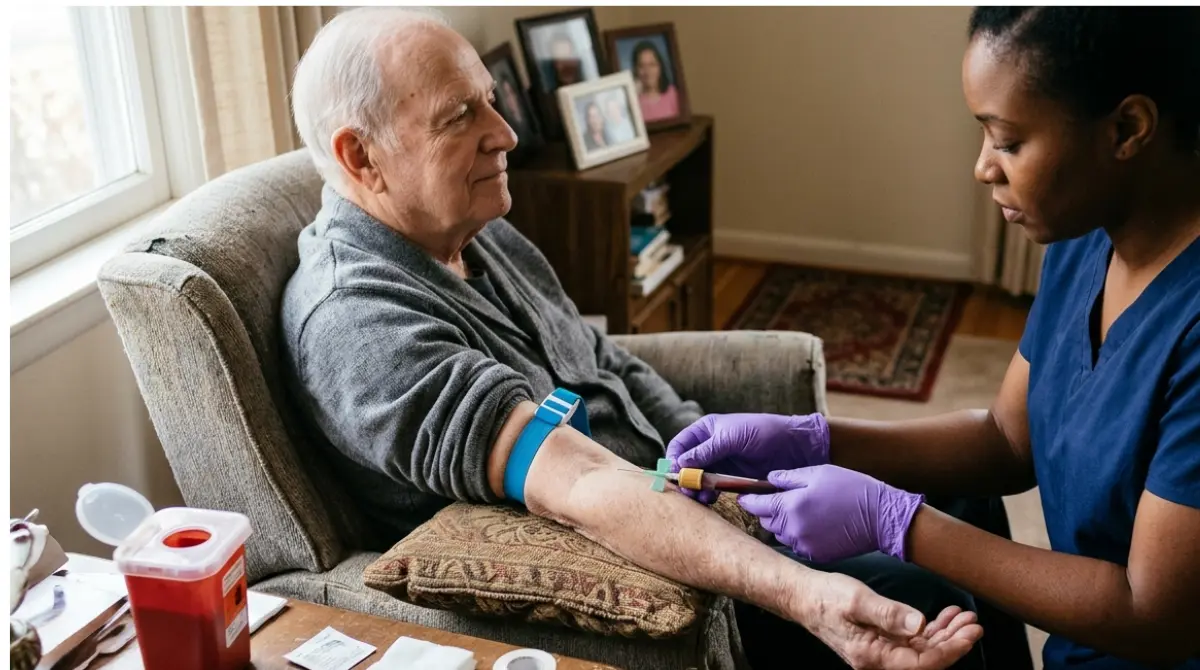
Most ads for an at-home CMP describe one of four setups, and only one gets all 14 tests from a venous sample without you leaving the house.
| Route | Who collects the blood | Where | All 14 tests? |
|---|---|---|---|
| Buy online, visit a lab | Lab phlebotomist, from a vein | Quest patient service center | Yes |
| Buy online, phlebotomist visits | Mobile phlebotomist, from a vein | Your home, where Quest Mobile operates | Yes |
| Fingertip draw by trained staff | Health worker with a capillary device | A site that offers it | Check the report |
| Mail-in finger-prick kit | You | Home, then mailed to a lab | Check the kit’s marker list |
Source: Quest CMP test page; Hoekstra et al., Clinical Chemistry and Laboratory Medicine.
Buying online still puts a clinician in the loop. Quest’s consumer CMP includes oversight by an independent physician, and you can discuss your results with an independent provider at no extra cost.
Fingertip draws done by trained staff use a collection device the FDA has cleared for professional use only. Neither potassium nor AST is on its list of cleared tests, according to the Dutch researchers’ review of the device. For a mail-in kit, compare its marker list with the 14 CMP tests before you buy.
Quest doesn’t collect these consumer-ordered samples in Arizona, Hawaii or Puerto Rico. Some states also restrict lab tests ordered without your own clinician.
What each route costs, and who pays
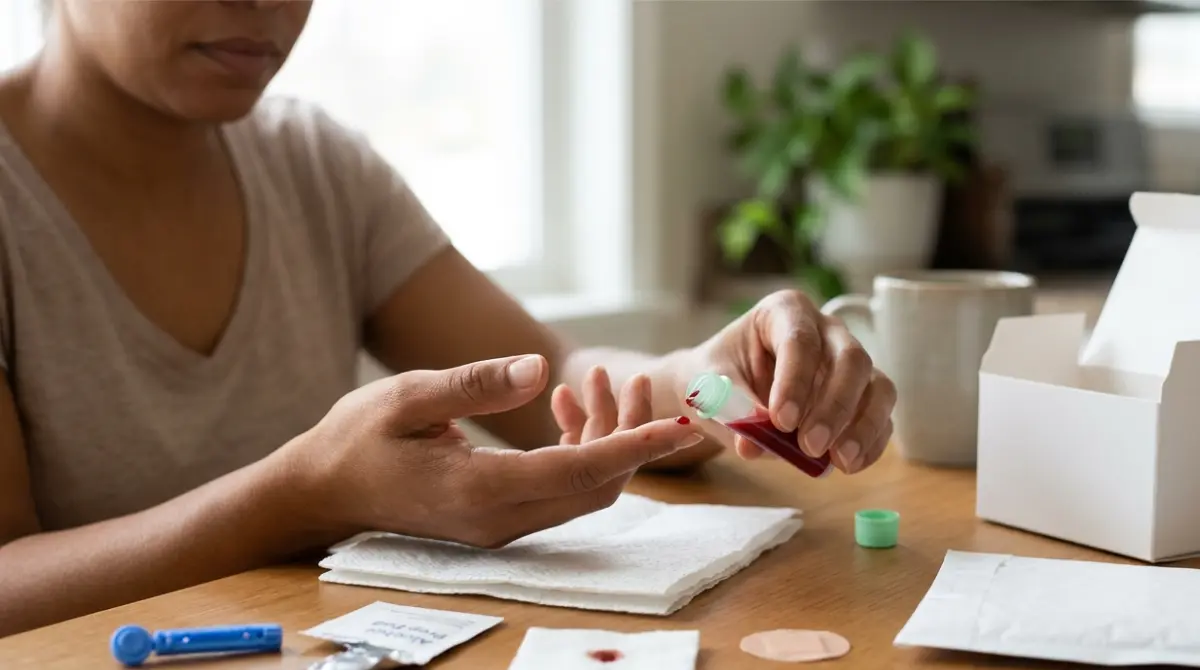
$49 buys the test itself at Quest, and the $6 physician service fee is added at checkout. Quest doesn’t bill insurance for these orders and says purchases can’t be submitted for reimbursement. HSA and FSA cards are accepted.
The $79 home visit is the largest single charge, and some people don’t have to pay it themselves. If you have Medicare and are homebound, Part B can pay a laboratory technician’s collection fee and travel allowance when the test is medically necessary. Ask the clinician ordering the test whether their office can arrange that draw for you.
A CMP your own clinician orders and bills to insurance can also cost less than buying one. Under Original Medicare, a covered lab test ordered by a Medicare-enrolled clinician usually costs you nothing.
Commercial plan rules are set out in when insurance covers a CMP. Cash prices at labs, hospitals and urgent care are compared in CMP prices without insurance.
How accurate is a finger-prick CMP?
Partly. Earlier work found that finger-stick blood tested within hours agrees closely with a venous draw for routine chemistry tests. Accuracy slips once the sample has to travel.
The Dutch study put that to the test. Thirty-eight kidney transplant recipients collected their own finger-prick samples. The samples were held at room temperature for 24 hours to mimic posting, then compared with blood drawn from their arm at the same visit. Potassium and AST fell outside accepted error limits.
Getting enough blood was its own problem. Under supervision, 29 of the 38 filled both collection tubes and 5 couldn’t fill any. Of the 16 kits later returned from home, only 7 had both tubes properly filled.
| CMP test | After 24 hours in a finger-prick sample | For a mailed sample |
|---|---|---|
| Potassium | Read about 1.15 mmol/L above the venous result, even in samples without broken cells | Don’t rely on it |
| AST | Outside error limits, mainly from red cells breaking open | Don’t rely on it |
| Sodium | Inside limits on average, with wide scatter between people | Use with caution |
| Calcium | Inside limits, but only just | Borderline |
| Creatinine, albumin | Met the limits | Usable |
| ALT, ALP | Met the limits; ALP read slightly low | Usable |
| Glucose, BUN, chloride, CO2, bilirubin, total protein | Not measured in this study | No data |
Source: Hoekstra et al., at-home blood collection for clinical chemistry.
Two mechanisms explain most of the misses. Hemolysis, red blood cells breaking open in the tube, happened more often in capillary samples, and it releases AST into the sample. Potassium kept reading high even after hemolyzed samples were removed, which the authors attribute to potassium’s poor stability when whole blood sits unseparated for a day.
Heat adds to the problem. On sunny days in the study, an outdoor mailbox ran up to about 18°F above the outside air.
Potassium: the result most likely to mislead
Sample report: a mailed kit flags potassium at 6.1 mmol/L, while sodium, creatinine and ALT sit inside the lab’s printed ranges.
That pattern fits the known error. In the Dutch study, finger-prick potassium ran about 1.15 mmol/L above the venous result after a day at room temperature. At that bias, a true 4.5 mmol/L would print as roughly 5.65. (For potassium, mmol/L and mEq/L are the same number, and many US reports use mEq/L.) The authors advise against home collection for people whose potassium needs close monitoring.
A genuinely high potassium is still dangerous, and it often causes no symptoms. MedlinePlus notes that very high levels need emergency treatment. A flagged home result therefore calls for a same-day phone call to the clinician who ordered the test, especially if you have kidney disease or take a potassium supplement. To prepare for that call, see where the number falls among critical CMP values and read the other reasons a CMP potassium reads high.
Get emergency care now if: you have chest pain, difficulty breathing, palpitations, or a slow, weak or irregular pulse, whatever the kit reported. Call 911.
Who should skip the home route?
If a result will change a medicine dose, have the blood drawn from a vein. That applies to:
- people with long-term kidney disease
- anyone prescribed extra potassium or using salt substitutes
- people taking medicines for heart disease or high blood pressure
These are the groups whose potassium and kidney tests are checked on a regular schedule. Those values are also the ones capillary samples handled worst.
Tracking a trend over time is the second reason to skip it. The Dutch team recommends marking results as home-collected and confirming any doubtful one with an arm draw, because the two sample types don’t match for every test.
For a healthy adult who wants a baseline, the $49 draw at a Quest location gives a venous sample for the full 14-test panel.
Two practical questions
Do I need to fast before an at-home CMP?
Yes. Quest asks for 8 to 12 hours with nothing but water, whether the draw happens at a service center or at home. Fasting before a CMP covers what does and doesn’t break a fast.
How long do results take?
Quest posts results within 1 to 2 business days of collection, after a clinical review. If a value falls outside the expected range, an independent healthcare coordinator may call you before you’ve opened the report. A mailed kit adds its own transit time.
Take a home result to your doctor with these questions
Bring the printed or portal report to the clinician who will act on it, and ask:
- Was this sample capillary or venous, and does that change how you read the potassium or AST?
- Should any flagged value be redrawn at a lab before a medicine changes?
- Can these results be compared with my earlier lab reports, or only with other home-collected ones?
- If I need regular testing at home, can your office order a mobile draw that Medicare or my plan pays for?
Once you have a sample you can trust, what each of the 14 CMP values means goes through the results one test at a time.
Found this helpful? See more of our guides on Google.
Want to see our guides first on Google?
Found this helpful? See more of our guides on Google.
About this content
How this article was put together: researched from recognised health sources, drafted with the help of AI tools, and edited by hand, with sources linked throughout.

Dr. Pooja Sahu, MBBS, is a medical reviewer for MyMedicineAdvisor. She is a clinical physician whose experience includes serving as a Junior Resident in Nephrology at Dr. Ram…
Medical disclaimer
The content on My Medicine Advisor is provided for general informational and educational purposes only and is not a substitute for professional medical advice, diagnosis, or treatment. Health information on this website should not be used to diagnose, treat, cure, or prevent any condition without guidance from a qualified healthcare professional. Always seek the advice of your doctor, physician, or another licensed healthcare provider with any questions you may have regarding a medical condition, symptoms, medications, or treatment decisions.