
On This Page – Quick Medical Summary
Why a blood test came with your blood pressure prescription
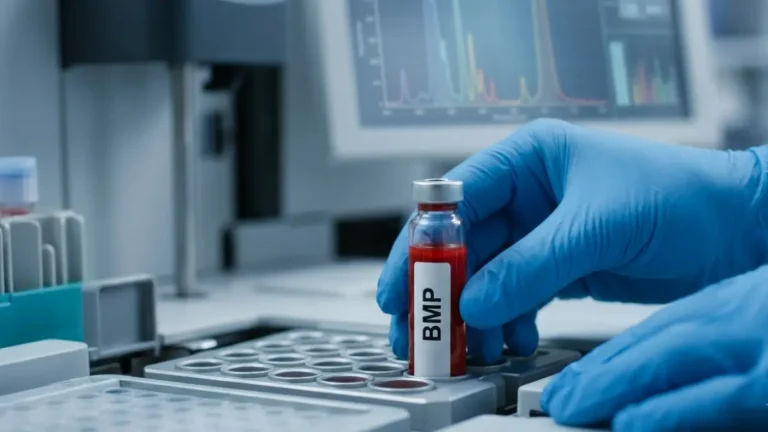
A basic metabolic panel ordered alongside a blood pressure medication is not measuring your blood pressure. Nothing on the panel does. It is watching what the medicine is doing to your potassium, your sodium, and the two waste products your kidneys clear.
Where you are right now decides which part of this page you need:
- Prescription just started or changed, no draw yet — the next two sections explain what the lab is looking for.
- Results already sitting in your portal — the drug-by-drug map further down tells you which value your prescription is connected to.
- You feel completely fine and resent the appointment — the section on silent changes is the honest answer to why the draw exists anyway.
The National Library of Medicine’s page on the basic metabolic panel lists high blood pressure among the long-term conditions a BMP is used to monitor, alongside kidney disease. That page also confirms the panel reports eight substances in total — and only some of the eight are the reason your prescriber wants this draw.
Knowing which ones changes how you read your own report. It also changes which question is worth asking at your next appointment.
📊 Clinical Data Point: A basic metabolic panel measures eight different substances in the blood — Source: MedlinePlus, National Library of Medicine, updated September 2024.
If you want the full set before going further, the pillar guide covers all eight results on a basic metabolic panel, and a separate article covers the reasons a BMP gets ordered in the first place.
ℹ️ Medical Disclaimer: This article is general health education about a laboratory test and does not diagnose any condition, recommend or adjust any medication, or interpret your individual results. Laboratory reference ranges differ between laboratories, and results must be read by the clinician who knows your prescriptions, your kidney history, and your other conditions. Never start, stop, or change the dose of a blood pressure medicine based on anything you read here. Symptoms such as chest pain, difficulty breathing, fainting, or collapse require emergency care, not a web page. Consult a board-certified primary care physician, cardiologist, or nephrologist before acting on anything below.
Which of the eight results the medicine can move
Four of the eight values on a metabolic panel are the ones a prescriber watches when blood pressure medicines are involved: potassium, sodium, BUN, and creatinine.
Potassium and sodium are electrolytes. The MedlinePlus page on the panel describes electrolytes as electrically charged minerals that help control fluid balance and help nerves, muscles, heart, and brain work properly.
BUN and creatinine are different. The same page describes them as waste products removed from your blood by your kidneys — which is why they are the two values that report on the organ several blood pressure medicines act through.

The kidney half of the panel
The American Heart Association’s current medication page lists kidney dysfunction among the possible side effects of one drug class and kidney damage among those of another. Those two classes are covered in detail below.
That is the reason a kidney function test and a blood pressure prescription tend to arrive together. For how the two waste values are read against each other, see how BUN and creatinine are read together.
The other four, and why this article leaves them alone
Glucose, calcium, chloride, and carbon dioxide sit on the same report. This article does not attach a blood pressure medication claim to any of them.
The reason is a standard rather than an omission: we name a value’s drug connection only where a current authoritative page states it, and no current approved source verified during research made that connection for these four. Numbers for any of the eight belong with where the numbers on your own report belong, not here.
If you take medicines for other conditions as well, how other drug classes show up on a metabolic panel covers the wider picture.
Why “water pill” doesn’t tell you which way potassium moves
Here is the part almost no page says out loud: a diuretic is not one direction. Two drugs sitting in the same “water pill” category can push potassium in opposite directions, and the class name cannot tell you which one you are holding.
MedlinePlus names diuretics first among common causes of low blood potassium. The medical encyclopedia entry on high potassium names certain blood-pressure-lowering medicines — most often ACE inhibitors, angiotensin receptor blockers, and mineralocorticoid receptor antagonists such as spironolactone — among the causes of high potassium.
Spironolactone appears on the American Heart Association’s diuretic list. So do hydrochlorothiazide and furosemide. One heading, opposite consequences.

The two kinds of water pill
| What’s on your bottle | Class on the AHA list | BMP value the sources connect | Key clinical detail |
|---|---|---|---|
| Hydrochlorothiazide, chlorthalidone, indapamide | Diuretics | Potassium, sodium | Potassium can fall |
| Furosemide, bumetanide, torsemide | Diuretics | Potassium, sodium | Potassium can fall |
| Spironolactone, eplerenone, amiloride, triamterene | Diuretics | Potassium | Potassium can rise |
| Lisinopril, enalapril, ramipril and other “-pril” names | ACE inhibitors | Potassium, kidney markers | Potassium can rise |
| Losartan, valsartan, olmesartan and other “-sartan” names | ARBs | Potassium, kidney markers | Potassium can rise |
Drug names and classes: American Heart Association, Types of Blood Pressure Medications, last reviewed August 2025. Directions: MedlinePlus Medical Encyclopedia, High potassium level (reviewed October 2025) and Low blood potassium (reviewed May 2025). Direction describes a tendency these sources record, not a prediction about you.
ACE inhibitors and ARBs
For both of these classes the American Heart Association lists hyperkalemia — high blood potassium — among possible side effects, along with a kidney effect. What else pushes potassium up covers causes beyond medication.
Diuretics also increase urine output and the loss of sodium through urine, which is why sodium sits in the same conversation. The other reasons sodium runs low covers the rest.
🔬 How It Works: Potassium leaves your body mainly through your kidneys, in urine. Medicines that make the kidneys flush out more fluid and salt tend to carry potassium out with it. Medicines that act on the hormone system controlling that flush tend to have the reverse effect, holding potassium back — which is why the direction depends on where in the system your particular drug acts.
✅ Patient Action: Bring the actual name on your bottle, not the phrase “a water pill,” to your next appointment with your prescribing physician or cardiologist. Ask: “Which of my blood pressure medicines is the reason my potassium is being checked, and which direction are you watching for?”
Why you can’t feel a potassium problem coming
This is the section for anyone who feels completely well and cannot see the point of the appointment. The honest answer is that feeling well is not evidence here, and two separate sources say so from opposite directions.
The MedlinePlus encyclopedia entry on high potassium, reviewed October 2025, states there are often no symptoms with a high potassium level. The entry on low blood potassium, reviewed May 2025, states that a small drop often causes no symptoms either.
Neither page cites the other. Two independent entries, two opposite problems, the same silence — which is precisely the gap a blood test fills.
What the panel catches that you can’t
The same high-potassium page states that a provider will likely check potassium and kidney blood tests on a regular basis for people who take medicines to treat heart disease or high blood pressure. It gives no interval, and neither does this article, because the schedule belongs to the clinician who knows your history.
A larger drop in potassium is different from a small one. That page on low potassium notes a large drop may lead to abnormal heart rhythms, particularly in people who already have heart disease — which is the reason the value is tracked rather than left to chance.
Before you panic at a flagged result
A flagged value is not automatically a changed body. Things that move a result without anything being wrong covers the collection-related effects that can push a potassium reading up on its own, and what an out-of-range result actually means covers interpretation across all eight values.
The salt substitute problem nobody mentions
Two pieces of standard advice given to the same person pull the same laboratory value in opposite directions, and almost nobody is told to notice.
If you have high blood pressure, you have probably been asked to cut salt. The low-salt diet guidance written for people with high blood pressure is explicit about the substitute question: many salt substitutes contain a lot of potassium, this may be harmful if you have certain conditions or take certain medicines, and you should ask your provider whether one is safe for you.
Now hold that next to the drug map above. The MedlinePlus page on high potassium lists taking extra potassium — including salt substitutes and supplements — among the causes, and separately lists using salt substitutes among the reasons a provider checks potassium and kidney blood tests regularly.
🔬 How It Works: Ordinary table salt is sodium chloride. Most products sold to replace it swap the sodium for potassium, which is what makes them taste salty without adding sodium. That is helpful for the value you were told to lower and relevant to the value your medicine may already be raising.

What else belongs on the list you hand over
The MedlinePlus patient instructions on ACE inhibitors, reviewed August 2024, ask patients to tell their provider about other medicines they take — specifically naming diuretics, potassium pills, and herbal or dietary supplements — and to talk to a provider before taking ibuprofen or aspirin.
That page also states plainly that your provider will check your blood pressure and do blood tests, and may change your dose from time to time.
✅ Patient Action: Before your next appointment, photograph the label of any salt substitute or potassium-containing supplement in your kitchen. Ask your prescribing physician or pharmacist: “I’ve been told to cut salt — is a potassium-based salt substitute safe alongside the blood pressure medicines I’m taking?”
Does every blood pressure medicine need blood tests?
The honest answer depends on which medicine, and you can check your own on a public list.
The American Heart Association’s list of blood pressure medication classes, last reviewed August 2025, groups these drugs into eight classes: diuretics, beta-blockers, ACE inhibitors, angiotensin II receptor blockers, calcium channel blockers, alpha blockers, alpha-2 receptor agonists, and vasodilators.
The classes where the panel is watching something
On that page, low sodium and low potassium appear under diuretics. Hyperkalemia and kidney dysfunction appear under ACE inhibitors. Hyperkalemia and kidney damage appear under angiotensin II receptor blockers.
Those are the three classes whose listed effects a basic metabolic panel can actually see.
The classes where the list shows no electrolyte or kidney effect
For the remaining five classes on that page, the side-effect lists contain no electrolyte or kidney item.
An absent line on a list is not proof of an absent effect. That sentence is doing real work: what has been verified here is what a named source lists, not a pharmacological conclusion that those medicines never affect laboratory values. Only your prescriber can make that call for you.
Why your kidneys, not just your drug, decide
The MedlinePlus high-potassium page frames its monitoring list around the person as much as the prescription. It names taking medicines for heart disease or high blood pressure, having long-term kidney disease, using salt substitutes, and having been prescribed extra potassium.
Two people on the same tablet can therefore sit in different places. Why creatinine moves covers the kidney side of that difference.
✅ Patient Action: Ask your prescribing physician or nephrologist: “Given my kidney results and everything else I take, does my blood pressure medicine need routine blood work — and how often for me specifically?”
Symptoms worth a phone call, not a wait
There is a trap in this topic worth naming. The symptoms that can accompany an electrolyte problem are the same vague symptoms a newly medicated person tends to attribute to the tablets settling in, or to getting older.
MedlinePlus lists confusion, irritability, fatigue, headache, loss of appetite, muscle weakness, spasms or cramps, and nausea or vomiting among the common symptoms of low blood sodium. Its low-potassium entry lists fatigue, muscle weakness or spasms, palpitations, constipation, and tingling or numbness.
You cannot tell those apart from ordinary adjustment by feel, and neither can this page. That is the whole reason the phone call is the answer rather than the waiting.
What the sources say to do about them
MedlinePlus states that when the body’s sodium level drops too much it can be a life-threatening emergency, and to call your provider right away if you have symptoms of it. Its low-potassium entry says to contact your provider right away if you are taking diuretics and have symptoms of low potassium.
Its ACE inhibitor instructions add that dizziness or lightheadedness can occur when starting these medicines or when a dose is increased, and to contact your provider right away after a fainting spell.
⚠️ Clinical Warning: Both the National Library of Medicine and the American Heart Association state the same instruction from different directions: do not stop taking a medicine, or change your dose or frequency, without checking with the professional who prescribed it. An abnormal result is a reason to call, not a reason to act alone. Chest pain, difficulty breathing, fainting, or collapse are emergencies — call emergency services rather than your clinic.
✅ Patient Action: If a symptom above started when your medicine started or changed, call the prescribing clinic and ask: “Should my potassium and kidney results be rechecked before my next scheduled draw?” For results a laboratory treats as urgent, see results a lab treats as urgent.
Common questions about blood tests and blood pressure medicine
1. Does a BMP show whether my blood pressure is controlled?
No. A BMP for blood pressure medication reports eight substances in your blood, and blood pressure is not among them. Your cuff reading answers that question. The panel answers a different one — what the medicine is doing to your potassium, sodium, and the waste products your kidneys clear. Your prescriber reads both together.
2. Which BMP value do blood pressure medicines affect most?
Potassium is the value most consistently connected to these drugs. MedlinePlus names diuretics among causes of low potassium, and names ACE inhibitors, angiotensin receptor blockers, and mineralocorticoid receptor antagonists among causes of high potassium. Sodium and the two kidney markers are also watched. Ask your prescriber which applies to your specific medicine.
3. Do water pills raise or lower potassium?
Both, depending on which one you take. Hydrochlorothiazide, chlorthalidone, and loop diuretics such as furosemide are among the diuretics MedlinePlus names as causes of low potassium. Spironolactone, eplerenone, amiloride, and triamterene sit on the same American Heart Association diuretic list but are connected to potassium rising. Your prescriber can confirm which yours is.
4. Do ACE inhibitors and ARBs raise potassium?
The American Heart Association lists hyperkalemia — high blood potassium — among possible side effects of both classes, and MedlinePlus names both among blood-pressure-lowering medicines that can raise potassium. This is a recognised effect, not a certainty for any individual. Your prescriber decides what your own results mean and whether anything needs changing.
5. Does a BMP check my kidneys?
Partly. BUN and creatinine are described by MedlinePlus as waste products removed from your blood by your kidneys, and both sit on a BMP. The American Heart Association lists kidney effects among the possible side effects of ACE inhibitors and angiotensin receptor blockers. A full kidney assessment involves more than these two blood values, so ask your clinician what else has been checked.
6. Will I feel it if my potassium is off?
Often not. MedlinePlus states there are often no symptoms with a high potassium level, and that a small drop in potassium often causes no symptoms either. That silence in both directions is the reason the blood test exists rather than a symptom check. A larger drop may produce symptoms, particularly in people who already have heart disease.
7. Can I use a salt substitute with blood pressure medicine?
Ask before you do. MedlinePlus guidance written for people with high blood pressure states that many salt substitutes contain a lot of potassium, and that this may be harmful with certain conditions or certain medicines. The same source lists salt substitutes among reasons potassium is monitored. Your prescribing physician or pharmacist can tell you whether one is safe for you.
8. Do all blood pressure medicines need blood tests?
Not identically. On the American Heart Association’s current list, electrolyte and kidney side effects appear under diuretics, ACE inhibitors, and angiotensin receptor blockers, and not under the other five classes listed. An absent line is not proof of an absent effect, and your kidney history matters as much as your drug class. Your prescriber sets your monitoring.

What to do before your next blood draw
Two things are worth carrying out of this page.
The first is the name on your bottle rather than its category, because “a water pill” cannot answer the potassium question and the drug name can. The second is the salt substitute question, which takes ten seconds to ask and is almost never volunteered.
Neither replaces the person holding both your prescription list and your results. If you want the wider context for the numbers on your report, the pillar guide covers your full basic metabolic panel value by value.
About this content
How this article was put together: researched from recognised health sources, drafted with the help of AI tools, and edited by hand, with sources linked throughout.

Sameer Patel is the founder and editor of My Medicine Advisor. He is not a doctor or medical professional — before starting this site he worked in banking,…
Medical disclaimer
The content on MyMedicineAdvisor is provided for general informational and educational purposes only and is not a substitute for professional medical advice, diagnosis, or treatment. Health information on this website should not be used to diagnose, treat, cure, or prevent any condition without guidance from a qualified healthcare professional. Always seek the advice of your doctor, physician, or another licensed healthcare provider with any questions you may have regarding a medical condition, symptoms, medications, or treatment decisions.