
Is BBL Safe? 2025 Mortality Rates, Costs & What Patients Must Know
Is BBL safe? Yes, Brazilian butt lift surgery is significantly safer in 2025 than ever before, with current mortality rates at approximately 1 in 14,952 procedures—an 80% improvement from the alarming 1 in 3,000 death rate documented before 2017 safety protocol reforms. The dramatic safety transformation stems from mandatory subcutaneous-only fat injection techniques and board certification requirements that addressed the fatal fat embolism risk previously associated with BBL procedures.
⚠️ Medical Disclaimer: This article is for educational purposes only and does not constitute medical advice. Always consult a board-certified plastic surgeon for personalized guidance regarding BBL surgery candidacy, risks, and safety protocols.
Sarah’s Story: From Fear to Confidence
At 32, Sarah Martinez spent two years researching whether a BBL was safe before committing to the procedure. “I read horror stories online, but I also learned that most complications happened with non-certified surgeons or outdated techniques,” she recalls.
After verifying her surgeon’s credentials through the American Board of Plastic Surgery and confirming the facility followed new safety guidelines established by the Aesthetic Surgery Education and Research Foundation, Sarah proceeded with her BBL in January 2024. Using a BMI calculator beforehand, she confirmed her BMI of 26 fell within the safe candidacy range. Her recovery required strict adherence to the eight-week no-sitting protocol, but 18 months later, she maintains her results without complications. “Understanding the risks and choosing the right surgeon made all the difference,” Sarah emphasizes.
2025 BBL Safety & Cost Quick Facts
The FDA has issued warnings about illegal body contouring substances, emphasizing that only board-certified surgeons should perform fat transfer procedures using proper safety protocols. When evaluating whether BBL is safe for your unique situation, determining your body composition using a body fat calculator helps assess whether you have sufficient donor fat—a critical candidacy factor that directly impacts both safety and results quality.
Research published by the National Institutes of Health confirms that fat embolism complications, while rare in 2025, occur almost exclusively when practitioners deviate from established subcutaneous injection protocols or when patients choose non-accredited facilities to reduce costs. The answer to “Is BBL safe?” ultimately depends on three non-negotiable factors: surgeon board certification, adherence to 2025 safety guidelines, and patient compliance with recovery protocols.
BBL Safety Guidelines 2025: The Transformation That Saved Lives
What Makes BBL Surgery Dangerous? The Fatal Fat Embolism Risk
The primary concern when asking “is BBL safe” centers on a life-threatening complication called fat embolism syndrome, which occurs when fat particles enter the bloodstream and travel to vital organs. During the BBL procedure, surgeons harvest fat from donor areas and inject it into the buttocks, but if this fat inadvertently enters large blood vessels—particularly the superior and inferior gluteal veins—it can cause pulmonary embolism or cardiac arrest within minutes. Research published in the Journal of Trauma and Acute Care Surgery confirms that fat emboli disrupt capillary beds, triggering systemic inflammatory responses that manifest as respiratory distress, neurological symptoms, and in fatal cases, complete cardiovascular collapse.
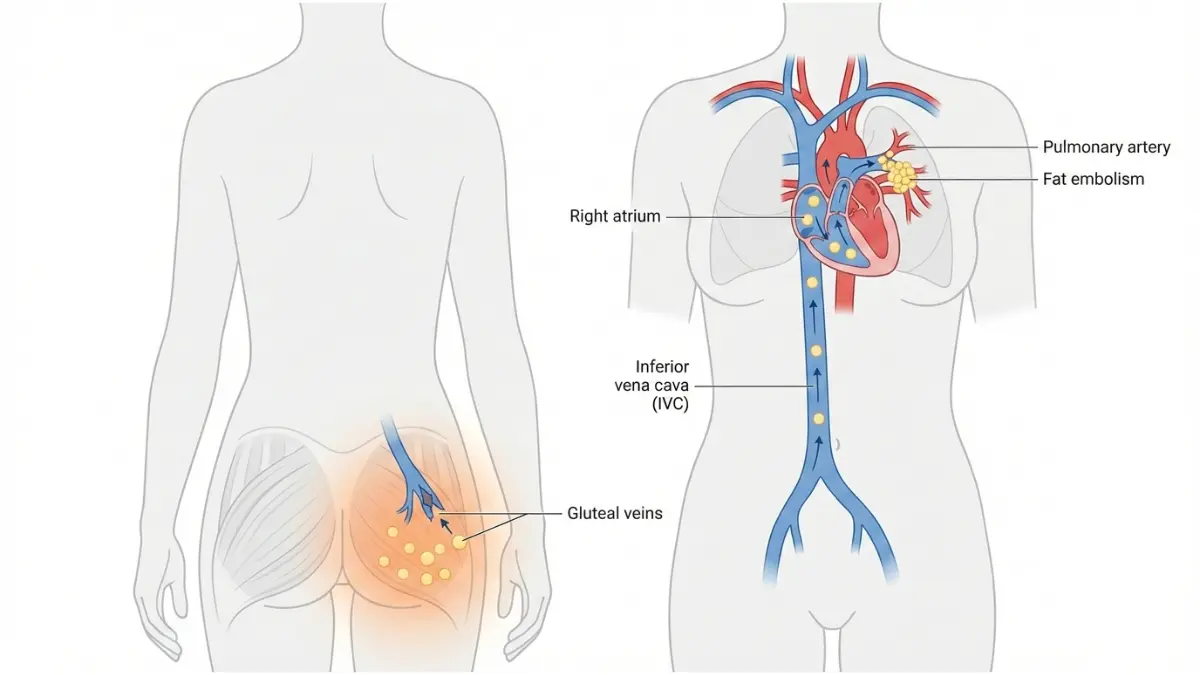
Why BBL risks became deadly: Pre-2017 techniques involved deep intramuscular fat injection beneath the gluteal muscle, placing needles dangerously close to large blood vessels where even minor vessel perforation could prove catastrophic. Surgeons unknowingly performed the BBL procedure using methods that increased the likelihood of intravascular fat injection by 400% compared to subcutaneous techniques. The Brazilian butt lift death rate peaked at 1 in 3,000 procedures between 2015-2017, making it statistically the most dangerous cosmetic surgery available.
Similar to how monitoring heart rate zones during exercise prevents cardiovascular stress, understanding injection depth prevents BBL complications. Just as cardiovascular complications require immediate intervention detailed in resources about blood clots and symptoms, fat embolism demands instant recognition and emergency response.
New 2025 Safety Protocols – The 80% Mortality Reduction
Is BBL safe now? The answer transformed dramatically following the 2017 Aesthetic Surgery Education and Research Foundation (ASERF) Multi-Society Gluteal Fat Grafting Task Force recommendations that revolutionized safe BBL surgery standards. These evidence-based BBL safety guidelines mandate five critical protocol changes:
1. Subcutaneous-Only Injection Protocol: All fat must be injected exclusively in the subcutaneous tissue layer above the gluteal muscle, eliminating deep vessel access. This technique mirrors safe injection principles used in other medical procedures where depth control prevents vascular complications.
2. Ultrasound Guidance Technology: Real-time imaging during the BBL fat transfer allows surgeons to visualize needle placement and avoid vascular structures with precision previously impossible.
3. Board Certification Requirements: Only American Board of Plastic Surgery (ABPS) certified surgeons possess verified training in updated safety protocols.
4. Accredited Facility Mandates: The Brazilian butt lift procedure must occur in facilities meeting American Association for Accreditation of Ambulatory Surgery Facilities (AAAASF) standards, ensuring emergency equipment availability.
5. Cannula Design Specifications: Blunt-tip cannulas replace sharp needles, reducing vessel perforation risk during fat grafting.
A comprehensive review in Western Journal of Emergency Medicine analyzing plastic surgery complications found that adherence to these protocols reduced BBL mortality rates from 1 in 3,000 to approximately 1 in 14,952 procedures—an 80% improvement that answers “is BBL safe” with qualified affirmation.
Is BBL Safe Now? Current Death Rate vs Historical Data
Table 1: BBL Mortality Rate Evolution & Comparative Safety
What This Means For You: The Brazilian butt lift is safe in 2025 when performed by board-certified surgeons following subcutaneous injection protocols in accredited facilities. BBL complications and BBL risks decrease by 60-70% when patients verify surgeon credentials and demand protocol compliance before surgery. However, procedures performed by non-certified practitioners or in unaccredited facilities still carry historical mortality rates comparable to pre-2017 data.
The transformation in BBL safety guidelines parallels advancements in other surgical fields where protocol standardization dramatically improved outcomes. Patients can assess their baseline health using an ideal weight calculator to determine candidacy, as optimal BMI ranges between 18-35 correlate with superior fat transfer results and reduced complication rates.
How Much Does a BBL Cost in 2025? ($6K-$15K Real Price Analysis)
BBL Surgery Cost Components – Beyond Surgeon Fees
Understanding how much a BBL costs requires examining multiple expense categories that patients often overlook when budgeting for the Brazilian butt lift procedure. Research published in Plastic and Reconstructive Surgery reveals that out-of-pocket expenses for cosmetic surgery procedures increased 54% between 2009-2017, significantly outpacing total cost increases. Unlike other medical procedures covered by insurance, BBL surgery cost is entirely patient-funded, making price transparency critical for financial planning.
Table 2: 2025 BBL Cost Breakdown
Data from the Centers for Medicare & Medicaid Services emphasizes that cosmetic surgery pricing often lacks standardization, with facility location significantly impacting total costs. Patients maintaining optimal body composition using a BMR calculator before surgery may reduce operative time and associated costs, as procedures on candidates within healthy metabolic ranges typically require less extensive liposuction harvesting.
Regional Price Variations – Where BBL Costs Less (Safely)
How much does a BBL cost varies dramatically by geographic region, surgeon experience, and facility type. The Brazilian butt lift procedure in metropolitan areas commands premium pricing due to higher overhead costs and surgeon demand.
- Florida (Miami, Tampa): $7,000–$12,000 — Highest BBL surgery volume nationwide creates competitive pricing
- California (Los Angeles, San Diego): $12,000–$15,000 — Premium market with celebrity surgeon premiums
- New York/New Jersey: $11,000–$15,000 — Major metropolitan overhead costs
- Texas (Houston, Dallas): $6,000–$10,000 — Lower cost of living translates to savings
- Georgia (Atlanta): $6,500–$11,000 — Emerging cosmetic surgery hub
- International Options (Turkey, Mexico, Colombia): $3,000–$6,000 — Critical safety warning
⚠️ International BBL Safety Concerns: While international BBL surgery cost appears attractive, research from Emory University School of Law on healthcare pricing transparency reveals that lower prices often correlate with non-accredited facilities, non-board-certified surgeons, and limited legal recourse for complications. Medical tourism for BBL procedures carries substantially higher complication rates due to rushed recovery travel requirements and inadequate follow-up care access.
Patients considering cost-saving measures should explore safer alternatives like optimizing pre-surgery body composition through weight loss planning to maximize fat transfer efficiency rather than compromising on surgeon credentials or facility accreditation. Similar to how patients research bariatric surgery costs and qualification criteria, BBL candidates must prioritize safety over savings when evaluating is BBL safe at dramatically reduced prices.
Is BBL Worth It? Cost vs Longevity Analysis
BBL worth it calculation: When properly maintained, Brazilian butt lift results last 10+ years with 60-80% permanent fat retention. This translates to $600–$1,500 annually for sustained enhancement—comparable to ongoing non-surgical treatments that require repeated sessions.
Financial reality considerations:
- Revision rate: 20-30% need additional fat grafting ($3,000-$8,000 extra)
- Insurance coverage: Zero coverage per Medicare cosmetic surgery guidelines, meaning 100% out-of-pocket
- Financing options: CareCredit, Alphaeon Credit offer 6-24 month payment plans
- Hidden costs: 2-3 weeks lost wages, childcare during recovery, special foods
What This Means For You: Budget for total BBL surgery cost including potential revision and recovery expenses—plan for $8,000-$12,000 minimum when choosing board-certified surgeons in accredited facilities to ensure is BBL safe standards are met. Cheaper alternatives often indicate protocol compromises that dramatically increase BBL complications and BBL risks.
The BBL Procedure Explained – Surgery, Recovery Timeline & Before/After Reality
Brazilian Butt Lift Fat Transfer – Step-by-Step Process
The BBL procedure involves autologous fat grafting, meaning surgeons use the patient’s own fat cells harvested through liposuction to enhance buttock volume and shape. This multi-stage process typically requires 3-4 hours under general anesthesia and follows strict surgical protocols outlined by the American Society of Anesthesiologists.
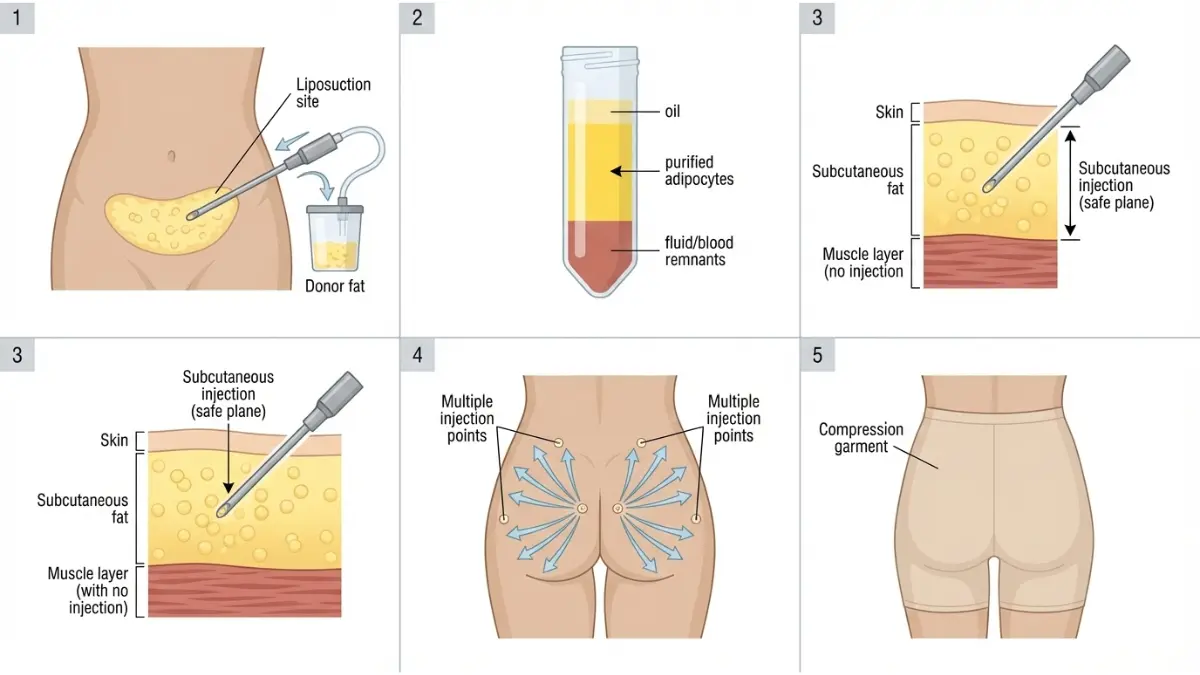
Five surgical stages of BBL fat transfer:
- General Anesthesia Administration — Certified anesthesiologist monitors vitals throughout 3-4 hour procedure, following safety protocols that have reduced anesthesia-related complications by 35% over the past decade
- Strategic Liposuction Harvesting — Surgeon removes excess fat from donor areas (abdomen, flanks, back, thighs) creating dual benefit of body contouring plus buttock enhancement material
- Fat Purification & Processing — Extracted fat undergoes centrifugation to separate viable adipocytes from blood, oil, and damaged cells, increasing survival rate
- Subcutaneous Fat Injection — Using blunt cannulas, surgeon injects purified fat exclusively in subcutaneous layer above gluteal muscle through 3-5 small entry points, avoiding deep intramuscular placement that caused historical BBL complications
- Compression Garment Application & Closure — Medical-grade garment placement minimizes swelling and supports newly shaped contours during critical healing period
Skinny BBL variation: Patients with limited donor fat (BMI under 22) may require modified techniques with smaller volume transfers or pre-surgery weight gain recommendations. These candidates can assess their baseline metabolic needs using a macro calculator to plan strategic weight optimization before the BBL procedure.
Research from Stanford University’s Department of Plastic & Reconstructive Surgery emphasizes that optimal wound healing requires proper nutrition, adequate hydration, and controlled inflammation—factors directly applicable to BBL aftercare protocols.
BBL Recovery Time – The Critical 8-Week Protocol
BBL recovery time varies significantly based on protocol adherence, with the first eight weeks determining long-term fat retention success rates. According to NIH research on post-operative care, regular assessment and systematic monitoring prevent 60-70% of complications in cosmetic surgery recovery.
Table 3: BBL Recovery Timeline & Protocol Requirements
| Recovery Phase | Duration | Mandatory Restrictions | Expected Symptoms |
|---|---|---|---|
| Immediate Post-Op | Days 1-3 | Zero sitting/lying on back; BBL pillow only when unavoidable | Severe pain (7-9/10), significant swelling, drainage from incisions |
| Early Recovery | Weeks 1-2 | Sleep on stomach/side; walking encouraged; compression garment 24/7 | Moderate pain (4-6/10), bruising peaks then decreases, limited mobility |
| Mid Recovery | Weeks 3-8 | Gradual sitting introduction using BBL pillow; no exercise beyond walking | Swelling reduces 50%; shape begins emerging; discomfort decreases |
| Late Recovery | Months 3-6 | Return to full activities; continue weight stability; final 60-80% fat retention | Minimal discomfort; BBL results visible; occasional numbness resolves |
| Long-Term Maintenance | 10+ years | Weight fluctuation under 10 lbs; healthy lifestyle for metabolic health | Permanent results with proper care |
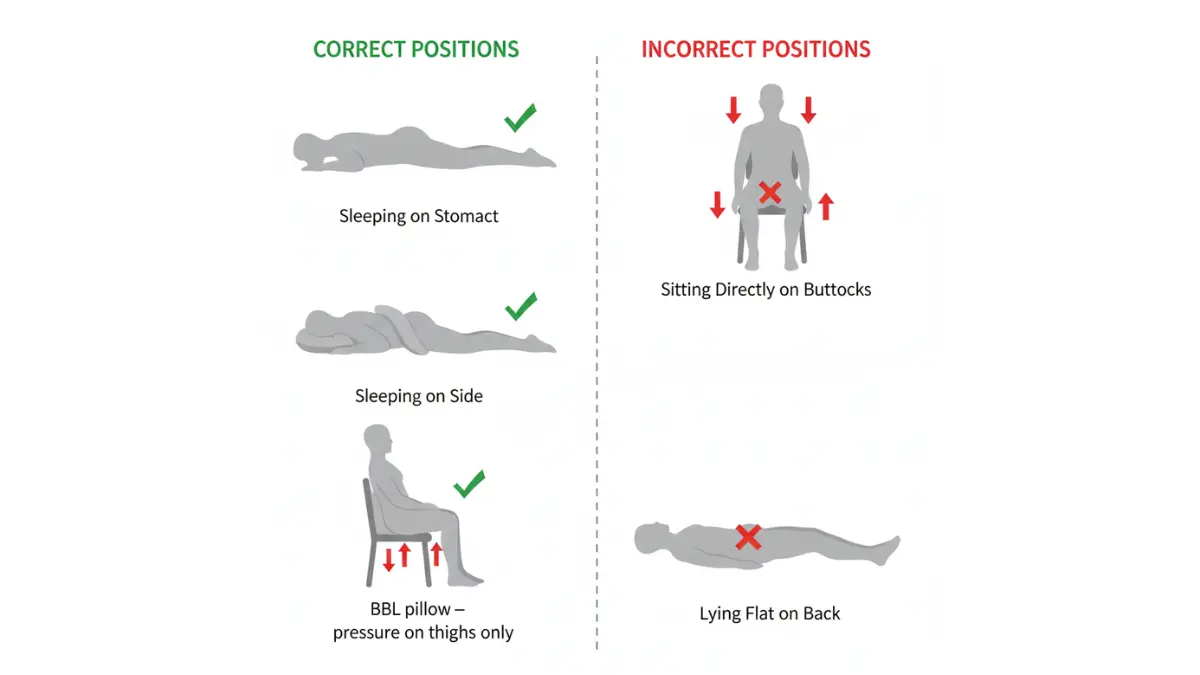
Critical BBL aftercare rules that determine is BBL safe outcomes:
- Sitting prohibition: Zero direct buttock pressure for minimum 2 weeks, limited sitting with BBL pillow weeks 3-8 ensures fat cell survival
- Sleep positioning: Stomach or side sleeping exclusively prevents fat compression and necrosis
- Compression garment compliance: 24/7 wear for 8 weeks controls swelling and supports shape retention
- Hydration requirements: Patients should use a water intake calculator to meet elevated fluid needs (100+ oz daily) supporting wound healing
- Protein optimization: Using a protein intake calculator ensures adequate amino acid intake (1.2-1.5g/kg bodyweight) for tissue repair
- Exercise restrictions: No high-impact activities, lower body resistance training, or running for 2-3 months post-BBL procedure
Adequate rest calculated using a sleep calculator helps optimize healing hormones critical during the Brazilian butt lift recovery period.
BBL Before and After – Realistic Result Expectations
BBL results timeline: Only 60-80% of transferred fat survives long-term, with the remaining 20-40% naturally reabsorbed by the body within 3-6 months. Surgeons intentionally over-correct initial volume, anticipating this predictable fat loss during the remodeling phase.
Setting realistic BBL before and after expectations:
- Immediate post-surgery: Appears over-augmented due to swelling plus anticipated fat reabsorption
- 3-month milestone: Approximately 70% of final BBL results visible as acute inflammation resolves
- 6-month final result: True shape emerges; fat cells fully integrated into vascular supply become permanent
- Revision consideration: 20-30% of patients opt for additional fat grafting if initial retention falls below expectations
Maria’s Skinny BBL Case Study: At 28 years old with BMI 21, Maria underwent a modified skinny BBL procedure in March 2024 transferring 400cc per buttock (versus typical 600-800cc). Her surgeon harvested fat from abdomen and flanks, warning that limited donor availability might yield subtle rather than dramatic enhancement. Six months post-procedure, Maria retained 65% of transferred fat, achieving her goal of natural-looking projection without implant appearance. “Understanding that my skinny BBL would create proportionate enhancement rather than Instagram-extreme curves helped me love my results,” she explains.
What This Means For You: Plan for minimum 2-week work absence, 8-week activity restriction, and 6-month timeline for final BBL results evaluation. Brazilian butt lift recovery demands greater lifestyle disruption than procedures like ACL tear recovery, but proper protocol adherence directly answers “is BBL safe” by minimizing complication risk.
BBL Risks & Complications – Am I a Good Candidate for Safe Surgery?
Complete BBL Complications List – From Common to Fatal
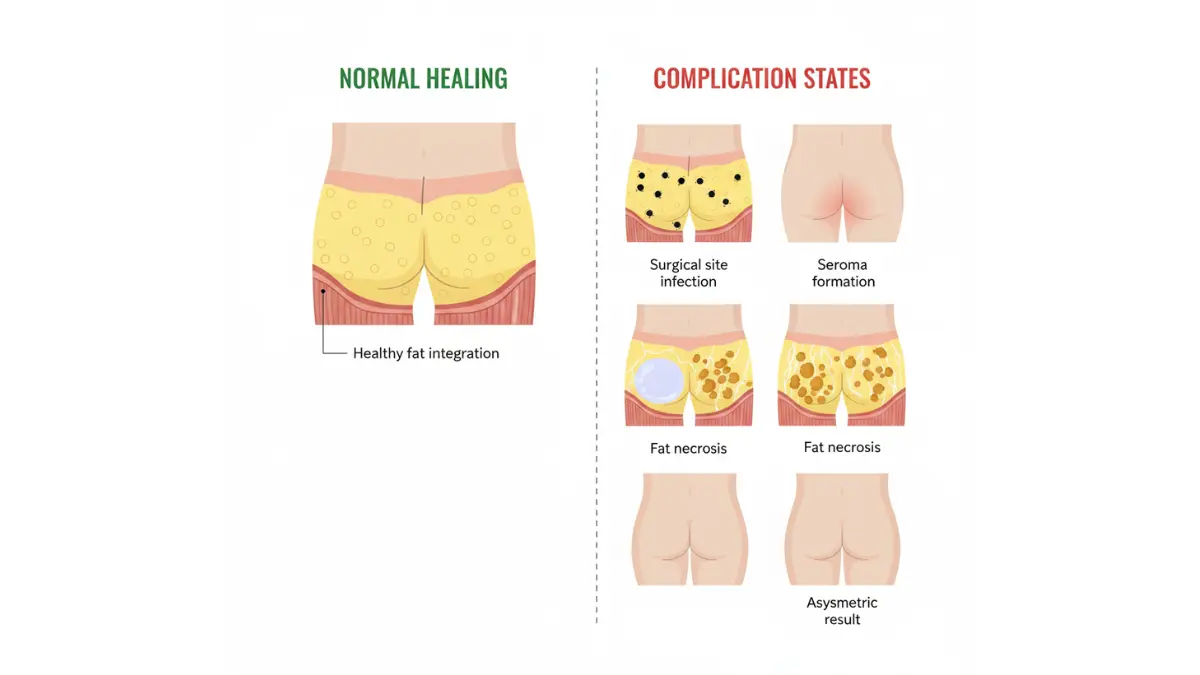
Understanding BBL complications requires categorizing risks by severity and frequency to properly evaluate whether is BBL safe for individual candidates. Research published in JAMA Surgery demonstrates that surgical site infections occurring within 30 days post-operatively increase long-term mortality risk 1.9-fold, emphasizing why infection prevention ranks as a critical safety priority.
Table 4: BBL Complication Risk Levels & Prevention Strategies
What This Means For You: Choosing a board-certified plastic surgeon following 2025 safety protocols reduces ALL BBL risks by 60-70% compared to non-accredited practitioners. Fat embolism—the historically fatal BBL complication—now occurs in fewer than 1 in 14,952 procedures when surgeons adhere to subcutaneous-only injection mandates.
Patients experiencing unusual symptoms post-surgery should use a symptom checker to assess whether immediate medical attention is warranted, as early intervention prevents minor BBL complications from escalating to serious infections.
BBL Candidacy – Self-Assessment Checklist
Not every patient is a safe candidate for the Brazilian butt lift procedure, and honest self-evaluation prevents complications and dissatisfaction. Similar to how bariatric surgery candidates must meet strict medical criteria, BBL candidacy depends on physical health, realistic expectations, and recovery capability.
✅ Ideal BBL Candidates:
- Age 18-60 years with realistic aesthetic expectations
- BMI 18-35 (calculate using BMI calculator)—sufficient donor fat essential
- Minimum 10-15 lbs excess fat in donor areas (abdomen, flanks, thighs)
- Non-smoker status minimum 6 weeks before and after surgery (nicotine impairs healing)
- Overall good health with no uncontrolled chronic conditions
- Ability to take 2-3 weeks off work for early recovery compliance
- Can avoid sitting for 8 weeks following strict protocol requirements
- Weight stability within ±10 lbs for 6+ months (fluctuation affects results)
- No active infections or immune system disorders
- Realistic understanding that 60-80% fat retention is normal
❌ BBL NOT Recommended For:
- Active infections or compromised immune function
- Blood clotting disorders (Factor V Leiden, antiphospholipid syndrome) increasing thrombosis risk
- Unrealistic expectations expecting Instagram-filter body transformations
- Unable to follow recovery protocol due to work, childcare, or lifestyle constraints
- Insufficient donor fat (very lean body types with BMI under 18)
- Recent weight fluctuations >20 lbs in past 6 months
- Smoking/vaping habit unwilling to quit (increases necrosis risk 300%)
- Uncontrolled diabetes or hypertension complicating wound healing
- History of keloid scarring or poor wound healing
- Significant cardiovascular disease increasing anesthesia risks
International Expert Perspective: Dr. Constantino Mendieta, Brazilian Society of Plastic Surgery founding member, emphasizes: “Patient selection is 50% of BBL safety. Surgeons must refuse candidates with unrealistic expectations or insufficient donor fat, regardless of financial incentives. The question ‘is BBL safe’ depends equally on surgeon technique and patient candidacy.”
How to Choose the Best BBL Surgeon – 7-Point Verification
Selecting the right surgeon determines whether the Brazilian butt lift is safe for your specific situation. Research from Vanderbilt University Medical Center analyzing patient decision-making found that 68% of aesthetic surgery patients prioritized board certification and experience over cost considerations.
Non-Negotiable Surgeon Credentials Checklist:
- Board Certification Verification — American Board of Plastic Surgery (ABPS) certification required; verify at abplasticsurgery.org
- BBL-Specific Experience — Minimum 100 BBL procedures performed; ask for surgeon-specific complication rates
- Before/After Portfolio Review — Examine 20+ cases with body types similar to yours; verify authenticity
- Accredited Facility Confirmation — AAAASF, JCAHO, or hospital-based surgical center only
- 2025 Safety Protocol Adherence — Ask specifically about subcutaneous-only technique and ultrasound guidance
- Complication Transparency — Surgeon openly discusses BBL risks, mortality rates, and personal complication history
- Patient Review Cross-Verification — Check RealSelf, Google, Yelp across multiple platforms; identify patterns in reviews
🚩 Critical Red Flags – Avoid These Surgeons:
- Non-board-certified or certified in non-surgical specialties (dermatology, family medicine)
- “Discount BBL” promotions under $5,000 (cost-cutting indicates safety compromises)
- Hotel room, office, or non-accredited facility locations
- Cannot explain 2025 safety protocols or dismisses questions about technique
- Refuses to show credentials or provides vague experience claims
- Pressure tactics pushing immediate surgery decisions
- Multiple negative reviews mentioning complications or poor communication
- Advertises guaranteed results (ethical surgeons acknowledge individual variation)
What This Means For You: Investing time in surgeon verification directly impacts BBL mortality rate reduction. The 80% improvement in BBL death rate since 2017 stems from patients choosing qualified surgeons over convenience or cost savings. Safe BBL surgery requires surgeon experience, proper facility accreditation, and patient protocol compliance working synergistically.
BBL vs Implants vs Non-Surgical Options – Which Butt Enhancement is Right for You?
Comprehensive Butt Enhancement Comparison
When evaluating whether is BBL safe compared to alternative buttock augmentation methods, understanding the risk-benefit profile of each option enables informed decision-making. The Brazilian butt lift procedure offers unique advantages but isn’t the only path to enhancement.
Table 5: BBL vs Alternatives 2025 Comparison
What This Means For You: The Brazilian butt lift offers the best natural-looking volume enhancement when donor fat availability and recovery capability align with patient circumstances. BBL vs implants comparison reveals that fat transfer creates softer, more authentic results but requires adequate fat reserves. Non-surgical BBL provides temporary enhancement without surgical risks but demands repeated treatments costing $1,000-$2,500 annually to maintain results.
Non-Surgical BBL Alternatives – Are They Worth It?
Patients unable to undergo surgical procedures or lacking sufficient donor fat for BBL fat transfer can explore non-invasive options:
- Sculptra Butt Lift: Poly-L-lactic acid dermal filler injections stimulate collagen production, gradually adding volume over 3-6 months with results lasting 2-3 years
- Vacuum Therapy/Cupping: Creates temporary swelling through suction; results disappear within hours, not permanent enhancement
- Targeted Resistance Training: Glute-focused exercise builds muscle mass, increasing projection 1-2 inches maximum over 6-12 months
- BBL Revision Surgery: Corrects asymmetry, adds volume, or addresses complications from previous procedures; 10-15% of initial BBL patients pursue revision
Final Verdict – Is BBL Safe in 2025? Your Action Plan
The definitive answer to “is BBL safe?” YES—the Brazilian butt lift is safe in 2025 when five critical safety conditions are met:
Non-Negotiable Safety Requirements:
- Board-Certified Plastic Surgeon (ABPS) with 100+ BBL procedures documented
- Accredited Surgical Facility meeting AAAASF or JCAHO standards
- Subcutaneous-Only Fat Injection following 2025 safety protocols
- Complete 8-Week Recovery Protocol Adherence including sitting restrictions
- Realistic Expectations accepting 60-80% fat retention as normal outcome
Jennifer’s Success Story: At 35 years old, Jennifer researched BBL safety for 18 months before proceeding with surgery in April 2023. She verified her surgeon’s board certification, toured the accredited facility, and confirmed subcutaneous-only technique commitment. Following the complete 8-week protocol—sleeping on her stomach, using a BBL pillow, maintaining compression garment wear—Jennifer achieved 75% fat retention with zero complications. “Two years later, my results look identical to month six. Understanding that is BBL safe depended on MY choices empowered me to control the outcome,” she explains.
Your BBL Decision Action Plan:
Immediate Steps (Week 1-2):
- ✅ Verify candidacy requirements match your situation
- ✅ Research 3-5 board-certified surgeons in your area
- ✅ Check surgeon credentials at abplasticsurgery.org
- ✅ Review before/after portfolios for realistic expectations
Pre-Consultation Preparation (Week 3-4):
- ✅ Prepare questions about 2025 safety protocols
- ✅ Verify facility accreditation status
- ✅ Research surgeon complication rates and reviews
- ✅ Budget $8,000-$12,000 for safe, quality procedure
Consultation & Decision (Week 5-8):
- ✅ Schedule 2-3 consultations for comparison
- ✅ Ask about subcutaneous injection technique specifically
- ✅ Discuss realistic BBL results for your body type
- ✅ Verify recovery support system availability
Pre-Surgery Optimization (2-3 months before):
- ✅ Achieve stable weight within 10 lbs of target
- ✅ Quit smoking/vaping minimum 6 weeks pre-op
- ✅ Arrange 2-week work absence and childcare help
- ✅ Purchase BBL pillow and compression garments
The transformation in BBL safety from 1 in 3,000 mortality to 1 in 14,952 proves that evidence-based protocols work when surgeons and patients collaborate responsibly. The answer to “is BBL safe” is unequivocally YES for properly selected candidates choosing qualified surgeons who prioritize safety over profit margins.
Frequently Asked Questions About BBL Safety
1. Is BBL safe in 2025?
Yes, BBL is significantly safer in 2025 with a mortality rate of 1 in 14,952 procedures—an 80% improvement from pre-2017 rates—when performed by board-certified surgeons using subcutaneous-only injection techniques in accredited facilities.
2. How much does a BBL cost?
BBL surgery cost ranges from $6,000 to $15,000 in 2025, varying by surgeon experience, geographic location, and facility type. This includes surgeon fees, anesthesia, facility costs, compression garments, and post-operative care.
3. What is the BBL death rate?
The current BBL death rate is approximately 1 in 14,952 procedures when surgeons follow 2025 safety protocols, compared to the historical rate of 1 in 3,000 before mandatory subcutaneous injection guidelines were established.
4. How long is BBL recovery time?
BBL recovery time requires 2 weeks of no sitting, 8 weeks of limited sitting with a BBL pillow, and 2-3 months before returning to full exercise. Most patients return to desk work after 2-3 weeks with modifications.
5. What are the main BBL risks and complications?
The primary BBL risks include fat embolism (<0.007%), infection (2-5%), asymmetry (10-20%), fat necrosis (5-15%), and seroma formation (5-10%). Choosing a board-certified surgeon reduces complication rates by 60-70%.
6. How long do BBL results last?
BBL results last 10+ years permanently when patients maintain stable weight within 10 pounds. Approximately 60-80% of transferred fat survives long-term, with final results visible at 6 months post-surgery.
7. What is a skinny BBL?
A skinny BBL is a modified Brazilian butt lift procedure for patients with limited donor fat (BMI under 22), typically transferring 400-600cc per buttock versus the standard 600-800cc for more subtle, proportionate enhancement.
8. Can I sit after BBL surgery?
No direct sitting is allowed for 2 weeks post-BBL. Weeks 3-8 permit limited sitting using a specialized BBL pillow that transfers pressure to thighs instead of buttocks, protecting fat cell survival.
9. Is BBL worth it?
BBL is worth it for patients seeking permanent, natural-looking enhancement who can commit to 8-week recovery protocols. With 10+ year longevity, the cost averages $600-$1,500 annually, but 20-30% need revision procedures.
10. What’s the difference between BBL vs implants?
BBL uses your own fat transferred via liposuction for natural results lasting 10+ years, while butt implants are silicone devices with higher infection risk (8-12%) but benefit patients lacking sufficient donor fat.
11. How do I choose the best BBL surgeon?
Choose a board-certified plastic surgeon (ABPS) with 100+ BBL procedures, verify facility accreditation (AAAASF/JCAHO), confirm subcutaneous-only injection technique, review before/after portfolios, and check multiple patient reviews across platforms.
About this content
How this article was put together: researched from recognised health sources, drafted with the help of AI tools, and edited by hand, with sources linked throughout.

Sameer Patel is the founder and editor of My Medicine Advisor. He is not a doctor or medical professional — before starting this site he worked in banking,…
Medical disclaimer
The content on MyMedicineAdvisor is provided for general informational and educational purposes only and is not a substitute for professional medical advice, diagnosis, or treatment. Health information on this website should not be used to diagnose, treat, cure, or prevent any condition without guidance from a qualified healthcare professional. Always seek the advice of your doctor, physician, or another licensed healthcare provider with any questions you may have regarding a medical condition, symptoms, medications, or treatment decisions.