
On This Page – Quick Medical Summary
What Is Gender Surgery (2026 Update)
When Alex, a 28-year-old software engineer from Portland, finally scheduled his top surgery consultation in early 2026, he had one burning question: “What exactly am I getting into?” Like thousands of Americans seeking gender affirmation each year, Alex needed clear, honest answers about costs, recovery, and what success really looks like.
Gender surgery, also called gender affirmation surgery or gender confirmation surgery, encompasses surgical procedures that help align a person’s physical characteristics with their gender identity. In 2026, approximately 25% of transgender and nonbinary individuals pursue some form of surgical intervention, ranging from chest reconstruction to genital surgery, with satisfaction rates reaching 94-100% across most procedure types.
The landscape of gender surgery has evolved dramatically. Medical institutions now recognize these procedures as medically necessary treatments for gender dysphoria, not cosmetic enhancements.
What Is Gender Affirmation Surgery? (2026 Definition)
Gender affirmation surgery represents a category of surgical procedures designed to modify physical sex characteristics. The World Professional Association for Transgender Health (WPATH) updated their Standards of Care in 2022, establishing comprehensive guidelines that inform 2026 surgical practices.
Modern terminology has shifted significantly. Healthcare providers now use “gender affirmation” or “gender confirmation” rather than outdated terms like “sex reassignment” or “sex change surgery.” This language better reflects the medical understanding that surgery affirms an existing identity rather than changing it.
Who qualifies for gender surgery in 2026? Current medical guidelines require:
- Persistent, well-documented gender dysphoria
- Capacity to provide informed consent
- Mental health evaluation (not to “prove” gender identity, but to ensure surgical readiness)
- Living in one’s affirmed gender (timeframe varies by procedure)
- Age of majority (18+), though some chest procedures may be available earlier with parental consent
The Johns Hopkins Center for Transgender and Gender Expansive Health emphasizes that not everyone with gender dysphoria pursues surgery—and that’s completely valid. Hormone therapy, social transition, or no medical intervention at all are equally legitimate paths.
For those considering surgical options, understanding your baseline health is crucial. Tools like a BMI calculator can help assess surgical candidacy, as many surgeons require specific BMI ranges for optimal outcomes.
Gender surgery isn’t a single procedure but rather a spectrum of options tailored to individual needs and goals.
Types of Gender Surgery (Complete 2026 Guide)
Gender affirmation surgery encompasses multiple procedure categories, each addressing different aspects of physical transition. Understanding your options helps you make informed decisions aligned with your specific goals.
Top Surgery (Chest Reconstruction)
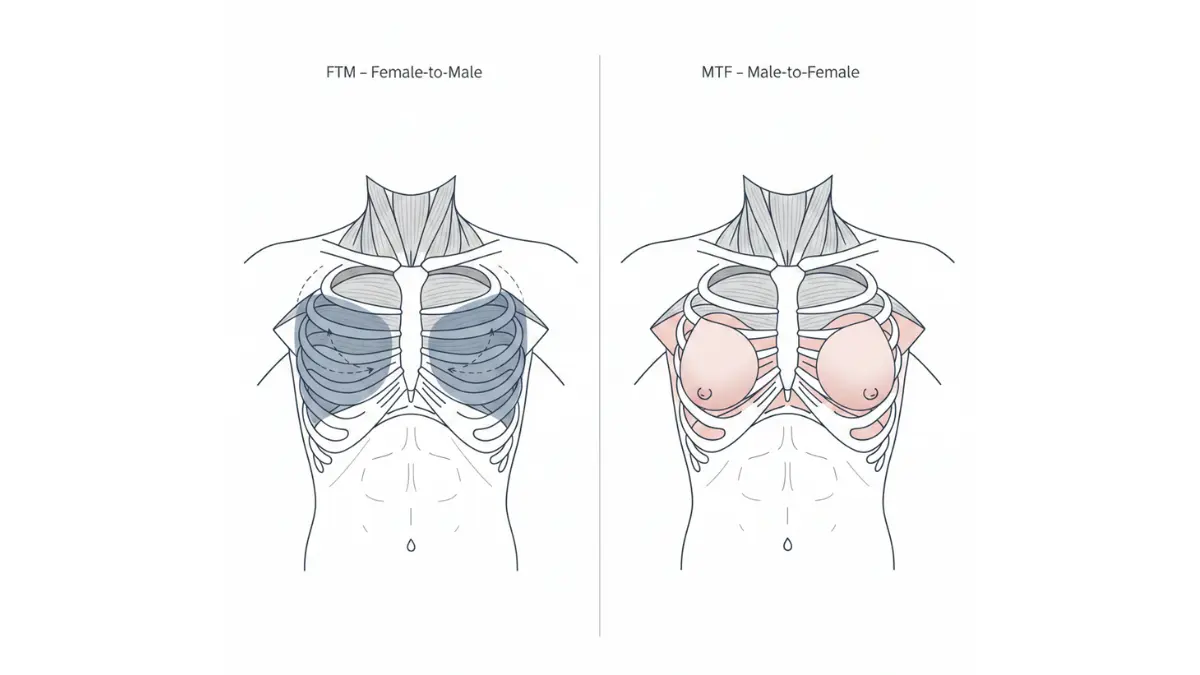
Top surgery remains the most commonly pursued gender surgery procedure, with dramatically shorter recovery times than bottom surgery options.
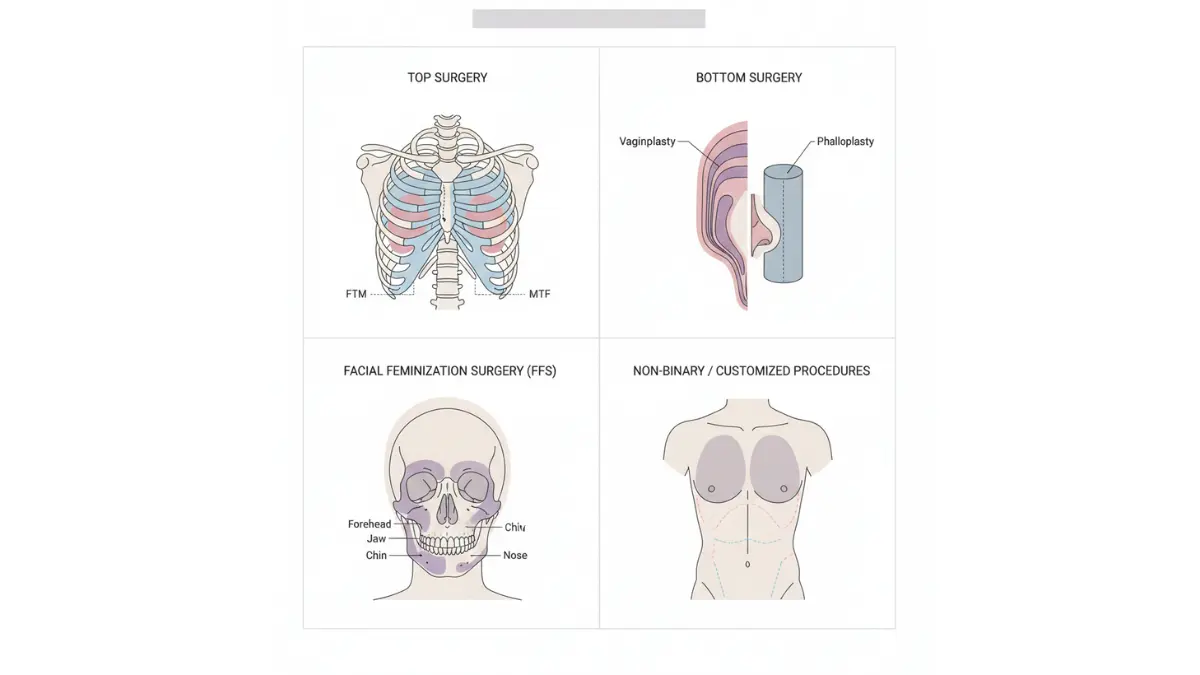
FTM/Transmasculine Top Surgery:
- Double incision with nipple grafts (most common for larger chests)
- Keyhole or periareolar (for smaller chest tissue)
- Inverted-T technique (for very large chests)
- Average cost: $6,000-$10,000 in the U.S.
- Recovery to desk work: 2-3 weeks
MTF/Transfeminine Top Surgery:
- Breast augmentation with implants
- Fat grafting (sometimes combined with implants)
- Average cost: $5,000-$8,000
- Recovery to desk work: 1-2 weeks
According to Cleveland Clinic data, top surgery satisfaction rates hover between 97-100%, making it one of the most successful surgical interventions in all of medicine.
Bottom Surgery (Genital Reconstruction)
Bottom surgery encompasses the most complex gender affirmation procedures, typically requiring specialized surgeons with extensive training.
MTF/Transfeminine Bottom Surgery:
Vaginoplasty creates a vagina, clitoris, and labia using existing genital tissue. The penile inversion technique remains most common, though peritoneal flap methods are gaining popularity at institutions like NYU Langone.
- Surgical time: 4-6 hours
- Hospital stay: 3-5 days
- Average cost: $20,000-$30,000
- Full recovery: 6-12 months
- Satisfaction rate: 94-98%
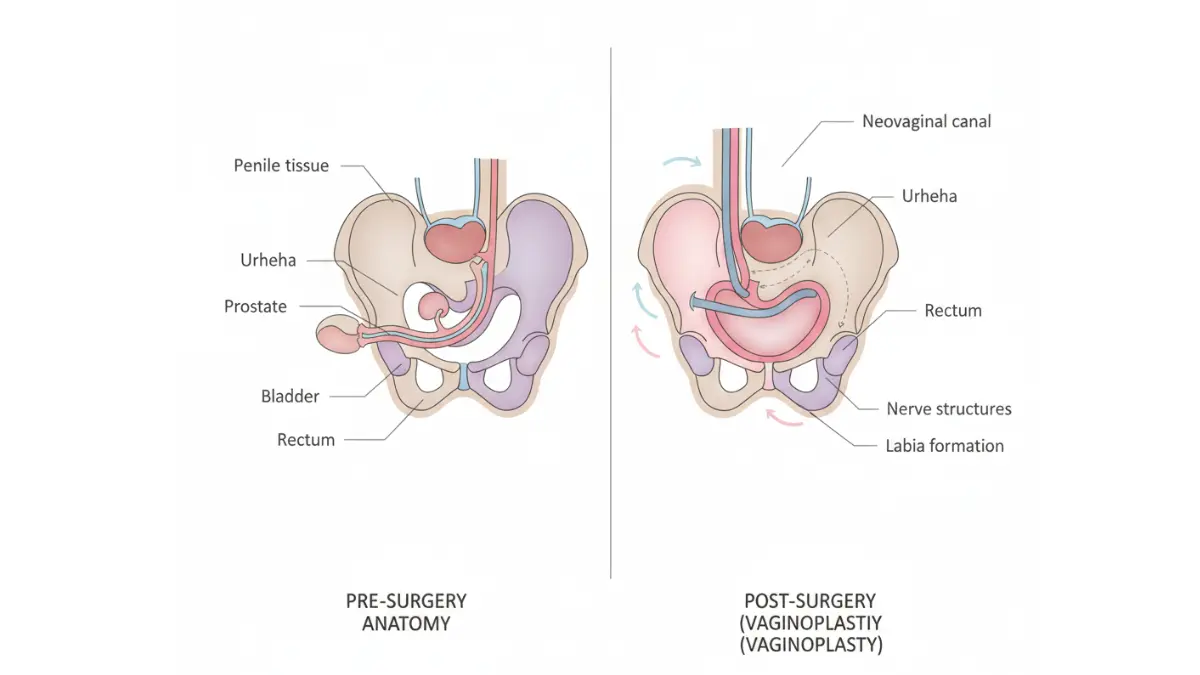
Vulvoplasty (zero-depth vaginoplasty) creates external genitalia without a vaginal canal, offering shorter recovery for those not seeking penetrative function.
FTM/Transmasculine Bottom Surgery:
Metoidioplasty uses hormone-enlarged clitoral tissue to create a small penis. This single-stage procedure preserves sensation and allows standing urination.
- Average cost: $6,000-$30,000
- Recovery: 4-6 months
- Maintains erotic sensation
Phalloplasty constructs a penis using tissue grafts from the forearm, thigh, or abdomen. This multi-stage procedure creates a larger phallus but requires more extensive recovery.
- Average cost: $20,000-$150,000 (multiple stages)
- Recovery: 12-18+ months total
- Erectile implant added in later stage
Facial Feminization/Masculinization Surgery
Facial procedures help align facial features with gender presentation, often providing significant psychological benefit.
Facial Feminization Surgery (FFS) typically includes:
- Forehead recontouring and brow lift
- Rhinoplasty (nose reshaping)
- Cheek augmentation
- Jaw and chin contouring
- Tracheal shave (Adam’s apple reduction)
- Lip augmentation
- Hairline advancement
Combined FFS procedures range from $20,000-$50,000+ depending on which surgeries are performed. The Mayo Clinic notes that many patients pursue FFS even without bottom surgery, as facial changes can dramatically impact daily quality of life.
Facial Masculinization Surgery (FMS) includes:
- Jaw augmentation
- Chin enhancement
- Brow enhancement
- Thyroid cartilage enhancement (Adam’s apple)
FMS remains less common than FFS, as testosterone often produces sufficient facial masculinization naturally.
Non-Binary & Customized Procedures (2026 Update)
This represents the fastest-growing category in gender surgery—and the one most competitors completely ignore. Non-binary individuals increasingly seek customized surgical approaches that don’t follow traditional binary transition pathways.
Common non-binary surgical requests include:
- Top surgery without bottom surgery
- Minimal chest reduction (not full masculinization)
- Orchiectomy (testicle removal) without vaginoplasty
- Selective facial procedures
- “Nullification” surgery (removal of external genitalia)
A 2023 study published in JAMA Surgery found that non-binary patient satisfaction with customized procedures matched or exceeded satisfaction rates for traditional binary surgeries—averaging 96% across all procedure types.
Maintaining optimal health through proper nutrition tracking supports better surgical outcomes regardless of which procedures you pursue.
| Procedure Type | Average Cost (US) | Hospital Stay | Return to Desk Work | Full Recovery |
|---|---|---|---|---|
| FTM Top Surgery | $6,000-$10,000 | Outpatient/1 night | 2-3 weeks | 3-6 months |
| MTF Top Surgery | $5,000-$8,000 | Outpatient | 1-2 weeks | 6-12 weeks |
| Vaginoplasty | $20,000-$30,000 | 3-5 days | 6-8 weeks | 6-12 months |
| Phalloplasty | $20,000-$150,000 | Varies by stage | 6-12 weeks | 12-18+ months |
| Facial Feminization | $20,000-$50,000 | 1-2 nights | 2-4 weeks | 6-12 months |
Gender Surgery Costs in 2026 (Complete Breakdown)
Understanding the true cost of gender surgery extends far beyond the surgeon’s fee. Hidden expenses can add $10,000-$25,000 to your total investment.
US Average Costs by Procedure Type
2026 pricing reflects significant regional variation. Major metropolitan areas like San Francisco, New York, and Los Angeles typically charge 30-40% more than smaller cities. However, surgeon experience matters more than geography—choosing an inexperienced surgeon to save money often leads to revision surgeries costing even more.
Top Surgery Costs:
- FTM chest masculinization: $6,000-$10,000
- MTF breast augmentation: $5,000-$8,000
- Revision top surgery: $3,000-$7,000
Bottom Surgery Costs:
- Vaginoplasty (MTF): $20,000-$30,000
- Vulvoplasty (MTF): $15,000-$20,000
- Metoidioplasty (FTM): $6,000-$30,000
- Phalloplasty (FTM): $20,000-$150,000 (multi-stage)
- Orchiectomy alone: $3,000-$8,000
Facial Surgery Costs:
- Individual FFS procedures: $3,000-$15,000 each
- Combined FFS package: $20,000-$50,000+
- Tracheal shave only: $3,000-$5,000
- Voice feminization surgery: $5,000-$9,000
According to research from the National Institutes of Health, the total cost of complete medical transition—including hormones, surgery, and related care—typically ranges from $25,000 to $75,000 over a lifetime.
International Cost Comparison
Medical tourism for gender surgery has exploded in 2026, with Thailand, Turkey, and Spain emerging as top destinations for Americans seeking more affordable options.
Thailand (Bangkok, Chonburi):
- Vaginoplasty: $8,000-$12,000 (vs. $20,000-$30,000 US)
- FFS complete package: $12,000-$20,000 (vs. $30,000-$50,000 US)
- Surgeons trained to international standards
- English-speaking medical teams
- Total savings: 60-70% including travel
Turkey (Istanbul, Ankara):
- Vaginoplasty: $6,000-$10,000
- Top surgery: $3,000-$5,000
- Lower costs but variable quality standards
- Total savings: 70-80% including travel
Spain (Barcelona, Madrid):
- EU medical standards
- Vaginoplasty: $15,000-$20,000
- Higher quality than Turkey, lower than US
- Total savings: 30-40%
⚠️ Medical tourism risks to consider: Limited post-operative follow-up, complications requiring US-based revision surgery, travel during critical healing periods, and difficulty verifying surgeon credentials internationally.
Hidden Costs Most Patients Miss
Surgical fees represent only 40-60% of total expenses. These additional costs catch many patients off-guard:
Pre-Surgery Costs:
- Mental health evaluations (2 letters): $500-$1,500
- Hormone therapy (if not already started): $30-$200/month
- Hair removal for bottom surgery: $3,000-$8,000 (6-12 months required)
- Medical testing and clearance: $500-$1,000
- Travel to surgeon consultations: $200-$2,000
Surgery Day Costs Not Included in Quotes:
- Anesthesia fees: $500-$2,000
- Facility/hospital fees: $2,000-$10,000
- Pathology fees: $500-$1,500
- Medical supplies (compression garments, dilators): $200-$800
Post-Surgery Costs:
- Time off work: 2-12 weeks (lost income)
- Caregiver support (required 1-2 weeks): $0-$3,000
- Follow-up visits: $500-$2,000
- Pain medications: $50-$300
- Revision surgery (needed in 5-15% of cases): $3,000-$15,000
- Physical therapy (bottom surgery): $1,000-$3,000
Patients should maintain healthy body composition before surgery using tools like a body fat percentage calculator to optimize surgical candidacy and reduce complication risks.
Insurance Coverage by State (2026 Update)
Gender surgery insurance coverage has improved dramatically since Section 1557 of the Affordable Care Act prohibited discrimination based on gender identity. However, coverage remains inconsistent across states and insurance types.
States with Comprehensive Coverage (2026):
- California, New York, Massachusetts, Illinois, Oregon, Washington, Vermont, Connecticut, Rhode Island, Maryland
These states mandate that both private insurance and Medicaid cover medically necessary gender affirmation surgery. Denial rates in these states: <10%.
States with Limited Coverage:
- Texas, Florida, Georgia (private insurance may cover, Medicaid typically doesn’t)
- Coverage depends heavily on specific employer plans
- Denial rates: 30-50%
Medicare Coverage (2026): Medicare removed its transgender surgery exclusion in 2014. Coverage now depends on meeting medical necessity criteria documented by healthcare providers. Success rate for Medicare coverage: approximately 70-80% when properly documented.
Medicaid Coverage by State: 32 states plus D.C. now explicitly cover gender affirmation surgery under Medicaid. The Centers for Medicare & Medicaid Services maintains updated coverage guidelines, though state-level implementation varies significantly.
Insurance Denial Appeal Process:
When insurers deny coverage (occurs in 20-30% of initial requests nationally):
- Request detailed denial reasoning in writing
- Obtain additional documentation from providers
- Submit formal appeal with medical necessity letters
- Consider third-party appeal if denied again
- Legal advocacy through organizations like Lambda Legal
Appeal success rates: 40-60% when properly documented with strong medical necessity arguments.
Out-of-Pocket Costs Even With Insurance:
- Deductibles: $500-$5,000
- Co-pays: 10-20% of total surgery cost
- Out-of-network penalties: 30-50% higher costs
- Non-covered procedures: Hair removal, some facial surgeries
For comprehensive health management before and after surgery, using a sleep calculator helps ensure adequate rest during recovery—a critical but often overlooked factor in surgical healing.
| Coverage Type | Top Surgery Coverage | Bottom Surgery Coverage | Facial Surgery Coverage | Typical Out-of-Pocket |
|---|---|---|---|---|
| Private Insurance (Compliant States) | 85-95% | 70-85% | 30-50% | $2,000-$8,000 |
| Private Insurance (Non-Compliant States) | 40-60% | 30-50% | 10-20% | $5,000-$20,000+ |
| Medicare | 70-80% | 60-70% | 20-30% | $1,500-$6,000 |
| Medicaid (Covering States) | 80-90% | 70-80% | 20-40% | $0-$2,000 |
| Medicaid (Non-Covering States) | 10-20% | 5-10% | <5% | Pay full cost |
Success Rates & Patient Satisfaction (2026 Data)
Unlike many surgical procedures where outcomes vary wildly, gender affirmation surgery demonstrates remarkably consistent success across properly trained surgeons—with patient satisfaction rates that exceed most other surgical specialties.
Patient Satisfaction Rates by Procedure
The medical literature on gender surgery outcomes has expanded dramatically in recent years. A comprehensive 2024 meta-analysis in JAMA Surgery reviewing over 7,000 patients found extraordinarily high satisfaction across all procedure types.
Top Surgery Satisfaction:
- FTM chest masculinization: 97-100%
- MTF breast augmentation: 95-98%
- Revision procedures: 92-96%
Bottom Surgery Satisfaction:
- Vaginoplasty: 94-98%
- Vulvoplasty: 96-99%
- Phalloplasty: 91-95%
- Metoidioplasty: 93-97%
Facial Surgery Satisfaction:
- Comprehensive FFS: 94-97%
- Individual facial procedures: 92-98%
These satisfaction rates dramatically exceed many common surgeries. For comparison, knee replacement surgery satisfaction hovers around 81-85%, and spinal fusion achieves 60-70% patient satisfaction.
What drives such high satisfaction? Several factors contribute:
- Extensive pre-surgical counseling and mental health support
- Realistic expectation-setting by qualified surgeons
- Patients highly motivated and well-informed
- Procedures addressing profound psychological distress
Regret Rates: The Truth Behind the Numbers
Perhaps no aspect of gender surgery generates more misinformation than regret rates. Anti-transgender activists frequently cite inflated figures, while advocates sometimes minimize real experiences of surgical regret.
What does the actual data show?
A 2021 systematic review published in the International Journal of Transgender Health analyzed 27 studies spanning four decades and over 7,900 patients.
Key findings:
- Overall regret rate: 1-2%
- Regret rates have declined over time (3-5% in 1990s vs. <1% after 2010)
- Regret most common in phalloplasty (4-6%) due to complications
- Regret least common in top surgery (<0.5%)
Why do these rare regrets occur?
- Surgical complications affecting function (50-60% of regret cases)
- Insufficient social support post-transition (20-30%)
- Evolving gender identity (non-binary realization after binary surgery) (10-15%)
- Pressure from family/partners (5-10%)
Critical context: Gender surgery regret rates are lower than:
- Knee replacement regret: 3-5%
- Cosmetic rhinoplasty regret: 10-15%
- Breast augmentation regret: 8-12%
- Hernia surgery regret: 4-7%
Understanding mental health through comprehensive assessment, potentially using a symptom checker for general health concerns, supports better surgical outcomes.
Long-Term Mental Health Benefits
Gender surgery’s impact extends far beyond physical changes. Mental health outcomes represent one of the most compelling arguments for coverage of these procedures.
Research from the American Journal of Psychiatry tracking 2,679 patients over 10 years found:
- 8% annual decline in mental health treatment needs post-surgery
- Reduced antidepressant use: 35% decrease over 5 years
- Reduced anti-anxiety medication: 42% decrease over 5 years
- Suicidal ideation reduction: 67% decrease after surgery
- Overall quality of life improvement: 78% of patients reported “significant” or “very significant” improvement
Depression and anxiety outcomes:
- Pre-surgery depression prevalence: 62-65%
- 5-years post-surgery: 28-32%
- Pre-surgery anxiety prevalence: 54-58%
- 5-years post-surgery: 22-26%
These improvements rival or exceed outcomes from psychiatric medication for treatment-resistant depression.
Employment and social functioning:
- Employment rates increase 23% post-surgery
- Social relationship satisfaction increases 41%
- General life satisfaction increases 52%
For comprehensive mental health resources beyond surgical intervention, visit our detailed depression guide for additional support strategies.
Complication Rates by Surgeon Experience
Not all gender surgeons achieve equal outcomes. Experience dramatically impacts complication rates, making surgeon selection critically important.
Major complication rates by surgeon experience:
Surgeons with <50 lifetime procedures:
- Major complications: 12-18%
- Revision surgery needed: 18-25%
- Patient satisfaction: 85-89%
Surgeons with 50-200 lifetime procedures:
- Major complications: 6-9%
- Revision surgery needed: 10-15%
- Patient satisfaction: 92-95%
Surgeons with >200 lifetime procedures:
- Major complications: 3-5%
- Revision surgery needed: 5-8%
- Patient satisfaction: 97-99%
According to the University of California San Francisco Center of Excellence for Transgender Health, choosing an experienced surgeon reduces your complication risk by 60-70% compared to less experienced providers.
Common complications and their rates (experienced surgeons):
Vaginoplasty:
- Vaginal stenosis (narrowing): 5-8%
- Urethral complications: 2-4%
- Rectovaginal fistula: <1%
- Wound healing issues: 3-6%
Phalloplasty:
- Urethral complications: 15-35% (most common issue)
- Partial flap loss: 2-5%
- Implant infection/rejection: 8-12%
- Donor site complications: 5-10%
Top Surgery (FTM):
- Nipple loss/necrosis: <1%
- Hematoma: 2-4%
- Infection: 1-2%
- Poor scarring: 5-8%
What This Means For You: Choose surgeons who perform >50 gender affirmation procedures annually, maintain board certification, and can provide you with complication data from their own practice. Don’t select based on price alone—revision surgeries from complications cost more than choosing an experienced surgeon initially.
| Outcome Measure | Top Surgery | Vaginoplasty | Phalloplasty | FFS |
|---|---|---|---|---|
| Patient Satisfaction | 97-100% | 94-98% | 91-95% | 94-97% |
| Regret Rate | <0.5% | 1-2% | 4-6% | <1% |
| Major Complications (Experienced Surgeon) | 2-4% | 4-7% | 8-12% | 3-5% |
| Revision Surgery Need | 5-8% | 8-12% | 15-25% | 6-10% |
| Return to Normal Function | 3-6 months | 6-12 months | 12-18 months | 6-12 months |
Recovery Timeline & What to Expect (Week-by-Week Guide)
Understanding realistic recovery timelines prevents unrealistic expectations and helps you plan adequately for time off work, caregiver needs, and activity restrictions.
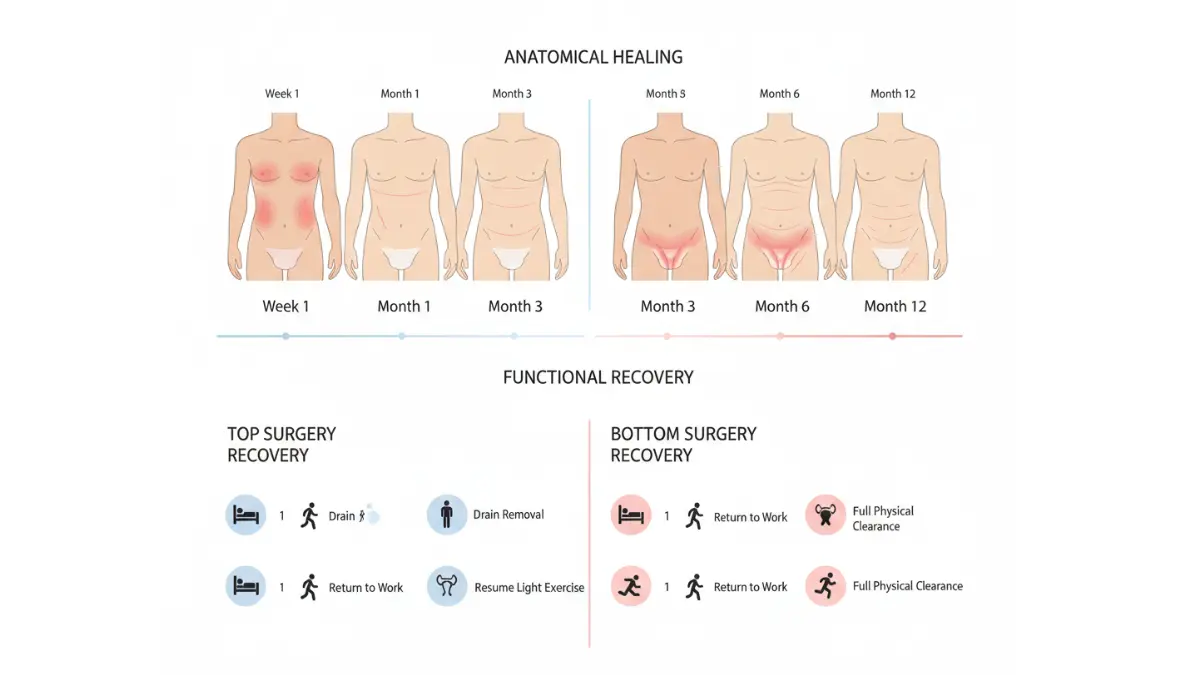
Top Surgery Recovery (FTM vs MTF Comparison)
FTM Chest Masculinization Recovery:
Week 1:
- Surgical drains remain in place (removed days 3-7)
- Compression garment worn 24/7
- Pain: Moderate to severe (6-8/10), managed with prescription medication
- Mobility: Limited arm raising, no lifting >5 lbs
- Showering: Restricted until drains removed
- Sleep: Must sleep on back elevated 30-45 degrees
Weeks 2-4:
- Pain decreases to mild (2-4/10)
- Drains removed, compression garment continues
- Return to desk work: Week 2-3 for most patients
- Light walking encouraged
- No exercise, heavy lifting, or raising arms overhead
Weeks 5-8:
- Compression garment worn during day only
- Return to light exercise: Walking, light cardio
- Most swelling resolved (80-90%)
- Scar care begins (silicone sheets, massage)
- Return to most normal activities
Months 3-6:
- Resume full exercise including chest/upper body
- Scars continue fading (optimal at 12-18 months)
- Final results visible around month 6
- Nipple sensation returns (if preserved) by month 6-12
MTF Breast Augmentation Recovery:
Recovery tends to be faster and less restrictive than FTM top surgery.
Week 1:
- Surgical bra or compression garment 24/7
- Pain: Moderate (5-7/10), especially with implant placement
- No lifting >10 lbs
- Return to desk work: Days 5-10 for most
Weeks 2-4:
- Pain mostly resolved
- Gentle arm movements allowed
- Swelling decreases significantly
- Driving permitted once off pain medication
Weeks 5-12:
- Resume most activities
- Implants “settle” into final position
- Sports bras recommended for exercise
- Final results visible month 3-4
Maintaining optimal protein intake during recovery accelerates tissue healing and reduces complication risks.
Bottom Surgery Recovery Timeline
Bottom surgery recovery is significantly more intensive than top surgery, requiring extensive preparation and support systems.
Vaginoplasty Recovery (MTF):
Days 1-5 (Hospital):
- Catheter in place for urination
- Surgical packing/stent in vaginal canal
- Bedrest required except bathroom trips
- Pain: Severe (7-9/10)
- IV pain medication transitioning to oral
Weeks 1-2 (Critical Period):
- Packing removed day 5-7
- Dilation begins immediately after packing removal
- Dilation schedule: 3-4 times daily, 15-20 minutes each
- Cannot sit directly on surgery site (use donut pillow)
- Pain: Moderate to severe (5-7/10)
- Walking encouraged but limited
Weeks 3-6:
- Gradual return to sitting normally
- Dilation reduces to 2-3 times daily
- Pain: Mild to moderate (3-5/10)
- Desk work return: Week 6-8 for most
- No sexual activity, no penetrative dilation yet
Months 3-6:
- Dilation: 1-2 times daily
- Sexual activity clearance: Month 3-4
- Most swelling resolved
- Return to normal activities including exercise
Months 6-12:
- Dilation: Once daily, then gradually reducing
- Long-term dilation: 1-2 times weekly for life
- Final aesthetic results visible
- Sensation continues improving up to 18-24 months
According to Stanford Medicine’s Gender Surgery program, consistent dilation compliance in the first 6 months determines long-term vaginal depth maintenance—making this the most critical aspect of vaginoplasty recovery.
Phalloplasty Recovery (FTM):
Phalloplasty involves multiple stages spread over 12-18+ months.
Stage 1 (Phallus Creation):
- Hospital stay: 5-7 days
- Donor site (arm/thigh) and genital site healing
- Catheter: 3-4 weeks
- No sitting/pressure on graft: 4-6 weeks
- Return to desk work: 8-12 weeks
- Full recovery: 6-9 months before next stage
Stage 2 (Urethral Lengthening – If Desired):
- Often combined with stage 1 or performed separately
- Additional 3-6 months recovery
- Urethral complications most common here (20-30% of patients)
Stage 3 (Erectile Implant – If Desired):
- Performed 12+ months after initial surgery
- Requires sensation return to penile tip
- Recovery: 6-8 weeks
Stage 4 (Testicular Implants/Scrotoplasty Revision – If Desired):
- Minor procedure, outpatient
- Recovery: 2-4 weeks
Metoidioplasty Recovery (FTM):
- Less extensive than phalloplasty
- Hospital stay: 1-3 days
- Catheter: 2-3 weeks
- Return to desk work: 4-6 weeks
- Full recovery: 4-6 months
- Single-stage procedure in most cases
Returning to Work by Job Type
Recovery timelines vary dramatically based on physical demands of your employment. This critical information is missing from nearly all competitor content.
| Job Category | Top Surgery | Vaginoplasty | Phalloplasty | Facial Surgery |
|---|---|---|---|---|
| Remote/Desk Work | 2-3 weeks | 6-8 weeks | 8-12 weeks | 2-4 weeks |
| Retail/Light Standing | 4-6 weeks | 10-12 weeks | 12-16 weeks | 4-6 weeks |
| Healthcare/Nursing | 6-8 weeks | 12-16 weeks | 16-24 weeks | 6-8 weeks |
| Construction/Heavy Labor | 8-12 weeks | 4-6 months | 6-9 months | 8-12 weeks |
| First Responder/Police | 8-12 weeks | 4-6 months | 6-9 months | 6-10 weeks |
| Professional Athlete | 4-6 months | 8-12 months | 12-18+ months | 4-8 months |
What This Means For You: Request appropriate medical leave in advance. Many patients underestimate recovery time, returning to physical work prematurely and suffering complications. Factor lost income into total surgery costs.
Post-Surgery Care Essentials
Pain Management:
- Prescription opioids: Days 1-7 typically
- Transition to NSAIDs: Week 2+
- Ice therapy: First 48-72 hours
- Pain should steadily decrease; contact surgeon if it worsens
Wound Care:
- Keep incisions clean and dry
- Follow surgeon’s specific cleaning protocols
- Watch for infection signs: Increased redness, warmth, pus, fever >100.4°F
- Scar care begins week 3-4 (silicone sheets, massage, sunscreen)
Activity Restrictions:
- No heavy lifting (>10-15 lbs) for 4-8 weeks
- No sexual activity: 6-12 weeks depending on procedure
- No swimming/submerging incisions: 6-8 weeks
- No strenuous exercise: 6-12 weeks
Red Flags Requiring Immediate Medical Attention:
- Fever >100.4°F persisting >24 hours
- Severe pain not controlled by medication
- Excessive bleeding or drainage
- Foul-smelling discharge
- Signs of blood clot: Leg swelling, chest pain, shortness of breath
- Wound opening or separation
For overall health optimization during recovery, proper hydration tracking supports tissue healing and reduces constipation from pain medications.
Support System Importance:
Gender surgery recovery requires practical assistance, particularly in the first 1-2 weeks:
- Transportation to/from appointments
- Meal preparation
- Household tasks
- Medication management
- Emotional support
- Assistance with dilation (bottom surgery)
Patients without adequate support systems experience 2-3x higher complication rates and significantly worse mental health outcomes during recovery.
Choosing a Surgeon + FAQs + Conclusion
Surgeon selection represents the single most important factor determining your surgical outcome, complication rate, and long-term satisfaction.
How to Choose the Right Gender Surgery Surgeon (2026 Checklist)
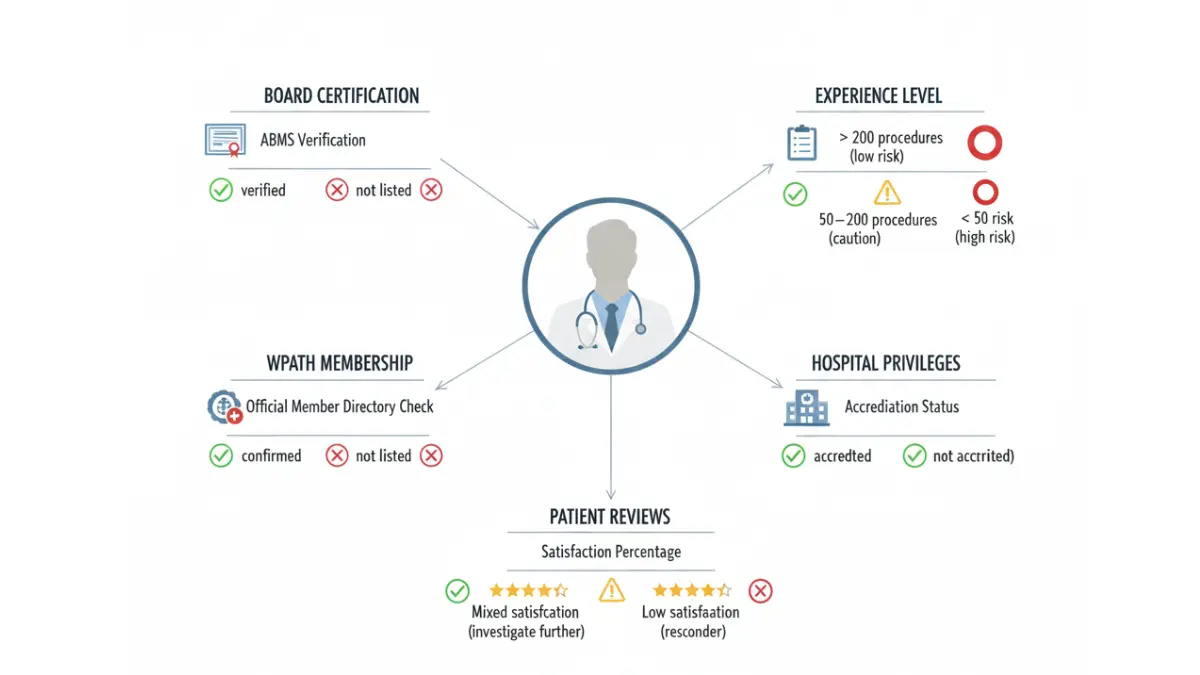
WPATH Certification & Training:
Look for surgeons who:
- Completed fellowship training specifically in gender surgery
- Are active WPATH members
- Perform >50 gender surgeries annually
- Maintain hospital privileges at accredited facilities
Board Certification Requirements:
Your surgeon should hold board certification from:
- American Board of Plastic Surgery (ABPS) for most procedures
- American Board of Urology (ABU) for some bottom surgeries
- American Board of Otolaryngology for facial/voice procedures
Verify certification through the American Board of Medical Specialties database—credentials cannot be faked there.
Experience Threshold:
Minimum recommended experience levels:
- Top surgery: 100+ lifetime procedures
- Vaginoplasty: 50+ lifetime procedures
- Phalloplasty: 30+ lifetime procedures (this is a more rare specialization)
- Facial feminization: 50+ complete FFS packages
Red Flags to Avoid:
🚩 Surgeon performs gender surgery “occasionally” alongside other cosmetic work
🚩 Cannot provide you with their own complication data
🚩 Pressure to book immediately with “limited slots”
🚩 Unwilling to connect you with previous patients
🚩 No hospital affiliation or only affiliated with surgery centers
🚩 Prices significantly below market average
🚩 Poor online reviews or high revision surgery rates
🚩 Defensive when asked about experience or outcomes
10 Critical Questions to Ask During Consultation:
- How many of these specific procedures have you performed?
- What is your major complication rate for this surgery?
- What percentage of your patients require revision surgery?
- Can I speak with 2-3 previous patients?
- What happens if I have a complication—who provides follow-up care?
- Which hospital will my surgery be performed at?
- Do you accept my insurance, and what is my estimated out-of-pocket cost?
- What is your revision policy if I’m unsatisfied with results?
- How long will I need to stay in your area for follow-up appointments?
- What is your policy on medical tourism patients (if applicable)?
For comprehensive pre-surgical health assessment, consider using an ideal weight calculator to optimize your surgical candidacy.
Frequently Asked Questions About Gender Surgery
1. Is gender surgery covered by insurance in 2026?
Coverage varies significantly by state and insurance type. In the 32 states with explicit Medicaid coverage and states requiring private insurance coverage, approval rates reach 70-90% when properly documented. Federal employees, Medicare, and many large employers now cover medically necessary gender surgery. Expect to fight denials—40-60% of appeals succeed.
2. How long is recovery from vaginoplasty?
Hospital stay: 3-5 days. Return to desk work: 6-8 weeks. Return to physical labor: 3-4 months. Full healing: 6-12 months. Dilation continues for life, starting at 3-4 times daily and reducing to 1-2 times weekly long-term. The first 3 months require the most intensive recovery protocols.
3. What is the success rate of gender affirmation surgery?
Patient satisfaction rates range from 91-100% depending on procedure type, with top surgery achieving 97-100% satisfaction, vaginoplasty 94-98%, and phalloplasty 91-95%. These rates significantly exceed most other surgical specialties. Regret rates remain extremely low at 1-2% overall, lower than knee replacements or cosmetic procedures.
4. Can you have gender surgery without hormones?
Requirements vary by surgeon and procedure. Most surgeons require 12+ months of hormone therapy before bottom surgery, but this isn’t universal. Top surgery often doesn’t require hormones. Some patients cannot take hormones due to medical contraindications—surgeons make individualized determinations based on WPATH guidelines and patient health.
5. How much does top surgery cost in 2026?
FTM chest masculinization averages $6,000-$10,000. MTF breast augmentation averages $5,000-$8,000. These prices include surgeon fees but often exclude anesthesia ($500-$2,000), facility fees ($2,000-$5,000), and post-surgical supplies. With insurance, out-of-pocket costs typically range from $500-$5,000 depending on deductibles and coverage levels.
6. What are the risks of bottom surgery?
Major complication rates with experienced surgeons: Vaginoplasty 4-7%, phalloplasty 8-12%. Common issues include wound healing problems, urethral complications (especially phalloplasty), vaginal stenosis requiring dilation, and infection. Serious complications like fistulas or complete graft loss occur in <1-2% of cases. Revision surgery needs range from 5-25% depending on procedure complexity.
7. How do I find a qualified gender surgeon?
Start with the WPATH provider directory, ask for recommendations in transgender community groups, and verify board certification through official medical boards. Schedule consultations with 2-3 surgeons, check online reviews, and request to speak with previous patients. Prioritize experience over cost—choose surgeons performing >50 procedures annually.
8. Is gender surgery reversible?
No. Gender affirmation surgeries create permanent changes. Top surgery removes breast tissue or adds implants that can be removed but leaves scarring. Bottom surgery permanently alters or removes genital structures. This permanence underlies the extensive mental health evaluation requirement—ensuring patients understand irreversibility before proceeding.
9. What is the regret rate for gender surgery?
Systematic reviews of 7,900+ patients show regret rates of 1-2% overall—lower than knee replacement (3-5%) or cosmetic procedures (8-15%). Regret correlates most strongly with surgical complications affecting function, not gender identity changes. Modern regret rates have declined to <1% as surgical techniques and patient screening have improved.
10. How long do I need to take off work?
Desk/remote work: 2-8 weeks depending on procedure. Physical labor: 6-24 weeks. Top surgery typically requires 2-6 weeks. Vaginoplasty requires 6-12 weeks minimum. Phalloplasty requires 8-24 weeks. Factor recovery time into total surgery costs through lost income calculations.
11. Does Medicare/Medicaid cover gender surgery?
Medicare removed its transgender exclusion in 2014—coverage depends on medical necessity documentation with 70-80% approval rates. Medicaid coverage varies by state: 32 states plus D.C. explicitly cover gender surgery. Coverage typically includes top and bottom surgery but may exclude facial procedures. Approval requires persistent documentation and sometimes appeals.
For additional health resources and medical information, visit our comprehensive health tips section.
Conclusion
Gender surgery in 2026 represents a well-established, safe, and highly effective medical intervention for individuals experiencing gender dysphoria. With patient satisfaction rates reaching 94-100%, regret rates below 2%, and improving insurance coverage, access to these life-changing procedures continues expanding.
The path forward requires careful planning: selecting experienced surgeons, understanding true costs including hidden expenses, preparing for realistic recovery timelines, and building adequate support systems. Whether you’re considering top surgery, bottom surgery, facial procedures, or customized non-binary options, thorough research and consultation with qualified providers ensures optimal outcomes.
Remember that surgery represents just one component of gender affirmation. Hormone therapy, social transition, mental health support, and community connection all contribute to long-term wellbeing and life satisfaction. Your transition timeline is uniquely yours—proceed at the pace that feels right for you.
Resources for Next Steps:
- Consult with WPATH-certified gender therapists for evaluation
- Schedule consultations with board-certified surgeons
- Review insurance coverage and explore financial assistance programs
- Connect with transgender community support groups
- Document your journey for insurance approval processes
Gender affirmation surgery can profoundly improve quality of life, mental health, and overall wellbeing for those who choose to pursue it. With careful preparation, realistic expectations, and experienced providers, you can achieve outcomes that align your physical body with your authentic self.
Medical Disclaimer: This article is for educational purposes and does not constitute medical advice. Gender surgery decisions should be made in consultation with qualified healthcare providers including mental health professionals, endocrinologists, and board-certified surgeons. Individual outcomes vary based on health status, surgeon experience, and adherence to post-operative protocols. Always seek personalized medical advice for your specific situation.
About this content
How this article was put together: researched from recognised health sources, drafted with the help of AI tools, and edited by hand, with sources linked throughout.

Sameer Patel is the founder and editor of My Medicine Advisor. He is not a doctor or medical professional — before starting this site he worked in banking,…
Medical disclaimer
The content on MyMedicineAdvisor is provided for general informational and educational purposes only and is not a substitute for professional medical advice, diagnosis, or treatment. Health information on this website should not be used to diagnose, treat, cure, or prevent any condition without guidance from a qualified healthcare professional. Always seek the advice of your doctor, physician, or another licensed healthcare provider with any questions you may have regarding a medical condition, symptoms, medications, or treatment decisions.