On This Page – Quick Medical Summary
Quick Answer: Mother cells treatment — the common term for stem cell therapy — uses the body’s master regenerative cells to repair or replace damaged tissue. As of 2026, it is FDA-approved for blood cancers, aplastic anemia, and pediatric immune disorders, with active clinical trials underway for Parkinson’s disease, Type 1 diabetes, and ALS.
What Is Mother Cells Treatment? (Plain-English Answer Doctors Give in 2026)
Marcus, a 52-year-old teacher from Chicago, was told by his oncologist that his leukemia had returned. His doctor’s next words changed everything: “We should discuss mother cells treatment.” Marcus had never heard the term. His doctor explained it simply — it’s stem cell therapy, and it could save his life.
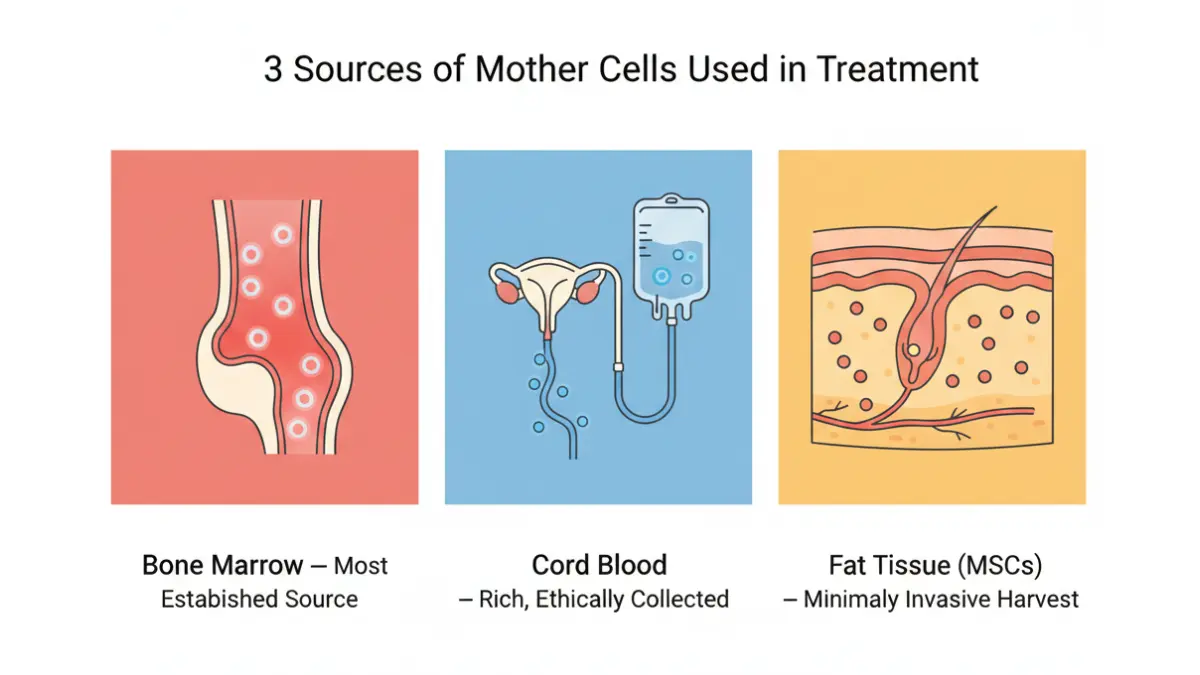
Mother cells treatment and stem cell therapy are the same thing. The term “mother cells” reflects how these cells work — they are the original cells from which all other specialized cells in the body are born. They are found in bone marrow, umbilical cord blood, and fat tissue.
According to NIH stem cell research guidelines, stem cells have two defining properties:
- Self-renewal — they can copy themselves indefinitely
- Differentiation — they can transform into blood cells, nerve cells, heart cells, or almost any other tissue
Why does this matter for patients? When disease destroys your body’s cells — whether leukemia destroys blood cells or Parkinson’s destroys dopamine neurons — mother cells treatment can potentially step in and rebuild what was lost.
💡 What This Means For You: If your doctor has mentioned stem cells, bone marrow transplant, or regenerative therapy, they are referring to mother cells treatment. These terms are interchangeable. Don’t let the language confuse your decision-making.
If you’re experiencing unexplained symptoms and wondering whether you might be a candidate, use the Symptom Checker at mymedicineadvisor.com as a first step before your doctor’s appointment.
How Does Mother Cells Treatment Work? A Step-by-Step Breakdown
Understanding how stem cell therapy works helps patients make informed decisions and ask the right questions. Here is how the process unfolds — in plain English.
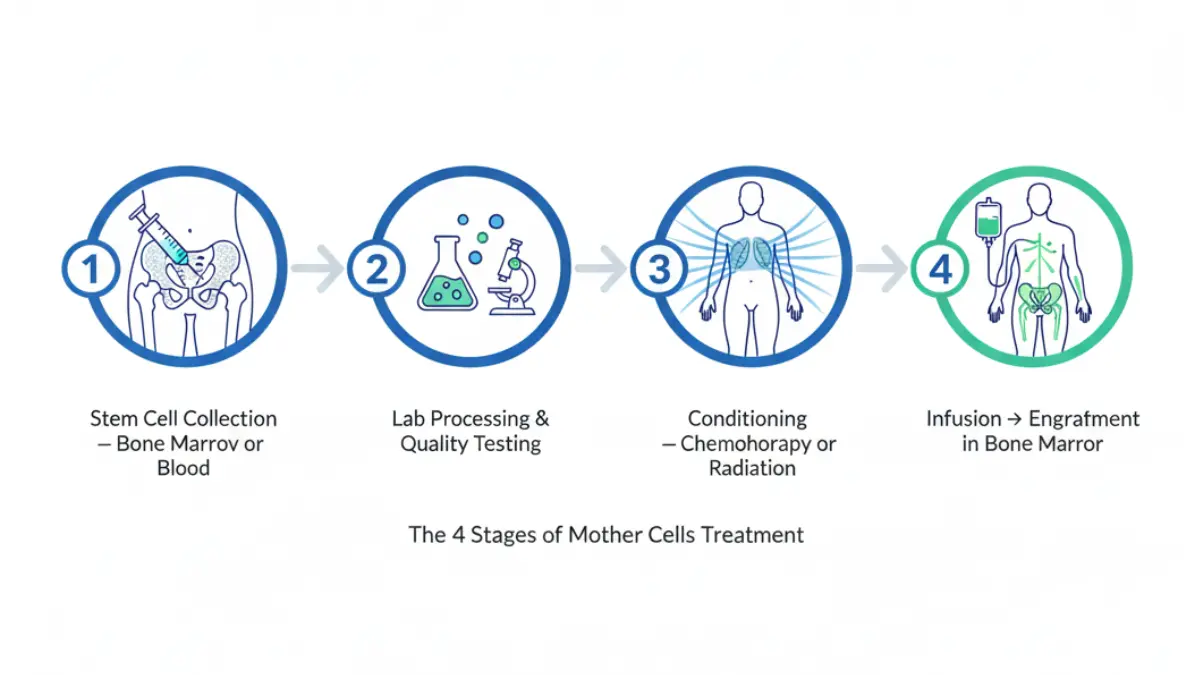
The 4-Step Process
Step 1 — Collection Mother cells (stem cells) are collected from the patient’s own bone marrow or blood (autologous), or from a matched donor (allogeneic). Cord blood from a newborn’s umbilical cord is another verified source.
Step 2 — Processing The collected cells are filtered, tested for purity, and sometimes genetically modified in a laboratory. This is where technologies like iPSC (induced pluripotent stem cells) are used to reprogram adult cells back into a versatile, stem-cell-like state.
Step 3 — Conditioning The patient undergoes chemotherapy or radiation to clear space in the bone marrow and suppress the immune system. This prepares the body to accept the new cells.
Step 4 — Transplant & Regeneration The processed mother cells are infused intravenously. Over days to weeks, the cells travel to the bone marrow, engraft, and begin producing healthy new cells — a process called hematopoietic reconstitution.
3 Types of Mother Cells Used in Treatment
| Cell Type | Source | Primarily Used For |
|---|---|---|
| Hematopoietic Stem Cells (HSC) | Bone marrow, cord blood, peripheral blood | Leukemia, lymphoma, aplastic anemia |
| Mesenchymal Stem Cells (MSC) | Fat tissue, bone marrow, umbilical cord | Immune disorders, GVHD, arthritis |
| Induced Pluripotent Stem Cells (iPSC) | Reprogrammed adult (skin/blood) cells | Parkinson’s, ALS, diabetes (clinical trials) |
Autologous vs. Allogeneic — What’s the Difference?
- Autologous: Your own cells are used. Lower rejection risk, but can’t eliminate cancer cells from the graft.
- Allogeneic: A donor’s cells are used. Higher curative potential for blood cancers via the graft-vs-tumor effect, but requires close HLA tissue matching.
🔬 2026 Breakthrough: In January 2026, researchers at the University of British Columbia published a landmark study in Cell Stem Cell showing — for the first time — a reliable method to grow helper T-cells from stem cells in a lab. This solves one of the biggest barriers to off-the-shelf cancer immunotherapy, potentially making treatment cheaper and more accessible within the next decade.
For a deeper dive into the science of iPSCs, read our expert guide on induced pluripotent stem cells.
12 Conditions Mother Cells Treatment Can Treat — Confirmed by Doctors in 2026
Not all stem cell claims are equal. Below is a medically verified, evidence-graded breakdown of conditions where mother cells treatment is currently used — from confirmed FDA approval to active clinical trials.
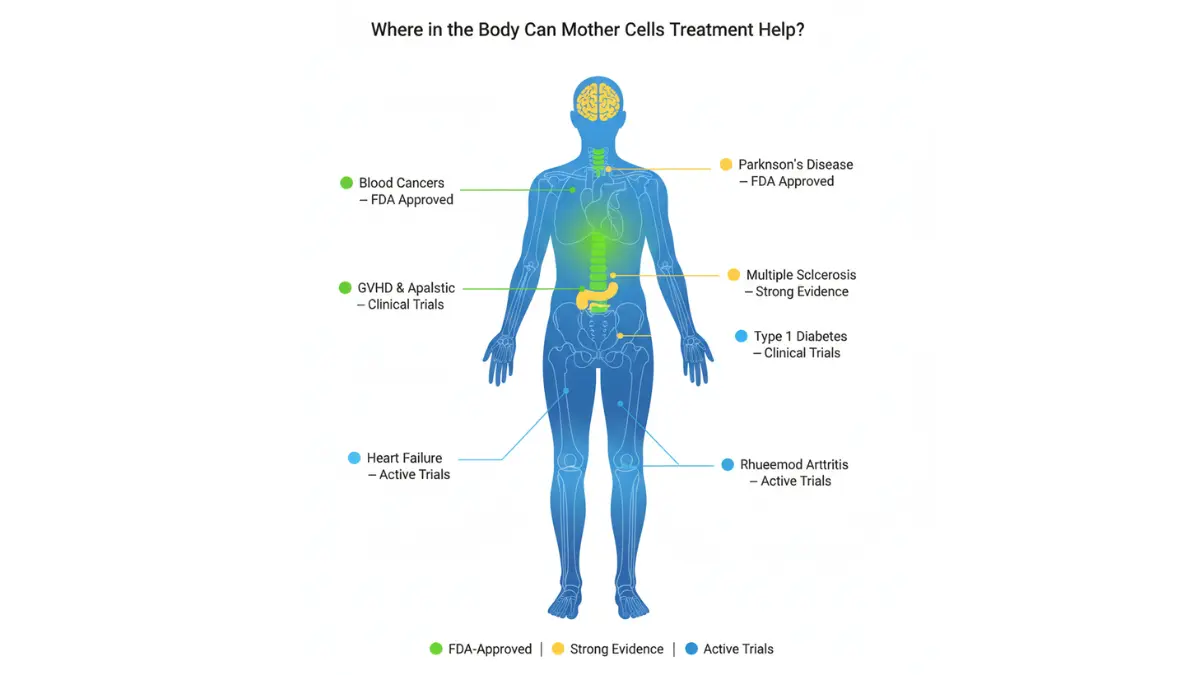
Evidence Key: 🟢 FDA-Approved | 🟡 Strong Clinical Evidence | 🔵 Active Clinical Trials (2025–2026)
| Condition | Evidence Level | What Mother Cells Do |
|---|---|---|
| Leukemia & Lymphoma | 🟢 FDA-Approved | Replace cancerous blood cells via bone marrow transplant |
| Aplastic Anemia | 🟢 FDA-Approved | Restore normal bone marrow and blood cell production |
| Graft-vs-Host Disease (GVHD) | 🟢 FDA-Approved (Ryoncil, Dec 2024) | MSCs calm the immune system attacking the patient’s organs |
| Sickle Cell Disease | 🟢 FDA-Approved | Correct defective hemoglobin-producing cells |
| Multiple Myeloma | 🟡 Strong Evidence | Reset immune system after high-dose chemotherapy |
| Multiple Sclerosis | 🟡 Strong Evidence | Halt immune attack on nerves; ~80% halt progression (MIST trial) |
| Parkinson’s Disease | 🔵 Phase 1 Trial | Regenerate dopamine neurons; USC/Keck trial started April 2025 |
| Type 1 Diabetes | 🔵 Active Trials | Regenerate insulin-producing beta cells in the pancreas |
| Spinal Cord Injury | 🔵 iPSC Trials (2025) | Stimulate nerve regeneration and restore motor function |
| Heart Failure | 🔵 Active Trials | Repair damaged cardiac muscle tissue |
| Rheumatoid Arthritis | 🔵 Active Trials | Reduce joint inflammation via MSC immune modulation |
| ALS | 🔵 FDA IND Clearance, June 2025 | Slow motor neuron degeneration |
For a full list of conditions treated at top U.S. transplant centers, see the verified registry at Memorial Sloan Kettering Cancer Center.
💡 What This Means For You: If your condition shows 🟡 or 🔵, ask your oncologist or specialist about registered trials. Search ClinicalTrials.gov using your specific diagnosis to find open studies near you — it’s free to search and apply.
Patients with hereditary blood conditions can use our Genetic Risk Assessment Tool to understand their baseline risk profile before specialist consultation.
Mother Cells Treatment Cost, Risks & Real Success Rates (2026 U.S. Data)
Before committing to any treatment, patients need straight answers on cost, safety, and realistic outcomes. Here is the data competitors consistently bury or avoid.
Cost in the United States (2026)
| Treatment Type | Average Cost (USD) | Insurance Coverage |
|---|---|---|
| Autologous HSC Transplant | $100,000 – $200,000 | Medicare/Medicaid covers FDA-approved conditions |
| Allogeneic Bone Marrow Transplant | $200,000 – $900,000 | Major insurers cover for approved diagnoses |
| CAR-T Cell Therapy (e.g., CARVYKTI) | $400,000 – $500,000 | FDA-approved; covered with prior authorization |
| Mesenchymal Stem Cell Therapy (MSC) | $10,000 – $50,000 | Limited coverage; largely experimental outside GVHD |
| Unregulated “wellness” stem cell clinics | $5,000 – $30,000 | Not covered — and potentially dangerous |
Important: Always verify whether a clinic is FDA-registered before paying anything. The FDA’s official stem cell therapy consumer warning page explains exactly what to look for and what questions to ask.
Real Success Rates — What the Data Shows
| Condition | Success Rate | Source |
|---|---|---|
| Leukemia (allogeneic HSC transplant) | 50–90% (varies by type and age) | National Cancer Institute |
| Sickle Cell Disease | ~80–90% long-term cure | NEJM 2023 data |
| Multiple Sclerosis (HSCT) | ~80% halt disease progression | MIST Trial, JAMA 2019 |
| GVHD — Ryoncil (Dec 2024 approval) | ~70% overall response | Mesoblast clinical trial |
| Aplastic Anemia (matched donor) | ~80–90% survival at 5 years | National Marrow Donor Program |
Side Effects You Must Know Before Starting
Mother cells treatment carries real risks. These are not rare or trivial:
- Graft-versus-host disease (GVHD): Donor cells attack the patient’s organs — occurs in 30–50% of allogeneic transplants
- Serious infection: Immune suppression during recovery leaves patients vulnerable to bacteria, viruses, and fungi
- Graft failure: The new cells don’t engraft — more common with cord blood sources
- Infertility: High-dose chemotherapy conditioning can permanently affect fertility
- Tumor formation (rare): Poorly controlled stem cells can proliferate abnormally
- Fatigue and prolonged recovery: Full immune reconstitution takes 6–24 months
- Organ toxicity: Liver, lungs, and kidneys can be affected by conditioning regimens
⚠️ Scam Clinic Warning: The Pew Charitable Trusts documented 360 adverse events from unproven stem cell products — including 20 deaths. Over 2,500 U.S. clinics offer unapproved stem cell treatments. You may be told “because it’s your own cells, the FDA doesn’t regulate it.” This is false. The FDA regulates all stem cell products. Do not pay for any treatment without verifying FDA registration.
Patients managing blood sugar during or after treatment can track their readings with our Blood Sugar Converter, and use our Water Intake Calculator during recovery — hydration is a critical factor in transplant outcomes.
3 Mother Cells Treatment Breakthroughs in 2026 That Change Everything
2026 has already delivered more advances in stem cell therapy than any single year in the past decade. Healthline, WebMD, and Mayo Clinic have not yet covered these breakthroughs in patient-friendly language. You’re reading this first.
Breakthrough 1: First-Ever MSC Drug Approved by FDA — Ryoncil (December 18, 2024)
This is the most significant regulatory milestone in stem cell medicine in U.S. history.
The FDA approved Ryoncil (remestemcel-L) — developed by Mesoblast Corporation — on December 18, 2024. It is the first-ever mesenchymal stem cell (MSC) drug approved in the United States.
Who it helps: Children aged 2 months and older with steroid-resistant acute graft-versus-host disease (SR-aGVHD) — a life-threatening immune complication after transplant, with previously almost no treatment options.
Why it matters: This approval signals to the entire pharmaceutical industry that MSC drugs can pass FDA review. Dozens of MSC therapies for autoimmune conditions, arthritis, and organ diseases are now in accelerated development.
💡 What This Means For You: If your child or a loved one received a bone marrow transplant and developed steroid-resistant GVHD, Ryoncil is now a FDA-approved option. Ask your hematologist directly.
Breakthrough 2: Helper T-Cells Grown from Stem Cells — UBC (January 7, 2026)
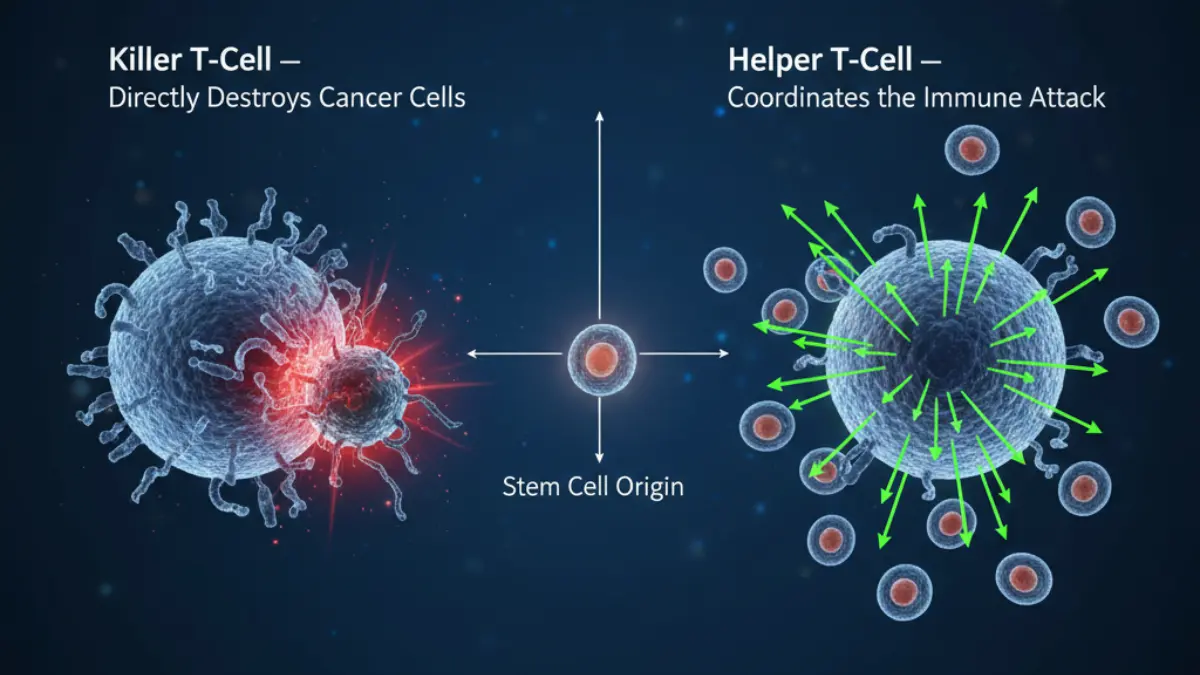
For two decades, researchers could grow “killer T-cells” from stem cells but not “helper T-cells” — the immune system’s coordinators.
A team at the University of British Columbia, publishing in Cell Stem Cell on January 7, 2026, solved this problem. By precisely controlling a developmental signal called Notch — reducing it at the right moment during cell development — they reliably produced helper T-cells from stem cells for the first time.
Why it matters: Cancer immunotherapies like CAR-T are most effective when both killer and helper T-cells are present. Off-the-shelf cancer treatments — made in advance, not custom-built per patient — are now genuinely within reach.
💡 What This Means For You: This doesn’t change treatment options today, but for patients with blood cancers or immune disorders, this breakthrough means far cheaper and faster cell therapies could be available within 5–8 years. Ask your oncologist whether any off-the-shelf cell therapy trials are open to you.
Breakthrough 3: iPSC Therapies Enter Human Trials for Parkinson’s & ALS (2025–2026)
In June 2025, the FDA granted Investigational New Drug (IND) clearance for three iPSC-based therapies targeting Parkinson’s disease, spinal cord injury, and ALS. These are off-the-shelf, allogeneic cell products designed for large-scale production.
A Phase 1 clinical trial for Parkinson’s disease specifically — using dopaminergic neural progenitor cells derived from iPSCs — commenced in April 2025 at Keck Medicine, University of Southern California (ClinicalTrials.gov identifier: NCT06687837).
💡 What This Means For You: If you or a family member has Parkinson’s or ALS, an active Phase 1 trial may be accepting participants. Search your diagnosis at ClinicalTrials.gov to find open studies. Participation is free, and trial drugs are provided at no cost to participants.
To understand how immunotherapy and cell-based therapies are converging, read our in-depth guide: How Immunotherapy Works.
How to Start Mother Cells Treatment — Your Verified 5-Step Action Plan
You’ve read the science, the evidence, and the breakthroughs. Here is the clear, actionable pathway forward — verified by medical professionals.
Step-by-Step: From Interest to Treatment
Step 1 — Confirm Your Condition Qualifies Check whether your diagnosis appears in the FDA-approved or clinical trial categories in Section 3. If it’s a blood cancer, immune disorder, or inherited blood disease — you may have an FDA-approved pathway today.
Step 2 — Get a Specialist Referral Ask your primary care physician for a referral to a hematologist or oncologist who specializes in bone marrow transplantation or cellular therapy. General practitioners rarely have up-to-date knowledge of the latest stem cell protocols.
Step 3 — Verify Any Clinic Is FDA-Registered Before your first appointment at any facility, confirm they operate under an FDA-approved Investigational New Drug (IND) application or are conducting registered clinical trials. This is non-negotiable. The FDA’s stem cell consumer guidance gives you the exact questions to ask.
Step 4 — Understand Your Tissue Type (HLA Matching) For allogeneic transplants, you will need HLA (Human Leukocyte Antigen) typing — a blood test that determines compatibility with potential donors. This is arranged through your transplant center. The National Marrow Donor Program maintains the world’s largest bone marrow registry at bethematch.org.
Step 5 — Register on ClinicalTrials.gov for Trial Eligibility If your condition is in the 🔵 trial stage, registering on ClinicalTrials.gov costs nothing. Clinical trials provide FDA-monitored treatment free of charge, along with close medical supervision.
3 Critical Questions to Ask Your Doctor Before Agreeing to Treatment
- “Is this treatment FDA-approved for my specific diagnosis, or experimental?”
- “Will you provide me the IND application number or trial registration ID?”
- “What are the five most common serious side effects — and how will they be managed?”
Monitor Your Health During Recovery
Track key health metrics throughout your recovery period. Use our BMI Calculator to monitor weight changes during conditioning, and our Sleep Calculator to optimize recovery sleep — stem cell engraftment and immune reconstitution are significantly supported by consistent restorative sleep.
⚠️ Medical Disclaimer: This article is for educational purposes only and does not constitute medical advice, diagnosis, or treatment recommendations. Always consult a qualified healthcare professional before making any medical decisions. Data cited reflects the best available evidence as of February 2026.
Frequently Asked Questions — Mother Cells Treatment
1. What is mother cells treatment?
Mother cells treatment is stem cell therapy — a medical approach that uses the body’s master regenerative cells to repair or replace tissue damaged by disease, injury, or cancer.
2. Is mother cells treatment the same as stem cell therapy?
Yes. “Mother cells” is a lay term for stem cells. Both refer to the same class of foundational cells that can develop into any specialized cell type in the body.
3. Which diseases can be treated with mother cells treatment?
FDA-approved conditions include leukemia, lymphoma, aplastic anemia, sickle cell disease, and pediatric GVHD. Parkinson’s, diabetes, ALS, and MS are in active clinical trials.
4. Is mother cells treatment FDA-approved in the United States?
Yes, for specific conditions. The most recent approval was Ryoncil on December 18, 2024 — for pediatric steroid-resistant graft-versus-host disease.
5. How much does mother cells treatment cost in the U.S.?
Costs range from approximately $100,000 for autologous transplants to over $900,000 for complex allogeneic procedures. Medicare and most major insurers cover FDA-approved indications.
6. What are the main side effects of mother cells treatment?
The most serious include graft-versus-host disease, severe infection, graft failure, infertility, and prolonged fatigue. Side effect profiles vary by treatment type.
7. How long does recovery from mother cells treatment take?
Hospital stay typically lasts 3–6 weeks. Full immune reconstitution and recovery takes 6–24 months depending on the transplant type and the patient’s condition.
8. Can mother cells treatment cure cancer?
For certain blood cancers — leukemia, lymphoma, and multiple myeloma — stem cell transplantation is a potentially curative treatment, with success rates of 50–90% depending on the specific cancer and patient factors.
9. How do I find a legitimate stem cell clinic?
Only consider facilities conducting FDA-registered trials or offering FDA-approved treatments. Verify registration directly through ClinicalTrials.gov or the FDA’s biologics database.
10. Is stem cell treatment available through Medicare or insurance?
Yes — for FDA-approved conditions, Medicare Part A covers inpatient transplants, and most commercial insurers provide coverage with prior authorization. Unapproved treatments are not covered.
11. What is the success rate of mother cells treatment for leukemia?
For hematopoietic stem cell transplantation in leukemia, success rates range from 50–90% depending on the leukemia subtype, patient age, donor match quality, and disease stage at transplant.
Want to go deeper? Read our related expert guides:
- Stem Cell Therapy: Does It Work?
- Induced Pluripotent Stem Cells Explained
- How Immunotherapy Works in 2026
- Chemotherapy Guide 2026: Side Effects & What to Expect
About this content
How this article was put together: researched from recognised health sources, drafted with the help of AI tools, and edited by hand, with sources linked throughout.

Sameer Patel is the founder and editor of My Medicine Advisor. He is not a doctor or medical professional — before starting this site he worked in banking,…
Medical disclaimer
The content on MyMedicineAdvisor is provided for general informational and educational purposes only and is not a substitute for professional medical advice, diagnosis, or treatment. Health information on this website should not be used to diagnose, treat, cure, or prevent any condition without guidance from a qualified healthcare professional. Always seek the advice of your doctor, physician, or another licensed healthcare provider with any questions you may have regarding a medical condition, symptoms, medications, or treatment decisions.