

On This Page – Quick Medical Summary
Is your ALT normal for a woman your age?
If a routine blood panel just flagged your ALT, or showed a number your doctor called fine but that looks high to you, you’re in the right place. Women’s livers typically run at lower ALT levels than men’s, and the years around menopause can shift the picture.
Start with the situation that fits you:
- Your result was flagged high: skip to the causes and follow-up thresholds below.
- Your result was “normal” but in the 20s or 30s: the healthy-range section explains why that may still be worth a question.
- You want the basics first: read our guide to what your ALT blood test number means.
ℹ️ Medical Disclaimer: This article is general education about ALT test results. It does not diagnose liver disease, recommend treatment, or replace advice about medications, supplements, hormone therapy, or insurance coverage for testing. Review your results with your primary care physician or a board-certified gastroenterologist or hepatologist before acting on them.
What’s the normal ALT range for women?
For women, the American College of Gastroenterology (ACG) defines a truly healthy ALT level as 19–25 IU/L. For men, it’s 29–33 IU/L, and levels above these ranges should be assessed by a physician, according to the ACG clinical guideline on abnormal liver chemistries.
Your lab’s range vs. the guideline range
| Reference point | Upper limit for women | Key clinical detail |
|---|---|---|
| ACG healthy range | 19–25 IU/L | Based on people with no identifiable liver risk factors |
| Typical lab upper limits | 31–55 U/L (varies by lab) | Set from each lab’s own reference population |
Sources: ACG Clinical Guideline, Am J Gastroenterol 2017; published review of laboratory ALT upper limits (PMC).
Why labs report higher cutoffs
Each lab builds its own reference range. MedlinePlus’s ALT test page gives 4 to 36 U/L as one example and notes that values vary among labs.
📊 Clinical Data Point: A study of 6,835 blood donors with normal viral tests and healthy BMI placed the true upper limit of ALT at 19 IU/L for women and 30 IU/L for men. Source: cited in the ACG Clinical Guideline, Am J Gastroenterol 2017.
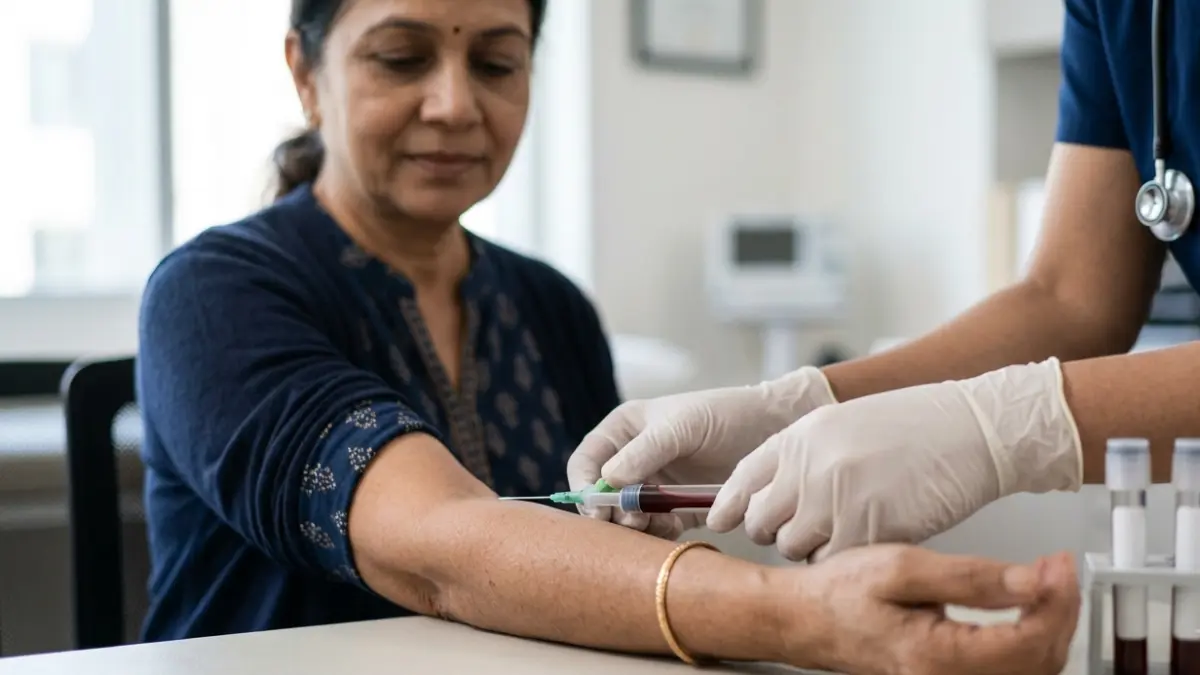
Does menopause change ALT levels?
ALT can rise during the menopause transition and then settle again.
What happens to ALT across the transition
A study of 393 Japanese women across seven menopausal stages found that ALT and AST both rose toward early postmenopause. Later in postmenopause, ALT fell while AST stayed high. This is one population, so read it as a pattern rather than a rule.
Why estrogen matters for liver fat
🔬 How It Works: Fatty liver disease is less common in premenopausal women than in men or postmenopausal women. Researchers read this as a sign that estrogen offers some protection. When estrogen declines, that protection may fade, and liver fat, a leading cause of raised ALT, becomes more likely.
The ACG also describes a straight-line relationship between ALT and body mass index. This is one reason weight changes in midlife can show up on a liver panel.

What causes high ALT in women over 40?
The ACG lists dozens of causes, but a few matter most at this stage of life.
Fatty liver (now called MASLD)
MASLD is the new name for nonalcoholic fatty liver disease. According to the American Association for the Study of Liver Diseases, it affects more than 30% of people worldwide. The ACG advises ultrasound screening when a mild ALT elevation appears alongside diabetes, excess weight, high cholesterol, or high blood pressure.
For more on this link, see how fatty liver raises ALT. To check one metabolic risk factor yourself, try our BMI calculator.
Medications, supplements and alcohol
Prescription drugs, over-the-counter medicines, and herbal supplements can all raise ALT, so the ACG asks doctors to review every one. Our guide to medications that raise ALT covers the common culprits. For alcohol, the ACG flags liver risk for women drinking more than 140 grams a week.
Autoimmune hepatitis
NIDDK reports that 71% to 95% of adults with autoimmune hepatitis are women, and many people with the condition have no symptoms. It often occurs alongside other autoimmune conditions, such as thyroid disease or celiac disease.
How high is too high? When to follow up
The ACG grades an ALT result by how far it sits above the lab’s upper limit of normal (ULN).
Mildly above the healthy range
- Borderline: less than 2× ULN
- Mild: 2–5× ULN
- Moderate: 5–15× ULN
- Severe: more than 15× ULN
Before any further workup, the guideline recommends repeating the test to confirm the result is truly abnormal.
Symptoms that need prompt care
⚠️ Clinical Warning: A high ALT with yellowing of the skin or eyes (jaundice) or new confusion needs urgent medical care, not a routine appointment. The ACG states that acute hepatitis with a prolonged clotting time or confusion requires immediate referral to a liver specialist.
✅ Patient Action: Ask your primary care physician: “Which upper limit are you using for my ALT, and which ACG category does my result fall into?”
What tests come after a high ALT result?
Your doctor will usually look at ALT alongside other markers rather than on its own.
Repeat and related liver tests
A liver panel measures ALT together with AST, ALP, GGT, and bilirubin, and providers compare all of them. The pattern between two of these is a useful clue, explained in our guide to the AST/ALT ratio.
The ACG’s recommended evaluation can include:
- tests for hepatitis B and C
- iron studies to check for hemochromatosis
- autoimmune markers (ANA, ASMA), especially if you already have another autoimmune condition
Questions to ask at your appointment
- Should we repeat the test before anything else?
- Could my medications or supplements explain this result?
- Do I need an ultrasound to check for fatty liver?
- Should I be tested for autoimmune hepatitis?
Should a slightly high ALT worry you?
A mildly high ALT deserves follow-up, not panic.
Why the lower threshold exists
The ACG set its lower female threshold because ALT above healthy levels is linked to higher liver-related mortality, even in people without known risk factors. That link describes large populations over time, not a prediction about you.
Why one result isn’t a diagnosis
Lab reference ranges are commonly set at the 95th percentile, so a small share of healthy people will always fall outside them. The reverse is also true: the ACG notes that a normal ALT does not always rule out significant liver disease.
Frequently asked questions
1. What is a normal ALT level for a woman?
The ACG defines a healthy ALT for women as 19–25 IU/L. That’s lower than many lab cutoffs, which can run from 31 to 55 U/L.
2. Why is my ALT high but I feel fine?
Common causes of high ALT, such as fatty liver and autoimmune hepatitis, often cause no symptoms. Ask your doctor about repeating the test.
3. Does menopause affect ALT levels?
One study found ALT rose toward early postmenopause and then fell later. Falling estrogen may also make fatty liver, which raises ALT, more likely.
4. Is an ALT of 40 high for a woman?
Yes. An ALT of 40 is above the ACG’s healthy range for women, though at under twice the upper limit it counts as borderline. Ask about a repeat test.
5. Why are lab ALT ranges higher than guideline ranges?
Each lab sets its ALT range from its own population. The ACG range comes from people with no liver risk factors.
6. What causes high ALT in women over 40?
Key causes of high ALT at this age include fatty liver (MASLD), medications and supplements, alcohol, and autoimmune hepatitis.
7. Can fatty liver raise ALT?
Yes. The ACG lists fatty liver among the causes of high ALT and advises ultrasound screening when metabolic risk factors are present. Your doctor decides whether imaging fits your case.
8. When is high ALT an emergency?
A high ALT with jaundice or new confusion needs urgent care. The ACG calls for immediate referral to a liver specialist in these situations.
9. Should I repeat an elevated ALT test?
Yes. The ACG recommends repeating the test to confirm an abnormal ALT before a full evaluation. Ask your doctor what timing suits your result.
10. What tests come after a high ALT?
After a high ALT, doctors may order a full liver panel, hepatitis tests, iron studies, autoimmune markers, or an ultrasound. Your doctor chooses based on your result.
11. Is autoimmune hepatitis more common in women?
Yes. NIDDK reports that 71% to 95% of adults with autoimmune hepatitis are women. A hepatologist can order the right tests.
Your next step
For women, a healthy ALT sits lower than many lab reports suggest, and the menopause years can shift it. Bring your exact number and your lab’s reference range to your next visit. Ask which ACG category your result falls into and whether a repeat test comes first.
About this content
How this article was put together: researched from recognised health sources, drafted with the help of AI tools, and edited by hand, with sources linked throughout.

Sameer Patel is the founder and editor of My Medicine Advisor. He is not a doctor or medical professional — before starting this site he worked in banking,…
Medical disclaimer
The content on MyMedicineAdvisor is provided for general informational and educational purposes only and is not a substitute for professional medical advice, diagnosis, or treatment. Health information on this website should not be used to diagnose, treat, cure, or prevent any condition without guidance from a qualified healthcare professional. Always seek the advice of your doctor, physician, or another licensed healthcare provider with any questions you may have regarding a medical condition, symptoms, medications, or treatment decisions.