
On This Page – Quick Medical Summary
Marcus, a 34-year-old software engineer from Boston, received his IgE blood test results showing 487 kU/L. His doctor mentioned “elevated levels,” but Marcus left the office confused about what this number actually meant for his chronic hives and whether he needed immediate treatment.
Here’s what you need to know right now: An IgE test measures immunoglobulin E antibodies in your blood to detect allergic reactions, immune disorders, or parasitic infections. Normal IgE levels for adults range from 0-150 kU/L, though this varies by age. If your results show elevated IgE levels above 150 kU/L, this typically indicates your immune system is overreacting to allergens, though the severity depends on how high your numbers are and your symptoms.
2026 Quick Reference: IgE Normal Ranges by Age
| Age Group | Normal IgE Range (kU/L) | Clinical Significance |
|---|---|---|
| Infants (0-12 months) | 0-15 | Baseline low |
| Children (1-5 years) | 0-60 | Developing immunity |
| Children (6-9 years) | 0-90 | Allergen exposure increases |
| Children (10-15 years) | 0-200 | Puberty variations |
| Adults (16+ years) | 0-150 | Stable baseline |
Key Takeaway: IgE testing helps identify what’s causing your allergic symptoms, but interpreting results requires understanding both the numbers and your clinical symptoms together.
Understanding IgE Tests – The Complete Guide
What Is an IgE Test? (Complete 2026 Breakdown)
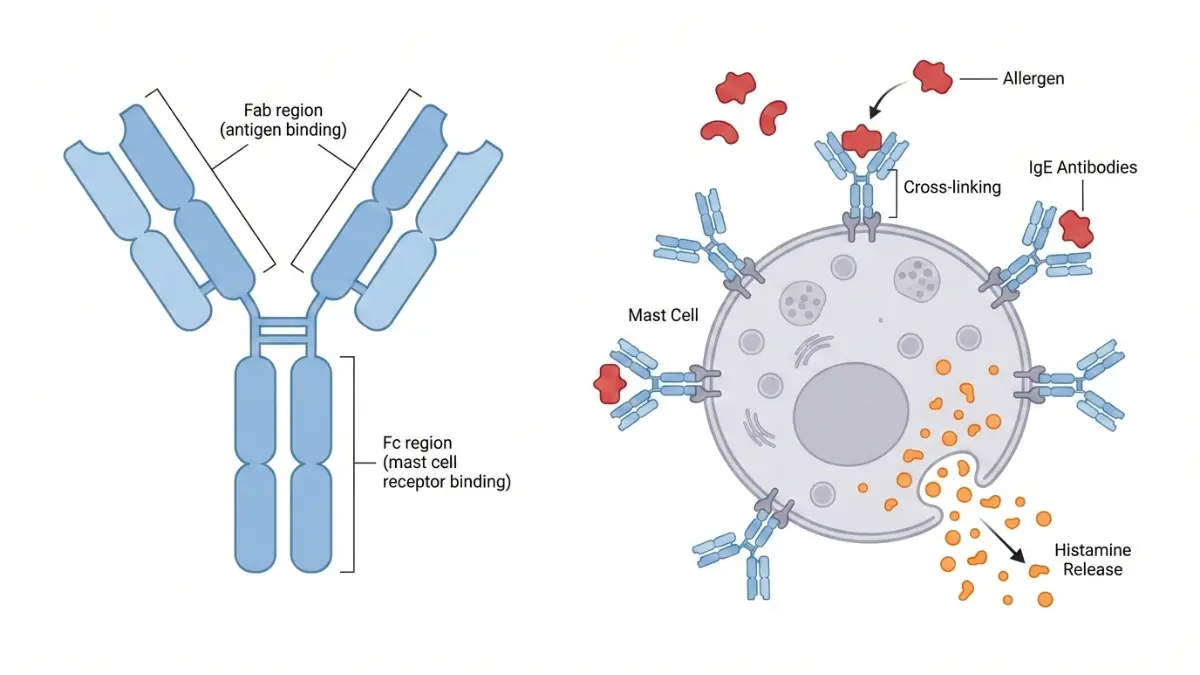
An IgE test is an allergy blood test that measures immunoglobulin E antibodies—specialized proteins your immune system produces when exposed to allergens. Unlike other diagnostic procedures, this blood work provides objective data about your body’s allergic sensitization without requiring skin pricks or allergen exposure during testing.
The immunoglobulin E test serves multiple clinical purposes beyond basic allergy screening. Healthcare providers order this test when patients experience unexplained symptoms like chronic hives, persistent respiratory issues, or suspected parasitic infections. Understanding whether you need total IgE or specific IgE testing depends entirely on your symptoms and medical history.
The Two Types: Total IgE vs Specific IgE (Critical Distinction)
Total IgE Test measures all immunoglobulin E antibodies in your bloodstream combined. This test costs $50-120 and provides a general overview of your allergic tendency without identifying specific allergens. Doctors typically order total IgE when screening for immune disorders, parasitic infections, or determining if you’re a candidate for biologic medications like omalizumab for severe asthma.
Specific IgE Test (also called allergen-specific IgE) measures your antibody response to individual allergens—peanuts, dust mites, pet dander, or hundreds of other substances. Each allergen tested costs $25-75, with comprehensive panels ranging $150-500. This targeted approach identifies exactly which substances trigger your allergic reactions.
| Feature | Total IgE | Specific IgE |
|---|---|---|
| What It Measures | All IgE antibodies combined | IgE to individual allergens |
| Cost Range | $50-120 | $25-75 per allergen |
| Best For | General screening, immune disorders | Identifying specific allergies |
| Results Timeline | 2-5 business days | 3-7 business days |
| Insurance Coverage | Usually covered with symptoms | Covered with clinical indication |
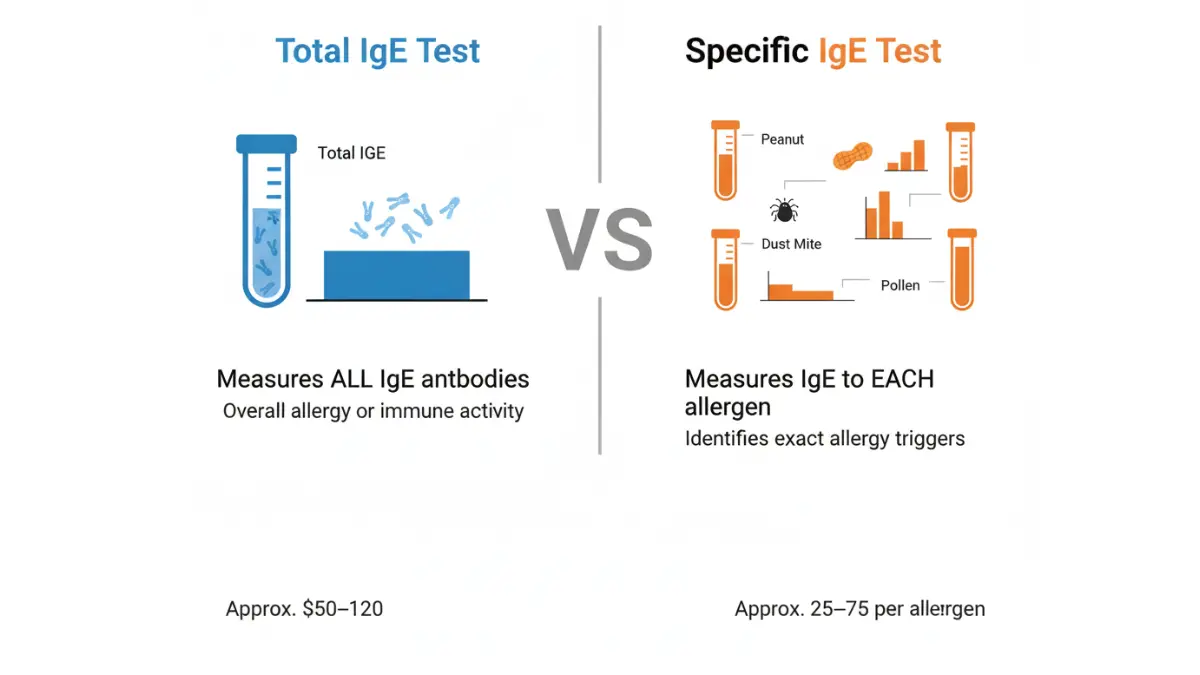
Similar to how a CBC blood test provides overall blood health information, total IgE gives a broad picture, while specific IgE functions like targeted diagnostics.
How the IgE Blood Test Works
The procedure takes 5 minutes or less at any standard laboratory. A phlebotomist draws blood from your arm vein using a small needle—you’ll feel a brief pinch. No fasting is required before IgE testing, and you don’t need to stop eating or drinking beforehand.
Your blood sample travels to the lab where technicians use fluorescent enzyme immunoassay (FEIA) technology to measure IgE antibodies. This 2026 standardized method provides consistent results across different laboratories, though reference ranges may vary slightly by testing facility.
Results typically return within 2-7 business days. Your healthcare provider receives a detailed report showing IgE levels in kilounits per liter (kU/L), which they’ll interpret alongside your symptoms and medical history.
Why Doctors Order IgE Tests
Healthcare providers recommend IgE testing for several specific scenarios:
Allergy Diagnosis: When you experience unexplained hives, swelling, or respiratory symptoms after eating certain foods or environmental exposure. The test confirms whether IgE antibodies are causing your reactions.
Asthma Management: Patients with difficult-to-control asthma often undergo IgE testing to determine if allergies are triggering attacks and whether biologic medications might help.
Parasitic Infection Screening: Elevated total IgE levels above 3,000 kU/L often indicate parasitic infections, particularly in patients with recent international travel or unexplained eosinophilia.
Immunodeficiency Evaluation: Abnormally low IgE levels may signal primary immunodeficiency disorders requiring specialist evaluation.
Pre-Treatment Assessment: Before prescribing omalizumab (Xolair) for severe allergic asthma, doctors must confirm IgE levels fall within the treatable range of 30-700 kU/L.
Much like understanding CRP test results helps assess inflammation, IgE testing provides specific insight into your immune system’s allergic responses.
2026 IgE Reference Ranges & Interpretation
IgE Test Results: 2026 Normal Ranges by Age
Age-Specific Normal IgE Levels (Complete Chart)
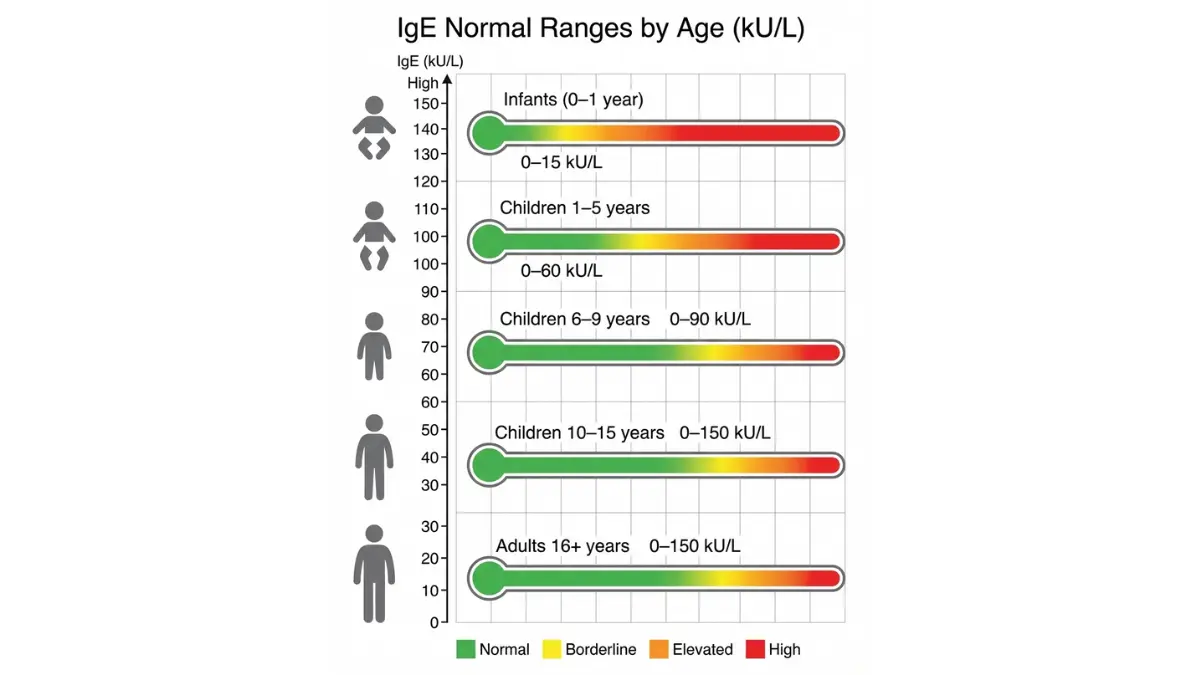
Understanding what high IgE levels mean starts with knowing age-appropriate reference ranges. According to National Institutes of Health guidelines updated in 2026, normal ranges increase significantly from infancy through adolescence as children develop immunologic memory from environmental exposures.
Infants (0-12 months): 0-15 kU/L
Newborns have minimal IgE because they haven’t encountered many allergens yet. Levels above 15 kU/L in infants warrant investigation for early allergic conditions or maternal IgE transfer.
Young Children (1-5 years): 0-60 kU/L
This age group shows increasing IgE as children encounter new foods, pets, and environmental allergens. Levels within this range are generally normal even with mild seasonal allergies.
School-Age Children (6-9 years): 0-90 kU/L
Continued allergen exposure naturally elevates IgE. This range accommodates normal immune development without indicating pathology.
Adolescents (10-15 years): 0-200 kU/L
Puberty and hormonal changes can temporarily increase IgE levels. The wider range accounts for normal variation during this developmental period.
Adults (16+ years): 0-150 kU/L
Adult IgE levels stabilize, though seasonal allergies and new exposures can cause fluctuations. Consistent levels above 150 kU/L require clinical correlation with symptoms.
Critical 2026 Update: Laboratory standardization now uses the WHO International Reference Preparation, ensuring consistency across different testing facilities. Previous variations between labs have decreased by 87% since this standardization.
What High IgE Levels Mean (Severity Classification)
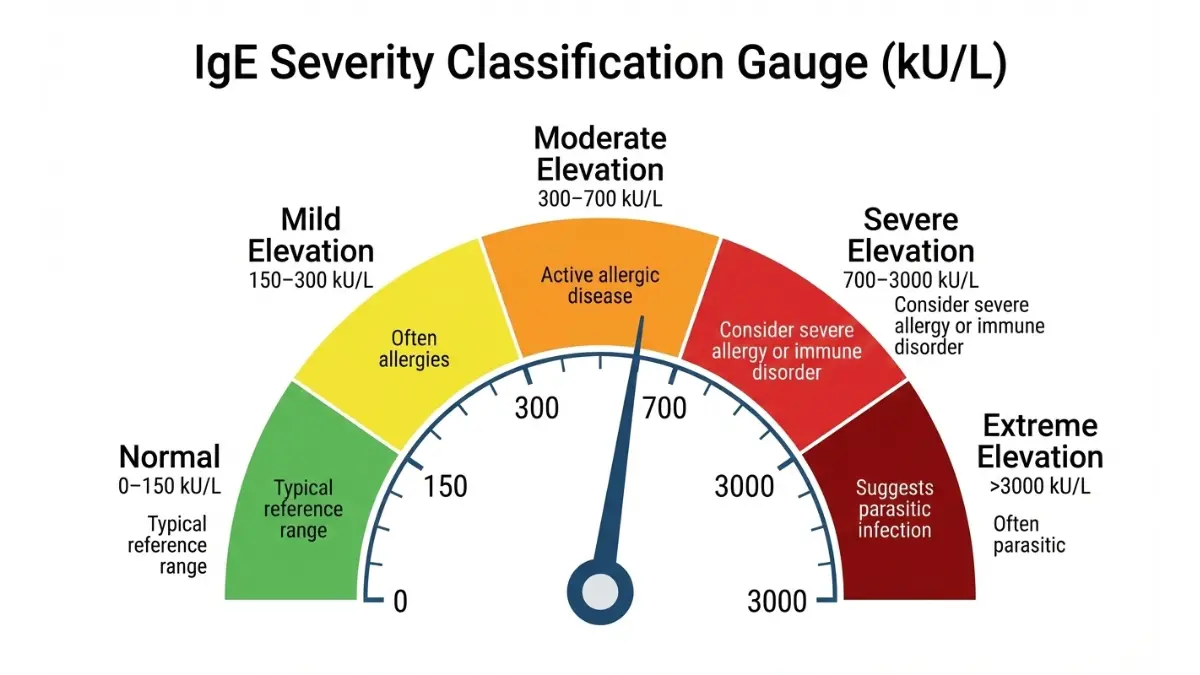
Mild Elevation (150-300 kU/L):
This range suggests allergic sensitization to common environmental allergens. Patients typically experience seasonal allergies, mild food sensitivities, or allergic rhinitis. Treatment usually involves antihistamines and allergen avoidance rather than intensive intervention.
Moderate Elevation (300-700 kU/L):
These levels indicate significant allergic disease requiring medical management. Patients often have multiple allergies affecting daily life, moderate-to-severe asthma, or atopic dermatitis. Healthcare providers consider immunotherapy or biologic medications at this threshold.
Severe Elevation (700-3,000 kU/L):
This range signals serious allergic conditions or possible parasitic infection. Patients need comprehensive evaluation including specific IgE testing, complete blood count with differential, and specialist referral to allergist or immunologist.
Extreme Elevation (>3,000 kU/L):
Levels exceeding 3,000 kU/L almost always indicate parasitic infection (particularly helminths) rather than allergies alone. Immediate workup should include stool studies, complete parasitology panel, and infectious disease consultation.
Real Patient Example: Jennifer, age 42, had total IgE of 892 kU/L with chronic urticaria (hives). Specific IgE testing revealed severe dust mite and cockroach allergy. After environmental remediation and starting omalizumab, her symptoms improved 80% within 12 weeks.
Factors That Affect IgE Test Results
Medications:
Antihistamines don’t affect IgE blood tests (unlike skin prick tests where they must be stopped 7 days prior). However, oral corticosteroids taken for more than 2 weeks can suppress IgE production by 30-40%, potentially causing false-negative results. Always inform your doctor about current medications before testing.
Seasonal Variations:
Research published in the Journal of Allergy and Clinical Immunology shows IgE levels fluctuate 20-45% seasonally in pollen-allergic patients, peaking during high pollen months (typically April-June in the US). For accurate baseline assessment, testing during winter months provides more stable results.
Recent Allergen Exposure:
IgE levels can spike 2-7 days after significant allergen exposure. If you’ve eaten a suspected food allergen or had major environmental exposure within 48 hours, consider rescheduling your test for more representative results.
Smoking Status:
Current smokers show 25-35% higher total IgE levels than non-smokers, even without clinical allergies. This elevation reflects immune system activation from smoke exposure rather than true allergic sensitization.
When to Retest:
Follow-up IgE testing typically occurs every 6-12 months when monitoring treatment response, or 3-6 months after starting immunotherapy. Retesting too frequently (within 3 months) rarely provides meaningful clinical information unless symptoms dramatically change.
Understanding these variables helps interpret your results accurately, much like knowing factors that influence HbA1c levels provides context for diabetes screening.
Specific IgE Testing & Allergen Panels
Specific IgE Tests: Identifying Your Exact Allergies
Common Allergen Panels Tested
Specific IgE testing evaluates your antibody response to individual allergens using standardized extracts. Modern laboratories can test over 500 different substances, categorized into logical panels that match typical exposure patterns.
Food Allergen Panel (8 most common):
- Peanuts (Ara h 1, 2, 3 components)
- Tree nuts (almonds, cashews, walnuts)
- Milk (casein and whey proteins)
- Eggs (ovalbumin)
- Wheat (gluten proteins)
- Soy (Gly m 4)
- Fish (parvalbumin)
- Shellfish (tropomyosin)
Environmental Allergen Panel:
- Dust mites (Der p 1, Der f 1)
- Pet dander (dog, cat, horse)
- Mold spores (Alternaria, Aspergillus, Cladosporium)
- Pollen (tree, grass, ragweed)
- Cockroach allergen
Additional Testing Available:
- Insect venom (bee, wasp, hornet, fire ant)
- Medications (penicillin, cephalosporins)
- Latex
- Occupational allergens (by profession)
Your healthcare provider selects which allergens to test based on your symptom history, geographic location, and suspected exposures. Random “panel testing” of 100+ allergens without clinical suspicion increases false-positive results and costs without improving diagnostic accuracy.
How to Read Specific IgE Results (Class System)
Specific IgE results use a standardized classification system from Class 0 (negative) to Class 6 (very high positive). This scoring helps clinicians predict reaction severity, though correlation isn’t perfect.
Class 0: <0.10 kU/L – Negative (no sensitization detected)
Class 1: 0.10-0.34 kU/L – Borderline (equivocal, clinical correlation needed)
Class 2: 0.35-0.69 kU/L – Low positive (possible allergy)
Class 3: 0.70-3.49 kU/L – Moderate positive (likely allergy)
Class 4: 3.50-17.4 kU/L – High positive (very likely allergy)
Class 5: 17.5-49.9 kU/L – Very high positive (almost certain allergy)
Class 6: ≥50 kU/L – Extremely high positive (definite allergy)
Critical Reality Check: 50-60% of positive specific IgE tests don’t result in clinical allergies. This high false-positive rate occurs because sensitization (having IgE antibodies) doesn’t always equal allergy (having symptoms). You need both positive testing AND clinical symptoms when exposed to confirm true allergy.
Component Testing Advancement:
Modern molecular diagnostics analyze specific protein components within allergens rather than whole extracts. For peanut allergy, testing Ara h 2 specifically predicts systemic reactions with 95% accuracy, while whole peanut IgE shows only 60% accuracy. This precision helps determine anaphylaxis risk and guide treatment decisions.
Similar to how lipid panel results require interpretation within clinical context, specific IgE numbers alone don’t diagnose allergies—symptoms plus positive testing confirm diagnosis.
Next Steps After Positive Results
Allergist Referral Criteria:
See an allergist when specific IgE testing shows Class 3 or higher for food allergens, multiple environmental allergens, or any result suggesting anaphylaxis risk. Board-certified allergists (ABAI certified) provide comprehensive evaluation including skin testing confirmation and oral food challenges when appropriate.
Oral Food Challenge (Gold Standard):
When test results conflict with symptom history, supervised oral food challenges definitively confirm or rule out food allergies. Performed in clinical settings equipped for anaphylaxis treatment, patients consume increasing amounts of suspected allergen under medical observation. This procedure has 98% accuracy for diagnosing true food allergies.
Avoidance Strategies:
Confirmed food allergies require strict elimination from diet, careful label reading for hidden ingredients, and restaurant communication strategies. Environmental allergies benefit from air purifiers, allergen-proof bedding covers, and minimizing exposure during peak seasons.
Emergency Preparedness:
Patients with specific IgE Class 4 or higher to foods associated with anaphylaxis (peanuts, tree nuts, shellfish, fish) should carry epinephrine auto-injectors and wear medical alert identification. Your allergist will prescribe EpiPen or generic alternatives and provide training on proper use.
For comprehensive symptom evaluation before allergy testing, consider using a symptom checker to document patterns and triggers.
Costs, Insurance & Practical Information
IgE Test Cost & Insurance Coverage (2026 Guide)
Test Costs Breakdown
Total IgE Test: $50-120
Most insurance plans cover this screening test when ordered with documented allergy symptoms. Cash-pay pricing at major labs (Quest Diagnostics, LabCorp) ranges $65-95 without insurance.
Single Specific IgE: $25-75 per allergen
Testing individual allergens costs significantly less than comprehensive panels. Strategic testing of 3-5 clinically suspected allergens keeps costs under $300.
Multi-Allergen Panels: $150-500
Common panels (food panel, environmental panel, pet panel) test 10-25 related allergens at bundled pricing. Insurance typically requires prior authorization for panels exceeding $200.
Comprehensive Testing: $400-1,000
Extensive panels testing 50-100+ allergens generally aren’t covered by insurance without documented multiple allergy diagnoses. These broad panels increase false-positive results without improving diagnostic accuracy for most patients.
Geographic Variations:
Testing costs vary 40-60% between regions. Urban centers with competitive laboratory markets (New York, Los Angeles, Chicago) offer lower self-pay prices than rural areas. Canada’s provincial health plans cover medically necessary IgE testing at no patient cost. UK’s NHS provides free testing through GP referrals.
Insurance Coverage Reality
Medicare Coverage:
Medicare Part B covers allergy testing when medically necessary with documented symptoms. Total IgE and up to 50 specific IgE tests per year are typically approved. Requires physician order stating clinical indication—”screening” without symptoms gets denied.
Private Insurance:
Most plans cover IgE testing with $20-50 copay after meeting deductible. Prior authorization increasingly required for panels exceeding 10 allergens. Denials occur when testing is requested without documented allergic symptoms or for “wellness screening.”
High-Deductible Plans:
Patients with HSA/FSA accounts can use tax-free funds for IgE testing. If you haven’t met your deductible, expect to pay full negotiated rate ($150-400 for typical panels). Consider testing strategic single allergens rather than expensive comprehensive panels.
Cash-Pay Strategies:
Some laboratories offer significant discounts (40-60% off) for uninsured cash-pay patients. Request itemized pricing before testing and compare costs at 2-3 local labs. Online lab testing services (Walk-In Lab, Request A Test) sometimes offer lower pricing than hospital-based labs.
Just as understanding the genetic risk assessment tool helps predict hereditary conditions, knowing insurance coverage parameters helps plan affordable allergy testing.
How Long Results Take
Standard Turnaround: 2-5 business days
Most commercial laboratories complete IgE testing within this timeframe. Samples drawn Monday typically return results by Thursday or Friday.
Stat Testing: 24-48 hours
Available at major reference labs when clinically urgent (severe unexplained allergic reactions, pre-procedure screening). Costs 30-50% more than standard testing.
Results Delivery:
Healthcare providers receive electronic results through secure portals. Patients access results via patient portals (MyChart, LabCorp Patient, Quest MyQuest) typically within 24 hours of provider review. Paper copies mail within 7-10 days if requested.
Understanding Your Report:
Laboratory reports list each allergen tested, numerical IgE level (kU/L), and interpretation (negative, low positive, high positive). Reference ranges appear alongside results. Schedule follow-up appointment with ordering provider to discuss results and treatment planning within 1-2 weeks of receiving results.
Clinical Actions & Expert Guidance
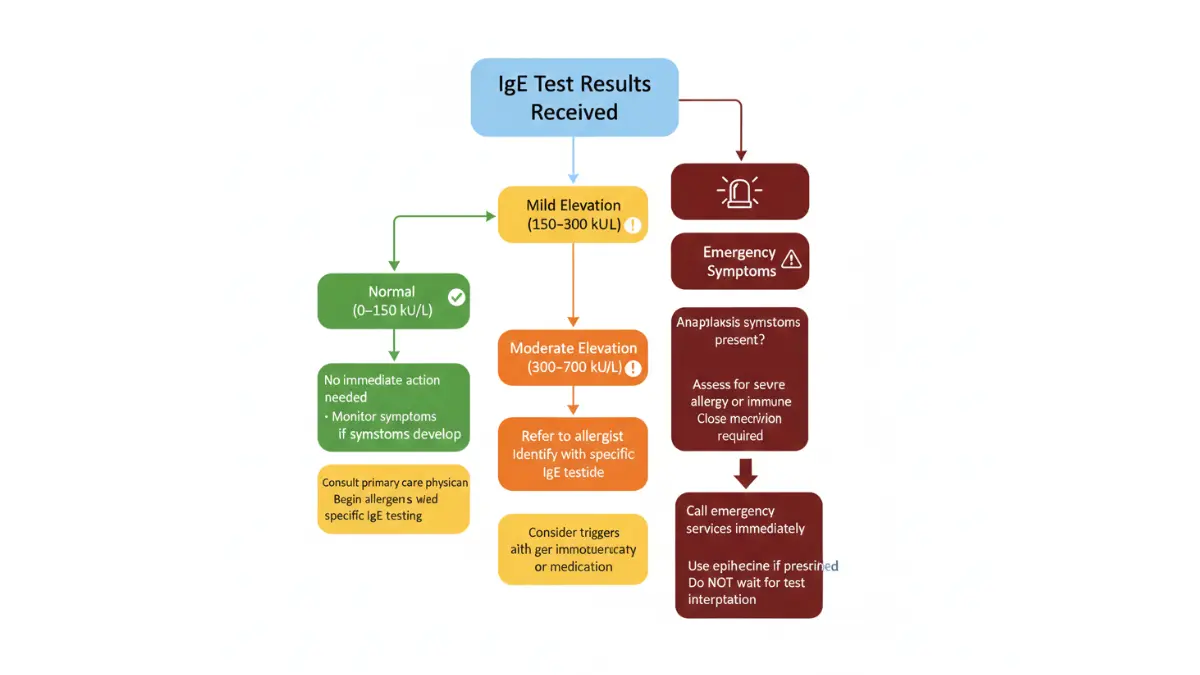
What to Do If Your IgE Levels Are High
Immediate Action Steps
Step 1: Schedule Provider Follow-Up
Contact your ordering physician within 3-5 business days of receiving high IgE results. Don’t wait for routine follow-up—proactive discussion ensures timely intervention. Prepare questions about result significance, treatment options, and referral needs.
Step 2: Document Symptom Timeline
Create detailed symptom diary for 2 weeks before your follow-up appointment. Record dates, times, specific symptoms (hives, swelling, breathing difficulty, digestive issues), potential trigger exposures, and symptom duration. This documentation helps your provider correlate symptoms with IgE results.
Step 3: Begin Allergen Exposure Tracking
Download a food diary app or use paper logs to track everything consumed for 7-14 days. Include ingredients, preparation methods, and symptom occurrence within 2 hours of eating. Environmental exposures (pet contact, outdoor activities, new products) should also be logged.
Emergency Situations Requiring Immediate Care:
Seek emergency room treatment immediately if you experience:
- Difficulty breathing or swallowing
- Throat tightness or swelling
- Rapid pulse (>120 bpm)
- Dizziness or loss of consciousness
- Severe whole-body hives (urticaria)
- Facial or tongue swelling (angioedema)
These symptoms may indicate anaphylaxis requiring urgent epinephrine administration. Don’t hesitate—call 911 or go to nearest ER.
EpiPen Prescription Criteria:
Healthcare providers prescribe epinephrine auto-injectors when specific IgE testing shows Class 4 or higher to high-risk allergens (peanuts, tree nuts, shellfish, fish) or when patients have history of severe reactions. Two auto-injectors are standard (one backup), costing $100-600 with insurance ($650-750 without).
Long-Term Management Strategies
Allergen Avoidance Techniques:
Confirmed food allergies require complete elimination from diet. Read ingredient labels carefully—allergens hide in unexpected products. Cross-contamination during food preparation poses risks; use separate cooking utensils and preparation surfaces. When dining out, inform restaurant staff about allergies and request allergen-free meal preparation.
Environmental allergy management includes HEPA air purifiers in bedrooms, allergen-proof mattress and pillow covers (encase dust mites), weekly hot-water laundry washing (kills mites at >130°F), and reducing indoor humidity below 50% (inhibits mold growth). During high pollen seasons (check local counts at pollen.com), keep windows closed and shower after outdoor activities.
Medication Options:
- Antihistamines: First-line treatment for mild-moderate allergic symptoms. Second-generation options (cetirizine, loratadine, fexofenadine) cause less drowsiness than older medications.
- Nasal corticosteroids: Fluticasone and mometasone reduce inflammation for allergic rhinitis symptoms.
- Biologic medications: Omalizumab (Xolair) for patients with IgE 30-700 kU/L and severe allergic asthma reduces symptoms by 60-70%. Costs $2,000-2,500 monthly but insurance often covers with prior authorization.
Immunotherapy Consideration:
Allergy shots (subcutaneous immunotherapy) or sublingual tablets gradually desensitize immune system to specific allergens over 3-5 years. Success rates reach 80-85% for environmental allergies. Treatment costs $2,000-4,000 annually but often covered by insurance. Not appropriate for food allergies except in research settings.
Lifestyle Modifications:
Maintaining optimal BMI and regular exercise improves overall immune function. Adequate sleep (7-9 hours nightly) reduces inflammatory responses. Chronic stress elevates cortisol, which can worsen allergic symptoms—consider stress-reduction techniques.
Regular Monitoring Schedule:
Recheck IgE levels every 6-12 months when undergoing immunotherapy or biologic treatment to assess response. Stable allergic conditions without treatment escalation typically don’t require frequent retesting—clinical symptoms guide management better than repeated lab work.
When to Seek Specialist Care
Allergist Referral Indicators:
- IgE levels exceeding 300 kU/L
- Multiple positive specific IgE tests (>5 allergens)
- Inadequate symptom control despite avoiding identified allergens
- History of anaphylaxis or severe reactions
- Consideration for immunotherapy or biologic medications
- Occupational allergy concerns affecting work capacity
Immunologist for Complex Cases:
Patients with total IgE above 3,000 kU/L, suspected immunodeficiency (recurrent infections plus abnormal IgE), or unusual allergic presentations benefit from immunology subspecialty evaluation. Immunologists have additional training in immune system disorders beyond allergic diseases.
Preparing for Specialist Appointment:
Bring complete medical records including lab results (IgE and other testing), medication lists with doses, symptom diary covering 2-4 weeks, and questions written beforehand. Insurance referrals take 1-3 weeks to process; call specialist office to verify insurance acceptance before appointment.
Questions to Ask Your Specialist:
- Which specific allergens are causing my symptoms?
- Do my IgE levels increase anaphylaxis risk?
- Should I carry an epinephrine auto-injector?
- Would immunotherapy benefit my condition?
- How often should we recheck my IgE levels?
- What’s my long-term prognosis?
Similar to seeking expert interpretation for thyroid test results, complex allergy cases benefit from subspecialty expertise rather than primary care management alone.
Frequently Asked Questions about IgE test
1. Can I eat before an IgE test?
Yes, fasting isn’t required for IgE blood tests. Eat normally before your appointment.
2. How accurate are IgE tests?
IgE tests show 85-90% sensitivity but 50-60% of positive results are false positives, requiring clinical correlation with symptoms for accurate diagnosis.
3. Can stress affect IgE levels?
Chronic stress may elevate IgE by 15-20% through cortisol pathway dysregulation, though acute stress doesn’t significantly impact results.
4. Do I need to stop antihistamines before IgE blood tests?
No—antihistamines don’t affect blood IgE levels (unlike skin prick tests where they must be stopped 7 days prior).
5. What’s a dangerous IgE level?
No single IgE number defines “dangerous”—clinical context matters more. Levels above 3,000 kU/L warrant parasitic infection evaluation. High specific IgE (>50 kU/L) to food allergens increases anaphylaxis risk.
6. Can IgE levels change over time?
Yes, IgE levels fluctuate seasonally (20-45% variation) and can decrease with immunotherapy treatment or increase with new allergen exposures over years.
7. Is IgE testing better than skin prick tests?
Neither is universally “better”—each has advantages. Blood tests work for patients on antihistamines, with severe eczema, or at high anaphylaxis risk. Skin tests provide faster results and cost less.
8. Can babies get IgE tests?
Yes, IgE testing is safe at any age. Newborns typically have very low IgE (<15 kU/L); elevated levels in infancy may indicate early allergic conditions.
9. Will insurance cover IgE testing?
Most plans cover testing when medically necessary with documented symptoms. Prior authorization increasingly required for panels exceeding 10 allergens.
10. How often should IgE be retested?
Every 6-12 months when monitoring treatment response; otherwise, clinical symptoms guide management better than frequent retesting.
11. Can high IgE cause fatigue?
Chronic allergic inflammation from elevated IgE can contribute to fatigue, though IgE itself doesn’t directly cause tiredness—treating underlying allergies often improves energy levels.
Medical Disclaimer
This article provides educational information about IgE testing and is not a substitute for professional medical advice, diagnosis, or treatment. Always consult your healthcare provider regarding test results, symptoms, or treatment decisions. Individual results and experiences may vary. If you experience severe allergic symptoms or anaphylaxis, seek immediate emergency medical care.
References:
- National Institute of Allergy and Infectious Diseases. (2026). Allergy Testing Overview.
- Journal of Allergy and Clinical Immunology. (2025). IgE Reference Ranges and Clinical Interpretation.
- Centers for Disease Control and Prevention. (2026). Parasitic Infections and IgE Elevation.
- Mayo Clinic Laboratories. (2026). Immunoglobulin E Testing Standards.
- American Academy of Allergy, Asthma & Immunology. (2026). Diagnostic Allergy Testing Guidelines.
About this content
How this article was put together: researched from recognised health sources, drafted with the help of AI tools, and edited by hand, with sources linked throughout.

Sameer Patel is the founder and editor of My Medicine Advisor. He is not a doctor or medical professional — before starting this site he worked in banking,…
Medical disclaimer
The content on MyMedicineAdvisor is provided for general informational and educational purposes only and is not a substitute for professional medical advice, diagnosis, or treatment. Health information on this website should not be used to diagnose, treat, cure, or prevent any condition without guidance from a qualified healthcare professional. Always seek the advice of your doctor, physician, or another licensed healthcare provider with any questions you may have regarding a medical condition, symptoms, medications, or treatment decisions.