
On This Page – Quick Medical Summary
When Michael’s Doctor Called with “Concerning Numbers”
Michael, a 48-year-old accountant from Austin, Texas, thought his annual physical was routine—until his doctor mentioned his kidney test results needed “immediate attention.” His eGFR was 52, down from 68 the previous year.
Like 90% of people with early kidney disease, Michael had no symptoms. No pain, no swelling, no warning signs.
Here’s what your kidney test results actually mean: Your kidneys filter about 200 quarts of blood daily, removing waste while preserving essential nutrients. When kidney function declines, waste products accumulate in your bloodstream, potentially leading to life-threatening complications. The two critical tests—estimated glomerular filtration rate (eGFR) and urine albumin-to-creatinine ratio (uACR)—reveal how well your kidneys perform this vital filtration process.
This isn’t just another medical explainer. You’re about to discover seven specific red flags that demand immediate action, backed by November 2025 research from the National Institutes of Health showing that discordant test results increase mortality risk by 35% in hospitalized patients.
Why This Matters RIGHT NOW
Over 37 million Americans have chronic kidney disease, yet 90% don’t know it until kidney function drops below 40%. Early detection isn’t just important—it’s the difference between simple lifestyle changes and dialysis.
What you’ll learn in the next 8 minutes:
- The 7 emergency warning signs in kidney test results (Section 3)
- Age-specific normal ranges your doctor may not mention (Section 2)
- Why standard creatinine tests can be dangerously misleading (Section 4)
- Exact protocols for each result category (Section 5)
If you’re reading this because you just received confusing lab work, experiencing symptoms like fatigue or swelling, or have risk factors like diabetes or high blood pressure—this guide will help you understand what your numbers actually mean and what to do next.
Using your Blood Sugar Converter to track diabetes control is equally important, since high blood sugar is the leading cause of kidney disease in the United States.
Let’s decode those numbers together.
Understanding Your Kidney Test Results (The Basics)
What Are Kidney Test Results and Why Do They Matter?
Your kidney test results are numerical snapshots of your kidney’s filtration efficiency. Think of your kidneys as sophisticated water treatment plants—when they malfunction, toxins accumulate instead of being flushed out.
According to the Centers for Disease Control and Prevention kidney disease statistics, kidney disease causes more deaths annually than breast cancer or prostate cancer combined. Yet it’s preventable and manageable when caught early.
The Two Essential Tests Everyone Should Know
eGFR (Estimated Glomerular Filtration Rate)
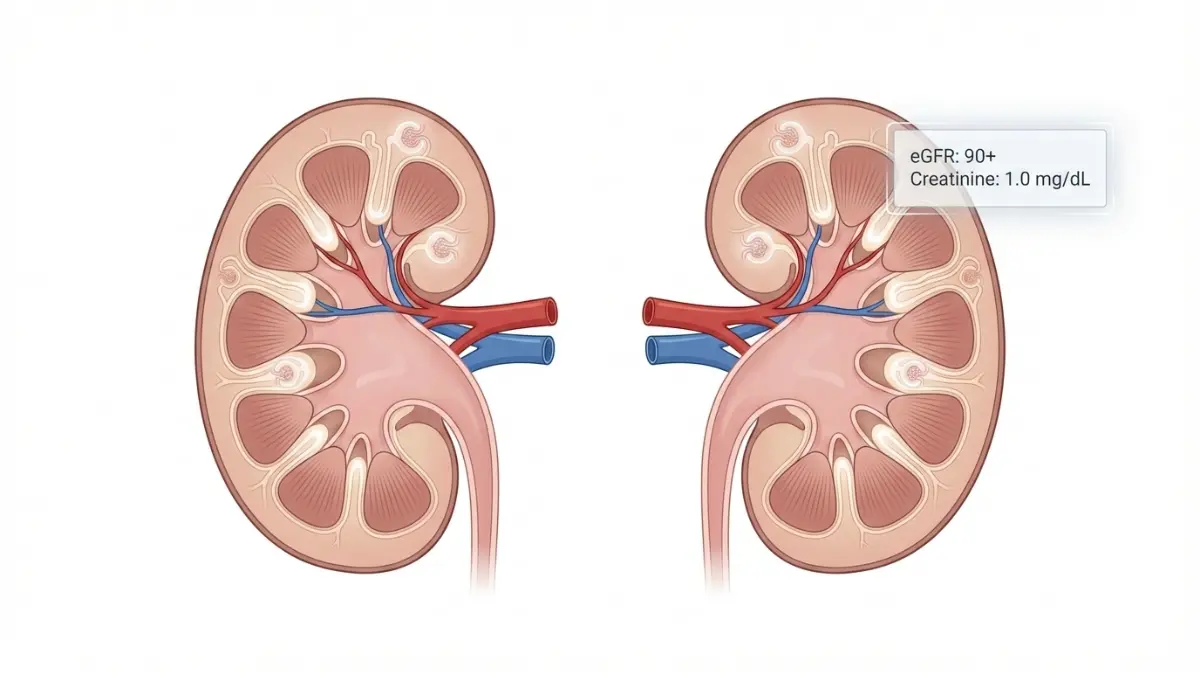
Your eGFR measures how many milliliters of blood your kidneys filter per minute. It’s calculated using your serum creatinine level, age, sex, and body size. A healthy eGFR is typically above 90 mL/min/1.73m².
What this number tells your doctor: An eGFR below 60 sustained for three months indicates chronic kidney disease. Below 15 signals kidney failure requiring dialysis or transplant consideration.
uACR (Urine Albumin-to-Creatinine Ratio)
This test measures protein leakage into your urine. Healthy kidneys keep protein in your bloodstream; damaged kidneys let albumin leak through their filters.
Normal result: Less than 30 mg/g
Warning zone: 30-300 mg/g
Danger zone: Above 300 mg/g
Why you need BOTH tests: The National Kidney Foundation emphasizes that eGFR alone can miss early kidney damage. Some patients have normal eGFR but elevated protein—a critical early warning sign.
Normal Ranges Decoded: 2026 Updated Guidelines
Here’s what most doctors won’t tell you: “normal” kidney function declines naturally with age. A 70-year-old with an eGFR of 75 may be perfectly healthy, while a 25-year-old with the same number could have significant disease.

| Age Group | Healthy eGFR Range | Mild Concern | CKD Indicator |
|---|---|---|---|
| 20-29 years | 116 or higher | 90-115 | Below 90 |
| 30-39 years | 107 or higher | 85-106 | Below 85 |
| 40-49 years | 99 or higher | 75-98 | Below 75 |
| 50-59 years | 93 or higher | 70-92 | Below 70 |
| 60-69 years | 85 or higher | 60-84 | Below 60 |
| 70+ years | 75 or higher | 50-74 | Below 50 |
Source: Adapted from National Kidney Foundation 2026 guidelines and peer-reviewed nephrology research.
What Each Number Actually Tells Your Doctor
Serum Creatinine: The Muscle Waste Marker
Creatinine is a waste product from normal muscle breakdown. Your kidneys should filter it out efficiently. When creatinine rises, it signals your kidneys aren’t keeping up with waste removal.
Normal ranges:
- Men: 0.74-1.35 mg/dL
- Women: 0.59-1.04 mg/dL
Critical insight: Muscular individuals naturally produce more creatinine. Bodybuilders may have “elevated” creatinine with perfectly healthy kidneys—which is why eGFR calculations are more reliable than creatinine alone.
BUN (Blood Urea Nitrogen): The Protein Breakdown Indicator
BUN measures nitrogen waste from protein metabolism. Normal range is 6-24 mg/dL, though this varies with diet and hydration status.
Expert perspective: Dr. Morgan Grams, nephrologist at NYU Grossman School of Medicine, explains: “A BUN-to-creatinine ratio above 20:1 usually indicates dehydration rather than true kidney disease. We see this resolve within 24-48 hours with proper hydration—which is why repeat testing is crucial before making treatment decisions.”
Understanding your BMI Calculator results matters too, since obesity significantly increases kidney disease risk through diabetes and hypertension pathways.
Electrolytes: The Balance Keepers
Your kidneys regulate sodium, potassium, calcium, and phosphorus levels. Abnormal electrolytes often appear before eGFR drops, serving as early warning signals.
Similar to how TSH levels indicate thyroid function, kidney test panels reveal how well multiple organ systems are functioning together.
The 7 Red Flags You Must Never Ignore
7 Kidney Test Red Flags That Demand Immediate Action
These aren’t subtle hints—these are medical emergencies or urgent situations requiring same-day or next-day medical attention.

Red Flag #1: Creatinine Spike Greater Than 0.3 mg/dL in 48 Hours
What it means: This indicates Acute Kidney Injury (AKI), a sudden loss of kidney function often caused by dehydration, medications, infections, or surgery complications.
Action protocol: Contact your nephrologist the same day. AKI Stage 1 requires immediate evaluation to prevent progression to complete kidney failure.
Real case: Jennifer, 52, developed AKI after taking ibuprofen for a dental procedure while mildly dehydrated. Her creatinine jumped from 0.9 to 1.3 mg/dL in 36 hours. After stopping NSAIDs and receiving IV fluids, her kidney function recovered within five days.
Why this matters: According to National Institute of Diabetes and Digestive and Kidney Diseases research, up to 50% of AKI cases are preventable through proper hydration and medication management.
Red Flag #2: eGFR Below 60 for Three Consecutive Months
What it means: Chronic Kidney Disease (CKD) confirmed. You’ve lost more than 40% of your kidney function.
Action protocol: Schedule a nephrology consultation within two weeks. Don’t wait for symptoms—by the time you feel sick, you may be at Stage 4 or 5.
Treatment reality: Research shows that early intervention at Stage 3 CKD can slow progression by 30-50% through blood pressure control, dietary modifications, and diabetes management.
What this means for you: Start kidney-protective medications (ACE inhibitors or ARBs), adopt a low-sodium diet, and begin tracking your Water Intake Calculator recommendations daily.
Red Flag #3: Potassium Level Above 5.5 mmol/L
What it means: Hyperkalemia—dangerously high potassium that can cause fatal cardiac arrhythmias within hours.
Emergency symptoms:
- Heart palpitations or irregular heartbeat
- Muscle weakness or paralysis
- Nausea or vomiting
- Chest pain
Action protocol: If potassium exceeds 6.0 mmol/L OR you have any symptoms, go to the emergency room immediately. This is life-threatening.
Dietary intervention: Avoid high-potassium foods immediately: bananas, oranges, potatoes, tomatoes, and spinach. Your doctor may prescribe potassium binders.
Red Flag #4: Urine Protein Above 300 mg/g (uACR)
What it means: Nephrotic syndrome risk—massive protein loss indicating severe kidney damage.
Visual warning signs:
- Foamy or bubbly urine (looks like beer foam)
- Swelling in legs, ankles, or around eyes
- Unexplained weight gain from fluid retention
Action protocol: Repeat test to confirm, then urgent nephrology referral. You may need a kidney biopsy to determine the specific disease type.
Treatment success: Carlos, 45, caught nephrotic syndrome early with a uACR of 350 mg/g. After starting immunosuppressive therapy and dietary changes, his protein levels normalized within six months, preventing permanent kidney scarring.
Red Flag #5: eGFR and Cystatin C Discordance Greater Than 30%
Breakthrough 2026 research: A November 2025 Journal of the American Medical Association study analyzed over 800,000 patients and found that when creatinine-based eGFR and cystatin C-based eGFR differ by more than 30%, patients face dramatically elevated risks:
- 35% higher all-cause mortality in hospitalized patients
- Increased cardiovascular disease and heart failure risk
- Higher likelihood of progressing to kidney failure
What it means: Standard creatinine tests may be giving you false reassurance if you’re elderly, malnourished, or have unusual muscle mass.
Action protocol: Request both creatinine and cystatin C testing, especially if you’re over 70, very muscular, or have previous unclear results.
Understanding how different tests work together is crucial—similar to how LFT results require comprehensive interpretation beyond single values.
Red Flag #6: Declining eGFR Trend Exceeding 5 mL/min Per Year
What it means: Rapid CKD progression. Most kidney disease declines slowly (1-2 mL/min annually). Faster drops signal aggressive disease or uncontrolled risk factors.
Action protocol: Immediate aggressive intervention—optimize blood pressure to less than 120/80, achieve diabetes control (A1C under 7%), and begin SGLT2 inhibitors if diabetic.
Success story: Patricia, 58, had an eGFR dropping 7 points yearly. After starting medications, adopting a Mediterranean diet using her Calorie Deficit Calculator, and walking 30 minutes daily, her decline slowed to 1 point per year. Five years later, she’s still dialysis-free.
Red Flag #7: BUN-to-Creatinine Ratio Above 20:1
What it means: Pre-renal azotemia—usually from dehydration, heart failure, or bleeding in the digestive tract.
The good news: This often resolves with treatment of the underlying cause.
Quick fix protocol:
- Increase fluid intake to 8-10 glasses daily (unless heart failure present)
- Retest in 48-72 hours
- If ratio stays elevated, investigate heart function and GI bleeding
Key insight: Unlike other red flags, this one frequently reverses completely with proper hydration and doesn’t indicate permanent kidney damage.
⚠️ Critical Warning: If you have TWO or more of these red flags simultaneously, schedule a nephrology appointment within 48 hours. Multiple abnormalities indicate complex kidney disease requiring specialist care.
How To Interpret Your Specific Results
Reading Your Kidney Test Report: A Step-by-Step Guide
Your lab report contains cryptic abbreviations, reference ranges, and flags—but what do they actually mean for YOUR kidneys?
What Your Lab Report Actually Shows
Most kidney function panels display results in this format:
Example Report:
- Creatinine: 1.4 mg/dL [Reference: 0.7-1.3] HIGH
- eGFR: 54 mL/min/1.73m² [Reference: >60] LOW
- BUN: 28 mg/dL [Reference: 6-24] HIGH
- Potassium: 4.8 mmol/L [Reference: 3.5-5.0] NORMAL
- uACR: 45 mg/g [Reference: <30] HIGH
What this pattern reveals: Early Stage 3 CKD with protein leakage. The patient needs nephrology referral, blood pressure optimization, and diabetes screening.
Understanding reference ranges: The “normal” ranges are population averages—not necessarily YOUR optimal levels. A 72-year-old with an eGFR of 65 may be perfectly healthy, while a 28-year-old with the same number has significant kidney disease.
The Cystatin C Advantage: 2026 Update
Traditional creatinine-based eGFR calculations can be misleading in specific populations. Cystatin C offers superior accuracy because it’s unaffected by muscle mass, diet, or age.
Who needs cystatin C testing:
✓ Adults over 70 years old
✓ Bodybuilders or highly muscular individuals
✓ Malnourished patients or those with muscle-wasting conditions
✓ Anyone with previous borderline or confusing results
✓ Patients where treatment decisions hinge on accurate kidney function assessment
The accuracy difference: Studies show cystatin C-based eGFR correctly identifies kidney disease in patients who would be missed by creatinine alone—particularly the elderly and those with sarcopenia.
Medication Effects on Kidney Numbers
Many common medications alter kidney test results—sometimes expectedly, sometimes dangerously. Understanding these interactions prevents unnecessary panic and catches real problems early.
| Medication Class | Effect on Creatinine | Effect on eGFR | Timeframe | Action Needed |
|---|---|---|---|---|
| NSAIDs (Ibuprofen, Naproxen) | ↑ Can spike rapidly | ↓ Drops within hours | 24-48 hours | Stop 48hrs before testing if safe |
| ACE Inhibitors (Lisinopril) | ↑ 0.3-0.5 mg/dL increase | ↓ 10-20% initial drop | 1-2 weeks | Expected and protective long-term |
| ARBs (Losartan) | ↑ Similar to ACE-I | ↓ Similar to ACE-I | 1-2 weeks | Expected and protective long-term |
| Proton Pump Inhibitors (Omeprazole) | Variable | ↓ Gradual decline | Months to years | Monitor every 6 months |
| Metformin | No direct effect | Monitor if <30 | N/A | Hold if eGFR <30 |
| SGLT2 Inhibitors (Empagliflozin) | ↑ Small initial rise | ↓ 5-10 point drop | 2-4 weeks | Expected and kidney-protective |
Critical insight: Don’t panic if your creatinine rises 0.3-0.5 mg/dL after starting an ACE inhibitor or ARB. This is expected and actually indicates the medication is protecting your kidneys by reducing intraglomerular pressure. Your doctor should continue the medication unless creatinine rises MORE than 30% from baseline.
Using a Pill Identifier helps ensure you know exactly which medications might affect your results.
What this means for you:
Before any kidney function test:
- Inform your doctor about ALL medications, including over-the-counter drugs and supplements
- Avoid NSAIDs for 48 hours if medically safe
- Don’t stop prescribed ACE inhibitors or ARBs—the initial creatinine rise is protective
- Mention if you recently started or stopped any medications
Real-world application: Thomas, 61, panicked when his creatinine rose from 1.1 to 1.4 mg/dL two weeks after starting lisinopril for blood pressure. His doctor correctly reassured him this was expected and kidney-protective—discontinuing the medication would have accelerated his kidney disease.
Similar to interpreting CBC blood test results, kidney function requires understanding trends and medication context, not just single values.
When to worry about medication effects:
- Creatinine rises MORE than 30% from baseline
- eGFR drops MORE than 25% from baseline
- Changes persist beyond 4-6 weeks
- New symptoms develop (decreased urine output, swelling, confusion)
The National Kidney Foundation medication safety guide provides comprehensive information about drug-kidney interactions that every patient should review with their healthcare provider.
What To Do After Getting Your Results
Your Action Plan Based on Test Results
Numbers without action plans are just anxiety-inducing data. Here’s exactly what to do based on YOUR specific results.
If Your Results Are Normal (eGFR >60, uACR <30)
Retest schedule:
- No risk factors: Every 2-3 years
- Diabetes or hypertension: Annually
- Family history of kidney disease: Every 6-12 months
- Age over 60: Annually
Prevention protocol—The Five Pillars:
1. Blood Pressure Mastery
Target: Below 120/80 mmHg (even if you’re not “hypertensive”)
Why: Every 10-point reduction in systolic pressure reduces kidney disease progression by 15-20%
2. Diabetes Control
Target: A1C below 7% (use your Blood Sugar Converter for daily monitoring)
Why: Uncontrolled diabetes is the #1 cause of kidney failure in the United States
3. Weight Optimization
If BMI over 30, losing just 10% of body weight reduces kidney disease risk by 40%. Use your Weight Loss Calculator to set realistic targets.
4. Sodium Restriction
Limit to under 2,300 mg daily (1,500 mg if you have hypertension)
Practical tip: Avoid processed foods, which contain 75% of dietary sodium
5. Hydration Balance
Aim for pale yellow urine—not clear, not dark. Use your Water Intake Calculator for personalized fluid recommendations.
International expert perspective: Professor Kenji Tanaka, Chief of Nephrology at Tokyo Medical University, emphasizes: “Prevention at the normal-function stage is 100 times more effective than trying to reverse established kidney disease. We see this repeatedly in our longitudinal studies—patients who maintain optimal blood pressure and glucose control almost never progress to dialysis.”

If You’re in the Warning Zone (eGFR 30-59)
Welcome to Stage 3 Chronic Kidney Disease—divided into Stage 3a (eGFR 45-59) and Stage 3b (eGFR 30-44). This is your intervention window.
Immediate actions within 72 hours:
✓ Schedule nephrology consultation within 4 weeks
✓ Start blood pressure medication if not already on one
✓ Request diabetes screening (even if you think you don’t have it)
✓ Begin tracking Heart Rate Zone Calculator for safe exercise intensity
The Mediterranean Diet Advantage
Research published in the American Journal of Kidney Diseases demonstrates that Mediterranean diet adoption slows CKD progression by 30-40% compared to standard Western diets.
Core principles:
- Fatty fish 3x weekly (omega-3s are kidney-protective)
- Abundant vegetables and legumes (but monitor potassium if restricted)
- Extra virgin olive oil as primary fat
- Limited red meat and processed foods
- Moderate wine consumption (if not contraindicated)
Exercise protocol for Stage 3 CKD:
Start conservatively: 20-30 minutes of moderate-intensity walking 5 days weekly. Use your Pace Calculator to maintain conversation-comfortable intensity.
Why exercise matters: A 2025 meta-analysis showed that regular moderate exercise improves kidney function markers and reduces cardiovascular risk—the leading cause of death in CKD patients.
Medication additions your nephrologist will likely prescribe:
- ACE inhibitor or ARB (kidney-protective, expect small creatinine rise)
- SGLT2 inhibitor if diabetic (reduces CKD progression by 37%)
- Statin for cholesterol (cardiovascular protection)
- Phosphate binders if needed (prevents bone disease)
Much like managing echocardiogram results, kidney disease requires coordinated multi-system care.
If You’re in Danger Territory (eGFR 15-29)
You’re at Stage 4 CKD—advanced kidney disease. Dialysis or transplant discussions should begin now, even if you feel relatively well.
Emergency protocols:
✓ Nephrologist appointment within 1 week
✓ Vascular access evaluation (preparation for possible dialysis)
✓ Transplant center referral and evaluation
✓ Dietary consultation with renal nutritionist
✓ Medication review (many drugs need dosage adjustment or discontinuation)
Prepare for dialysis discussion—Your options:
Hemodialysis: 3-4 hours, three times weekly at a center
Peritoneal dialysis: Daily exchanges at home, more flexibility
Home hemodialysis: Growing option with better outcomes
Transplant evaluation criteria:
Most centers evaluate patients when eGFR drops below 20. Living donor transplants have the best outcomes—80-90% function at 5 years versus 65-70% for deceased donor organs.
Patient perspective: Robert, 62, received his Stage 4 diagnosis at eGFR 22. “I wish I’d taken my Stage 2 results seriously five years earlier,” he reflects. “My brother donated a kidney, and I’m grateful—but those lost years of denial cost me dearly.”
Quality of life at Stage 4:
With proper management, many Stage 4 patients maintain reasonable quality of life for years. The key is aggressive symptom management:
- Anemia treatment with ESAs (erythropoietin-stimulating agents)
- Phosphate control to prevent bone disease
- Protein intake carefully balanced (too much strains kidneys, too little causes malnutrition)
- Potassium restriction to prevent cardiac complications
Questions to Ask Your Doctor at Your Next Appointment
Essential questions for ANY result:
- “What’s my eGFR trend over the past 1-3 years?”
- “Do I need both creatinine AND cystatin C testing for accuracy?”
- “Which of my current medications affect these numbers?”
- “What’s my specific target blood pressure given my kidney function?”
- “When should I see a nephrologist?”
- “How often should I repeat these tests?”
- “Are there any dietary restrictions I should follow now?”
For abnormal results, add:
- “What’s causing my kidney dysfunction—diabetes, hypertension, or something else?”
- “Do I need a kidney ultrasound or biopsy?”
- “Am I a candidate for kidney-protective medications like SGLT2 inhibitors?”
What this means for you: Being an informed, engaged patient improves outcomes. Studies show patients who actively participate in their kidney care have 25% slower disease progression than passive patients.
According to Centers for Disease Control and Prevention chronic disease management guidelines, patient education and self-management are cornerstone interventions for preventing kidney disease complications.
Prevention & Lifestyle Optimization
Protecting Your Kidneys for Life
Prevention isn’t just about avoiding kidney disease—it’s about optimizing the function you have and preventing decline.
The Five-Point Kidney Protection Plan
1. Precision Hydration
Not too much, not too little. Use your Water Intake Calculator for personalized targets based on weight, activity, and climate.
Hydration myths debunked:
- ❌ “Drink 8 glasses daily” (too generic)
- ✓ Aim for pale yellow urine color
- ❌ “More water is always better” (can strain kidneys)
- ✓ Adjust for exercise, heat, and medications
2. Strategic Nutrition
Kidney-protective foods:
- Berries (antioxidants reduce inflammation)
- Fatty fish (omega-3s are anti-inflammatory)
- Olive oil (reduces oxidative stress)
- Cruciferous vegetables (if potassium unrestricted)
Foods to limit or avoid:
- Processed meats (high sodium, phosphate additives)
- Dark sodas (phosphoric acid damages kidneys)
- Excessive protein (>1.2g/kg body weight)
- High-sodium packaged foods
3. Movement Medicine
The exercise prescription:
150 minutes moderate-intensity OR 75 minutes vigorous weekly
Use your Pace Calculator to find your optimal training zones. Studies show regular exercise improves kidney function markers even in Stage 3 CKD.
Safe exercise guidelines for kidney disease:
- Stage 1-2: No restrictions
- Stage 3: Moderate intensity, avoid extreme endurance
- Stage 4-5: Light walking, aquatic therapy, supervised programs
4. Sleep Optimization
Poor sleep accelerates kidney disease progression. Use your Sleep Calculator to determine your optimal bedtime.
The kidney-sleep connection: Sleep apnea damages kidneys through repeated oxygen deprivation and blood pressure spikes. If you snore loudly or experience daytime sleepiness, request a sleep study.
5. Metabolic Health Monitoring
Essential screening tests:
- Annual BMI Calculator tracking
- Blood pressure checks (home monitoring recommended)
- Annual diabetes screening with A1C
- Lipid panel every 1-2 years
- Kidney function tests (frequency based on risk)
Risk Assessment and Family History
If a first-degree relative (parent, sibling) has kidney disease, your risk increases 3-9 times depending on the specific condition. Use your Genetic Risk Assessment Tool to evaluate inherited risk factors.
Genetic kidney diseases to know:
- Polycystic kidney disease (PKD)
- Alport syndrome
- Fabry disease
- IgA nephropathy (can run in families)
Global Perspectives on Kidney Care
Asian nephrology protocols: Emphasize earlier intervention—nephrology referral often occurs at eGFR <70 rather than <60 in Western guidelines.
European CKD management: More aggressive blood pressure targets (often <130/80) compared to U.S. guidelines.
U.S. vs. UK testing frequency: UK’s NHS recommends annual testing for all diabetics, while U.S. guidelines suggest testing based on additional risk factors.
The National Institute of Diabetes and Digestive and Kidney Diseases prevention strategies provide comprehensive evidence-based recommendations that align with international best practices.
What this means for you: Regardless of where you live, the fundamentals remain constant—control blood pressure and blood sugar, maintain healthy weight, avoid nephrotoxic medications, and monitor kidney function regularly.
Just as understanding metabolic syndrome signs helps prevent diabetes and heart disease, recognizing kidney disease risk factors enables early intervention.
The bottom line: Your kidneys filter your entire blood volume 40 times daily. Protecting them isn’t optional—it’s essential for longevity and quality of life. Start today with one action: schedule your kidney function tests if you haven’t had them in the past year.
Frequently Asked Questions About Kidney Test Results
1. Can kidney test results fluctuate day to day?
Yes, results can vary by 10-15% based on hydration status, recent protein intake, and physical activity. This is why doctors look for sustained abnormalities over 3 months before diagnosing chronic kidney disease.
2. What’s more important to monitor: eGFR or creatinine?
eGFR is the gold standard because it accounts for age, sex, and body size. Creatinine alone can be misleading—a muscular 25-year-old and a frail 75-year-old might have the same creatinine but vastly different kidney function.
3. Can you improve eGFR naturally once it drops?
You typically cannot raise eGFR once kidney function declines, but you CAN prevent further decline. Blood pressure control, diabetes management, and kidney-protective medications can stabilize function and delay progression by years or decades.
4. When is a kidney biopsy necessary?
Biopsies are needed when the cause of kidney disease is unclear, when there’s rapid unexplained decline, or when specific diagnosis would change treatment. Common scenarios include unexplained protein in urine, suspected glomerulonephritis, or nephrotic syndrome.
5. Do I need to fast before kidney function tests?
Generally no fasting is required for basic kidney tests. However, avoid eating cooked meat for 12 hours before testing, as the cooking process converts creatine to creatinine, potentially skewing your results temporarily upward.
6. Can dehydration cause a false kidney disease diagnosis?
Absolutely. Dehydration can temporarily elevate creatinine and reduce eGFR by 20-30%. Always ensure adequate hydration before testing and request a repeat test if results are abnormal and you were potentially dehydrated.
7. What’s the difference between acute kidney injury (AKI) and chronic kidney disease (CKD)?
AKI occurs suddenly (within hours to days), is often reversible, and typically caused by dehydration, medications, or illness. CKD develops over months to years, is usually permanent, and results from diabetes, hypertension, or glomerular diseases.
8. Can high-protein diets damage healthy kidneys?
No credible evidence shows protein damages healthy kidneys. However, if you ALREADY have kidney disease (eGFR <60), excessive protein (>1.2g/kg body weight) can accelerate decline. Athletes with normal kidney function can safely consume higher protein.
9. How often should people with diabetes check kidney function?
At minimum annually, starting at diabetes diagnosis for Type 2 or after 5 years for Type 1. If you have additional risk factors (hypertension, family history) or declining function, test every 6 months.
10. What do Stage 3a vs. Stage 3b kidney disease mean?
Stage 3a (eGFR 45-59) represents moderate kidney disease with relatively preserved function. Stage 3b (eGFR 30-44) is more severe, with higher complication risk requiring closer monitoring and more aggressive intervention.
11. Are home kidney test kits accurate?
Home kits using finger-prick blood samples can provide reasonable screening for creatinine and estimated GFR. However, they should not replace laboratory testing—use them for monitoring trends between doctor visits, but confirm any concerning results with formal lab work.
⚠️ Final Reminder: This article provides educational information to help you understand kidney test results, but it does not replace professional medical advice. Always discuss your specific results, risk factors, and treatment options with a qualified healthcare provider. Individual cases vary significantly, and treatment decisions should be personalized to your unique medical situation.
What’s your next step? If you haven’t had kidney function testing in the past year and have risk factors (diabetes, hypertension, family history, age over 60), schedule an appointment with your doctor this week. Early detection saves kidneys—and lives.
About this content
How this article was put together: researched from recognised health sources, drafted with the help of AI tools, and edited by hand, with sources linked throughout.

Sameer Patel is the founder and editor of My Medicine Advisor. He is not a doctor or medical professional — before starting this site he worked in banking,…
Medical disclaimer
The content on MyMedicineAdvisor is provided for general informational and educational purposes only and is not a substitute for professional medical advice, diagnosis, or treatment. Health information on this website should not be used to diagnose, treat, cure, or prevent any condition without guidance from a qualified healthcare professional. Always seek the advice of your doctor, physician, or another licensed healthcare provider with any questions you may have regarding a medical condition, symptoms, medications, or treatment decisions.