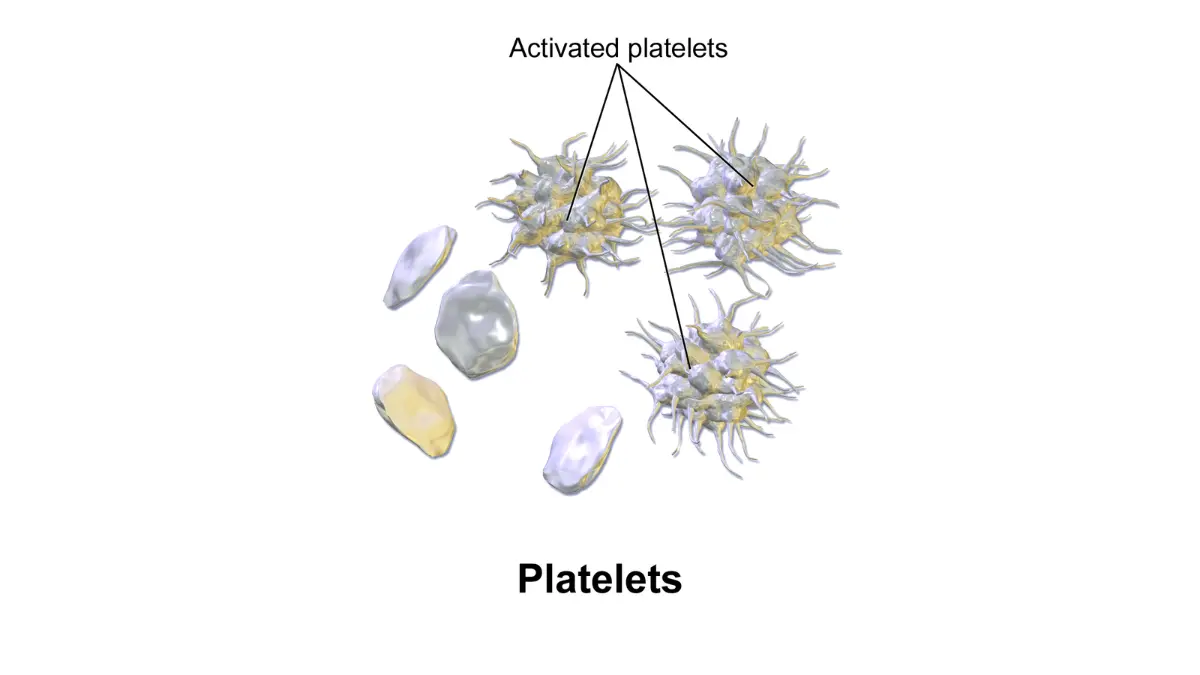

On This Page – Quick Medical Summary
What a platelet count below 150,000 actually means
Seeing “LOW” beside your platelets on a complete blood count is unsettling, but the number by itself rarely tells the whole story. A low platelet count — known medically as thrombocytopenia — means fewer than 150,000 platelets per microliter of blood, and how much it matters depends heavily on how low it is and why.
Use this to find your situation. If your platelet count below 150,000 sits in the 100,000–150,000 range and you feel well, it’s usually mild and simply monitored. If you have unexplained easy bruising, pinpoint red skin spots, or bleeding that won’t stop, it needs prompt medical evaluation. If you have heavy uncontrolled bleeding, a sudden severe headache, or new confusion, treat it as an emergency and seek care now.
If you’re pregnant, a mildly low count is common and usually harmless — but always mention it to your obstetric team. To see how platelets fit alongside your other results, start with our guide to your complete blood count.
ℹ️ Medical Disclaimer: This article is general health education, not medical advice, diagnosis, or treatment. It does not replace evaluation of your specific results, medications, or symptoms, or any decision about testing, treatment, or procedures. Always consult a physician — such as your primary care doctor or a board-certified hematologist — before acting on anything here, and seek emergency care for severe or uncontrolled bleeding.
How low is too low? Platelet ranges and bleeding risk
Not every number below 150,000 carries the same weight, so the first useful step is placing yours on a scale. A normal adult platelet count runs from about 150,000 to 450,000 per microliter, and counts below 150,000 are called thrombocytopenia. Some labs use a slightly lower top figure, so compare your result to your own report’s reference range — and if you want the full read-out, break down your full platelet result.
📊 Clinical Data Point: A normal adult platelet count is 150,000–450,000 per microliter; below 150,000 is thrombocytopenia. — Source: NHLBI (National Heart, Lung, and Blood Institute), verified 2026.
The severity bands, by the numbers
Clinicians generally sort a low count into three bands:
| Severity | Platelet count (per µL) | Key clinical detail |
|---|---|---|
| Mild | 100,000–150,000 | Typically no symptoms |
| Moderate | 50,000–100,000 | May bruise more easily |
| Severe | Below 50,000 | Bleeding risk with injury or procedures |
Source: StatPearls (NCBI) and American Family Physician, verified 2026.
The counts where bleeding risk actually rises
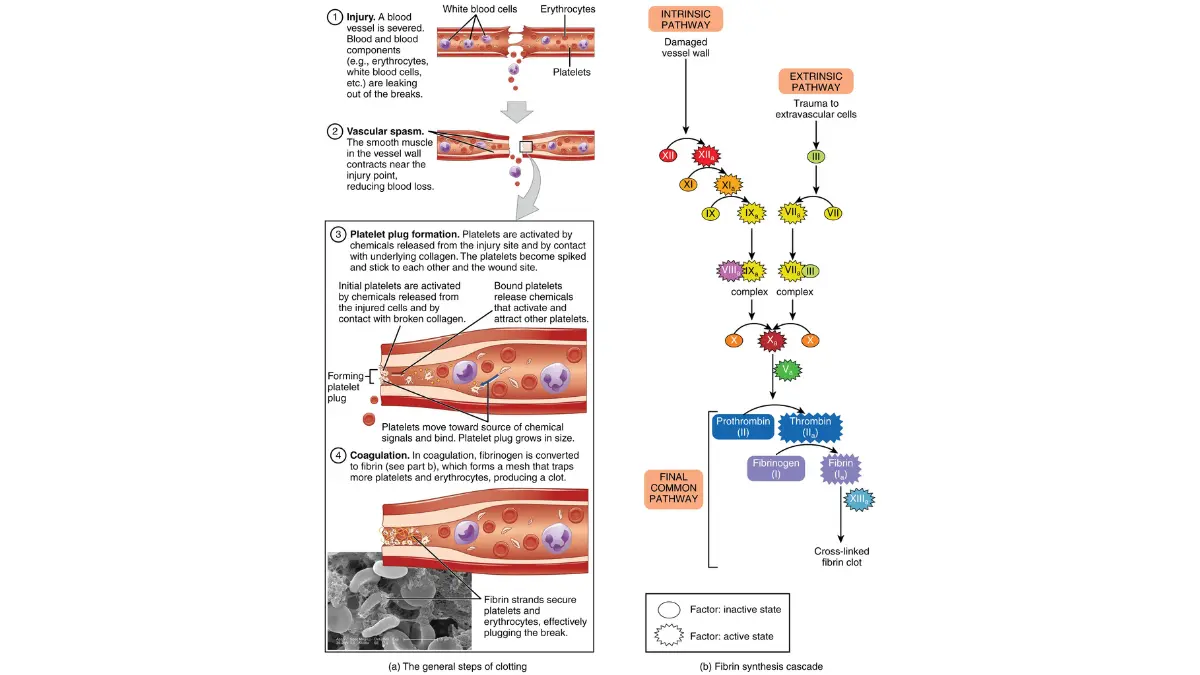
Adapted from OpenStax [Figure 18.5.1 (Hemostasis)], licensed under CC BY 4.0.
Below 50,000 per microliter, even everyday activities can provoke bleeding, according to the MedlinePlus platelet count reference, and below roughly 10,000, the risk of serious spontaneous bleeding is high. Skin signs like petechiae or bruising tend to appear in the 20,000–50,000 range.
🩺 Physician Note: Clinical reviews stress that the platelet number does not map neatly onto bleeding risk — the underlying cause, your medications, and your other blood counts all shape how a given number behaves. A count of 90,000 from one cause is not the same as 90,000 from another.
First, rule out a false alarm: when the test is wrong
Before assuming the worst, it helps to know that a “low” result is sometimes not low at all. A well-recognized lab artifact called pseudothrombocytopenia produces a falsely low reading when platelets clump inside the standard purple-top blood tube, which contains the anticoagulant EDTA.
🔬 How It Works: In some people, EDTA causes platelets to stick together into clumps. Automated analyzers count each clump as one large cell instead of many platelets, so the machine reports a number far below the true count. Nothing is actually wrong with the blood.
How doctors confirm it’s real
The fix is straightforward: a technician examines a peripheral blood smear under the microscope for clumps and repeats the count using a different tube. A normal result on the repeat confirms the first was a false alarm.
📊 Clinical Data Point: EDTA-dependent pseudothrombocytopenia is reported in roughly 0.1–2% of hospitalized patients and in about 15–17% of outpatients referred specifically for an isolated low platelet count. — Source: NCBI/PMC (BMC Clinical Pathology), verified 2026.
✅ Patient Action: If your low platelet result was a surprise and you have no bruising or bleeding, ask the clinician who ordered it whether the count was confirmed on a repeat sample or a blood smear before any further workup.
What causes a low platelet count? The three main mechanisms
Once a low count is confirmed as real, the question becomes why — and the answer almost always fits one of a few mechanisms. Broadly, low platelet count causes fall into three groups: the bone marrow makes too few platelets, the body destroys or uses up too many, or the spleen traps them. A fourth category covers dilution and the lab clumping described above.
🔬 How It Works: Platelets are made by giant cells called megakaryocytes in your bone marrow, circulate for about 8 to 10 days, then get removed by the spleen. A problem with production, survival, or storage can each lower the count.

Adapted from Wikimedia Commons [Megakaryocyte1], licensed under CC BY-SA 3.0.
Not enough are made (bone marrow)
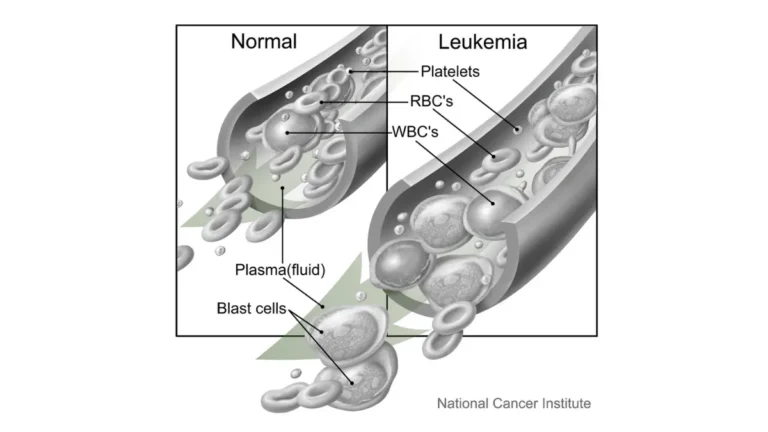
Conditions that suppress the marrow reduce output: leukemia and other blood cancers, aplastic anemia, chemotherapy, and deficiencies of vitamin B12 or folate. Because the marrow makes several cell types, these can also cause a low white blood cell count or anemia; if your B12 is borderline, our explainer on low vitamin B12 covers what to check.
Too many are destroyed
Here the marrow works fine, but platelets are cleared too fast. Causes include immune thrombocytopenia (ITP), where the immune system attacks platelets; drug-induced thrombocytopenia; heparin-induced thrombocytopenia; and serious conditions such as TTP and disseminated intravascular coagulation.
Trapped in the spleen
An enlarged spleen — often from liver disease or cirrhosis — pools platelets that would otherwise circulate, lowering the measured count without destroying them.
🩺 Physician Note: In an otherwise healthy adult with an isolated low count and no other abnormal results, the likeliest explanations are ITP or a medication effect, per American Family Physician guidance. For more depth, see the NHLBI overview of thrombocytopenia or a detailed clinical review.
Common causes and how doctors find the real one
Mechanisms explain the categories; in practice, a handful of common causes account for most low counts. In an otherwise healthy adult, the usual suspects are immune thrombocytopenia and medications, with viral infections and liver disease also frequent.
The most common everyday causes
Everyday medications — some antibiotics, anti-seizure drugs, and blood thinners like heparin — can lower platelets, as can infections including HIV and hepatitis C. Reviewing your numbers alongside your CBC differential and liver function tests often helps point to a cause.
Low platelets in pregnancy
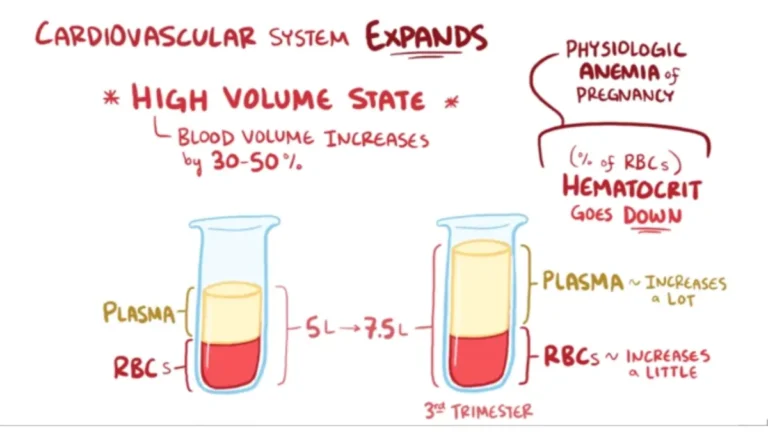
A mildly low count is common and usually benign in pregnancy. Gestational thrombocytopenia is the leading cause, but it must be distinguished from preeclampsia, HELLP syndrome, and rarer emergencies.
📊 Clinical Data Point: Thrombocytopenia affects roughly 5–10% of pregnancies, and gestational thrombocytopenia — typically mild and appearing in the second or third trimester — accounts for about 75% of those cases. — Source: StatPearls (NCBI) and the American Society of Hematology, verified 2026.
✅ Patient Action: If you’re pregnant with a low count, tell your obstetric provider promptly and ask whether you need preeclampsia screening, since a low platelet count can be an early clue.
What testing looks like
Beyond a repeat count and smear, workup may add other blood tests and, when the cause stays unclear, a bone marrow biopsy. Our general symptom checker can help you organize what you’re noticing before your visit, though it isn’t a diagnosis.
Monitored, treated, or referred: what happens next
What happens next depends entirely on the cause and the severity, not the number in isolation. Many mild, isolated low counts are simply monitored with a repeat test, and a good share return to normal on their own.
When a low count is just watched
If your count is mildly low, you feel well, and no other results are abnormal, watchful monitoring is common — sometimes with a follow-up count in a few weeks to confirm the trend. Treatment is reserved for lower or symptomatic counts, and it targets whatever is driving them.
When you’ll see a hematologist
A hematologist — a blood specialist — typically gets involved when a low count is unexplained, persistent, severe, or paired with other abnormal results. When the cause isn’t clear from blood tests, a bone marrow biopsy may be the next step.
✅ Patient Action: If your low count is unexplained or keeps recurring, ask your primary care doctor directly: “Should I see a hematologist, and do I need a peripheral smear or further testing first?”
Red flags: when a low platelet count is an emergency
Most low platelet counts are not emergencies — but a few situations demand immediate care, and knowing them matters. As a rough guide, very low counts (roughly below 10,000–20,000 per microliter) or any severe, uncontrolled bleeding warrant emergency evaluation.
⚠️ Clinical Warning: Seek emergency care for bleeding you can’t stop, blood in your urine or stool, coughing or vomiting blood, a sudden severe headache, vision changes, or new confusion. These can signal dangerous bleeding, including in the brain or gut, and should not wait for a routine appointment.
TTP: the rare emergency to know
One uncommon but critical cause is thrombotic thrombocytopenic purpura (TTP), a life-threatening condition that combines a very low platelet count with anemia and neurological symptoms.
🔬 How It Works: In TTP, a missing enzyme (ADAMTS13) lets tiny clots form throughout small blood vessels. Those clots consume platelets and shear red blood cells, which is why TTP shows up as low platelets together with low hemoglobin. It is treated urgently in the hospital.
Because low platelets can appear alongside clotting problems, your team may also check coagulation test results to see the full picture. If you notice the warning signs above, call emergency services or go to the nearest emergency department rather than waiting.
Low platelet count: frequently asked questions
1. Is a platelet count of 140,000 dangerous?
A platelet count of 140,000 falls in the mild range (100,000–150,000) and is usually not dangerous — most people at this level have no symptoms at all. It still deserves a repeat test to confirm the trend and check for a cause. Discuss any persistent low result with your doctor.
2. Can a low platelet count be a lab error?
Yes. A common lab artifact called pseudothrombocytopenia happens when platelets clump inside the standard EDTA blood tube, making the analyzer report a falsely low count. It is harmless and is confirmed by examining a blood smear and repeating the test in a different tube. Ask whether your result was rechecked this way.
3. What is the most common cause of low platelets?
In an otherwise healthy adult with an isolated low platelet count, the most common causes are immune thrombocytopenia (ITP), where the immune system attacks platelets, and medication side effects. Infections and liver disease are also frequent. Identifying the exact cause requires evaluation, so review your results with your clinician.
4. At what platelet count do you bleed spontaneously?
The risk of serious spontaneous bleeding — bleeding without any injury — becomes high when the platelet count drops below roughly 10,000 per microliter. Between about 20,000 and 50,000, minor skin signs like petechiae or easy bruising can appear, while everyday bleeding risk begins to rise below 50,000.
5. Can medications cause low platelets?
Yes, drug-induced thrombocytopenia is a leading cause of an isolated low count. Common culprits include certain antibiotics, anti-seizure medicines, and blood thinners such as heparin. The count usually recovers once the responsible drug is stopped. Never stop a prescribed medication on your own — ask the prescribing doctor first.
6. Does a viral infection lower platelets?
Yes. Many viral infections can temporarily lower the platelet count, including HIV, hepatitis C, and other common viruses. This usually reflects a mix of reduced production and increased destruction, and the count often recovers as the infection resolves. Persistent low platelets after an infection should be evaluated by your doctor.
7. Is a low platelet count a sign of cancer?
It can be, since blood cancers like leukemia and marrow-suppressing treatments reduce platelet production — but a low platelet count is far more often caused by benign issues such as medications, infections, ITP, or a lab artifact. Only proper testing can tell them apart, so discuss unexplained results with your doctor.
8. What platelet count is a medical emergency?
Very low counts, roughly below 10,000–20,000 per microliter, and any severe or uncontrolled bleeding are medical emergencies. Warning signs include bleeding you can’t stop, blood in urine or stool, a sudden severe headache, or new confusion. Seek emergency care immediately rather than waiting for a routine appointment.
9. Is a low platelet count normal in pregnancy?
A mildly low platelet count is common and usually harmless in pregnancy — gestational thrombocytopenia is the leading cause and typically appears in the second or third trimester. However, it must be distinguished from preeclampsia and rarer emergencies, so always report a low count to your obstetric provider.
10. What doctor treats low platelets?
A hematologist, a specialist in blood disorders, evaluates and treats low platelet counts that are unexplained, persistent, severe, or paired with other abnormal results. Milder, isolated cases are often managed by your primary care doctor with monitoring. Ask your doctor whether a hematology referral is appropriate for your situation.
11. Can low platelets return to normal on their own?
Often, yes. Many mild, isolated low platelet counts recover without treatment, especially when caused by a temporary trigger like a viral infection or a medication that is stopped. And a “low” count from lab clumping was never truly low. Persistent or unexplained results still warrant follow-up with your doctor.
What to do with a low platelet result
Most low platelet counts turn out to be mild, temporary, or — surprisingly often — a lab artifact rather than a true problem. The real causes are identifiable, and the number alone rarely tells the whole story.
Three practical steps: confirm your result was rechecked on a repeat sample or smear; note any red-flag symptoms and seek emergency care if they appear; and discuss the likely cause and next steps with your clinician. To see how your platelets fit with the rest of your bloodwork, revisit the full CBC picture.
About this content
How this article was put together: researched from recognised health sources, drafted with the help of AI tools, and edited by hand, with sources linked throughout.

Sameer Patel is the founder and editor of My Medicine Advisor. He is not a doctor or medical professional — before starting this site he worked in banking,…
Medical disclaimer
The content on MyMedicineAdvisor is provided for general informational and educational purposes only and is not a substitute for professional medical advice, diagnosis, or treatment. Health information on this website should not be used to diagnose, treat, cure, or prevent any condition without guidance from a qualified healthcare professional. Always seek the advice of your doctor, physician, or another licensed healthcare provider with any questions you may have regarding a medical condition, symptoms, medications, or treatment decisions.