
What Are Colon Cancer Symptoms in Young Adults Under 50?
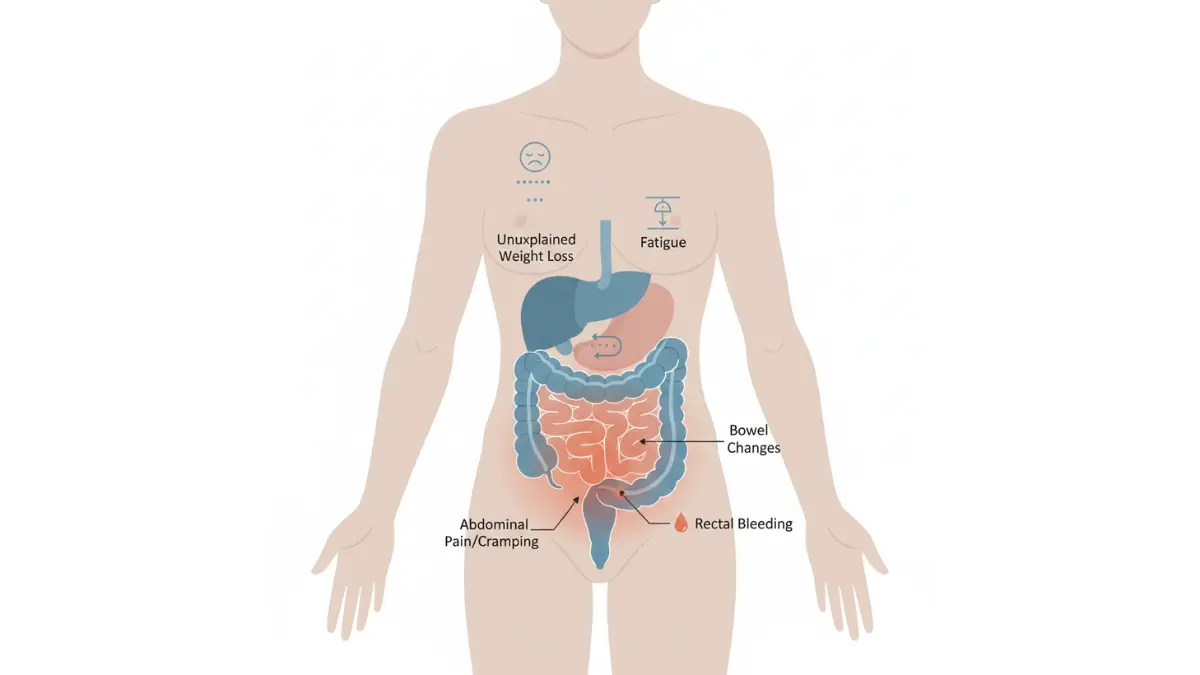
Colon cancer symptoms in young adults under 50 include rectal bleeding or blood in stool, persistent abdominal pain, unexplained changes in bowel movements, iron deficiency anemia, and unintentional weight loss. Research analyzing nearly 25 million patients reveals that rectal bleeding carries at least a 5-fold increased risk of early-onset colorectal cancer, with these early signs of colon cancer appearing between 3 months to 2 years before diagnosis.
Sarah Mitchell was 32 when she first noticed blood on her toilet paper after a bowel movement. Her primary care doctor reassured her it was likely hemorrhoids, common in young women. But the rectal bleeding persisted for four months, accompanied by cramping abdominal pain that kept her awake at night. By the time Sarah advocated for a colonoscopy through our Symptom Checker after tracking her symptoms for weeks, doctors discovered stage III colon cancer. Sarah’s story mirrors thousands of young adults whose colorectal cancer symptoms are dismissed as irritable bowel syndrome, stress, or benign digestive issues—a diagnostic delay that costs precious treatment time.
The urgency behind recognizing colon cancer warning signs in younger demographics has never been greater. One in five people diagnosed with colorectal cancer today are now under age 55, representing a dramatic shift from historical patterns. Since the mid-1990s, early onset colon cancer rates have more than doubled, with a consistent 2% annual increase among adults aged 20-39.
Projections indicate that by 2030, colorectal cancer will become the leading cause of cancer-related deaths in people in their 20s, 30s, and 40s—making colon cancer in young adults a critical public health priority. This alarming trend prompted the U.S. Preventive Services Task Force to lower screening recommendations from age 50 to 45 in 2021, yet nearly 50% of young adults with colon cancer experience diagnostic delays of 4-6 months from their first symptom.
In this comprehensive guide, you’ll learn the 17 distinct colon cancer symptoms identified in young adults, evidence-based risk factors including genetic predisposition assessments available through our Genetic Risk Assessment Tool, when to demand colon cancer screening despite your age, and actionable prevention strategies that reduce risk by up to 40%.
Medical Disclaimer: This article provides educational information about colon cancer symptoms and early detection strategies, not personalized medical advice. If you experience persistent rectal bleeding, abdominal pain, bowel habit changes, or unexplained weight loss lasting more than two weeks, consult a board-certified gastroenterologist or colorectal specialist immediately for proper evaluation and colon cancer diagnosis.
Complete Symptom Breakdown with Evidence Hierarchy
Recognizing Early Colon Cancer Warning Signs in Adults Under 50
Young adults experiencing colon cancer symptoms face a critical disadvantage: healthcare providers often dismiss colorectal cancer warnings in patients decades away from standard screening age. Research analyzing symptomatic patients under 50 reveals that 88% undergo colonoscopy only after symptoms appear rather than through preventive screening, with 70% having no family history of the disease. The most alarming finding shows these early signs of colon cancer typically manifest 3 months to 2 years before diagnosis, creating a narrow window where recognizing specific symptoms can dramatically improve outcomes.
The National Cancer Institute identified 17 distinct warning signs associated with early-onset colorectal cancer diagnosis, with four symptoms carrying substantially elevated risk levels compared to age-matched controls. Understanding which colon cancer warning signs demand immediate medical attention versus monitoring can help young adults advocate effectively for diagnostic colonoscopy when physicians hesitate based solely on age criteria.
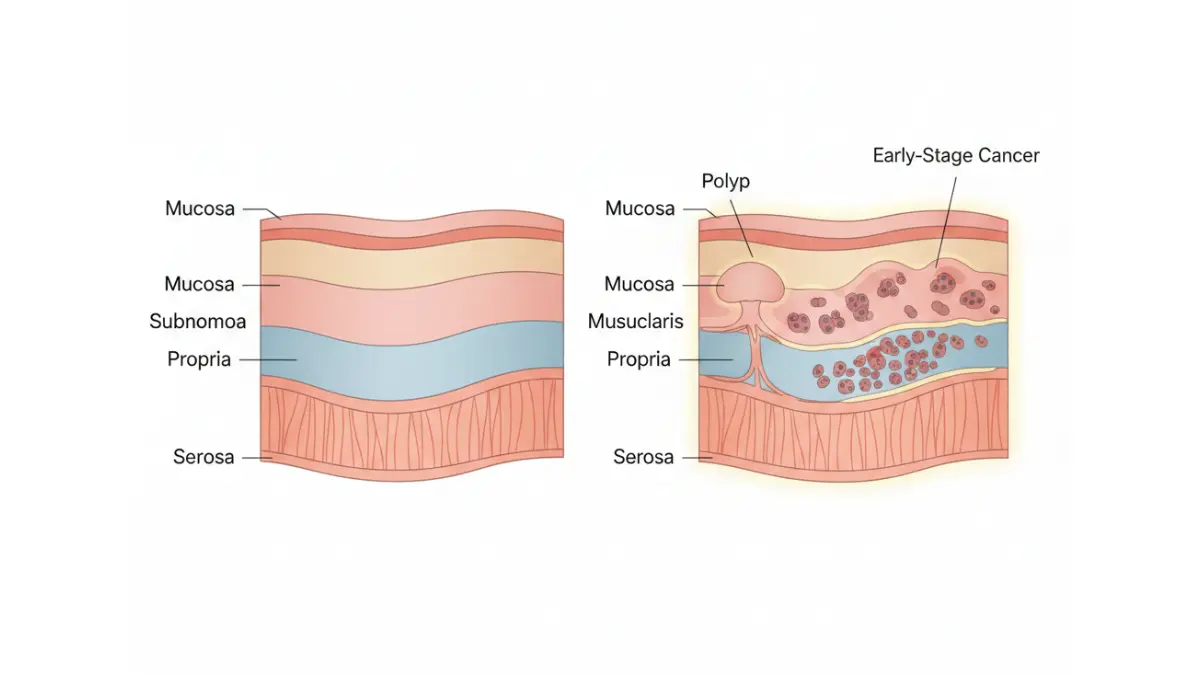
The Four High-Risk Warning Signs (Evidence Pyramid)
Detailed Symptom Descriptions with Actionable Context
Rectal bleeding & blood in stool
This colorectal cancer symptom represents the strongest predictor in young adults, increasing diagnostic odds by 8.5 times according to research presented at the American College of Surgeons Clinical Congress. Blood may appear as bright red streaks on toilet paper, dark blood mixed throughout stool giving it a tarry appearance, or frank blood visible in the toilet bowl. Unlike hemorrhoid-related bleeding that typically occurs with straining and resolves quickly, colon cancer-related rectal bleeding persists for weeks or months and often accompanies other symptoms documented in our Symptom Checker tool.
What This Means For You: Don’t accept hemorrhoid assumptions if bleeding persists beyond 2 weeks, especially when accompanied by abdominal pain or changes in bowel habits. Patients under 50 with rectal bleeding warrant colonoscopy regardless of family history, as CDC guidelines acknowledge the rising trend in early-onset presentations.
Persistent abdominal pain
Approximately 40% of young adults diagnosed with colon cancer report abdominal pain as their primary symptom, making it the most common complaint in early onset cases. The pain typically manifests as cramping in the lower abdomen, persistent discomfort that worsens over weeks, or sharp pain localized to one area. Research shows women experience significantly longer diagnostic delays when presenting with abdominal pain compared to men, with physicians more frequently attributing symptoms to gynecological conditions or stress. Maintaining a healthy weight through tools like our BMI Calculator helps establish baseline health metrics that make symptom changes more apparent.
Iron deficiency anemia
Iron deficiency anemia represents the most common extraintestinal symptom in colorectal cancer patients, affecting up to 80% of those diagnosed with colon cancer in young adults. Chronic blood loss from tumor ulceration depletes iron stores gradually, causing unexplained fatigue, weakness, pale skin, shortness of breath during normal activities, dizziness, and cold hands or feet. Young adults often dismiss these colon cancer symptoms as stress-related exhaustion or busy lifestyle consequences rather than investigating underlying causes. Blood tests revealing low hemoglobin, ferritin, or transferrin saturation warrant gastrointestinal evaluation even without visible rectal bleeding.
Changes in bowel habits
Persistent alterations in bowel movement patterns lasting more than 4 weeks represent significant warning signs of colon cancer that demand investigation, particularly when combined with bleeding or anemia. These colorectal cancer symptoms include new-onset constipation unresponsive to dietary changes, persistent diarrhea lasting weeks, alternating diarrhea and constipation patterns, narrow “pencil-thin” stools indicating possible obstruction, or incomplete evacuation feelings after bowel movements. Nearly 65% of people diagnosed with colon cancer experience bowel movement changes, with left-sided tumors (descending colon, sigmoid, rectum) causing more pronounced symptoms than right-sided cancers.
Additional Colon Cancer Symptoms in Men and Women
Gender-specific presentations:
Signs of colon cancer in women frequently include anemia-related fatigue and weakness that physicians misattribute to menstruation, resulting in diagnostic delays averaging 2-4 months longer than men. Women also report higher rates of bloating and incomplete bowel evacuation feelings. Colon cancer symptoms in men more commonly feature visible rectal bleeding that’s dismissed as hemorrhoids related to lifting, straining, or occupational factors.
Shared warning signs:
- Unexplained weight loss exceeding 5% of body weight over 6 months without dietary changes
- Persistent fatigue unrelieved by rest (use our Sleep Calculator to optimize recovery)
- Nausea or vomiting accompanying abdominal discomfort
- Loss of appetite lasting multiple weeks
- Palpable abdominal mass or unusual firmness
- Tenesmus: frequent urge to defecate without productive bowel movements
Early recognition of these early signs of colon cancer combined with immediate medical evaluation through gastroenterology specialists significantly improves treatment outcomes, with survival rates exceeding 90% when colorectal cancer is detected at stage I.
Risk Factors & Who’s at Highest Risk
Understanding Colon Cancer Risk Factors in Young Adults
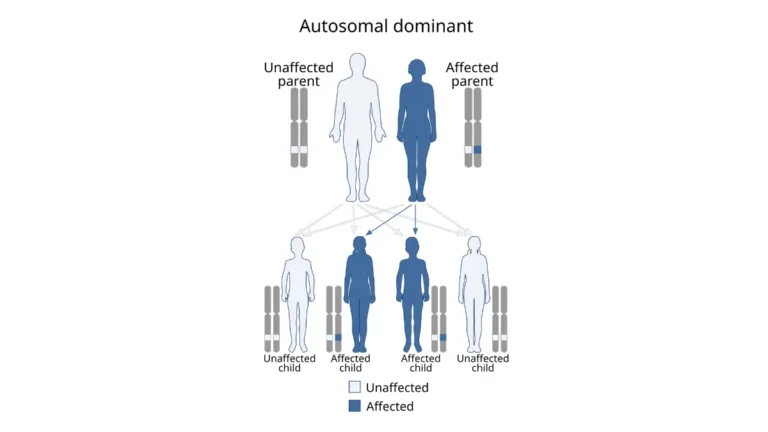
While 30% of early onset colon cancer patients report family history, the alarming reality shows 70-80% of young adults diagnosed have no known hereditary syndrome. This paradigm shift challenges the assumption that colorectal cancer primarily affects those with genetic predisposition, revealing that modifiable lifestyle factors play increasingly critical roles in colon cancer in young adults. Research demonstrates up to 20% of colorectal cancer patients under 50 may carry hereditary cancer syndromes like Lynch syndrome or familial adenomatous polyposis, yet the majority face risk from acquired factors including obesity, dietary patterns, and environmental exposures.
Non-Modifiable Risk Factors
Family history of colorectal cancer
Having a first-degree relative—parent, sibling, or child—diagnosed with colon cancer increases your risk 2-3 times compared to those without family history, with risk escalating further when multiple relatives are affected or diagnosis occurred before age 50. The National Cancer Institute identifies strong family history patterns as key indicators warranting genetic counseling and earlier screening protocols. Individuals in this category should begin colonoscopy screening 10 years before the youngest family member’s diagnosis age or at age 40, whichever comes first, and consider assessment through our Genetic Risk Assessment Tool.
Genetic conditions
Lynch syndrome, also called hereditary nonpolyposis colorectal cancer (HNPCC), accounts for 10-20% of early onset colon cancer cases and increases lifetime colorectal cancer risk to 50-80%. Familial adenomatous polyposis (FAP) causes hundreds to thousands of colon polyps during adolescence, with near-certain cancer development by age 40 without intervention. MUTYH-associated polyposis, juvenile polyposis syndrome, and Peutz-Jeghers syndrome represent additional genetic colon cancer risk factors requiring specialized surveillance.
Inflammatory bowel disease (IBD)
Patients with inflammatory bowel disease face 4-7 times higher colorectal cancer risk compared to the general population, with chronic intestinal inflammation creating pro-tumorigenic environments. Research shows ulcerative colitis patients with extensive colonic involvement for 8+ years carry a 7% cumulative colorectal cancer risk after 30 years of disease duration. Crohn’s disease affecting one-third or more of the colon similarly elevates risk, with younger age at IBD diagnosis (under 30) quadrupling colon cancer risk factors compared to later-onset IBD.
Modifiable Lifestyle Risk Factors
Obesity and weight
Obesity emerges as the strongest modifiable risk factor for early-onset colorectal cancer, with women carrying body mass index ≥30 facing nearly double the risk compared to those maintaining BMI 18.5-22.9. Each 5-unit BMI increase corresponds to 20% higher early onset colon cancer risk, with weight gain since age 18 particularly impactful. Young adults can assess baseline risk using our BMI Calculator and track progress through our Body Fat Calculator while implementing dietary changes.
Diet patterns
High consumption of red and processed meats, low fiber intake, and excessive ultra-processed food consumption create inflammatory intestinal environments promoting colorectal cancer symptoms development. The CDC identifies dietary modifications including increased vegetable and whole grain consumption as critical prevention strategies. Calculate optimal macronutrient ratios using our Macro Calculator to support anti-inflammatory dietary patterns.
Sedentary lifestyle
Physical inactivity independently increases colon cancer risk in young adults, with sedentary behavior compounding obesity-related effects. Regular moderate-intensity exercise for 150+ minutes weekly reduces colorectal cancer risk by up to 40%, making activity level assessment through our Heart Rate Zone Calculator valuable for monitoring training intensity.
Alcohol and tobacco
Smoking and heavy alcohol consumption (>2 drinks daily) represent established colon cancer risk factors, with combined exposure creating synergistic effects. Tobacco use at any age increases colorectal cancer symptoms likelihood, while alcohol consumption above moderate levels promotes tumor development through multiple mechanisms.
Understanding these risk factors empowers young adults to implement evidence-based prevention strategies while recognizing when symptoms warrant immediate evaluation regardless of age or perceived risk level.
Screening, Diagnosis & Stages
Colon Cancer Screening and Diagnosis for Adults Under 50
The landscape of colorectal cancer screening transformed in 2021 when the U.S. Preventive Services Task Force lowered the recommended screening age from 50 to 45, acknowledging the dramatic rise in early onset colon cancer among younger demographics. This Grade B recommendation reflects substantial evidence that colon cancer screening beginning at age 45 catches tumors earlier, though screening rates remain disappointingly low—only 20% of newly eligible 45-49 year-olds have been screened since the guideline change. Critically, 88% of young adults receive colorectal cancer diagnoses through symptoms rather than preventive screening, highlighting the urgent need for increased awareness and earlier intervention.
Research reveals the median time from symptom presentation to colon cancer diagnosis spans 78 days, with women and those with distal tumors experiencing significantly longer delays. This diagnostic timeline represents a critical window where early detection dramatically impacts survival outcomes, making symptom recognition through tools like our Symptom Checker essential for tracking concerning changes before medical appointments.
When Young Adults Should Get Screened
Colorectal Cancer Screening Options
Colonoscopy (Gold Standard)
Colonoscopy remains the most comprehensive colon cancer screening method, allowing physicians to visualize the entire colon, remove colon polyps during the procedure, and biopsy suspicious tissue simultaneously. The National Institute of Diabetes and Digestive and Kidney Diseases emphasizes colonoscopy’s dual diagnostic and therapeutic capacity, particularly critical for detecting early onset colon cancer in young adults who present with more aggressive tumor histology. Detection at stage I yields 92% five-year survival rates, underscoring colonoscopy’s life-saving potential.
Stool-based tests
The fecal immunochemical test (FIT) detects human hemoglobin in stool using antibodies specific to lower intestinal bleeding, offering convenient annual screening without dietary restrictions that interfered with older guaiac-based tests. The stool DNA-FIT test (Cologuard) combines FIT with detection of genetic mutations like KRAS and methylation markers, requiring testing every 3 years. Research published through the National Institutes of Health confirms all positive stool-based tests mandate follow-up colonoscopy for definitive colon cancer diagnosis.
CT colonography and flexible sigmoidoscopy
Virtual colonoscopy uses imaging rather than endoscopy but still requires bowel preparation and cannot remove polyps discovered during scanning. Flexible sigmoidoscopy examines only the lower colon and rectum every 5 years, missing proximal tumors that increasingly affect young adults.
The Diagnostic Process Timeline
Young adults experiencing colorectal cancer symptoms face median intervals of 5 days from presentation to first investigation, 78 days from investigation to confirmed diagnosis, and 23 days from diagnosis to treatment initiation. The 78-day investigation-to-diagnosis window represents the greatest delay component, with women experiencing disproportionately longer intervals potentially related to symptom dismissal. Maintaining detailed symptom logs through our Symptom Checker helps patients advocate for expedited diagnostic colonoscopy when presenting with colon cancer warning signs like persistent rectal bleeding, abdominal pain, or unexplained weight loss tracked via our Weight Loss Calculator.
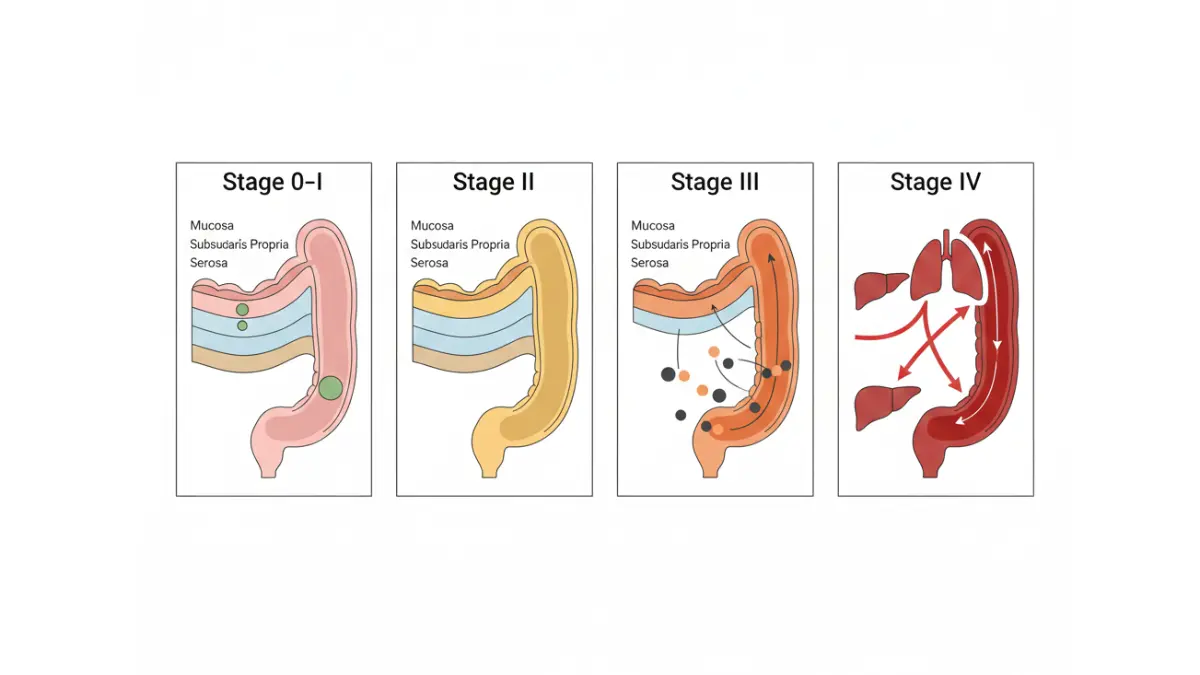
Understanding Colon Cancer Stages
The National Cancer Institute uses the TNM staging system to classify tumor size (T), lymph node involvement (N), and distant metastasis (M), which collectively determine numerical stages I through IV.
Young adults demonstrate better survival outcomes within each colon cancer stage compared to older patients, though they more frequently present with poor tumor differentiation and advanced disease due to diagnostic delays and lack of routine screening. Understanding that 25% of young adults present with stage IV disease at diagnosis reinforces the critical importance of recognizing early signs of colon cancer and demanding appropriate diagnostic evaluation regardless of age.
Treatment Options & Living with Diagnosis
Colon Cancer Treatment for Young Adults
Colon cancer treatment approaches vary by stage, tumor location, and molecular characteristics, with young adults facing unique challenges including fertility preservation concerns, career disruptions, and more aggressive tumor histology. The National Cancer Institute outlines five primary treatment modalities: surgery, chemotherapy, radiation therapy, targeted therapy, and immunotherapy, with treatment selection dependent on colon cancer stages and genetic tumor profiling. Research shows young adults often receive more intensive treatment regimens than older patients across all stages, though survival outcomes remain favorable particularly when detected early.
Primary Colon Cancer Treatment Modalities
Surgery (Colectomy)
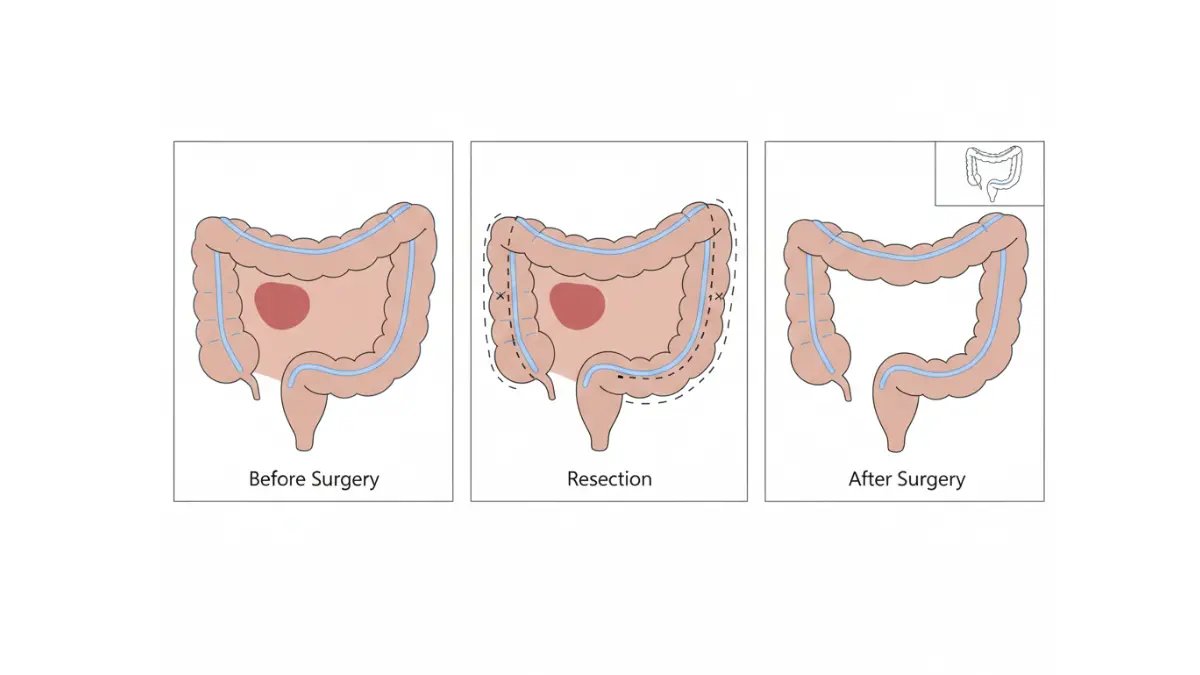
Surgical resection represents the cornerstone treatment for non-metastatic colon cancer, with procedures ranging from segmental colectomy removing tumor-containing bowel sections to total colectomy for extensive disease. Young adults typically undergo complete mesocolic excision achieving 96% complication-free recovery within 8 days postoperatively. Minimally invasive laparoscopic and robotic surgical approaches reduce recovery time to 2-4 weeks, allowing faster return to work and daily activities tracked through our BMR Calculator monitoring metabolic changes during healing.
Chemotherapy
Stage III colon cancer universally requires adjuvant chemotherapy following surgery, typically administered for 3-6 months using FOLFOX (leucovorin, fluorouracil, oxaliplatin) or CAPOX (capecitabine, oxaliplatin) regimens to eliminate microscopic residual disease. Stage II patients with high-risk features including poor tumor differentiation, bowel obstruction, or inadequate lymph node sampling may receive chemotherapy despite lower absolute benefit. Managing chemotherapy-related side effects including neuropathy, fatigue, and nausea requires maintaining adequate nutrition calculated through our Macro Calculator and Protein Intake Calculator ensuring 1.2-1.5 grams protein per kilogram body weight daily.
Targeted Therapy
Genetic mutations in KRAS, BRAF, and microsatellite instability status determine targeted therapy eligibility, with KRAS wild-type metastatic colorectal cancer responding to anti-EGFR antibodies cetuximab and panitumumab. BRAF V600E mutations occurring in 8-12% of colorectal cancers predict poor prognosis but respond to combination BRAF/MEK inhibitor therapy. Bevacizumab targeting vascular endothelial growth factor reduces tumor blood supply across multiple genetic profiles.
Immunotherapy
Tumors classified as microsatellite instability-high (MSI-H) or mismatch repair deficient (dMMR)—representing 12-15% of colorectal cancers—demonstrate remarkable responses to checkpoint inhibitor immunotherapy. The FDA approved nivolumab plus ipilimumab combination in 2025 as initial treatment for advanced dMMR colorectal cancer, achieving superior progression-free survival compared to chemotherapy. Pembrolizumab monotherapy provides another effective option for MSI-H tumors.
Emotional and Psychological Support
Young adults diagnosed with colon cancer experience significant mental health burdens including anxiety, depression, post-traumatic stress, and survivor’s guilt that clinical teams often underaddress. Research reveals meaningful levels of depressive symptoms persist throughout treatment and long-term survivorship, with demographic and psychosocial factors influencing outcomes. Professional counseling, cancer-specific support groups, and peer mentorship programs provide essential emotional scaffolding during treatment, with resources available through organizations like CancerCare and Colontown.
Lifestyle Modifications During Treatment
Fertility preservation strategies warrant immediate discussion before chemotherapy or radiation, as treatments can impair reproductive capacity in both men and women. Sperm banking, egg or embryo cryopreservation, and ovarian tissue freezing preserve future parenthood options that rank second only to survival concerns among young adults.
Nutrition optimization supports immune function and tissue repair during treatment, with caloric needs calculated through our Calorie Deficit Calculator adjusted to maintain rather than lose weight. Adequate hydration tracked via our Water Intake Calculator combats dehydration from chemotherapy-related diarrhea. Physical activity within tolerance using guidance from our Heart Rate Zone Calculator maintains strength and reduces cancer-related fatigue.
Prevention Strategies & Take Action
Preventing Colon Cancer: Actionable Steps for Young Adults
Evidence-based research confirms that up to 40% of early onset colon cancer cases are preventable through lifestyle modifications targeting modifiable risk factors. The National Cancer Institute identifies physical activity as a protective factor, with regular exercise reducing colorectal cancer risk by 24% across multiple cohort studies. Colon cancer prevention strategies implemented during young adulthood create cumulative protective effects that substantially lower lifetime risk, making immediate action critical even for those without current symptoms or family history.
Evidence-Based Colon Cancer Prevention Strategies
Diet modifications for cancer prevention:
✓ Increase fiber intake to 25-35 grams daily through whole grains, vegetables, legumes, and fruits—research published through the National Institutes of Health shows fiber decreases colorectal cancer risk significantly
✓ Limit red meat consumption to fewer than 18 ounces weekly and minimize processed meats entirely
✓ Consume calcium-rich dairy products and consider supplementation reaching 1,000-1,200mg daily
✓ Use our Macro Calculator to optimize nutrient ratios supporting colon cancer prevention
Physical activity requirements:
✓ Engage in 150+ minutes of moderate-intensity aerobic exercise weekly through walking, cycling, or swimming
✓ Incorporate strength training twice weekly to maintain healthy metabolism
✓ Track cardiovascular intensity using our Heart Rate Zone Calculator ensuring adequate effort levels
✓ Reduce sedentary time with movement breaks every 60 minutes
Weight management:
✓ Maintain BMI between 18.5-24.9 assessed through our BMI Calculator
✓ Achieve gradual weight loss of 1-2 pounds weekly if overweight using our Weight Loss Calculator and Calorie Deficit Calculator
✓ Monitor body composition changes via our Body Fat Calculator
Lifestyle factors:
✓ Limit alcohol consumption below 1 drink daily (women) or 2 drinks daily (men)
✓ Eliminate tobacco use completely—smoking increases colorectal cancer risk at all ages
✓ Prioritize quality sleep using our Sleep Calculator for optimal 7-9 hour targets supporting immune function
Screening adherence:
✓ Begin colon cancer screening at age 45 per CDC guidelines or earlier with family history
✓ Complete recommended screening intervals without delay
✓ Report symptoms immediately using our Symptom Checker to document patterns
When to See a Doctor Immediately
Seek urgent gastroenterology evaluation if experiencing:
- Rectal bleeding or blood in stool persisting beyond 1 week
- Persistent abdominal pain or cramping unrelieved by over-the-counter remedies
- Bowel habit changes lasting more than 4 weeks
- Unexplained weight loss exceeding 5% body weight in 6 months
- Severe fatigue with pallor suggesting possible anemia
Colon cancer symptoms in young adults under 50 demand immediate attention rather than watchful waiting. With early-onset colorectal cancer rates doubling since the 1990s, recognizing colon cancer warning signs early transforms outcomes—stage I detection yields 92% five-year survival compared to 14.7% for metastatic disease. Trust persistent symptoms, advocate assertively for diagnostic colonoscopy regardless of age, and implement prevention strategies today through our comprehensive health calculators and tools available at My Medicine Advisor.
Frequently Asked Questions on Colon Cancer Symptoms in Young Adults
1. What are the earliest colon cancer symptoms in young adults?
The earliest colon cancer symptoms often include rectal bleeding, blood in stool, persistent bowel habit changes, and unexplained fatigue or anemia.
2. Is rectal bleeding always a sign of colon cancer?
No, rectal bleeding can be caused by hemorrhoids or fissures, but persistent or unexplained bleeding should always be evaluated with a colonoscopy.
3. How do bowel movements change with colon cancer?
You may notice persistent diarrhea, constipation, narrower “pencil-thin” stools, or the feeling that your bowels never fully empty.
4. Can young adults get colon cancer without family history?
Yes, most early onset colon cancer cases occur in people with no known family history or genetic syndrome.
5. When should I worry about abdominal pain as a colon cancer symptom?
Abdominal pain that lasts for weeks, worsens over time, or occurs with rectal bleeding, weight loss, or anemia warrants urgent medical review.
6. Is unexplained weight loss a colon cancer warning sign?
Yes, unintentional weight loss combined with bowel changes, fatigue, or bleeding can signal colon cancer and should be investigated.
7. Are colon cancer symptoms different in men and women?
Core symptoms are similar, but women more often present with anemia and fatigue, while men more often report obvious rectal bleeding.
8. At what age should I start colon cancer screening?
Most average-risk adults should start screening at 45, but those with symptoms or strong risk factors may need earlier evaluation.
9. Can lifestyle changes really reduce colon cancer risk?
Yes, a high-fiber diet, regular exercise, maintaining healthy weight, not smoking, and limiting alcohol all reduce colorectal cancer risk.
10. Do all colon cancer patients have pain?
No, some young adults have minimal or no pain; subtle signs like mild bleeding, fatigue, or bowel habit changes may be the only clues.
11. When should I see a doctor about possible colon cancer symptoms?
See a doctor promptly if you have rectal bleeding, blood in stool, bowel changes lasting more than 4 weeks, or unexplained weight loss or anemia.
About this content
How this article was put together: researched from recognised health sources, drafted with the help of AI tools, and edited by hand, with sources linked throughout.

Sameer Patel is the founder and editor of My Medicine Advisor. He is not a doctor or medical professional — before starting this site he worked in banking,…
Medical disclaimer
The content on MyMedicineAdvisor is provided for general informational and educational purposes only and is not a substitute for professional medical advice, diagnosis, or treatment. Health information on this website should not be used to diagnose, treat, cure, or prevent any condition without guidance from a qualified healthcare professional. Always seek the advice of your doctor, physician, or another licensed healthcare provider with any questions you may have regarding a medical condition, symptoms, medications, or treatment decisions.