
On This Page – Quick Medical Summary
What Is VSG Surgery
When Jennifer’s endocrinologist told her that medication alone couldn’t control her type 2 diabetes anymore, she knew something had to change. At 38 years old with a BMI of 42, she faced a choice that over 150,000 Americans make annually: VSG surgery.
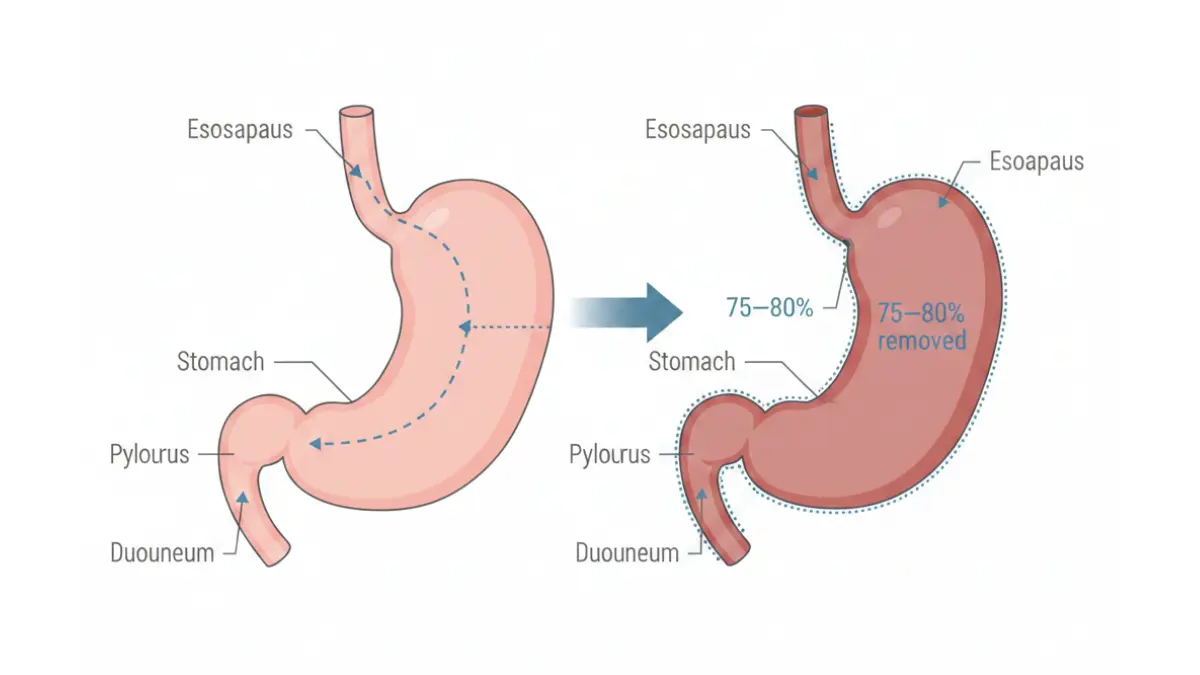
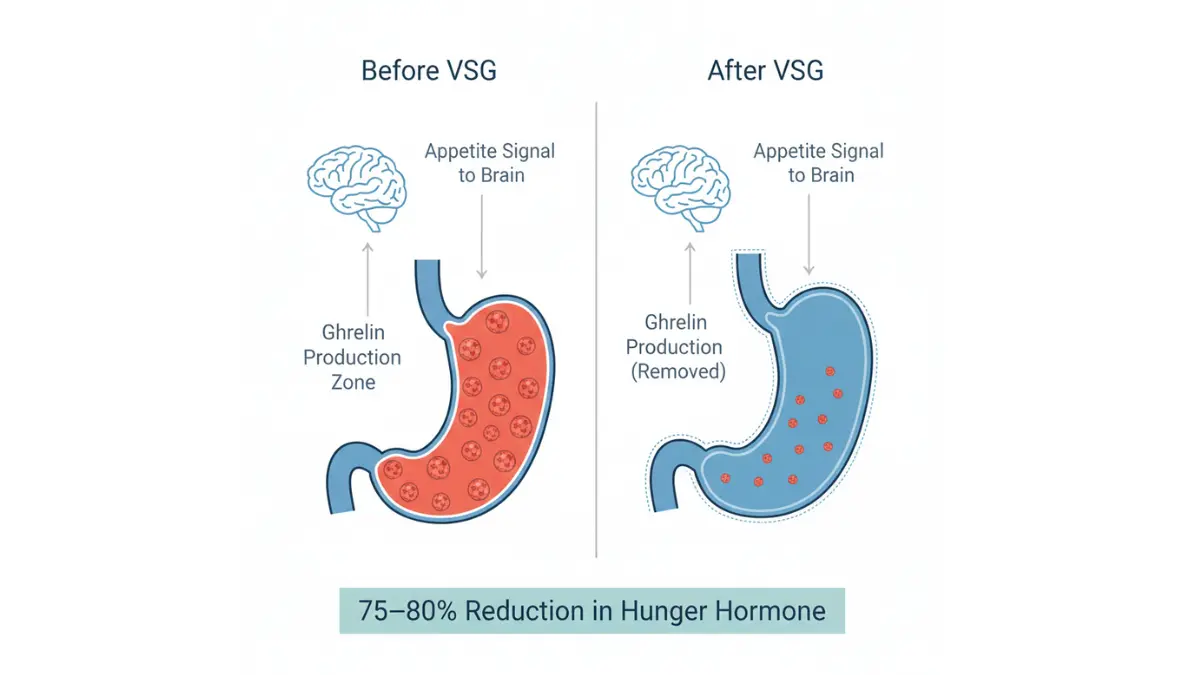
What is VSG surgery? Vertical Sleeve Gastrectomy (VSG)—commonly called gastric sleeve surgery—is a laparoscopic bariatric procedure where surgeons remove approximately 75-80% of the stomach, leaving a banana-shaped sleeve. Unlike gastric bypass, VSG surgery doesn’t reroute your intestines or require ongoing adjustments like lap-band procedures.
Why VSG Became America’s #1 Weight Loss Surgery in 2026
VSG surgery now accounts for more than half of all bariatric procedures performed in the United States, with over 40% of American adults having obesity according to CDC data. The procedure’s popularity stems from three key factors:
Proven Weight Loss Results: Patients typically lose 60-70% of excess body weight within the first 18-24 months. If you’re wondering what your ideal weight might be, our BMI Calculator can help you understand your starting point.
Metabolic Changes Beyond Restriction: VSG surgery removes the portion of your stomach that produces ghrelin—the “hunger hormone.” According to research published by the National Institutes of Health, this hormonal change leads to reduced appetite and improved insulin sensitivity, with mortality rates now just 0.1-0.13% at accredited centers.
Shorter Recovery Than Alternatives: Most VSG surgery patients return to work within 2-4 weeks, compared to 3-6 weeks for gastric bypass surgery. The minimally invasive laparoscopic approach means smaller incisions, less pain, and faster healing.
VSG Surgery Cost Breakdown (2026 Reality)
VSG Surgery Cost: State-by-State Breakdown
Let’s address what most doctors gloss over during consultations: the actual financial investment for VSG surgery. National averages hide significant regional variations that can impact your budget by tens of thousands of dollars.
| Location | Average Total Cost | With Insurance (Out-of-Pocket) | Self-Pay Range |
|---|---|---|---|
| California | $17,000-$23,000 | $2,000-$5,000 | $15,000-$20,000 |
| Texas | $14,000-$19,000 | $1,500-$4,000 | $12,000-$17,000 |
| New York | $18,000-$25,000 | $2,500-$6,000 | $16,000-$22,000 |
| Florida | $15,000-$21,000 | $1,800-$4,500 | $13,000-$19,000 |
| Mexico (Medical Tourism) | $8,000-$10,000 | N/A | $7,999-$9,500 |
What’s Actually Included in VSG Surgery Cost?
Here’s the breakdown most bariatric surgery consultations don’t clearly explain:
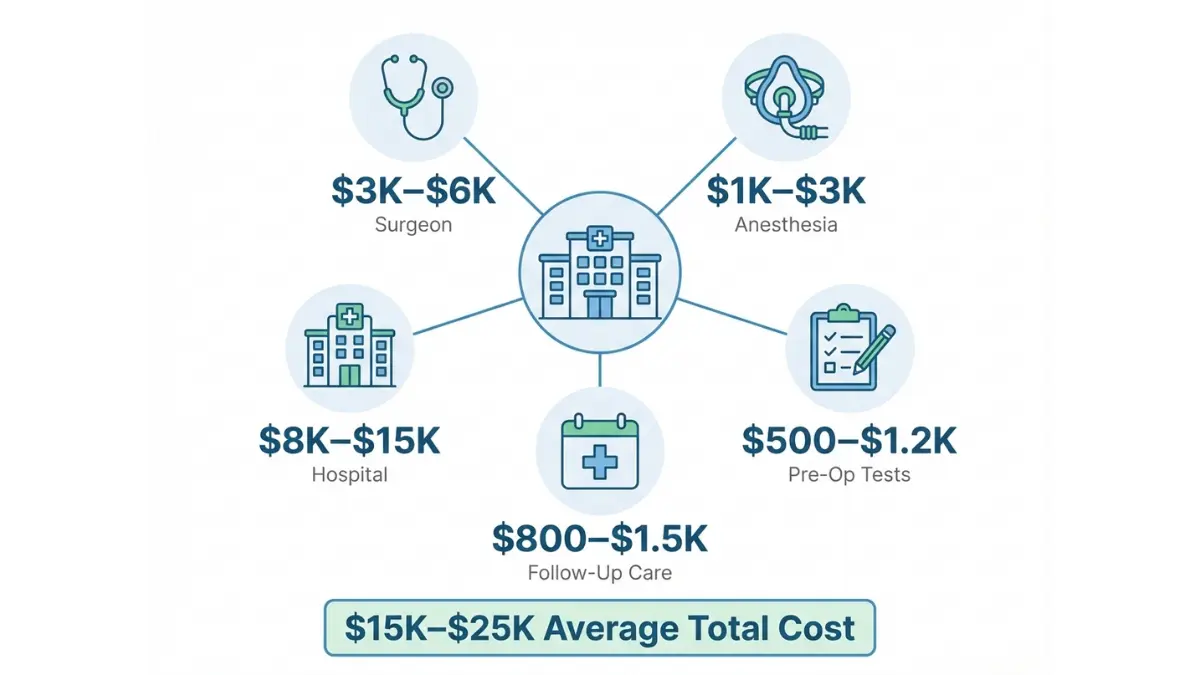
- Surgeon Professional Fees: $3,000-$6,000 (experience and location-dependent)
- Anesthesia Services: $1,000-$3,000 (usually billed separately)
- Hospital Facility Fees: $8,000-$15,000 (operating room, recovery, overnight stay)
- Pre-Operative Testing: $500-$1,200 (bloodwork, EKG, sleep study, psychological evaluation)
- Post-Operative Follow-Up: $800-$1,500 (first-year nutritionist visits, surgeon check-ups)
Hidden Costs Doctors Don’t Mention:
- Pre-surgery protein supplements for the 2-week liver shrinking diet: $150-$300
- Lifelong vitamin supplementation: $600-$1,200 annually
- Body contouring surgery (for excess skin): $15,000-$40,000 (usually 18-24 months post-VSG)
Insurance Coverage for VSG Surgery: The 2026 Approval Strategy
Most insurance plans now cover VSG surgery if you meet these criteria based on current NIH guidelines:
BMI Requirements:
- BMI ≥40 (regardless of comorbidities)
- BMI 35-39.9 with obesity-related conditions (type 2 diabetes, hypertension, sleep apnea)
- BMI 30-34.9 with uncontrolled diabetes (emerging 2026 criteria at select centers)
Documentation Requirements:
- 3-6 months of supervised diet attempts with your primary care physician
- Detailed food/exercise journal showing compliance
- Psychological evaluation demonstrating emotional readiness
- Letter of medical necessity from your bariatric surgeon
Pro Tip: Start documenting weight loss attempts NOW—even if surgery is months away. Insurance companies scrutinize this heavily, and missing documentation is the #1 reason for claim denials.
Medical Tourism Reality: Mexico vs. USA
Centers in Tijuana and Monterrey offer VSG surgery at 50-60% lower costs, but consider these factors:
Safety: Verify JCI accreditation or MBSAQIP certification Follow-Up Care: US surgeons may refuse to treat complications from overseas procedures Travel Logistics: Factor in 5-7 day recovery before flying home
VSG Surgery Recovery Timeline (Week-by-Week Reality)
What Actually Happens: Hospital Stay & First 48 Hours
Most VSG surgery patients are shocked by how different recovery feels from expectations. Here’s the unfiltered truth:
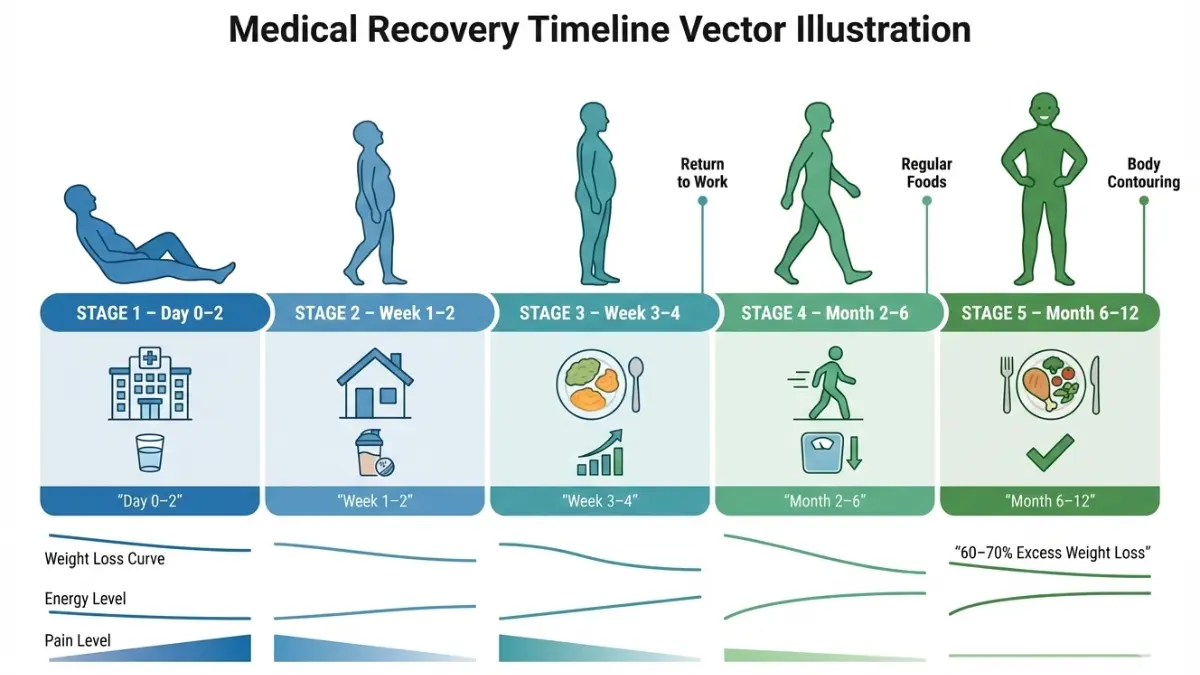
Day 0 (Surgery Day): Your laparoscopic VSG surgery takes 60-90 minutes under general anesthesia. You’ll wake up in recovery with 4-6 small incisions, a drainage tube (removed within 24-48 hours), and prescribed pain medication. Walking begins 2-4 hours post-op—yes, the same day—to prevent blood clots.
Day 1: Clear liquids only: water, broth, sugar-free popsicles. Most patients describe minimal hunger due to lowered ghrelin hormone levels. Pain ranges from 3-5 on a 10-point scale with proper medication. You’ll walk the hospital corridors every 2 hours.
Day 2: If you’re tolerating liquids and pain is controlled, you’ll likely be discharged. According to enhanced recovery protocols studied at Columbia University, patients in ERAS programs have shorter hospital stays with no increase in complications.
Week 1-2: The Liquid Phase (Hardest Period)
What You’ll Eat:
- Protein shakes (60-80g protein daily minimum—use our Protein Intake Calculator)
- Clear broths
- Sugar-free gelatin
- Decaffeinated herbal tea
What You’ll Feel: Extreme fatigue hits hard. You’re consuming 400-600 calories daily while your body heals, so expect low energy. Most patients stop prescription pain medication by day 7, transitioning to acetaminophen only.
Warning Signs to Call Your Surgeon:
- Fever above 101°F
- Incision redness, swelling, or drainage
- Persistent nausea preventing liquid intake
- Severe abdominal pain
Week 3-4: Soft Foods & Energy Return
Your diet expands to pureed proteins—think scrambled eggs, Greek yogurt, cottage cheese, and blended chicken. Energy improves significantly as calorie intake reaches 600-800 daily.
Return to Work Timeline:
- Desk jobs: 2-3 weeks typical
- Physical labor: 4-6 weeks minimum
- Healthcare workers: 3-4 weeks (lifting restrictions apply)
Month 2-6: Rapid Weight Loss Phase
This is where VSG surgery results become visible. Expected weight loss:
- First 2 weeks: 15-20 pounds (mostly water weight)
- First 3 months: 40% of excess body weight
- First 6 months: 50-60% of excess body weight
Track your progress with our Weight Loss Calculator to stay motivated.
Vitamin Requirements:
- Multivitamin with iron (twice daily)
- Calcium citrate (1,200mg daily)
- Vitamin B12 (sublingual or injection)
- Vitamin D3 (3,000-5,000 IU daily)
Month 6-12: Stabilization & Long-Term Success
By one year post-VSG surgery, most patients achieve 60-70% excess weight loss. Weight loss slows but continues. Focus shifts to:
- Regular foods reintroduced: All food groups in smaller portions
- Exercise intensification: 150 minutes weekly cardio + 2x strength training
- Follow-up schedule: Surgeon visits at 3, 6, 12 months; nutritionist quarterly
Plan for potential body contouring surgery timing—most surgeons recommend waiting until 18-24 months post-VSG when weight stabilizes. Use our Ideal Weight Calculator to set realistic goals.
What Doctors Don’t Tell You (Insider Reality)
Pre-Surgery Reality #1: The Liver Shrinking Protocol
Your bariatric surgeon mentions a “pre-op diet,” but here’s what that actually means: 2 weeks of near-starvation to shrink your fatty liver.
Why It’s Critical: An enlarged liver physically blocks surgical access to your stomach. If your liver hasn’t shrunk adequately, surgeons may cancel your procedure mid-operation.
The Protocol:
- Calories: 800-1,200 daily (use our Keto Calculator for macro targets)
- Composition: 70g+ protein, <50g carbs, minimal fat
- Duration: 14 days minimum, 21 days for BMI >50
What Happens If You Cheat: One patient reported sneaking pizza three days before surgery—her procedure was rescheduled after surgeons couldn’t safely visualize her stomach. That’s an additional 3-6 month insurance approval delay.
Recovery Reality #2: Hair Loss (60% Experience This)
This is the side effect most bariatric surgery patients report feeling blindsided by—yet it’s rarely emphasized during consultations.
Timeline: Months 3-6 post-VSG surgery Cause: Rapid weight loss combined with temporary protein/iron deficiency Duration: Usually stops by month 9-12
Prevention Strategies:
- Maintain 80-100g daily protein (non-negotiable)
- Biotin supplementation (5,000mcg daily)
- Iron with vitamin C for absorption
- Zinc (as recommended by your nutritionist)
Reality Check: Hair thins noticeably but rarely reaches “bald patches.” It grows back once your body adjusts to new weight and nutrition levels.
Long-Term Reality #3: Loose Skin & Body Contouring Costs
If you’re losing 100+ pounds through VSG surgery, loose skin is almost inevitable. Here’s the financial reality nobody discusses upfront:
Body Contouring Costs (2026):
- Tummy tuck (abdominoplasty): $8,000-$15,000
- Arm lift (brachioplasty): $5,000-$8,000
- Thigh lift: $7,000-$12,000
- Full body lift: $25,000-$40,000
Insurance Coverage: Almost never covered unless causing medical issues (rashes, infections). This is out-of-pocket spending.
Timing: Wait 18-24 months post-VSG when weight stabilizes. Check your body fat percentage with our Body Fat Calculator to track readiness.
Psychological Reality #4: Food Relationship Changes
VSG surgery removes 80% of your stomach—but it doesn’t remove emotional eating triggers.
The Truth: If you ate for comfort, stress, or boredom before surgery, those impulses persist. Many patients report “transfer addiction”—replacing food with alcohol, shopping, or other compulsive behaviors.
What Helps:
- Pre-surgery therapy (most programs require this, but take it seriously)
- Post-op support groups (in-person or online)
- Ongoing counseling during the first year
- Relationship strain affects 20-25% of bariatric surgery patients—partners may feel threatened by your transformation
Financial Reality #5: Lifelong Supplement Costs
Here’s the math doctors skip: $50-$100 monthly in vitamins, forever.
Annual Costs:
- Bariatric multivitamins: $240-$360
- Calcium citrate: $120-$180
- B12 sublingual/injections: $60-$120
- Vitamin D3: $40-$60
- Iron (if needed): $60-$100
- Quarterly lab monitoring: $200-$400
Total Annual: $720-$1,220
Skip these, and you risk serious complications including osteoporosis, anemia, and neurological damage.
Complication Reality #6: The 5-10% That Goes Wrong
Modern VSG surgery has a major complication rate under 5% at accredited centers, but here’s what that actually means:
Staple Line Leak (2-3% occurrence): Most serious complication. Stomach contents leak into your abdomen, requiring emergency intervention. Warning signs: fever, severe pain, rapid heart rate.
Stricture/Stenosis (1-2% occurrence): Narrowing where the sleeve was created. Symptoms: difficulty swallowing, persistent vomiting. Usually treatable with endoscopic dilation.
GERD Worsening (15-20% experience): VSG surgery can worsen acid reflux. Some patients require conversion to gastric bypass if severe. Pre-existing reflux? Discuss this extensively with your surgeon.
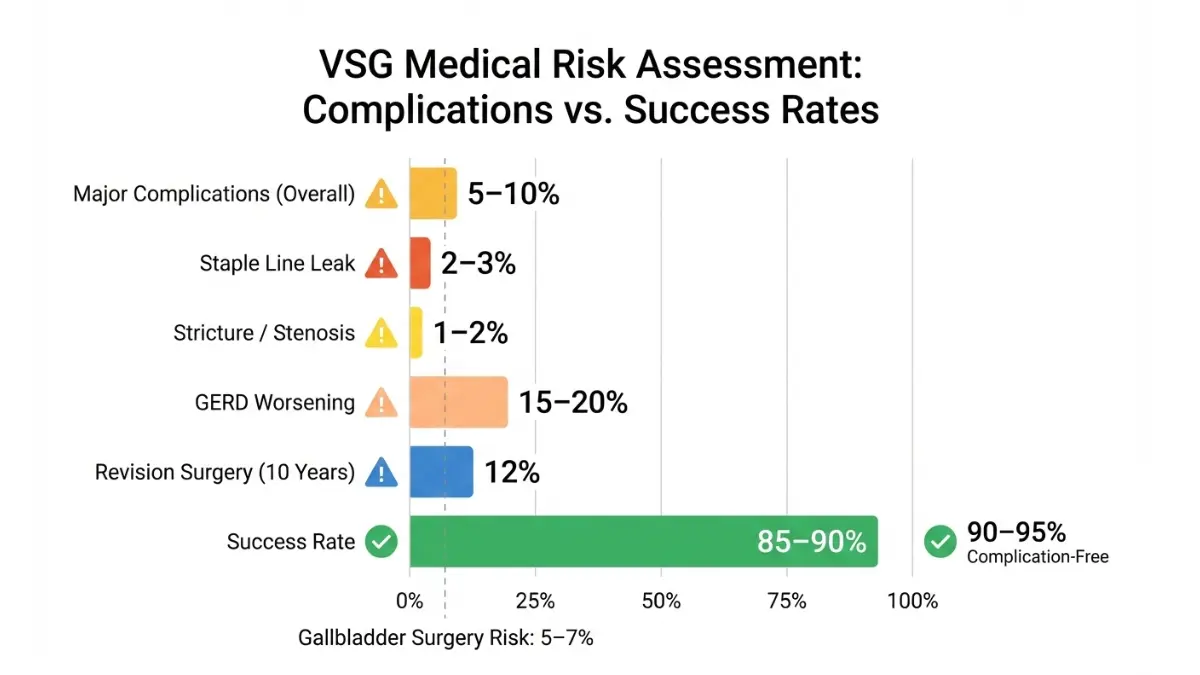
Revision Surgery Rate: 12% of VSG patients require some form of revision surgery within 10 years—usually for inadequate weight loss or weight regain.
What This Means For You:
- Choose a surgeon performing 100+ sleeve procedures annually
- Verify the facility has MBSAQIP accreditation
- Ask specifically about their complication rates
- Ensure comprehensive aftercare includes emergency access
VSG Surgery Eligibility & Preparation
Am I a Candidate for VSG Surgery? (2026 Criteria)
Not everyone qualifies for VSG surgery. Here’s the checklist your bariatric surgeon will use:
BMI Requirements (Calculate yours with our BMI Calculator):
✅ Class III Obesity: BMI ≥40 (any circumstances) ✅ Class II Obesity with Comorbidities: BMI 35-39.9 PLUS at least one:
- Type 2 diabetes requiring medication
- Hypertension (high blood pressure)
- Obstructive sleep apnea
- Non-alcoholic fatty liver disease
- Severe joint problems limiting mobility
✅ Emerging Criteria: BMI 30-34.9 with uncontrolled diabetes (select centers offering this per 2022 ASMBS guidelines)
Additional Medical Requirements:
- Age 18-65 (case-by-case beyond these ranges)
- Documented weight loss attempts (6-month physician-supervised diet)
- No untreated medical conditions that increase surgical risk
- No active substance abuse issues
- Stable mental health (screened via psychological evaluation)
Psychological Evaluation: What They’re Actually Assessing
Every bariatric surgery program requires pre-operative psychological screening. Here’s what evaluators examine:
Mental Health Stability:
- History of depression, anxiety, eating disorders
- Current psychiatric medications and stability
- Suicide ideation or self-harm history
Understanding and Expectations:
- Do you understand VSG surgery is a tool, not a cure?
- Are your weight loss expectations realistic?
- Do you grasp the permanence of this decision?
Support System:
- Who will help during recovery?
- Does your household support this choice?
- Are you prepared for relationship changes?
Commitment to Lifestyle Changes:
- Will you attend follow-up appointments?
- Can you afford lifelong vitamins?
- Are you willing to exercise regularly?
Red Flags That Delay Approval:
- Uncontrolled binge eating disorder
- Unrealistic expectations (“I’ll never exercise but still lose all the weight”)
- Substance abuse within past year
- Severe untreated depression
How to Choose Your VSG Surgeon (Red Flags to Avoid)
Not all bariatric surgeons offer equal outcomes. Here’s your vetting checklist:
Green Flags (Look For These):
- Board certification in general surgery (verify at American Board of Medical Specialties)
- MBSAQIP-accredited facility (Metabolic and Bariatric Surgery Accreditation and Quality Improvement Program)
- High volume: 100+ sleeve procedures annually
- Low complication rate: <2% major complications (they should disclose this)
- Comprehensive aftercare: Nutritionist, support groups, emergency access
Red Flags (Walk Away If You See These):
- Pressure tactics: “Limited time offer” or “Surgery next week!”
- Guarantees: No ethical surgeon promises specific weight loss
- No complication rate transparency
- Limited follow-up: “You’re on your own after 3 months”
- Overseas training without US verification
VSG vs. Other Weight Loss Surgeries (2026 Comparison)
| Surgery Type | Excess Weight Loss | Reversible? | Complexity | Recovery Time |
|---|---|---|---|---|
| VSG (Gastric Sleeve) | 60-70% | No | Moderate | 2-4 weeks |
| Gastric Bypass | 70-80% | No | High | 3-6 weeks |
| Lap-Band | 40-50% | Yes | Low | 1-2 weeks |
| ESG (Endoscopic Sleeve) | 50-60% | Yes | Low | 1 week |
Why VSG Dominates: Best balance of effectiveness, safety, and recovery time. Learn more about bariatric surgery options on our comprehensive guide.
Success Factors & Next Steps
The 5 Non-Negotiables for Long-Term VSG Surgery Success
Research shows that patients who maintain these five habits achieve the best 10-year outcomes:
1. Protein-First Rule Every meal starts with 20-30g protein. Hit 60-100g daily using our Protein Intake Calculator. This prevents muscle loss and supports metabolism.
2. Hydration Commitment 64oz minimum daily (use our Water Intake Calculator). Sip slowly—your new stomach can’t handle large gulps.
3. Vitamin Compliance Zero excuses. Missing doses causes irreversible damage (osteoporosis, nerve problems). Set phone reminders for morning and evening vitamins.
4. Exercise Habit
- Cardio: 150 minutes weekly minimum (walking counts!)
- Strength training: 2x weekly to preserve muscle during weight loss
- Start slow, but start early (walking begins day 1 post-op)
5. Support System Join bariatric support groups (check ObesityHelp.com for local chapters). Attend ALL follow-up appointments. Stay connected to your surgical team.
Your Next Steps: Starting the VSG Surgery Journey
Month 1-3: Research & Consultation
- Attend a bariatric surgery seminar (most programs offer free info sessions)
- Schedule consultations with 2-3 surgeons (get multiple perspectives)
- Start documenting current weight loss attempts for insurance
- Begin food/exercise journaling now
Month 3-6: Insurance Approval Process
- Complete required 3-6 month supervised diet with PCP
- Undergo psychological evaluation
- Complete pre-operative testing (sleep study, bloodwork, EKG)
- Submit insurance pre-authorization with surgeon’s office help
- Plan finances if insurance is denied
Month 6-9: Pre-Surgery Preparation
- Attend nutrition classes (learn post-op eating)
- Join support groups (meet post-op patients)
- Practice eating slowly and mindfully (start new habits now)
- Prepare home for recovery (meal prep, comfortable clothes)
- Arrange work leave and childcare if needed
What This Means For You: The timeline from first consultation to VSG surgery typically spans 3-9 months. Don’t view this as delay—use it to build sustainable habits. Patients who practice protein-first eating and regular exercise BEFORE surgery have significantly better outcomes.
Success Rate Reminder: 85% of VSG surgery patients achieve significant, sustained weight loss when following their surgical team’s guidance. You’re not just changing your stomach size—you’re transforming your relationship with food, activity, and health.
Ready to explore more health optimization strategies? Visit our Health Tips section for evidence-based guidance on nutrition, exercise, and wellness.
VSG Surgery FAQ: Quick Answers to Common Questions
1. How long does VSG surgery take?
The surgical procedure itself takes 60-90 minutes. Total operating room time (including anesthesia and recovery) is approximately 2-3 hours.
2. Is VSG surgery painful?
Most patients rate post-op pain as 3-5 out of 10 with proper medication. Pain peaks day 1-2, then decreases rapidly. Most discontinue prescription pain meds by day 7.
3. Can VSG surgery be reversed?
No. Vertical sleeve gastrectomy permanently removes 75-80% of your stomach. This is a permanent anatomical change that cannot be undone.
4. Will I regain weight after VSG?
Some weight regain (5-10% of lost weight) is common after year 2-3. However, patients who maintain protein intake, exercise regularly, and attend follow-ups typically keep 60-70% of excess weight off long-term. Learn about laparoscopic surgery success rates for more context.
5. Does insurance cover VSG surgery?
Most major insurance plans cover VSG surgery for patients meeting BMI criteria (≥40 or ≥35 with comorbidities) after completing required pre-operative programs.
6. What can I eat after VSG surgery?
Week 1-2: Clear liquids and protein shakes only. Week 3-4: Pureed proteins and soft foods. Month 2+: Regular foods in small portions, protein-first focus.
7. When can I return to work after VSG?
Desk jobs: 2-3 weeks typical. Physical labor: 4-6 weeks minimum due to lifting restrictions and energy levels.
8. What are the most common VSG complications?
Staple line leak (2-3%), stricture requiring dilation (1-2%), and worsening GERD (15-20%). Overall major complication rate is under 5% at accredited centers.
9. How much weight will I lose with VSG?
Average patients lose 60-70% of excess body weight within 18-24 months. For example: If you’re 100 lbs overweight, expect to lose 60-70 lbs. Results vary based on starting BMI, age, compliance, and activity level.
10. Is VSG safer than gastric bypass?
Yes, VSG surgery has lower complication rates (5% vs. 8-10%) and simpler anatomy. However, gastric bypass offers slightly higher weight loss (70-80% vs. 60-70% excess weight).
11. Do I need to take vitamins forever after VSG?
Yes. Lifelong daily supplementation is mandatory: bariatric multivitamin, calcium citrate, B12, vitamin D, and sometimes iron. Missing vitamins causes serious deficiencies (osteoporosis, anemia, nerve damage).
About this content
How this article was put together: researched from recognised health sources, drafted with the help of AI tools, and edited by hand, with sources linked throughout.

Sameer Patel is the founder and editor of My Medicine Advisor. He is not a doctor or medical professional — before starting this site he worked in banking,…
Medical disclaimer
The content on MyMedicineAdvisor is provided for general informational and educational purposes only and is not a substitute for professional medical advice, diagnosis, or treatment. Health information on this website should not be used to diagnose, treat, cure, or prevent any condition without guidance from a qualified healthcare professional. Always seek the advice of your doctor, physician, or another licensed healthcare provider with any questions you may have regarding a medical condition, symptoms, medications, or treatment decisions.