
On This Page – Quick Medical Summary
A complete blood count (CBC) can raise suspicion of leukemia, but it cannot diagnose it on its own. An abnormal result — a high or low white cell count, low platelets, or low hemoglobin — is a signal for more testing, not a verdict, and most abnormal CBCs turn out to have a cause other than cancer.
Where you are now shapes what matters most here. If you have unexplained symptoms and no results yet, start with the count patterns and warning signs below.
If a routine CBC came back abnormal but you feel well, the section on missed and misread results explains why abnormal rarely means cancer — and why a normal count still isn’t an absolute all-clear. If you’re a caregiver, the diagnostic-pathway section walks through what actually confirms a diagnosis.
Leukemia is a cancer of the blood-forming tissue, in which the bone marrow makes abnormal white cells that crowd out healthy ones. Because a CBC reflects what the marrow is producing, it’s often the first place a problem shows up. MedlinePlus keeps a plain-language overview of the blood count tests used to help detect blood cancers.
ℹ️ Medical Disclaimer: This article is general health education — not medical advice, diagnosis, or treatment. Interpreting a CBC, diagnosing leukemia, and any decision about a blood smear, biopsy, referral, or treatment must come from a licensed clinician who knows your history — usually your primary-care physician and, where blood cancer is a concern, a board-certified hematologist. If you have severe or rapidly worsening symptoms, seek urgent medical care.
What a CBC measures — and what it can’t see
A CBC counts and sizes the cells in your blood, giving a snapshot of what your bone marrow is producing. It’s the natural companion to our fuller guide to what a complete blood count can and can’t tell you.
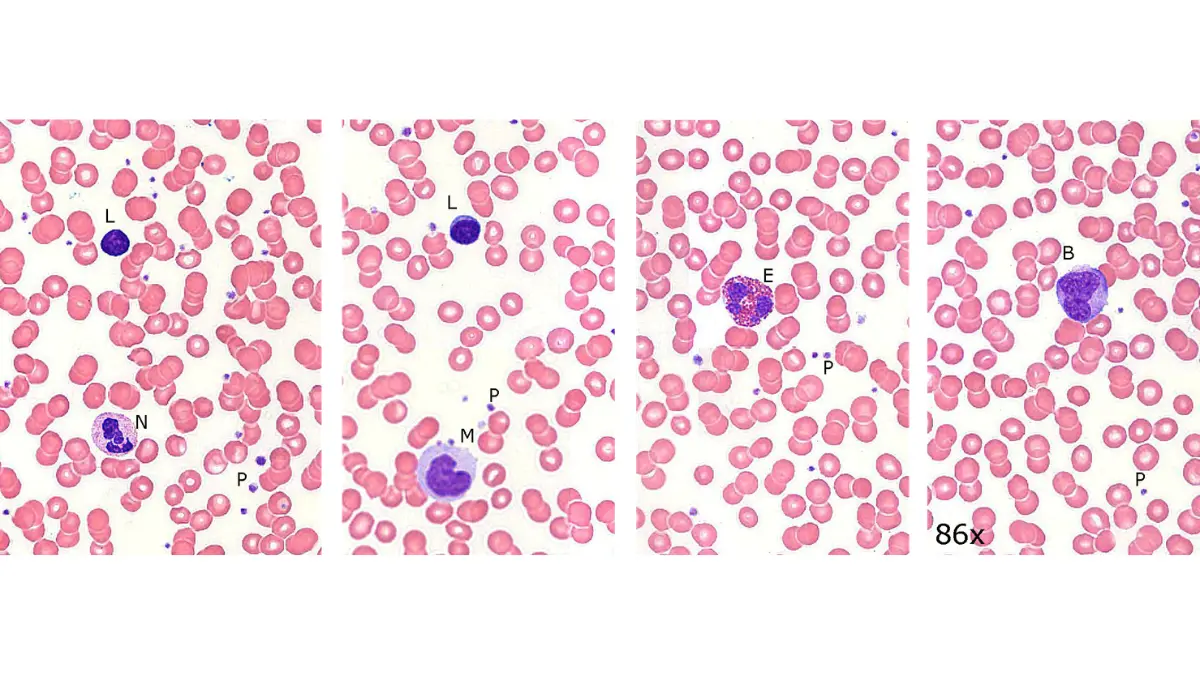
The main things a CBC counts
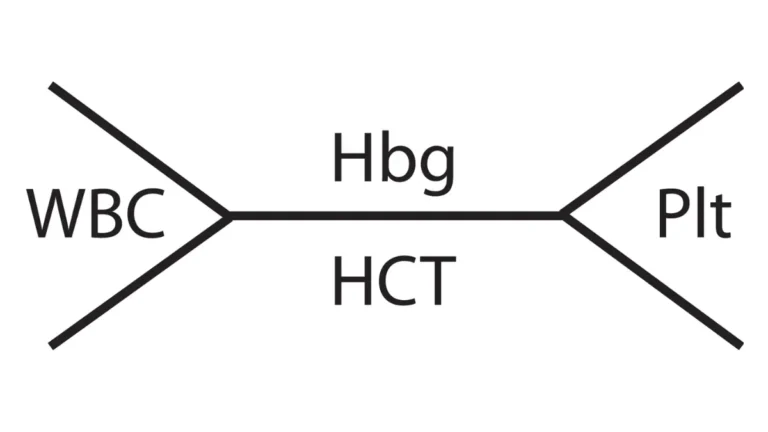
Per MedlinePlus, a CBC measures white blood cells, red blood cells, hemoglobin, hematocrit, platelets, and red-cell size (MCV). A CBC with differential counts each of the five white-cell types separately. Reference ranges vary by lab, age, and sex, so a result is read against that lab’s range — a point covered in our CBC normal range chart.
Why counts alone can’t diagnose leukemia
🔬 How It Works: A CBC analyzer counts cells and flags whether a number is high or low — but not why. It can tell that white cells are elevated; it cannot tell an infection from a cancer. That judgment needs a person, and often more tests.
MedlinePlus notes a low white count can point to a bone-marrow disorder or cancer, while a high count more often reflects infection or a medication. That overlap is exactly why an abnormal CBC leads to more testing, not a diagnosis. See the full patient reference on what a complete blood count measures.
Blood-count patterns that can point toward leukemia
Certain blood-count patterns make a clinician think about leukemia — but each turns up far more often in ordinary conditions. Here is what a CBC tends to show when leukemia is present:
- An abnormal white blood cell count — high, low, or even normal
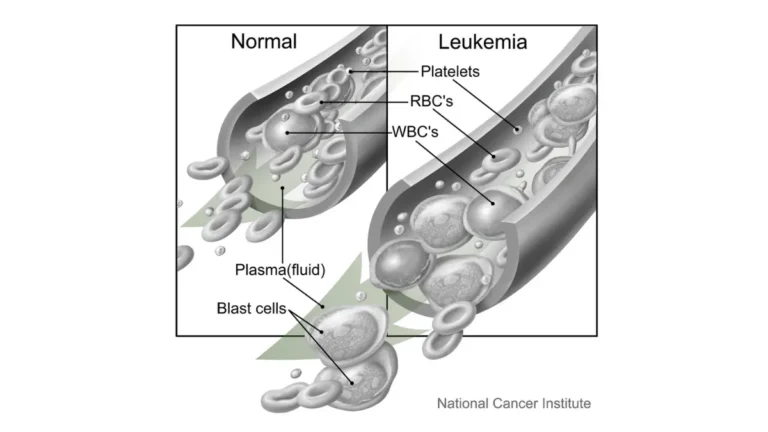
- Immature white cells called blast cells that don’t normally circulate
- Anemia — low red blood cells or low hemoglobin
- A low platelet count (thrombocytopenia)
- Sometimes all three cell lines low together (pancytopenia)
This picture — an abnormal white count with circulating blasts, plus anemia and low platelets — is the classic one in the medical literature on leukemia detection.
White cells: too high, too low — or immature
A raised white count (leukocytosis) is usually benign; see the ordinary causes in a high white blood cell count. A low count (leukopenia) also has a long list of explanations in low white blood cell count causes. What stands out in leukemia isn’t the number but the appearance of blast cells your lab would flag on the differential.
Low red cells and low platelets
Anemia and low platelets can occur when abnormal cells crowd out normal marrow production. But both are common on their own — from iron deficiency to medications — as low hemoglobin and anemia and low platelet count causes explain.
Why these patterns don’t equal a diagnosis
No single value is a verdict. There’s no white-cell number that confirms or excludes leukemia, and these patterns appear in dozens of harmless conditions. Only a clinician, weighing your counts against your symptoms and exam, can say what they mean.
What happens after an abnormal CBC — and what confirms leukemia
If a CBC is worrying, a clear sequence follows — and for most leukemias it’s a bone marrow biopsy, not the CBC, that confirms the diagnosis. What typically confirms leukemia:
- A repeat CBC and a peripheral blood smear — a pathologist examines the cells under a microscope
- Referral to a hematologist (a blood-disorder specialist)
- Bone marrow aspiration and biopsy, usually from the back of the hip
- Flow cytometry and genetic testing to identify the exact type
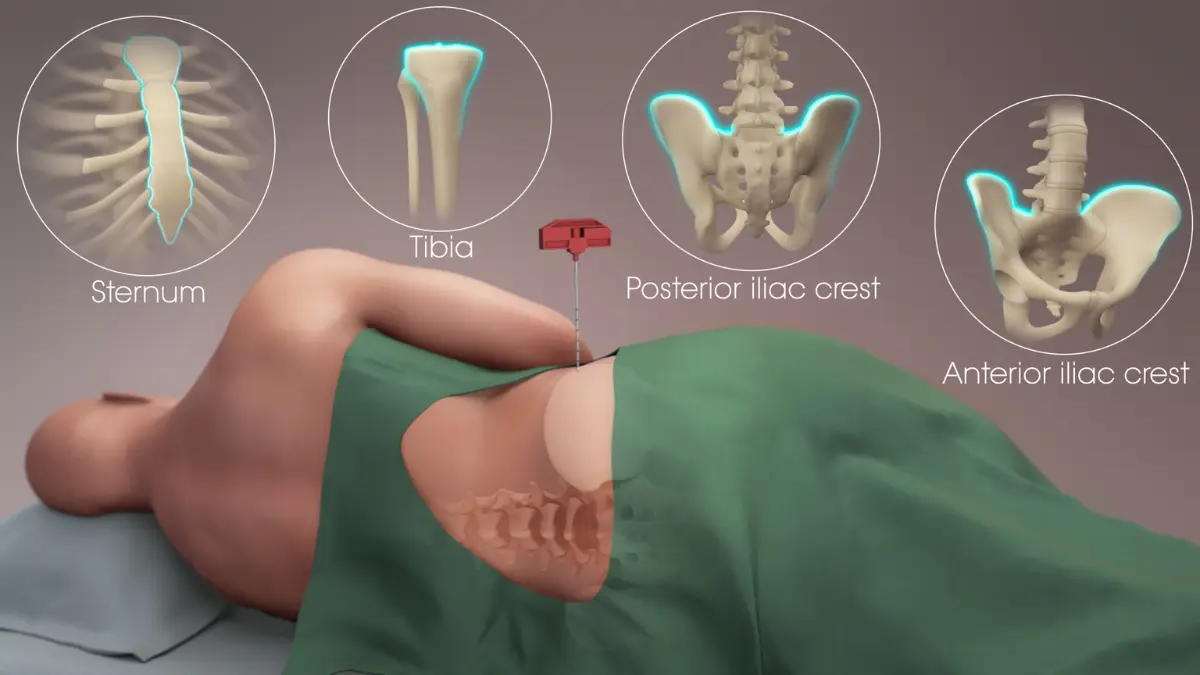
First: a repeat CBC and a blood smear
A smear adds what the analyzer can’t — a trained eye on the shape, size, and maturity of the cells, including any blasts. It often decides whether the next step is follow-up or referral, as how to read CBC results explains.
Then: referral to a hematologist
If concern remains, a hematologist takes over and may arrange bone marrow testing to settle the question.
🔬 How It Works: For a bone marrow test, the skin and bone over the back of the hip are numbed with local anesthetic; a thin needle draws liquid marrow (aspiration) and a slightly larger one takes a small core of bone (biopsy). The American Cancer Society notes most people feel brief pain as the marrow is drawn.
Confirming the diagnosis: bone marrow, flow cytometry, and genetics
Leukemia starts in the marrow, so examining it is central; the ACS describes how leukemia is diagnosed with bone marrow testing. Flow cytometry then sorts cells by their surface markers, separating myeloid from lymphoid leukemia — a difference that changes treatment. The percentage of blast cells is central to identifying acute leukemia, but the exact threshold depends on the subtype and genetic findings, so your care team applies the current criteria rather than one fixed number.

🩺 Physician Note: Guidelines don’t treat the CBC as a diagnostic endpoint. They rely on marrow examination plus flow cytometry and genetics to confirm the disease and classify its type — and that classification, not the blood count, drives treatment.
✅ Patient Action: If referred onward, ask the hematologist: “Do my results warrant a bone marrow test, and what would it tell us that my blood test can’t?”
Can leukemia be missed on a CBC — and does abnormal mean cancer?
Two honest truths sit side by side here, and holding both is the key to reading your own result calmly.
Why a normal CBC doesn’t fully rule it out
Can you have leukemia with a normal CBC? Yes, though it’s uncommon: some leukemia stays mainly in the bone marrow and doesn’t spill abnormal cells into the blood, so early counts can look normal. A normal CBC is reassuring, but not an absolute all-clear — which is why persistent, unexplained symptoms deserve follow-up even when the numbers look fine.
Why an abnormal CBC usually isn’t leukemia
Far more often, the worry runs the other way. MedlinePlus lists routine reasons a CBC drifts out of range — diet, hydration, medications, a menstrual period, or a passing infection — so an abnormal result is usually a prompt for a second look, not a signal of cancer. Our broader explainer on whether a CBC can detect cancer puts this in perspective.
How often blood work finds leukemia — and how it differs by type
Leukemia is uncommon, and how a CBC catches it depends on which of the four main types is involved.
Leukemia by the numbers
📊 Clinical Data Point: Leukemia accounts for about 3.2% of all new U.S. cancer cases, with an estimated 67,790 new diagnoses and 23,910 deaths projected for 2026 — Source: NCI SEER Cancer Stat Facts, 2026.
The same NCI source estimates about 563,581 people were living with leukemia in the U.S. in 2023, and notes that although leukemia is the most common childhood cancer, it occurs more often in older adults. Because a CBC reflects marrow activity, it can occasionally reveal leukemia in someone who feels well. Review the full national leukemia statistics from the NCI.
Which types a routine CBC tends to catch
Slow-growing chronic types are the ones a routine CBC most often surfaces, sometimes by chance; fast-moving acute types more often cause symptoms first.
| Leukemia type | Speed | Often found on a routine CBC? | How it’s usually confirmed (key detail) |
|---|---|---|---|
| Chronic lymphocytic (CLL) | Slow | Often — frequently found incidentally | Blood tests with flow cytometry are often enough |
| Chronic myeloid (CML) | Slow | Sometimes found incidentally | Blood and bone marrow tests, including genetic testing |
| Acute myeloid (AML) | Fast | Less often — usually causes symptoms first | Bone marrow tests with flow cytometry and genetics |
| Acute lymphoblastic (ALL) | Fast | Less often — usually causes symptoms first | Bone marrow tests with flow cytometry and genetics |
Sources: NCI SEER Cancer Stat Facts; American Cancer Society.
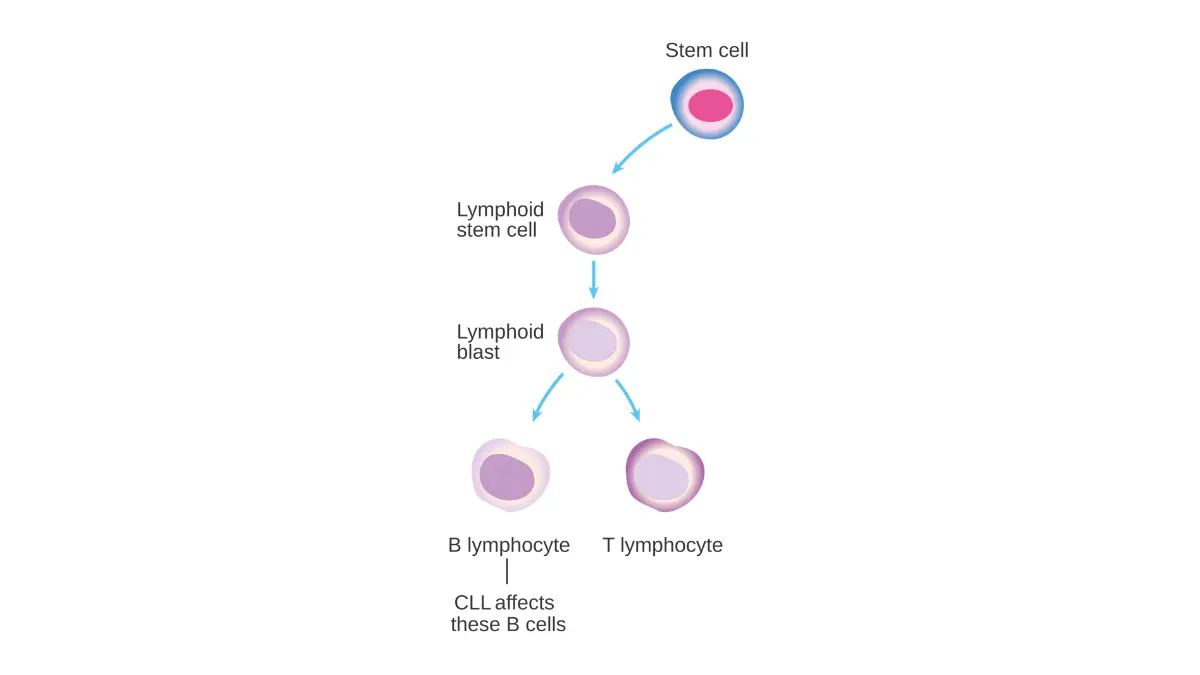
CLL is the exception to the “you need a bone marrow test” rule: the ACS explains that CLL is often diagnosed with blood tests and flow cytometry, with marrow sampling not always needed at first.
When blood-count changes and symptoms shouldn’t wait
Most abnormal blood counts are benign, but some symptoms deserve prompt medical attention rather than watchful waiting. These are reasons to see a doctor — not a self-diagnosis checklist:
- Persistent, unexplained fatigue that rest doesn’t fix
- Easy or unexplained bruising or bleeding
- Frequent or hard-to-shake infections, or recurring fever
- Unintended weight loss or drenching night sweats
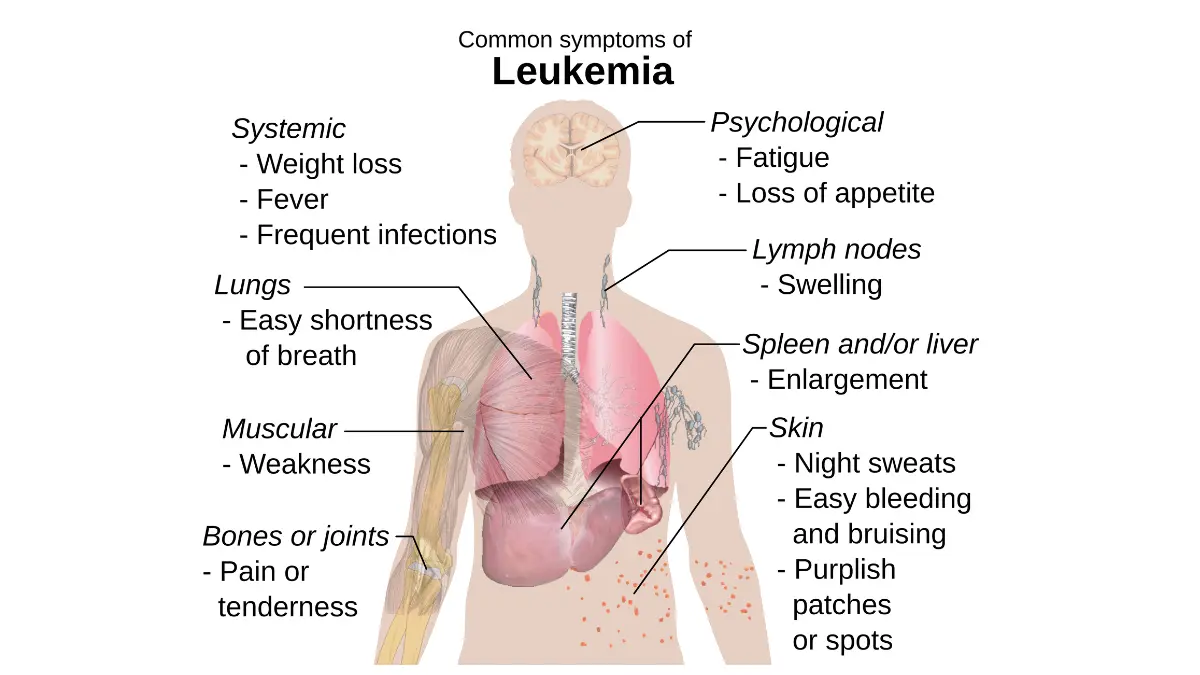
MedlinePlus lists these among the symptoms that prompt clinicians to order a CBC in the first place. Isolated and short-lived, any one is usually nothing; it’s persistence, or several appearing together, that warrants evaluation.
⚠️ Clinical Warning: Signs of very low platelets or a serious infection — bleeding that won’t stop, a rash of tiny red-purple spots, a high fever with shaking chills, or new breathlessness — need urgent assessment, not a wait-and-see approach.
✅ Patient Action: Bring your actual CBC printout to your appointment and ask: “Given these numbers and my symptoms, do I need urgent evaluation, a repeat test, or a referral — and what are we checking for?”
CBC and leukemia: frequently asked questions
1. Can a CBC detect leukemia?
A CBC can detect the blood-count changes that raise suspicion of leukemia — an abnormal white count, low platelets, or anemia — but it can’t confirm leukemia alone. An abnormal result usually has a non-cancer cause. Confirming leukemia takes further testing, usually a bone marrow exam, so discuss any abnormal CBC with your clinician.
2. What does a CBC show if you have leukemia?
In leukemia, a CBC may show a white cell count that is high, low, or normal, often with immature blast cells, plus anemia and low platelets. Sometimes all cell types drop together. These patterns also appear in many non-cancer conditions, so only a clinician can interpret your specific results.
3. Can you have leukemia with a normal CBC?
Yes, though uncommon: some leukemia stays mainly in the bone marrow without releasing abnormal cells into the blood, so a CBC can look normal early. A normal CBC is reassuring but not an absolute all-clear. If worrying symptoms persist despite normal counts, tell your clinician, who reads results alongside your exam.
4. What test confirms leukemia?
For most leukemias, a bone marrow aspiration and biopsy confirm the diagnosis, supported by flow cytometry and genetic testing that identify the type. Chronic lymphocytic leukemia can often be diagnosed with blood tests and flow cytometry alone. A hematologist decides which tests you need, so ask what each would tell you.
5. What white blood cell count indicates leukemia?
There’s no single white blood cell number that confirms or rules out leukemia. Counts can be markedly high, near-normal, or low with leukemia, and a very high count far more often reflects infection or medication. Because no threshold is diagnostic, an abnormal white count should always be interpreted by your clinician.
6. Can a CBC tell what type of leukemia you have?
No — a CBC can flag that something’s wrong but can’t identify the leukemia type. Determining whether leukemia is acute or chronic, myeloid or lymphoid, needs flow cytometry and genetic testing on blood or marrow. The type drives treatment, so a hematologist makes this classification before any treatment decisions.
7. Is leukemia usually found on a routine blood test?
Sometimes — because a CBC reflects marrow activity, it can incidentally reveal leukemia in people without symptoms, most often the slow-growing chronic types, especially chronic lymphocytic leukemia. Acute leukemias more often cause symptoms that prompt testing. Any leukemia suspected on routine blood work is confirmed with further testing by your clinician.
8. What happens after an abnormal CBC?
Your clinician usually repeats the CBC and orders a peripheral blood smear, where a pathologist examines the cells. If leukemia stays a concern, you’re referred to a hematologist, who may perform bone marrow testing to confirm or exclude it. Most abnormal CBCs are explained without cancer, so ask what’s being checked.
9. Does a high white blood cell count mean leukemia?
Usually not — a high white blood cell count most often reflects infection, inflammation, stress, or a medication reaction rather than leukemia. In leukemia the count can be high, but also normal or low, and immature blast cells matter more than the number. Persistent, unexplained high counts should be evaluated by your clinician.
10. Can anemia or low platelets be a sign of leukemia?
They can be, because leukemia cells can crowd out normal red-cell and platelet production in the marrow. But low hemoglobin and low platelets have many common, non-cancer causes, from iron deficiency to medications. Alone they don’t mean leukemia; your clinician interprets them with the rest of your CBC and history.
11. Should I be worried about an abnormal CBC?
An abnormal CBC is common and usually traces to something benign — diet, hydration, medication, a period, or a passing infection. It’s a prompt for follow-up, not a diagnosis. Still, don’t ignore it: bring it to your clinician, who decides whether a repeat test, smear, or referral is warranted.
The bottom line
A CBC is a powerful first look at your blood, but it points toward leukemia rather than proving it. Blood-count changes — abnormal white cells, low platelets, anemia — are signals that earn a closer look, and for most leukemias it’s a bone marrow test with flow cytometry and genetic analysis that confirms the diagnosis. Chronic lymphocytic leukemia is the common exception that blood tests can often settle.
If your CBC came back abnormal, the most useful next move isn’t to fear the number — it’s to bring it to your clinician, ask what the result is checking for, and understand the pathway ahead.
About this content
How this article was put together: researched from recognised health sources, drafted with the help of AI tools, and edited by hand, with sources linked throughout.

Sameer Patel is the founder and editor of My Medicine Advisor. He is not a doctor or medical professional — before starting this site he worked in banking,…
Medical disclaimer
The content on MyMedicineAdvisor is provided for general informational and educational purposes only and is not a substitute for professional medical advice, diagnosis, or treatment. Health information on this website should not be used to diagnose, treat, cure, or prevent any condition without guidance from a qualified healthcare professional. Always seek the advice of your doctor, physician, or another licensed healthcare provider with any questions you may have regarding a medical condition, symptoms, medications, or treatment decisions.