
On This Page – Quick Medical Summary
If a doctor just ordered a complete blood count and you’re bracing for the needle, here’s the short answer first: a CBC blood draw usually feels like a quick pinch or sting that lasts a few seconds, not the ordeal your nerves are predicting. Most people are surprised by how fast it’s over.
This guide is built for wherever you’re standing. If you’re an adult booking your own test, skip ahead to what the draw feels like and how to make it easier. If you’re a parent bringing a child, or someone who has felt faint at the sight of a needle, there’s a section written for you. And if your arm bruised last time and left you worried, you’ll find exactly what’s normal and what isn’t.
The needle part is genuinely brief. Everything that follows is here so nothing catches you off guard — and so you leave with a plan.
ℹ️ Medical Disclaimer: This article is general health information, not medical advice, and does not diagnose any condition, direct any treatment or medication, or replace guidance about your specific procedure. Blood-draw reactions, bleeding risk, and follow-up needs vary by person — for anything specific to you, consult your own healthcare provider, and for the draw itself, speak with the phlebotomist or clinic drawing your blood.
What a CBC blood draw actually feels like
The honest answer to whether a CBC hurts: for most people it’s a brief, sharp pinch as the needle enters, then a feeling of mild pressure while the blood is collected, and it’s done within seconds. According to MedlinePlus, a blood test carries very little risk, and you may feel only slight pain or minor bruising at the spot where the needle went in, with most of that fading quickly.
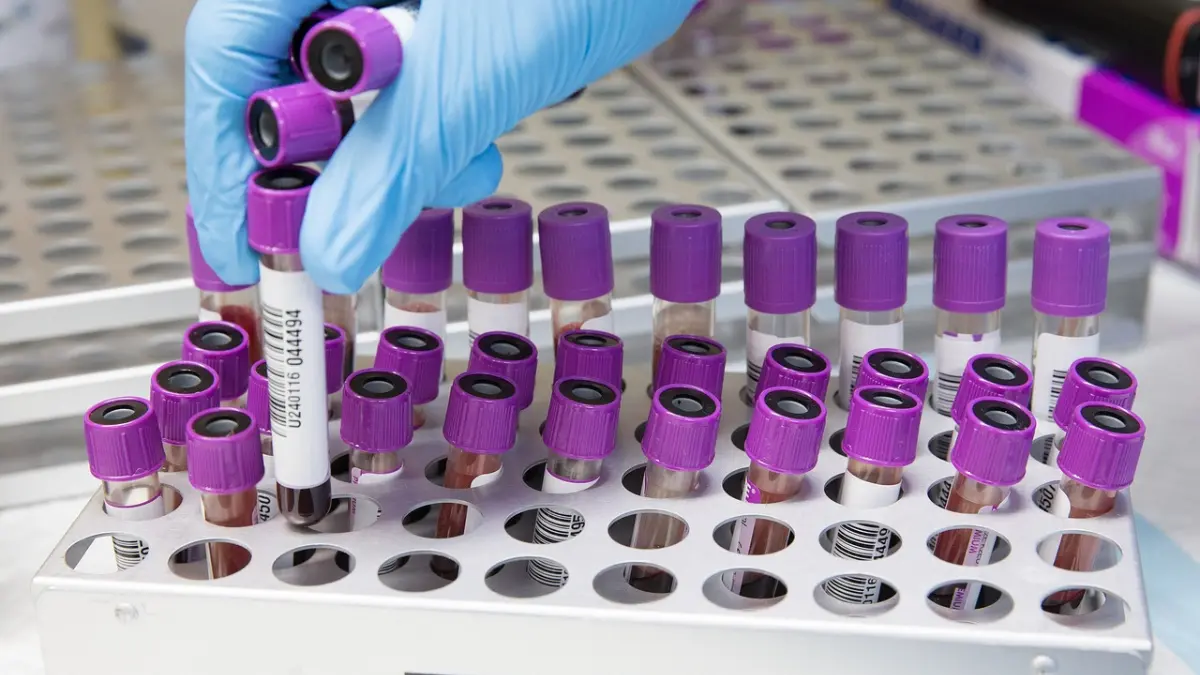
A CBC by itself also needs only a small blood sample — usually a single small tube, a few milliliters, which is less than a teaspoon. If you’ve seen several tubes filled at once, that’s almost always because other tests were ordered at the same visit, not because a CBC needs that much.
🔬 How It Works: The quick sting comes from the needle passing through your skin, where the nerve endings that sense sharp touch are concentrated. Once the needle is in the vein, there are far fewer of those nerve endings, which is why the pressure that follows usually doesn’t hurt the way the first moment does.
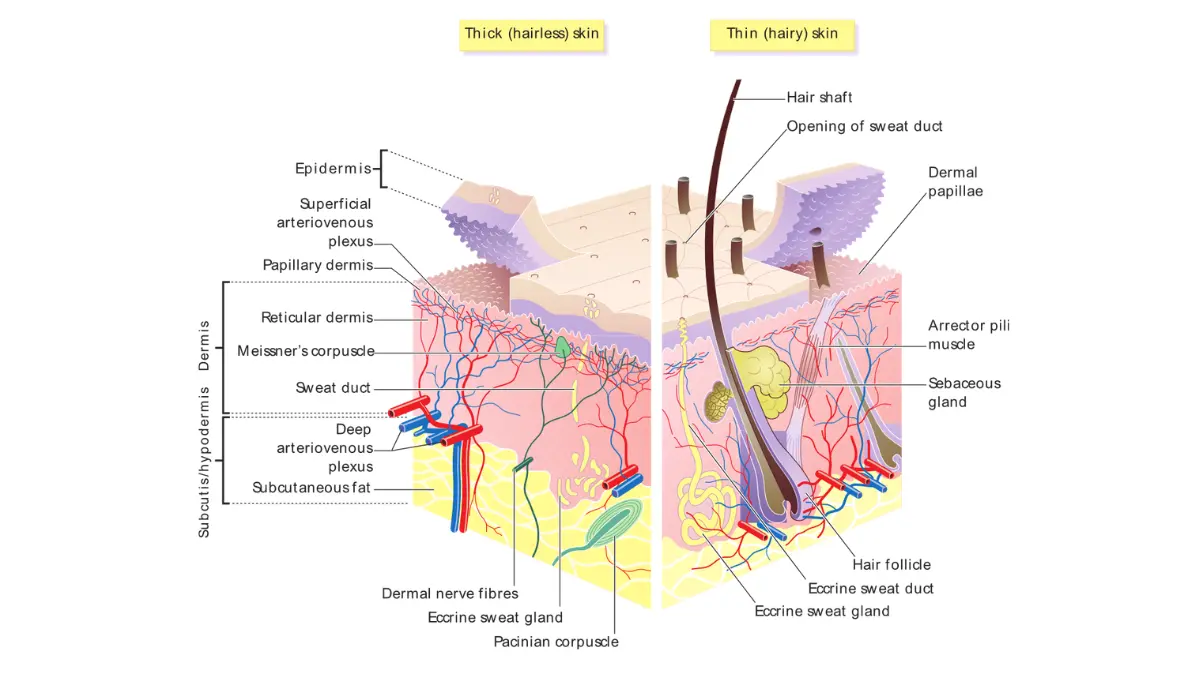
Adapted from Wikimedia Commons Skin Layers, licensed under CC BY-SA 3.0.
For a lot of people, the dread is the hardest part, and anticipating the pain feels worse than the pinch itself. Knowing the sensation ahead of time — brief, then just pressure — takes some of the power out of it. Once your results are ready, the pillar guide on what your CBC can and can’t tell you walks through what the numbers mean, including when a lab runs a CBC with differential.
Step by step: what happens during the draw
Knowing the sequence removes most of the surprise, so here is a CBC blood test from start to finish. The whole thing is quick — your part usually takes just a few minutes.
- You roll up a sleeve, and the phlebotomist ties a soft elastic band (a tourniquet) above the site to make the vein easier to find.
- They clean the skin with an alcohol wipe, which can feel cool.
- A thin needle goes into a vein — usually inside the elbow — and this is the quick-pinch moment.
- One small tube fills with blood; you may feel gentle pressure but usually no ongoing pain.
- The band comes off, the needle comes out, and they press gauze on the spot and add a bandage.
You generally don’t need to fast for a standalone CBC — if it’s the only test ordered, you can eat and drink as usual, though your provider may ask you to fast if other tests are being drawn at the same time. If timing is on your mind, our guide to how long a CBC takes from check-in to results covers the full picture, and the details on whether you need to fast before a CBC explain the exceptions.
✅ Patient Action: When you book, ask the clinic one question — “Is the CBC the only test being drawn, or should I fast?” — so you arrive prepared instead of guessing.
How to make a CBC blood draw hurt less
You have more control over the experience than it feels like, and a few simple steps genuinely reduce the sting. The single most useful one is hydration.
Before your appointment:
- Drink plenty of water. When you’re well hydrated, your veins are fuller and easier to find, which often means fewer attempts.
- Keep the arm warm — cold makes veins constrict and harder to access.
- Wear a loose sleeve that pushes up easily.
During the draw:
- Breathe slowly, with a long exhale as the needle goes in; this eases tension and can soften how the pinch registers.
- Look away if the sight bothers you, and keep the arm relaxed and still.
- Tell the phlebotomist if you’d like them to count down or talk you through it.
🩺 Physician Note: Standard phlebotomy best practices consistently point to the same low-tech levers — hydration, warmth, relaxed breathing, and an experienced person drawing the blood — as the things that make a draw smoother. None of these require anything special; they’re simply worth doing on purpose.
If you’re especially sensitive to needles, ask whether a topical numbing cream is an option; some people apply an over-the-counter lidocaine cream to the site roughly 30 minutes beforehand to dull the surface sensation. Raise it with your provider first, since timing and suitability matter. For a full run-through, see how to prepare for your CBC, and if you want to check your daily intake, our water intake calculator gives you a target.
Why blood draws hurt more for some people
If your draws have been rougher than a friend’s, it usually isn’t about your pain tolerance — it’s about veins, hydration, and technique. Small, deep, or rolling veins are harder to access, and dehydration makes them flatter and easier to miss, which can mean more than one attempt.
Anxiety plays a real role too. Fear heightens how much the needle registers, and for some people it can trigger lightheadedness or fainting. Needle fear is common enough that researchers have described it as an overlooked barrier to getting care, and you can read more in this NIH-hosted survey on needle fear.
📊 Clinical Data Point: About 1 in 4 adults report a fear of needles — Source: Harvard Health (2021). Survey estimates run higher in some groups depending on how the question is asked, so if this is you, you’re in very common company.
The person drawing your blood matters as well; an experienced phlebotomist tends to locate veins faster and stick fewer times. If a CBC was ordered because of unexplained symptoms, our symptom checker can help you organize what you’re noticing before your visit.
Normal after-effects vs. when to call your clinic
Most people walk away with nothing more than a moment of soreness. A little tenderness at the site, or a small bruise, is common and usually settles on its own within a few days to a couple of weeks as your body reabsorbs the blood. Brief lightheadedness right after can also happen and typically passes with a few minutes of sitting.
🔬 How It Works: A bruise (hematoma) forms when a small amount of blood leaks out of the vein into the surrounding tissue after the needle is removed. Pressing firmly on the spot for a few minutes afterward — and going easy on that arm — helps keep it small.
Some situations are worth a call rather than a wait-and-see, and these are the signs to watch for.
⚠️ Clinical Warning: Contact the clinic that drew your blood — or seek care — if you notice spreading redness, warmth, swelling, or pus at the site (possible infection), persistent numbness, tingling, or an electric-shock sensation down the arm (possible nerve irritation), a lump that keeps growing, or bleeding that won’t stop with firm pressure. These are uncommon, but they shouldn’t be ignored.
If you take a blood thinner such as warfarin, mention it beforehand — you’re more prone to bruising, and a little extra pressure after the draw helps.
✅ Patient Action: If your arm is still numb, tingling, or painful the next day, call the clinic that drew the blood and ask to speak with the lab supervisor or a nurse about a possible nerve or bruising issue — don’t wait for it to “sort itself out.”
CBC blood draws for kids, fainters, and hard-to-find veins
A few situations deserve their own game plan, starting with children. For a child, a butterfly needle (a smaller, thinner needle) is often used for little veins, and simple distraction and an honest, calm explanation usually help more than a big buildup. The amount a CBC needs is small and safe for kids, and pediatric teams often use tiny microtubes.
If you tend to faint, this is the most important thing you can do: tell the phlebotomist before they start.
✅ Patient Action: Say plainly, “I’ve fainted during blood draws before — can I lie down for this one?” Lying back and, if they suggest it, gently tensing your leg and core muscles for a few seconds at a time can help keep your blood pressure from dropping.
For veins that are tricky to find, hydration and warmth do a lot of the work — you can also ask for a warm compress or request an experienced phlebotomist. Speaking up is welcome, not a bother; the people drawing blood would much rather adjust than have a hard stick.
CBC blood draw: frequently asked questions
1. Does a CBC blood test hurt?
For most people, a CBC blood test hurts only briefly — a quick pinch or sting as the needle enters, then mild pressure while a small tube fills. It’s over within seconds. Anxiety can make it feel bigger than it is, but the actual needle moment is short.
2. How long does a CBC blood draw take?
The blood draw itself is quick — the needle is usually in your arm for well under a minute, and your whole part of the visit takes just a few minutes. Filling one small tube for a CBC doesn’t take long once the vein is found.
3. Do I need to fast before a CBC?
No — if a CBC is the only test ordered, you can usually eat and drink normally beforehand. You only need to fast if other tests drawn at the same visit require it. Check your specific instructions, and ask your provider if you’re unsure.
4. How much blood is taken for a CBC?
A standalone CBC usually needs just a small amount — one small tube holding a few milliliters, which is less than a teaspoon. If you see several tubes filled, that’s typically because other tests were ordered at the same time, not the CBC alone.
5. Why does my arm hurt after a blood draw?
Mild soreness at the needle site is common and usually brief, often from minor bruising as a little blood leaks into nearby tissue. Firm pressure afterward and going easy on the arm help. If pain worsens or spreads, contact the clinic that drew your blood.
6. Is bruising after a CBC normal, and how long does it last?
Yes — a small bruise at the blood draw site is a common, harmless side effect, and it usually fades within a few days to a couple of weeks as your body reabsorbs the blood. A bruise that keeps growing or becomes very painful is worth a call to your provider.
7. Can you faint during a blood draw?
Some people do feel faint or lightheaded during a blood draw, often driven by anxiety rather than the pinch itself. It usually passes quickly with rest. If you have a history of fainting, tell the phlebotomist and ask to lie down — and mention it to your provider.
8. Does drinking water before a blood test make it hurt less?
It can help indirectly. Being well hydrated makes your veins fuller and easier to find, which often means fewer needle attempts and a smoother CBC blood draw. Drinking water in the hours before your appointment is a simple, low-effort way to prepare.
9. Can I ask for numbing cream before a CBC?
Yes — some people use an over-the-counter lidocaine numbing cream on the site about 30 minutes before a blood draw to dull the surface sensation. Ask your provider first about whether it’s suitable and how to time it, since it needs to be applied in advance.
10. What if my arm is numb or tingling after a blood draw?
Persistent numbness, tingling, or an electric-shock sensation down the arm after a blood draw isn’t typical and can signal nerve irritation. Report it to the clinic that drew your blood rather than waiting. Most cases are mild, but it should be checked by a provider.
11. Which hurts less, a butterfly needle or a regular needle?
A butterfly needle is thinner and often used for small or fragile veins, so it can feel gentler for some people and in children. The phlebotomist chooses based on your veins and the draw, so it’s fine to ask which they’d recommend for you.
The bottom line before your appointment
A CBC blood draw is one of the most routine tests there is, and for the vast majority of people it comes down to a few seconds of a quick pinch, then it’s finished. Most of what makes it easier is in your hands — arrive hydrated and warm, breathe through the moment, speak up about past fainting or tough sticks, and know the small handful of after-effects that warrant a call.
The needle is brief; your health information is worth it. Once your results come back, our guide to how to read your CBC results breaks down each value in plain language, including what a high white blood cell count can mean.
About this content
How this article was put together: researched from recognised health sources, drafted with the help of AI tools, and edited by hand, with sources linked throughout.

Sameer Patel is the founder and editor of My Medicine Advisor. He is not a doctor or medical professional — before starting this site he worked in banking,…
Medical disclaimer
The content on MyMedicineAdvisor is provided for general informational and educational purposes only and is not a substitute for professional medical advice, diagnosis, or treatment. Health information on this website should not be used to diagnose, treat, cure, or prevent any condition without guidance from a qualified healthcare professional. Always seek the advice of your doctor, physician, or another licensed healthcare provider with any questions you may have regarding a medical condition, symptoms, medications, or treatment decisions.