
On This Page – Quick Medical Summary
Finding out that prostate cancer can affect men under 50 is unsettling, especially when almost everything you read frames it as an older man’s disease. It is uncommon before 50 — but it is real, and how you should respond depends on where you stand right now.
If you are worried about your risk because of family history or ancestry, the sections on who is most at risk and when to screen are written for you. If you have unexplained urinary symptoms, start with the signs section — though symptoms alone rarely confirm anything. If you were recently diagnosed young, the sections on what makes early-onset disease different and what the survival data shows will matter most. If you are a partner or caregiver, the FAQ answers the questions families ask first.
This guide focuses on what is genuinely different about prostate cancer under 50 — and what to do with that information. For the bigger picture, our overview of how prostate cancer is staged and treated covers the full clinical journey.
ℹ️ Medical Disclaimer: This article is educational. It does not diagnose prostate cancer, recommend treatment, or replace personalized medical care. Decisions about PSA screening, genetic testing, biopsy, and treatment depend on your individual risk and should be made with a board-certified urologist or your primary care physician. If you have urinary symptoms, blood in your urine or semen, or a family history of cancer, raise them with a qualified clinician.
How common is prostate cancer in men under 50?
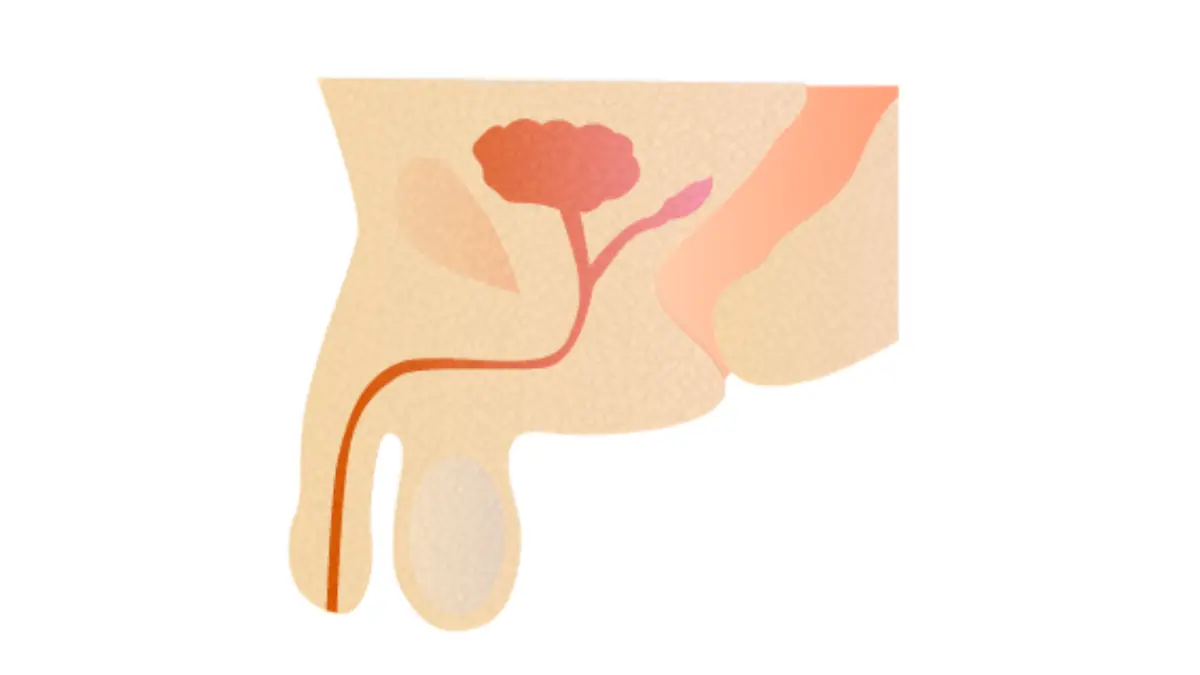
Prostate cancer is strongly tied to age, and diagnoses before 50 make up a small share of all cases. According to U.S. Cancer Statistics from the CDC, in 2022 about 5% of prostate cancer cases were diagnosed in men aged 45 to 54, compared with 52% in men 55 to 69 and 43% in men 70 or older.
How rare is it, really?
The average age at diagnosis is around 66, based on the National Cancer Institute’s SEER program. Cases under 50 exist but are uncommon, and most are caught while still confined to the prostate. A SEER-based analysis of men under 50 diagnosed between 2004 and 2020 found that roughly three-quarters were localized at diagnosis, with about 15% regional.
📊 Clinical Data Point: In 2022, about 5% of U.S. prostate cancer cases occurred in men aged 45–54. — Source: CDC, U.S. Cancer Statistics, Prostate Cancer Incidence (2025 release).
Why the numbers can look different across sources
You may see alarming “rates doubling in young men” headlines. Some reflect data from other countries; in the United States, incidence in younger men rose for decades but peaked in the early 2000s and then declined, a shift linked to reduced routine PSA testing after 2012. Reading any single statistic in that context helps prevent unnecessary alarm.
What are the signs of prostate cancer in younger men?
The signs of prostate cancer are not different for younger men — and the most important fact is that early disease usually causes no symptoms at all. When symptoms do appear, they tend to involve urination and overlap heavily with non-cancer conditions.
Why early prostate cancer often has no symptoms
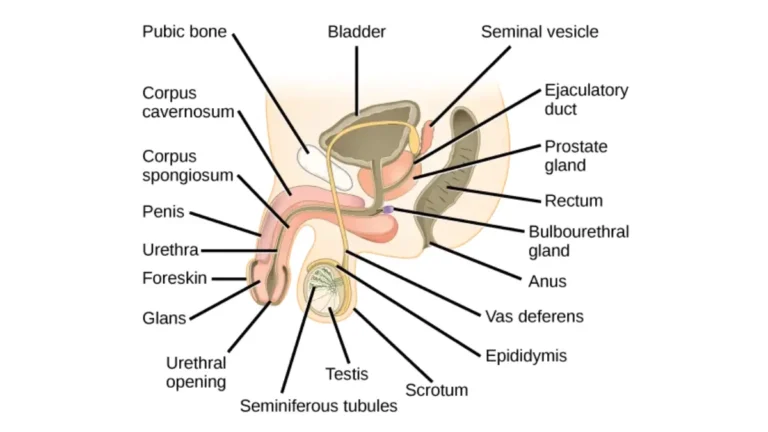
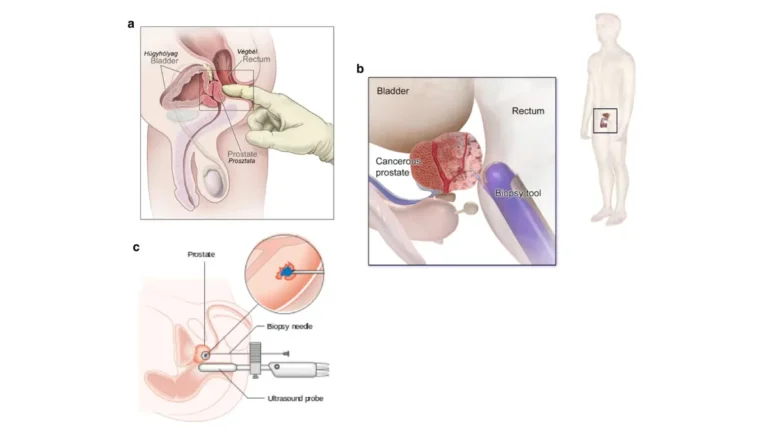
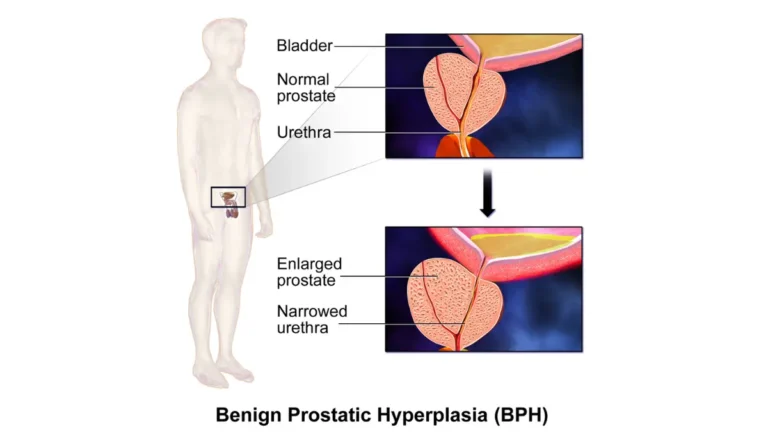
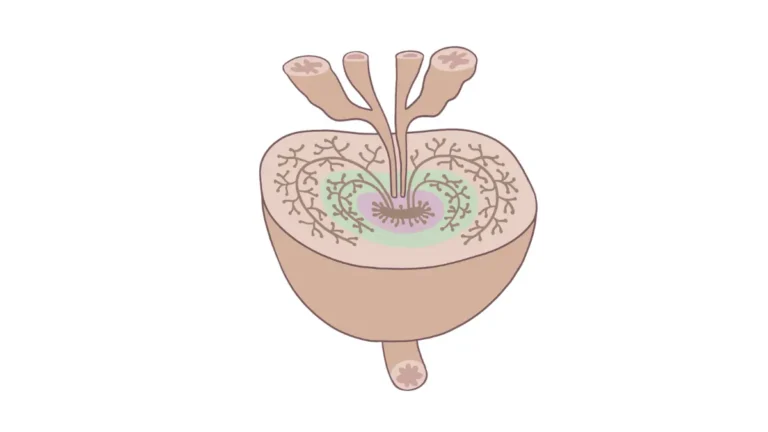
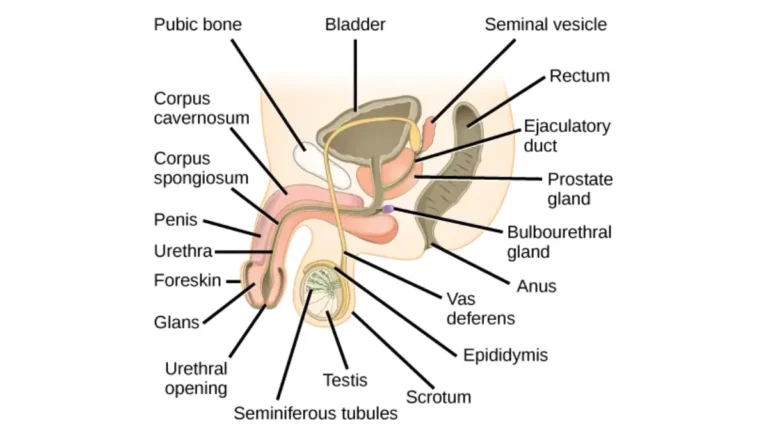
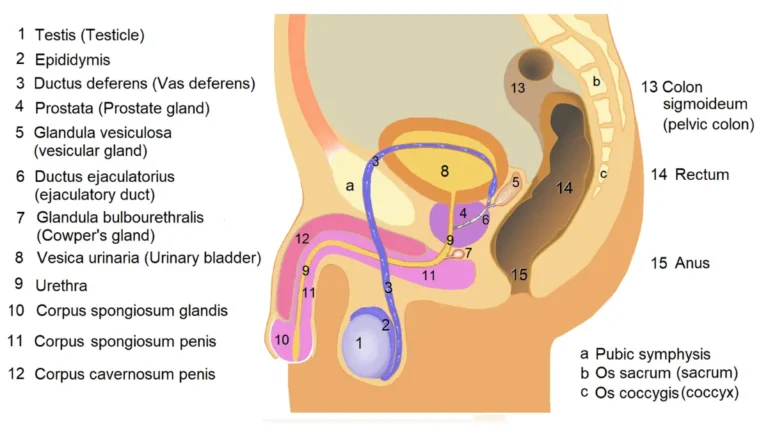
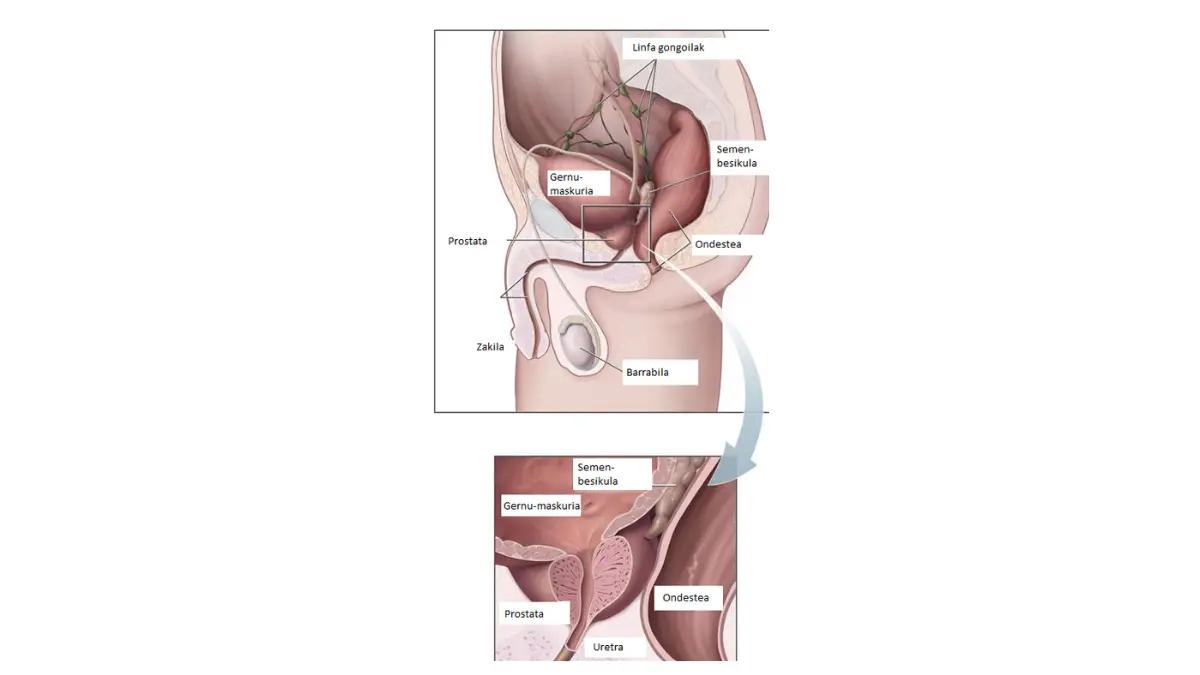
The prostate sits below the bladder and wraps around the urethra. A small, early tumor often does not press on anything or change how you urinate, which is why screening — not symptoms — is usually what detects it early. Waiting for symptoms is not a reliable way to catch prostate cancer in time.
Urinary changes and when they matter
When symptoms do occur, they may include:
- Needing to urinate more often, especially at night
- Difficulty starting urination, or a weak or interrupted stream
- A feeling that the bladder is not fully empty
- Less commonly, blood in the urine or semen
Symptoms that overlap with non-cancer conditions
Most of these symptoms are caused by benign prostatic hyperplasia (an enlarged prostate) or a prostate infection, not cancer, as MedlinePlus’s overview of prostate symptoms describes. That overlap is exactly why symptoms cannot confirm or rule out cancer on their own.
✅ Patient Action: If you notice blood in your urine or semen, or urinary changes that persist beyond two weeks, ask a primary care physician or urologist to evaluate them — they are usually benign, but worth checking. You can also use our symptom checker to organize what to mention.
What makes prostate cancer under 50 different?
When prostate cancer appears at a younger age, research suggests it is not one single thing. Early-onset prostate cancer appears to follow two different patterns, and inherited genetics plays a larger role than it does in older men.
Two different patterns of early-onset disease
Many younger cases are found through screening, are low-grade, and grow slowly. A smaller group involves more aggressive biology, sometimes tied to inherited gene mutations. Grouping all “young” prostate cancer together is misleading, because these two patterns behave very differently.
Is prostate cancer more aggressive in younger men?
Not as a rule. Most early-onset disease caught while localized is highly treatable, and age by itself does not make a tumor aggressive. The higher-risk picture concentrates in cases linked to inherited mutations, or those already advanced when found.
Why inherited genetics matter more at a young age
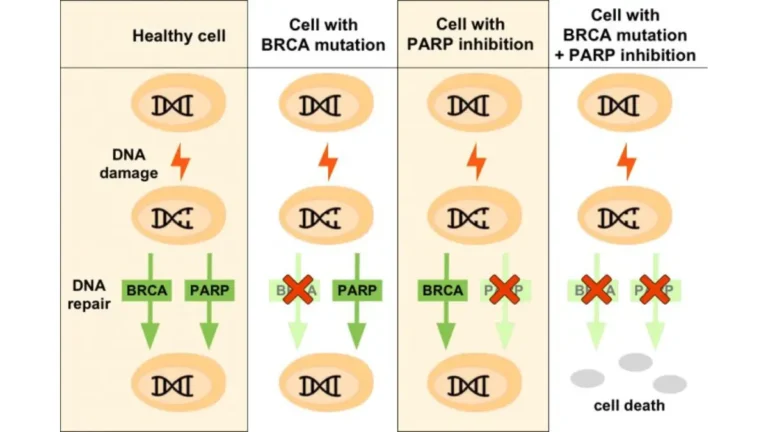
A younger diagnosis raises the likelihood that an inherited factor is involved. The National Cancer Institute notes that mutations in DNA-repair genes such as BRCA2 are associated with earlier onset and more aggressive disease — which is why genetics is central to understanding prostate cancer under 50. Our guide to BRCA mutations and prostate cancer testing goes deeper.
🔬 How It Works: Genes like BRCA2 normally help cells repair damaged DNA. When an inherited mutation disables that repair, cells can accumulate errors more easily — which helps explain why some inherited prostate cancers appear younger and behave more aggressively.
Who is most at risk for early-onset prostate cancer?
Three factors raise prostate cancer risk most consistently: increasing age, family history, and ancestry. For men under 50, the last two matter more than age, and they should guide what you do next.
Family history and inherited gene mutations
Having a father or brother diagnosed with prostate cancer — particularly at a young age, or several relatives affected — meaningfully increases risk. A strong family history can also point to an inherited mutation that runs through a family, raising risk for relatives of both sexes.
Race, ancestry, and prostate cancer risk
Black men in the U.S. have higher prostate cancer incidence and death rates than White men, and are often diagnosed younger. The American Cancer Society reports incidence is roughly 70% higher in Black men. Our article on prostate cancer risk in Black men covers why this matters for earlier screening.
Hereditary cancer syndromes (BRCA, Lynch)
Mutations in BRCA2, BRCA1, ATM, CHEK2, and the Lynch syndrome genes can raise prostate cancer risk and signal hereditary cancer syndromes that affect relatives too, as the National Cancer Institute’s genetics of prostate cancer summary explains.
✅ Patient Action: If a first-degree relative had prostate cancer young, or you have a known family mutation, ask a genetic counselor whether germline testing is right for you. Our genetic risk assessment tool can help you map your family history first.
When should younger men get screened for prostate cancer?
Screening guidance is built around risk, not a single age, which is why younger men with risk factors may start much earlier than the general population. The American Cancer Society frames the conversation about screening this way:
Screening ages by risk group
- Age 50 for men at average risk with at least a 10-year life expectancy
- Age 45 for higher-risk men, including Black men and those with a first-degree relative diagnosed before 65
- Age 40 for the highest-risk men, including those with more than one first-degree relative diagnosed young
NCCN and the American Urological Association similarly support a baseline PSA test at 40 to 45 for men at increased risk, including those with germline mutations.
What a baseline PSA test tells you
PSA is a blood test that measures prostate-specific antigen. A baseline reading earlier in life gives doctors a point of comparison over time, which helps flag meaningful changes. PSA is not a cancer test on its own — elevated levels have many non-cancer causes.
What to ask your doctor
Screening carries trade-offs, including false positives and the overdiagnosis of cancers that may never cause harm, so it is a shared decision. You can read more on prostate cancer screening by age to prepare. The American Cancer Society’s early-detection recommendations lay out the age tiers in full.
✅ Patient Action: Ask your primary care physician or a urologist: “Based on my family history, ancestry, and any known mutations, should I start PSA screening now — and how often?”
⚠️ Clinical Warning: A normal PSA does not completely rule out prostate cancer, and a high PSA does not confirm it. Treat PSA results as one input in a clinician-guided plan, not a verdict.
What is the survival rate for prostate cancer under 50?
For prostate cancer caught before it spreads, survival is high — and that holds for younger men. Outcomes depend far more on the stage and grade at diagnosis than on age itself.
Survival by stage at diagnosis
The National Cancer Institute reports that, across all ages, the 5-year relative survival for prostate cancer that is localized or regional is greater than 99%, while survival for distant (metastatic) disease is about 37%. A SEER-based analysis of men under 50 found 5-year relative survival near 100% for localized disease.
📊 Clinical Data Point: 5-year relative survival for localized or regional prostate cancer is greater than 99% (all ages). — Source: NCI, Prostate Cancer Treatment (PDQ), SEER 2014–2020.

Why outcomes are usually favorable when caught early
Most prostate cancers found early grow slowly and respond well to treatment. The harder outcomes concentrate in the small share diagnosed at a distant stage, or in very young patients with advanced disease — exactly the cases the genetics and screening sections aim to catch sooner. For a fuller breakdown, see prostate cancer survival rates by stage.
🩺 Physician Note: Survival statistics describe large populations, not individuals. Your stage, Gleason grade, and overall health shape your outlook far more than the headline numbers, so interpret them with your oncologist or urologist.
Prostate cancer under 50: frequently asked questions
1. Can you get prostate cancer under 50?
Yes, you can get prostate cancer under 50, though it is uncommon. CDC data show about 5% of U.S. cases occur in men aged 45 to 54, with the average age at diagnosis around 66. Most younger cases are found while still confined to the prostate. Discuss your personal risk with a primary care physician.
2. How common is prostate cancer in men under 50?
Prostate cancer under 50 is relatively rare. According to CDC U.S. Cancer Statistics, roughly 5% of cases in 2022 were in men aged 45 to 54, compared with about 95% in men 55 and older. U.S. incidence in younger men rose for decades but peaked in the early 2000s before declining.
3. What are the first signs of prostate cancer in younger men?
Early prostate cancer usually has no signs at all. When symptoms appear, they typically involve urination — frequent urination, a weak stream, or trouble starting — and overlap with an enlarged prostate or infection. Blood in urine or semen is less common. Because symptoms can’t confirm cancer, ask a urologist to evaluate persistent changes.
4. Is prostate cancer more aggressive in younger men?
Not as a rule. Research describes early-onset prostate cancer as two patterns: many slow-growing, screen-detected cancers, plus a smaller group with aggressive biology often linked to inherited mutations. Age alone does not make a tumor aggressive; stage and grade at diagnosis matter most. Your care team can explain your specific risk.
5. What makes prostate cancer under 50 different?
The main difference in prostate cancer under 50 is the larger role of inherited genetics. A younger diagnosis raises the chance an inherited mutation, such as in BRCA2, is involved, and these can drive earlier, more aggressive disease. The signs themselves are the same as in older men.
6. Does family history cause early-onset prostate cancer?
Family history strongly raises prostate cancer risk but does not guarantee it. A father or brother diagnosed young, or several affected relatives, can signal an inherited mutation running through a family. This is why a young or strong family history is a reason to ask a genetic counselor about germline testing.
7. Should men under 50 get a PSA test?
It depends on whether you have risk factors such as Black ancestry, a first-degree relative diagnosed young, or a known germline mutation — those men may begin PSA testing in their 40s. Average-risk men typically start later. Screening has trade-offs, so make the decision with your primary care physician or urologist.
8. At what age should high-risk men start prostate cancer screening?
The American Cancer Society suggests discussing screening at 45 for higher-risk men, including Black men and those with a first-degree relative diagnosed before 65, and at 40 for the highest-risk men with more than one such relative. BRCA2 carriers are often advised to start around 40. Confirm timing with your doctor.
9. Can a 40-year-old have prostate cancer?
Yes, though prostate cancer at 40 is uncommon. Most diagnoses occur after 55, but men with strong risk factors — family history, Black ancestry, or inherited mutations — can develop it earlier, which is why high-risk men may begin PSA screening at 40. A normal screen is reassuring but not absolute. Discuss screening with your clinician.
10. What is the survival rate for prostate cancer under 50?
Survival is generally excellent when prostate cancer is caught early. The National Cancer Institute reports 5-year relative survival above 99% for localized or regional disease across all ages, and a SEER analysis found near 100% for localized disease in men under 50. Survival drops for distant-stage disease. Your stage and grade guide your outlook.
11. Should I get genetic testing if a relative had prostate cancer young?
A relative diagnosed young is one situation where germline genetic testing may be worthwhile, since it can reveal inherited mutations like BRCA2 that affect your prostate cancer risk and your relatives’ risk too. A genetic counselor can assess your family history and explain what testing would, and would not, tell you.
Key takeaways and your next step
Prostate cancer under 50 is uncommon, but it is real — and what sets it apart is the larger role of inherited genetics, not a different set of symptoms. Early disease is usually silent, so screening, not symptom-watching, is what catches it in time. When caught early, outcomes are usually very good.
Your risk tier matters more than your age. If you have a family history, Black ancestry, or a known mutation, that is a reason to start the screening conversation in your 40s rather than wait.
✅ Patient Action: Bring your family history to your next primary care visit and ask whether earlier PSA screening, or a referral to a genetic counselor, makes sense for you.
About this content
How this article was put together: researched from recognised health sources, drafted with the help of AI tools, and edited by hand, with sources linked throughout.

Sameer Patel is the founder and editor of My Medicine Advisor. He is not a doctor or medical professional — before starting this site he worked in banking,…
Medical disclaimer
The content on MyMedicineAdvisor is provided for general informational and educational purposes only and is not a substitute for professional medical advice, diagnosis, or treatment. Health information on this website should not be used to diagnose, treat, cure, or prevent any condition without guidance from a qualified healthcare professional. Always seek the advice of your doctor, physician, or another licensed healthcare provider with any questions you may have regarding a medical condition, symptoms, medications, or treatment decisions.