
On This Page – Quick Medical Summary
If you’ve searched for pancreatic cancer symptoms in women, you noticed something that worried you, and you want an honest answer about whether being a woman changes what to watch for. Here it is, up front: the warning signs of pancreatic cancer are the same for women and men. What differs is not the symptoms themselves but the path to a diagnosis, the risk factors that matter most, and how often women’s symptoms get attributed to something else first.
This guide is organized by where you are right now. If you have a symptom you can’t explain — back pain, weight loss, yellowing skin, or new diabetes — start with the warning signs below. If you’re assessing risk because of family history or a BRCA result, skip to the risk section. If you’ve already been dismissed once and aren’t sure whether to push further, the section on why these symptoms get missed is for you. For the full picture beyond symptoms, our overview of how pancreatic cancer develops and is staged covers more ground.
ℹ️ Medical Disclaimer: This article is educational and does not diagnose pancreatic cancer, recommend treatment, or replace evaluation by a qualified clinician. The symptoms discussed here have many possible causes, most of them benign. Decisions about testing, diagnosis, medication, and care should be made with a board-certified physician — typically your primary care doctor, a gastroenterologist, or an oncologist — who can assess your individual situation.
Are pancreatic cancer symptoms different in women?
No. The symptoms of pancreatic cancer do not differ between women and men. The signs are the same because the disease behaves the same way regardless of sex — a tumor in the pancreas produces the same effects whether the patient is a woman or a man.
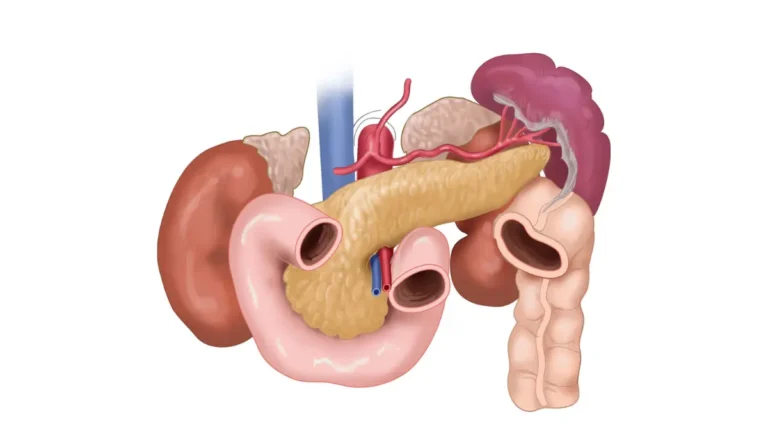
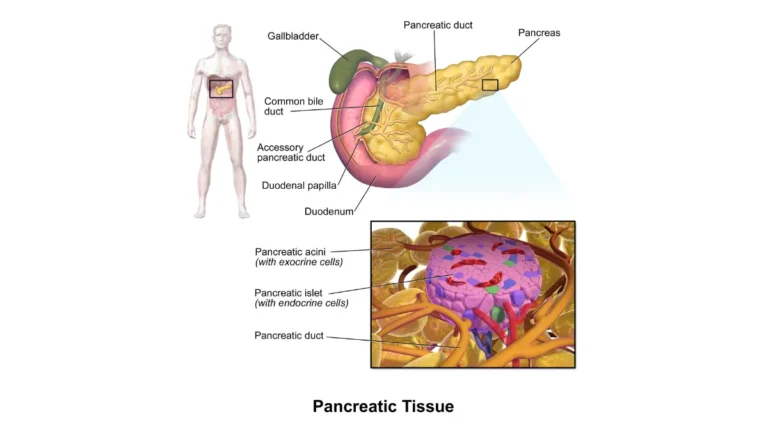
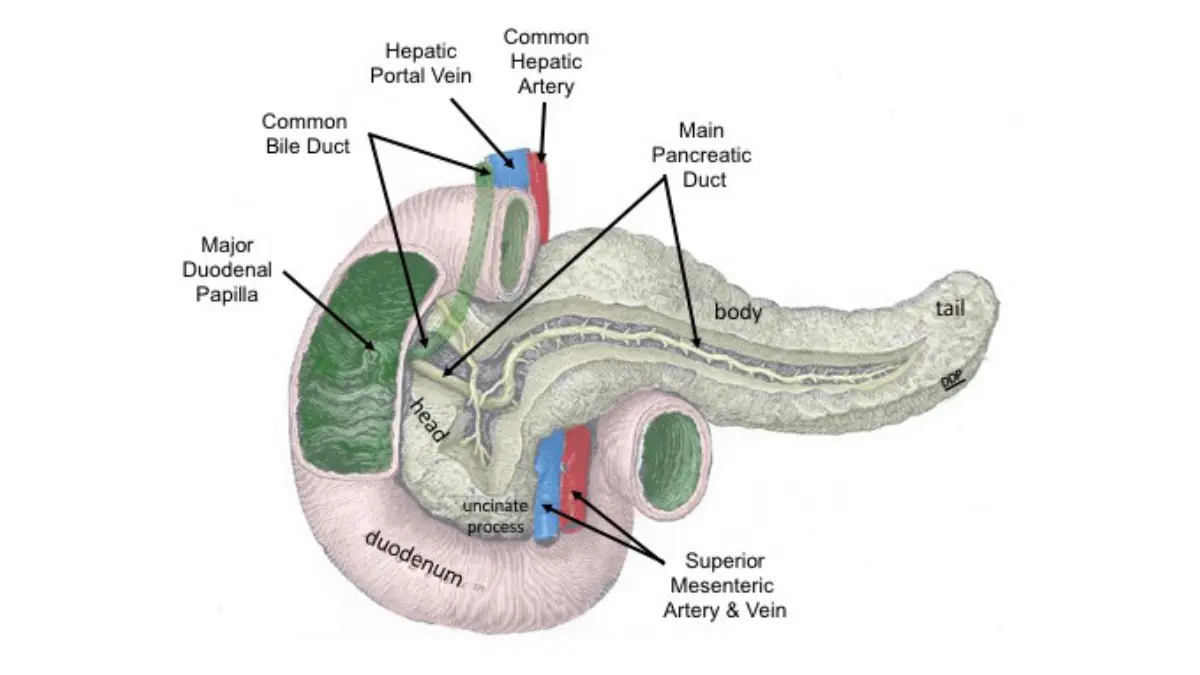
What the tumor’s location changes is which symptoms appear first. A growth in the head of the pancreas tends to block the bile duct early, producing jaundice. A tumor in the body or tail more often causes pain and weight loss instead, and can grow for longer before it is noticed. Our detailed look at the earliest signs of pancreatic cancer breaks down how this progression unfolds.
So why does so much content single out women? Because women’s symptoms are more often blamed on other things first. Many pancreatic cancer symptoms are initially attributed to gastrointestinal issues or stress — and for women, that list of “more likely” explanations frequently expands to include hormonal or gynecological causes. The symptoms are identical; the interpretation is where sex starts to matter.
The warning signs of pancreatic cancer to know
The most common warning signs of pancreatic cancer include:
- Jaundice — yellowing of the skin and the whites of the eyes, often one of the first noticeable signs
- Abdominal or back pain — usually in the upper belly, sometimes wrapping around to the mid-back
- Unexplained weight loss with loss of appetite or feeling full quickly
- New-onset diabetes, especially after age 50 and without an obvious cause
- Pale or greasy stools and dark urine — signs that bile flow is blocked
- Nausea or vomiting, often worse after eating
- Persistent fatigue unrelated to activity
- New, unexplained blood clots in the legs
According to the American Cancer Society’s overview of pancreatic cancer symptoms, most people with the disease develop jaundice as an early sign — though gallstones and hepatitis cause it far more often. Our guide to the seven warning signs clinicians never ignore covers each in more depth.
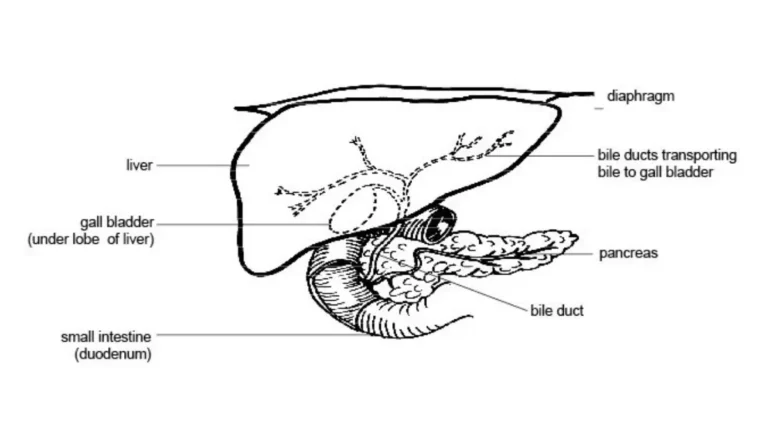
🔬 How It Works: Jaundice happens when a tumor in the head of the pancreas presses on the bile duct — the tube carrying bile from the liver to the intestine. Bile backs up, and a yellow pigment called bilirubin builds up in the blood, tinting the eyes and skin and darkening the urine.
Two signs deserve special attention. New-onset diabetes in an adult over 50 with no clear cause can occasionally be the first clue, because a growing tumor can damage the insulin-producing cells in the pancreas; if this happens to you, our blood sugar converter can help you track readings to discuss. Otherwise, remember that any single symptom is far more likely to be harmless — it is persistence beyond two weeks, or several signs together, that warrants evaluation.
How common is pancreatic cancer in women?
In 2026, the American Cancer Society estimates about 67,530 Americans will be diagnosed with pancreatic cancer — roughly 32,340 of them women and 35,190 men. A woman’s average lifetime risk is about 1 in 60, slightly lower than the 1 in 56 risk for men.
📊 Clinical Data Point: Pancreatic cancer accounts for about 3% of all U.S. cancers but is the third-leading cause of cancer death. The overall five-year relative survival rate is 13%, and only about 15% of cases are found while still localized to the pancreas. — Source: SEER Cancer Stat Facts (NCI) and American Cancer Society, 2026.
These numbers carry two honest messages. The disease is uncommon, and slightly less common in women than in men — so a single worrying symptom is far more likely to have a benign cause. But it is also serious and usually caught late, which is exactly why recognizing the signs early matters.
One trend is worth noting without alarm: several analyses, including a 2023 study in The Lancet Gastroenterology & Hepatology, found pancreatic cancer incidence rising faster in younger women than in younger men. The absolute numbers remain very small, and researchers stress the cause is not yet understood — but it is a reason for younger women with persistent, unexplained symptoms not to assume they are “too young.”
Why pancreatic cancer is more often missed in women
Women face a measurable gap in how quickly pancreatic cancer is diagnosed. A national study of Medicare beneficiaries found that female patients waited about 13% longer than men between the first related symptom and a diagnosis, and about 12% longer between diagnosis and surgery.
📊 Clinical Data Point: Women had 13% longer waiting times from symptom identification to diagnosis (odds ratio 1.13) and 12% longer from diagnosis to surgery (odds ratio 1.12). — Source: National study of Medicare beneficiaries, PubMed (PMID 33084065).
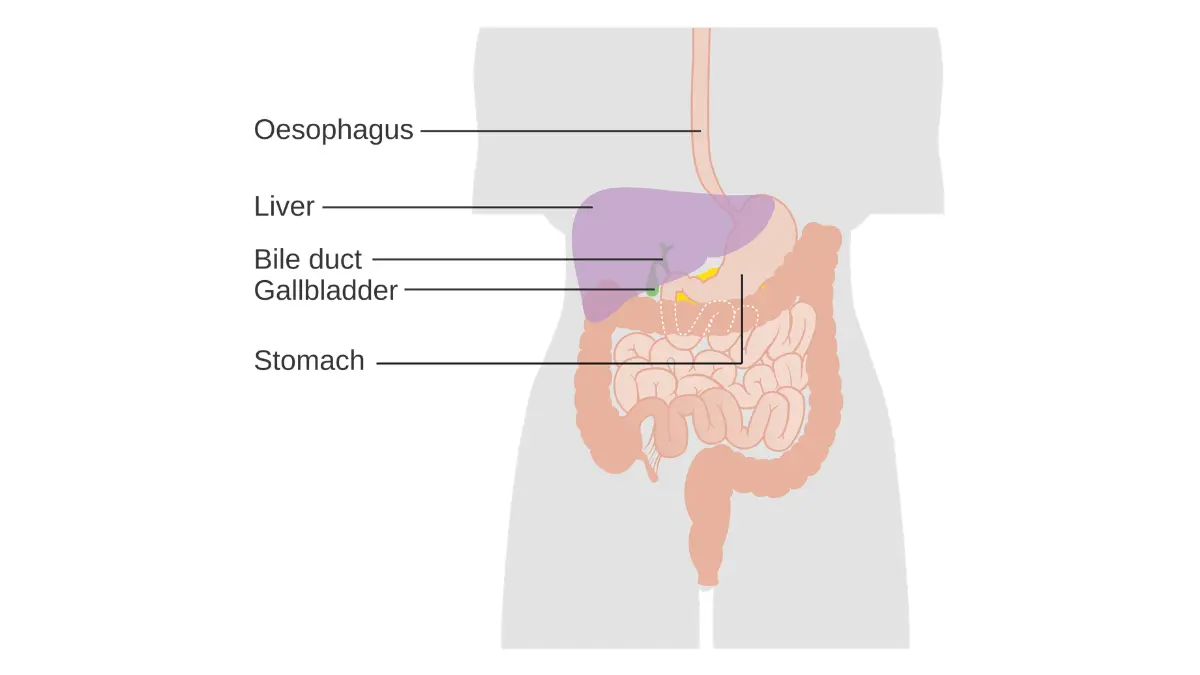
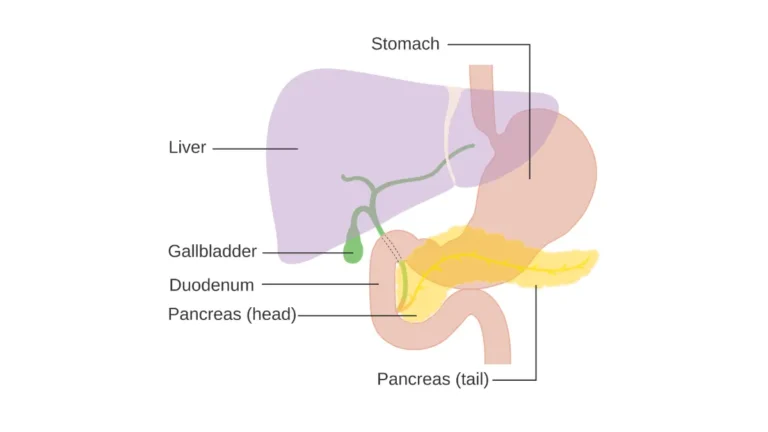
Adapted from Wikimedia Commons Diagram showing the position of the gallbladder and bile ducts CRUK 440.svg, licensed under CC BY-SA 4.0.
The reason is partly that pancreatic symptoms are vague and overlap with far more common conditions. For women, those overlapping explanations often include hormonal shifts, menopause, or gynecological problems — the same back pain or bloating that can signal a pancreatic issue can resemble symptoms women are routinely told to expect. Our guide to the ovarian cancer symptoms women are often told to ignore describes a parallel pattern.
This is not a reason for fear; it is a reason for self-advocacy. If your symptoms are persistent or stacking up, you are entitled to ask directly whether a pancreatic cause has been considered, rather than accepting the first benign explanation.
✅ Patient Action: If symptoms persist beyond two weeks, ask your primary care doctor or a gastroenterologist: “Could this be coming from my pancreas, and do I need blood tests or imaging to rule it out?”
Risk factors that matter most for women
Most risk factors for pancreatic cancer apply to everyone: smoking, excess weight, type 2 diabetes, chronic pancreatitis, increasing age, and a family history of the disease. Smoking and obesity are among the most significant ones a person can change.
A few factors are more specific to women. Inherited BRCA mutations — already familiar to many women through breast and ovarian cancer screening — also raise pancreatic cancer risk.
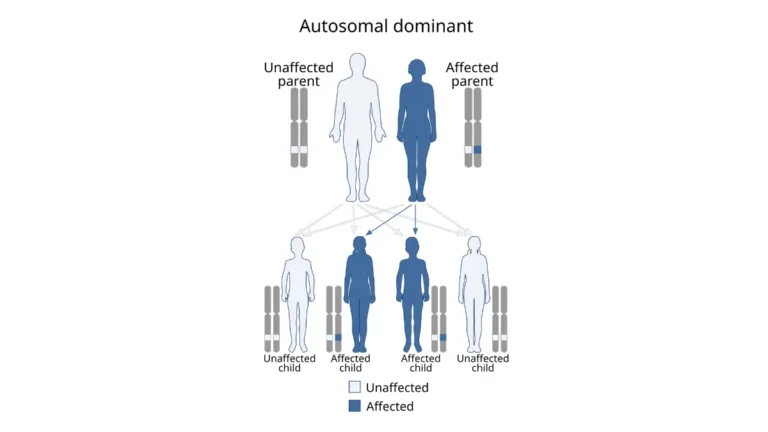
📊 Clinical Data Point: Up to 5% of people with a harmful BRCA1 change and 5%–10% of those with a harmful BRCA2 change will develop pancreatic cancer in their lifetime, compared with about 1.7% in the general population; a 2025 cohort of women carriers specifically estimated roughly 2%–3%. — Source: National Cancer Institute, BRCA Gene Changes Fact Sheet.
If you carry a BRCA mutation or have a strong family history, this is worth raising with a genetic counselor, since you may qualify for pancreatic surveillance. Our explainer on what a positive BRCA result means walks through next steps, and you can map your hereditary factors with our genetic risk assessment tool.
🩺 Physician Note: Evidence on hormonal factors is still taking shape. A large European cohort (EPIC) found that longer breastfeeding and longer use of menopausal hormone therapy were associated with lower pancreatic cancer risk in women — an association, not proof of cause, and not a reason to change reproductive decisions.
✅ Patient Action: If you have a BRCA mutation or two or more relatives with pancreatic, breast, ovarian, or related cancers, ask a genetic counselor: “Do I qualify for a pancreatic cancer surveillance program?”
What to do if you’re worried about these symptoms
Worry is not a diagnosis, but persistent symptoms deserve a plan. Most people with these signs do not have pancreatic cancer — yet acting promptly is what makes the difference when something is wrong.
Before your appointment, write down each symptom, when it started, and whether it is getting worse. A clear timeline counters the tendency to dismiss vague complaints and helps your clinician decide whether blood tests or imaging — usually a CT or MRI scan — are warranted. You can organize what you’re noticing with our symptom checker first.
⚠️ Clinical Warning: Yellowing of the skin or eyes is not a “watch and wait” symptom. New jaundice — with or without pain — warrants prompt medical evaluation to find the cause, which is often benign but must be checked.
Bring specific questions, and don’t leave without answers. Given the documented delays women face, asking directly is both reasonable and appropriate.
✅ Patient Action: Tell your doctor: “These symptoms have lasted more than two weeks and are happening together. Can we investigate a pancreatic cause, and should I see a gastroenterologist?”
Frequently asked questions
1. Are pancreatic cancer symptoms different in women than in men?
No. The symptoms of pancreatic cancer in women are the same as in men — jaundice, abdominal or back pain, unexplained weight loss, new-onset diabetes, and digestive changes. The disease behaves identically regardless of sex. What differs is that women’s symptoms are more often attributed to hormonal or other causes first, which can delay recognition.
2. What are the first signs of pancreatic cancer in women?
Early signs are often vague: upper abdominal or back pain, unexplained weight loss, loss of appetite, and sometimes new-onset diabetes. Jaundice — yellowing of the skin and eyes — can be one of the first noticeable signs when a tumor sits in the head of the pancreas. Any single symptom usually has a benign cause.
3. Can pancreatic cancer cause back pain in women?
Yes. Back pain is a recognized symptom of pancreatic cancer, typically felt in the upper or mid-back and sometimes wrapping around from the abdomen. It occurs when a tumor presses on or spreads to nearby nerves. Most back pain is musculoskeletal, but pain that is persistent and unexplained should be evaluated by a clinician.
4. Is new-onset diabetes a sign of pancreatic cancer?
It can be, though most new diabetes is not cancer-related. New-onset diabetes in an adult over 50 without an obvious cause occasionally signals pancreatic cancer, because a tumor can damage insulin-producing cells. If you develop diabetes unexpectedly alongside weight loss or abdominal pain, discuss a pancreatic evaluation with your doctor.
5. How common is pancreatic cancer in women?
Pancreatic cancer is uncommon. In 2026, the American Cancer Society estimates about 32,340 women will be diagnosed in the U.S., with an average lifetime risk of about 1 in 60 — slightly lower than for men. It accounts for roughly 3% of cancers but is the third-leading cause of cancer death.
6. Why is pancreatic cancer often diagnosed late in women?
Pancreatic symptoms are vague and overlap with common conditions, and for women they are more often attributed to hormonal or gynecological causes. A national Medicare study found women waited about 13% longer than men from first symptom to diagnosis. The disease is also usually symptomless until it has advanced.
7. Does a BRCA mutation increase a woman’s risk of pancreatic cancer?
Yes. The National Cancer Institute estimates up to 5% of people with a harmful BRCA1 change and 5%–10% with a harmful BRCA2 change develop pancreatic cancer, versus about 1.7% generally. Women with a BRCA mutation should ask a genetic counselor whether they qualify for pancreatic surveillance.
8. What raises a woman’s risk of pancreatic cancer?
The main risk factors are smoking, excess weight, type 2 diabetes, chronic pancreatitis, older age, and family history. Inherited BRCA mutations and certain hereditary syndromes also raise risk. Smoking and maintaining a healthy weight are the most significant factors a woman can change to lower her risk.
9. When should a woman see a doctor about these symptoms?
See a doctor if symptoms persist beyond about two weeks, occur together, or worsen — especially unexplained weight loss, new diabetes, or persistent abdominal or back pain. Jaundice warrants prompt evaluation regardless of how you feel otherwise. Bring a written symptom timeline and ask whether imaging is needed.
10. Can pancreatic cancer be caught early?
Sometimes, but it is difficult. Only about 15% of cases are found while still localized to the pancreas, because early disease usually causes no symptoms. There is no routine screening test for average-risk adults, which is why prompt evaluation of persistent symptoms — and surveillance for high-risk individuals — matters.
11. Is pancreatic cancer more common in men or women?
Slightly more common in men. The American Cancer Society estimates about 35,190 men versus 32,340 women will be diagnosed in 2026, with lifetime risks of about 1 in 56 for men and 1 in 60 for women. Incidence, however, has been rising faster among younger women.
The bottom line
The warning signs of pancreatic cancer are the same for women and men — yellowing skin, upper abdominal or back pain, unexplained weight loss, new diabetes, and digestive changes. What’s different for women is not the symptoms but the story around them: a slightly lower risk, a documented tendency for these signs to be diagnosed later, and a few risk factors, like BRCA mutations, that deserve attention.
That makes awareness your strongest tool. Most of these symptoms will turn out to be something else — but if they are persistent, unexplained, or stacking up, track them and ask your doctor directly whether a pancreatic cause should be ruled out.
About this content
How this article was put together: researched from recognised health sources, drafted with the help of AI tools, and edited by hand, with sources linked throughout.

Sameer Patel is the founder and editor of My Medicine Advisor. He is not a doctor or medical professional — before starting this site he worked in banking,…
Medical disclaimer
The content on MyMedicineAdvisor is provided for general informational and educational purposes only and is not a substitute for professional medical advice, diagnosis, or treatment. Health information on this website should not be used to diagnose, treat, cure, or prevent any condition without guidance from a qualified healthcare professional. Always seek the advice of your doctor, physician, or another licensed healthcare provider with any questions you may have regarding a medical condition, symptoms, medications, or treatment decisions.