
On This Page – Quick Medical Summary
Can new diabetes after 50 be a sign of pancreatic cancer?
If you were recently diagnosed with new-onset diabetes after age 50 and you found this page because you’re afraid it could mean pancreatic cancer, here is the direct answer: yes, it can be an early clue — but it rarely is. About 1 in 160 people with new diabetes are diagnosed with pancreatic cancer within three years, which means roughly 99 in 100 are not.
The link is real and worth understanding, and the odds are strongly in your favor. Where you are right now shapes what matters most on this page. If you just received a diabetes diagnosis and feel frightened, the next two sections explain why the connection exists and how small the absolute risk actually is. If you’ve also noticed unexplained weight loss or other changes, skip to the warning signs. If you’re caring for a parent in this situation, or you want a script for your next appointment, the sections on what to do are written for you.
ℹ️ Medical Disclaimer: This article is general health education, not medical advice, diagnosis, or treatment. It does not replace an evaluation by a qualified clinician regarding your individual diabetes, symptoms, pancreatic cancer risk, screening decisions, or care. The risk figures here are population averages and cannot predict any individual outcome. If you have new-onset diabetes alongside unexplained weight loss or other concerning symptoms, contact a board-certified physician — start with primary care, who can refer you to a gastroenterologist if needed.
Why can pancreatic cancer cause diabetes?
The connection runs in a direction most people don’t expect — in many cases, the cancer causes the diabetes, not the other way around.
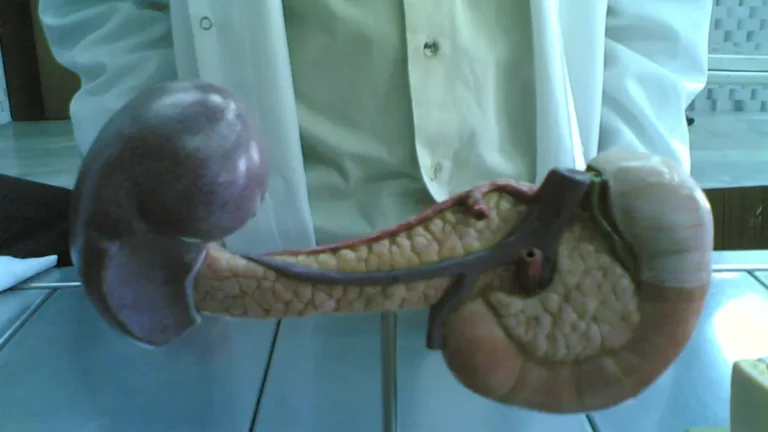
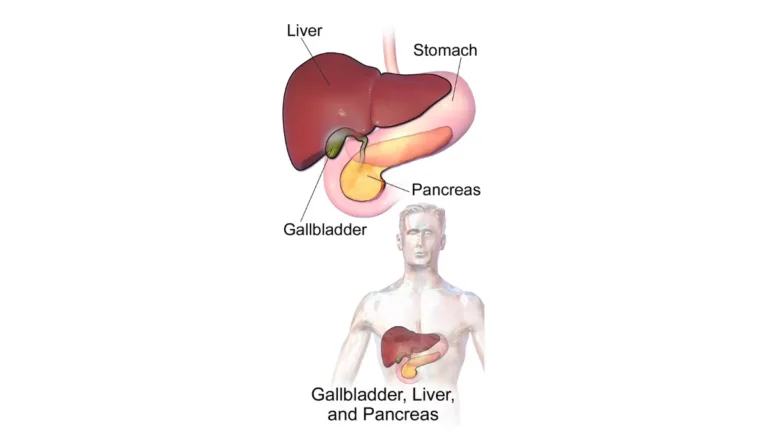
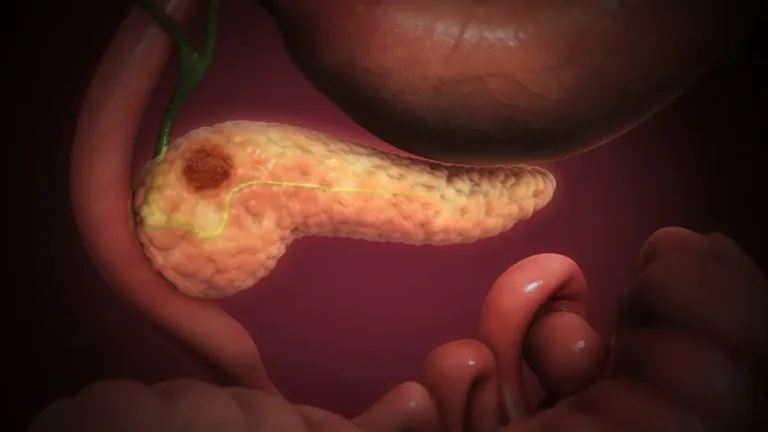
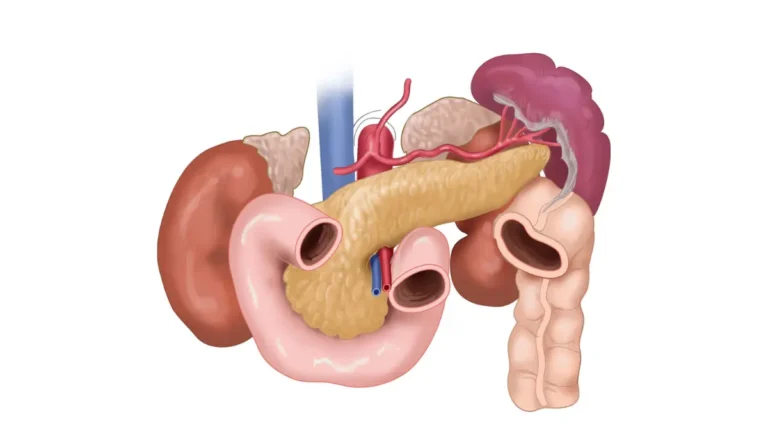
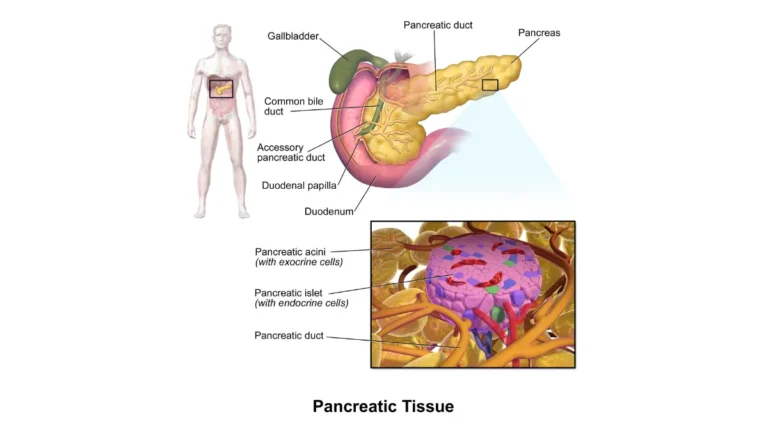
The tumor-first connection. The pancreas is the organ that makes insulin and helps control blood sugar. A tumor growing there can disrupt insulin production and how the body responds to it, which is why new diabetes can appear months to a few years before a pancreatic cancer is ever found.
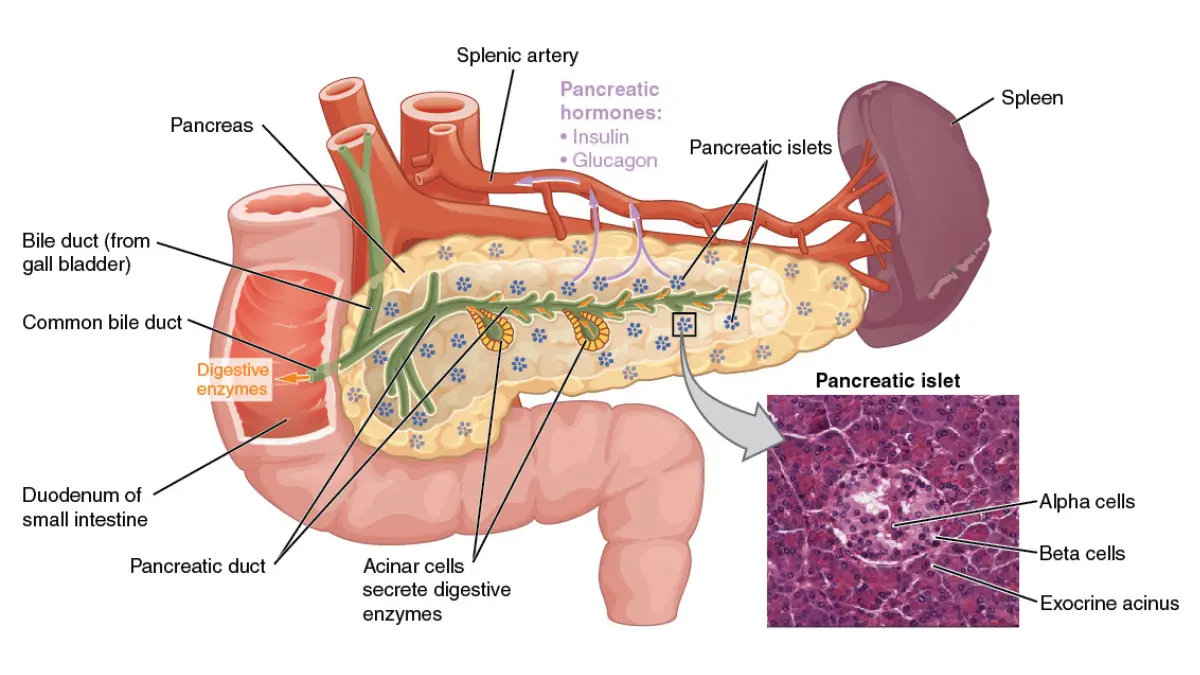
Adapted from OpenStax Anatomy and Physiology 2e Figure 17.18, licensed under CC BY 4.0.
Diabetes caused by disease of the pancreas itself has a name: type 3c diabetes, also called pancreatogenic diabetes. It differs from common type 2 diabetes, which is usually driven by genetics and body weight over time. The cancer-associated form is thought to be a paraneoplastic effect, meaning the tumor releases signals that change how the body handles blood sugar.
🔬 How It Works: A pancreatic tumor can secrete substances — including tiny particles called extracellular vesicles — that make the body’s cells resist insulin and weaken the pancreas’s insulin-producing beta cells. Blood sugar rises as a result, sometimes before the tumor is large enough to cause pain or other obvious symptoms. That timing is exactly why new diabetes can act as an early signal.
The practical difference shows up in the pattern. Ordinary type 2 diabetes tends to develop alongside weight gain, while the cancer-associated pattern more often comes with weight loss despite rising blood sugar. Most pancreatic cancers linked to new diabetes are found within the first year, which supports the idea that the tumor drove the change.
How much does new diabetes raise pancreatic cancer risk?
The numbers here matter, and the most important one is the one that brings perspective.
Relative risk versus absolute risk. Adults over 50 with new-onset diabetes have roughly 5 to 8 times the general population’s risk of pancreatic cancer within three years. That multiplier sounds frightening on its own. The number that matters more is the absolute risk: about 1 in 160 — under 1% — are actually diagnosed in that window.
📊 Clinical Data Point: In a 2025 prospective study of 18,838 adults aged 50 and older with new-onset diabetes, about 1 in 160 were diagnosed with pancreatic cancer within three years — a rate nearly five times higher than expected, yet still well under 1%. Most cancers were found within the first year. — Source: Chari et al., Gastroenterology, 2025
Separately, research shows about 1 in 4 people with pancreatic cancer develop new diabetes in the three years before their cancer is found. The National Cancer Institute now treats new-onset diabetes as a group worth studying for earlier detection, as covered in the National Cancer Institute’s look at new-onset diabetes and pancreatic cancer.
Here is the comparison that helps most:
| Group | Risk vs. general population | Absolute 3-year risk | Key clinical detail |
|---|---|---|---|
| New diabetes after 50 | ~5–8× higher | ~1 in 160 (under 1%) | Most cancers found within the first year |
| Long-standing type 2 (>3 yrs) | ~1.5–2× higher | Low | A modest, longer-term risk factor |
| No diabetes | Baseline | Very low | Routine screening not recommended |
Source: relative and absolute figures from Chari et al., Gastroenterology (2025) and published summaries of earlier cohort studies (Hirshberg Foundation for Pancreatic Cancer Research).
Why does catching it early matter so much? Pancreatic cancer’s overall five-year survival is about 13%, and it rises substantially when the disease is found before it spreads, according to current pancreatic cancer survival rates. A clue like new diabetes is valuable precisely because this cancer is so often found late. A primary care clinician can interpret what these population numbers mean for your situation; the figures cannot predict any one person’s outcome.
Warning signs that new diabetes needs a closer look
One specific combination of changes is more meaningful than any single symptom.
The red-flag triad: age, weight loss, rising blood sugar. The pattern that most warrants a closer look is new diabetes after about age 50, plus unexplained weight loss, plus blood sugar that is climbing fast or suddenly needs insulin to control. Any one of these alone is usually not cancer. It is the combination, in someone over 50, that researchers have tied to higher risk.
⚠️ Clinical Warning: New diabetes together with unexplained weight loss and rapidly worsening blood sugar in someone over 50 is the combination that should prompt a conversation about evaluating the pancreas. In studies, people who later had pancreatic cancer lost weight before diagnosis, while those who did not tended to gain weight. Sudden, unexpected weight loss while your blood sugar is rising is the signal not to dismiss.
Pancreatic cancer can bring other symptoms worth knowing, especially alongside new diabetes:
- Yellowing of the skin or eyes (jaundice)
- Pain in the upper abdomen that may radiate to the back
- Loss of appetite or feeling full quickly
- Pale, greasy stools that float
- Ongoing fatigue
You can read more about jaundice and pancreatic cancer, where pancreatic cancer pain is felt, and other early signs of pancreatic cancer.
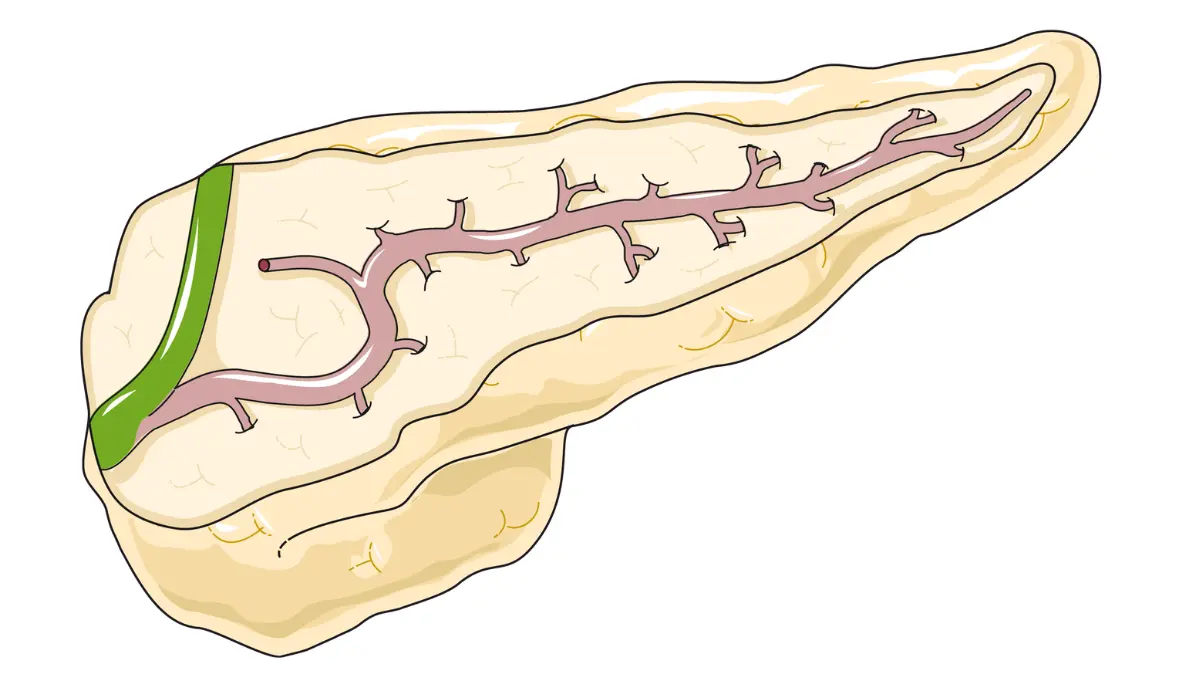
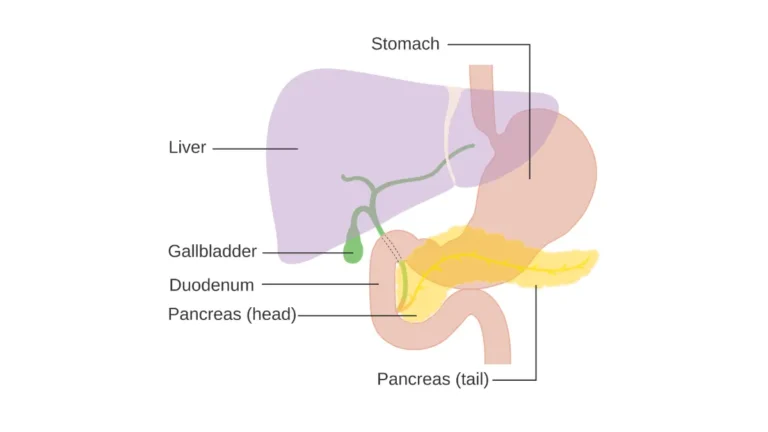
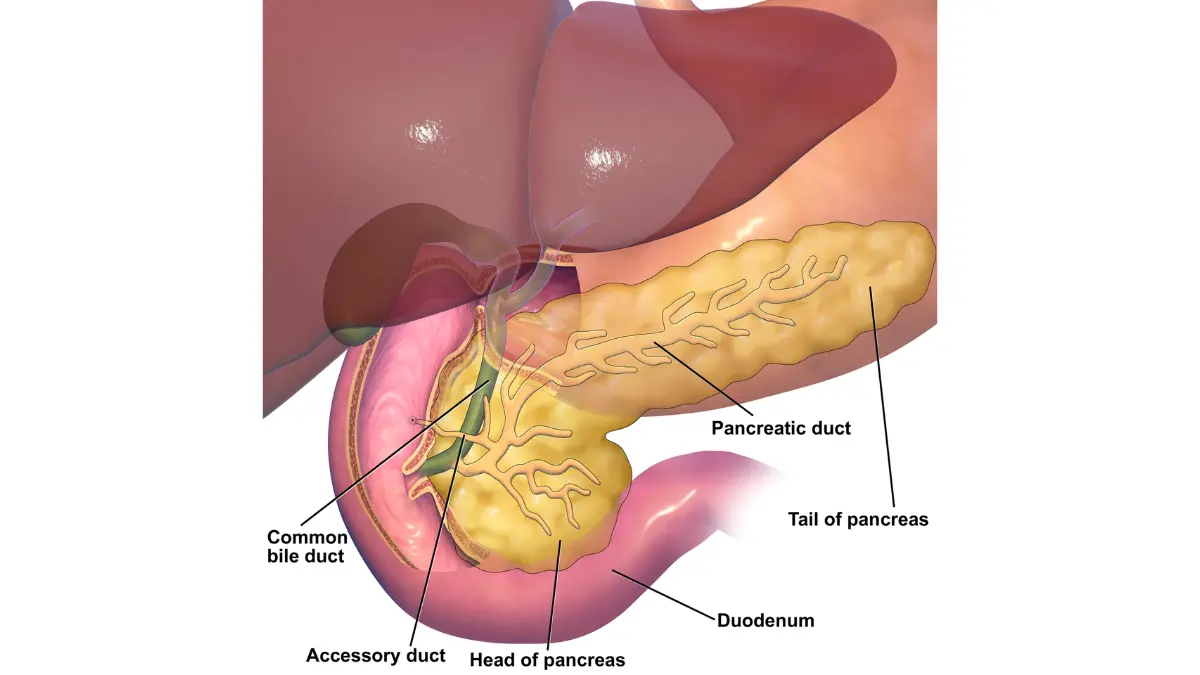
Adapted from Servier Medical Art Drawing Pancreas and pancreatic duct, licensed under CC BY 4.0.
✅ Patient Action: If you have new diabetes plus unexplained weight loss, ask your primary care clinician directly: “Given my age, my recent weight loss, and how fast my blood sugar changed, should we evaluate my pancreas?” Organizing what you’ve noticed with a symptom checker before the visit can make the conversation more useful.
What to do if you’re worried about pancreatic cancer
Worry is more manageable when it has a plan attached.
Start with a focused conversation. The first step is a conversation with a primary care clinician, who can weigh your individual picture and refer you to a gastroenterologist if warranted. Routine pancreatic cancer screening is not recommended for the general population, because the disease is uncommon and broad screening causes more harm than benefit. Evaluation is decided case by case, based on your risk factors.
What the ENDPAC score is. Researchers developed a tool called the ENDPAC score to flag which people with new diabetes are at higher risk. It combines three things: your age, how much your blood sugar changed over the prior year, and how much weight you lost.
🩺 Physician Note: The ENDPAC score is a research and risk-stratification tool, not a routine test you can request like a cholesterol panel. A higher score identifies a group that researchers evaluate with imaging such as CT or endoscopic ultrasound. An ongoing NIH study, an early-detection trial for pancreatic cancer, is testing whether this approach catches the disease sooner in people with new-onset diabetes.
If your clinician decides evaluation is appropriate, it may involve imaging of the pancreas — such as a CT scan or endoscopic ultrasound — rather than a single blood test. A tumor marker called CA 19-9 exists, but it has real limitations and is not used as a standalone screening test.
✅ Patient Action: Before your appointment, write down three things: when your diabetes was diagnosed, your recent weight change, and your latest blood sugar or A1C readings. Bring them, and ask whether imaging of your pancreas fits your specific risk. If pancreatic cancer runs in your family, a genetic risk assessment can help frame that part of the conversation.
New-onset diabetes vs. type 2: how doctors tell them apart
Most new diabetes after 50 is ordinary type 2 — knowing the difference helps you avoid both panic and false comfort.
What typical type 2 looks like. Common type 2 diabetes usually develops gradually and tracks with extra body weight, family history, and other features of metabolic syndrome. It is by far the most likely explanation for new diabetes at any age. The presence of these familiar risk factors generally points toward ordinary type 2.
What raises suspicion for a pancreatic cause. A few features make clinicians look harder: older age at onset, blood sugar that worsens quickly, a normal or low body weight, and weight loss rather than weight gain. None of these proves anything on its own — they simply shift the level of suspicion.
The direction of weight change is one of the clearest practical clues. Gaining weight as diabetes develops fits the ordinary type 2 picture, while losing weight as blood sugar climbs is the combination that earns a second look. If you want help making sense of your readings, you can convert your blood sugar values or read about what your A1C numbers mean.
Putting your pancreatic cancer risk in perspective
Step back, and the picture is reassuring without being dismissive.
What matters most. Two facts sit together. New diabetes after 50 is a genuine, research-backed early clue for pancreatic cancer, and the large majority of people with new diabetes — about 99 in 100 — will not be diagnosed with it within three years. Knowing the link puts you ahead, not behind.
Pancreatic cancer is hard to catch early, which is why a signal like new diabetes is valuable, and also why the goal is attention rather than alarm. For the bigger picture, the full guide to pancreatic cancer symptoms and stages walks through the disease in depth. If your situation includes the warning combination — new diabetes, weight loss, and fast-rising blood sugar after 50 — a calm, specific conversation with your clinician is worth having soon.
The point of understanding this connection is agency. You can watch for the pattern, bring clear information to your clinician, and make decisions with real numbers instead of fear.
Frequently asked questions
1. Can new-onset diabetes be a sign of pancreatic cancer?
Yes, new-onset diabetes can be an early sign of pancreatic cancer, but it rarely is. About 1 in 160 people with new diabetes are diagnosed within three years, so roughly 99% are not. The link matters most after age 50, especially with unexplained weight loss. Discuss your individual risk with a primary care clinician.
2. How common is pancreatic cancer in people with new diabetes?
It is uncommon. In a large 2025 study of adults over 50 with new-onset diabetes, about 1 in 160 were diagnosed with pancreatic cancer within three years — under 1%. The relative risk is elevated several-fold, but the absolute risk stays low for the vast majority of people with new diabetes.
3. At what age does new diabetes raise pancreatic cancer concern?
The pancreatic cancer signal applies mainly to new-onset diabetes that appears after about age 50. In younger adults, new diabetes is far more likely to be ordinary type 2 and is not considered a meaningful cancer clue. Age combined with unexplained weight loss is what raises clinical suspicion.
4. What’s the difference between type 2 and pancreatic-cancer-related diabetes?
Ordinary type 2 diabetes usually develops with weight gain and family history. Pancreatic-cancer-related diabetes, called type 3c or pancreatogenic diabetes, is caused by the tumor itself and more often comes with weight loss as blood sugar rises. Only a clinician can determine which pattern fits you, so share your full history with your doctor.
5. Should I be screened for pancreatic cancer if I have new diabetes?
Routine pancreatic cancer screening is not recommended for everyone with new-onset diabetes, because the disease is uncommon and broad screening can cause more harm than benefit. Evaluation is individualized based on age, weight change, and other risk factors. Ask your primary care clinician whether your specific situation warrants further evaluation.
6. What other symptoms appear alongside pancreatic-cancer-related diabetes?
Beyond new diabetes, watch for unexplained weight loss, jaundice (yellowing skin or eyes), upper-abdominal or back pain, loss of appetite, and pale, greasy stools. These signs are more meaningful in combination than alone. If several appear together with new diabetes after 50, raise them with your clinician.
7. How soon after diabetes does pancreatic cancer usually appear?
When pancreatic cancer is linked to new-onset diabetes, it is usually found within three years of the diabetes diagnosis, and most often within the first year. This short window is one reason researchers view new diabetes as a possible early-detection opportunity rather than a long-term risk.
8. Does losing weight with new diabetes mean cancer?
Not by itself. But new-onset diabetes plus unexplained weight loss plus rapidly rising blood sugar, in someone over 50, is the combination that warrants a closer look. In studies, people who later developed pancreatic cancer lost weight beforehand. Ask your doctor whether this pattern justifies evaluating your pancreas.
9. What is the ENDPAC score?
The ENDPAC score is a research tool that estimates pancreatic cancer risk in people with new-onset diabetes. It combines three factors: age, how much blood sugar changed over the prior year, and weight change. A higher score flags a higher-risk group that researchers evaluate further; it is not yet a routine clinical test.
10. Can pancreatic cancer be found early through diabetes?
Possibly. Because new-onset diabetes can appear before other symptoms, it offers a potential window for earlier detection, which matters since pancreatic cancer is often found late. An ongoing NIH trial is testing whether screening people with new diabetes catches cancer sooner. This approach is promising but not yet standard care.
11. What should I ask my doctor if I’m worried?
Ask your primary care clinician whether your combination of new diabetes, any weight change, and how quickly your blood sugar shifted warrants evaluating your pancreas. Bring your diagnosis date and recent readings. If pancreatic cancer runs in your family, mention it, and ask whether imaging or referral to a gastroenterologist is appropriate.
The bottom line — and your next step
New diabetes after 50 is a real but uncommon early clue to pancreatic cancer. The relative risk is higher, yet the absolute risk stays low — about 99 in 100 people with new diabetes are not diagnosed within three years. The link is worth understanding precisely because this cancer is so often caught late.
Your next step is concrete. If your new diabetes came with unexplained weight loss or blood sugar that rose fast, write down your diagnosis date and recent readings, and ask your primary care clinician whether your pancreas should be evaluated. Knowing this connection gives you something better than worry: a clear, specific question to bring to someone who can help.
About this content
How this article was put together: researched from recognised health sources, drafted with the help of AI tools, and edited by hand, with sources linked throughout.

Sameer Patel is the founder and editor of My Medicine Advisor. He is not a doctor or medical professional — before starting this site he worked in banking,…
Medical disclaimer
The content on MyMedicineAdvisor is provided for general informational and educational purposes only and is not a substitute for professional medical advice, diagnosis, or treatment. Health information on this website should not be used to diagnose, treat, cure, or prevent any condition without guidance from a qualified healthcare professional. Always seek the advice of your doctor, physician, or another licensed healthcare provider with any questions you may have regarding a medical condition, symptoms, medications, or treatment decisions.