
On This Page – Quick Medical Summary
You noticed it in the mirror — the whites of your eyes looking yellow, or a yellow tint to your skin — and your mind went straight to cancer. Take a breath. Jaundice is a sign, not a diagnosis, and most of the time it comes from gallstones or a liver problem, not pancreatic cancer.
This guide is built to help you act with the right level of urgency:
- If your jaundice comes with fever, chills, and severe upper-right belly pain: treat it as an emergency — read the “act fast” section, then call 911 or go to the ER.
- If you have painless yellowing, dark urine, or unexplained weight loss: you’ll learn why that pattern needs a prompt doctor’s visit.
- If you’re a caregiver or already diagnosed: the diagnosis and treatment sections explain what to expect.
Whatever brought you here, you’ll leave knowing what this symptom means and exactly what to do next.
ℹ️ Medical Disclaimer: This article is general health education, not medical advice, diagnosis, or treatment, and it does not replace evaluation by a qualified clinician for any symptom, test result, medication, procedure, or insurance decision discussed here. New or worsening jaundice always warrants prompt medical assessment. Jaundice with fever, chills, severe abdominal pain, confusion, or vomiting blood is a medical emergency — call 911 or go to the nearest emergency department. For personal guidance, consult a board-certified gastroenterologist, hepatologist, or oncologist.
Why pancreatic cancer can turn your skin yellow
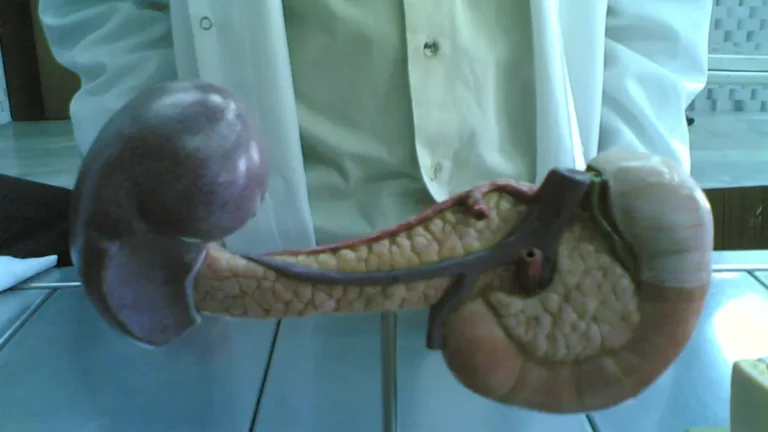
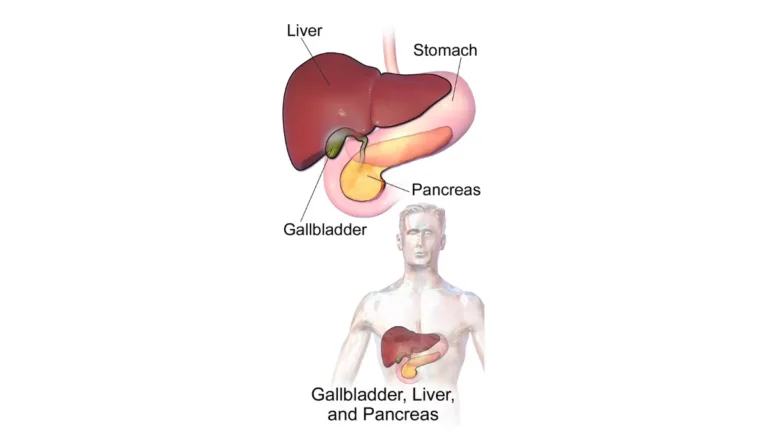
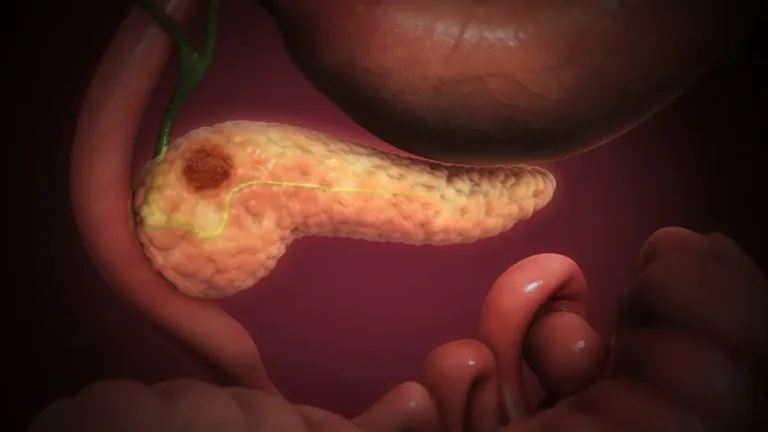
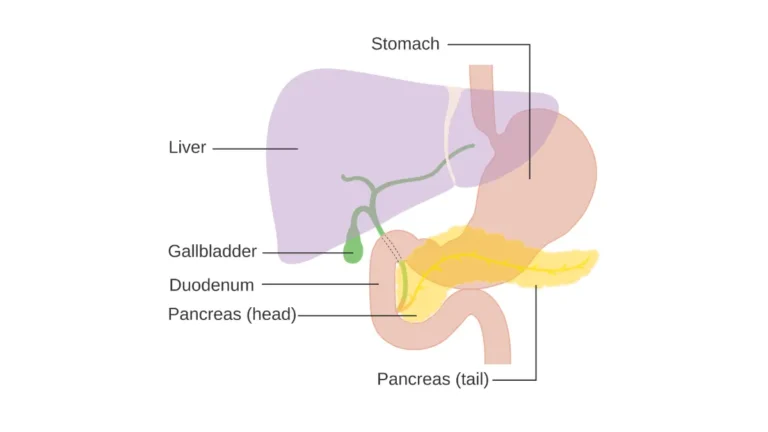
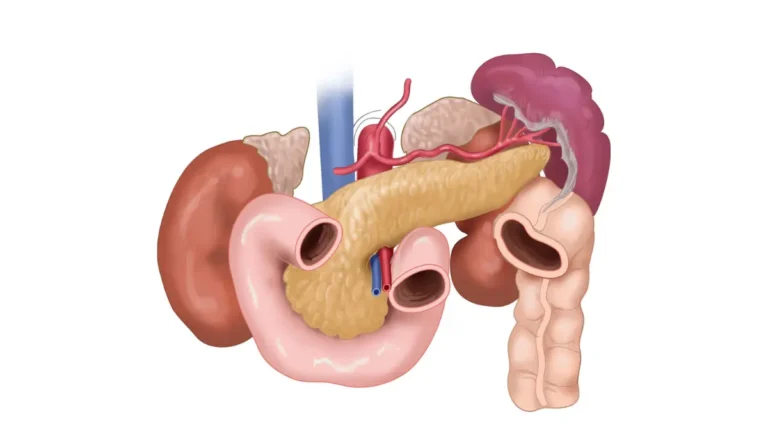
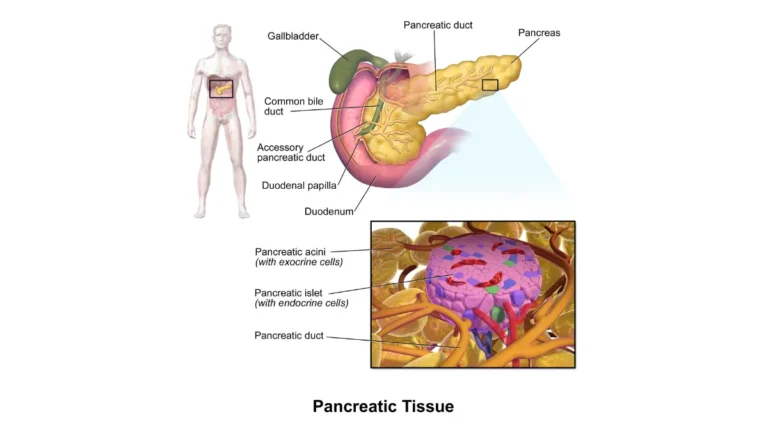
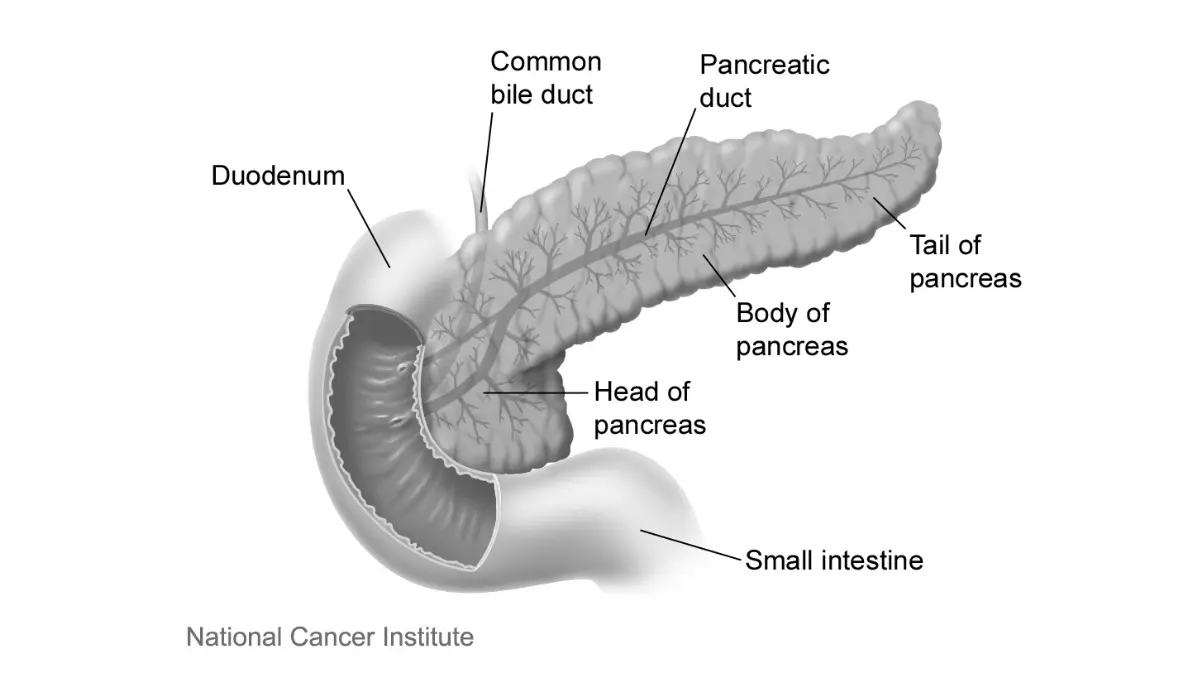
The pancreas sits deep in your abdomen, and its wider end — the head of the pancreas — lies right next to the tube that drains bile from your liver. When a tumor grows there, it can press on or block that tube, the common bile duct. Bile then has nowhere to go.
🔬 How It Works: Your liver constantly makes bile, which carries a yellow pigment called bilirubin. Normally bile flows down the common bile duct into your intestine. When a tumor in the head of the pancreas squeezes that duct shut, bilirubin backs up into your bloodstream and settles in your skin and the whites of your eyes — turning them yellow. Doctors call this obstructive jaundice (or post-hepatic jaundice).
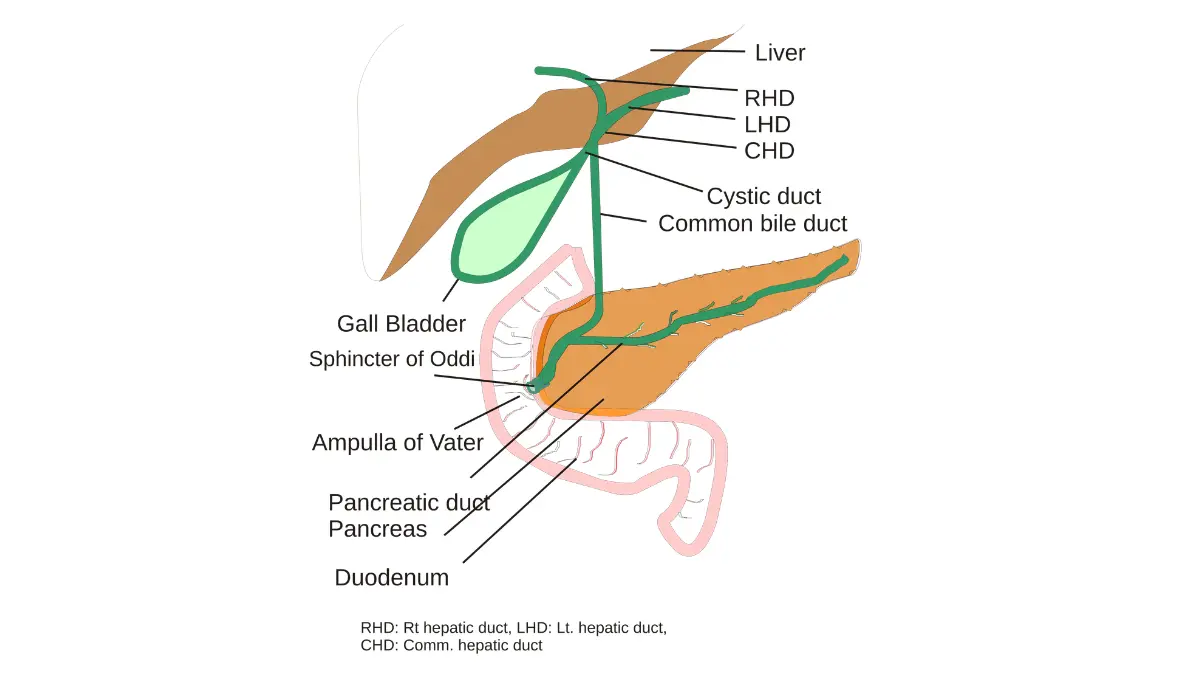
Adapted from Wikimedia Commons Biliary system.svg, licensed under
Public Domain.
Because the blockage is mechanical, the same backup explains the other changes people notice: dark urine, pale stools, and itchy skin. Tumors in the pancreatic head are the ones most likely to cause jaundice, while tumors in the body and tail of the gland often stay silent until later.
This is also why jaundice can be one of the first noticeable signs of a pancreatic tumor — the duct it blocks runs right through the gland. For a plain-language primer on the symptom itself, MedlinePlus explains jaundice in everyday terms.
What jaundice from pancreatic cancer looks like
The most useful clue is not just the yellow color — it’s how it behaves. Jaundice from pancreatic cancer is usually painless and comes on gradually, deepening over days to weeks. That painless, creeping quality is part of why it gets brushed off until it’s obvious.
📊 Clinical Data Point: Painless jaundice is the presenting sign in roughly 50% of people with pancreatic adenocarcinoma, and unexplained weight loss occurs in about 90% over the course of the disease. — Source: StatPearls, NIH National Library of Medicine (2024).
Several changes tend to travel together, because they all come from the same blocked duct:
- Yellowing of the whites of the eyes first, then the skin
- Dark urine — often the earliest change, sometimes before the eyes look yellow
- Pale, clay-colored stools
- Generalized itching, called pruritus
- Reduced appetite, nausea, and weight loss
Doctors also look for a swollen but non-tender gallbladder in a jaundiced person, known as Courvoisier’s sign, which points toward a blockage below the gallbladder rather than a stone. It’s a helpful clue when present, though its absence doesn’t rule a tumor out.
One distinction matters most: cancer-related jaundice is typically painless, while jaundice that arrives with cramping pain or fever more often comes from gallstones. If you do have pain, our guide to where pancreatic cancer pain usually shows up explains the pattern, and the early warning signs of pancreatic cancer covers the symptoms that tend to cluster with it.
When to act fast: urgent versus emergency
Here is the rule that matters most. New jaundice always needs a doctor — but some situations need an emergency room today, not an appointment next week.
⚠️ Clinical Warning: Jaundice combined with fever, chills, and severe pain in the upper-right abdomen can signal acute cholangitis — a bacterial infection of a blocked bile duct that can become life-threatening within hours. This is a medical emergency. Confusion, drowsiness, or vomiting blood alongside jaundice are also emergency signs. Call 911 or go to the nearest emergency department.
When jaundice is the painless, gradual kind — no fever, no severe pain — it is usually not an overnight emergency, but it still should not wait. New painless jaundice, especially with weight loss, is exactly the pattern that warrants prompt evaluation for a bile-duct blockage, including a possible tumor. The MSD Manual notes that painless obstructive jaundice in an adult deserves quick attention precisely because the cause can be serious.
✅ Patient Action: If you have painless yellowing of your eyes or skin, call your primary care doctor or a gastroenterologist this week and ask directly: “Could a blocked bile duct explain my jaundice, and what imaging do I need to find the cause?” If fever or severe pain develops, go to the ER instead.
Acting quickly helps even when the cause turns out to be benign, because a blocked duct can become infected. To organize your symptoms before you call, you can use our symptom checker — though it never replaces emergency care when red flags are present.
How doctors find the cause of jaundice
Finding the cause is a step-by-step process, not a single test — and one blood result rarely settles it. The work usually starts with blood tests and moves to imaging.
Blood tests measure bilirubin and liver enzymes; a normal total bilirubin runs about 0.3 to 1.3 mg/dL, and a blocked duct pushes it higher. If you want to understand the panel, our breakdown of how to read your liver function test results walks through each number.
🩺 Physician Note: A common point of confusion is the tumor marker CA 19-9. It is not a screening test for pancreatic cancer — major oncology guidance advises against using it to screen people without symptoms, partly because jaundice itself can falsely raise the number. It is most useful alongside imaging once a mass is already suspected, not as a standalone answer.
Imaging is where the cause usually becomes clear:
- Abdominal ultrasound — often the first look; good at spotting gallstones and blocked ducts
- CT scan — detailed views of the pancreas and surrounding structures
- MRCP — a specialized MRI that maps the bile and pancreatic ducts without an instrument
- Endoscopic ultrasound (EUS) — a scope-based scan that can also take a tissue sample
- ERCP — a scope that can image the duct and, in the same session, relieve a blockage or take a biopsy
✅ Patient Action: Ask your gastroenterologist whether MRCP or endoscopic ultrasound is the right next step for you, and whether your CA 19-9 should be interpreted before or after any jaundice is treated.
How often is jaundice actually pancreatic cancer?
Most jaundice is not cancer. The single most common reason a bile duct gets blocked is gallstones, not a tumor, and liver infections like hepatitis are another frequent cause. Our guides to gallbladder and gallstone pain and the silent signs of hepatitis B cover those benign but important causes.
When jaundice is caused by a tumor, the numbers are worth understanding in context.
📊 Clinical Data Point: In 2026, the American Cancer Society estimates about 67,530 new pancreatic cancer diagnoses and 52,740 deaths in the US — roughly 3.2% of all new cancers, and most common at ages 65–74. — Source: NCI SEER Cancer Stat Facts, 2026 (ACS projections).
Survival depends heavily on how early the cancer is found, which is exactly why a symptom like jaundice — when it leads to early detection — can matter so much.
📊 Clinical Data Point: The 5-year relative survival rate is about 44% when pancreatic cancer is still localized to the pancreas, versus roughly 16% once it has spread regionally and about 3% once it reaches distant organs; the all-stages figure is around 13%. — Source: NCI SEER (localized 43.6%, 2016–2022) and the American Cancer Society survival data, 2026.
Only about 15–20% of pancreatic cancers are found early enough to be removed by surgery — one reason any early clue deserves prompt attention. If pancreatic cancer runs in your family, our genetic risk assessment tool can help you think through inherited risk to discuss with your doctor.
Can the jaundice itself be treated?
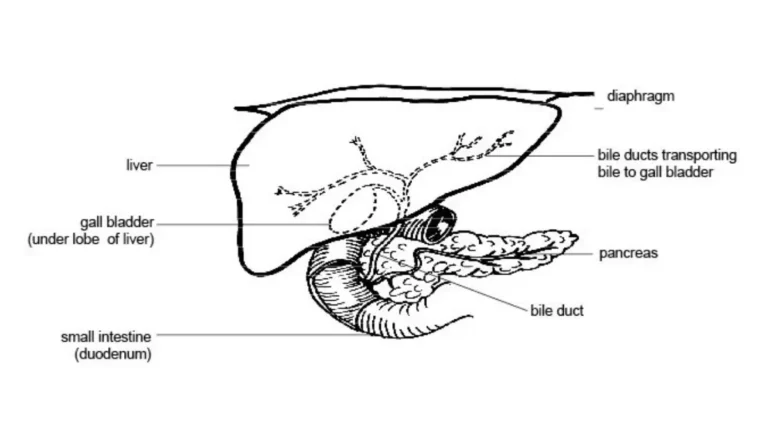
Here is the reassuring part for anyone facing this: the yellowing itself can usually be relieved, often quickly, by reopening the blocked duct. The standard approach is a biliary stent — a small tube placed during an ERCP that props the duct open so bile can drain again.
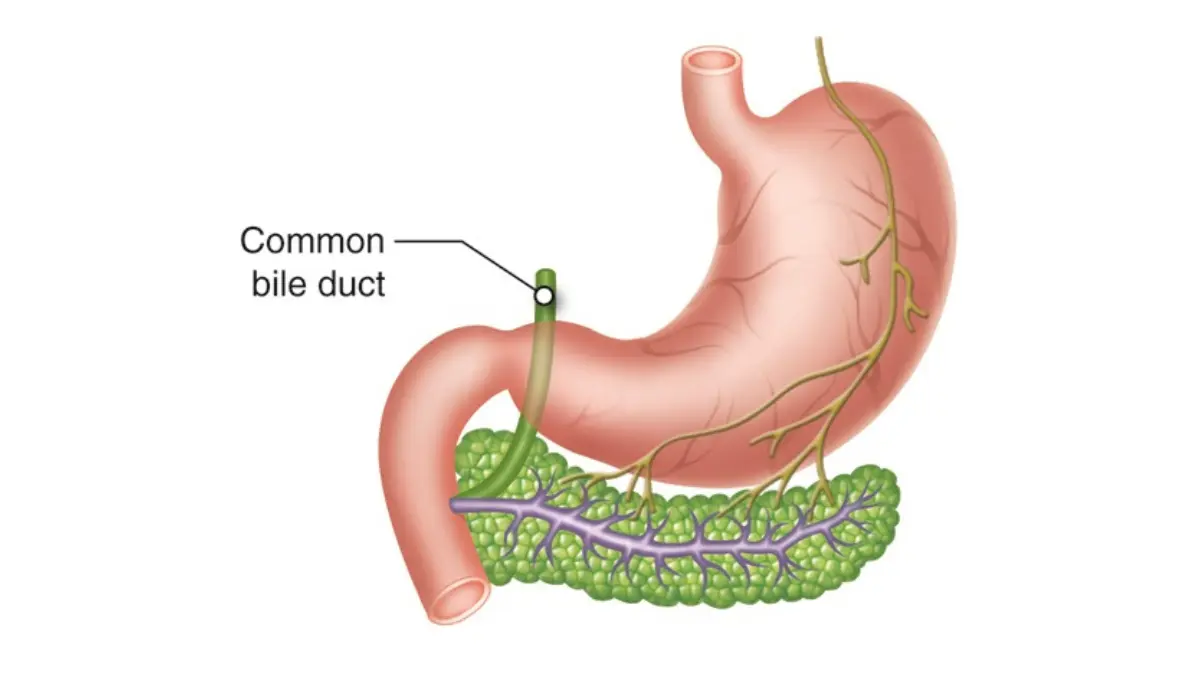
Adapted from AnatomyTool Cenveo – Drawing Common bile and pancreatic duct – English labels, licensed under – “Cenveo – Drawing Common bile and pancreatic duct – English labels” by Cenveo, license: CC CC BY 4.0
📊 Clinical Data Point: Short-term relief of jaundice and itching after biliary stenting exceeds 80% in studies, and the yellowing typically fades over about 2–3 weeks. — Source: peer-reviewed biliary-drainage research (NIH/PMC) and Pancreatic Cancer UK.
Relieving the jaundice does an important job, but it treats the blockage, not the cancer itself. It can also make further treatment possible, since severe jaundice can limit chemotherapy. When a head-of-pancreas tumor is caught early and is removable, the surgery to remove it is the Whipple procedure (pancreaticoduodenectomy) — though only a minority of tumors are found early enough for that option.
For an authoritative, plain-language overview of treatment choices, the National Cancer Institute’s patient information on pancreatic cancer is a reliable next step, and your care team — a gastroenterologist plus a surgical or medical oncologist — will tailor the plan to your situation.
Common questions about jaundice and pancreatic cancer
1. Does jaundice always mean pancreatic cancer?
No. Jaundice is a sign, not a diagnosis, and most cases come from gallstones or hepatitis rather than pancreatic cancer. It happens whenever bilirubin builds up in the blood — from a blocked bile duct, a liver problem, or rapid red-blood-cell breakdown. Any new jaundice should still be evaluated promptly by a doctor to find the cause.
2. Is the jaundice from pancreatic cancer painful?
Usually not. Jaundice from pancreatic cancer is typically painless and develops gradually, which is part of why it can be missed. Jaundice that arrives with cramping pain, fever, or chills more often points to gallstones or a bile-duct infection. Painless yellowing with weight loss is the pattern that warrants prompt medical evaluation.
3. What color are urine and stool with pancreatic cancer jaundice?
When a tumor blocks the bile duct, urine often turns dark (tea- or cola-colored) and stools become pale or clay-colored. Dark urine is frequently the earliest change, sometimes appearing before the eyes look yellow. These color changes, together with yellow skin and itching, all stem from the same blocked bile flow.
4. How fast should I see a doctor if my eyes turn yellow?
Promptly. Painless yellowing should prompt a doctor’s visit within days, not weeks. But if jaundice comes with fever, chills, severe upper-right abdominal pain, confusion, or vomiting blood, go to the emergency room immediately — these can signal a dangerous bile-duct infection. When in doubt, seek care sooner rather than later.
5. Can pancreatic cancer be cured if it’s found because of jaundice?
Sometimes. Outcomes depend heavily on the stage at diagnosis and whether the tumor can be surgically removed. Localized pancreatic cancer has a markedly better 5-year survival than cancer that has spread, which is why jaundice that leads to early detection can matter. Discuss your specific stage and options with a medical oncologist.
6. What tests check for pancreatic cancer after jaundice?
Doctors usually start with blood tests (bilirubin and liver enzymes), then imaging — abdominal ultrasound, CT, MRCP, or endoscopic ultrasound — and sometimes ERCP, which can both image and relieve a blockage. The CA 19-9 marker is interpreted alongside imaging, not used alone to screen. Ask your gastroenterologist which tests fit your situation.
7. Why does pancreatic cancer make you itch?
When a tumor blocks the bile duct, bile components build up in the bloodstream and reach the skin, causing generalized itching (pruritus). The itch comes from the same backup that yellows the skin and darkens the urine. Relieving the blockage — for example, with a stent — usually eases the itching over time.
8. Can jaundice be treated if I have pancreatic cancer?
Yes. A biliary stent placed during an ERCP reopens the blocked duct and relieves jaundice, often within a few weeks. This treats the blockage and its symptoms — yellowing, dark urine, and itching — but not the cancer itself. Relieving jaundice can also make chemotherapy safer. Your care team will recommend the right timing.
9. What is Courvoisier’s sign?
Courvoisier’s sign is a swollen but non-tender gallbladder felt in a person with jaundice. It suggests the bile duct is blocked below the gallbladder — more typical of a tumor than a gallstone. It is a useful clue to doctors when present, but its absence does not rule out pancreatic cancer.
10. Is the yellow skin from pancreatic cancer reversible?
Often, yes. Because the yellowing comes from a mechanical blockage, reopening the duct with a stent usually clears the jaundice as bilirubin drains and falls back toward normal. The skin and eyes typically lighten over about two to three weeks. The underlying cancer still needs its own treatment plan.
11. Where does jaundice show up first?
Jaundice usually appears first in the whites of the eyes, then the skin, and dark urine often precedes both. If your skin looks yellow-orange but the whites of your eyes are normal, it may not be jaundice — eating a lot of beta-carotene (carrots) can tint the skin without raising bilirubin.
The bottom line on jaundice and pancreatic cancer
The most important takeaway is simple: most jaundice is not pancreatic cancer, but new yellowing of your eyes or skin always deserves prompt attention. Painless, gradual jaundice — especially with dark urine, pale stools, or weight loss — is a reason to call your doctor this week. Jaundice with fever, chills, severe pain, confusion, or vomiting blood is an emergency: go to the ER.
If a tumor is the cause, the jaundice itself can usually be relieved, and finding it early gives you the most options. For the complete picture, see our full guide to pancreatic cancer symptoms and stages — then take the one step that matters most and get evaluated.
About this content
How this article was put together: researched from recognised health sources, drafted with the help of AI tools, and edited by hand, with sources linked throughout.

Sameer Patel is the founder and editor of My Medicine Advisor. He is not a doctor or medical professional — before starting this site he worked in banking,…
Medical disclaimer
The content on MyMedicineAdvisor is provided for general informational and educational purposes only and is not a substitute for professional medical advice, diagnosis, or treatment. Health information on this website should not be used to diagnose, treat, cure, or prevent any condition without guidance from a qualified healthcare professional. Always seek the advice of your doctor, physician, or another licensed healthcare provider with any questions you may have regarding a medical condition, symptoms, medications, or treatment decisions.