
On This Page – Quick Medical Summary
If you are holding a lab report with a CA 19-9 result on it, the number beside it can feel like a verdict. It isn’t one.
Where you are right now shapes what this number means for you:
- You just got a result back and no one has explained it — the first sections cover what counts as normal and what a higher number can, and can’t, tell you.
- You or someone you love was recently diagnosed with pancreatic cancer — the section on monitoring explains how doctors use this test through treatment.
- A high result came with normal scans, or you have jaundice — the section on false alarms explains why that happens.
CA 19-9 is a tumor marker — a substance measured in a blood test that can rise with certain cancers but also with several harmless conditions. On its own, it cannot diagnose pancreatic cancer or rule it out. This guide explains what your level means and what to ask next. For the bigger picture, see our complete guide to pancreatic cancer.
ℹ️ Medical Disclaimer: This article is health education, not a diagnosis, treatment plan, or medication guidance. CA 19-9 results, cancer staging, treatment choices, and follow-up testing must be interpreted and managed by a board-certified oncologist or the physician who ordered your test, alongside your imaging and full clinical picture. Do not start, stop, or change any treatment based on this page.
What CA 19-9 is and what a normal level looks like
A normal CA 19-9 level is generally under 37 U/mL, though the exact cutoff can vary slightly between labs.
What CA 19-9 actually measures
CA 19-9, or cancer antigen 19-9, is a protein that some cells in the digestive tract shed into the blood. Certain cancers — pancreatic cancer most of all — can produce it in larger amounts, which is why a blood test for it is used in cancer care. It is one of several tools in how pancreatic cancer is diagnosed, never the whole picture.
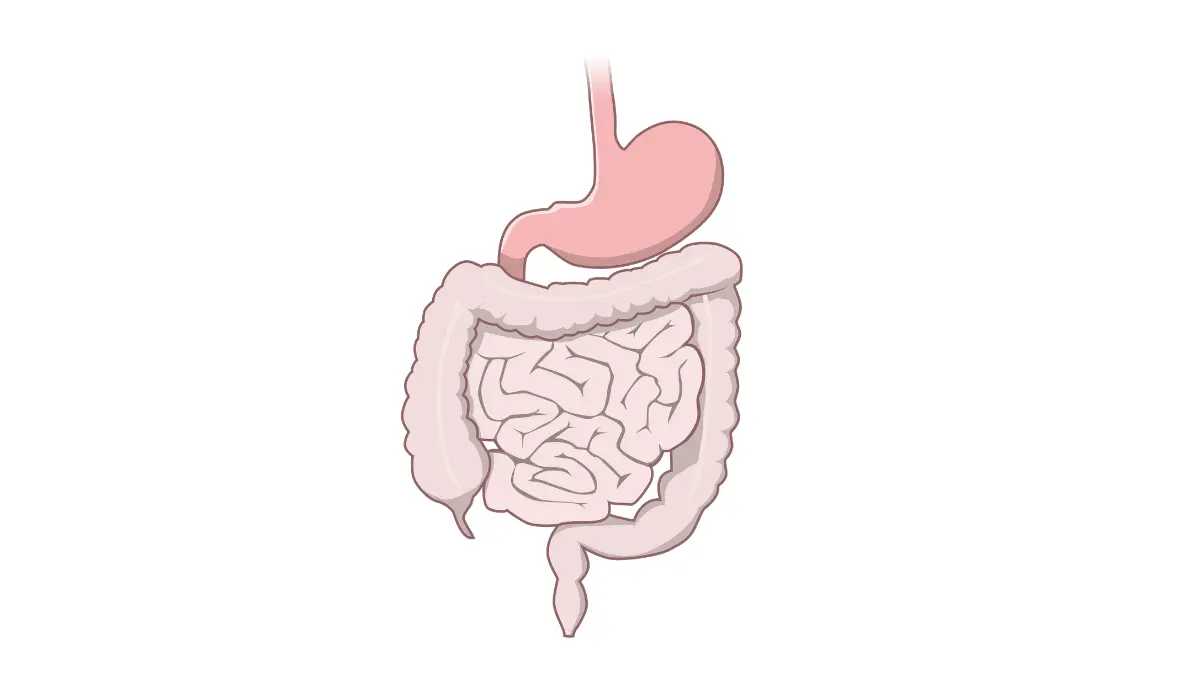
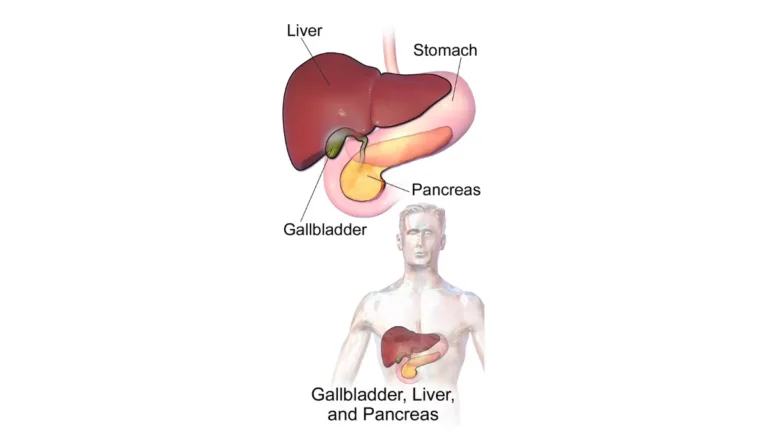
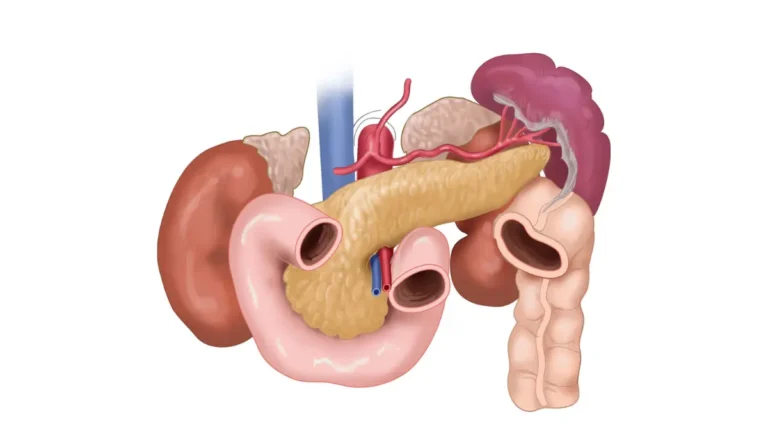
Adapted from Wikimedia Commons Human Digestive Tract (NIH BioArt 212 – 657933), licensed under public domain.
🔬 How It Works: CA 19-9 is a sugar-protein molecule (a sialylated Lewis antigen) shed from the surface of certain cells. When an active pancreatic tumor is present, more of it can enter the bloodstream, so the blood level can rise. The same molecule appears in other organs too, which is why the test isn’t specific to cancer.
What counts as a normal CA 19-9 level
Most labs report a reference range with an upper limit near 37 U/mL, so read your own report’s reference column. A result inside the normal range is reassuring. But as the next sections explain, a normal number does not guarantee there is no cancer, and a high number does not confirm one. For the patient-facing basics, MedlinePlus offers a clear guide to the CA 19-9 blood test.
What your CA 19-9 number can — and can’t — tell you
A high CA 19-9 means follow-up is warranted, but how high it is — and your symptoms and scans — matters far more than the number by itself.
Mildly elevated vs. very high
A result modestly above 37 U/mL is common and often has a non-cancer cause. Broadly, the higher the level climbs, the more concerning it becomes — yet no single number diagnoses cancer.
📊 Clinical Data Point: For diagnosing pancreatic cancer in people who already have symptoms, CA 19-9 has roughly 79–81% sensitivity and 82–90% specificity — Source: Ballehaninna & Chamberlain, an evidence-based appraisal of CA 19-9 (peer-reviewed). It is far less reliable in early disease.
| CA 19-9 level | What it can suggest | Key clinical detail |
|---|---|---|
| Under 37 U/mL | Within the normal range | Does not rule out cancer — some tumors don’t raise it |
| Mildly to moderately elevated | Many causes, benign or malignant | Often driven by jaundice, pancreatitis, or other conditions |
| Very high (e.g., over 1,000 U/mL) | Associated with advanced, often unresectable disease | Still requires imaging and biopsy to confirm |
Source: synthesized from MedlinePlus and peer-reviewed CA 19-9 reviews. These are population-level associations, not individual diagnoses.
Why the number is never read alone
A diagnostic workup for pancreatic cancer relies on imaging such as CT or MRI and, when needed, a tissue biopsy. CA 19-9 supports that picture; it does not replace it. What any specific level means for you is a question for the team reading it alongside your scans.
✅ Patient Action: Ask the clinician who ordered the test: “What is my CA 19-9 level, and what does it mean alongside my imaging and symptoms?”
When a high number isn’t cancer — and a normal one isn’t the all-clear
This is the part most people need most: a high CA 19-9 is frequently caused by something other than cancer, and a normal level does not always mean you are in the clear.
Non-cancer reasons CA 19-9 can be high
Several benign conditions can raise it, including:
- Pancreatitis (inflammation of the pancreas)
- Gallstones, bile-duct blockage, or bile-duct infection (cholangitis)
- Obstructive jaundice
- Cirrhosis and other liver disease
- Cystic fibrosis
Other cancers — colorectal, stomach, gallbladder, bile-duct, liver, and lung — can also elevate it.
Why jaundice can spike the number
When bile flow is blocked, CA 19-9 can rise sharply on its own. Levels usually fall once the blockage is treated, so doctors often recheck the test after the jaundice clears rather than acting on the first high value. More on the link between jaundice and pancreatic cancer.
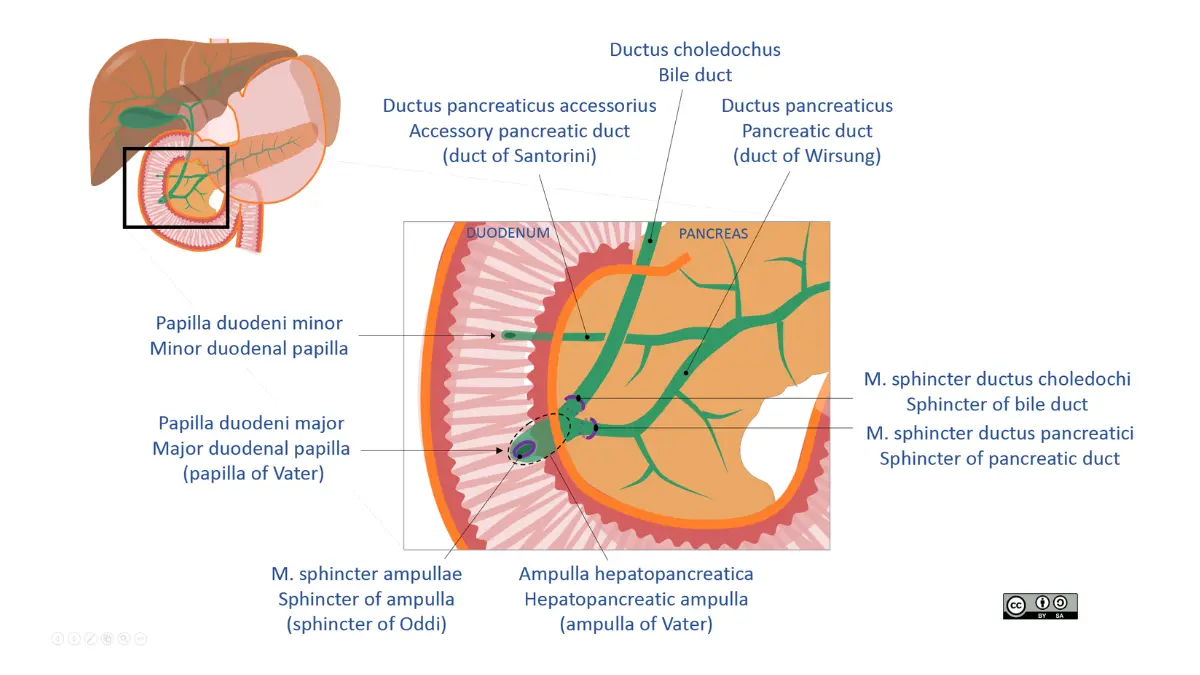
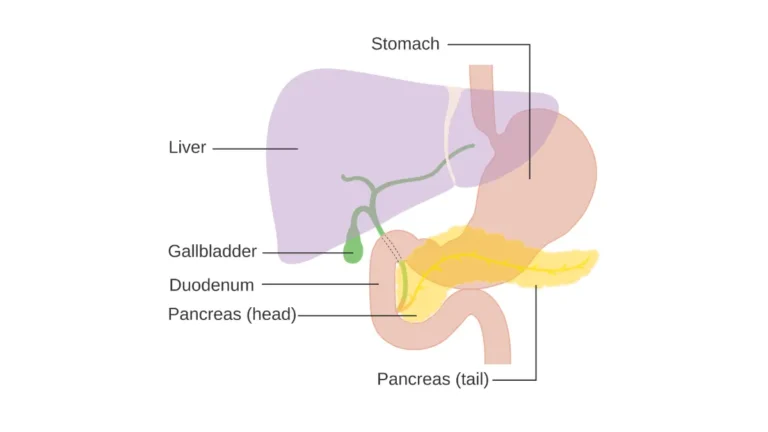
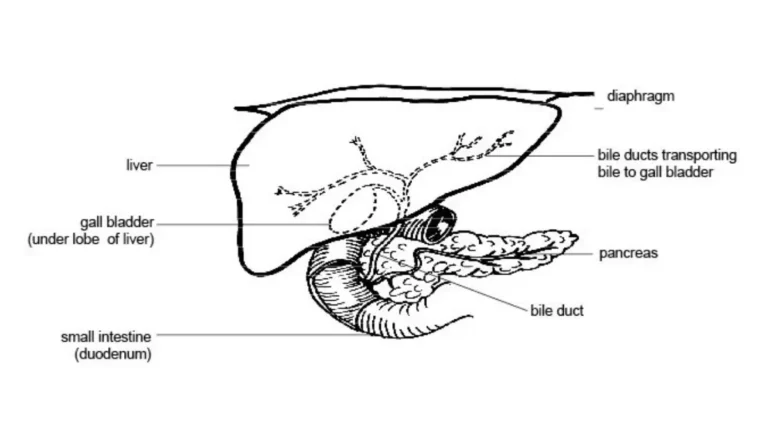
Adapted from AnatomyTool.org JMarchn – Bile duct, pancreatic ducts, hepatopancreatic ampulla, licensed under “JMarchn – Bile duct, pancreatic ducts, hepatopancreatic ampulla – Latin and English labels” by Jordi Marchn and O. Paul Gobée, LUMC, license: CC BY-SA.
⚠️ Clinical Warning: A single high CA 19-9 drawn during active jaundice can be misleading. If you are jaundiced, ask whether the test should be repeated after your bile duct is treated.
Why a normal result can’t rule cancer out
🔬 How It Works: CA 19-9 is built on the Lewis blood-group antigen. About 5–10% of people are “Lewis-negative” and make little or no CA 19-9 at all, so their level can read normal even with pancreatic cancer. Small, early tumors may also fail to raise it.
If you have symptoms like unexplained weight loss, new abdominal or back pain, or yellowing skin, those matter regardless of the number — see the early signs of pancreatic cancer.
Why CA 19-9 isn’t used to screen for pancreatic cancer
No — major guidelines do not recommend CA 19-9 to screen people who have no symptoms.
What guidelines say about screening
The U.S. Preventive Services Task Force recommends against screening for pancreatic cancer in average-risk, symptom-free adults, and professional oncology guidance does not endorse CA 19-9 as a screening test. The reason is statistical: pancreatic cancer is uncommon in the general population, and because the marker also rises in benign conditions, testing everyone would produce many false alarms and missed cases.
🩺 Physician Note: Guidance draws a clear line between screening (testing people without symptoms) and monitoring (tracking a known cancer). CA 19-9 has a real role in the second, not the first.
What high-risk people should know
People with a strong family history or an inherited risk are managed differently — through specialized surveillance programs, often using MRI or endoscopic ultrasound at expert centers, not a single blood test. New-onset diabetes after age 50 can occasionally be an early clue worth raising with a doctor; see new-onset diabetes and pancreatic cancer.
✅ Patient Action: If pancreatic or related cancers run in your family, ask a gastroenterologist or genetic counselor whether you qualify for a surveillance program. A genetic risk assessment can help you organize that conversation.
How doctors use CA 19-9 during and after treatment
CA 19-9’s most established job is not finding cancer — it is helping track a cancer that has already been diagnosed.
Tracking response during treatment
If the level was elevated at diagnosis, it can be measured about every 1–3 months during active treatment to watch the trend. A falling level generally suggests treatment is working, and a rising trend can signal progression — but a number alone cannot confirm that. Imaging or biopsy is needed to act on it.
What a falling number after surgery means
CA 19-9 clears from the blood within a couple of days, so it is typically checked a few weeks after surgery. A return to normal, or a clear downward trend, is associated with better outcomes, while a level that stays high may prompt closer follow-up.
📊 Clinical Data Point: The 5-year relative survival for pancreatic cancer is about 13% overall and roughly 8% for pancreatic adenocarcinoma, its most common form — Source: American Cancer Society pancreatic cancer survival data (Cancer Statistics 2025 / SEER).
These are population averages across all stages and ages, not a forecast for any one person. Survival is markedly higher when the cancer is found early and can be removed surgically.
What CA 19-9 says about prognosis
Higher levels before treatment tend to track with more advanced disease, which is why oncologists weigh the trend over time rather than any single reading.
✅ Patient Action: Ask your oncologist: “What does my CA 19-9 trend mean alongside my latest scan, and how often should we recheck it?”
What to do with your CA 19-9 result
One number is a starting point for a conversation, not a conclusion. A few specific questions make that conversation more useful.
Questions to ask your doctor
- What is my baseline level, and what will we compare future results to?
- Could a non-cancer cause, like jaundice or pancreatitis, explain my result?
- Should the test be repeated, and if so, when?
- What do my imaging results show alongside this number?
- Could I be Lewis-negative, which would make my CA 19-9 unreliable?
When to follow up sooner
Some symptoms deserve prompt attention regardless of any lab value: new or worsening yellowing of the skin or eyes, unexplained weight loss, persistent upper-abdominal or mid-back pain that wraps around, or dark urine with pale stools.
✅ Patient Action: If you have these symptoms and no clear explanation, contact your doctor rather than waiting for a repeat blood test. Our symptom checker can help you describe what you are noticing.
CA 19-9 and pancreatic cancer: common questions
1. What is a normal CA 19-9 level?
A normal CA 19-9 level is generally under 37 U/mL, though labs vary slightly, so check your report’s reference range. A result within range is reassuring but does not rule out cancer on its own, because some pancreatic tumors do not raise CA 19-9. Always interpret your result with the clinician who ordered it.
2. What does a high CA 19-9 mean?
A high CA 19-9 means follow-up is warranted, not that you have cancer. How high it is and your symptoms and scans matter far more than the number alone. Many non-cancer conditions raise it, and imaging or biopsy is needed to confirm any diagnosis. Discuss a high result with the physician who ordered the test.
3. Can you have pancreatic cancer with a normal CA 19-9?
Yes. About 5–10% of people are “Lewis-negative” and make little or no CA 19-9, so their level can read normal even with pancreatic cancer. Small, early tumors may also not raise it. A normal CA 19-9 should never be used alone to rule out cancer when symptoms are present. Tell your doctor about any persistent symptoms.
4. What CA 19-9 level indicates pancreatic cancer?
There is no single cutoff that diagnoses pancreatic cancer. Generally, the higher the level, the greater the concern, and very high levels (over about 1,000 U/mL) are associated with advanced disease. But CA 19-9 alone cannot diagnose cancer — imaging and biopsy are required. Your care team interprets any level in clinical context.
5. Can CA 19-9 be elevated without cancer?
Yes, often. Benign causes include pancreatitis, gallstones, bile-duct blockage or infection, obstructive jaundice, cirrhosis, other liver disease, and cystic fibrosis. Jaundice in particular can push CA 19-9 up sharply, with levels falling once it is treated. A mildly elevated result frequently turns out to have a non-cancer explanation.
6. Is CA 19-9 used to screen for pancreatic cancer?
No. Guidelines, including the U.S. Preventive Services Task Force, do not recommend CA 19-9 to screen people without symptoms. The disease is uncommon and the marker rises in benign conditions, so screening everyone would cause many false results. High-risk individuals are monitored through specialized programs, not a single blood test.
7. How often is CA 19-9 checked during treatment?
If CA 19-9 was elevated at diagnosis, it is often measured about every 1–3 months during active treatment to follow the trend. A falling level generally suggests the treatment is working. A rising trend can suggest progression but must be confirmed with imaging or biopsy. Your oncologist decides the right timing for your situation.
8. What does it mean if CA 19-9 drops after surgery?
A CA 19-9 level that returns to normal or trends downward after surgery is generally a positive sign and is associated with better outcomes. It is usually checked a few weeks afterward, since the marker clears the blood within days. A level that stays elevated may prompt closer monitoring. Your surgical and oncology team will interpret the change.
9. Why is my CA 19-9 high but my scans are normal?
This is common and often reassuring. A non-cancer cause such as jaundice, pancreatitis, or liver disease can raise CA 19-9 without anything showing on imaging. Your doctor may recheck the level after treating a reversible cause, or arrange follow-up imaging. A single high value with clear scans rarely means cancer on its own.
10. What does a very high CA 19-9 (over 1,000) mean?
Very high CA 19-9 levels are strongly associated with advanced, often unresectable pancreatic cancer, though obstructive jaundice can also drive levels up. Even so, the number alone does not confirm a diagnosis or a stage — imaging and biopsy do. A very high result should be evaluated promptly by an oncology team.
11. Can other cancers raise CA 19-9?
Yes. Besides pancreatic cancer, CA 19-9 can be elevated in colorectal, stomach, gallbladder, bile-duct, liver, and lung cancers. Because it is not specific to one cancer, it is never used by itself to identify where a problem is. A clinician interprets it together with imaging, symptoms, and other tests.
The bottom line on your CA 19-9 result
A CA 19-9 level is one informative-but-imperfect data point that your care team reads alongside imaging and your full clinical picture — it neither confirms nor rules out pancreatic cancer by itself. A high number is often something benign, and a normal number is not always the all-clear. The most useful thing you can do is bring specific questions to the clinician who ordered the test. For how this test fits into diagnosis, staging, and treatment, return to our complete guide to pancreatic cancer.
About this content
How this article was put together: researched from recognised health sources, drafted with the help of AI tools, and edited by hand, with sources linked throughout.

Sameer Patel is the founder and editor of My Medicine Advisor. He is not a doctor or medical professional — before starting this site he worked in banking,…
Medical disclaimer
The content on MyMedicineAdvisor is provided for general informational and educational purposes only and is not a substitute for professional medical advice, diagnosis, or treatment. Health information on this website should not be used to diagnose, treat, cure, or prevent any condition without guidance from a qualified healthcare professional. Always seek the advice of your doctor, physician, or another licensed healthcare provider with any questions you may have regarding a medical condition, symptoms, medications, or treatment decisions.