
On This Page – Quick Medical Summary
Start here: making sense of your BMP blood test
If a result just landed in your patient portal with an “H” or “L” beside it, you’re probably here to find out whether one flagged number is a problem. A basic metabolic panel is a common blood test that measures eight substances tied to your blood sugar, kidneys, and fluid balance — and a single value outside the range is far more often a prompt for a conversation than a diagnosis.
Use whichever of these fits you:
- You have results and one value is flagged → head to what each number means and what an abnormal result usually does, and doesn’t, mean.
- You’re about to take a BMP → start with whether you need to fast and what the draw involves.
- You’re monitoring a condition or medication (diabetes, kidney disease, blood-pressure drugs) → focus on the blood-sugar and kidney sections and how a BMP tracks medication safety.
- You’re deciding between a BMP and a CMP → skip to the panel comparison.
One principle runs through everything below: compare every value only to the reference range printed on your own report, because those ranges legitimately differ from one lab to the next. This guide explains what the test measures and what results generally indicate; it doesn’t interpret your specific numbers for you.
ℹ️ Medical Disclaimer: This article explains what a basic metabolic panel measures, typical reference ranges and what they indicate, how the test is used to screen for and monitor conditions such as diabetes, kidney disease, and electrolyte or acid-base disorders, how it relates to medication monitoring, and when a flagged value warrants urgent attention. It is educational and is not a substitute for professional medical advice. Reference ranges and results must be interpreted in the context of your history, medications, and symptoms — discuss your specific results with your healthcare provider, and seek prompt care for any value or symptom described here as urgent.
What is a basic metabolic panel (BMP)?
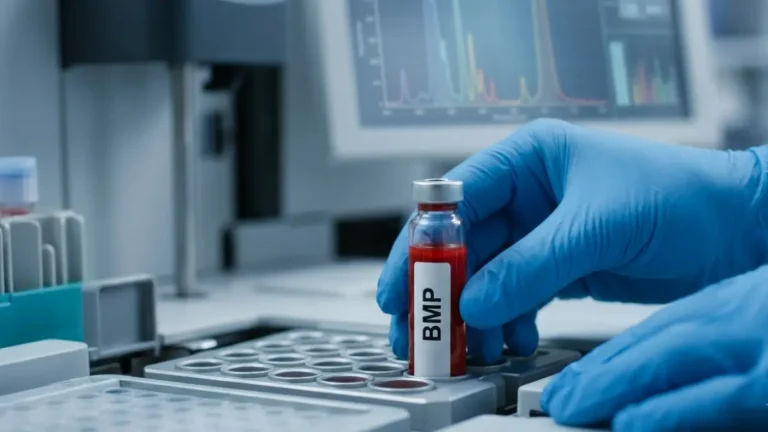
A basic metabolic panel (BMP) is one of the most commonly ordered blood tests, and knowing what it covers takes the mystery out of the numbers on your report. It’s a group of eight tests that together give your clinician a snapshot of your blood chemistry — your blood sugar, kidney function, and the electrolytes that keep your fluids and acid-base balance steady.
The eight substances a BMP measures are:
- Glucose — blood sugar, your body’s main energy source.
- Calcium — a mineral essential for nerves, muscles, and heart function.
- Sodium, potassium, chloride, and carbon dioxide (CO2, or bicarbonate) — the four electrolytes that regulate fluid balance and acidity.
- Blood urea nitrogen (BUN) and creatinine — waste products your kidneys filter out, used to gauge kidney function.
According to the National Library of Medicine’s overview of the basic metabolic panel, the test reports on fluid and electrolyte status, kidney function, and blood sugar, and it’s frequently used as a routine screen during a physical exam.
Is it the same as a “Chem-7” or “Chem-8”?
Yes. You may see a BMP called a Chem-7 or Chem-8 panel, or simply “electrolytes and kidney function” — different names for essentially the same core group of tests. The number refers to how many analytes the lab reports.
Where eGFR and the anion gap fit in
Many labs add two calculated values to a BMP without drawing more blood: an eGFR and an anion gap.
🔬 How It Works: Your eGFR (estimated glomerular filtration rate) isn’t measured directly — it’s calculated from your creatinine, age, and sex to estimate how much blood your kidneys filter each minute. Per Mayo Clinic Laboratories, eGFR isn’t reported for people under 18. The anion gap is a calculation from your electrolytes that helps flag acid-base imbalances.
Why your doctor ordered a basic metabolic panel
A BMP shows up on a lab order for four main reasons, and recognizing which one applies to you can lower the worry considerably. It’s ordered as often for a routine check as it is to investigate a specific problem.
- As a routine health screen. A BMP is a standard part of many annual physicals, giving a broad look at your metabolism and kidney health before any symptoms appear.
- To investigate symptoms. Fatigue, confusion, persistent thirst, weakness, or signs of dehydration can prompt a BMP to check blood sugar, electrolytes, and kidney function.
- To monitor a known condition. People with diabetes, high blood pressure, or kidney disease get periodic BMPs to track how those conditions affect their blood chemistry.
- To check that a medication is safe. Certain drugs can shift potassium, sodium, or kidney values, so a BMP confirms they’re working without causing harm.
🩺 Physician Note: A normal-looking BMP doesn’t rule out every condition, and one abnormal value rarely settles a diagnosis on its own. Cleveland Clinic notes that providers rarely diagnose a condition from a BMP alone — they read it alongside your history, symptoms, and often repeat or additional tests.
Your BMP blood sugar and kidney numbers explained
Four of the eight BMP values speak to two of the things people worry about most — blood sugar and kidney function — so this section takes each in plain language. As you read, remember that a flagged value here is a reason to ask questions, not a verdict.
Glucose (blood sugar)
Glucose is the sugar your body uses for energy, and a BMP usually measures it after fasting. MedlinePlus lists a typical range of 64 to 100 mg/dL, though your report’s range may differ.
A single high fasting glucose doesn’t diagnose diabetes. Confirmation needs repeat testing or an A1c, because one reading can be nudged by stress, illness, or how long you actually fasted — the CDC’s guidance on diabetes testing explains the tests used to make an actual diagnosis. To understand a borderline reading, our explainer on what a fasting blood sugar in the 70–100 range means goes deeper.
Blood urea nitrogen (BUN)
BUN measures urea, a waste product from protein breakdown that your kidneys clear. MedlinePlus gives a typical range of 6 to 20 mg/dL. A high BUN can reflect reduced kidney filtration — but also simple dehydration, a high-protein diet, or certain medications.
Creatinine
Creatinine is a waste product from normal muscle activity, filtered out by the kidneys, and it’s one of the most useful single markers of kidney function on the panel.
🔬 How It Works: Your muscles produce creatinine at a fairly steady rate, and healthy kidneys clear it just as steadily. When filtration drops, creatinine rises in the blood — which is why a rising creatinine, read together with your eGFR, points toward the kidneys. Our guide covers how BUN and creatinine reflect kidney function in depth.
Here’s a concrete reason to trust your own report over any general chart: MedlinePlus lists a typical creatinine of 0.8 to 1.2 mg/dL, while Cleveland Clinic lists 0.58 to 0.96 mg/dL. Both are legitimate — labs calibrate differently — so your result is only meaningful against the range beside it.
When these point to your kidneys vs. your hydration
Because dehydration concentrates the blood, it can raise BUN, creatinine, and sodium together, mimicking a kidney problem. Clinicians use the pattern — including the BUN-to-creatinine ratio — plus your symptoms to tell the difference.
✅ Patient Action: If your glucose, BUN, or creatinine is flagged, ask your primary care provider: “Given my age, medications, and how hydrated I was, what does this specific value mean, and does it need a repeat test?”
Your BMP electrolytes and calcium explained
The remaining four BMP values — your electrolytes plus calcium — govern fluid balance, nerve and muscle function, and the acidity of your blood. Small deviations are common and often harmless; your clinician interprets them in context.
🔬 How It Works: Electrolytes are minerals that carry a tiny electrical charge, and that charge is what powers nerve signals, muscle contractions (including your heartbeat), and the movement of water between your cells and bloodstream. Holding them in a narrow range is how your body keeps its fluids and pH steady.
Sodium and chloride (fluid balance)
Sodium and chloride move water through your body and hold your fluid balance. MedlinePlus lists sodium at about 136 to 144 mEq/L and chloride at 96 to 106 mmol/L. Low sodium (hyponatremia) or high sodium (hypernatremia) can follow dehydration, overhydration, medications, or hormonal shifts.
Potassium (nerves and heart rhythm)
Potassium is critical for nerve signals and a steady heartbeat, with a typical range of 3.7 to 5.2 mEq/L. Because both high and low potassium can affect heart rhythm, it’s a value clinicians watch closely — and one where any urgent flag belongs with your provider, not a self-check.
Bicarbonate/CO2 (acid-base balance)
The carbon dioxide (CO2) on a BMP reflects bicarbonate, part of how your body manages acidity, typically 23 to 29 mmol/L. A low value can point toward metabolic acidosis and a high value toward alkalosis — both read alongside the rest of the panel.
Calcium (bones, nerves, and muscle)
Calcium in your blood keeps nerves, muscles, and your heart working, at a typical 8.5 to 10.2 mg/dL. You can explore what your calcium result can mean and a closer look at your electrolyte levels in our companion guides.
✅ Patient Action: For a flagged electrolyte or calcium, ask your provider whether it needs a repeat test and whether any medication or hydration issue could explain it.
Do you need to fast before a BMP blood test?
Whether to fast is the most common pre-test question, and the answer is usually simple. Fasting mainly protects the accuracy of one value: your glucose.
Most providers ask you to fast for about 8 hours before a BMP so the blood-sugar reading is accurate; water is generally fine. Always confirm timing and whether to take your usual medications with the provider or lab that ordered the test, since instructions vary. Our guide on whether you need to fast before this blood test covers the specifics.
What to expect during the blood draw
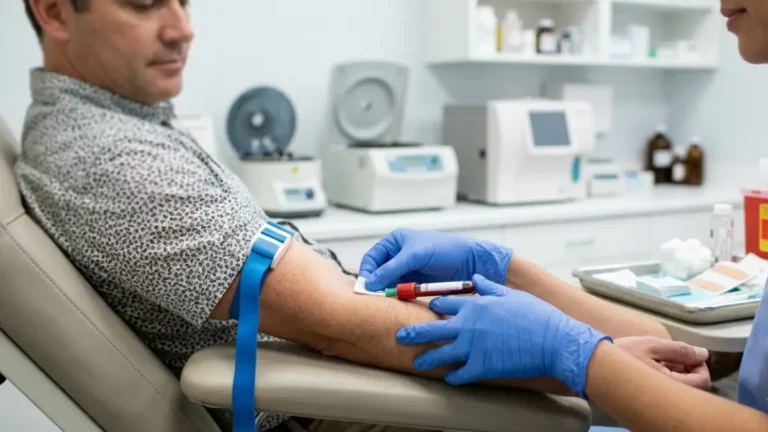
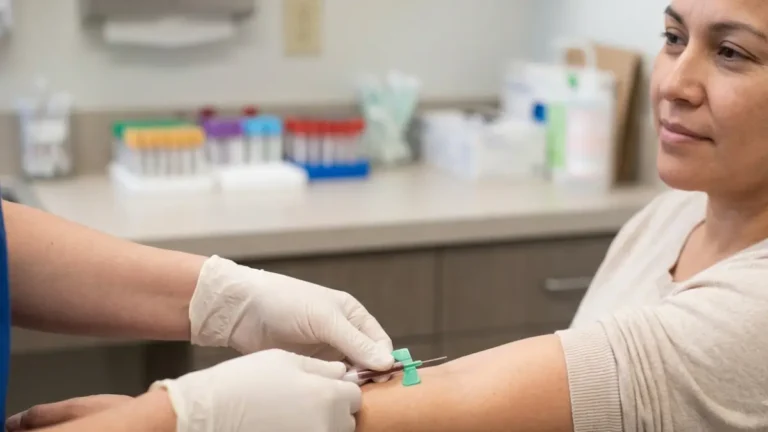
A BMP uses a standard blood draw from a vein in your arm (venipuncture), takes a minute or two, and involves the same brief pinch as any routine blood test. You can eat and return to normal activity right afterward unless told otherwise.
How soon results come back
Turnaround depends on the lab, but basic chemistry results are often available the same day or within a few days through your portal. Your ordering clinic can tell you what to expect for your specific lab.
Basic metabolic panel normal ranges, and your report
Here are the typical adult reference ranges for a BMP in one place — with the single most important caveat attached: these are starting points, and your lab’s numbers are what actually apply to you.
Typical adult BMP reference ranges
| Test | Typical range | What it checks | Key clinical detail |
|---|---|---|---|
| Glucose (fasting) | 64–100 mg/dL | Blood sugar | A single high value doesn’t diagnose diabetes |
| Calcium | 8.5–10.2 mg/dL | Nerve, muscle, bone | Tightly regulated by hormones |
| Sodium | 136–144 mEq/L | Fluid balance | Shifts with hydration and medications |
| Potassium | 3.7–5.2 mEq/L | Nerve and heart function | Watched closely; affects heart rhythm |
| Chloride | 96–106 mmol/L | Fluid balance | Read with sodium and CO2 |
| CO2 (bicarbonate) | 23–29 mmol/L | Acid-base balance | Low may signal metabolic acidosis |
| BUN | 6–20 mg/dL | Kidney function | Rises with dehydration too |
| Creatinine | 0.8–1.2 mg/dL | Kidney function | Range varies notably by lab |
Source: reference ranges from the National Library of Medicine (MedlinePlus), Basic Metabolic Panel. Ranges vary by laboratory; compare to your own report.
Why your lab’s ranges may differ
Different labs use different equipment and methods, so the same analyte can carry a slightly different “normal” range from one lab to another. MedlinePlus states plainly that normal value ranges vary among labs — which is why an “H” or “L” flag is defined by your report, not a chart online. For the full 14-value panel and how it extends these numbers, see the complete metabolic-panel reference-range chart.
What a fully normal BMP does and doesn’t rule out
A BMP that’s entirely in range is reassuring for blood sugar, kidney, and electrolyte status — but it’s a snapshot of those systems, not a whole-body all-clear. It doesn’t assess your liver, blood counts, cholesterol, or thyroid, which need their own tests.
📊 Clinical Data Point: A BMP measures 8 analytes; a comprehensive metabolic panel measures 14. The six a BMP leaves out are all liver and protein markers. (Source: MedlinePlus, Basic and Comprehensive Metabolic Panel entries.)
What an abnormal basic metabolic panel result means
If one value came back outside the range, this is the section to slow down on — because the most likely explanation is rarely the scariest one. A single out-of-range number is common and frequently has a benign cause.
An abnormal result on one BMP value is often a matter of timing, hydration, diet, medication, or how the sample was handled — not disease. Providers interpret the whole pattern, and usually repeat the test or add others, before drawing any conclusion. Our guide to reading an abnormal metabolic-panel result walks through this.
Common non-disease reasons a value is off
- Dehydration, which can raise BUN, creatinine, and sodium together. Staying ahead of fluids matters more than most people realize — you can estimate how much water you actually need each day.
- Recent food, exercise, or a short fast, which can move glucose and electrolytes within hours.
- Sample handling — a delay or mishandling can falsely lower glucose or affect potassium.
Why patterns matter more than any single number
🩺 Physician Note: Clinicians read a BMP as a pattern, not a row of isolated numbers. A low CO2 alongside a high glucose and other shifts tells a very different story than any one value alone — which is exactly why a single flag out of context can mislead, and why your provider’s read matters.
What your provider does next
For a genuinely abnormal value, the usual next step is a repeat test to confirm it’s real, then a targeted look at the cause. Most single flags are resolved this way rather than by an immediate diagnosis.
✅ Patient Action: Bring your flagged result to your primary care provider and ask directly: “Does this need a repeat test or a referral, and what’s the most likely explanation given my history?”
BMP results that need same-day medical attention
Most flagged BMP values are routine — but a few situations genuinely warrant prompt care, and it’s worth knowing the honest line between them. The safest signals are symptoms, not numbers.
Some BMP results are marked “critical” (or “panic”) by the lab, meaning the value is far enough outside the expected range that it needs prompt clinical attention. Labs are required to notify the ordering provider quickly when a critical value comes back — so if yours is truly urgent, expect a phone call rather than a portal surprise. For which values fall into this category and why, see which flagged values need same-day attention.
Symptoms that mean seek care now, whatever the number says
Regardless of what a specific value reads, get medical help promptly if you have symptoms such as:
- Severe weakness, muscle cramps, or an irregular or racing heartbeat
- Confusion, severe drowsiness, or fainting
- Severe nausea and vomiting with signs of dehydration
- Extreme thirst, frequent urination, and fatigue together, which can signal very high blood sugar
⚠️ Clinical Warning: Very high or very low potassium can disturb the heart’s rhythm, and markedly high blood sugar with symptoms can be a medical emergency. These situations are judged by your clinician using your full picture — not by matching a number to a chart — so this section deliberately doesn’t publish action thresholds. If a value is flagged critical or you have the symptoms above, contact your provider or seek care now.
Why the lab may call you or your doctor first
A critical result triggers a notification process specifically so dangerous values aren’t missed. If you get that call, treat it as time-sensitive and follow the instructions you’re given.
✅ Patient Action: If a value is flagged critical or you feel unwell, ask (or go in and ask): “Given this result and my symptoms, do I need to be seen today, and should I adjust any medication in the meantime?”
BMP vs CMP: which blood test do you need?
If you’re trying to work out whether you needed the “basic” or the “comprehensive” panel, the difference comes down to six extra markers. Your clinician chooses between them based on whether liver information is needed.
A comprehensive metabolic panel (CMP) includes all eight BMP tests plus six liver and protein markers: ALT, AST, ALP, total bilirubin, total protein, and albumin. A BMP covers blood sugar, kidneys, and electrolytes; a CMP adds a look at your liver.
| Feature | Basic metabolic panel (BMP) | Comprehensive metabolic panel (CMP) |
|---|---|---|
| Number of tests | 8 | 14 |
| Blood sugar | Glucose | Glucose |
| Kidney markers | BUN, creatinine | BUN, creatinine |
| Electrolytes | Sodium, potassium, chloride, CO2 | Sodium, potassium, chloride, CO2 |
| Calcium | Yes | Yes |
| Liver & protein markers | Not included | ALT, AST, ALP, bilirubin, total protein, albumin |
| Best for | Blood sugar, kidney, and electrolyte checks | The above plus liver and protein assessment |
Source: test composition from the National Library of Medicine (MedlinePlus), Basic and Comprehensive Metabolic Panel entries.
Per the National Library of Medicine’s comprehensive metabolic panel entry, the added markers let a clinician check for liver problems and protein or nutritional issues a BMP can’t see.
For a side-by-side walkthrough of when a clinician picks each panel, see how a BMP compares with a comprehensive metabolic panel.
✅ Patient Action: If you’re unsure which you had or need, ask your provider: “For my situation, do I need a BMP or a CMP, and does my liver need checking too?”
How a BMP monitors your medications
If you take a regular medication, your BMP may be doing a specific safety job in the background. Understanding which marker matters for your prescription makes those periodic blood tests feel less like a formality.
Some medications change how your kidneys work or shift your electrolytes, so a BMP is used to catch those effects early. The panel doesn’t tell you to change anything — it gives your prescriber the information to decide.
- Blood-pressure drugs such as ACE inhibitors and ARBs are commonly monitored with potassium and creatinine, because they can raise potassium and affect kidney filtration.
- Diuretics (“water pills”) can move sodium, potassium, and other electrolytes, so those values are tracked.
- Diabetes and other drugs cleared by the kidneys rely on kidney markers to confirm they’re being processed safely.
🩺 Physician Note: Which markers your clinician watches, and how often, depends on your specific medication and health — there’s no single monitoring schedule that fits everyone. Our guide on how routine blood tests track medication safety explains the common drug-and-marker pairings.
Some people also track related numbers at home between blood tests. A home blood-pressure monitor or glucose meter can support those conversations, though they’re general wellness tools, not a substitute for lab testing or medical advice.
✅ Patient Action: Ask your prescriber or pharmacist: “How does my medication affect these values, and how often should I have a BMP to monitor it?”
BMP cost, insurance, and where to get tested
What a BMP costs is one of the few things this guide can’t give you a single number for — and any site quoting one precise price is glossing over how much it varies. What you pay depends on where you go and how you’re covered.
The cost of a BMP varies by provider, lab, and insurance. When a clinician orders it as part of routine care, it’s often covered, though your out-of-pocket share depends on your plan and deductible. Cash-pay and at-home options exist and are usually cheaper than a hospital draw, but confirm the price before you book.
Getting a BMP
- Through your doctor, drawn at the clinic or a partner lab — the most common route, and usually the one insurance covers.
- At a standalone lab, often at a lower cash price, with many accepting a doctor’s order or direct-access requests.
- Through an at-home test service, which mails a kit or arranges a draw — convenient, with cost and quality worth comparing.
✅ Patient Action: Before you pay, ask the lab: “What’s the cost with and without my insurance, and will my provider accept these results?”
Helping a parent understand their BMP results
If you’re reading this for an aging parent whose results came back flagged, you’re doing something genuinely useful — and there’s one nuance about older adults worth knowing. Helping is normal, and it’s very doable.
When you sit down with a parent’s BMP results, start by comparing each value to the range on their own report, then focus on any flagged number. MedlinePlus notes that normal creatinine varies with age and muscle mass, which matters more in older adults than most charts admit.
🩺 Physician Note: Because creatinine comes from muscle, an older adult with less muscle mass can have a “normal” creatinine that still overstates how well their kidneys are filtering — while kidney filtration also naturally declines with age. So a normal creatinine isn’t automatically full reassurance in an older parent; the eGFR and a clinician’s read matter. Our guide to helping an older parent make sense of flagged results covers this conversation.
Reading results together without alarm
Keep the focus on what the clinician plans to do next rather than on any single scary-looking value, and write down questions to bring to the appointment.
✅ Patient Action: At your parent’s next visit, ask their provider: “Given my parent’s age and muscle mass, is this creatinine or eGFR result actually concerning, and does it need follow-up?”
Basic metabolic panel: frequently asked questions
Short, sourced answers to the questions people ask most about a basic metabolic panel. Each draws on the same authorities cited above.
1. What is a basic metabolic panel?
A basic metabolic panel (BMP) is a common blood test that measures eight substances in your blood: glucose, calcium, sodium, potassium, chloride, carbon dioxide (bicarbonate), BUN, and creatinine. Together they give your clinician a picture of your blood sugar, kidney function, and fluid and electrolyte balance. It’s often used as a routine screen during a physical exam.
2. What does a BMP test measure?
A BMP measures eight things: blood sugar (glucose), calcium, four electrolytes (sodium, potassium, chloride, and CO2/bicarbonate), and two kidney waste products (BUN and creatinine). Many labs also report a calculated eGFR to estimate kidney filtration. It doesn’t include liver markers, cholesterol, or blood counts.
3. What’s the difference between a BMP and a CMP?
A BMP measures 8 substances; a comprehensive metabolic panel (CMP) measures those same 8 plus 6 liver and protein markers — ALT, AST, ALP, total bilirubin, total protein, and albumin. Your provider chooses a CMP when liver or protein information is needed. Discuss which one fits your situation with your clinician.
4. Do you have to fast for a BMP?
Often, yes — many providers ask you to fast for about 8 hours before a BMP, mainly so the glucose reading is accurate. Water is generally fine. Instructions vary by lab and by whether other tests are ordered at the same time, so confirm fasting and medication timing with the provider or lab that ordered your test.
5. What is a normal glucose level on a BMP?
MedlinePlus lists a typical fasting glucose of 64 to 100 mg/dL, though your lab’s range may differ slightly. A single high value doesn’t diagnose diabetes — confirmation needs repeat testing or an A1c, because one reading can be affected by stress, illness, or fasting time. Discuss a flagged glucose with your provider.
6. What is a normal potassium level?
A typical potassium range is about 3.7 to 5.2 mEq/L per MedlinePlus, though your report’s range is what applies to you. Because both high and low potassium can affect heart rhythm, it’s a value clinicians watch closely. A flagged potassium — especially with symptoms — should be reviewed with your provider promptly.
7. What does high creatinine mean on a BMP?
Creatinine is a muscle waste product your kidneys filter, so a high value can signal reduced kidney filtration. It’s read together with your eGFR and BUN, and it can also rise from dehydration, intense exercise, or a high-protein diet. One elevated result isn’t a diagnosis — ask your provider whether it needs a repeat test.
8. What is a normal BUN level?
MedlinePlus gives a typical BUN of 6 to 20 mg/dL, though your lab’s range may vary. BUN reflects a protein waste product your kidneys clear, so a high value can point to reduced kidney function — but also to dehydration, a high-protein diet, or certain medications. It’s interpreted alongside creatinine and your clinician’s assessment.
9. What does low CO2 (bicarbonate) mean on a BMP?
The CO2 on a BMP reflects bicarbonate, part of how your body manages acidity, with a typical range of about 23 to 29 mmol/L. A low value can point toward metabolic acidosis, and a high value toward alkalosis. It’s interpreted with the rest of the panel and your symptoms, so review a flagged CO2 with your clinician.
10. What is eGFR on a BMP?
eGFR (estimated glomerular filtration rate) is a value calculated from your creatinine, age, and sex to estimate how much blood your kidneys filter per minute. Per Mayo Clinic Laboratories, it isn’t reported for people under 18. It’s one of the main numbers used to gauge kidney function alongside creatinine.
11. Why would a doctor order a BMP?
Doctors order a BMP for four main reasons: as a routine health screen, to investigate symptoms like fatigue or dehydration, to monitor a known condition such as diabetes or kidney disease, and to check that a medication is safe. It’s ordered as often for a routine check as for a specific concern.
12. What conditions can a BMP detect?
A BMP can offer clues about diabetes (through glucose), kidney disease (through BUN, creatinine, and eGFR), and electrolyte or acid-base disorders. It screens rather than diagnoses — providers rarely diagnose a condition from a BMP alone and usually confirm with repeat or additional tests. Discuss any abnormal pattern with your clinician.
13. Is a BMP the same as a Chem-7 or Chem-8?
Yes. A BMP is also called a Chem-7 or Chem-8 panel, or informally “electrolytes and kidney function.” The number refers to how many analytes the lab reports. They’re different names for essentially the same core group of blood chemistry tests.
14. What does an abnormal BMP result mean?
A single out-of-range BMP value is common and often reflects timing, hydration, diet, medication, or sample handling rather than disease. Clinicians read the whole pattern and usually repeat the test or add others before concluding anything. Bring a flagged result to your provider to ask whether it needs a repeat test or further evaluation.
15. Can dehydration affect BMP results?
Yes. Because dehydration concentrates the blood, it can raise BUN, creatinine, and sodium together, sometimes mimicking a kidney problem. Clinicians use the overall pattern and your symptoms to tell dehydration apart from true kidney issues. Rehydration and a repeat test often clarify the picture.
16. How often should you get a BMP?
There’s no single schedule — how often you need a BMP depends on your health, any conditions you’re managing, and the medications you take. Some people have one at an annual physical; others need more frequent monitoring. Your clinician sets the right interval for you based on your situation.
Your next steps after a BMP blood test
If you came here worried about a flagged number, you should be leaving with the most useful reframe there is: one value outside the range on a basic metabolic panel is usually a starting point for a conversation, not a diagnosis. You now know what the eight values measure, why your own report’s ranges are the ones that count, and which situations genuinely need prompt care.
The single most important step before your next appointment is simple: write down any flagged values and bring them with you, along with your current medications and how you were feeling. That one page makes your provider’s read faster and more accurate.
Where to go deeper: if you’re weighing which panel you need, revisit how a BMP compares with a comprehensive metabolic panel; for the full set of values, see the complete metabolic-panel reference-range chart; and if a value was flagged critical, which flagged values need same-day attention explains what happens next.
About this content
How this article was put together: researched from recognised health sources, drafted with the help of AI tools, and edited by hand, with sources linked throughout.

Sameer Patel is the founder and editor of My Medicine Advisor. He is not a doctor or medical professional — before starting this site he worked in banking,…
Medical disclaimer
The content on MyMedicineAdvisor is provided for general informational and educational purposes only and is not a substitute for professional medical advice, diagnosis, or treatment. Health information on this website should not be used to diagnose, treat, cure, or prevent any condition without guidance from a qualified healthcare professional. Always seek the advice of your doctor, physician, or another licensed healthcare provider with any questions you may have regarding a medical condition, symptoms, medications, or treatment decisions.