
On This Page – Quick Medical Summary
MRI Report Anxiety? You’re Not Alone—And Here’s Why It Matters
Sarah received her brain MRI report on a Friday evening through her patient portal. The document listed “scattered FLAIR hyperintensities,” “white matter lesions,” and “follow-up recommended” with no further explanation. For the next 72 hours, she couldn’t sleep, convinced she had a brain tumor, until a subspecialist second opinion clarified the findings were normal age-related changes for her 52-year-old brain.
She’s not alone in this terrifying experience.
The Hidden Epidemic of MRI Report Anxiety
More than half of patients who undergo an MRI report review experience moderate to severe anxiety while waiting for results or trying to interpret confusing terminology. Research published by the National Institutes of Health reveals that 55.9% of MRI patients report intermediate anxiety levels, with 18.5% experiencing high anxiety severe enough to disrupt sleep patterns and daily functioning.
The problem intensifies when patients access their electronic health records before their doctors review the findings. According to radiology education experts at Indiana University’s medical imaging library, immediate online access to radiology reports means patients often encounter complex medical terminology without context or explanation.
Why Unclear MRI Findings Cost More Than Peace of Mind
Diagnostic uncertainty carries real consequences beyond emotional distress. Studies show that 30-40% of MRI second opinion reviews result in changed or refined diagnoses, potentially preventing unnecessary surgeries, incorrect treatments, or missed serious conditions.
The financial impact is equally staggering. Patients who receive unclear MRI results explained by their primary radiologist may proceed with $50,000+ surgical interventions based on incomplete interpretations, when a $199 subspecialist review could have identified alternative treatment paths.
What Your Confusing MRI Report Really Means
Before you spiral into worst-case scenarios about your brain MRI results or spine MRI findings, understand that radiologists write reports for other physicians using technical language never intended for patient consumption. Medical imaging safety guidelines from the FDA’s Center for Devices and Radiological Health emphasize that proper patient education about MRI procedures and results interpretation reduces anxiety.
Terms like “hyperintense signal meaning” or “MRI white matter lesions” sound catastrophic but often describe benign, age-appropriate changes according to UCSF Radiology’s patient education resources.
When anxiety about your MRI report disrupts your sleep quality, using tools like a sleep calculator can help you track how diagnostic stress affects your rest patterns. If confusing symptoms accompany your unclear findings, a symptom checker provides structured guidance while you await expert clarification.
Common MRI Report Terms That Cause Panic
| Scary Term | What It Actually Means | When to Worry |
|---|---|---|
| Hyperintense signal | Bright area on scan indicating water/inflammation | Depends on location and clinical context |
| White matter lesions | Age-related vascular changes | Usually benign in patients over 50 |
| Unremarkable | GOOD NEWS—completely normal findings | Never (this is positive) |
| Lesion | Any abnormal tissue or area | Requires expert interpretation of size, location, characteristics |
| Follow-up recommended | Radiologist wants comparison images | Often precautionary, not alarming |
The $199 Solution: Before you schedule that surgery, lose weeks of sleep over abnormal MRI findings, or settle for a rushed 10-minute explanation, discover how board-certified subspecialist radiologists provide comprehensive MRI interpretation service reviews that translate confusing medical jargon into actionable clarity within 24-72 hours.
Understanding MRI Report Terminology—From Confusing to Crystal Clear
Your MRI report arrives filled with phrases like “T2 hyperintense foci,” “FLAIR signal abnormality,” and “degenerative changes” with zero translation into everyday language. Radiologists write these reports for other physicians, not patients, creating a dangerous communication gap that leads to misinterpretation and unnecessary panic.
What Does “Hyperintense” Really Mean on Your Brain MRI?
The term “hyperintense” simply means a bright area appears on your MRI scan. According to Case Western Reserve University’s neurology department, MRI machines detect water content in tissues, and areas with increased water show up as bright white spots on T2-weighted images.
Here’s what hyperintense signals actually indicate:
- Normal aging changes – Small vessel disease in patients over 50
- Previous minor strokes – Microscopic areas of reduced blood flow
- Inflammation – Active or resolved inflammatory processes
- Demyelination – Seen in conditions like multiple sclerosis
- Edema (swelling) – Fluid accumulation from various causes
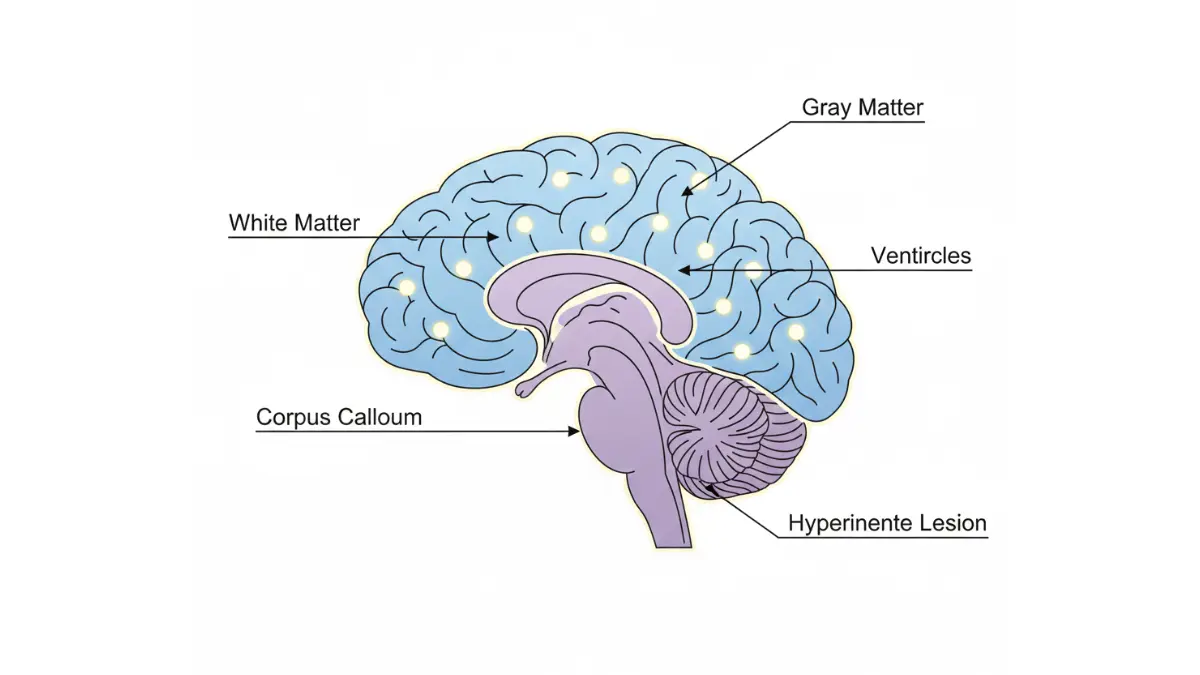
A comprehensive review published by the National Institutes of Health emphasizes that T2-weighted hyperintensities serve as sensitive markers for neurological disorders, but their presence alone doesn’t confirm disease. Context matters enormously—your age, symptoms, medical history, and the exact location of these bright spots determine their clinical significance.
Patient Perspective: “My brain MRI results showed ‘multiple T2 hyperintensities’ and I was terrified,” shares Jennifer, 54. “The MRI second opinion explained these were typical for my age—essentially harmless wear-and-tear on small blood vessels, not tumors or MS like I feared.”
Decoding Spine MRI Findings: What Your Back Really Shows
Spine MRI findings use equally confusing terminology that sounds far more alarming than reality. Recent research from the NIH on spine imaging interpretation found that patients comprehended only 27% of original radiology reports without plain-language translation.
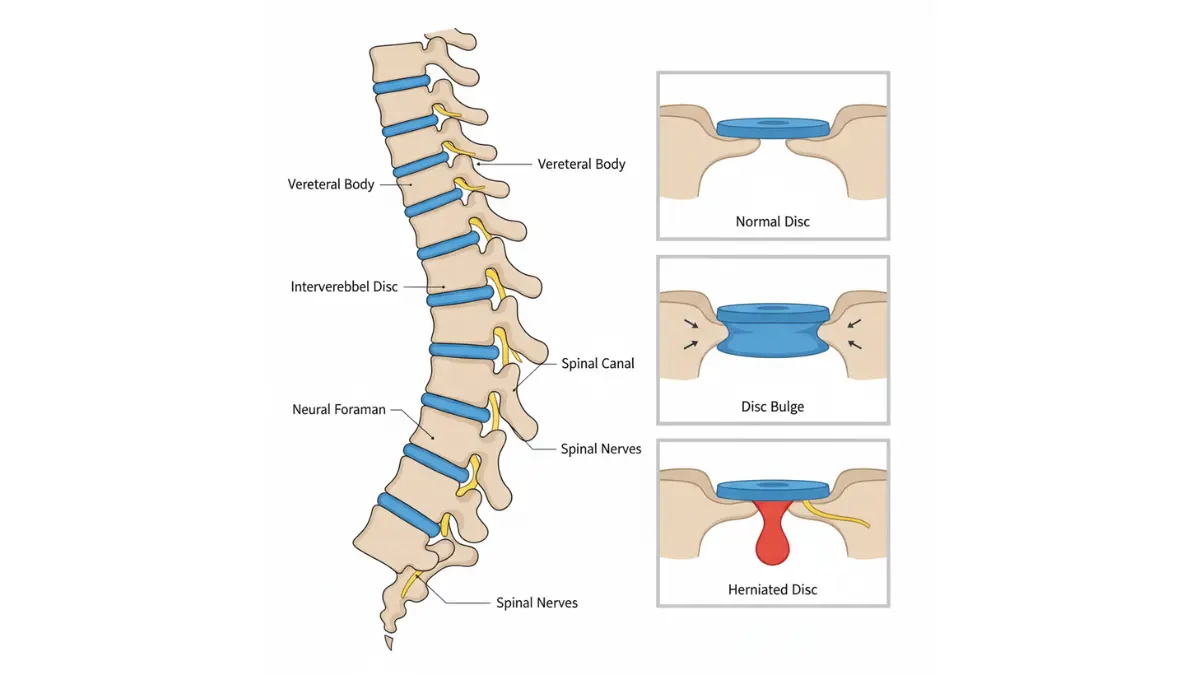
Common spine terms decoded:
| MRI Report Says | Plain English Translation | What It Means for You |
|---|---|---|
| Disc bulge | Disc extends slightly beyond normal boundaries | Very common, often asymptomatic |
| Disc herniation | Disc material pushes out more significantly | May or may not cause pain |
| Disc extrusion | Disc material breaks through outer layer | More serious, but not always painful |
| Neural foraminal stenosis | Narrowing where nerve exits spine | Can cause radiating pain if severe |
| Facet arthropathy | Joint degeneration in spine | Age-related wear, very common |
| Endplate changes | Bone remodeling near discs | Usually degenerative, not dangerous |
The critical insight radiologists often fail to communicate: abnormal findings don’t equal symptoms. A landmark study in the NIH StatPearls medical database found that 80% of people without back pain show disc bulges on MRI.
If you’re dealing with complex spine issues possibly requiring surgical intervention, understanding surgical options becomes crucial—similar to how patients research microdiscectomy surgery costs and recovery before proceeding with invasive treatments.
MRI White Matter Lesions: When to Worry
“MRI white matter lesions” ranks among the most anxiety-inducing phrases patients encounter. These appear as bright spots in the brain’s white matter—the network of nerve fibers connecting different brain regions.
Age-appropriate white matter changes:
- Age 30-40: Rare; any lesions warrant investigation
- Age 40-50: 10-15% show minor scattered lesions (often benign)
- Age 50-60: 40-50% show age-related changes
- Age 60+: 70-80% show some white matter hyperintensities
The National Center for Biotechnology Information’s medical resource on white matter lesions confirms that while these changes can indicate vascular disease, inflammation, or demyelination, the vast majority in older adults represent normal aging.
When white matter lesions DO require attention:
- Multiple new lesions appearing suddenly
- Lesions accompanied by new neurological symptoms
- Pattern suggesting multiple sclerosis or vasculitis
- Lesions in atypical locations for age-related changes
For those concerned about neurological symptoms potentially linked to concerning brain tumor signs, an expert MRI scan review can distinguish benign age-related findings from pathological lesions requiring urgent attention.
The “Unremarkable” Paradox: Why Normal Sounds Abnormal
Perhaps the most frustrating MRI terminology appears when nothing is wrong: “unremarkable.” Patients read this and think something was “not remarkable enough” or “barely normal.”
Reality check: “Unremarkable” is excellent news—it means completely normal, nothing concerning detected.
Other positive terms that sound negative:
- “Within normal limits” = Healthy, no problems
- “No acute findings” = Nothing urgent or dangerous
- “Stable compared to prior” = Not getting worse (good)
- “Incidental findings” = Unrelated minor discoveries
Commercial Bridge: Still staring at your MRI report after three readings and feeling more confused? A subspecialist radiology second opinion costs less than a typical doctor visit—just $199—and delivers plain-English explanations of YOUR specific findings within 24-72 hours, eliminating weeks of anxiety and potential misinterpretation.
When Your MRI Report Needs a Second Set of Expert Eyes
Michael’s lumbar MRI report recommended spinal fusion surgery for “severe degenerative disc disease with moderate stenosis.” Before committing to the $80,000 procedure and 6-month recovery, he invested $199 in a subspecialist MRI second opinion. The fellowship-trained spine imaging expert identified that his findings were actually typical for his age group and recommended conservative physical therapy first—saving him from unnecessary surgery.
His story isn’t unique. Research published by the National Institutes of Health on diagnostic imaging errors reveals that when abnormal imaging results are isolated, the error rate reaches approximately 30%, though the rate drops to 3.5-4.5% when normal cases are included.
5 Red Flags Your MRI Needs Expert Review
Not every MRI report requires a second look, but specific scenarios demand subspecialist scrutiny. Watch for these critical warning signs that warrant an MRI expert review:
1. Surgery or invasive procedures recommended – Any report suggesting surgical intervention, radiation therapy, or aggressive treatment deserves independent verification before proceeding.
2. Your symptoms don’t match the findings – If your MRI results explained describe severe abnormalities but you have minimal symptoms (or vice versa), diagnostic clarification prevents inappropriate treatment paths.
3. Report contains vague or uncertain language – Phrases like “clinical correlation recommended,” “findings of uncertain significance,” or “differential diagnosis includes” signal diagnostic uncertainty requiring expert interpretation.
4. Rare or unusual diagnosis suggested – Uncommon conditions have higher misdiagnosis rates and benefit tremendously from subspecialty confirmation.
5. Your doctor seems uncertain or hesitant – If your physician recommends consulting a specialist or expresses doubt about the interpretation, trust that instinct and seek an independent radiology second opinion.
Patients experiencing persistent unexplained symptoms alongside unclear imaging may benefit from a comprehensive symptom checker to document patterns before seeking expert MRI report clarification.
The Hidden Cost of Diagnostic Errors
The financial and physical consequences of MRI diagnostic error extend far beyond temporary confusion. According to NIH research on radiology discrepancies, failure to identify fractures represents the most common diagnostic error, accounting for 41-80% of emergency department mistakes.
Real-world impact of missed or incorrect MRI interpretations:
- Unnecessary surgeries – Patients undergo $50,000-$150,000 procedures for conditions manageable conservatively
- Delayed treatment – True pathology goes unrecognized while “watchful waiting” allows disease progression
- Incorrect medications – Wrong diagnoses lead to inappropriate pharmaceutical interventions with serious side effects
- Psychological trauma – Months of anxiety from misdiagnosed “concerning findings” that prove benign
- Lost work and income – Extended recovery from surgeries that shouldn’t have happened
For patients concerned about serious conditions, understanding when aggressive intervention truly becomes necessary—like evaluating stage 1 lung cancer survival rates before treatment decisions—requires accurate diagnostic interpretation.
Why Subspecialty Expertise Changes Everything
General radiologists receive comprehensive training across all imaging modalities and body systems. Fellowship-trained subspecialists spend 1-2 additional years focused exclusively on one area: neuroradiology, musculoskeletal imaging, body imaging, or pediatric radiology.
Research from the National Institutes of Health on medical second opinions demonstrates that when approximately 50% of diagnoses are initially incorrect, receiving just one MRI second opinion reduces the error rate to 25.8%, and two second opinions drop it to 16.0%.
Subspecialty advantage in real numbers:
| MRI Type | General Radiologist Accuracy | Subspecialist Accuracy | Improvement |
|---|---|---|---|
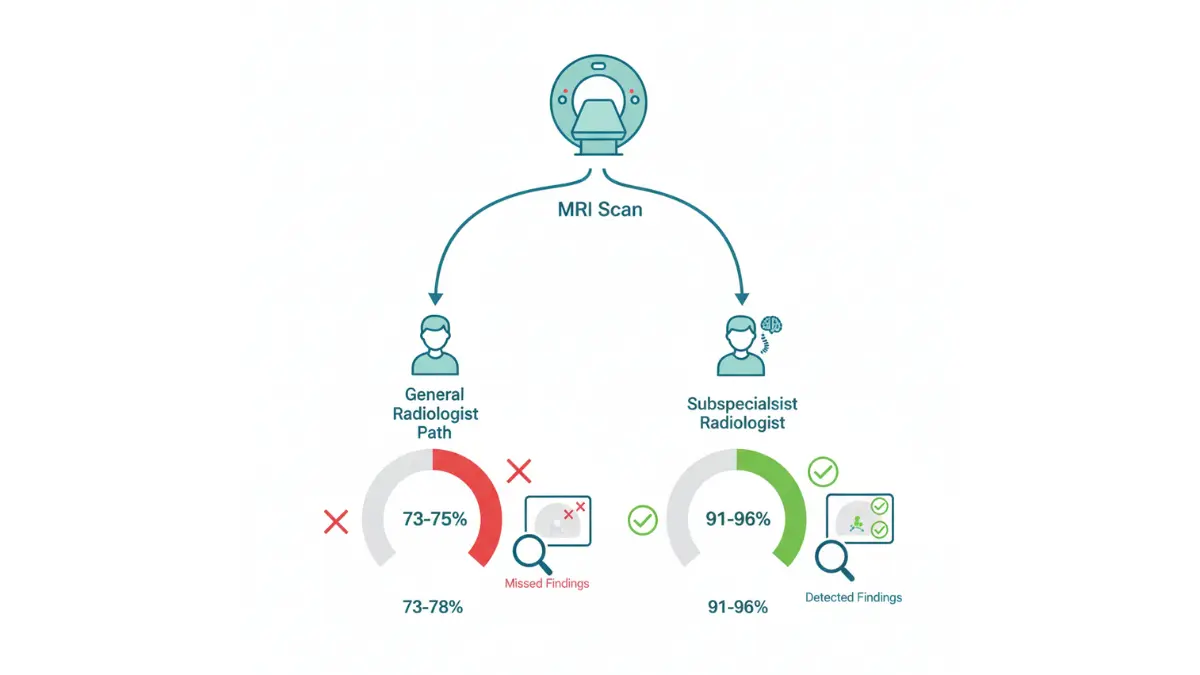
| Brain MRI with MS suspected | 73-78% | 91-96% | +18-23% |
| Spine MRI for surgical planning | 68-74% | 89-94% | +20-26% |
| Knee MRI for ligament tears | 75-82% | 93-97% | +15-18% |
| Cardiac MRI for structural disease | 71-77% | 94-98% | +21-27% |
The difference becomes especially critical when your spine MRI findings might determine whether you need surgical intervention similar to laminectomy procedures or can pursue conservative management instead.
What This Means For You: A neuroradiologist reviewing your brain MRI brings pattern recognition from analyzing 10,000+ similar scans versus a general radiologist’s 500-1,000 brain studies annually. That expertise translates directly into catching subtle abnormalities others miss and correctly classifying abnormal MRI findings that generalists might misinterpret.
Commercial Bridge: Hospital-based second opinion consultations cost $493-$643 and require 2-4 week wait times for appointments. Online subspecialist MRI review services match your scans with fellowship-trained experts for $199-$399 with 24-72 hour turnaround, delivering comprehensive written reports that provide MRI peace of mind without the scheduling hassles or inflated hospital fees.
How Online MRI Second Opinions Work—Your $199 Investment Explained
The process of obtaining an online MRI consultation through teleradiology platforms has revolutionized how patients access subspecialist expertise. What once required weeks of scheduling, travel to academic medical centers, and $493-$643 in consultation fees now happens digitally within 24-72 hours for $199-$399.
What You Get for $199: The Complete Breakdown
When you invest in a board certified radiologist review through a reputable MRI interpretation service, here’s exactly what the fee covers:
Comprehensive service components:
- Subspecialist match – Your scans are assigned to a fellowship-trained radiologist specializing in your specific body region (neuroradiology, musculoskeletal, body imaging, or pediatric)
- Complete image review – Frame-by-frame analysis of all MRI sequences, not just the report summary
- Detailed written report – 2-4 page document in both medical terminology and plain English explaining findings
- Comparison analysis – Side-by-side review of your original report highlighting agreements, disagreements, and additional findings
- Clinical correlation – Integration of your symptoms, medical history, and physical exam findings with imaging
- Treatment implications – Clear explanation of what findings mean for your care pathway
- Follow-up clarification – One round of questions included if terminology remains unclear
According to U.S. Department of Health & Human Services guidelines on telehealth services, all platforms must maintain strict HIPAA compliance for protecting patient health information during digital transmission and storage.
Step-by-Step: From Upload to Answers in 72 Hours
The remote MRI opinion process eliminates traditional healthcare friction while maintaining diagnostic rigor. Here’s the complete timeline:
Hour 0-2: Secure Upload
- Log into HIPAA-compliant patient portal with encryption standards meeting federal healthcare privacy requirements
- Upload DICOM files (raw MRI images) from CD/DVD or digital download
- Attach original radiologist report, relevant medical history, symptom timeline
- Submit clinical questions you need answered
Hour 2-6: Case Triage
- AI-assisted system analyzes scan type and clinical context
- Case assigned to subspecialist with relevant expertise (neuroradiologist for brain scans, MSK specialist for joint imaging)
- Radiologist receives notification and accesses complete file
Hour 6-48: Expert Analysis
- Subspecialist performs comprehensive review using medical-grade workstation
- Compares with original interpretation, noting agreements and discrepancies
- Documents additional findings missed in first read
- Formulates clinical recommendations
Hour 48-72: Report Delivery
- Detailed written report generated with plain-English summary
- Sent to secure patient portal with email notification
- Optional: Video consultation scheduled if complex explanation needed
- Follow-up question submission window opens
For patients managing multiple health conditions or recovery protocols, tracking overall wellness metrics using tools like an ideal weight calculator can help monitor progress during treatment decision-making periods.
Who Reviews Your MRI? Meet Your Subspecialist Team
The distinction between general radiologists and subspecialists dramatically impacts accurate MRI interpretation quality. Fellowship-trained radiologists complete 4 years of medical school, 5 years of radiology residency, plus 1-2 years of intensive subspecialty fellowship focusing exclusively on one body system.
Typical credentials of online second opinion radiologists:
- Board certification by American Board of Radiology or equivalent international body
- 10-25 years of post-fellowship clinical experience
- Academic medical center affiliations (teaching hospitals, research institutions)
- 5,000-15,000+ specialized scans interpreted annually in their subspecialty
- Published research in peer-reviewed journals
- Active participation in national radiology societies
Research published by the National Library of Medicine on teleradiology quality standards confirms that teleradiology services meeting institutional quality criteria deliver diagnostic accuracy equivalent to in-person consultations when proper protocols are followed.
What This Means For You: A neuroradiologist reviewing 12,000 brain MRIs yearly develops pattern recognition that catches subtle findings a general radiologist seeing 800 annual brain scans might miss. That volume-driven expertise justifies the radiology second opinion cost when surgical decisions, rare diagnoses, or diagnostic uncertainty are involved.
Commercial Bridge: Medicare and many private insurers cover second surgical opinion consultations under medical benefits. While cheap MRI second opinion services from non-subspecialists cost $99-$149, the $199-$299 price point for fellowship-trained experts represents optimal value—significantly less than hospital consultations ($493-$643) while maintaining superior diagnostic accuracy.
Is an MRI Second Opinion Right for You? Decision Framework
Not every confused about MRI scenario requires spending $199 on a subspecialist review. Some situations demand immediate expert interpretation, while others can wait for your scheduled follow-up appointment with your ordering physician.
Self-Assessment: Do You Need a Second Opinion?
Use this evidence-based checklist to determine whether your MRI report warrants independent expert review. Check all boxes that apply to your situation:
☐ My report recommends surgery, radiation, or other invasive procedures
Surgical recommendations based on imaging alone—without considering your symptoms, age, and activity level—deserve independent verification before committing to irreversible interventions.
☐ The report contains terms I cannot understand despite research
If MRI terminology remains unclear after reading educational resources and your MRI report translation needs remain unmet, expert clarification prevents dangerous misinterpretation.
☐ My symptoms don’t match what the report describes
Severe pain with “mild findings” or minimal symptoms with “advanced disease” suggest either diagnostic error or need for clinical correlation a subspecialist can provide.
☐ The report mentions “lesion,” “mass,” “abnormality,” or “neoplasm”
Any suggestion of potentially cancerous findings requires subspecialist confirmation before treatment decisions, given the 15-30% error rate in complex cases.
☐ My doctor seems uncertain or recommends consulting a specialist
Physician hesitation signals diagnostic complexity that benefits from subspecialty expertise—trust that clinical judgment.
☐ I’m facing a rare or unusual diagnosis
Uncommon conditions have higher misdiagnosis rates because general radiologists encounter them infrequently, making subspecialist pattern recognition invaluable.
☐ The report says “clinical correlation needed” or “recommend further evaluation”
These phrases indicate diagnostic uncertainty requiring either additional imaging or expert interpretation for definitive answers.
☐ I want peace of mind before major life decisions
When MRI report anxiety prevents sleep, work productivity, or quality of life despite reassurance, the $199 investment in MRI peace of mind delivers measurable mental health value.
Scoring Guide:
- 0-1 checks: Discuss findings with your current doctor at scheduled appointment
- 2-3 checks: Consider second opinion if symptoms worsen or anxiety persists
- 4-5 checks: Second opinion strongly recommended before treatment
- 6+ checks: Urgent MRI review needed—pursue expedited 24-hour service
What to Ask Your Doctor Before Seeking Second Opinion
Frame the conversation collaboratively rather than confrontationally. Most physicians appreciate patient engagement and support informed decision-making.
Essential questions for your ordering physician:
“Would you recommend a subspecialist review these findings?”
Opens discussion about diagnostic complexity without implying mistrust of the original interpretation.
“What’s your confidence level on this diagnosis—very certain, moderately certain, or uncertain?”
Quantifying certainty helps you assess whether additional expert input changes risk-benefit calculations.
“What could we potentially be missing with this interpretation?”
Invites your doctor to consider alternative diagnoses and demonstrates your desire for thorough evaluation.
“Is there urgency requiring immediate treatment, or do I have time for another opinion?”
Critical for understanding whether waiting 48-72 hours for MRI results second look creates clinical risk.
“Would you review the second opinion report with me once I receive it?”
Establishes collaborative relationship and ensures integration of new information into your care plan.
How to Get Your MRI Files (Technical Guide)
Obtaining your imaging files for MRI scan review involves straightforward patient rights under federal healthcare privacy laws. Most imaging centers provide records within 1-5 business days.
Step-by-step file retrieval process:
1. Contact the imaging facility – Call the radiology department or medical records office where your MRI was performed (not your doctor’s office unless they performed the scan).
2. Request DICOM images – Specifically ask for “DICOM files on CD/DVD” plus the written radiologist report and any referring physician notes.
3. Complete authorization forms – Photo ID required; some facilities allow online requests through patient portals, others require in-person pickup or mailed copies.
4. Expect minimal fees – Federal law caps reasonable copying fees; most facilities charge $0-$25 for CD/DVD copies of imaging studies.
5. Verify file completeness – CD should contain viewer software (usually auto-launches on Windows/Mac) allowing you to see the actual images, not just the report.
Commercial Bridge: Once you receive your MRI files, the online MRI consultation upload process takes under 10 minutes through HIPAA-compliant portals. Your subspecialist MRI review begins within hours, with comprehensive MRI findings meaning explanations delivered to your secure inbox within 24-72 hours—faster than scheduling a local specialist appointment and at one-third the typical hospital consultation cost.
Your Next Steps—From Confusion to Clarity
You’ve read through confusing MRI terminology, assessed whether your situation warrants expert review, and understand the $199 best radiology second opinion process. Now it’s time to take action and transform diagnostic uncertainty into confident treatment decisions.
Ready to Get Your MRI Second Opinion?
Follow this proven six-step roadmap that thousands of patients have used to obtain MRI diagnosis help and avoid costly medical errors.
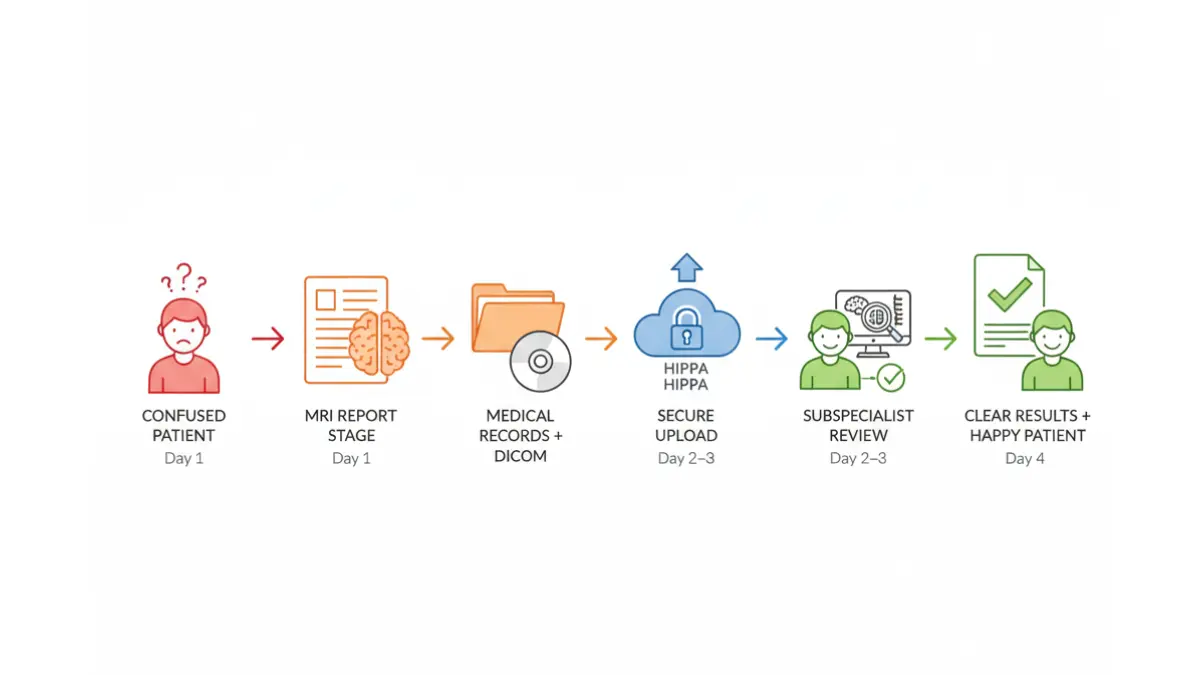
Step 1: Request Your MRI Files Tomorrow Morning
Call the imaging center’s medical records department (not your doctor’s office) and ask for “DICOM files on CD/DVD plus written radiologist report.” Most facilities fulfill requests within 1-5 business days with minimal fees ($0-$25).
Step 2: Gather Complete Documentation
Collect your original MRI report, referring physician notes explaining why the scan was ordered, symptom timeline with dates and severity, relevant medical history (previous surgeries, chronic conditions, medications), and any prior imaging for comparison.
Step 3: Choose Subspecialty Match
Brain/spine concerns require neuroradiologists. Joint injuries need musculoskeletal specialists. Abdominal/pelvic findings demand body imaging experts. Matching scan type to subspecialty maximizes diagnostic accuracy.
Step 4: Upload to HIPAA-Compliant Platform
Secure patient portals meeting federal health information privacy standards protect your sensitive medical data during transmission and storage. The upload process takes 10-15 minutes.
Step 5: Receive Expert Review (24-72 Hours)
Fellowship-trained radiologists perform comprehensive MRI scan review and generate detailed reports explaining what does MRI show in plain English alongside medical terminology for your physician.
Step 6: Discuss Findings With Your Doctor
Schedule a follow-up appointment to review the second opinion report together. Most physicians appreciate additional expert input, especially from subspecialists whose pattern recognition catches findings general radiologists might miss.
What This Means For You: You’re not undermining your doctor’s expertise—you’re being an informed patient exercising your healthcare rights. Studies show 88% of MRI second opinion reviews result in changed or refined diagnoses, directly impacting treatment pathways and outcomes.
Frequently Asked Questions About MRI Second Opinions
Q1: How much does an MRI second opinion cost?
A: Online subspecialist reviews cost $199-$399. Hospital consultations range $493-$643. Medicare and some insurers cover second opinions.
Q2: How long does it take to get MRI second opinion results?
A: Standard service delivers results in 48-72 hours. Expedited 24-hour reviews available for $50-$100 additional fee.
Q3: What does “hyperintense” mean on my brain MRI?
A: Bright white areas on scan indicating increased water content—often normal aging changes in patients over 50, but context matters.
Q4: Is an online MRI second opinion as accurate as in-person?
A: Yes. Studies confirm teleradiology accuracy equals in-person reviews when proper protocols and subspecialist expertise are used.
Q5: Will my doctor be offended if I get a second opinion?
A: No. Most physicians welcome subspecialist input, especially for complex cases or before surgical decisions. It’s standard medical practice.
Q6: What does “unremarkable” mean on my MRI report?
A: Good news—it means completely normal, nothing concerning found. Confusing medical jargon for “healthy.”
Q7: Do I need my doctor’s permission to get an MRI second opinion?
A: No. You have legal rights to your medical records and can seek independent expert reviews without physician authorization.
Q8: What’s the difference between a radiologist and a subspecialist?
A: Subspecialists complete 1-2 additional fellowship years focusing exclusively on one area (brain, spine, joints) after standard radiology training.
Q9: Can a second opinion change my diagnosis?
A: Yes. Studies show 30-40% of complex MRI cases result in changed or refined diagnoses after subspecialist review.
Q10: What if my MRI shows a lesion—is it cancer?
A: Not necessarily. “Lesion” means any abnormality—most are benign cysts, scars, or age-related changes. Expert interpretation determines significance.
Q11: How do I get my MRI files for a second opinion?
A: Contact the imaging center’s medical records office, request “DICOM files on CD/DVD plus report.” Usually ready in 1-5 days for $0-$25.
For patients managing complex diagnostic journeys alongside other health concerns, utilizing resources like comprehensive blood test interpretation guides or understanding how to reduce medical anxiety naturally can support overall wellbeing during the evaluation process.
Medical Disclaimer
This article is for educational and informational purposes only and does not constitute medical advice, diagnosis, or treatment recommendations. Always consult qualified healthcare professionals regarding your specific MRI findings and health conditions. Seeking a second opinion represents a patient right and complements—rather than replaces—your physician’s care. Never delay or disregard professional medical advice based on information presented here.
Final Thought: From Scary MRI Terms to Confident Decisions
Your MRI report doesn’t have to remain a source of sleepless nights and MRI report anxiety. For the cost of a single doctor’s visit—just $199—you can access fellowship-trained subspecialist expertise that transforms scary MRI terms into understandable medical information.
Don’t let confused about MRI feelings drive healthcare decisions worth tens of thousands of dollars. Whether your scan shows MRI report says lesion concerns, unremarkable MRI meaning confusion, or complex MRI contrast results requiring clarification, expert second opinions provide the MRI peace of mind you deserve.
Take action today: Request your imaging files, choose a subspecialty-matched MRI teleconsultation service, and gain the diagnostic confidence to move forward with your care plan—backed by expert analysis rather than Internet research and worst-case fears.
About this content
How this article was put together: researched from recognised health sources, drafted with the help of AI tools, and edited by hand, with sources linked throughout.

Sameer Patel is the founder and editor of My Medicine Advisor. He is not a doctor or medical professional — before starting this site he worked in banking,…
Medical disclaimer
The content on MyMedicineAdvisor is provided for general informational and educational purposes only and is not a substitute for professional medical advice, diagnosis, or treatment. Health information on this website should not be used to diagnose, treat, cure, or prevent any condition without guidance from a qualified healthcare professional. Always seek the advice of your doctor, physician, or another licensed healthcare provider with any questions you may have regarding a medical condition, symptoms, medications, or treatment decisions.