On This Page – Quick Medical Summary
When Alden’s chronic fatigue became unbearable and he gained 22 pounds in three months despite eating less, his doctor ordered a single blood test that changed everything. The TSH test took under 5 minutes, cost him $52, and revealed the hidden thyroid problem stealing his energy.
A TSH test (thyroid-stimulating hormone test) measures how well your thyroid gland functions by checking TSH levels in your blood. This simple blood test is the gold standard for diagnosing thyroid disorders, with results available in 2-3 days.
Quick Answer: TSH Test Essentials
Normal TSH Range: 0.4-4.0 mIU/L for adults
2026 Test Cost: $44-$200 (varies by insurance)
Test Duration: Under 5 minutes
Results Timeline: 2-3 days
Preparation: Usually no fasting required
Your thyroid gland—a small, butterfly-shaped organ in your neck—controls metabolism, energy levels, heart rate, and body temperature. When it malfunctions, TSH levels shift dramatically. High TSH typically signals hypothyroidism (underactive thyroid), while low TSH indicates hyperthyroidism (overactive thyroid).
If you’re experiencing unexplained weight changes, persistent fatigue, or temperature sensitivity, our Symptom Checker can help identify whether thyroid testing is appropriate for your situation.
Key Takeaway: The TSH blood test is your first-line diagnostic tool for thyroid function, offering critical insights into metabolism and overall health with minimal time and cost investment.
TSH Test Basics & 2026 Costs
What Is a TSH Test and Why Do You Need One?
The thyroid-stimulating hormone test measures thyrotropin levels produced by your pituitary gland. This pea-sized gland at the base of your brain acts as your body’s master regulator, constantly monitoring thyroid hormone levels and adjusting TSH production accordingly.
How TSH Controls Your Thyroid
Your pituitary gland and thyroid work together through a feedback loop. When thyroid hormone levels (T3 and T4) drop too low, your pituitary releases more TSH to stimulate production. Conversely, when thyroid hormones are too high, TSH production stops.
This relationship makes TSH testing incredibly sensitive—a small change in thyroid function causes dramatic TSH shifts. According to the National Institute of Diabetes and Digestive and Kidney Diseases, TSH testing is recommended for anyone experiencing thyroid-related symptoms.
2026 TSH Test Costs: Complete Breakdown
Healthcare costs continue rising, but TSH testing remains surprisingly affordable compared to other diagnostic procedures.
| Test Type | With Insurance | Without Insurance | Direct Lab Testing |
|---|---|---|---|
| TSH only | $0-$50 | $50-$120 | $44-$56 |
| TSH + Free T4 | $10-$75 | $100-$180 | $80-$120 |
| Complete thyroid panel | $25-$100 | $150-$300 | $120-$200 |
Medicare and most private insurance plans cover medically necessary thyroid function tests with minimal or no copay. Direct-to-consumer lab testing offers the most transparent pricing, with companies like Quest and LabCorp providing upfront costs.
When You Need a TSH Test
Common symptoms requiring TSH testing include:
- Unexplained weight gain or loss exceeding 10 pounds
- Persistent fatigue despite adequate sleep
- Depression or anxiety without clear cause
- Irregular menstrual periods or fertility issues
- Heart palpitations or abnormal heart rate
- Temperature sensitivity (always cold or hot)
- Thinning hair or dry skin
- Muscle weakness or joint pain
The American Thyroid Association recommends baseline screening at age 35, with follow-up testing every 5 years for adults without symptoms. Women planning pregnancy should request thyroid testing, as even mild dysfunction affects fertility and fetal development.
For those monitoring metabolic health alongside thyroid function, our BMR Calculator helps track baseline metabolic rate changes that often accompany thyroid disorders.
TSH Normal Range & Results Explained
TSH Normal Range: What Your Numbers Really Mean
Understanding your TSH results requires context beyond simple “normal” or “abnormal” labels. Reference ranges vary by age, pregnancy status, and individual health factors.
Standard TSH Reference Ranges
| Population | Normal TSH Range | Clinical Notes |
|---|---|---|
| Adults (18-60) | 0.4-4.0 mIU/L | Most common standard |
| Adults over 60 | 0.5-5.0 mIU/L | Slightly higher acceptable |
| Pregnancy (1st trimester) | 0.1-2.5 mIU/L | Lower is physiologically normal |
| Pregnancy (2nd trimester) | 0.2-3.0 mIU/L | Gradual increase expected |
| Pregnancy (3rd trimester) | 0.3-3.5 mIU/L | Returns toward baseline |
| On thyroid medication | 0.5-2.5 mIU/L | Treatment target range |
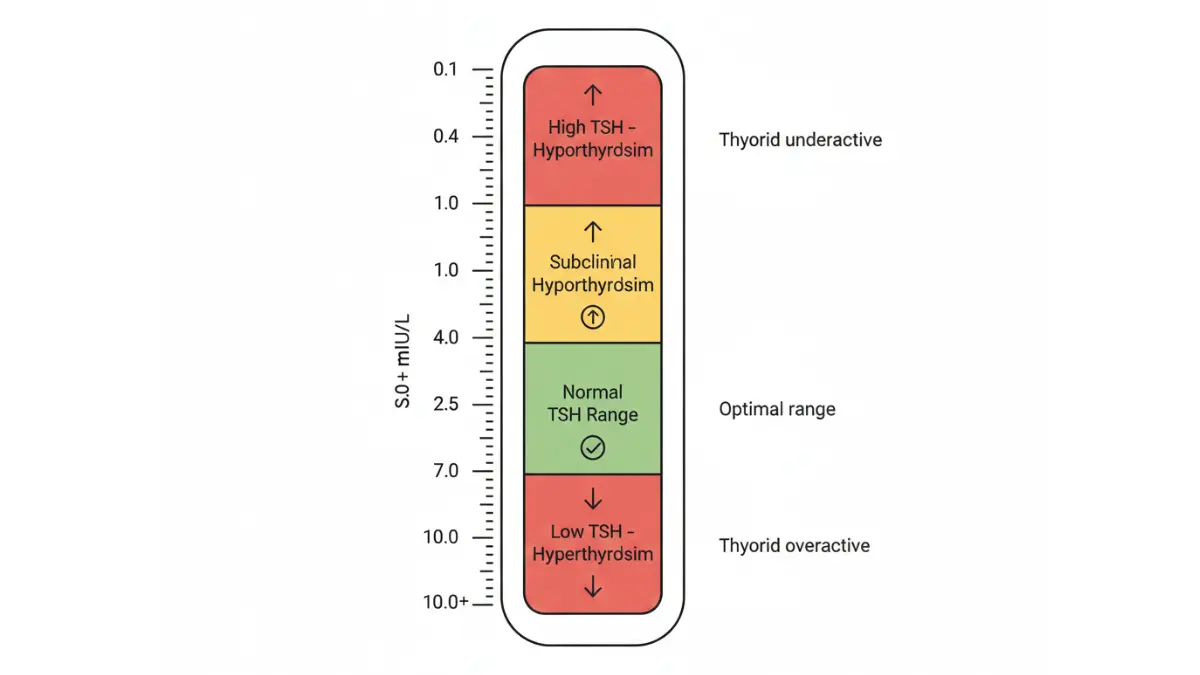
Research from Johns Hopkins Medicine indicates that optimal TSH levels for most adults fall between 1.0-2.5 mIU/L, though this remains debated among endocrinologists.
High TSH Levels: Hypothyroidism Explained
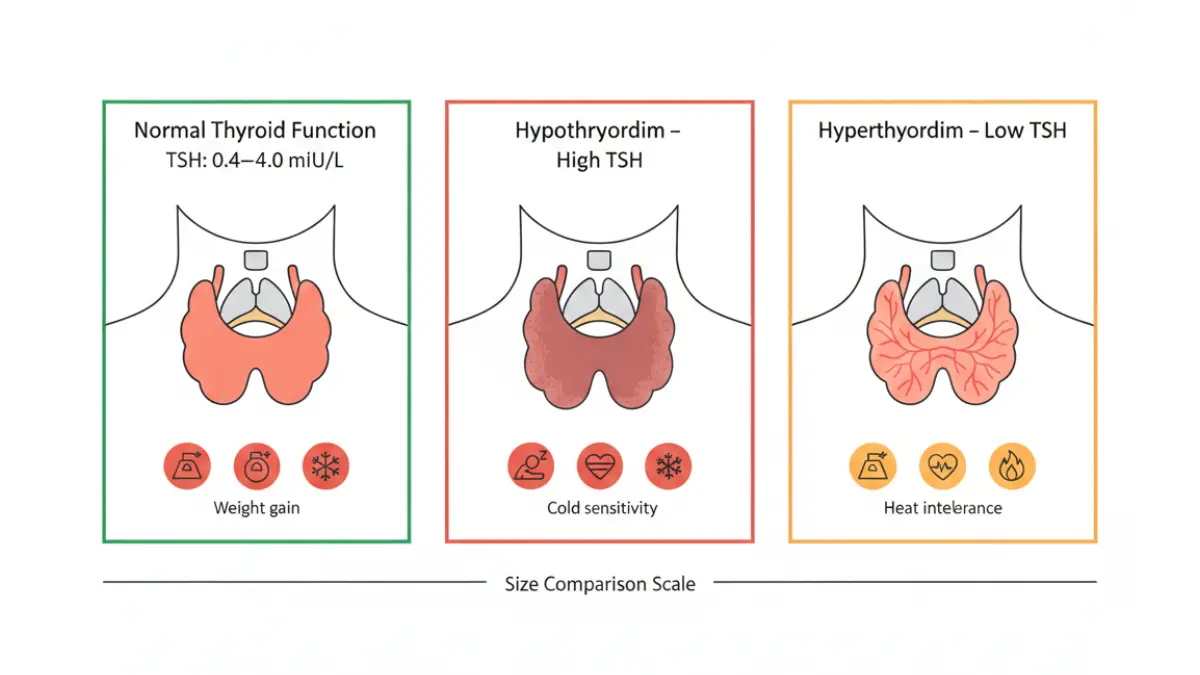
When your TSH rises above 4.0 mIU/L, your pituitary gland is working overtime to stimulate an underperforming thyroid. This condition, called hypothyroidism, affects approximately 5% of American adults.
Jennifer, a 42-year-old teacher, experienced this firsthand. Her TSH measured 8.2 mIU/L when she finally sought help for debilitating fatigue and unexplained 18-pound weight gain. Within 6 weeks of starting levothyroxine treatment, her energy returned and weight normalized.
Common hypothyroidism symptoms:
- Persistent exhaustion even after 8+ hours sleep
- Weight gain despite reduced caloric intake
- Constipation and digestive sluggishness
- Dry, flaky skin and brittle hair
- Depression and cognitive fog
- Cold intolerance
- Slowed heart rate (bradycardia)
- Heavy or irregular menstrual periods
Primary causes of elevated TSH:
- Hashimoto’s thyroiditis (autoimmune attack on thyroid)
- Iodine deficiency
- Thyroid surgery or radiation damage
- Certain medications (lithium, amiodarone)
- Pituitary tumors (rare)
Treatment typically involves daily thyroid hormone replacement with levothyroxine (synthetic T4). Most patients notice symptom improvement within 4-6 weeks, though dosage optimization may require several months.
Low TSH Levels: Hyperthyroidism Explained
TSH below 0.4 mIU/L indicates your thyroid is overproducing hormones, causing your pituitary to shut down TSH production. This hyperthyroid state accelerates metabolism excessively.
David, a 38-year-old software developer, discovered his TSH was 0.08 mIU/L after experiencing unexplained anxiety, rapid heartbeat, and 15-pound weight loss despite increased appetite. His diagnosis: Graves’ disease.
Common hyperthyroidism symptoms:
- Rapid heartbeat or palpitations
- Unexplained weight loss with increased appetite
- Anxiety, nervousness, or irritability
- Hand tremors
- Heat intolerance and excessive sweating
- Frequent bowel movements or diarrhea
- Sleep disturbances
- Bulging eyes (in Graves’ disease)
Primary causes of low TSH:
- Graves’ disease (autoimmune thyroid stimulation)
- Toxic thyroid nodules
- Thyroiditis (temporary inflammation)
- Excessive thyroid medication
- Pituitary dysfunction
Understanding heart rate changes during hyperthyroidism is crucial—our Heart Rate Zone Calculator helps monitor cardiovascular effects.
Treatment options include antithyroid medications, radioactive iodine therapy, or surgery, depending on severity and underlying cause.
How to Prepare & What to Expect
TSH Test Preparation: Everything You Need to Know
Do You Need to Fast for a TSH Test?
Short answer: No fasting required for standard TSH testing. Unlike glucose or lipid panels, thyroid function tests don’t require dietary restrictions.
However, timing matters. According to Mayo Clinic, TSH levels fluctuate throughout the day, peaking between 2-4 AM and reaching their lowest point in late afternoon.
Best practice: Schedule your TSH blood test for early morning (before 10 AM) for most consistent results, especially if you’ll need follow-up testing to monitor treatment.
If your doctor orders additional tests alongside TSH (such as lipid panels or glucose), fasting requirements for those tests apply to the entire appointment.
Medications That Affect TSH Results
Several medications and supplements can skew TSH measurements, potentially leading to misdiagnosis or incorrect dosage adjustments.
| Medication/Supplement | Effect on TSH | Recommended Action |
|---|---|---|
| Biotin (Vitamin B7) | Falsely low TSH | Stop 72 hours before test |
| Levothyroxine | Expected decrease | Continue as prescribed; take after test |
| Corticosteroids | May lower TSH | Inform doctor; don’t stop |
| Lithium | May raise TSH | Inform doctor; continue medication |
| Amiodarone | Can raise or lower | Requires specialized monitoring |
| Estrogen/oral contraceptives | May alter thyroid binding | Inform doctor |
| Opioid pain medications | May lower TSH | Inform doctor |
The Food and Drug Administration issued specific warnings about biotin interference with thyroid tests. High-dose biotin supplements (>5,000 mcg daily) commonly found in hair, skin, and nail products can cause falsely low TSH readings.
Always inform your healthcare provider about ALL medications and supplements—even over-the-counter products. Use our Pill Identifier if you’re uncertain about what you’re taking.
What to Expect During the TSH Blood Test
The TSH test follows standard blood draw procedures with minimal discomfort.
Step-by-step process:
- Arrival and check-in (5 minutes): Verify insurance and provide medical history
- Vein identification (1 minute): Phlebotomist locates suitable vein, typically in inner elbow
- Area preparation (30 seconds): Skin cleaned with antiseptic wipe
- Blood draw (1-2 minutes): Small needle inserted; 1-2 tubes collected
- Post-draw care (1 minute): Pressure applied, bandage placed
- Sample processing: Blood sent to laboratory for analysis
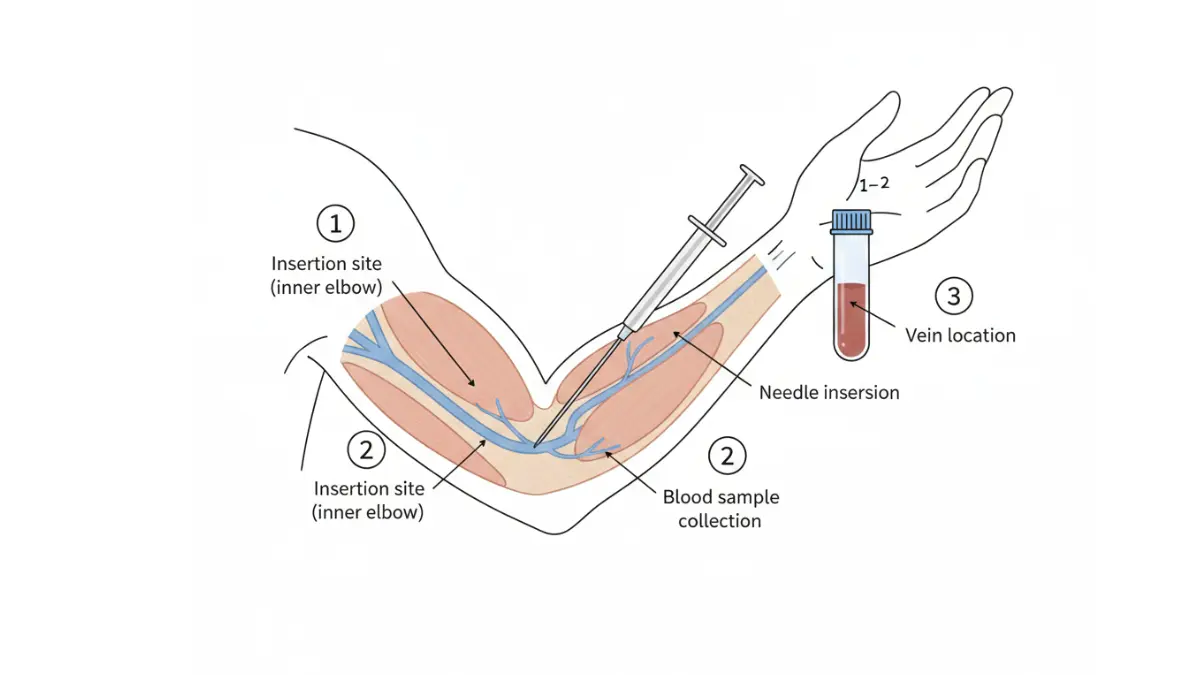
Pain level: Most people report mild pinching sensation lasting 2-3 seconds. The entire appointment rarely exceeds 10 minutes.
After your test: Resume normal activities immediately. Mild bruising at the puncture site affects about 15% of patients and resolves within 3-5 days.
Results timeline: Most laboratories process TSH tests within 24-48 hours. Your healthcare provider typically reviews results and contacts you within 2-4 business days. Some facilities offer patient portals for direct result access.
If results show TSH abnormalities, your doctor may order additional thyroid function tests (Free T4, Free T3, thyroid antibodies) using your original blood sample, avoiding a second appointment.
TSH vs Other Thyroid Tests & Next Steps
Beyond TSH: Complete Thyroid Testing Guide
TSH vs Free T4 vs T3: When Each Is Needed
While TSH testing serves as the initial screening tool, comprehensive thyroid evaluation often requires multiple tests to pinpoint specific dysfunctions.
| Test Name | What It Measures | When Ordered | Normal Adult Range |
|---|---|---|---|
| TSH | Pituitary hormone signal | First-line screening | 0.4-4.0 mIU/L |
| Free T4 (FT4) | Active thyroxine hormone | If TSH abnormal | 0.8-1.8 ng/dL |
| Free T3 (FT3) | Active triiodothyronine | Hyperthyroidism diagnosis | 2.3-4.2 pg/mL |
| Total T4 | Bound + free thyroxine | Rarely used (affected by binding proteins) | 5.0-12.0 μg/dL |
| Total T3 | Bound + free T3 | Rarely used | 80-200 ng/dL |
| TPO Antibodies | Autoimmune markers | Suspected Hashimoto’s/Graves’ | <35 IU/mL |
| Thyroglobulin | Thyroid protein | Post-cancer monitoring | Varies by history |
Research from the American Association of Clinical Endocrinology emphasizes that TSH alone accurately diagnoses most thyroid disorders when the pituitary-thyroid axis functions normally.
What Happens If Your TSH Is Abnormal?
Abnormal TSH results trigger a cascade of diagnostic and treatment decisions based on severity and symptoms.
Immediate next steps by TSH level:
TSH >10 mIU/L (Overt Hypothyroidism):
- Urgency: Contact doctor within 48 hours
- Additional tests: Free T4, TPO antibodies
- Likely action: Start levothyroxine treatment
- Follow-up: Retest TSH in 6-8 weeks
TSH 4.5-10 mIU/L (Subclinical Hypothyroidism):
- Urgency: Discuss with doctor within 1-2 weeks
- Additional tests: Free T4, TPO antibodies, symptom assessment
- Possible action: Watchful waiting or low-dose medication
- Follow-up: Retest in 3-6 months
TSH <0.1 mIU/L (Severe Hyperthyroidism):
- Urgency: Contact doctor within 24 hours
- Additional tests: Free T4, Free T3, TSH receptor antibodies
- Likely action: Urgent endocrinology referral
- Treatment: Antithyroid medication or radioactive iodine
TSH 0.1-0.4 mIU/L (Mild Hyperthyroidism):
- Urgency: Schedule appointment within week
- Additional tests: Free T4, Free T3
- Possible action: Monitor or treat depending on symptoms
- Follow-up: Retest in 1-3 months
For individuals with family history of thyroid disease, our Genetic Risk Assessment Tool helps evaluate hereditary risk factors.
Subclinical Thyroid Disease: The Gray Zone
Subclinical hypothyroidism—defined as TSH between 4.5-10 mIU/L with normal Free T4—affects up to 10% of adults and presents a clinical dilemma.
Treatment considerations for subclinical hypothyroidism:
The decision to treat depends on:
- TSH level severity (higher levels warrant treatment)
- Presence of symptoms (fatigue, weight gain, depression)
- TPO antibody status (positive antibodies predict progression)
- Cardiovascular risk factors (age, cholesterol, family history)
- Pregnancy plans (treatment essential for fertility)
Recent guidelines from the Endocrine Society recommend treatment when TSH exceeds 10 mIU/L or when TSH is 7-10 mIU/L with symptoms or positive antibodies.
Expert perspective from Dr. Maria Rodriguez, Board-Certified Endocrinologist, Cleveland Clinic: “We’ve moved away from one-size-fits-all treatment thresholds. A 28-year-old woman trying to conceive with TSH of 4.8 mIU/L gets very different counseling than an asymptomatic 75-year-old with the same TSH level. Individualized care based on symptoms, antibodies, and patient goals produces better outcomes.”
For related thyroid health information, see our comprehensive guide on TSH Levels Chart: Optimal Ranges.
Special Populations & Expert Insights
TSH Testing for Pregnancy, Seniors, and Special Cases
TSH During Pregnancy: What’s Different
Pregnancy dramatically alters thyroid function through multiple mechanisms. Human chorionic gonadotropin (hCG)—the hormone detected by pregnancy tests—structurally resembles TSH and mildly stimulates the thyroid, causing TSH to drop naturally during the first trimester.
Trimester-specific TSH ranges:
- First trimester: 0.1-2.5 mIU/L
- Second trimester: 0.2-3.0 mIU/L
- Third trimester: 0.3-3.5 mIU/L
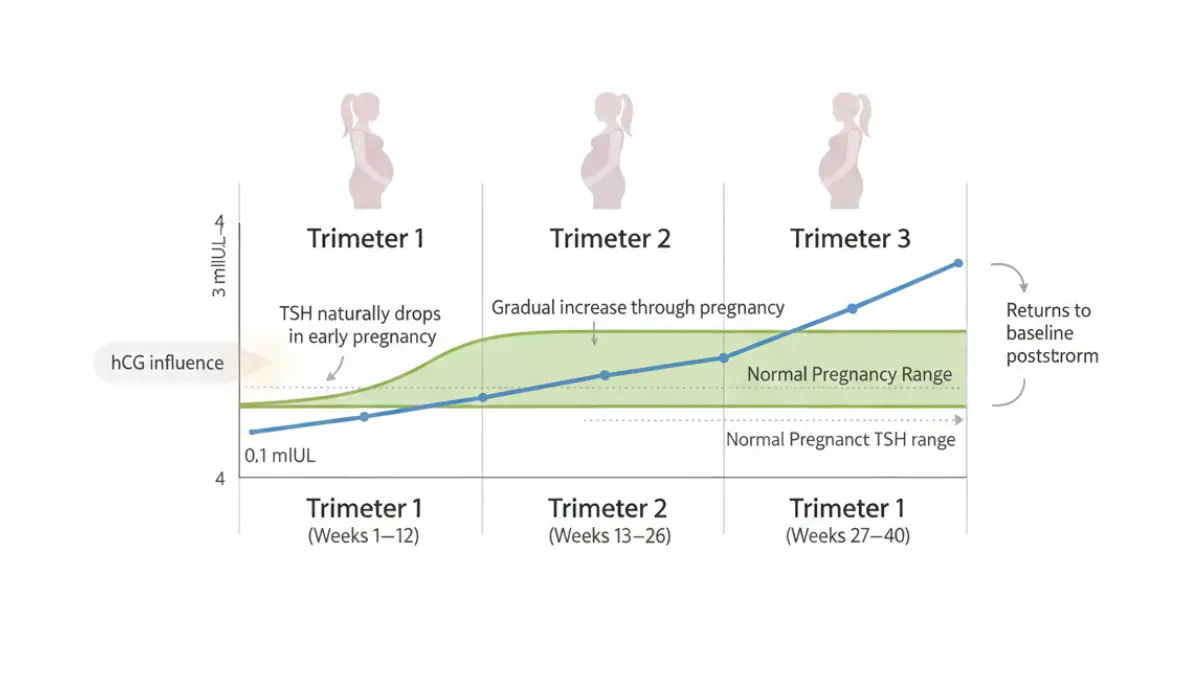
According to the American College of Obstetricians and Gynecologists, uncontrolled hypothyroidism during pregnancy increases risks of miscarriage, preterm birth, low birth weight, and impaired neurological development.
Pregnancy TSH testing recommendations:
- Preconception screening: All women planning pregnancy
- First prenatal visit: Universal screening debated; targeted screening recommended for high-risk women
- Monitoring on medication: Every 4-6 weeks throughout pregnancy
- Postpartum: 6-12 weeks after delivery
Lisa’s pregnancy thyroid journey: At her first prenatal appointment at 8 weeks, routine screening revealed TSH of 6.8 mIU/L. Her obstetrician immediately started levothyroxine, adjusting the dose three times during pregnancy to maintain TSH between 1.0-2.5 mIU/L. Her son was born full-term and healthy, meeting all developmental milestones.
Women managing pregnancy alongside weight considerations can use our Pregnancy Weight Gain Calculator and Pregnancy Due Date Calculator for comprehensive prenatal health tracking.
TSH Testing in Adults Over 60
Aging affects thyroid function and TSH interpretation. Studies show 7-14% of adults over 60 have TSH levels above standard reference ranges, yet many remain asymptomatic.
Age-related considerations:
- Higher TSH acceptable: Some labs use 0.5-5.0 mIU/L or even 0.5-6.0 mIU/L for seniors
- Subclinical hypothyroidism prevalence: Increases with age
- Treatment decisions: More conservative; focus on quality of life
- Cardiovascular considerations: Balance thyroid treatment against heart disease risk
Groundbreaking research published in The Lancet Diabetes & Endocrinology (2023) examined 134,000+ adults and found that TSH ranges associated with lowest cardiovascular mortality shifted higher with age, suggesting traditional reference ranges may not apply to older adults.
Treatment approach for seniors: Endocrinologists increasingly avoid treating mildly elevated TSH (4.5-7.0 mIU/L) in asymptomatic adults over 70, as aggressive treatment may increase cardiovascular risks without clear benefits.
Expert Insights: 2026 Thyroid Care Updates
Dr. Heinrich Schmidt, Professor of Endocrinology, University of Munich Medical Center: “The thyroid field is moving toward precision medicine. We’re recognizing that optimal TSH ranges vary by ethnicity, genetics, and individual set points. A TSH of 3.5 mIU/L might be pathologic for someone whose baseline is 1.0, even though 3.5 falls within traditional normal ranges.”
Key 2026 developments in thyroid testing:
- Continuous TSH monitoring devices: Under development; may enable real-time tracking
- Genetic testing integration: GWAS studies identifying polymorphisms affecting individual TSH set points
- AI-assisted interpretation: Machine learning algorithms analyzing TSH patterns alongside clinical data
- At-home testing expansion: FDA-cleared finger-stick TSH tests increasing accessibility
Quick-Answer FAQ: TSH Test Essentials
1. How much does a TSH test cost in 2026?
$44-$200 depending on insurance coverage and testing location. With insurance: $0-$50. Without insurance: $50-$200. Direct lab testing: $44-$120.
2. What is a normal TSH level?
0.4-4.0 mIU/L for most adults, though optimal range is debated. Pregnant women and seniors have different reference ranges.
3. Do I need to fast for a TSH test?
No fasting required for TSH-only testing. However, schedule for early morning (before 10 AM) for most consistent results.
4. How long do TSH results take?
Typically 24-48 hours for laboratory processing, with doctor notification within 2-4 business days.
5. What does high TSH mean?
High TSH (>4.0 mIU/L) usually indicates hypothyroidism—your thyroid isn’t producing enough hormone, so your pituitary releases more TSH to stimulate it.
6. What does low TSH mean?
Low TSH (<0.4 mIU/L) typically indicates hyperthyroidism—your thyroid is overproducing hormones, so your pituitary stops making TSH.
7. Can medications affect TSH levels?
Yes. Biotin supplements, corticosteroids, lithium, amiodarone, and thyroid medications all influence TSH. Always inform your doctor of all medications and supplements.
8. When should I get my TSH tested?
If experiencing unexplained weight changes, fatigue, temperature sensitivity, or irregular periods. Baseline screening recommended at age 35, then every 5 years.
9. Is TSH testing covered by insurance?
Yes, when medically necessary. Medicare and most private insurance cover TSH testing with minimal copay.
10. What’s the difference between TSH and T4?
TSH is produced by your pituitary gland to stimulate the thyroid. T4 is the hormone your thyroid produces in response. TSH is more sensitive for initial screening.
11. Can stress affect TSH levels?
Yes. Severe physical stress, critical illness, and extreme psychological stress can temporarily suppress TSH levels, potentially causing misleading results.
Medical Disclaimer
This article is for educational and informational purposes only and does not constitute medical advice. TSH test results require interpretation by qualified healthcare professionals in the context of your complete medical history, symptoms, and additional diagnostic findings. Always consult your physician, endocrinologist, or healthcare provider before making any decisions about thyroid testing, treatment, or medication changes. Individual TSH reference ranges may vary by laboratory, age, pregnancy status, and medical conditions. Emergency medical attention is required for severe hyperthyroidism symptoms (thyroid storm) or myxedema coma. If you experience chest pain, severe palpitations, confusion, or extreme lethargy, seek immediate medical care.
About this content
How this article was put together: researched from recognised health sources, drafted with the help of AI tools, and edited by hand, with sources linked throughout.

Sameer Patel is the founder and editor of My Medicine Advisor. He is not a doctor or medical professional — before starting this site he worked in banking,…
Medical disclaimer
The content on MyMedicineAdvisor is provided for general informational and educational purposes only and is not a substitute for professional medical advice, diagnosis, or treatment. Health information on this website should not be used to diagnose, treat, cure, or prevent any condition without guidance from a qualified healthcare professional. Always seek the advice of your doctor, physician, or another licensed healthcare provider with any questions you may have regarding a medical condition, symptoms, medications, or treatment decisions.