
On This Page – Quick Medical Summary
Yes — ultherapy works for mild-to-moderate skin laxity. It is backed by 50+ clinical studies, a documented 42% increase in collagen Types I and III, and over 3 million treatments performed across 80+ countries. But it is not for everyone, and results vary significantly by candidate. This honest 2026 medical review covers the evidence, real risks, updated costs, the new PRIME upgrade, and exactly who should skip it.
Real Patient Perspective
Michelle, a 51-year-old nurse from Houston, noticed her jawline softening and loose skin forming under her chin in early 2025. She had tried every collagen cream available. After a consultation, she underwent a single ultherapy PRIME session. Three months later, her provider documented measurable brow elevation and improved neck tightening — with no downtime beyond two days of mild tingling.
Her experience reflects what the clinical evidence actually shows: ultherapy delivers real results for the right candidate. But Michelle also knew what she was walking into. She asked the hard questions. This article gives you the same honest answers.
What Is Ultherapy and How Does It Work?
The Science, Simplified
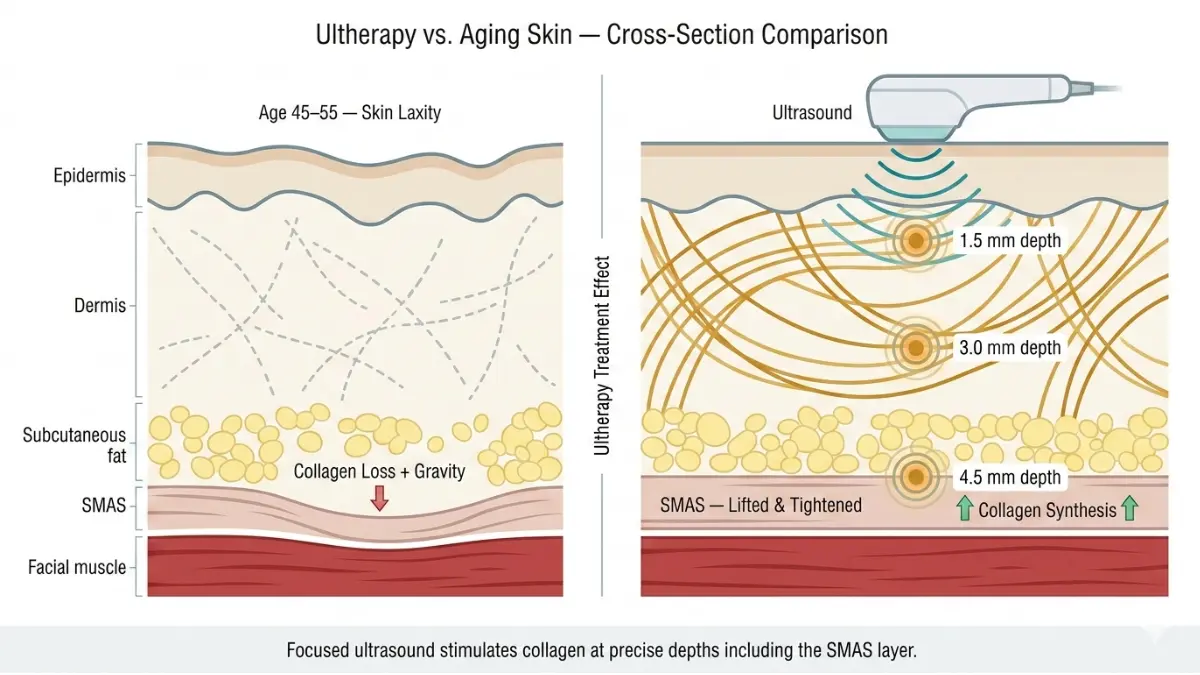
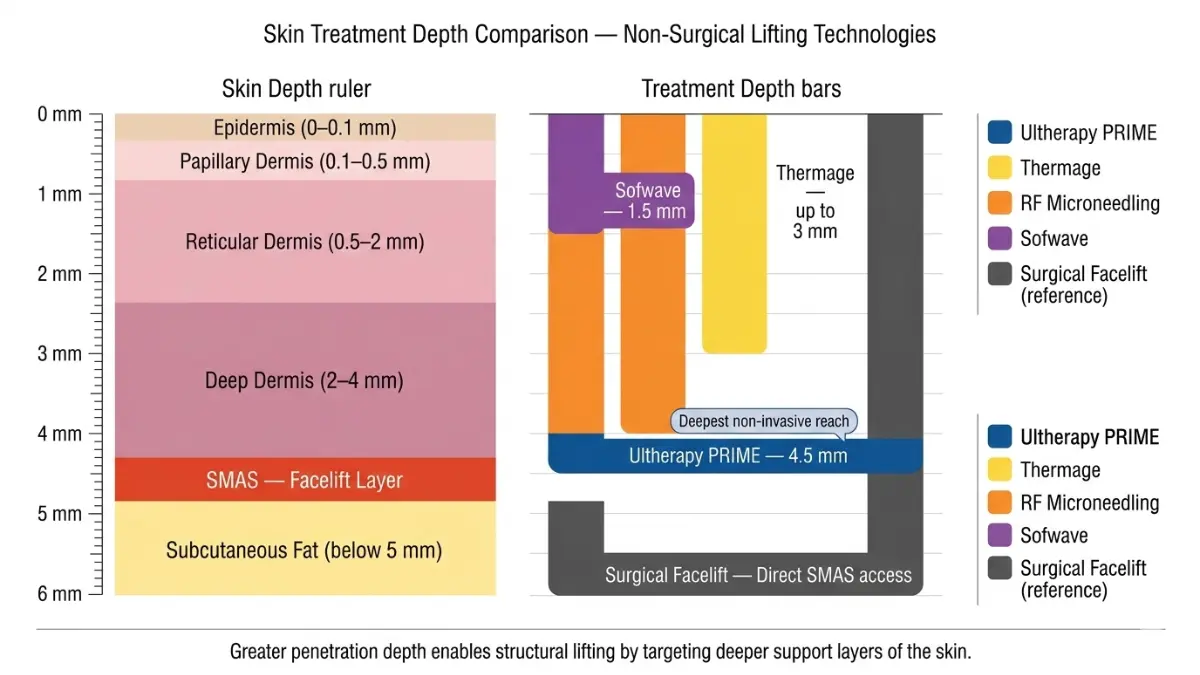
Ultherapy (also called Ulthera) is the only FDA-cleared, non-invasive skin lifting treatment that uses microfocused ultrasound with real-time visualization (MFU-V). It delivers focused thermal energy at precise depths of 1.5mm, 3.0mm, and 4.5mm beneath the skin surface — without cutting or damaging the outer skin layer.
The key target is the SMAS layer (superficial musculoaponeurotic system) — the same deep foundational tissue that surgeons address during a surgical facelift. According to a systematic review published on PubMed Central (NIH), microfocused ultrasound can reach therapeutic depths unmatched by radiofrequency alternatives, making it uniquely effective for structural skin lifting.
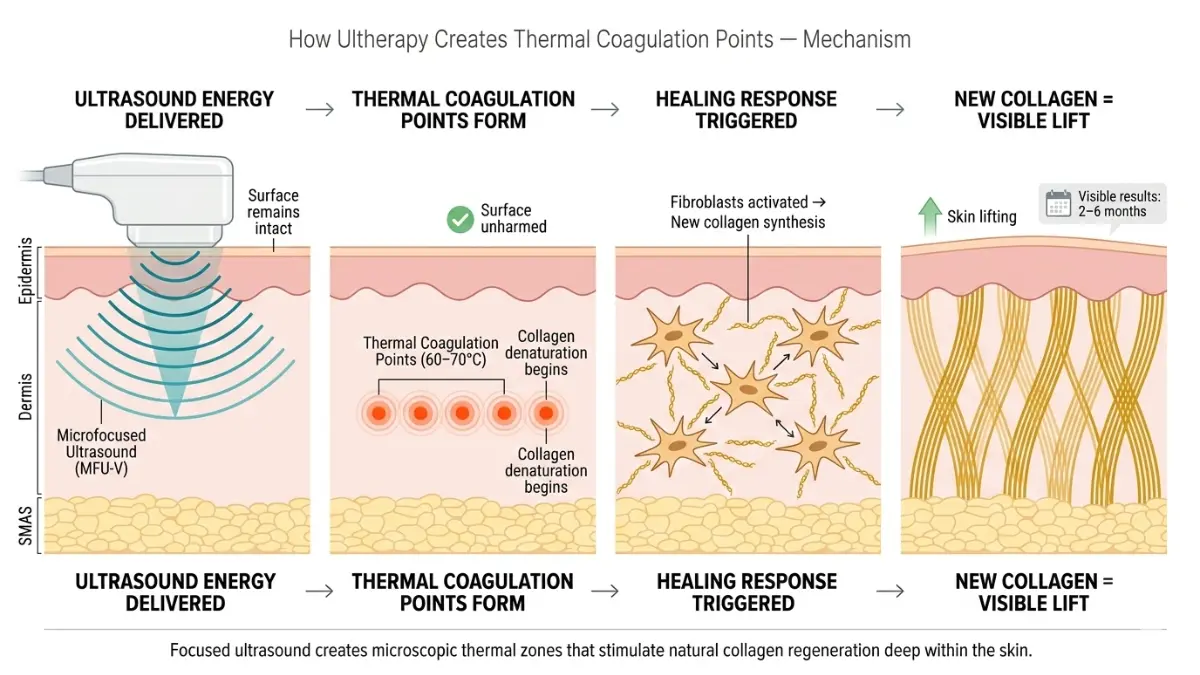
Here is what happens during treatment:
- The device creates thermal coagulation points (TCPs) at 60–70°C in targeted tissue
- This triggers controlled collagen denaturation — essentially a healing response
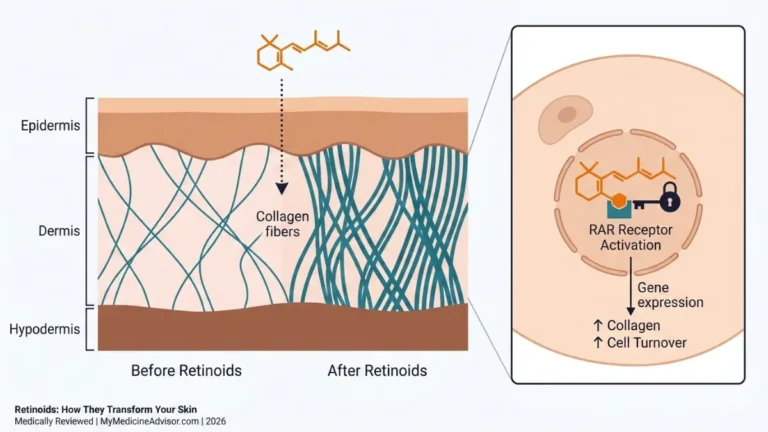
- The body responds by producing new Type I and Type III collagen over the following weeks and months
- Real-time ultrasound imaging allows your provider to see exactly which tissue layer they are treating — a safety feature no competitor device currently offers
Ultherapy PRIME® — What Changed in 2025?
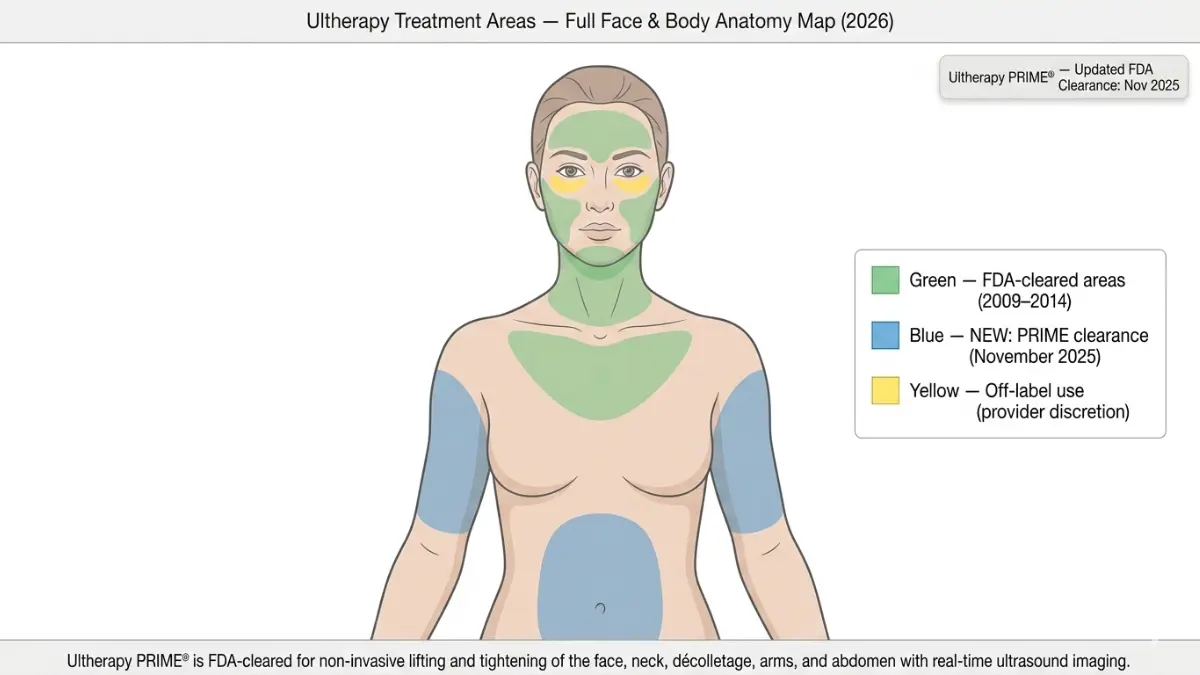
This is the update no major health website has covered. On November 5, 2025, the U.S. FDA cleared Ultherapy PRIME® for two entirely new treatment areas: the anterior arms, posterior arms, and abdomen. This makes it the only FDA-cleared device with real-time imaging for the face, neck, décolletage, and body — a historic expansion.
Ultherapy PRIME also delivers significantly lower pain scores — clinical data shows average pain scores less than half those of the legacy device — and operates at approximately twice the treatment speed.
| Feature | Legacy Ultherapy | Ultherapy PRIME® (2025) |
|---|---|---|
| Real-time imaging | ✅ | ✅ Enhanced |
| Treatment areas | Face, neck, chest | + Arms, Abdomen |
| Pain level | Moderate | Significantly lower |
| FDA clearance year | 2009 | Updated Nov 2025 |
| Speed | Standard | ~2x faster |
| Clinical publications | 50+ | 120+ |
Does Ultherapy Actually Work? The Clinical Evidence
What the Studies Show
This is where most health websites fail their readers — they describe the treatment without ever citing actual trial results. Here is what the clinical evidence shows:
The FDA Approval Trial:
- Among 35 evaluable subjects, 86% showed clinically significant brow lift at 90 days post-treatment
- Mean eyebrow elevation measured at 1.7mm — small but clinically meaningful and visible
103-Patient Cohort Study:
- 58.1% of patients showed measurable improvement per blinded clinical reviewers
- 63.6% reported visible improvement in skin laxity at the 90-day mark
Collagen Production Study (KineMed Partnership):
- Ultherapy treatment on one side of the face vs. untreated produced an average 1.4x increase in collagen production rate on the treated side
- Specifically, collagen Types I and III — the types most associated with skin aging — increased by 42% compared to the untreated side
A narrative review published in PMC (2025) analyzed 67 studies across PubMed, Google Scholar, and Cochrane databases, confirming that MFU-V improves all four measurable dimensions of skin quality: firmness, surface evenness, tone evenness, and glow.
Evidence Strength Table
| Evidence Level | Study Type | Key Finding |
|---|---|---|
| 🔴 Highest | Systematic Review (PMC/NIH) | MFU effective for skin laxity, ages 35–65 |
| 🟠 High | FDA Approval RCT | 86% brow lift at 90 days |
| 🟡 Moderate | 103-patient cohort | 58–63% satisfaction rate |
| 🟢 Supporting | Histological tissue study | 42% collagen Types I & III increase |
What Ultherapy Can and Cannot Do
✅ CAN effectively treat:
- Mild-to-moderate skin laxity on the face and neck
- Sagging brow, jowls, and under-chin area
- Neck bands and loose submental skin
- Chest (décolletage) lines and wrinkles
- Arms and abdomen skin laxity (PRIME only)
❌ CANNOT replace:
- Surgical facelift for significant or severe sagging
- Treatments that address excess fat or deep tissue volume loss
- Dermal filler for volume restoration
📌 What This Means For You: If your skin laxity is mild to moderate, you are in the ideal candidate window. If you have significant drooping or are seeking dramatic structural change, a surgical consultation is the more appropriate and honest recommendation.
Ultherapy Before and After — Realistic Timeline
| Time Point | What to Expect |
|---|---|
| Immediately after | Minor initial tightening from collagen contraction |
| 2–3 months | Visible lift and firming as new collagen forms |
| 6 months | Peak ultherapy results |
| 1–2 years | Duration of results before maintenance |
Ultherapy Side Effects and Risks — The Honest Truth
This is the section that separates this review from every competitor. Healthline’s ultherapy article is from 2018 and doesn’t mention nerve risk. WebMD provides no clinical risk data. Here is the full, honest picture.
Common Side Effects (Temporary)
Most patients experience only mild, short-lived effects:
- Redness and swelling — typically resolves within hours to 48 hours
- Tingling or “pins and needles” — normal sensation indicating collagen stimulation has begun
- Mild bruising — may last up to 2 weeks in patients with sensitive skin
- Temporary skin tenderness — resolves within days
These are expected responses and are not cause for alarm.
The Risk No One Talks About: Nerve Damage
This is the most significant rare risk of ultherapy, and most major health sites either skip it or bury it.
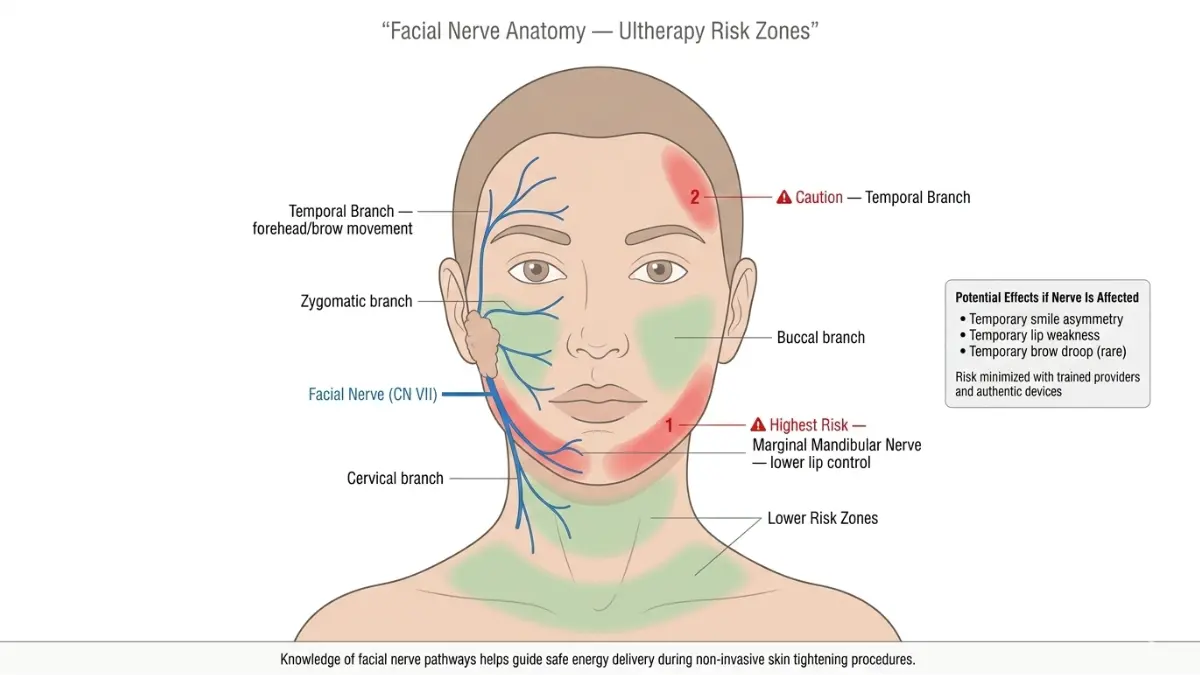
In rare cases, energy delivered too close to the marginal mandibular nerve or temporal branches of the facial nerve can cause:
- Temporary facial muscle weakness
- Asymmetric smile
- Difficulty chewing or drinking (temporary)
- Numbness in the lower face
Why does this happen? Almost always: counterfeit machines, undertrained providers, or incorrect treatment protocols. When genuine Ultherapy PRIME equipment is used by a Merz-certified practitioner following proper protocols, this risk is extremely low.
You can verify whether a medical device has legitimate FDA clearance through the FDA’s Premarket Notification database — always check before you book.
The “Fat Melting” Controversy
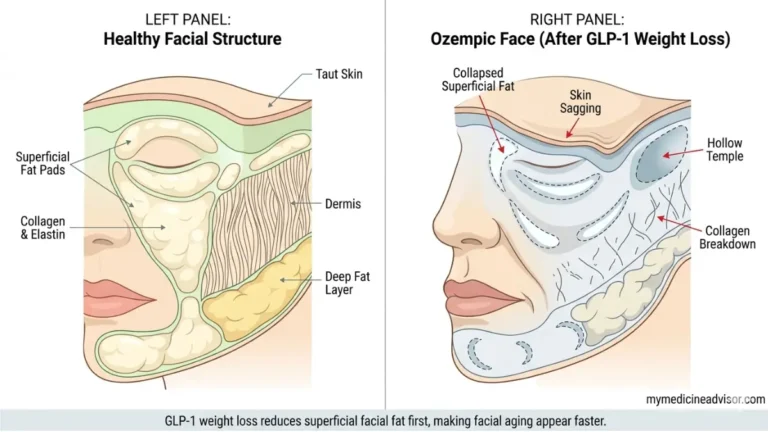
Searching online, you will find patients describing “sunken cheeks” or unintended facial fat loss after ultherapy. This is real, but context matters.
Unintended fat reduction occurs when ultrasound energy is misdirected into the subcutaneous fat layer rather than the SMAS. Expert consensus is consistent: this does not occur with properly calibrated, genuine Ultherapy devices operated by trained practitioners.
Some providers intentionally use ultherapy for fat reduction in the lower face — this is an off-label but documented clinical use. If you are not seeking fat reduction, confirm with your provider exactly which tissue depth they are targeting.
Risk Summary Table
| Risk | Likelihood | Reversible? | Prevention |
|---|---|---|---|
| Redness/swelling | Very common | Yes — hours to days | Normal healing |
| Bruising | Common | Yes — 1–2 weeks | Avoid blood thinners pre-treatment |
| Tingling/numbness | Uncommon | Yes — weeks | Normal response |
| Nerve weakness | Rare | Usually yes | Certified provider + genuine device |
| Unintended fat loss | Rare | Partially | Correct depth settings + trained provider |
📌 What This Means For You: Always ask two non-negotiable questions before booking: (1) Is this a genuine Ultherapy PRIME® device certified by Merz Aesthetics? (2) Are you certified to perform this procedure? If a provider hesitates on either answer, walk away.
If you notice any unexpected symptoms after treatment, use our Symptom Checker to help identify what may need a follow-up evaluation.
Ultherapy Cost 2026 — Complete USA Breakdown
Cost by Treatment Area (USA, 2026)
| Treatment Area | Average Cost Range |
|---|---|
| Full face + neck | $3,000 – $5,000 |
| Face only | $2,000 – $3,500 |
| Neck only | $1,500 – $2,500 |
| Brow lift only | $750 – $1,200 |
| Décolletage | $800 – $1,500 |
| Arms (PRIME, new 2025) | $1,500 – $2,500 |
| Abdomen (PRIME, new 2025) | $2,000 – $3,500 |
Ultherapy is not covered by insurance as it is an elective cosmetic procedure. Many providers accept CareCredit and similar financing options. Most patients achieve their goals in a single session, though those with more significant laxity may require a second session 12–18 months later.
Cost-Saving Warning: Choosing the cheapest provider is one of the most common mistakes patients make. Lower cost can mean a counterfeit device, an undertrained operator, or diluted treatment protocols — all of which increase risk and reduce results.
Ultherapy vs. Facelift: Is It Worth the Investment?
| Factor | Ultherapy | Surgical Facelift |
|---|---|---|
| Average cost | $2,000 – $5,000 | $8,000 – $15,000 |
| Downtime | Zero | 2–4 weeks |
| Results duration | 1–2 years | 5–10 years |
| Best for | Mild–moderate laxity | Moderate–severe laxity |
| Risk level | Low | Higher |
| Recovery | Immediate return to activities | Extended recovery |
For those working toward healthier body composition before considering skin tightening treatments, our free BMI Calculator and Weight Loss Calculator can help you establish a baseline — since skin tightening results are more predictable in patients within a healthy weight range.
Who Should NOT Get Ultherapy
This is the section every competitor avoids. No major health site has a clear, medically accurate list of contraindications for ultherapy. Knowing who should skip it is just as important as knowing its benefits.
You may not be a good candidate for ultherapy if you have:
- Severe skin laxity — you are likely a surgical facelift candidate; ultherapy will underdeliver
- Active skin infections, open wounds, or cystic acne in the treatment area
- Metal implants (pacemakers, cochlear implants, or metal plates) near the treatment zone
- A history of keloid scarring — energy-based devices may trigger abnormal healing
- Unrealistic expectations — ultherapy will not replicate surgical results
- Pregnancy — no safety data exists for use during pregnancy
- Significant excess weight — skin tightening has limited structural impact without weight management
If you are unsure whether you are a strong candidate, an honest provider will tell you during consultation. A good provider will recommend against ultherapy if it is not right for you — not oversell you into a treatment with poor odds.
Ultherapy vs. Alternatives: 2026 Quick Comparison
| Treatment | Depth Reached | Downtime | Results Duration | FDA Cleared? |
|---|---|---|---|---|
| Ultherapy PRIME | 4.5mm (SMAS) | None | 1–2 years | ✅ Yes |
| Thermage FLX | 2–3mm dermis | None | 1–2 years | ✅ Yes |
| Sofwave | 1.5mm | None | ~1 year | ✅ Yes |
| RF Microneedling (Morpheus8) | 0.5–4mm | 2–3 days | ~1 year | ✅ Yes |
| Surgical Facelift | Full SMAS | 2–4 weeks | 5–10 years | Surgical |
If you are researching alternatives, our in-depth guide on Morpheus8: Doctors’ Honest 2026 Risks Review covers radiofrequency microneedling in the same clinical detail. For those considering microneedling as a more accessible entry point, see our Microneedling: Does It Work in 2026? guide.
Expert Consensus, Provider Selection, and Final Verdict
What International Medical Experts Agree On (2026)
The evidence base for ultherapy is the strongest of any non-invasive skin lifting treatment available today. Key consensus positions:
- A peer-reviewed narrative review in PubMed Central analyzing 67 studies confirms MFU-V improves all measurable dimensions of skin quality with a strong safety profile
- The American Academy of Dermatology recognizes non-invasive ultrasound skin tightening as an appropriate first-line option for patients with mild-to-moderate laxity who are not surgical candidates or not ready for surgery
- Ultherapy has been recognized as the gold standard for nonsurgical lifting by physician consensus panels, citing its 120+ clinical publications as the strongest evidence body in its category
- Ultherapy PRIME has been shown in a 2025 comparative study (J Cosmet Dermatol, 2025) to deliver significantly lower pain scores than legacy Ultherapy while maintaining equivalent or superior efficacy
5-Point Provider Checklist Before You Book
Use this checklist before committing to any ultherapy treatment:
- ✅ Device verification — Confirm the practice uses genuine Ultherapy PRIME® hardware certified by Merz Aesthetics
- ✅ Provider credentials — Your provider should be a board-certified dermatologist, facial plastic surgeon, or Merz-certified practitioner
- ✅ Consultation first — Reputable providers always assess your skin, medical history, and candidacy before booking a session
- ✅ Real before-and-after photos — Ask to see photos from their own patients, not stock images or manufacturer materials
- ✅ Multiple treatment options discussed — A trustworthy provider will consider whether alternatives like IPL, RF microneedling, or surgical consultation might serve you better. Our guide on IPL treatment: What Dermatologists Won’t Tell You covers another popular alternative worth comparing.
Final Verdict: Is Ultherapy Worth It in 2026?
For the right candidate — yes, ultherapy is worth it.
It offers the strongest non-invasive evidence base, zero downtime, meaningful collagen results backed by peer-reviewed science, and the 2025 PRIME upgrade has genuinely improved both comfort and treatment scope.
It is not worth it if you have severe laxity, unrealistic expectations, or are choosing a provider based on lowest price rather than credentials and device authenticity.
The November 2025 FDA expansion to arms and abdomen opens an entirely new patient population — particularly postpartum patients and those managing body changes after significant weight loss.
For more evidence-based guides on skin health, regenerative treatments, and medical procedures, explore our Health Tips library at mymedicineadvisor.com.
Frequently Asked Questions (FAQs) about Ultherapy
Q1. Does ultherapy actually work?
Yes. Clinical studies show 58–86% of patients experience measurable skin lifting and firming. Results are most predictable in patients with mild-to-moderate skin laxity.
Q2. How long do ultherapy results last?
Results typically last 1–2 years. Ultherapy PRIME results can last up to a year or more per FDA documentation, and many patients choose annual maintenance sessions.
Q3. Is ultherapy painful?
The legacy device was considered moderately uncomfortable. Ultherapy PRIME, cleared in 2025, has average pain scores less than half those of the original device, making it significantly more tolerable.
Q4. How much does ultherapy cost in 2026?
Full face and neck treatment averages $3,000–$5,000 in the USA. Smaller treatment areas start from $750. Costs vary by provider, location, and number of areas treated.
Q5. What is Ultherapy PRIME and is it better?
Ultherapy PRIME is the 2025 upgrade to legacy Ultherapy. It offers expanded FDA clearance (arms and abdomen), lower pain scores, faster treatment speed, and enhanced real-time imaging. It is a clinically meaningful improvement.
Q6. Who is not a good candidate for ultherapy?
Those with severe skin laxity, active skin infections, metal implants near the treatment zone, cystic acne in the area, or those who are pregnant should avoid ultherapy.
Q7. How many ultherapy sessions do I need?
Most patients achieve results with a single session. Those with greater skin laxity may benefit from a second treatment 12–18 months later.
Q8. What are the side effects of ultherapy?
Common side effects include temporary redness, swelling, tingling, and mild bruising — all resolving within days to two weeks. Nerve damage and unintended fat loss are rare but documented risks.
Q9. Can ultherapy replace a facelift?
No. Ultherapy delivers meaningful improvement for mild-to-moderate laxity but cannot replicate the structural correction of a surgical facelift, particularly for significant sagging.
Q10. Is ultherapy safe for all skin types?
Yes. Unlike laser-based treatments that target melanin, ultherapy uses ultrasound energy and is safe for all Fitzpatrick skin types, including darker skin tones. A 2023 study on Chinese patients with Fitzpatrick types III–IV confirmed safety and efficacy.
Q11. Can ultherapy cause fat loss or nerve damage?
In rare cases, yes — both are documented risks. Nerve damage (temporary weakness or asymmetry) and unintended facial fat reduction can occur, almost exclusively when counterfeit devices or undertrained providers are used. This is why provider and device verification is non-negotiable.
⚠️ Medical Disclaimer: This article is for educational purposes only and does not constitute medical advice. The information provided is based on peer-reviewed research and clinical data current as of February 2026. Always consult a board-certified dermatologist, plastic surgeon, or licensed medical professional before undergoing any cosmetic procedure.
About this content
How this article was put together: researched from recognised health sources, drafted with the help of AI tools, and edited by hand, with sources linked throughout.

Sameer Patel is the founder and editor of My Medicine Advisor. He is not a doctor or medical professional — before starting this site he worked in banking,…
Medical disclaimer
The content on MyMedicineAdvisor is provided for general informational and educational purposes only and is not a substitute for professional medical advice, diagnosis, or treatment. Health information on this website should not be used to diagnose, treat, cure, or prevent any condition without guidance from a qualified healthcare professional. Always seek the advice of your doctor, physician, or another licensed healthcare provider with any questions you may have regarding a medical condition, symptoms, medications, or treatment decisions.