
On This Page – Quick Medical Summary
Quick Answer: Metronidazole is a nitroimidazole antibiotic and antiprotozoal medication used to treat anaerobic bacterial infections, bacterial vaginosis, trichomoniasis, and giardia. It works by destroying bacterial DNA — but there’s critical information most prescribers never mention at the pharmacy counter.
When 34-year-old Rachel from Chicago picked up her metronidazole prescription for bacterial vaginosis, her doctor’s only instruction was “take twice a day for 7 days.” Three hours later, she was frantically searching: “Can I drink wine this weekend on metronidazole?” and “Why does my mouth taste like pennies?” She’s not alone. Millions of Americans receive this prescription every year with almost no patient education. This guide fills every gap.
⚠️ Medical Disclaimer: This article is for educational purposes only and does not constitute medical advice. Always consult your licensed healthcare provider before starting, stopping, or modifying any medication.
What Is Metronidazole? The Antibiotic That Works Differently
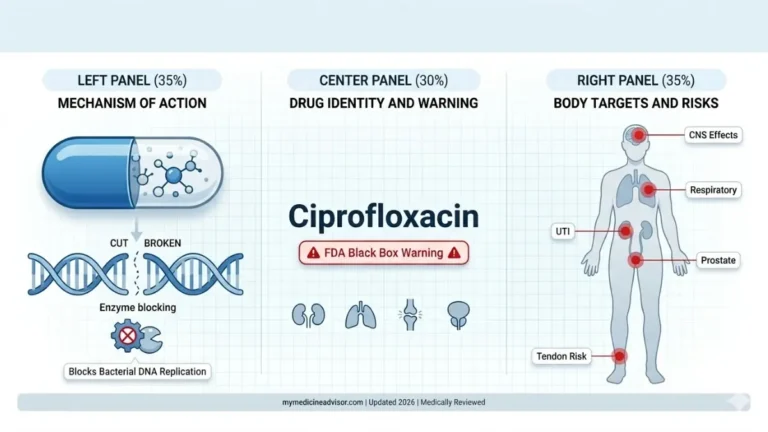
How Metronidazole Actually Kills Bacteria
Metronidazole — sold under the brand name Flagyl — is not a typical antibiotic. Most antibiotics work broadly. Metronidazole works with surgical precision: it targets only anaerobic bacteria (organisms that survive without oxygen) and certain parasites.
Here’s what happens at the molecular level:
- The drug enters bacterial cells by diffusion
- Inside anaerobic organisms, it gets chemically activated into a toxic free radical
- That free radical attacks and breaks DNA strands inside the bacterium
- The bacteria die rapidly — this is called concentration-dependent bactericidal activity
According to NIH StatPearls, metronidazole is one of the mainstay drugs for treating anaerobic bacterial, protozoal, and microaerophilic bacterial infections — and it penetrates the blood-brain barrier, making it effective even for brain abscesses.
Metronidazole vs. Regular Antibiotics — The Critical Difference
| Feature | Metronidazole | Standard Broad-Spectrum Antibiotic |
|---|---|---|
| Targets | Anaerobic bacteria + parasites only | Aerobic + anaerobic bacteria |
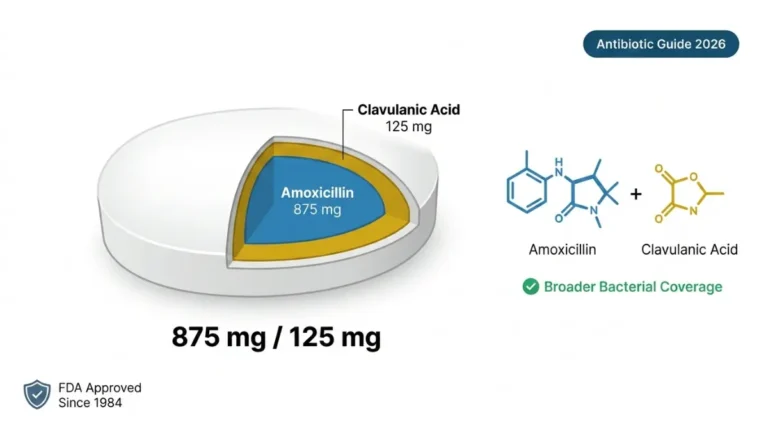
| Brand name | Flagyl | Amoxicillin, Augmentin, etc. |
| Works on viruses? | ❌ No | ❌ No |
| Works on UTIs (E. coli)? | ❌ No | ✅ Often yes |
| WHO Essential Medicine? | ✅ Yes | Varies |
| FDA approved since | 1963 | Varies |
What This Means For You: If your doctor prescribed metronidazole for what you think is a standard UTI, ask specifically which pathogen was identified. Metronidazole does not cover the most common UTI-causing bacteria like E. coli.
Not sure whether your symptoms need an antibiotic at all? Use our Symptom Checker to help assess your situation before your next doctor visit.
What Metronidazole Treats — The Complete 2026 Condition Guide
FDA-Approved Uses With Dosage Table
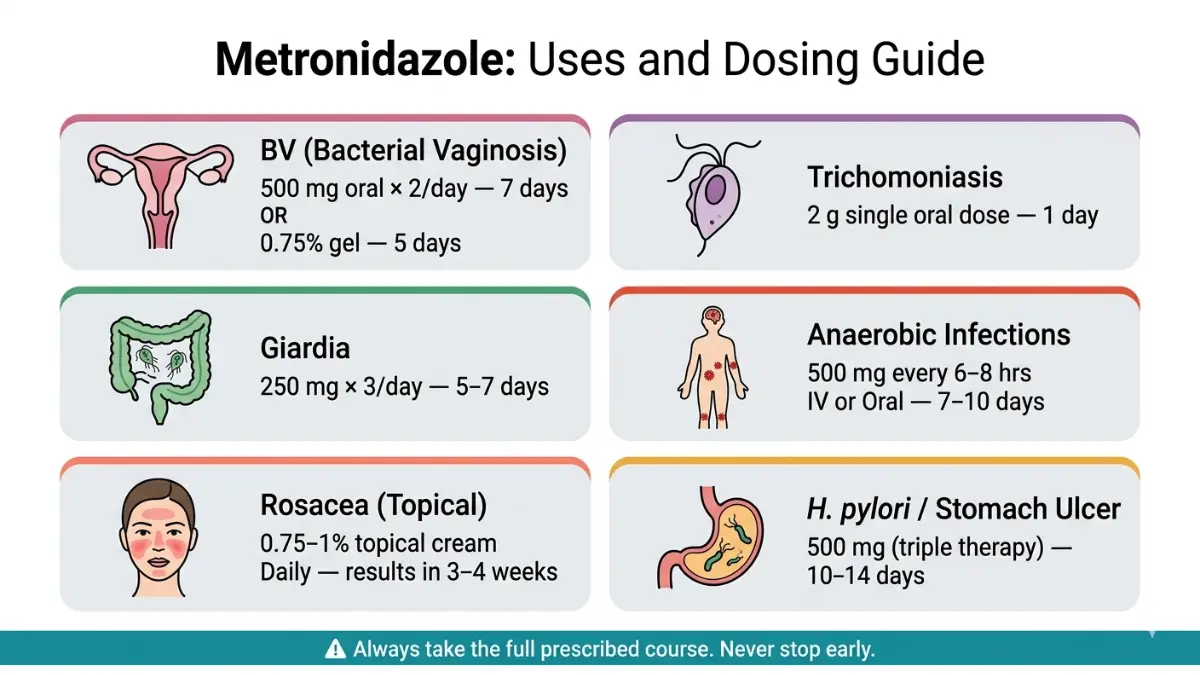
Metronidazole treats a wide spectrum of infections. Here is every major condition with current 2026 dosing standards:
| Condition | Form | Standard Dose | Duration |
|---|---|---|---|
| Bacterial Vaginosis (BV) | Oral tablet | 500mg twice daily | 7 days |
| Bacterial Vaginosis (BV) | Vaginal gel (0.75%) | 5g applicator once daily | 5 days |
| Trichomoniasis | Oral | 2g single dose | Single day |
| Giardiasis | Oral | 250mg three times daily | 5–7 days |
| Amebiasis (intestinal) | Oral | 500–750mg three times daily | 7–10 days |
| Anaerobic bacterial infections | IV / Oral | 500mg every 6–8 hours | 7–10 days |
| Rosacea | Topical cream/gel (0.75%–1%) | Apply once or twice daily | 3–4 weeks for visible results |
| H. pylori eradication | Oral (as part of triple therapy) | 500mg twice daily | 10–14 days |
| C. diff (second-line only) | Oral | 500mg three times daily | 10–14 days |
2026 Clinical Note: The CDC STI Treatment Guidelines confirm metronidazole 500mg orally twice daily for 7 days remains the first-line recommended regimen for bacterial vaginosis in the United States.
Off-Label Uses Doctors Prescribe
Beyond FDA approvals, physicians prescribe metronidazole for:
- Crohn’s disease flares — reduces perianal complications
- Perioral dermatitis — topical application shows benefit
- Pelvic inflammatory disease (PID) — as combination therapy
- Surgical prophylaxis in colorectal procedures
What Metronidazole CANNOT Treat
This is what most sites skip entirely — and it causes real patient harm:
- ❌ Common UTIs (caused by aerobic E. coli)
- ❌ Yeast infections / vaginal candidiasis
- ❌ Viral infections (cold, flu, COVID-19)
- ❌ Standard strep throat
- ❌ MRSA or other aerobic resistant bacteria
If you’re experiencing skin concerns alongside an antibiotic course, our guide on ringworm treatment can help distinguish fungal from bacterial skin infections — two conditions that are frequently confused.
Metronidazole Side Effects — What Your Pharmacist Didn’t Explain
Common Side Effects and How to Manage Each One
Most patients on metronidazole experience at least one side effect. Here’s the honest breakdown:
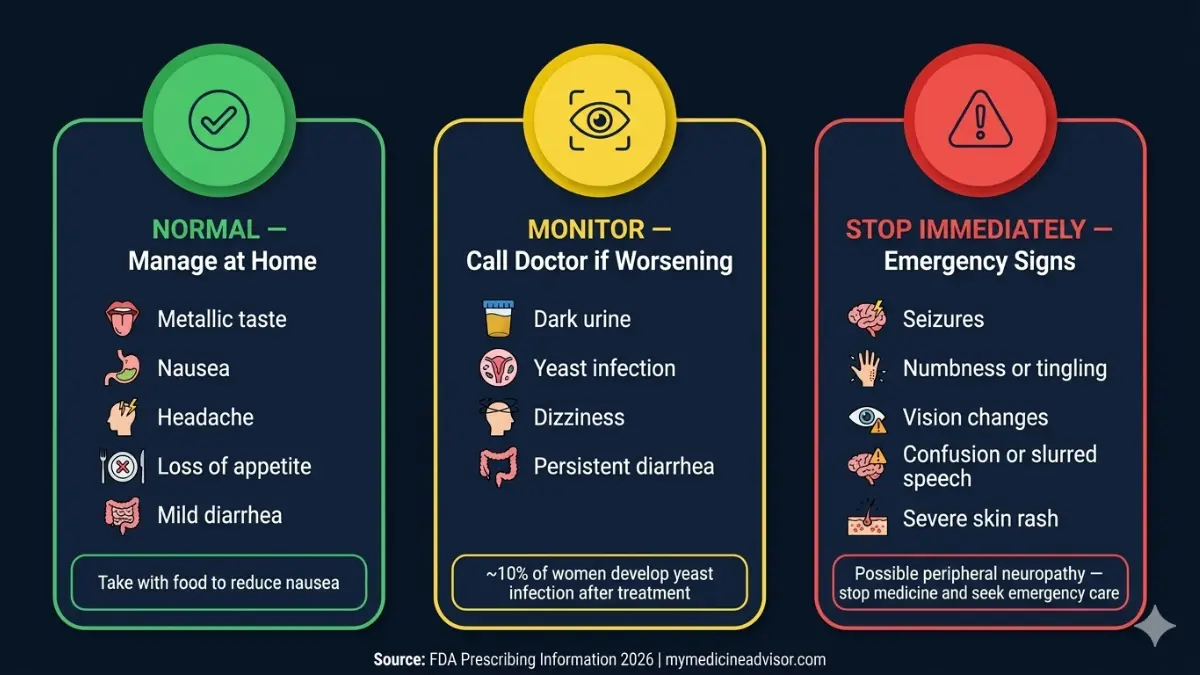
🟢 Normal — Manage at Home:
- Metallic taste in mouth (most common — affects up to 50% of patients)
- Nausea or upset stomach
- Headache
- Loss of appetite
- Diarrhea (mild)
🟡 Monitor — Contact Doctor if Worsening:
- Dark or reddish-brown urine
- Persistent or severe diarrhea
- Vaginal yeast infection (affects ~10% of women post-treatment)
- Dizziness or vertigo
🔴 STOP Immediately — Seek Emergency Care:
- Seizures or convulsions
- Numbness or tingling in hands or feet (peripheral neuropathy)
- Sudden vision changes
- Severe skin rash or blistering (potential Stevens-Johnson Syndrome)
- Encephalopathy symptoms: confusion, slurred speech, unsteady walk
According to the FDA prescribing information for metronidazole, the most serious reported adverse reactions include convulsive seizures, encephalopathy, optic neuropathy, and peripheral neuropathy — particularly with prolonged use.
The Metallic Taste: Why It Happens + 3 Proven Fixes
The metallic taste (dysgeusia) is one of the most commonly reported and least explained metronidazole side effects. Here’s the science:
Metronidazole is excreted in saliva at concentrations similar to those in the bloodstream. This means the drug is literally coating your taste buds throughout treatment.
Three evidence-supported fixes:
- Cold water sipping — Cold temperatures temporarily suppress taste receptor sensitivity. Sip ice-cold water between doses.
- Sugarless citrus candy or gum — Citric acid competes with metallic ion receptors on the tongue. This is the most patient-reported effective strategy.
- Mint-flavored toothpaste before meals — Briefly overrides metallic signal. Works best 5–10 minutes before eating.
Key Takeaway: The metallic taste is not a sign the drug is harmful or working incorrectly. It will resolve completely within 24–48 hours of completing your course.
The Black Box Warning — In Plain English
Metronidazole carries an FDA black box carcinogenicity warning based on animal studies in mice and rats. Here’s what this actually means for short-course human use:
- Animal studies showed tumor development at high doses over sustained periods
- Large-scale human follow-up studies have not confirmed increased cancer risk in patients using standard short courses
- The warning exists as a precaution — it does not mean metronidazole causes cancer in humans at therapeutic doses
- Short courses (5–14 days) are considered safe when clinically indicated
What This Means For You: This warning is why your doctor should only prescribe metronidazole for confirmed indications — not as a precaution or for viral illnesses. Always ask if an antibiotic is truly necessary.
Not sure what’s in your prescription bottle? Use our Pill Identifier tool to verify your medication before taking it.
Metronidazole and Alcohol — The Truth Most Sites Get Wrong
The Official Recommendation vs. The Scientific Reality
Every major medical website tells you: “Do NOT drink alcohol on metronidazole.” But almost none of them tell you why the evidence for this warning is far weaker than you think.
Here is the truth that your doctor almost certainly didn’t share:
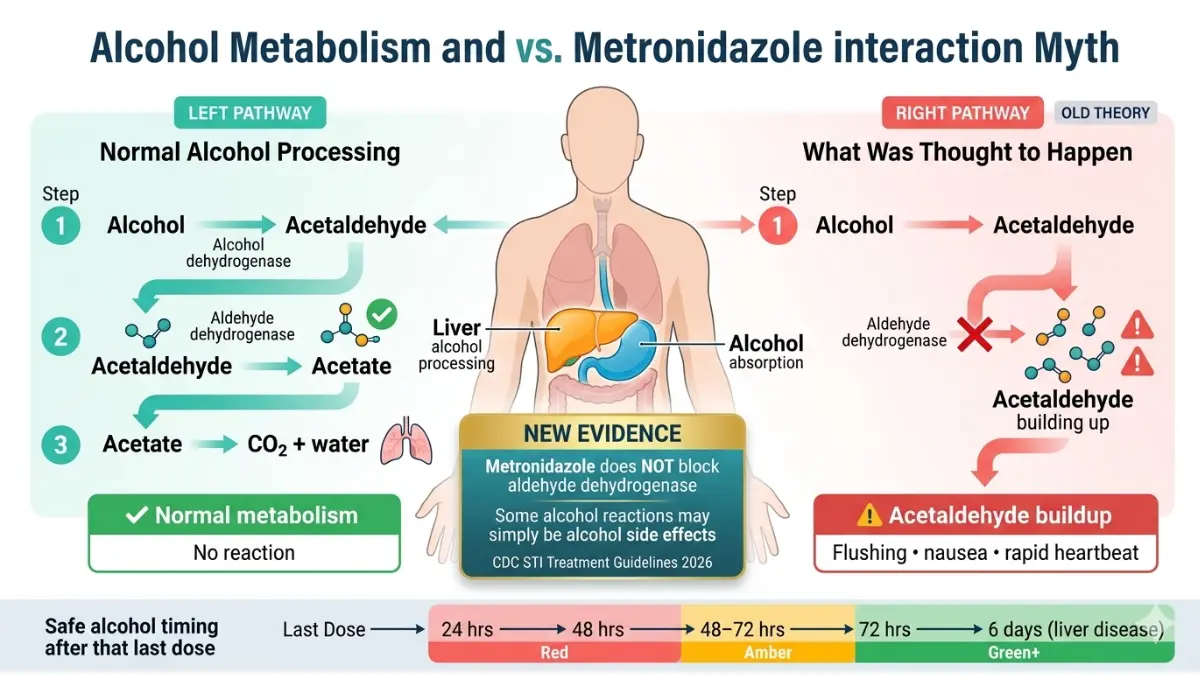
The traditional warning is based on a presumed disulfiram-like reaction — the same mechanism as Antabuse, a drug used to deter alcoholism by making alcohol consumption severely unpleasant.
The 2026 reality: The CDC STI Treatment Guidelines now explicitly state:
Metronidazole does not inhibit acetaldehyde dehydrogenase, as occurs with disulfiram. Ethanol alone or ethanol-independent side effects of metronidazole might explain the suspicion of disulfiram-like effects. Thus, refraining from alcohol use while taking metronidazole may be unnecessary.
A review published by the National Institutes of Health confirmed that research on this interaction found no convincing in vitro studies, animal models, or clinical evidence demonstrating a definitive disulfiram-like interaction between alcohol and standard-dose metronidazole.
What Happens If You Do Drink
Despite the emerging evidence, reported symptoms in patients who combined alcohol and metronidazole include:
- Facial flushing and warmth
- Nausea and vomiting
- Rapid heartbeat (tachycardia)
- Severe headache
- In rare cases: sudden drop in blood pressure
Whether these symptoms were caused by the drug-alcohol interaction specifically — or simply by alcohol’s own side effects compounded by an already-nauseating antibiotic — remains scientifically unresolved.
The Safe Timeline: How Long After Metronidazole Can You Drink?
| Patient Type | Recommended Wait After Last Dose |
|---|---|
| Standard healthy adult | 24–48 hours (drug clears in ~2–3 days) |
| Standard precautionary guidance | 72 hours (3 days) — most prescribers advise this |
| Patients with liver disease | Up to 6 days (slower drug clearance) |
What This Means For You: The official bottle label says “avoid alcohol for 3 days after finishing.” Until clinical trial data definitively resolves this interaction, following that guidance remains the safe and prudent choice — especially if you have any liver concerns. Always discuss this with your pharmacist, not just the bottle label.
If you’re tracking metabolic markers or liver-related health during antibiotic treatment, our Blood Sugar Converter and health tips section have relevant monitoring guides.
Who Should NOT Take Metronidazole — Pregnancy, Breastfeeding & Drug Interactions
Metronidazole in Pregnancy — What 2026 Evidence Says
This is one of the most anxiety-inducing questions patients search. The evidence is reassuring — with important nuance:
First trimester: Most guidelines recommend avoiding metronidazole unless the benefit clearly outweighs risk. Some product labels list it as contraindicated in the first trimester. However, data from multiple cohort and case-control studies have not demonstrated increased birth defect rates.
Second and third trimester: Metronidazole is widely used and considered safe. The CDC confirms that metronidazole therapy poses a low risk during pregnancy and is recommended for treating BV and trichomoniasis in pregnant women when indicated.
Key point: Untreated BV in pregnancy is associated with preterm birth, low birth weight, and intrauterine infections. In many cases, the risk of NOT treating is greater than the risk of the drug.
If you’re pregnant and tracking weight or fetal development alongside antibiotic treatment, our Pregnancy Weight Gain Calculator and Fetal Growth Percentile Calculator provide medically referenced tracking tools.
Metronidazole While Breastfeeding
- Metronidazole does pass into breast milk
- Standard doses (250–500mg): Generally considered compatible with breastfeeding — the infant dose is far below therapeutic levels
- Single 2g dose: Many clinicians recommend pumping and discarding milk for 12–24 hours after this dose as a precaution
- Discuss individual circumstances with your OB or pharmacist
Critical Drug Interactions — Priority Table
| Interacting Drug | What Happens | Severity | Action |
|---|---|---|---|
| Warfarin (blood thinner) | INR increases — bleeding risk rises sharply | 🔴 High | Monitor INR closely; dose adjustment likely needed |
| Lithium | Lithium blood levels elevate — toxicity risk | 🔴 High | Measure serum lithium during treatment |
| Disulfiram (Antabuse) | Severe CNS psychosis, confusion | 🔴 Contraindicated | Do NOT combine; 2-week washout required |
| Phenytoin (seizure medication) | Phenytoin levels increase | 🟡 Moderate | Monitor drug levels |
| Busulfan (chemotherapy) | Busulfan toxicity risk | 🔴 High | Avoid concomitant use |
| Alcohol/propylene glycol | Potential disulfiram-like reaction (evidence mixed) | 🟡 Caution | Discuss with pharmacist |
According to MedlinePlus drug information, patients should inform all healthcare providers — including dentists — that they are taking metronidazole before any procedure or new prescription is written.
Who Should Absolutely NOT Take Metronidazole:
- Anyone who has taken disulfiram within the past 2 weeks
- Patients with a confirmed allergy to metronidazole, tinidazole, or secnidazole (cross-reactivity)
- Patients in the first trimester of pregnancy without urgent clinical indication
For patients managing complex medication regimens, our drug interactions reference guide provides a broader medication safety resource.
How Long Does Metronidazole Take to Work? Your Complete Recovery Timeline
The Day-by-Day Recovery Guide (By Condition)
This is the information most patients desperately search for — and zero competitors provide it in a scannable format.
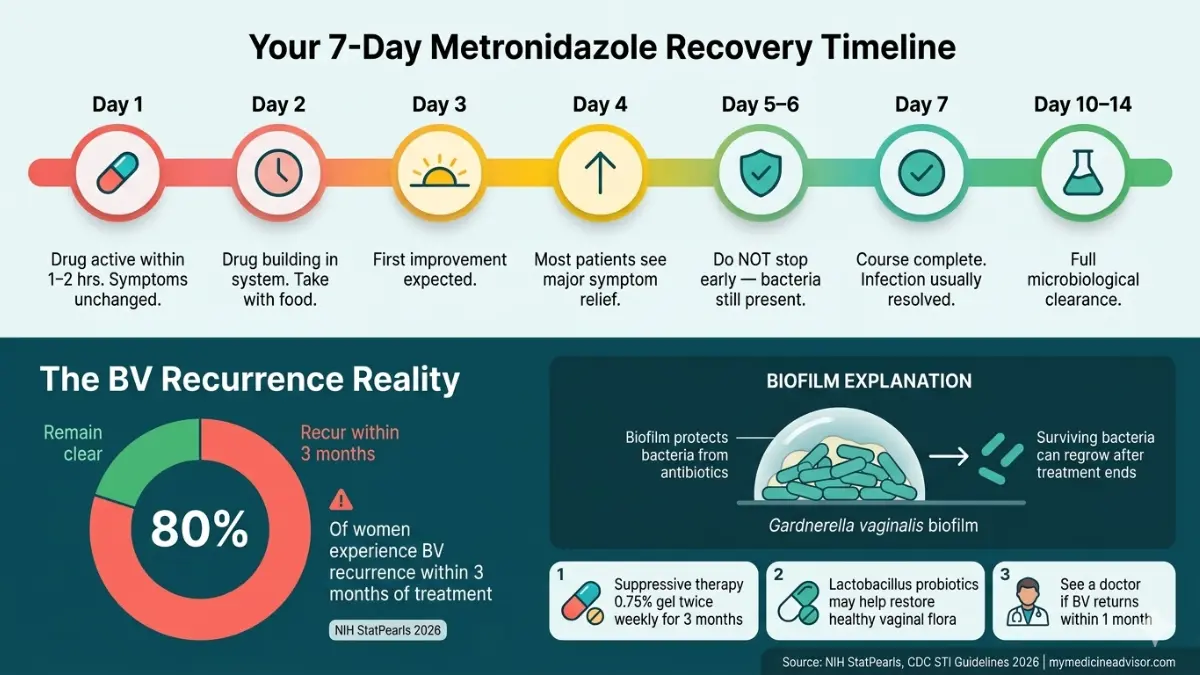
For Bacterial Vaginosis (oral, 7-day course):
| Day | What Most Patients Experience |
|---|---|
| Day 1–2 | Drug active in system within 1–2 hours of first dose. Symptoms may feel unchanged or slightly worse. |
| Day 3–4 | First noticeable improvement in discharge, odor, and discomfort for most patients |
| Day 5–6 | Significant symptom reduction. Do not stop early — incomplete treatment fuels resistance |
| Day 7 | Course complete. Most BV infections clinically resolved |
| Day 10–14 | Full microbiological clearance confirmed for most anaerobic infections |
For Trichomoniasis (single 2g dose): Most patients see symptom improvement within 24–72 hours. Partner treatment is essential — reinfection is common without it.
For Rosacea (topical metronidazole): Skin improvement typically takes 3–4 weeks of consistent application. Do not judge effectiveness before this point.
For Anaerobic infections (IV/severe): Clinical improvement expected within 48–72 hours of IV initiation.
The BV Recurrence Truth — What Nobody Tells You
This is the most important fact for women taking metronidazole for BV — and not one major competitor mentions it clearly:
Research published in NIH StatPearls on Bacterial Vaginosis confirms that within 3 months of completing treatment, approximately 80% of women experience BV recurrence. The primary reason: Gardnerella vaginalis creates protective biofilms that shield surviving bacteria from metronidazole penetration.
What this means if BV keeps coming back:
- Recurrence does not mean the antibiotic failed or that you did anything wrong
- Current CDC guidance supports extended suppressive therapy with 0.75% metronidazole gel twice weekly for over 3 months for women with multiple recurrences
- Emerging research (not yet FDA-approved) shows Lactobacillus probiotic supplementation after metronidazole may reduce recurrence rates significantly
- Discuss boric acid vaginal suppositories as an adjunct with your gynecologist
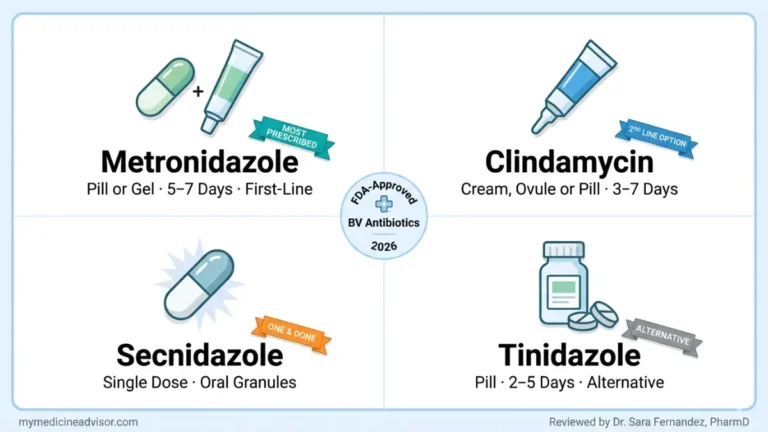
Metronidazole vs. Tinidazole vs. Clindamycin — Which Is Better?
| Factor | Metronidazole | Tinidazole | Clindamycin |
|---|---|---|---|
| Dosing | Twice daily × 7 days | Once daily × 2 days | Once nightly × 7 days (vaginal) |
| BV cure rate | ~80% initial | ~83–100% (single-dose) | ~63–64% |
| Metallic taste | Common | Less common | None |
| Alcohol restriction | 24–72 hours | 72 hours | Not applicable |
| Cost (generic) | Very low ($4–$10) | Moderate ($15–$30) | Moderate |
| Available topically | ✅ (vaginal gel, rosacea cream) | ❌ | ✅ (vaginal cream) |
When to Call Your Doctor During Treatment
Contact your healthcare provider immediately if you experience:
- Neurological symptoms: Numbness, tingling, unsteady walking, slurred speech
- Worsening symptoms after Day 4 of a 7-day course
- Fever above 101°F developing during treatment
- Severe stomach pain not relieved by taking the medication with food
- Signs of severe allergic reaction: hives, difficulty breathing, facial swelling
If you’re uncertain whether symptoms are side effects or something else entirely, our Symptom Checker can help you triage before deciding whether to call your doctor or seek urgent care.
For patients managing antibiotic-related fatigue or disrupted sleep during treatment, our Sleep Calculator can help optimize recovery rest.
Expert Key Takeaways
Dr. Sara Fernandez, PharmD (Clinical Pharmacology):
“Metronidazole is one of the most effective antibiotics we have for anaerobic infections — but patient education at the point of prescribing is almost universally insufficient. The alcohol question, the metallic taste, and the BV recurrence reality are three things every patient deserves to know before they leave the pharmacy.”
Three Non-Negotiable Rules for Metronidazole Patients:
- ✅ Always complete the full course — even if you feel better on Day 3
- ✅ Tell every prescriber you’re taking it — especially if you’re on warfarin or lithium
- ✅ Don’t assume BV recurrence means treatment failure — it’s a biological reality, not a personal failure
Frequently Asked Questions about Metronidazole
1. What is metronidazole used for?
Metronidazole treats anaerobic bacterial infections, bacterial vaginosis, trichomoniasis, giardia, amebiasis, and is used topically for rosacea. It is both an antibiotic and antiprotozoal medication.
2. Can you drink alcohol while taking metronidazole?
The standard guidance is to avoid alcohol during treatment and for 3 days after your last dose. However, CDC 2026 guidelines note the evidence for a true disulfiram-like reaction is weaker than previously believed. Caution is still advised — discuss with your pharmacist.
3. How long does metronidazole take to work?
Metronidazole begins working within hours of the first dose, but most patients notice symptom improvement between Day 3–4 of a standard 7-day course. Topical use for rosacea takes 3–4 weeks.
4. Why does metronidazole cause a metallic taste?
The drug is excreted in saliva at near-blood concentrations, directly stimulating metallic taste receptors on the tongue. It resolves within 24–48 hours of completing the course.
5. Is metronidazole an antibiotic?
Yes — specifically a nitroimidazole antibiotic. It also has antiprotozoal properties, which is why it treats parasitic infections like giardia and trichomoniasis in addition to bacterial infections.
6. Can metronidazole treat a UTI?
No. Standard UTIs are caused by aerobic bacteria like E. coli, which metronidazole does not cover. If prescribed for a UTI, ask your doctor to confirm the specific organism identified in your culture.
7. Is metronidazole safe during pregnancy?
In the second and third trimesters, current evidence supports its safety. First-trimester use should be discussed individually with your OB. Untreated BV in pregnancy poses serious risks including preterm birth.
8. What should I do if I miss a dose?
Take it as soon as you remember — unless it’s almost time for your next dose. Never double up. Skipping doses increases the risk of antibiotic resistance and treatment failure.
9. Why do I get a yeast infection after metronidazole?
Metronidazole disrupts the vaginal microbiome by reducing certain bacteria, which allows Candida (yeast) to overgrow. This affects approximately 10% of women. Over-the-counter antifungal treatment is appropriate if symptoms appear.
10. Can metronidazole be used for rosacea?
Yes — topical metronidazole (0.75% gel or cream, 1% gel) is an established first-line treatment for inflammatory rosacea lesions. It requires 3–4 weeks of consistent use to see visible skin improvement.
11. How long after finishing metronidazole can I drink alcohol?
The conservative standard recommendation is 72 hours (3 days) after your last dose. For patients with liver disease, wait up to 6 days. Discuss your specific situation with your pharmacist rather than relying solely on the label.
About this content
How this article was put together: researched from recognised health sources, drafted with the help of AI tools, and edited by hand, with sources linked throughout.

Sameer Patel is the founder and editor of My Medicine Advisor. He is not a doctor or medical professional — before starting this site he worked in banking,…
Medical disclaimer
The content on MyMedicineAdvisor is provided for general informational and educational purposes only and is not a substitute for professional medical advice, diagnosis, or treatment. Health information on this website should not be used to diagnose, treat, cure, or prevent any condition without guidance from a qualified healthcare professional. Always seek the advice of your doctor, physician, or another licensed healthcare provider with any questions you may have regarding a medical condition, symptoms, medications, or treatment decisions.