

On This Page – Quick Medical Summary
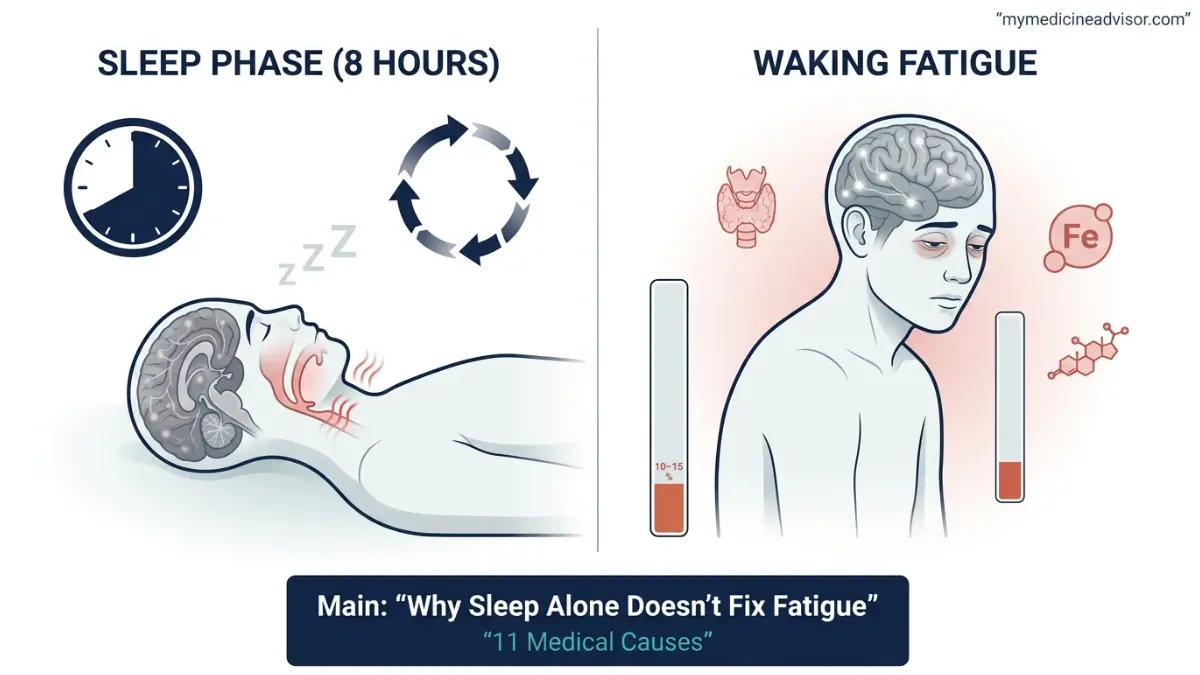
You slept 8 hours last night. Maybe even 9. And you still woke up feeling like you hadn’t slept at all.
If this sounds familiar, you’re not lazy, weak, or imagining it. Millions of Americans feel exhausted every single day — not because of how much they sleep, but because of what’s happening during that sleep, and what’s happening inside their body.
This guide reveals exactly why — with real medical causes, a self-diagnostic framework, and a doctor-recommended action plan.
📌 Quick Answer: Feeling tired no matter how much you sleep is usually caused by poor sleep quality (not just quantity), an undiagnosed medical condition such as sleep apnea or thyroid dysfunction, nutritional deficiencies, or a disrupted circadian rhythm. The solution isn’t always more sleep — it’s better sleep and the right diagnosis.
You Sleep 8 Hours — And Wake Up Exhausted. Here’s Exactly Why
James, a 34-year-old nurse from Ohio, tracked his sleep for three months. He was clocking 8–9 hours every night. Yet by 10 AM, he was fighting to stay awake. His GP eventually found he had undiagnosed sleep apnea — he was waking up dozens of times an hour without knowing it.
James’s story is far more common than most people realize.
The core problem: Most people assume tiredness = not enough sleep. But the science says something different. It’s not just about how much you sleep — it’s about what your body does during that sleep.
Tiredness vs. Fatigue vs. Hypersomnia — Know the Difference
| Condition | What It Feels Like | Relieved by Sleep? |
|---|---|---|
| Tiredness | Natural end-of-day sleepiness | ✅ Yes, usually |
| Fatigue | Persistent low energy, brain fog, no motivation | ❌ Often not |
| Hypersomnia | Extreme daytime sleepiness despite adequate sleep | ❌ No |
Understanding which category you fall into determines your next steps. Use our free Symptom Checker to identify patterns before your next doctor’s visit.
According to the National Heart, Lung, and Blood Institute, between 50–70 million Americans live with a sleep disorder — and the majority don’t know it yet.
The Real Problem — It’s Not How Long You Sleep, It’s What Happens Inside That Sleep
Sleep Architecture 101: Why Deep Sleep Is the Missing Piece
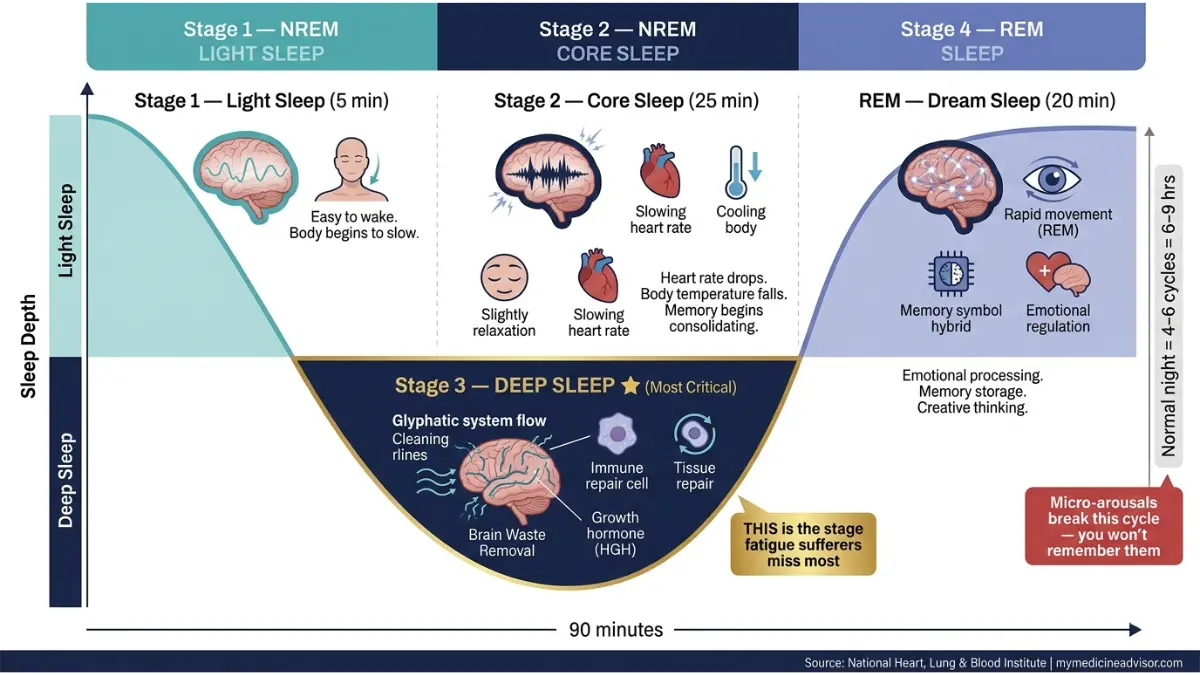
Every night, your body cycles through 4–6 sleep cycles, each lasting roughly 90 minutes. Each cycle contains four stages:
- Stage 1 (NREM 1): Light drowsiness, easy to wake
- Stage 2 (NREM 2): Body temperature drops, heart rate slows
- Stage 3 (NREM 3 — Deep Sleep): Cell repair, immune strengthening, growth hormone release
- Stage 4 (REM Sleep): Memory consolidation, emotional processing, dreaming
The critical stage is NREM Stage 3 — deep sleep. This is where your brain flushes out waste products (via the glymphatic system), your tissues repair, and your energy systems reset.
If something repeatedly pulls you out of deep sleep — even for seconds — you lose this restorative phase. And you wake up exhausted, regardless of how many hours you logged.
To understand this more deeply, read our full guide on sleep stages explained and what REM sleep actually does.
What Are Micro-Arousals? (The Invisible Sleep Thief)
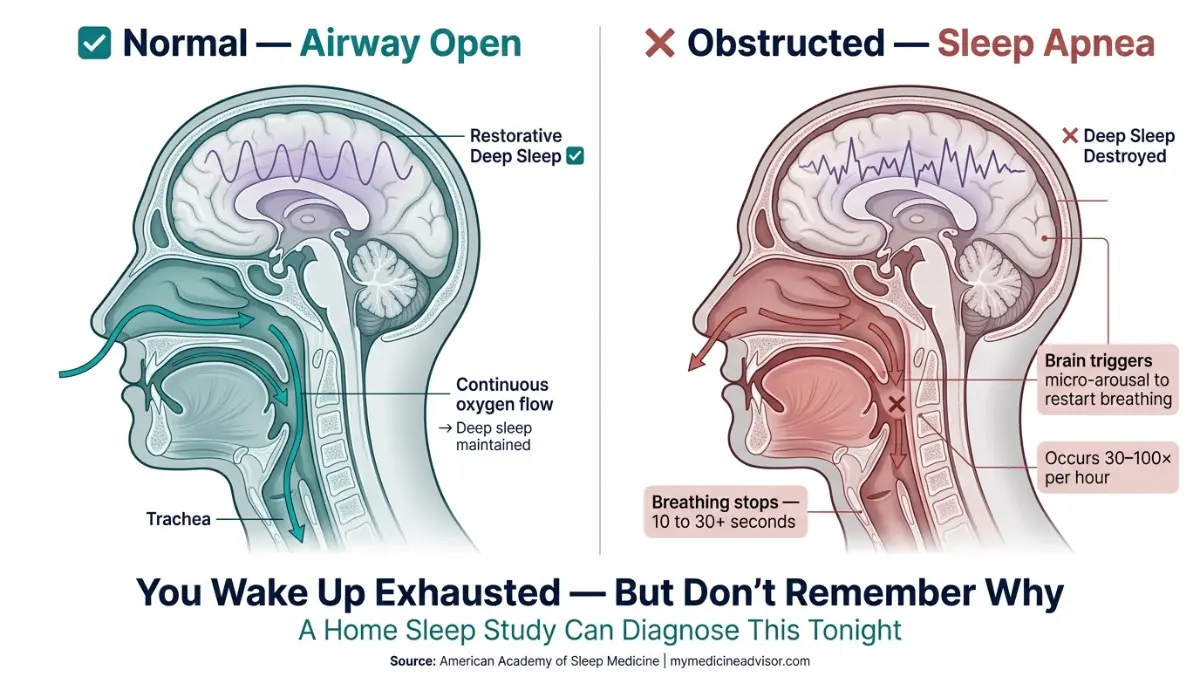
A micro-arousal is a brief awakening — sometimes only 3–10 seconds — that shifts your brain from deep sleep into a lighter stage. You won’t remember it. But it happens.
People with untreated sleep apnea can experience 30–100 micro-arousals per hour and wake up with zero memory of them. The result? They technically “slept all night” but got almost no restorative deep sleep.
Sleep Quality vs. Sleep Quantity — Which Matters More?
| Scenario | Sleep Duration | Sleep Quality | How You Feel |
|---|---|---|---|
| Healthy sleeper | 7 hours | Excellent | Refreshed, alert |
| Sleep apnea patient | 9 hours | Poor | Exhausted, foggy |
| Anxious sleeper | 8 hours | Fragmented | Tired, irritable |
| Optimal recovery | 7–8 hours | Deep + REM intact | Energized |
The verdict: Quality beats quantity every time. Use our Sleep Calculator to find your optimal sleep window based on sleep cycles — not just hours.
What Is Non-Restorative Sleep?
Non-restorative sleep (NRS) — also called unrefreshing sleep — is when you sleep the right number of hours but wake up feeling no better than when you went to bed.
It is a recognized clinical symptom linked to conditions including ME/CFS, fibromyalgia, sleep apnea, and Long COVID. If this describes you consistently for more than 4 weeks, it warrants medical investigation — not more hours in bed.
11 Medical Reasons You’re Always Tired No Matter How Much You Sleep
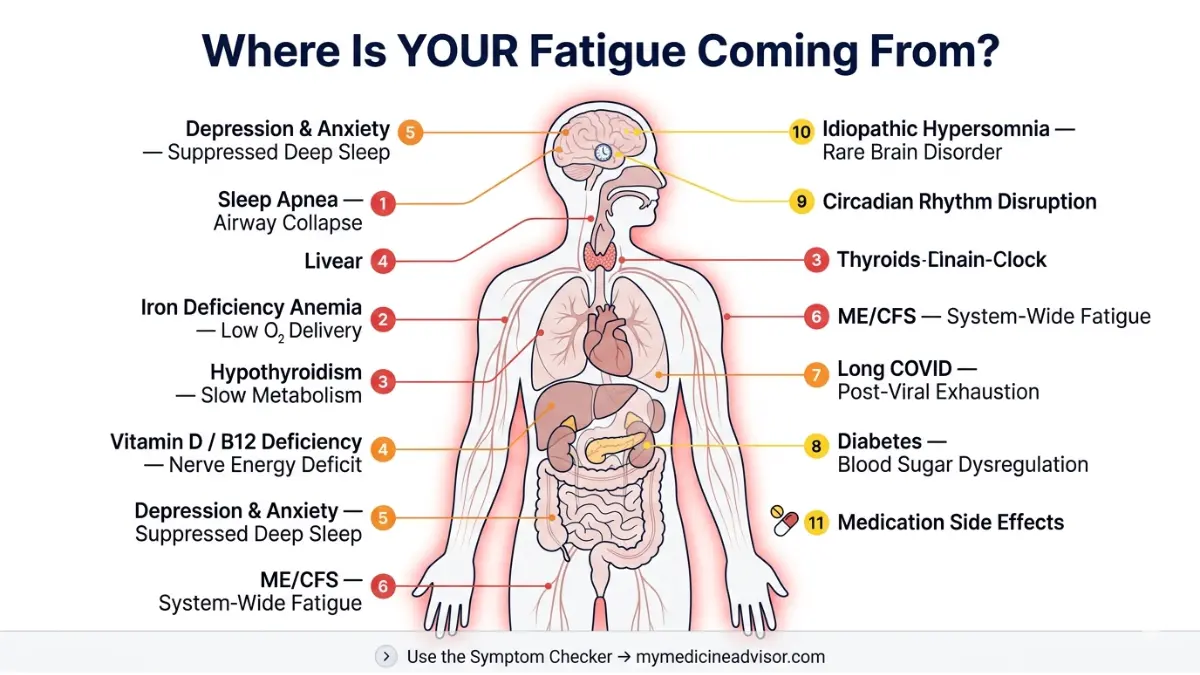
1. 🔴 Sleep Apnea
The most underdiagnosed cause of chronic exhaustion in America.
Sleep apnea causes breathing to stop repeatedly during the night. Your brain micro-wakes to restart breathing — blocking deep sleep entirely. It affects an estimated 29 million Americans, according to the National Sleep Foundation.
Signs to watch for: Loud snoring, waking with a dry mouth, morning headaches, irritability, and daytime sleepiness no matter how much you sleep.
What to do: Ask your doctor about a home sleep study. Treatment with a CPAP device often resolves fatigue within 2–4 weeks.
Learn more about warning signs in our article on sleep disorder symptoms and causes.
2. 🔴 Iron Deficiency / Anemia
Iron is essential for producing hemoglobin — the protein that carries oxygen through your blood. When iron levels drop, your organs receive less oxygen, and fatigue becomes relentless.
Iron deficiency is the most common nutritional deficiency worldwide and frequently causes extreme tiredness even after adequate sleep. It’s particularly common in women of reproductive age.
What to do: Request a ferritin and CBC blood test. Our guide on iron studies and what abnormal results mean explains your numbers.
3. 🔴 Hypothyroidism (Underactive Thyroid)
When your thyroid gland doesn’t produce enough thyroid hormone, every system in your body slows down — including your sleep quality and energy production.
Hypothyroidism is notoriously under-recognized, especially in women over 40. Classic symptoms beyond tiredness include weight gain, cold sensitivity, dry skin, and brain fog.
What to do: A simple TSH blood test can identify this. See our detailed guide on TSH levels and what your results mean. For symptoms specifically, read our article on hypothyroidism symptoms.
4. 🟠 Vitamin D or B12 Deficiency
Both vitamins are critical for neurological energy function. Deficiency in either causes fatigue that sleep simply cannot fix.
- Vitamin D deficiency affects over 40% of American adults and is directly linked to fatigue, low mood, and disrupted sleep architecture.
- B12 deficiency causes nerve dysfunction, brain fog, and persistent exhaustion — especially in people over 50, vegans, and those on metformin.
What to do: Request serum vitamin D and B12 tests. Read our deep-dive on vitamin D deficiency symptoms and levels for context.
5. 🟠 Depression and Anxiety
Depression doesn’t just affect mood — it physically alters sleep architecture, suppressing deep sleep and increasing nighttime wakefulness. The result is a cruel cycle: poor sleep worsens depression, and depression worsens sleep.
Over 70% of people with depression report chronically poor sleep quality, according to research published via the National Institute of Mental Health.
What to do: If you’re experiencing persistent low mood alongside fatigue, explore our guide on depression causes and recovery. CBT-I (Cognitive Behavioral Therapy for Insomnia) is now the gold-standard first-line treatment.
6. 🟠 ME/CFS (Chronic Fatigue Syndrome)
Myalgic encephalomyelitis/chronic fatigue syndrome is characterized by profound tiredness that does not improve with rest — regardless of how much you sleep. It is not a psychological condition.
As Johns Hopkins Medicine explains, core ME/CFS symptoms include unrefreshing sleep, post-exertional malaise, and cognitive impairment. Diagnosis requires ruling out other conditions.
What to do: If fatigue has lasted 6+ months with no relief from sleep, request a full medical workup and ask for a specialist referral.
7. 🟡 Long COVID Fatigue (2026 Update)
Post-COVID fatigue is now one of the most rapidly growing causes of chronic tiredness in adults under 60 in the United States. Research from 2025–2026 confirms that Long COVID can cause mitochondrial dysfunction, autonomic nervous system disruption, and non-restorative sleep — sometimes months or years after initial infection.
What to do: If your fatigue began after a COVID-19 infection, mention this specifically to your doctor. Specialized Long COVID clinics now operate in most major US cities.
8. 🟡 Diabetes and Blood Sugar Dysregulation
Uncontrolled blood sugar — whether from type 1, type 2, or prediabetes — causes dramatic energy crashes and disrupts overnight glucose regulation, leading to fragmented sleep and morning exhaustion.
Use our Blood Sugar Converter to track your readings and understand your numbers before your next appointment.
9. 🟡 Circadian Rhythm Disruption / Social Jet Lag
Your internal body clock (circadian rhythm) regulates when you feel sleepy and when you feel alert. Shift work, irregular bedtimes, and weekend sleep schedule changes of even 1–2 hours (“social jet lag”) can desynchronize this clock — leaving you tired all day despite sleeping enough.
Read our complete guide on what circadian rhythm is and how to reset it for targeted strategies.
10. 🟡 Idiopathic Hypersomnia
A rare but massively underdiagnosed condition where patients sleep excessive amounts — sometimes 10–12 hours — yet wake completely unrefreshed. Unlike narcolepsy, there is no identifiable brain chemical cause. Diagnosis requires a formal sleep study.
Key distinction: In idiopathic hypersomnia, even long naps provide no relief. This separates it from regular fatigue or sleep deprivation.
11. 🟡 Medication Side Effects
Several commonly prescribed and over-the-counter medications cause daytime fatigue as a side effect, including:
- Antihistamines (Benadryl, cetirizine)
- Antidepressants (some SSRIs, tricyclics)
- Beta-blockers (used for blood pressure)
- Sleep aids — paradoxically cause “sleep hangover” grogginess
- Statins (linked to muscle fatigue in some patients)
What to do: Review your medications with a pharmacist or doctor if fatigue started or worsened after starting a new drug. Our drug interactions guide provides useful context.
Your Personal Tiredness Severity Scale
| Level | What You Experience | Recommended Action |
|---|---|---|
| Mild | Occasional, improves on weekends | Sleep hygiene audit |
| Moderate | Daily fatigue, affects concentration and mood | GP visit + blood panel |
| Severe | Constant exhaustion, no relief from any amount of sleep | Urgent specialist referral |
| Critical | Fatigue + chest pain, weight loss, or neurological symptoms | Emergency evaluation |
7 Hidden Lifestyle Reasons You’re Always Tired
Even without a medical condition, daily habits can silently sabotage sleep quality and leave you exhausted.
1. You’re Chronically Dehydrated
Even mild dehydration (1–2% body weight) increases fatigue, reduces cognitive performance, and impairs sleep quality. Most Americans don’t drink nearly enough water throughout the day.
Use our Water Intake Calculator to find your precise daily hydration target based on your weight, activity level, and climate.
2. Your Bedroom Environment Is Working Against You
Your sleep environment directly controls how much deep sleep you get. Key disruptors include:
- Temperature above 67°F (19°C) — suppresses melatonin production
- Light exposure — even small amounts delay sleep onset
- Background noise — triggers micro-arousals throughout the night
- Electronic devices in bed — increase alertness hormones
3. Caffeine After 2 PM Is Destroying Your Deep Sleep
Caffeine has a 5–7 hour half-life. A coffee at 3 PM still has 50% of its stimulant effect active at 9 PM — directly blocking adenosine (your sleep pressure chemical) and reducing deep sleep by up to 20%.
The fatigue you feel the next morning pushes you toward more caffeine. The cycle repeats.
4. You’re Eating in Ways That Disrupt Sleep Hormones
- High-sugar meals before bed cause blood sugar spikes and crashes overnight
- Late large meals divert blood flow to digestion, fragmenting sleep
- Alcohol creates false sedation but suppresses REM sleep entirely
Track your nutrition patterns using our Macro Calculator to optimize your eating timing.
5. Over-Exercise Without Adequate Recovery
Overtraining syndrome is a real clinical condition where excessive physical training without recovery causes adrenal dysregulation, elevated cortisol at night, and non-restorative sleep. Athletes and high-intensity gym-goers are particularly vulnerable.
6. Social Jet Lag From Weekend Sleep Shifts
Sleeping in just 90 minutes later on weekends can shift your circadian rhythm enough to cause Monday morning exhaustion — a pattern researchers call “social jet lag.”
Fix: Keep your wake time within 30 minutes every day, including weekends.
7. Chronic Stress Elevates Cortisol and Steals Deep Sleep
Elevated cortisol — your primary stress hormone — actively blocks the brain signals needed to enter deep NREM sleep. Chronic stress literally prevents the restorative sleep your body needs, no matter how many hours you log.
What This Means For You: ✅ Set your bedroom temperature to 65–67°F ✅ Cut caffeine by 2 PM ✅ Keep your wake time consistent 7 days a week
The 3-Step Doctor-Recommended Action Framework
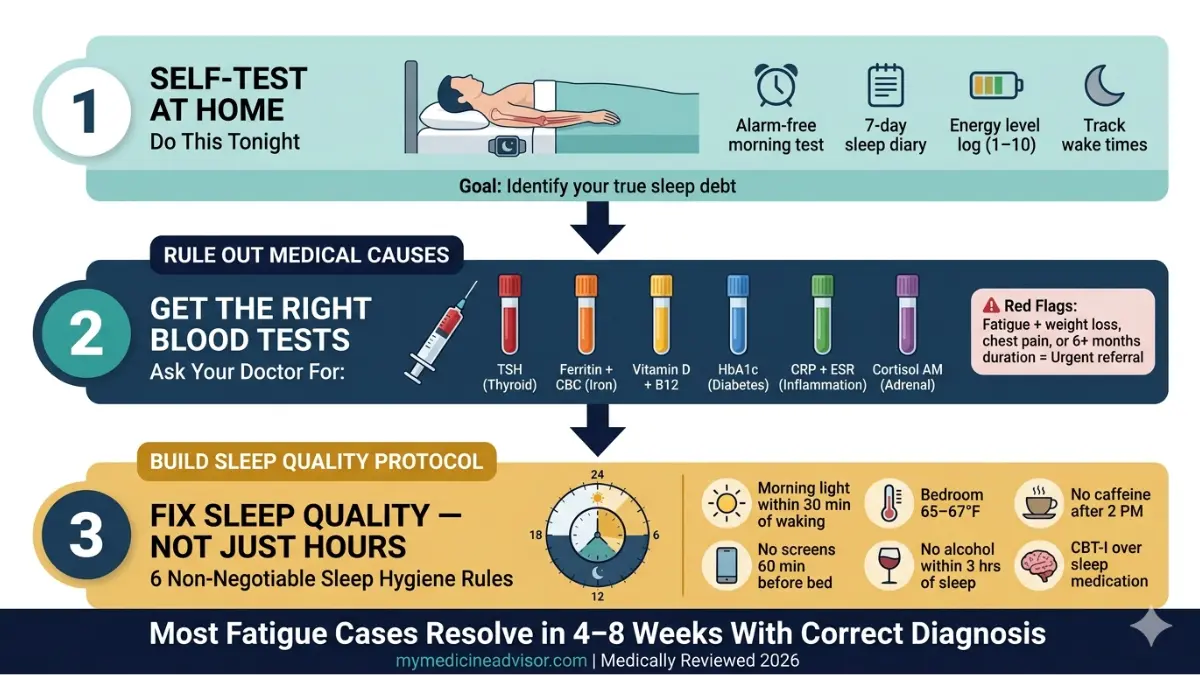
Step 1 — Self-Test at Home (Do This Tonight)
The Alarm-Free Test: On your next day off, go to bed at your usual time and set no alarm. If you sleep significantly later than normal, your body is in sleep debt — meaning your current schedule isn’t giving you enough quality rest.
7-Day Sleep Audit Checklist:
- [ ] Track actual sleep time vs. time in bed
- [ ] Note morning energy level (1–10 scale)
- [ ] Record afternoon energy crashes
- [ ] Note any known snoring or partner observations
- [ ] Log caffeine and alcohol consumption
- [ ] Record screen time in the 90 minutes before bed
- [ ] Note any waking during the night
Use our Sleep Calculator to determine your optimal sleep window aligned with natural 90-minute cycles.
Step 2 — Rule Out Medical Causes (What Blood Tests to Request)
Ask your doctor for this specific panel:
| Test | What It Rules Out |
|---|---|
| TSH | Thyroid dysfunction |
| Ferritin + CBC | Iron deficiency anemia |
| Vitamin D (25-OH) | Vitamin D deficiency |
| Vitamin B12 | B12 deficiency |
| HbA1c + fasting glucose | Diabetes / prediabetes |
| CRP + ESR | Systemic inflammation |
| Cortisol (AM) | Adrenal dysfunction |
🚨 Red Flag Symptoms That Need Urgent Attention:
- Fatigue + unexplained weight loss
- Fatigue + chest pain or shortness of breath
- Fatigue + severe headaches upon waking
- Fatigue + swollen lymph nodes
- Fatigue lasting 6+ months with zero improvement
The CDC’s sleep health resource provides additional guidance on when to escalate your concerns to a specialist.
Step 3 — Build a Sleep Quality Protocol
These six evidence-based sleep hygiene practices are clinically proven — not generic advice:
- Fixed wake time daily — anchors your circadian rhythm
- No screens 60 minutes before bed — allows melatonin to rise naturally
- Bedroom temperature 65–67°F — optimal for deep sleep onset
- No alcohol within 3 hours of sleep — protects REM cycles
- Morning light exposure within 30 minutes of waking — resets your body clock
- CBT-I over sleep medication — Cognitive Behavioral Therapy for Insomnia is the gold standard per NIH guidelines
Energy Recovery Timeline:
| Timeline | Expected Changes |
|---|---|
| Days 1–7 | Sleep environment optimized; micro-arousals may reduce |
| Week 2–3 | Blood test results in; lifestyle changes begin showing effect |
| Week 4–6 | Diagnosis confirmed (if applicable); treatment starts |
| Month 2–3 | Sustained energy improvement with correct treatment |
When “Always Tired” Becomes a Medical Emergency
Most fatigue is treatable and not dangerous. But certain patterns require prompt medical evaluation.
🚨 See a Doctor Immediately If You Have:
- Fatigue that has persisted for 6 months or more with no improvement
- Extreme tiredness alongside chest pain, palpitations, or breathlessness
- Fatigue combined with unintentional weight loss (more than 5% body weight)
- Morning exhaustion with severe headaches on waking (sleep apnea sign)
- Fatigue with confusion, memory gaps, or personality changes
- Tiredness that began after a viral infection and never resolved (Long COVID)
What Our Expert Panel Says (2026)
Dr. Omar Hassan, MD — Internal Medicine: “Patients who come to me describing tiredness no matter how much they sleep almost always have an identifiable cause. Sleep apnea, thyroid dysfunction, and iron deficiency account for the majority of cases we see. The mistake most people make is accepting exhaustion as normal. It is not.”
Dr. Vikram Nair, MD — Endocrinology: “Hormonal causes of fatigue — especially thyroid and adrenal dysfunction — are frequently missed at the primary care level. If your TSH comes back ‘normal’ but you’re still exhausted, ask about free T3, free T4, and a cortisol morning draw. Normal TSH doesn’t always mean optimal thyroid function.”
Dr. Aditi Menon, MD — Lifestyle Medicine: “The body does not compartmentalize. Poor sleep quality shows in skin, mood, immune function, and metabolic health simultaneously. When I see a patient with chronic fatigue, I look at their entire lifestyle — nutrition, light exposure, stress, movement — not just sleep duration.”
Internal Resources to Continue Your Diagnosis Journey:
- Understand warning signs of a sleep disorder — know when your tiredness is serious
- Review how many hours of sleep you need by age — your target may be different from the “8-hour” myth
- Check your circadian rhythm health — often the root cause of chronic morning exhaustion
⚠️ Medical Disclaimer: This article is for educational purposes only and does not constitute medical advice, diagnosis, or treatment. Always consult a qualified, licensed healthcare professional for any concerns regarding your health. If you are experiencing severe or persistent fatigue, please seek medical evaluation promptly.
Frequently Asked Questions
1. Why am I always tired even after 8 hours of sleep?
Eight hours of sleep does not guarantee restorative sleep. Conditions like sleep apnea, iron deficiency, thyroid dysfunction, or poor sleep architecture can leave you exhausted regardless of how much you sleep. A medical evaluation is the most reliable way to find the cause.
2. Can too much sleep make you more tired?
Yes. Sleeping more than 9 hours regularly can disrupt your circadian rhythm and leave you more fatigued. Consistently oversleeping can also signal an underlying condition like hypersomnia, depression, or thyroid disease.
3. What deficiency causes extreme tiredness?
The most common are iron deficiency (anemia), vitamin B12 deficiency, and vitamin D deficiency. All three are diagnosable with a simple blood test and highly treatable.
4. Is it normal to feel tired all the time?
Occasional tiredness is normal. Persistent fatigue that doesn’t improve with sleep, or that interferes with daily function, is not normal and warrants medical investigation.
5. What blood tests should I get for chronic fatigue?
Request: TSH, ferritin, CBC, vitamin D, B12, HbA1c, fasting glucose, CRP, and cortisol (morning draw). This panel covers the most common medically treatable causes.
6. Can anxiety make you feel tired no matter how much sleep you get?
Yes. Anxiety elevates cortisol and adrenaline, which suppress deep NREM sleep. You may sleep 8–9 hours but remain in light, fragmented sleep all night — waking exhausted.
7. Does sleep apnea cause daytime fatigue even after a full night’s sleep?
Absolutely. This is the defining feature of sleep apnea. Repeated micro-arousals throughout the night prevent restorative deep sleep, leading to severe daytime tiredness regardless of sleep duration.
8. What is non-restorative sleep?
Non-restorative sleep (unrefreshing sleep) is sleep that doesn’t leave you feeling rested upon waking, even after adequate hours. It is a recognized clinical symptom linked to ME/CFS, fibromyalgia, sleep apnea, and Long COVID.
9. Can Long COVID cause always feeling tired?
Yes. Post-COVID fatigue is now one of the most reported Long COVID symptoms in 2026. It can cause profound, persistent tiredness that does not respond to rest, and often requires specialist evaluation at a Long COVID clinic.
10. How do I know if my fatigue needs a doctor?
See a doctor if your fatigue: has lasted more than 4 weeks, doesn’t improve with rest, is accompanied by any other symptoms (pain, weight loss, breathlessness), or is significantly affecting your quality of life.
11. What is the fastest way to stop feeling tired all the time?
Start with the basics tonight: fix your wake time, cut caffeine by 2 PM, cool your bedroom, and eliminate alcohol near bedtime. Then book blood tests. These two steps — optimizing sleep hygiene and ruling out medical causes — resolve most cases of chronic fatigue within 4–8 weeks.
Written and reviewed by the mymedicineadvisor.com Medical Advisory Panel. For more evidence-based health guides, visit our Health Tips hub.
About this content
How this article was put together: researched from recognised health sources, drafted with the help of AI tools, and edited by hand, with sources linked throughout.

Sameer Patel is the founder and editor of My Medicine Advisor. He is not a doctor or medical professional — before starting this site he worked in banking,…
Medical disclaimer
The content on MyMedicineAdvisor is provided for general informational and educational purposes only and is not a substitute for professional medical advice, diagnosis, or treatment. Health information on this website should not be used to diagnose, treat, cure, or prevent any condition without guidance from a qualified healthcare professional. Always seek the advice of your doctor, physician, or another licensed healthcare provider with any questions you may have regarding a medical condition, symptoms, medications, or treatment decisions.