
On This Page – Quick Medical Summary
Radon gas is an invisible, odorless, radioactive gas that seeps into homes from soil and rock. Long-term radon exposure is the #1 cause of lung cancer in non-smokers and the second leading cause overall in the United States, responsible for an estimated 21,000 lung cancer deaths every year, according to the U.S. Environmental Protection Agency.
What You’ll Learn in This Guide:
- What radon gas is and exactly how it damages your lungs at the cellular level
- The 2026 risk data every homeowner in the USA needs to know
- A step-by-step guide to testing and fixing high radon levels
- What to do if you’ve already been exposed for years
The Story That Changed Everything for One Colorado Family
Marcus, 58, had never smoked a single cigarette in his life. He coached youth soccer, ran 5Ks, and ate well. When he was diagnosed with stage II non-small-cell lung cancer in early 2025, his pulmonologist asked one question he had never considered: “Has your home ever been tested for radon?”
It hadn’t. A test placed in his basement that week returned a reading of 9.4 pCi/L — more than double the EPA’s action threshold. His family had lived there for 14 years.
Marcus’s story is not rare. It is, tragically, one of thousands happening across the United States every year. And the most alarming part? His home showed no signs of danger whatsoever.
What Is Radon Gas — And Why Is It So Deadly?
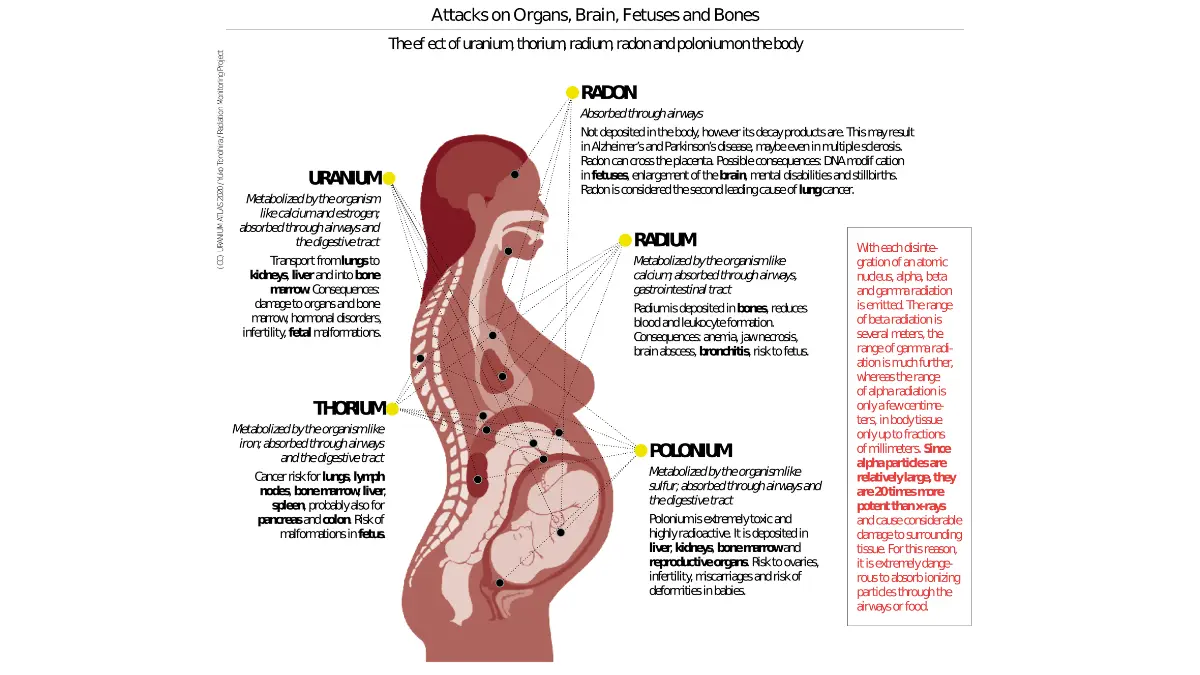
Radon gas is a naturally occurring radioactive gas produced by the decay of uranium found in soil, rock, and groundwater across the globe. It is colorless, odorless, and tasteless — completely undetectable by human senses.
Outdoors, radon disperses harmlessly into the atmosphere, typically at levels around 0.4 picocuries per liter (pCi/L) — too diluted to cause harm. The danger begins when radon enters an enclosed structure and accumulates to dangerous concentrations.
Where Radon Comes From: The Decay Chain
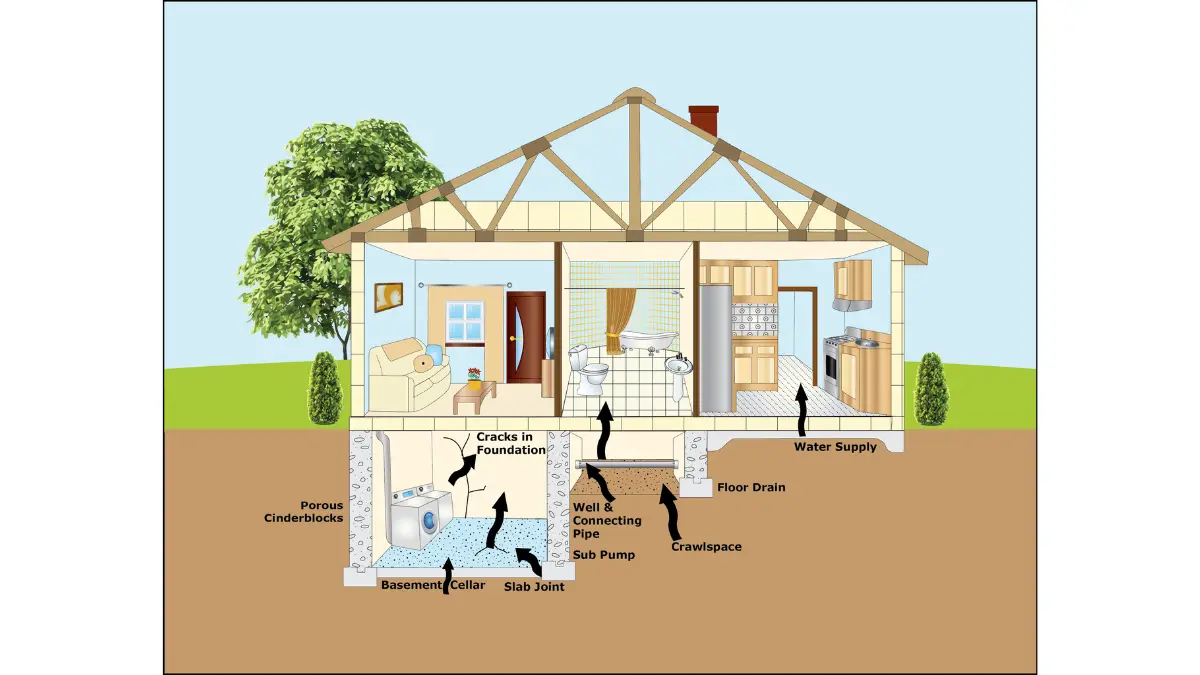
Uranium breaks down in the earth to form radium. Radium then decays into radon gas. That gas rises through soil and enters your home through:
- Cracks in foundation floors and walls
- Gaps around service pipes, sump pumps, and drains
- Construction joints in concrete
- Crawl spaces and unsealed basement floors
- Well water (in some rural areas)
How Radon Destroys Your Lungs: The Alpha Particle Mechanism
This is the critical science missing from virtually every competitor article — and it’s the reason radon is so dangerous.
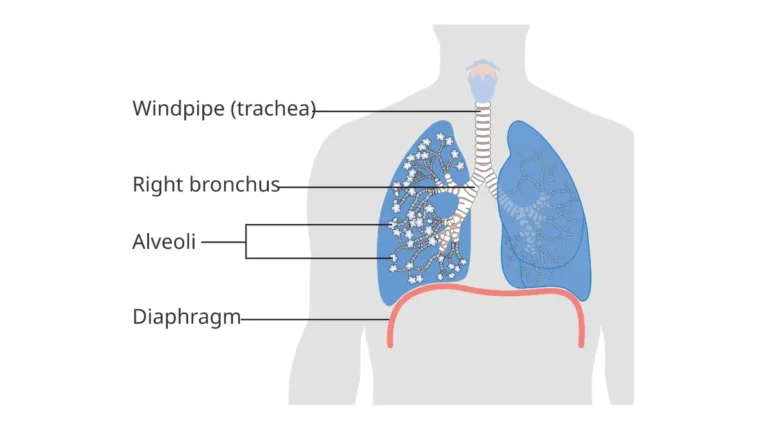
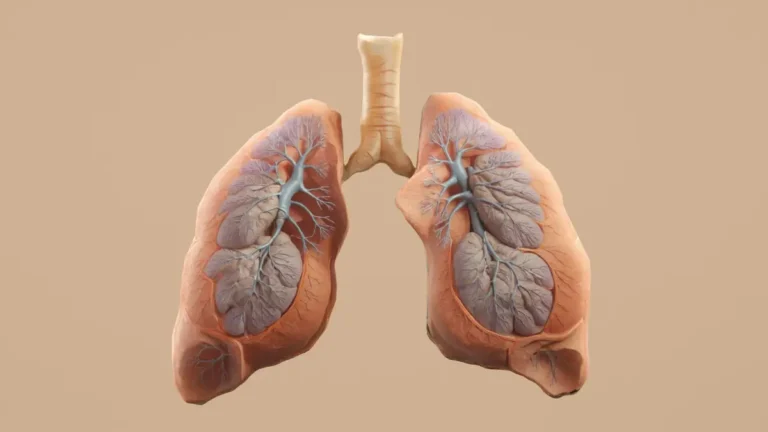
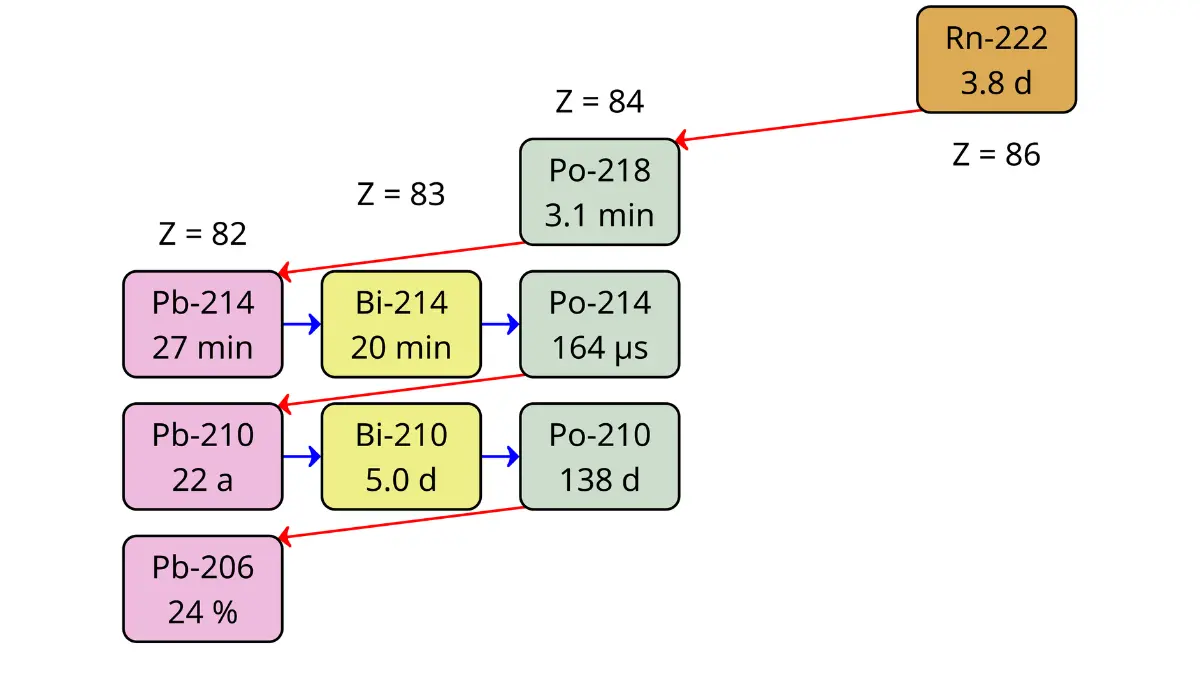
When radon gas is inhaled, it releases radioactive decay products called radon progeny (including polonium-218 and polonium-214). These microscopic particles lodge deep in the alveoli — the tiny air sacs of the lungs.
Once embedded, they fire alpha radiation directly into lung tissue. Think of it as invisible, silent bullets striking your lung cells repeatedly, day after day, year after year.
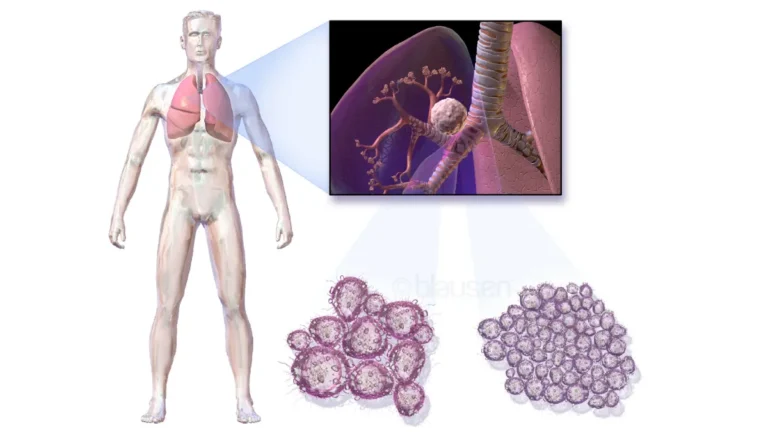
Over time, this alpha radiation breaks chemical bonds in DNA strands within lung cells. When those breaks are not repaired correctly, they can trigger the uncontrolled cell growth that defines cancer.
If you’ve been experiencing a persistent cough, shortness of breath, or chest tightness for an unexplained reason, use our Symptom Checker to assess whether your symptoms warrant medical attention.
⚠️ Key Takeaway: Radon doesn’t announce itself. There are no smells, no alarms, no warning signs. The only way to know your radon level is to test.
Radon Gas and Lung Cancer — The 2026 Science, Statistics & Global Consensus
The Numbers Every American Should Know
According to the National Cancer Institute, between 15,000 and 22,000 lung cancer deaths in the United States each year are directly attributable to radon gas exposure. The U.S. EPA’s central estimate places the figure at 21,000 deaths annually — making radon a deadlier indoor air threat than house fires, carbon monoxide, and most known indoor pollutants combined.
The International Agency for Research on Cancer (IARC) classified radon as a Group 1 human carcinogen — its highest certainty rating — as early as 1988. That classification has only been reinforced by decades of research since.
Radon exposure is the leading cause of lung cancer among people who have never smoked, according to the American Cancer Society. For a deeper understanding of how smoking compounds this risk, our guide on smoking and lung cancer explains the combined carcinogenic burden in detail.
The Risk Table No Competitor Shows You (2026)
This is the most actionable data most homeowners never see. Your risk is determined by both your radon level AND your smoking status.
| Radon Level | Never-Smoker Risk | Current Smoker Risk | Action Required? |
|---|---|---|---|
| 1.3 pCi/L (US average) | 2 in 1,000 | 20 in 1,000 | Test your home |
| 4 pCi/L (EPA action level) | 7 in 1,000 | 62 in 1,000 | Mitigate immediately |
| 8 pCi/L | ~15 in 1,000 | ~120 in 1,000 | Urgent mitigation |
| 20 pCi/L | ~36 in 1,000 | ~260 in 1,000 | Emergency action |
Source: U.S. EPA BEIR VI Risk Model / National Cancer Institute
A smoker living in a home with 4 pCi/L of radon has roughly a 1-in-16 lifetime risk of radon-induced lung cancer. That is not a theoretical number. That is a real, verifiable, evidence-backed probability.
How Long Does It Take?
This question is critically underserved in every top-ranking article. Radon-induced lung cancer has a latency period of 10 to 30 years. Cumulative exposure over this period — not a single incident — is what drives cancer risk.
This is why the man diagnosed at 58 may have been silently accumulating cellular damage since his early 40s. It is also why testing today is urgent, even if you feel perfectly healthy.
Cutting-Edge 2025 Research: Genetic Markers
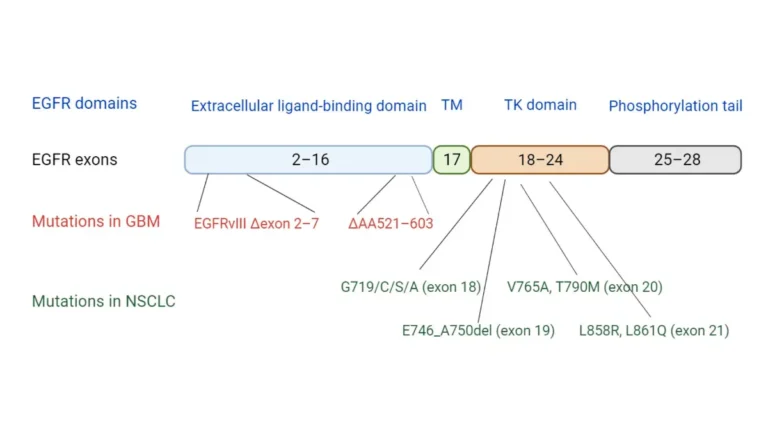
A May 2025 peer-reviewed study published in Biology (MDPI) identified specific genetic mutations — including in KRAS, EGFR, TP53, and RASSF1 genes — linked to radon-induced lung carcinogenesis. These findings are transforming how oncologists identify high-risk patients with radon exposure history and guiding early-detection protocols for 2026.
For a broader picture of all lung cancer risk factors beyond smoking, read our in-depth guide on causes of lung cancer beyond smoking, which covers radon, asbestos, air pollution, and genetic predispositions. If you want to assess your genetic cancer risk profile, our Genetic Risk Assessment Tool can help you understand your combined environmental and hereditary risk factors.
✅ What This Means For You: If you’ve lived in the same home for 10+ years and never tested for radon, your cumulative exposure is your biggest unknown health variable. Address it this week.
Is Your Home at Risk for Radon? The Complete Risk Assessment Guide
US Radon Zones: The States With the Highest Risk in 2026
The EPA divides the United States into three radon zones based on predicted average indoor radon levels. According to the EPA’s Map of Radon Zones, Zone 1 states — the highest risk — include:
- Iowa (highest average radon levels in the nation)
- Minnesota, North Dakota, South Dakota, Montana
- Colorado, Wyoming, Pennsylvania, Ohio
- Illinois, Indiana, Michigan, Wisconsin
Critically, elevated radon levels have been detected in all 50 states. No ZIP code is automatically safe.
4 Home Features That Dramatically Increase Radon Risk
| Risk Factor | Why It Matters |
|---|---|
| Basement or ground-floor primary living space | Radon enters from below; concentration is highest at lower levels |
| Granite or uranium-rich local geology | More radon in surrounding soil = more pressure pushing gas upward |
| Foundation cracks, gaps around pipes | Direct entry points for radon infiltration |
| Poor ventilation / sealed construction | Modern energy-efficient homes trap radon with less air exchange |
The Myth: New Homes Are Safe from Radon
This is one of the most dangerous misconceptions. Dr. Michael Bellamy, medical physicist at Memorial Sloan Kettering Cancer Center, confirms that radon levels are highly localized and depend on soil composition, not building age. A brand-new home on uranium-rich granite geology can have radon levels exceeding 10 pCi/L on day one.
Children in High-Radon Homes: The Hidden Crisis
This detail is absent from every major competitor article. Children breathe at a faster rate than adults and have smaller lung volumes — meaning they receive a proportionally higher dose of radon per body weight for the same air concentration. Some experts estimate children may face twice the lifetime lung cancer risk from the same radon exposure level compared to adults, as noted by WebMD’s clinical review.
Parents converting a basement into a child’s bedroom or playroom should test for radon before that change takes place.
Your Quick Radon Risk Checklist
Check any that apply to your home:
- ☐ Located in an EPA Zone 1 or Zone 2 state
- ☐ Home has a basement or ground-floor living area
- ☐ Home has never been tested for radon
- ☐ Visible cracks in foundation walls or floors
- ☐ Well water as the primary water source
- ☐ Children sleep in a basement or lower-level bedroom
- ☐ Home built before radon-resistant construction codes
If you checked 2 or more boxes, testing is not optional — it is urgent.
The American Lung Association estimates that 1 in every 15 US homes currently has radon levels at or above the EPA action level. Some states report 1 in 3. To learn more about the full spectrum of early signs of lung cancer that may accompany long-term radon exposure, our dedicated clinical guide covers every red flag. Women with prolonged radon exposure should also read our guide on lung cancer symptoms in women, which highlights symptoms that are frequently underdiagnosed in female patients.
✅ What This Means For You: Geography does not protect you. Test your specific home — not your neighbor’s home, not your county average. Your home is its own unique radon environment.
How to Test Your Home for Radon Gas — Step-by-Step 2026 Guide
Testing your home for radon is the single most important preventive health step most Americans will never take. According to the CDC’s radon testing guidance, testing is simple, affordable, and can be completed by any homeowner without professional help.
Short-Term vs. Long-Term Testing: Which Is Right for You?
| Test Type | Duration | Cost (2026) | Best For |
|---|---|---|---|
| Short-term DIY kit | 2–7 days | $15–$40 | Quick initial screen |
| Long-term DIY kit | 90+ days | $25–$50 | Most accurate annual average |
| Professional short-term | 2–7 days | $100–$300 | Home purchase/sale |
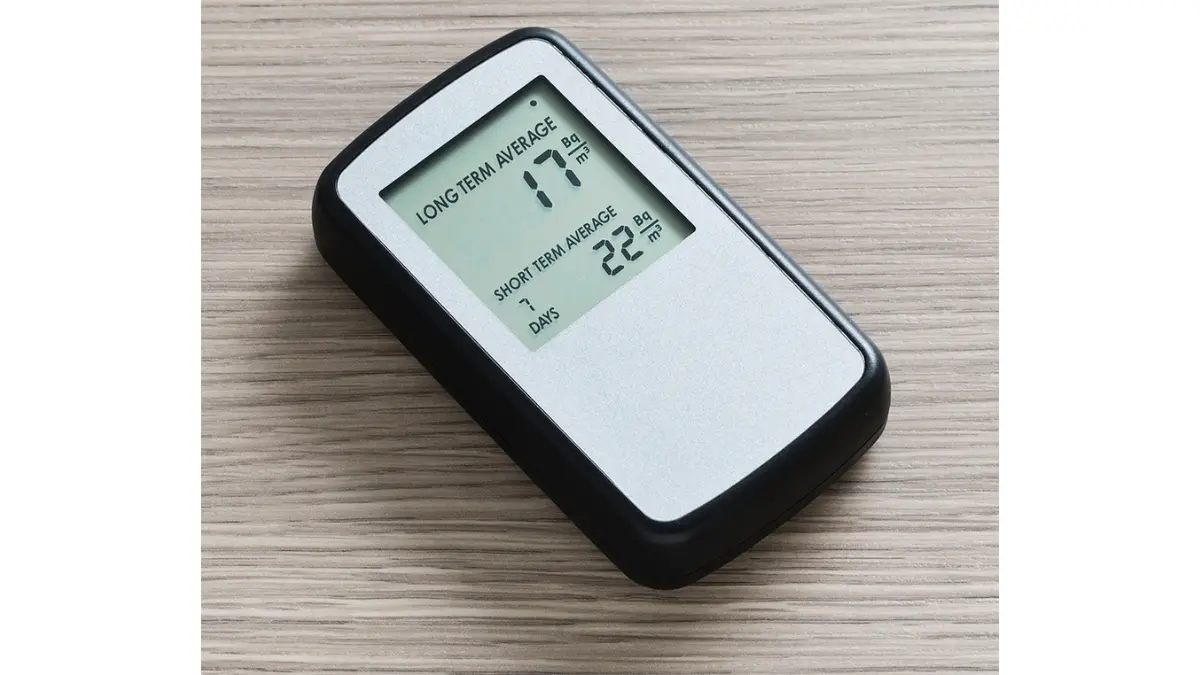
| Continuous electronic monitor | Real-time | $150–$300 (device) | Ongoing home monitoring |
Where Exactly to Place Your Radon Test Kit
Placement matters enormously. Follow these rules:
- Place in the lowest livable level of your home (basement, first floor, or ground level)
- Not in the kitchen, bathroom, or laundry room — moisture and airflow skew results
- Keep windows and doors closed for 12 hours before and during testing
- Leave in place for the full specified duration — do not move it
How to Read Your Radon Results
| Result (pCi/L) | Status | Action |
|---|---|---|
| Below 2.0 | 🟢 Low risk | Re-test every 2–5 years |
| 2.0–3.9 | 🟡 Moderate — consider action | Confirm with long-term test |
| 4.0–7.9 | 🔴 High — EPA action level | Hire certified mitigator |
| 8.0+ | 🔴🔴 Very high — urgent | Mitigate as a priority |
The National Radon Program Services at Kansas State University provides free and discounted test kits in many states and maintains a directory of certified radon testing professionals.
✅ What This Means For You: A $25 radon test kit from your local hardware store could be the most important $25 you spend this year. Schedule it today — not next month.
Radon Mitigation — How to Make Your Home Safe Starting Today
If your radon test returns a result at or above 4 pCi/L, the EPA recommends immediate professional mitigation. The good news: radon mitigation is highly effective and available in every US state.
Sub-Slab Depressurization: The Gold Standard Fix
The most effective and widely used method is active sub-slab depressurization (ASD). A licensed contractor installs a vent pipe through the foundation slab and connects it to a continuously running fan. This system pulls radon gas from beneath the home and vents it safely outdoors — where it disperses harmlessly.
Effectiveness: up to 99% reduction in indoor radon levels, according to the EPA’s health risk radon page.
2026 Radon Mitigation Cost Breakdown
| Method | Radon Reduction | Cost Range (2026) | Requires Professional? |
|---|---|---|---|
| Active sub-slab depressurization | Up to 99% | $1,000–$2,500 | Yes |
| Passive sub-slab (new builds) | 30–70% | $500–$1,000 | Recommended |
| Crawl space encapsulation | 50–80% | $1,500–$3,000 | Yes |
| Natural ventilation (temporary) | Variable | $0 | No |
| Crack sealing alone | Minimal | $50–$200 | No |
For advanced systems or complex home layouts, costs can reach $4,000. These figures reflect 2025–2026 contractor data from the University of Illinois Extension and industry surveys.
4 Dangerous Radon Myths — Busted Right Now
Myth 1: “My neighbor tested fine, so my home is safe.” ❌ FALSE. Radon levels vary dramatically house-to-house based on micro-geology, foundation type, and airflow. Your neighbor’s results tell you nothing about your home.
Myth 2: “Sealing cracks will solve my radon problem.” ❌ FALSE. Sealing alone provides minimal protection. Radon enters through pores in concrete, not just visible cracks. Active mitigation is required.
Myth 3: “Air purifiers remove radon gas.” ❌ FALSE. Standard HEPA and carbon air purifiers cannot capture radon gas molecules. Only sub-slab depressurization systems meaningfully reduce radon.
Myth 4: “New homes don’t have radon problems.” ❌ FALSE. Radon levels are determined by soil geology, not building age. New construction can have dangerous radon levels from day one without radon-resistant techniques.
Poor indoor air quality — including radon accumulation — can also significantly impair sleep quality. If you are monitoring your sleep during a mitigation period, our Sleep Calculator can help you track whether your rest is recovering as home air quality improves.
✅ What This Means For You: Radon mitigation is not a major renovation. It takes 1–2 days, costs less than a typical appliance repair, and reduces your lung cancer risk immediately.
Already Exposed to High Radon Levels? Your 2026 Lung Cancer Action Plan
You cannot undo past radon exposure. But you can take targeted steps to stop future damage and detect early lung changes before they progress.
Who Should Get Lung Cancer Screening in 2026?
The U.S. Preventive Services Task Force (USPSTF) currently recommends annual low-dose CT (LDCT) lung cancer screening for adults aged 50–80 who have a 20 pack-year smoking history and currently smoke or have quit within the past 15 years. Consult the USPSTF lung cancer screening recommendations for full eligibility criteria.
Critically: If you have never smoked but have spent years in a high-radon environment, discuss LDCT screening with your physician. Multiple pulmonology associations now recommend individualized screening conversations for non-smokers with documented prolonged high-radon exposure. For a complete overview of lung cancer including staging and survival data, our What Is Lung Cancer pillar article provides authoritative clinical context.
What to Tell Your Doctor
When you visit your physician, say this: “I’ve been exposed to radon levels of [X pCi/L] for approximately [Y years]. I’ve never smoked. Should I be considered for low-dose CT lung cancer screening?”
Document your test results and exposure duration. This information directly shapes screening eligibility and monitoring frequency. For reference on what survival looks like at different lung cancer stages, our lung cancer statistics and survival rates guide provides the latest 2026 SEER data. You can also use our Genetic Risk Assessment Tool before your appointment to evaluate how your genetic profile interacts with your radon exposure history.
Your 6-Step Post-Exposure Action Plan
Step 1 — 🔬 Test this week. Short-term kit, lowest living level, $15–$40.
Step 2 — 📊 Confirm elevated results. If result is ≥4 pCi/L, run a 90-day long-term test to confirm the annual average.
Step 3 — 🔧 Hire a certified mitigator. Find a licensed contractor via your state radon office or the National Radon Program.
Step 4 — 🔁 Re-test 24–48 hours post-mitigation. Verify your radon level dropped to below 2 pCi/L. Demand a written confirmation.
Step 5 — 🩺 Schedule a physician consultation. Share your radon history, exposure duration, and smoking status. Request a screening conversation.
Step 6 — 🫁 Ask about LDCT screening. If exposure was prolonged at ≥4 pCi/L for 10+ years, screening is a clinically reasonable conversation to have.
Staying well-hydrated supports lung mucosal health and overall cellular recovery. Use our Water Intake Calculator to ensure you are meeting your daily hydration targets, particularly during the weeks following mitigation when your indoor air quality is improving.
✅ What This Means For You: Early-stage lung cancer has a 5-year survival rate above 60%. Late-stage drops below 10%. The earlier you detect any change, the more options you have. Test now. Tell your doctor. Don’t wait.
Frequently Asked Questions About Radon Gas and Lung Cancer
Q1. What exactly is radon gas and where does it come from?
Radon is a naturally occurring radioactive gas produced when uranium in soil and rock decays. It rises through the ground and enters enclosed buildings through foundation cracks, gaps, and construction joints.
Q2. Can you smell or see radon gas in your home?
No. Radon is completely colorless, odorless, and tasteless. It is physically impossible to detect without a specific radon test kit or monitor. This is what makes it uniquely dangerous.
Q3. What radon level is considered dangerous?
The EPA recommends action at 4 pCi/L or above. However, the EPA also advises considering mitigation at levels between 2 and 4 pCi/L, as no radon level is fully risk-free with chronic exposure.
Q4. How long does it take for radon to cause lung cancer?
Radon-induced lung cancer typically develops after 10 to 30 years of cumulative high-level exposure. Short-term spikes cause far less risk than sustained elevated levels over years.
Q5. Do apartments and condos also have radon problems?
Yes. Radon levels can be elevated in any building at or below ground level, including ground-floor apartments, condominiums, and basement-level units. Ground-floor renters should request radon testing from landlords.
Q6. Is radon gas dangerous only in old homes?
Absolutely not. New homes can have high radon levels from day one, particularly in high-risk geological zones. Building age is not a reliable predictor of radon risk.
Q7. How much does a radon test kit cost in 2026?
Short-term DIY kits cost $15–$40 and are available at most hardware stores and online. Long-term kits cost $25–$50. Some state health departments offer free kits — check your state radon office.
Q8. Can radon gas be completely eliminated from a home?
Not entirely, but it can be reduced to safe levels. Active sub-slab depressurization systems reduce indoor radon by up to 99%, typically bringing levels below 2 pCi/L.
Q9. Do children face greater radon risk than adults?
Yes. Children breathe faster and have smaller lung volumes, resulting in a higher radon dose per unit of body weight compared to adults at equivalent air concentrations. Some research suggests children face up to twice the adult risk.
Q10. What is the difference between short-term and long-term radon testing?
Short-term tests (2–7 days) provide a quick snapshot and are good for initial screening. Long-term tests (90+ days) capture seasonal variation and provide a more accurate picture of your home’s actual annual average radon level.
Q11. I’ve been exposed to high radon levels for years — what should I do right now?
Mitigate your home immediately, then schedule a consultation with your physician to discuss your exposure history and whether low-dose CT lung cancer screening is appropriate for your individual risk profile.
Summary: What You Need to Do This Week
| Action | Cost | Time Required |
|---|---|---|
| Purchase a short-term radon test kit | $15–$40 | 15 minutes setup |
| Place kit in lowest livable area | $0 | 5 minutes |
| Wait for results | $0 | 2–7 days |
| If ≥4 pCi/L: hire certified mitigator | $1,000–$2,500 | 1–2 days |
| Re-test after mitigation | $15–$40 | 48 hours |
| Discuss with physician if exposure was prolonged | $0 (with insurance) | 1 appointment |
Radon gas is the most preventable cause of lung cancer in non-smoking Americans. The test costs less than a dinner out. The mitigation costs less than a used car. And the lung cancer it prevents? Priceless.
📋 Medical Disclaimer: This article is intended for educational purposes only and does not constitute medical advice, diagnosis, or treatment. Always consult a qualified, licensed healthcare professional for personalized medical guidance. If you are experiencing respiratory symptoms, seek medical evaluation promptly.
Article reviewed by the mymedicineadvisor.com Global Medical Advisory Board. Last updated: May 2026. Sources include the U.S. EPA, National Cancer Institute, American Cancer Society, Centers for Disease Control and Prevention, American Lung Association, Memorial Sloan Kettering Cancer Center, International Agency for Research on Cancer, and peer-reviewed literature via PubMed/NIH.
About this content
How this article was put together: researched from recognised health sources, drafted with the help of AI tools, and edited by hand, with sources linked throughout.

Sameer Patel is the founder and editor of My Medicine Advisor. He is not a doctor or medical professional — before starting this site he worked in banking,…
Medical disclaimer
The content on MyMedicineAdvisor is provided for general informational and educational purposes only and is not a substitute for professional medical advice, diagnosis, or treatment. Health information on this website should not be used to diagnose, treat, cure, or prevent any condition without guidance from a qualified healthcare professional. Always seek the advice of your doctor, physician, or another licensed healthcare provider with any questions you may have regarding a medical condition, symptoms, medications, or treatment decisions.