
On This Page – Quick Medical Summary
The Truth Nobody Tells You About Lung Cancer Causes
Ethan, a 47-year-old high school principal from Ohio, had never smoked in his life. He ran 5Ks on weekends, ate clean, and had no obvious health risks. When he was diagnosed with Stage II lung adenocarcinoma in 2024, his first question to his oncologist was: “How? I never smoked.”
His doctor’s answer changed everything: “Did you test your basement for radon?”
The answer was no. And the radon levels in Ethan’s 1960s-era home were four times the EPA’s safe limit.
What causes lung cancer? Smoking remains the leading cause — responsible for roughly 80–90% of lung cancer deaths, according to the CDC’s lung cancer risk factors page. But up to 20% of lung cancer cases in the United States occur in people who have never smoked a single cigarette. That translates to 20,000–40,000 Americans every year — people exactly like Ethan.
If lung cancer in never-smokers were classified as its own cancer type, it would rank as the 7th deadliest cancer on Earth, according to a 2025 systematic review published in NCBI.
This article covers the 9 scientifically proven causes of lung cancer beyond smoking — including the ones your doctor may never have mentioned.
Smoker vs. Never-Smoker Lung Cancer: They Are Not the Same Disease
Before exploring the risk factors, understand this critical distinction:
| Feature | Smoker-Related Lung Cancer | Never-Smoker Lung Cancer |
|---|---|---|
| Most Common Type | Squamous cell / Small cell | Adenocarcinoma |
| EGFR Mutation Rate | ~10% of cases | 52–74% (especially women) |
| Typical Diagnosis Age | 60s–70s | 40s–50s |
| Targeted Therapy Options | Lower likelihood | Significantly higher |
| Share of All US Cases | ~80–85% | 15–25% |
Understanding this difference matters enormously — because if you’re a never-smoker diagnosed with lung cancer, your tumor is biologically different and may respond better to precision-targeted therapies. Learn more about those distinctions in our full guide on NSCLC vs SCLC.
Radon Gas — The #1 Hidden Cause of Lung Cancer in Non-Smokers
What Is Radon and Why Is It So Dangerous?
Radon is a colorless, odorless, tasteless radioactive gas. You cannot see it. You cannot smell it. And it may be building up inside your home right now.
It forms naturally when uranium in soil and rock breaks down. Radon seeps up through the ground and can become trapped inside buildings — particularly in basements, ground floors, and older homes built before modern ventilation standards. Once inhaled, radon emits alpha radiation particles that directly damage the DNA in lung cells, triggering cancerous mutations.
How Much Risk Does Radon Actually Add?
According to the EPA’s official radon guidance, radon causes approximately 21,000 lung cancer deaths in the US each year. Among people who have never smoked, radon accounts for roughly 9% of all lung cancers — making it the single largest environmental cause of lung cancer in non-smokers.
Radon is classified as a Group 1 carcinogen by the International Agency for Research on Cancer (IARC) — the highest possible risk classification.
Is Your Home a Radon Risk Zone?
The highest-risk states include Iowa, Minnesota, Pennsylvania, Illinois, and Ohio — regions with high uranium content in soil. However, elevated radon has been detected in every US state. No home is automatically safe.
Your 4-Step Radon Action Protocol
- Step 1: Purchase a short-term radon test kit ($15–$30, available at hardware stores or online)
- Step 2: Place the kit in the lowest livable area of your home for 48–96 hours
- Step 3: Mail it to the lab. Results arrive in 2–3 weeks
- Step 4: If levels exceed 4 picocuries per liter (pCi/L), contact a certified radon mitigation contractor. Mitigation systems can reduce radon by up to 99%
✅ What This Means For You: Testing your home for radon is one of the most impactful actions you can take to reduce your lung cancer risk — and it costs less than a restaurant dinner. The EPA recommends every home below the third floor be tested at least once.
Workplace and Environmental Causes of Lung Cancer You Can’t Ignore
Asbestos — Still Killing Decades Later
Asbestos was widely used in construction, shipbuilding, and insulation materials until it was restricted in the 1970s and 1980s. Yet millions of older buildings still contain it. When asbestos fibers are inhaled, they lodge permanently in lung tissue and cause chronic inflammation that can trigger cancer 20–50 years later.
The risk is not just theoretical. People who worked in construction, manufacturing, mining, firefighting, and shipbuilding are at measurably elevated lifetime risk. If you were exposed to asbestos at work, read our companion article on asbestosis symptoms and delayed diagnosis risks — and talk to your doctor about whether you qualify for low-dose CT screening. Also note that asbestos exposure is the primary driver of mesothelioma, a separate but related cancer covered in our mesothelioma prevention and asbestos guide.
When combined with smoking, the lung cancer risk from asbestos multiplies dramatically — up to 50 times the baseline risk of a non-exposed, non-smoking individual.
Diesel Exhaust, Arsenic, and Industrial Chemicals
Several occupational carcinogens are confirmed IARC Group 1 causes of lung cancer:
- Diesel exhaust — affects truck drivers, miners, construction workers, railroad workers
- Arsenic — found in some groundwater supplies and certain industrial processes
- Chromium (VI) compounds — used in electroplating, welding, and pigment manufacturing
- Silica dust — affects sandblasters, quarry workers, and ceramics manufacturers
- Nickel compounds — found in metal refining and battery manufacturing
If you work in any of these industries, your employer is legally required to monitor carcinogen exposure levels under OSHA regulations. Request those monitoring reports. Use appropriate PPE at all times.
Air Pollution — The Global Silent Killer
A landmark September 2025 NIH genomic study found that high PM2.5 air pollution exposure was directly linked to shortened telomeres — the protective DNA caps on chromosomes — and a 3.9-fold increase in a mutational signature (SBS4) that is typically associated with tobacco smoking. This means air pollution can trigger the same genetic damage as cigarettes, in people who have never smoked.
Living near heavily trafficked roads significantly raises lung cancer risk. Air pollution accounts for approximately 8% of non-smoker lung cancers globally.
Cooking Fumes — The Most Overlooked Risk Factor
This is the gap that none of the top-ranking competitor websites cover — and it could be affecting millions of women right now.
Frying food at high temperatures releases carcinogenic compounds including benzopyrene, acrolein, and formaldehyde. The 2025 TALENT study from Taiwan — one of the largest screening trials for never-smoker lung cancer — identified cooking at high heat without proper ventilation as an independent lung cancer risk factor, particularly in women.
This risk is especially relevant for South Asian and East Asian women who frequently cook using high-heat methods (deep frying, stir-frying) without extractor fans. The solution is simple: always use a ventilation hood when cooking at high heat, and open windows whenever possible.
Non-Smoker Lung Cancer: Quantified Risk Factor Table
| Cause | % of Non-Smoker Lung Cancers | IARC Classification |
|---|---|---|
| Passive (secondhand) smoke | ~15% | Group 1 |
| Radon gas | ~9% | Group 1 |
| Air pollution (PM2.5) | ~8% | Group 1 |
| Asbestos | ~8% | Group 1 |
| Occupational chemicals | ~5% | Group 1 (varies by agent) |
| Cooking fumes | Emerging — under-quantified | Group 2A |
Source: NCBI 2025 systematic review on lung cancer in never-smokers
✅ What This Means For You: If you work in a high-risk occupation, request OSHA exposure records. If you cook frequently at high heat — turn on that extractor fan, every single time.
Genetics, EGFR Mutations, and Molecular Causes of Lung Cancer
Is Lung Cancer Hereditary?
Yes — family history is a real and measurable risk factor. According to Johns Hopkins Medicine, having one first-degree relative (parent, sibling, or child) with lung cancer doubles your lifetime risk. Having two or more first-degree relatives with lung cancer raises the risk even further.
Germline mutations (inherited DNA changes) associated with elevated lung cancer risk include:
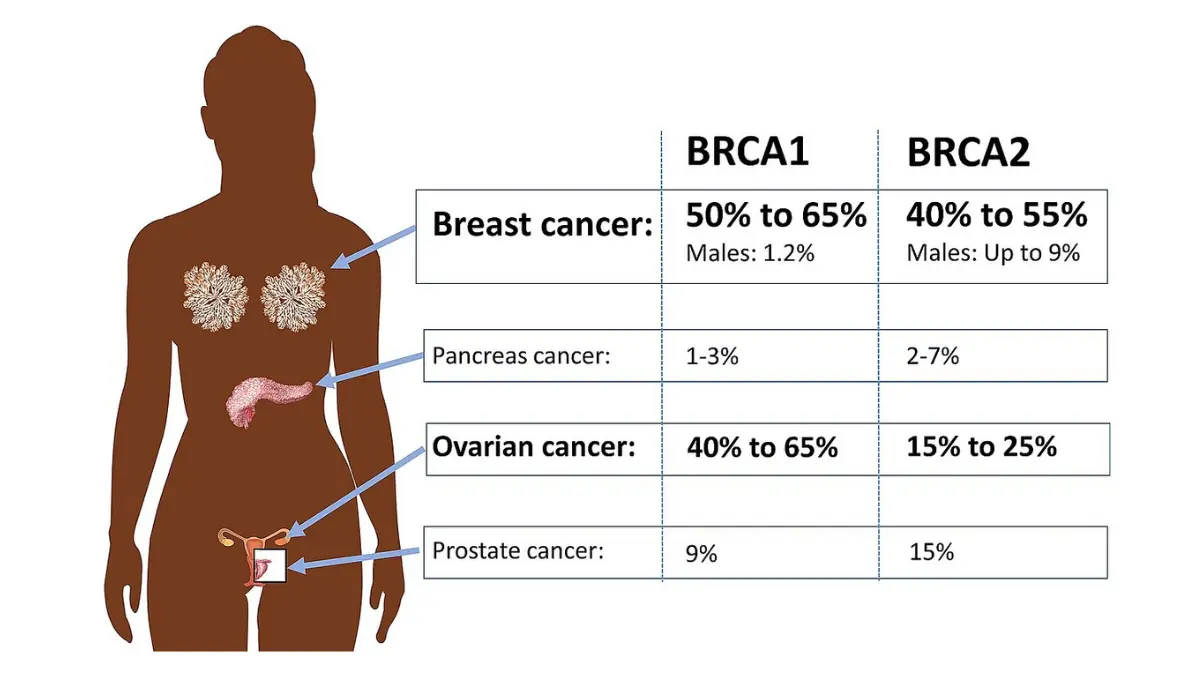
- BRCA1 and BRCA2 — typically known for breast and ovarian cancer, but also linked to lung cancer susceptibility
- CHEK2 and ATM — DNA damage response genes
- TP53 — the “guardian of the genome,” when mutated, dramatically increases cancer risk across multiple organs
If lung cancer runs in your family, use our Genetic Risk Assessment Tool to evaluate your inherited risk profile and bring those results to your doctor.
What Are EGFR Mutations and Why Do They Matter?
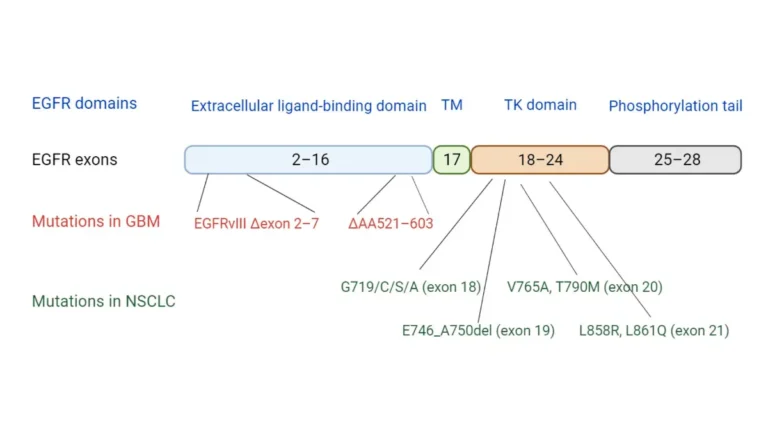
EGFR (Epidermal Growth Factor Receptor) mutations are the most common driver mutation found in never-smoker lung cancers. They are found in:
- 52–74% of never-smoking East Asian women with lung adenocarcinoma
- ~40% of never-smoking women in Western populations
- Only ~10% of smoking-related lung cancers
Here is what makes this critically important: EGFR-mutant lung cancers respond exceptionally well to targeted therapy drugs called TKIs (tyrosine kinase inhibitors) — including osimertinib, gefitinib, and erlotinib. This means if you’re a never-smoker diagnosed with lung adenocarcinoma, you are far more likely to have a mutation that responds dramatically better than standard chemotherapy.
According to the American Cancer Society’s lung cancer causes page, never-smokers with lung cancer should always request full biomarker/genomic testing at diagnosis — not just standard pathology. This is non-negotiable.
ALK, RET, and ROS1 — The Other Driver Mutations
Beyond EGFR, three additional mutations are more common in never-smokers:
- ALK rearrangements — found in ~5% of NSCLC, predominantly in younger non-smokers; responds to alectinib and brigatinib
- RET fusions — emerging targeted treatments available as of 2026 (selpercatinib)
- ROS1 rearrangements — rare but highly responsive to crizotinib and entrectinib
As confirmed by Yale Medicine’s lung cancer in nonsmokers overview, every never-smoker diagnosed with NSCLC should receive comprehensive molecular profiling — it directly determines their treatment roadmap. See our article on lung cancer stages explained to understand how molecular subtype affects staging and treatment decisions.
Gender, Age, and Ethnicity in Lung Cancer Causes
- Women who have never smoked are at higher risk of LCINS (lung cancer in never-smokers) than men who have never smoked
- East Asian populations have the highest global rates of never-smoker lung cancer — some studies show up to 50% of East Asian lung cancer patients have never smoked
- Age of diagnosis in never-smokers: typically 40s–50s, compared to 60s–70s in smokers
- Adenocarcinoma accounts for 60–80% of never-smoker lung cancers vs. ~40% in smokers
For a deeper look at how these risk factors specifically affect women, read our dedicated article on lung cancer symptoms in women.
✅ What This Means For You: If you are a woman, have a family history of lung cancer, or are of East Asian descent — you carry elevated baseline risk even as a non-smoker. Genetic counseling and proactive screening conversations with your doctor are warranted.
Prior Disease, Lifestyle, and Other Modifiable Risk Factors
Prior Lung Disease Dramatically Increases Risk
Having certain pre-existing lung conditions significantly raises your baseline lung cancer risk, independent of smoking:
- COPD (Chronic Obstructive Pulmonary Disease): The chronic inflammation associated with COPD increases lung cancer risk even in non-smokers
- Pulmonary fibrosis: Scarring of lung tissue creates a pro-inflammatory environment that can seed cancerous mutations
- Tuberculosis (TB): A prior TB infection is an independent risk factor, particularly relevant in South and Southeast Asian populations; scar tissue from healed TB lesions can become sites of malignant transformation
- Prior radiation therapy to the chest: Survivors of Hodgkin’s lymphoma and other chest-area cancers who received radiation therapy face measurably elevated lung cancer risk decades later, as confirmed by the NCI’s lung cancer overview
Does Diet Affect Lung Cancer Risk?
Evidence from multiple large cohort studies supports the following:
- Higher fruit and vegetable intake is consistently associated with reduced lung cancer risk, particularly cruciferous vegetables (broccoli, Brussels sprouts) rich in sulforaphane
- Beta-carotene supplements — paradoxically — have been shown to increase lung cancer risk in smokers and former smokers in clinical trials; never take high-dose beta-carotene if you smoke or have smoking history
- Red and processed meat consumption shows emerging associations with elevated lung cancer risk
- Obesity is being studied as a modifier — while not a direct cause, it may affect inflammatory pathways relevant to carcinogenesis
For overall wellness tracking that supports a cancer-risk-reduction lifestyle, use our Water Intake Calculator and BMI Calculator to monitor key health metrics.
Immune System, HIV, and Organ Transplant Status
Immunocompromised individuals face significantly elevated lung cancer incidence:
- HIV-positive individuals have a 2–4x higher lung cancer risk even after controlling for smoking status
- Solid organ transplant recipients on long-term immunosuppression have elevated cancer risk across multiple organs including lungs
- This immune dysregulation category is almost entirely absent from competitor articles — yet affects millions of Americans
Modifiable vs. Non-Modifiable Risk Factors: Quick Reference
| Risk Factor | Can You Change It? | Action to Take |
|---|---|---|
| Radon exposure | ✅ Yes | Test your home; install mitigation system if >4 pCi/L |
| Secondhand smoke | ✅ Yes | Eliminate exposure completely |
| Occupational carcinogens | ✅ Partial | Use PPE; request OSHA monitoring records |
| Cooking fumes | ✅ Yes | Use ventilation hood every time at high heat |
| Air pollution | ✅ Partial | Monitor local AQI; consider indoor HEPA air purifier |
| Family history / EGFR | ❌ No | Genetic counseling; proactive CT screening discussion |
| Prior lung disease / TB | ❌ No | Regular pulmonologist follow-up; low-dose CT if eligible |
| Gender / ethnicity | ❌ No | Awareness; earlier screening conversations |
Secondhand Smoke, Hormones, and Emerging Risk Factors
Secondhand Smoke: Still Underestimated
Secondhand smoke exposure accounts for approximately 15% of non-smoker lung cancers — the single largest attributable fraction among identified non-smoking causes, according to CDC data on lung cancer in never-smokers.
Living with a smoker increases your lung cancer risk by 20–30% compared to someone with no household smoking exposure. The same carcinogens in mainstream smoke — including benzene, formaldehyde, and polycyclic aromatic hydrocarbons — are present in sidestream smoke, often at higher concentrations.
There is no safe level of secondhand smoke exposure.
Hormone Factors in Women
Emerging research has identified estrogen receptor expression in a subset of lung adenocarcinomas, predominantly in women who have never smoked. While the mechanism is not fully established, some studies suggest:
- Longer duration of estrogen exposure (earlier menarche, later menopause) may influence lung adenocarcinoma risk
- Hormone replacement therapy (HRT) is under continued investigation as a potential modifier
- This research is ongoing, but it adds another dimension to the gender disparity seen in never-smoker lung cancer
Burning Biomass Fuels Indoors
In rural communities across the US and globally, burning wood, coal, or crop waste for heating and cooking indoors generates significant particulate matter exposure. While more commonly discussed in international contexts, this risk applies to parts of Appalachia and rural America as well. Indoor biomass combustion produces many of the same carcinogenic compounds as tobacco smoke.
What to Do Now — Your 2026 Lung Cancer Risk-Reduction Action Plan
Who Should Be Screened for Lung Cancer?
Current USPSTF 2024 screening guidelines recommend annual low-dose CT (LDCT) scans for:
- Adults aged 50–80 years
- With a 20 pack-year smoking history
- Who currently smoke or quit within the past 15 years
However, advocacy groups and oncologists are increasingly pushing to extend LDCT screening eligibility to high-risk never-smokers — including those with strong family history, known EGFR mutations, or significant radon/occupational exposure. Talk to your doctor if you fall into any of these categories.
For reference on what survival outcomes look like when lung cancer is caught early vs. late, our lung cancer statistics and survival rates guide provides a full breakdown. Stage I five-year survival is approximately 92% (NCI data). Stage IV drops to approximately 10%. Early detection is the single most powerful tool available.
Red Flag Symptoms — When to See a Doctor Immediately
Do not wait for a scheduled check-up if you experience any of the following. Use our Symptom Checker to evaluate your symptoms, then see a doctor urgently:
- Persistent cough lasting 3+ weeks that is new or worsening
- Coughing up blood (even a small amount)
- Unexplained weight loss of 10+ pounds in 2 months
- Chest pain that worsens with deep breathing or coughing
- Hoarseness of voice without obvious cause
- Shortness of breath during activities that were previously easy
- Recurring respiratory infections (pneumonia, bronchitis) without clear explanation
These are the early warning signs covered in detail in our article on early signs of lung cancer and lung cancer signs and early warnings.
Your 7-Step Lung Cancer Risk-Reduction Checklist for 2026
- Test your home for radon — buy a $15–$30 kit, test your basement and lowest livable floor, act if levels exceed 4 pCi/L
- Eliminate secondhand smoke exposure completely — insist on smoke-free environments at home and in the car
- Know your family history — document all first-degree relatives who had lung, breast, or any other cancer
- Request annual low-dose CT screening if you’re 50+, have significant smoking history, or have multiple non-smoking risk factors
- Use a ventilation hood every time you cook at high heat — especially during frying and high-temperature stir-frying
- Avoid beta-carotene supplements if you currently smoke or have a significant smoking history
- If diagnosed with lung cancer — never accept treatment without full biomarker/genomic testing — your mutation profile directly determines whether targeted therapy or immunotherapy is appropriate for you
For more evidence-based guidance on overall lung health and general wellness, visit our Health Tips library and explore the comprehensive What Is Lung Cancer pillar article for full topical context.
The American Lung Association’s lung cancer resource center is also an excellent patient-facing resource for navigating diagnosis and treatment support.
Frequently Asked Questions About Lung Cancer Causes
1. Can you get lung cancer if you’ve never smoked?
Yes. Between 20,000 and 40,000 Americans who have never smoked are diagnosed with lung cancer each year. Radon, air pollution, secondhand smoke, genetics, and occupational exposures are all proven causes of lung cancer in non-smokers.
2. What is the #1 cause of lung cancer in non-smokers?
Secondhand smoke is the largest attributable cause (~15%), followed closely by radon gas (~9%), air pollution (~8%), and asbestos (~8%) among never-smoker lung cancer cases.
3. Is lung cancer hereditary or genetic?
Yes. Having one first-degree relative with lung cancer doubles your risk. Germline mutations including BRCA1, CHEK2, ATM, and TP53 are associated with elevated inherited lung cancer susceptibility.
4. Does air pollution cause lung cancer?
Yes. A 2025 NIH study confirmed that high PM2.5 exposure triggers the same DNA mutational signatures found in smokers, even in people who have never smoked. Living near heavy traffic increases your risk.
5. Can secondhand smoke cause lung cancer?
Yes. Secondhand smoke contains the same IARC Group 1 carcinogens as direct tobacco smoke and accounts for approximately 7,300 US lung cancer deaths per year among never-smokers.
6. What is an EGFR mutation in lung cancer?
EGFR is a gene that, when mutated, drives uncontrolled lung cell growth. It is found in 52–74% of never-smoking East Asian women with lung adenocarcinoma. Critically, EGFR-mutant cancers respond very well to targeted therapy drugs, making biomarker testing essential at diagnosis.
7. Does asbestos always cause lung cancer?
No. Not every asbestos exposure leads to lung cancer, but the risk is real and cumulative. Risk is highest with prolonged high-level exposure and rises sharply if combined with smoking.
8. Can cooking fumes cause lung cancer?
Emerging evidence says yes — particularly for women who frequently cook at high heat without ventilation. The 2025 TALENT trial identified cooking fumes as an independent lung cancer risk factor in never-smoking women.
9. What are the earliest warning signs of lung cancer?
A new or worsening cough lasting 3+ weeks, coughing up blood, unexplained weight loss, chest pain, and recurring chest infections are the most critical early warning signs. See a doctor promptly if any of these develop.
10. Who should get screened for lung cancer in 2026?
USPSTF guidelines recommend annual LDCT screening for adults aged 50–80 with a 20 pack-year smoking history. High-risk never-smokers — particularly those with family history, EGFR mutations, or significant radon exposure — should discuss screening eligibility with their physician.
11. Can lung cancer be prevented if you don’t smoke?
While no prevention is absolute, testing your home for radon, avoiding secondhand smoke, minimizing occupational carcinogen exposure, cooking with ventilation, and knowing your family history can meaningfully reduce your non-smoking lung cancer risk.
⚕️ This content is produced for educational purposes only. It is not a substitute for professional medical diagnosis, advice, or treatment. If you are experiencing symptoms or have concerns about your lung cancer risk, please consult a licensed physician.
About this content
How this article was put together: researched from recognised health sources, drafted with the help of AI tools, and edited by hand, with sources linked throughout.

Sameer Patel is the founder and editor of My Medicine Advisor. He is not a doctor or medical professional — before starting this site he worked in banking,…
Medical disclaimer
The content on MyMedicineAdvisor is provided for general informational and educational purposes only and is not a substitute for professional medical advice, diagnosis, or treatment. Health information on this website should not be used to diagnose, treat, cure, or prevent any condition without guidance from a qualified healthcare professional. Always seek the advice of your doctor, physician, or another licensed healthcare provider with any questions you may have regarding a medical condition, symptoms, medications, or treatment decisions.