
On This Page – Quick Medical Summary
If you have noticed blood in the toilet, a change in your bathroom habits, or stomach pain that won’t settle, your question is reasonable: do these colon cancer symptoms mean you need a colonoscopy? The honest answer has two parts, and you need both.
The symptoms below deserve a doctor’s evaluation — sometimes promptly, even if you are under 45. But the absence of symptoms does not mean you are clear, because early colorectal cancer usually causes no symptoms at all.
Route yourself as you read. Passing large amounts of blood, or unable to pass stool or gas? Skip to the emergency section now. Have a symptom lasting more than a few days or weeks? The decision section is for you. No symptoms, but here from worry? The screening section matters most.
One note on language: “colon cancer” and “colorectal cancer” overlap. The colon and rectum are screened and evaluated together, and several warning signs below point more to the rectum than the colon.
ℹ️ Medical Disclaimer: This article is general health education — not medical advice, diagnosis, or treatment. The symptoms, screening guidance, and statistics here cannot tell you whether you personally have colon or rectal cancer, when you specifically should be screened, or which test is right for you. Only a clinical evaluation can do that. Speak with a board-certified primary care physician or gastroenterologist before acting on anything below, and seek emergency care for severe symptoms. Any product or test mentioned is for general information and is not a clinical recommendation.
The colon cancer symptoms to take seriously
Colorectal cancer can be present with no symptoms, but when it does cause them, the signs of colon cancer most often reported include:
- A change in bowel habits — diarrhea, constipation, or stools that become narrower — lasting more than a few days
- A feeling that you still need to pass stool that isn’t relieved by going (called tenesmus)
- Rectal bleeding or blood in the stool
- Cramping or persistent abdominal pain
- Weakness or fatigue
- Unintended weight loss
These are drawn from the American Cancer Society’s list of colorectal cancer symptoms.
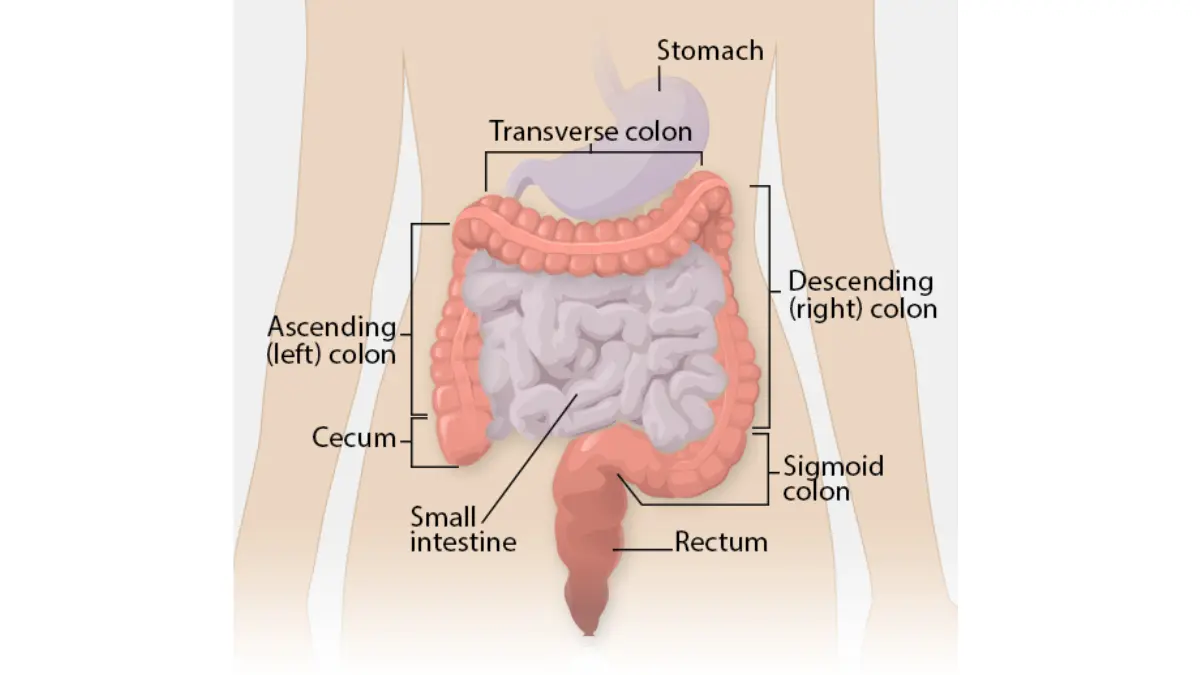
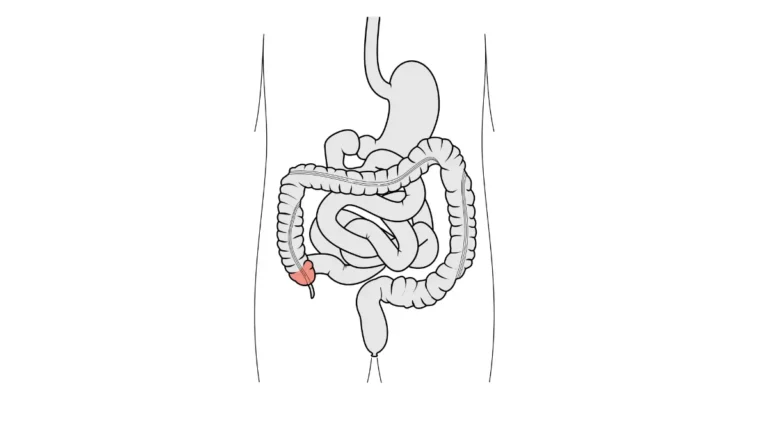
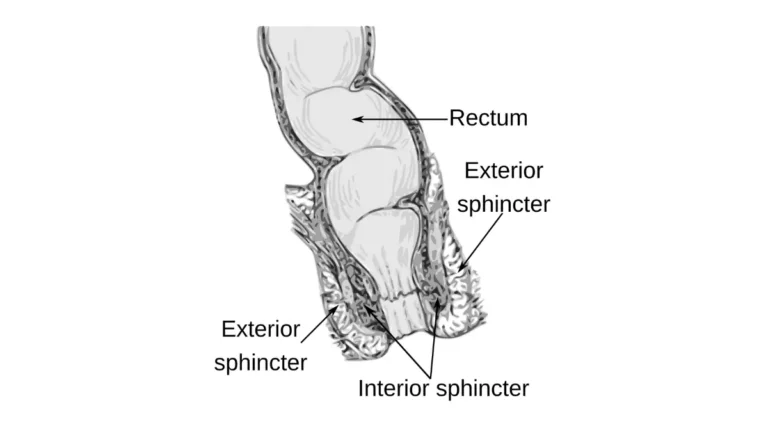
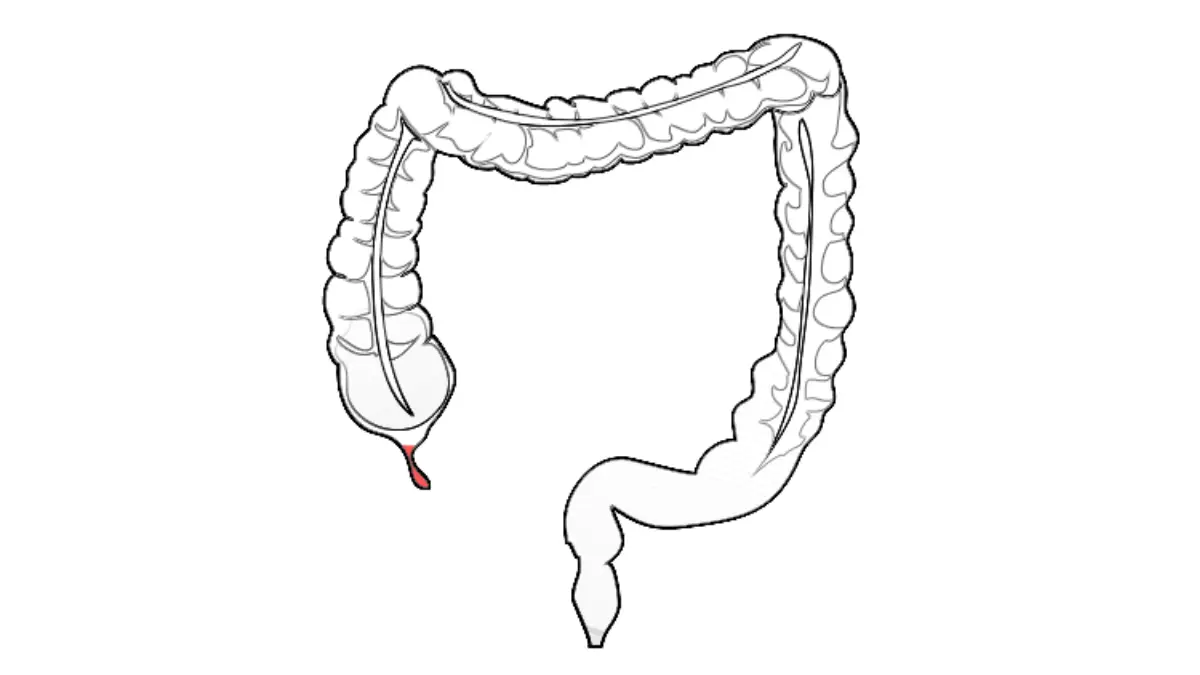
Adapted from Wikimedia Commons/Colon_illustration_lg.jpg, licensed under CC BY-SA 4.0.
Changes in bowel habits and stool shape
A short bout of diarrhea or constipation is normal. What matters is a change that persists, or a stool that turns consistently thin or ribbon-like. Many of these cancers begin as growths called polyps — and understanding what colon polyps mean for cancer risk is part of why bowel changes get attention.
🔬 How It Works: A tumor growing on the inner wall of the colon or rectum can narrow the channel stool moves through. As the opening shrinks, stool may flatten into a pencil-thin or ribbon shape, and the urge to go can persist even after the bowel is empty.
Bleeding: bright red, dark, or hidden
Bright red blood usually means bleeding low down, near the rectum. Darker or tarry stool can mean bleeding higher up that has been partly digested. Sometimes blood is present but the stool still looks completely normal.
Whole-body signs: fatigue, anemia, weight loss
Slow, unseen bleeding can drain the body’s iron over time, producing iron-deficiency anemia. That’s why unexplained fatigue, weakness, or breathlessness can be the first clue — before anything changes in the toilet.
Which symptoms mean it’s time for a colonoscopy
As a general guide, symptoms that persist longer than a few weeks — or rectal bleeding at any point — are reasons to see a clinician rather than wait. Screening for average-risk adults begins at age 45, but symptoms can warrant evaluation at any age; here’s why screening starts at age 45.
How long symptoms should last before you act
A single off day is rarely cause for alarm. A symptom that is new, persistent, and unexplained — lasting beyond a couple of weeks — is worth a conversation with your doctor.
Red-flag combinations that warrant prompt evaluation
Bleeding combined with a change in bowel habits, unexplained weight loss, or persistent abdominal pain is a pattern clinicians take seriously. The more of these that appear together, the less they should be put off.
⚠️ Clinical Warning: Rectal bleeding is never “normal,” and it cannot be reliably told apart from a more serious cause on your own — even if you have hemorrhoids. Any blood in the stool or toilet warrants medical evaluation rather than watchful waiting.
What to ask your doctor (including under 45)
If you are younger than 45 and have these symptoms, you can still ask whether a colonoscopy is appropriate. The American Cancer Society explicitly advises raising the question even below the screening age.
✅ Patient Action: Bring a written timeline to your appointment — when each symptom started, how often it happens, and what makes it better or worse — and ask your primary care physician or a gastroenterologist directly: “Given these symptoms, should I have a colonoscopy?”
No symptoms? You may still need a colonoscopy
Yes — you can have colorectal cancer, or the polyps that precede it, with no symptoms at all. That is the entire reason screening exists: to find disease before it can be felt, when it is most treatable. This is the logic behind getting a colonoscopy even with no symptoms.
Why early colorectal cancer is usually silent
🔬 How It Works: Most colorectal cancers begin as a small growth called a polyp on the colon’s inner lining. A polyp can take years to turn cancerous, and during that time it usually produces no sensation — so screening aims to find and remove polyps before they ever become cancer.
When screening starts: age 45 for average risk
For adults at average risk, both the U.S. Preventive Services Task Force screening recommendation and the American Cancer Society advise screening from age 45 through 75.
📊 Clinical Data Point: Average-risk screening now begins at age 45 — lowered from 50 by the American Cancer Society in 2018 and by the U.S. Preventive Services Task Force in 2021, in response to rising colorectal cancer in younger adults. — Source: USPSTF (2021); ACS (2018)
Colonoscopy vs. stool-based tests
A colonoscopy examines the entire colon and rectum and can remove polyps during the same procedure, which is why it’s considered the most thorough screening test; if you’re weighing it, here’s how to prepare for a colonoscopy. Stool-based tests done at home are another option — but a positive result still needs a follow-up colonoscopy, and stool tests are not a substitute when you already have symptoms. The pillar guide compares colonoscopy prep, cost, results, and which test you need.
Colon cancer vs. hemorrhoids, IBS, and other common causes
Most people with these symptoms do not have cancer. Bleeding, cramping, and bowel changes are far more often caused by hemorrhoids, irritable bowel syndrome, infections, or inflammatory bowel disease. The difficulty is that you cannot reliably tell which is which on your own.
Why bleeding isn’t always hemorrhoids
Hemorrhoid bleeding tends to come and go with flare-ups, while bleeding from a tumor more often persists or worsens. Those patterns overlap enough that bleeding always deserves evaluation.
IBS vs. colon cancer: overlapping symptoms
IBS and colorectal cancer can share cramping, diarrhea, and constipation. IBS itself does not cause rectal bleeding, unexplained weight loss, or anemia — so those particular signs point away from IBS and toward something that should be investigated.
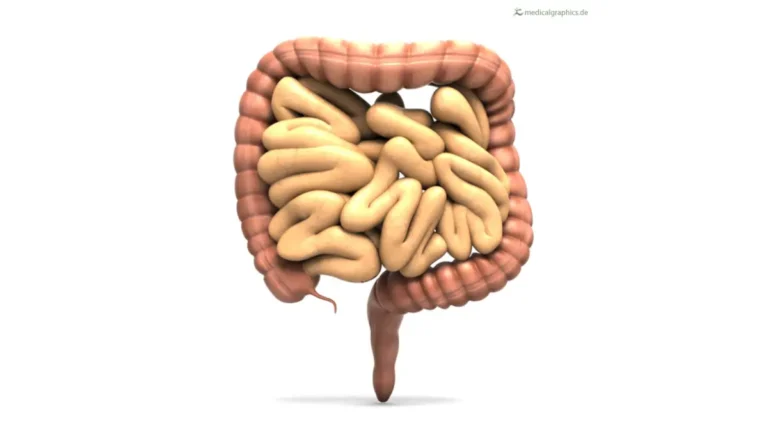
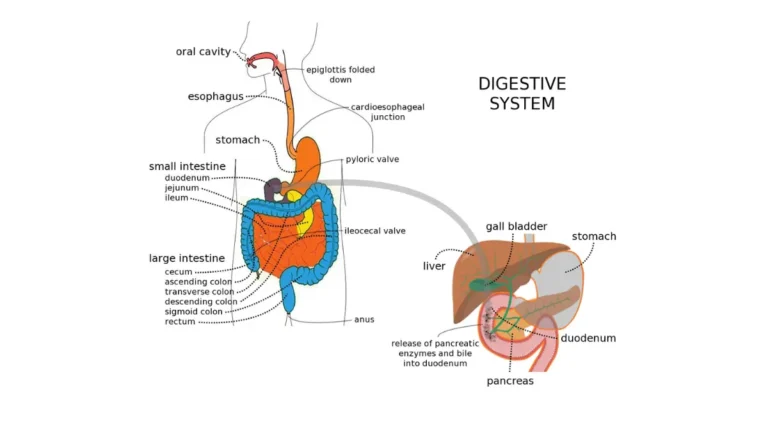
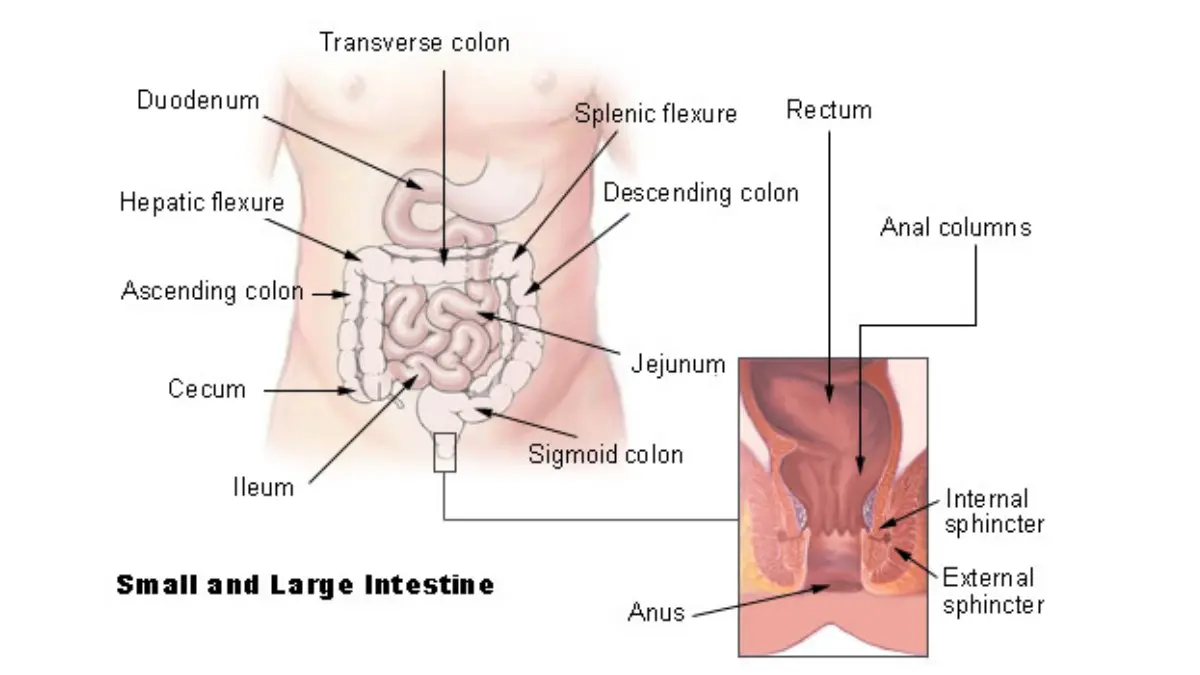
Adapted from Wikimedia Commons/Intestine-diagram.svg, licensed under Public Domain.
When ‘probably benign’ still needs a look
✅ Patient Action: Even if you’re sure it’s hemorrhoids, have any rectal bleeding looked at by a clinician — and organize what you’re noticing with a symptom checker before your visit so you can describe the pattern clearly.
Why younger adults can’t ignore these symptoms
The idea that colon cancer only affects older adults is outdated, and that matters for how seriously a younger person should treat symptoms.
Colorectal cancer is rising in adults under 50
📊 Clinical Data Point: In adults aged 20–49, colorectal cancer incidence has been rising about 3% per year (2013–2022), and colorectal cancer is now the leading cause of cancer death in U.S. adults under 50. — Source: American Cancer Society, Colorectal Cancer Statistics 2026 (SEER data)
About 1 in 5 colorectal cancer diagnoses now occur in people under 55. For a closer look at this group, see colon cancer symptoms in adults under 50. Across all ages, about 1 in 25 men and 1 in 26 women will be diagnosed in their lifetime.
Who is at higher risk
Risk is higher with a family history of colorectal cancer or polyps, inflammatory bowel disease, or inherited syndromes such as Lynch syndrome and familial adenomatous polyposis. Incidence is highest among American Indian, Alaska Native, and Black Americans.
When to start screening earlier than 45
✅ Patient Action: If a parent or sibling has had colorectal cancer or polyps, or you have inflammatory bowel disease, ask your doctor when you should start screening — it may be before 45 — and map your risk factors with a genetic risk assessment beforehand.
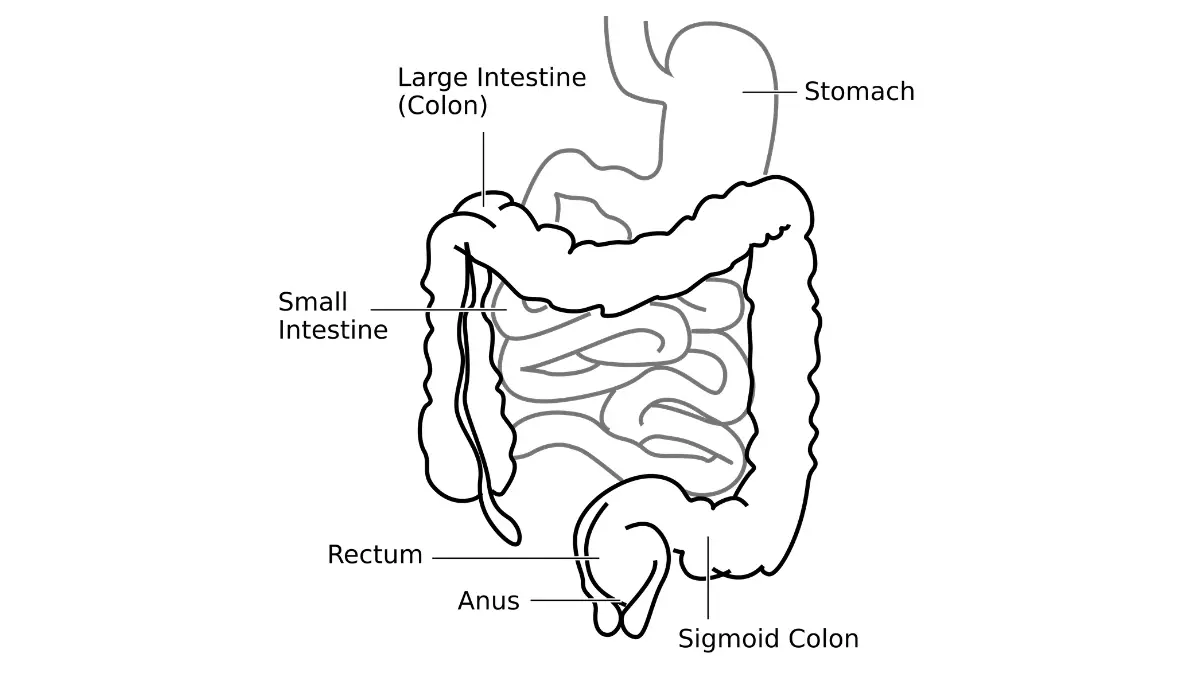
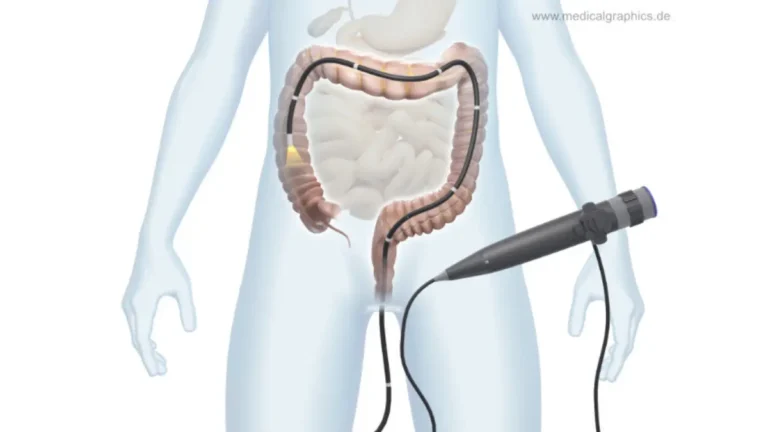
Adapted from Wikimedia Commons/2420_Large_Intestine.jpg, licensed under CC BY 3.0.
Symptoms that need emergency care, not a wait
Most colorectal symptoms call for a scheduled appointment, not an emergency room. A few do not.
Signs of a possible bowel obstruction
⚠️ Clinical Warning: Severe abdominal cramping with vomiting, bloating, and an inability to pass stool or gas can signal a bowel obstruction — a medical emergency. These symptoms need immediate care, not watchful waiting.
A blockage can stop waste and gas from moving through the bowel, and it requires urgent evaluation rather than a wait-and-see approach.
When bleeding is an emergency
Small amounts of blood warrant a doctor’s visit. Large amounts of rectal blood, or bleeding alongside dizziness or weakness, warrant emergency evaluation.
✅ Patient Action: If you’re passing a large amount of blood, vomiting and unable to keep fluids down, or have severe abdominal pain with no bowel movement or gas, go to an emergency department or call emergency services now.
Colon cancer symptoms and colonoscopy: common questions
1. What are the first signs of colon cancer?
Early colon cancer often has no first signs at all. When symptoms appear, common ones include a change in bowel habits lasting more than a few days, rectal bleeding, narrow stools, cramping, fatigue, or unexplained weight loss. Because these overlap with benign conditions, persistent symptoms should be evaluated by a clinician.
2. Can you have colon cancer without any symptoms?
Yes. Early colorectal cancer and the polyps that precede it usually cause no symptoms, which is exactly why screening is recommended even when you feel healthy. Screening can remove polyps before they become cancer, or catch cancer early. Average-risk screening begins at age 45.
3. Does blood in stool always mean cancer?
No. Blood in the stool is more often caused by hemorrhoids, fissures, or inflammation than by cancer. But blood is never considered normal, and it cannot be reliably distinguished from a serious cause on your own. Any rectal bleeding should be evaluated by a clinician.
4. At what age should I get a colonoscopy?
For adults at average risk, screening begins at age 45 and continues through 75, per the U.S. Preventive Services Task Force and the American Cancer Society. People with a family history, inflammatory bowel disease, or certain inherited syndromes may need to start earlier. Ask your doctor what applies to you.
5. Can colon cancer be mistaken for hemorrhoids?
Yes, and that overlap is the risk. Both hemorrhoids and colorectal cancer can cause rectal bleeding, and they can look identical from the outside. Hemorrhoid bleeding tends to flare and settle, while tumor bleeding more often persists — but only an evaluation can tell them apart. Have any bleeding checked.
6. What does colon cancer stool look like?
Colon cancer can make stool appear narrow or pencil-thin when a growth narrows the bowel. Bleeding may show as bright red blood, or as dark, tarry stool when blood is partly digested. Sometimes stool looks completely normal despite hidden bleeding. Persistent changes in stool shape warrant medical evaluation.
7. Should I get a colonoscopy if I’m under 45 and have symptoms?
Yes — you can and should ask. The American Cancer Society advises that adults under 45 with symptoms such as rectal bleeding or a lasting change in bowel habits ask their clinician whether a colonoscopy is needed. Your age does not rule out colorectal cancer; the symptom is what matters.
8. How long should symptoms last before I see a doctor?
A single off day is rarely concerning. A new, unexplained symptom that lasts more than a few weeks — or rectal bleeding at any point — is a reason to see a clinician rather than wait. Combinations, such as bleeding with weight loss, deserve prompter attention.
9. Can young adults get colon cancer?
Yes. Colorectal cancer is rising in younger adults — incidence in people aged 20–49 has climbed about 3% per year — and it is now the leading cause of cancer death in U.S. adults under 50. Symptoms in a younger person should not be dismissed because of age.
10. What’s the difference between IBS and colon cancer symptoms?
IBS and colon cancer can share cramping, diarrhea, and constipation. The key difference is that IBS does not cause rectal bleeding, unexplained weight loss, or anemia. When those signs are present, the cause needs to be investigated rather than assumed to be IBS. A clinician can sort this out.
11. Is a colonoscopy the only way to check for colon cancer?
No. A colonoscopy is the most thorough test because it views the whole colon and can remove polyps, but stool-based tests done at home are also valid screening options. A positive stool test still needs a follow-up colonoscopy, and stool tests are not appropriate when you already have symptoms.
Your next step
Two things are true at once, and holding both is the safest position. If you have a symptom — especially bleeding, a lasting change in bowel habits, weight loss, or unexplained fatigue — take it to a clinician rather than waiting for it to pass. And if you have no symptoms but are 45 or older, don’t let feeling fine talk you out of screening, because the earliest, most treatable colorectal cancers are usually the ones that cause none.
The most useful step today is to book an appointment and bring a written record of what you’ve noticed. If you’re weighing the procedure itself, start with what to expect at a first colonoscopy.
About this content
How this article was put together: researched from recognised health sources, drafted with the help of AI tools, and edited by hand, with sources linked throughout.

Sameer Patel is the founder and editor of My Medicine Advisor. He is not a doctor or medical professional — before starting this site he worked in banking,…
Medical disclaimer
The content on MyMedicineAdvisor is provided for general informational and educational purposes only and is not a substitute for professional medical advice, diagnosis, or treatment. Health information on this website should not be used to diagnose, treat, cure, or prevent any condition without guidance from a qualified healthcare professional. Always seek the advice of your doctor, physician, or another licensed healthcare provider with any questions you may have regarding a medical condition, symptoms, medications, or treatment decisions.