
On This Page – Quick Medical Summary
Does your CMP normal range really change as you age?
If a value on your comprehensive metabolic panel came back flagged and you’re wondering whether your age explains it, here’s the honest answer: for most of the 14 values, the normal range does not change as you get older. Your lab compares a 30-year-old and a 70-year-old to the same numbers for markers like sodium, potassium, and glucose. A handful of markers are genuine exceptions — and children are the biggest exception of all.
Find your situation. If you’re a parent staring at a scary “HIGH” on a child’s results, jump to the alkaline phosphatase section. If you’re an older adult whose kidney or protein markers were flagged, the kidney and albumin sections are for you. If you’re holding one out-of-range value and want to know how worried to be, start with why these ranges work the way they do.
One thing matters most: the range printed on your own report — not a chart you found online — is the one that applies. It’s worth reading your full guide to understanding your comprehensive metabolic panel results with that in mind, and the National Library of Medicine’s overview of the CMP is a reliable plain-language start.
ℹ️ Medical Disclaimer: This article is general health information, not medical advice, and does not diagnose any condition or recommend testing, treatment, or medication. Reference ranges vary by laboratory, method, age, and sex — always compare your results to the range printed on your own report and review them with a board-certified physician. If a value is markedly abnormal or you have concerning symptoms, contact your provider or seek urgent care.
Why most CMP ranges use one adult range, not age brackets
A reference range is not a verdict on your health — it’s a statistical band. Labs build it from the results of a large group of healthy people and keep the middle portion, usually about the central 95%. By definition, roughly 1 in 20 perfectly healthy people will land just outside the range on any given test.
🔬 How It Works: A lab measures a marker in many healthy volunteers and draws the boundaries around the central spread. Because each lab uses its own equipment, methods, and population, two labs can publish slightly different ranges for the same test.
For most CMP values, that single adult range is applied across all adult ages, and where age or sex genuinely shifts a result, the difference is often smaller than the gap between two labs. Sex is a good example: creatinine is normally reported with different ranges for men and women, which has nothing to do with age. If you want the standard adult figures for each marker, our breakdown of the normal range for all 14 CMP values lists them — but treat them as a general guide, not your personal cutoff. Any “optimal ranges by decade” you see elsewhere are wellness targets, not the reference interval your result was actually flagged against.
The markers that really shift: kidneys (eGFR, creatinine, BUN)
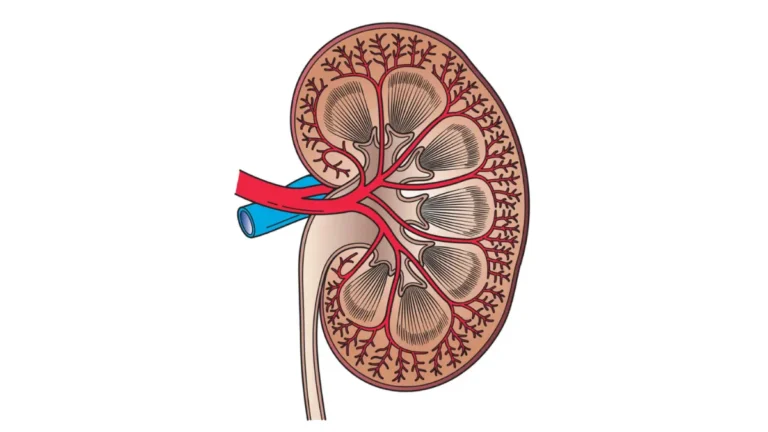
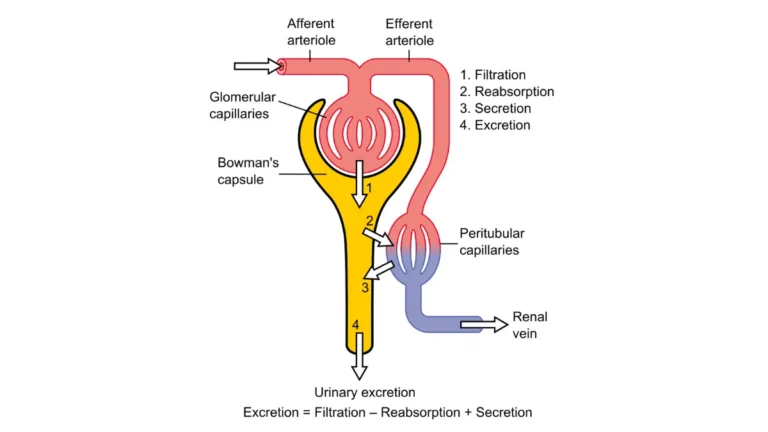
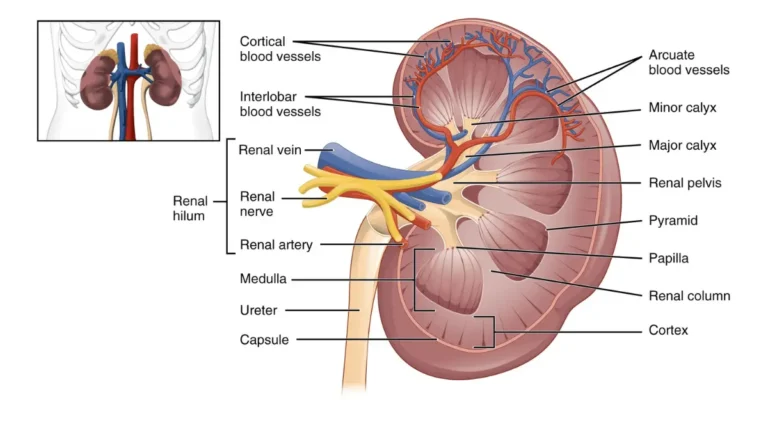
The clearest real age effect in adults is in the kidney markers. Kidney filtration, measured as estimated glomerular filtration rate (eGFR), tends to be highest in young adulthood and declines gradually across the lifespan even in healthy people. That drift shows up in large population studies of adults without kidney disease.
🔬 How It Works: Your eGFR isn’t measured directly — it’s calculated from your blood creatinine plus your age and sex. The widely used CKD-EPI equation contains age as a factor, so the same creatinine produces a lower eGFR as you age. Creatinine also reflects muscle mass, which declines with age.
This is why an older adult can be flagged when nothing is actually wrong. As the NIDDK notes in its guidance on estimating GFR, a normal creatinine reference interval does not necessarily reflect a normal filtration rate, and the equations estimate the average GFR for people of the same age and sex. What matters is the trend, not one isolated number. See our guides to kidney markers on a CMP and a high creatinine result.
📊 Clinical Data Point: An eGFR below 60 mL/min/1.73m² sustained for three months or more (or above 60 with signs of kidney damage) is used to define chronic kidney disease. — Source: National Kidney Foundation.
✅ Patient Action: Ask your primary care provider or a nephrologist: “Given my age and muscle mass, is my eGFR trend stable and expected, or does it need follow-up?”
Children and teens: why a “high” ALP is usually normal
If you’re a parent, this is likely the section that brought you here. Alkaline phosphatase (ALP) is normally much higher in growing children and teenagers than in adults — often high enough to trigger a “HIGH” flag that is, in fact, completely expected.
🔬 How It Works: ALP is released by osteoblasts, the cells that build and mineralize bone. Children and teens are laying down bone rapidly, so their blood carries far more ALP. Levels peak in infancy and the pubertal growth spurt, then settle toward adult levels once bone growth finishes.

Adapted from OpenStax Anatomy and Physiology 2e Figure 6.16, licensed under CC BY 4.0.
The catch is that many reports compare a child’s result to the adult range, so a healthy, growing child is routinely marked “H.” Published pediatric studies document exactly this: children often get a high-value alert even when their ALP is normal for their age and sex. During a growth spurt, a child’s ALP can run several times the adult upper limit and still be entirely normal. An isolated high ALP alongside normal GGT, ALT, AST, and bilirubin generally points to bone and growth rather than the liver, as our guide to the liver markers on a CMP explains. You can read more in the MedlinePlus ALP blood test overview; the adult-range “H” flag in children is detailed in this pediatric ALP study.
📊 Clinical Data Point: Typical adult ALP runs roughly 44–147 U/L, though the exact range varies by laboratory. — Source: ABIM laboratory reference ranges.
✅ Patient Action: Ask your pediatrician: “Is my child’s ALP normal for their age and growth stage, and do the liver markers — GGT, ALT, and AST — look normal?”

Adapted from Wikimedia Commons Bone Remodeling Model, licensed under CC0 1.0 Universal Public Domain Dedication.
Older adults: albumin, total protein, and reading a flag in context
At the other end of life, the protein markers drift slightly downward. Population studies in older adults show that mean serum albumin and total protein are modestly lower in the oldest age groups than in midlife. On its own, that decline is small.

Adapted from Wikimedia Commons Liver Diagram, licensed under CC BY 4.0. (Note: Vector layers mapped to updated universal standard).
The more important point is what a genuinely low albumin usually means. Rather than “just age,” it more often reflects inflammation, acute illness, liver disease, protein loss through the kidneys, or poor nutrition — causes worth identifying rather than dismissing. A flagged albumin shouldn’t be brushed off as normal aging, but it also isn’t cause for panic before the reason is understood; see our guide to the common causes of low albumin. If nutrition is part of the picture, you can estimate a starting protein target with our protein intake calculator — a wellness tool, not medical advice.
✅ Patient Action: Ask your primary care provider whether a low albumin reflects nutrition, inflammation, or a liver or kidney issue — and whether it should be rechecked.
How to read your own CMP by age: a simple 4-step approach
You don’t need to memorize numbers to read your results sensibly. Work through these four steps in order.
- Start with your own report. Compare each value only to the reference range printed beside it — that range already reflects your lab’s methods and population.
- Check the sex-specific markers. A few results, like creatinine, use different ranges for men and women; read yours against the right one.
- Weigh age only where it matters. For kidney markers, children’s ALP, and the protein markers, age genuinely shifts the picture; for most other values, it doesn’t. Treat a single kidney flag in an older adult as a trend to watch, not a diagnosis.
- Read the pattern, then ask. Look at which markers are off, in which direction, and whether they fit together — a single isolated value is often repeated before anyone acts on it.
For a fuller walkthrough of each value and what abnormal results can mean, see our step-by-step guide to reading your CMP results.
When an out-of-range CMP value shouldn’t wait — at any age
Most flagged values can wait for a routine follow-up. Some shouldn’t, and that’s true regardless of age.
A result that sits far outside the reference range, or any abnormal value paired with symptoms, is a reason to contact your provider’s office promptly rather than interpret it from a chart at home. For which values tend to prompt urgent attention, our overview of critical CMP values covers the general categories.
⚠️ Clinical Warning: A markedly abnormal value — or any result accompanied by symptoms such as confusion, chest pain, trouble breathing, severe weakness, or fainting — is not something to manage yourself from an online range. Contact your provider without delay, and call emergency services for severe or sudden symptoms.
✅ Patient Action: For a value flagged far outside its range, call your provider’s office and ask whether it needs a repeat test, a visit, or urgent evaluation.
CMP normal range by age: frequently asked questions
1. Do CMP normal ranges change with age?
For most of the 14 values, no — labs apply one adult range across adult ages. The real exceptions are the kidney markers, children’s alkaline phosphatase, and the protein markers. Always compare results to your own report and review them with your provider.
2. What is a normal CMP for a 60-year-old or senior?
There’s no separate senior chart for most values — a 60-year-old is compared to the same adult ranges as a younger adult. Expect a gradually lower eGFR and a slightly lower albumin, both read as trends. Discuss your specific results with your provider.
3. Why is my child’s alkaline phosphatase high?
In growing children and teens, alkaline phosphatase is normally much higher than in adults because bone-building cells release it during rapid growth. Many reports flag it “HIGH” only because they compare a child to the adult range. An isolated high ALP with normal liver markers usually reflects growth — confirm with your pediatrician.
4. Does creatinine increase with age?
Creatinine reflects both kidney filtration and muscle mass, so it can shift as muscle mass changes. More useful is the calculated eGFR, which includes age and tends to decline gradually across adulthood even in healthy people. A single flagged creatinine is best interpreted as a trend by your provider.
5. What is a normal eGFR by age?
eGFR is typically highest in young adulthood and declines gradually with age, so a healthy older adult can sit below a young-adult average without kidney disease. Because the equation already accounts for age, there’s no fixed by-decade cutoff to memorize — your own trend matters most. Ask your provider to interpret yours.
6. Is low albumin normal in older adults?
Albumin declines modestly with age, but a genuinely low value usually signals something else — inflammation, illness, liver disease, kidney loss, or poor nutrition — rather than age alone. It shouldn’t be dismissed as normal aging, nor alarming before the reason is clear. Ask your provider whether it needs rechecking.
7. Are CMP reference ranges the same for men and women?
Not for every marker. Creatinine, for example, is normally reported with a slightly higher range for men than women, reflecting differences in muscle mass. Most other CMP values use the same adult range for both. Read each result against the sex-specific range on your own report.
8. Why does my lab’s normal range differ from an online chart?
Because each lab sets its ranges using its own equipment, methods, and local reference population. That lab-to-lab variation is often larger than any difference from age, so the range on your report — not a general chart — is what applies.
9. Which CMP values are considered dangerous?
Any value sitting far outside its range, or an abnormal value paired with symptoms, warrants prompt attention regardless of age. This article doesn’t list specific danger thresholds, because interpretation depends on the full clinical picture. Contact your provider promptly for a markedly abnormal result, and seek urgent care for severe symptoms.
10. Do children have different CMP normal ranges than adults?
Yes — several markers, alkaline phosphatase most dramatically, have genuinely different pediatric ranges because of growth and development. A child compared to adult ranges may be flagged “HIGH” while being perfectly normal for their age. Pediatric results should be read against age- and sex-specific ranges by a pediatrician.
11. Should I worry about one out-of-range CMP value?
Usually a single flagged value isn’t cause for alarm — a recent meal, dehydration, or a medication can nudge a result out of range, and isolated values are often repeated before action. What matters is the overall pattern and trend, so review the specific result with your provider.
About this content
How this article was put together: researched from recognised health sources, drafted with the help of AI tools, and edited by hand, with sources linked throughout.

Sameer Patel is the founder and editor of My Medicine Advisor. He is not a doctor or medical professional — before starting this site he worked in banking,…
Medical disclaimer
The content on MyMedicineAdvisor is provided for general informational and educational purposes only and is not a substitute for professional medical advice, diagnosis, or treatment. Health information on this website should not be used to diagnose, treat, cure, or prevent any condition without guidance from a qualified healthcare professional. Always seek the advice of your doctor, physician, or another licensed healthcare provider with any questions you may have regarding a medical condition, symptoms, medications, or treatment decisions.