On This Page – Quick Medical Summary
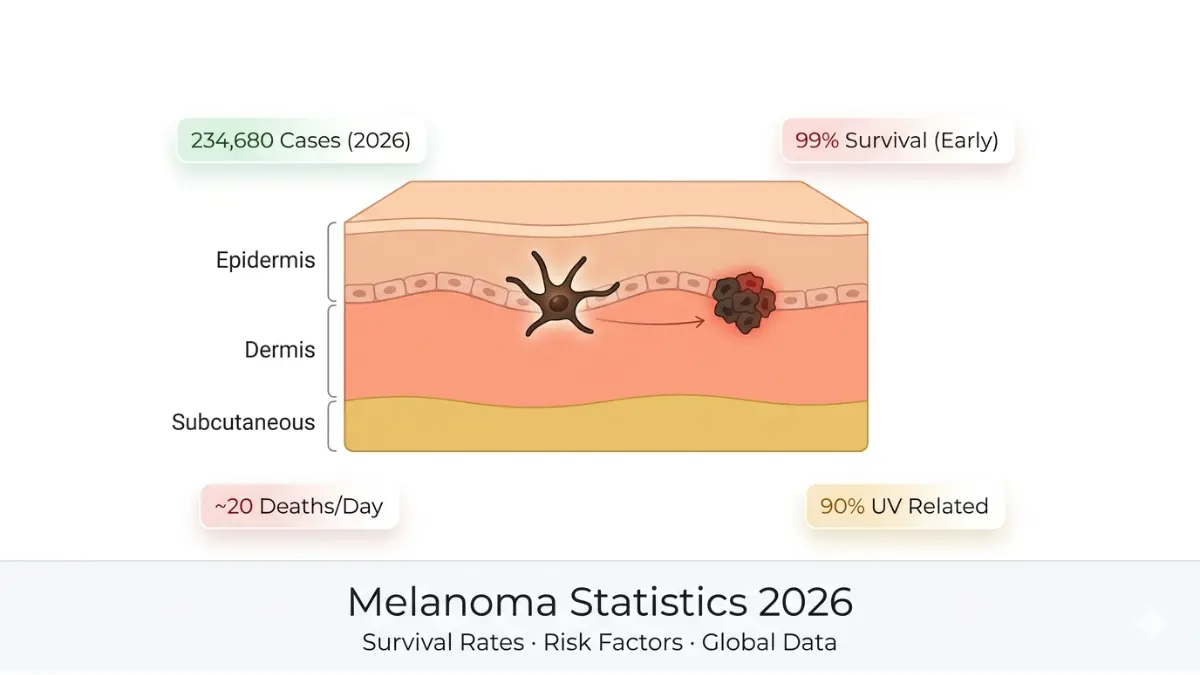
In 2026, approximately 234,680 Americans will be diagnosed with melanoma, and 8,510 will die from it — that’s nearly 23 deaths every single day. Yet when melanoma is caught early, the 5-year survival rate exceeds 99%. The gap between those two numbers is everything. Here’s what the latest melanoma statistics mean for you right now.
At a Glance — 2026 Melanoma Statistics (U.S.)
| Stat | 2026 Figure |
|---|---|
| Total melanoma diagnoses | 234,680 |
| Invasive melanoma cases | 112,000 |
| In situ (non-invasive) cases | 122,680 |
| Estimated deaths | 8,510 |
| 5-year survival (early-stage) | >99% |
| 5-year survival (metastatic) | ~35% |
Melanoma by the Numbers — 2026 U.S. Cases & Deaths
How Many People Are Diagnosed With Melanoma in 2026?
Melanoma statistics in 2026 tell a story of both alarming growth and remarkable progress. According to American Cancer Society Cancer Facts & Figures 2026, approximately 112,000 new invasive melanoma cases will be diagnosed in the U.S. this year alone — up from 104,960 in 2025.
Of those invasive cases, 65,400 will occur in men and 46,600 in women. An additional 122,680 non-invasive (in situ) cases bring the total melanoma diagnosis count to 234,680 — making 2026 one of the highest-ever recorded years.
How Many People Die From Melanoma in 2026?
The melanoma death toll in 2026 is projected at 8,510 Americans — approximately 5,500 men and 3,010 women, according to AIM at Melanoma Foundation’s 2026 Facts & Statistics. That works out to roughly 23 deaths every single day.
⚠️ Critical Fact: Melanoma causes only about 1% of all skin cancer cases — yet it drives the majority of skin cancer deaths.
Is Melanoma Increasing or Decreasing?
Invasive melanoma incidence has risen 46% over the last 15 years. However, death rates are declining — falling approximately 2–3% per year — thanks to advances in immunotherapy and targeted therapy. If you want to understand how those two trends coexist, our full guide on melanoma symptoms, stages, and treatment explains the treatment revolution driving that shift.
Year-Over-Year Melanoma Case Comparison (U.S.)
| Year | Invasive Cases | Deaths |
|---|---|---|
| 2022 | 99,780 | 7,650 |
| 2023 | 97,610 | 7,990 |
| 2024 | 100,640 | 7,990 |
| 2025 | 104,960 | 8,430 |
| 2026 | 112,000 | 8,510 |
What This Means For You: Rising case counts don’t have to mean rising death risk. Early detection is the single most powerful variable in your melanoma outcome.
Melanoma Survival Rates by Stage — The Number That Matters Most
5-Year Survival Rate for Each Stage of Melanoma
When people search “melanoma survival rates,” they’re often afraid of what they’ll find. The data, however, tells a more nuanced story. According to NCI SEER Cancer Statistics and the American Cancer Society’s survival rate breakdown by stage, here’s what the evidence shows:
Melanoma 5-Year Survival Rate by Stage (2026 Data)
| Stage | Description | 5-Year Survival Rate |
|---|---|---|
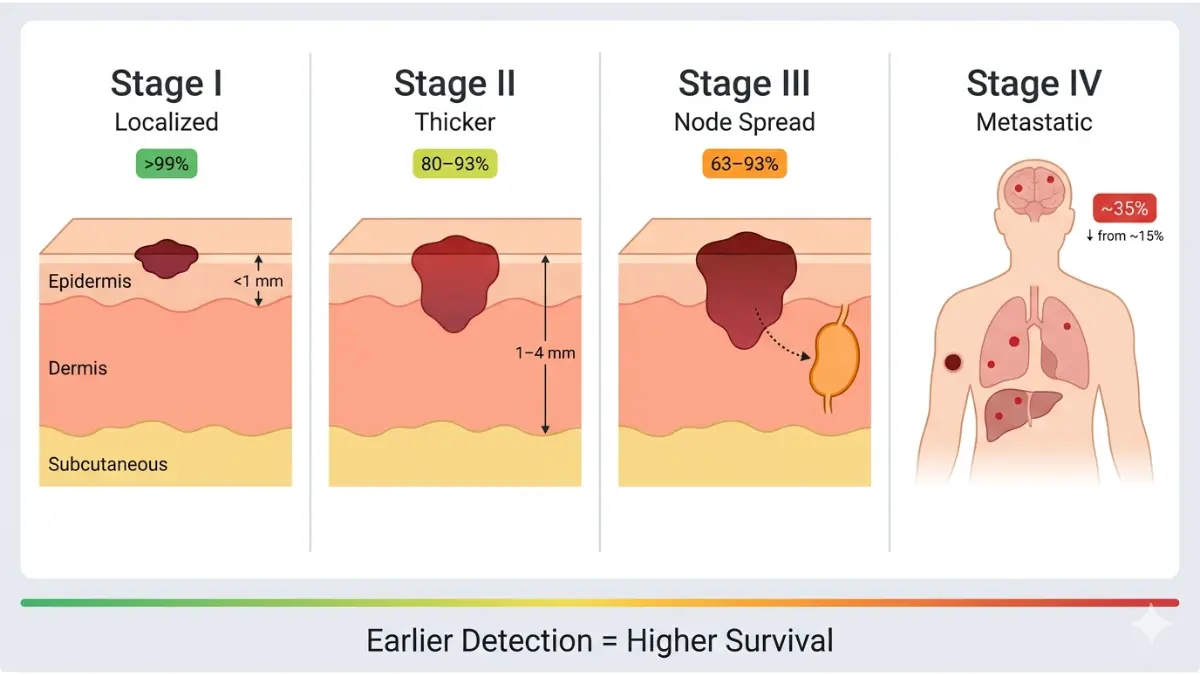
| Stage 0 (In Situ) | Melanoma confined to outer skin layer | ~99% |
| Stage I | Thin tumor, no spread | >99% |
| Stage II | Thicker tumor, localized | 80–93% |
| Stage III | Spread to nearby lymph nodes | 63–93% |
| Stage IV | Distant organ metastasis | ~35% |
How Has Immunotherapy Changed Melanoma Survival Rates?
This is the data point that changes everything. The 5-year survival rate for stage IV metastatic melanoma was only 15% in the mid-2000s. Today, it stands at 35% — more than double — driven by immunotherapy and targeted therapy breakthroughs. The Melanoma Research Alliance reports that 17 new drug approvals have been made for invasive melanoma since 2007 alone.
You can explore how these therapies work in detail through our overview on how immunotherapy works and our dedicated article on stage 4 melanoma survival and therapy options.
Why Timing of Treatment Matters Critically
Melanoma statistics don’t just track outcomes — they reveal the deadly cost of delay.
- Treatment within 30 days of biopsy: Baseline survival odds
- Treatment 30–59 days after biopsy: 5% higher death risk
- Treatment 119+ days after biopsy: 41% higher risk of dying from the disease
(Source: Skin Cancer Foundation)
What This Means For You: Stage and speed of treatment are the two variables most within your control. A suspicious mole checked today versus ignored for 4 months could be the difference between >99% and 63% survival odds. Use our Symptom Checker if you have a skin change you’ve been putting off assessing.
Who Is Most at Risk? Age, Gender & Race in 2026 Melanoma Statistics
Melanoma by Age — Who Gets It Most?
Melanoma does not discriminate by age as sharply as many cancers do.
- Melanoma is one of the four most commonly diagnosed cancers in adults aged 30–39
- Among people under 30, melanoma incidence in women has risen more than 50% since 1980
- In adults 50 and older, rates continue climbing — 1.4% per year in men, 2.8% per year in women according to AAD skin cancer statistics
- The percent of melanoma deaths is highest in the 65–74 age group
Key Takeaway: Younger adults are not protected. If you’re in your 30s and spending significant time outdoors, your melanoma statistics risk is real and rising.
Men vs. Women: The Gender Gap in 2026
| Group | Invasive Cases 2026 | Death Risk Pattern |
|---|---|---|
| Men | 65,400 | Higher — lower sun protection usage, later self-detection |
| Women | 46,600 | Lower — more likely to self-examine and visit dermatologist |
Men are significantly less likely to examine their own skin or schedule dermatology checkups — a behavioral gap that directly drives worse survival outcomes, not a biological one.
Racial Disparities: The Survival Gap That Must Be Addressed
This is one of the most underreported stories in melanoma statistics — and it matters enormously.
- Lifetime risk: White = ~3% (1 in 33) | Hispanic = 0.5% | Black = 0.1%
- 5-year survival rate (2015–2021): White individuals = 95% | Black individuals = 70%
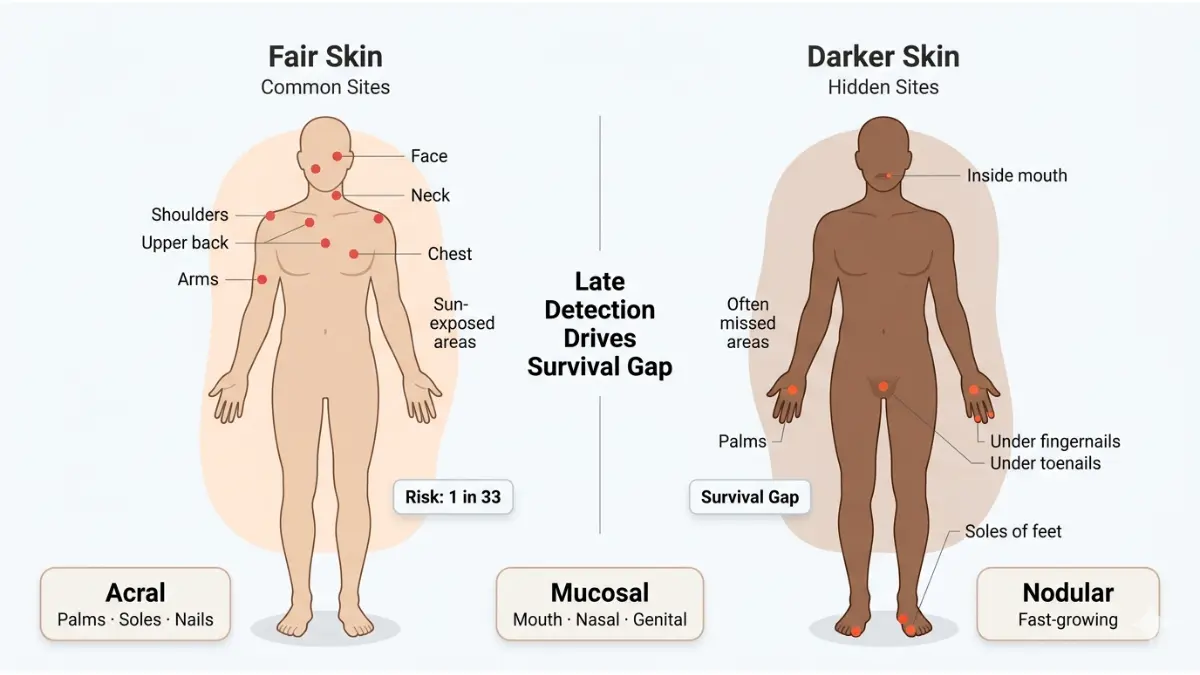
That 25-percentage-point gap is not caused by biology. Research published in PMC’s melanoma trends analysis confirms that when stage at diagnosis is controlled for, racial survival differences largely disappear. The disparity is driven by late-stage diagnosis — not disease biology.
Why are Black patients diagnosed later?
- Melanoma in darker skin tones often develops on non-sun-exposed areas: palms, soles, nail beds, and mucous membranes
- Clinicians may overlook melanoma in darker skin tones, especially rare subtypes like acral lentiginous melanoma
- Lower perceived personal risk leads to delayed care-seeking
If you have a family history or atypical moles, consider using our Genetic Risk Assessment Tool to better understand your personal risk profile.
What This Means For You: Melanoma doesn’t only look like a dark mole on sun-exposed skin. Check your palms, the soles of your feet, under your nails, and inside your mouth — regardless of your skin tone.
Global Melanoma Statistics 2026 — How the World Compares
Which Country Has the Highest Melanoma Rate in the World?
No competitor covers this — but it matters for every reader in the U.S., UK, Canada, and Australia.
Australia and New Zealand carry the world’s heaviest melanoma burden, with incidence rates reaching up to 42 per 100,000 annually — far exceeding any other region. A global burden of disease study published in Frontiers in Oncology confirms this disparity is driven by a combination of fair-skinned populations, high UV radiation intensity, and outdoor lifestyle culture.
Global Melanoma Incidence Comparison
| Region | Approximate Annual Rate (per 100,000) |
|---|---|
| Australia / New Zealand | Up to 42 |
| United States | ~21.9 |
| Western Europe (UK, Germany) | 12–18 |
| Asia | Below 1 |
| Africa | Below 1 |
Why High-Income Countries Have Higher Rates — But Better Survival
High-SDI (Socio-Demographic Index) countries have higher melanoma incidence but better survival outcomes — driven by access to dermatology screening, immunotherapy, and targeted treatments unavailable in lower-resource settings. Global mortality from melanoma has been declining in high-income nations even as incidence rises.
What This Means For You: If you live in the U.S., UK, Canada, or Australia, your melanoma risk is materially higher than global averages — but your access to life-saving early detection and treatment is also the best in the world. Use it.
Melanoma Risk Factors — What’s Raising Your Odds in 2026
Top 10 Proven Melanoma Risk Factors
Understanding your melanoma risk factors is the first step toward reducing them. According to Melanoma Research Foundation’s 2026 facts and CDC skin cancer data, the following factors have the strongest evidence:
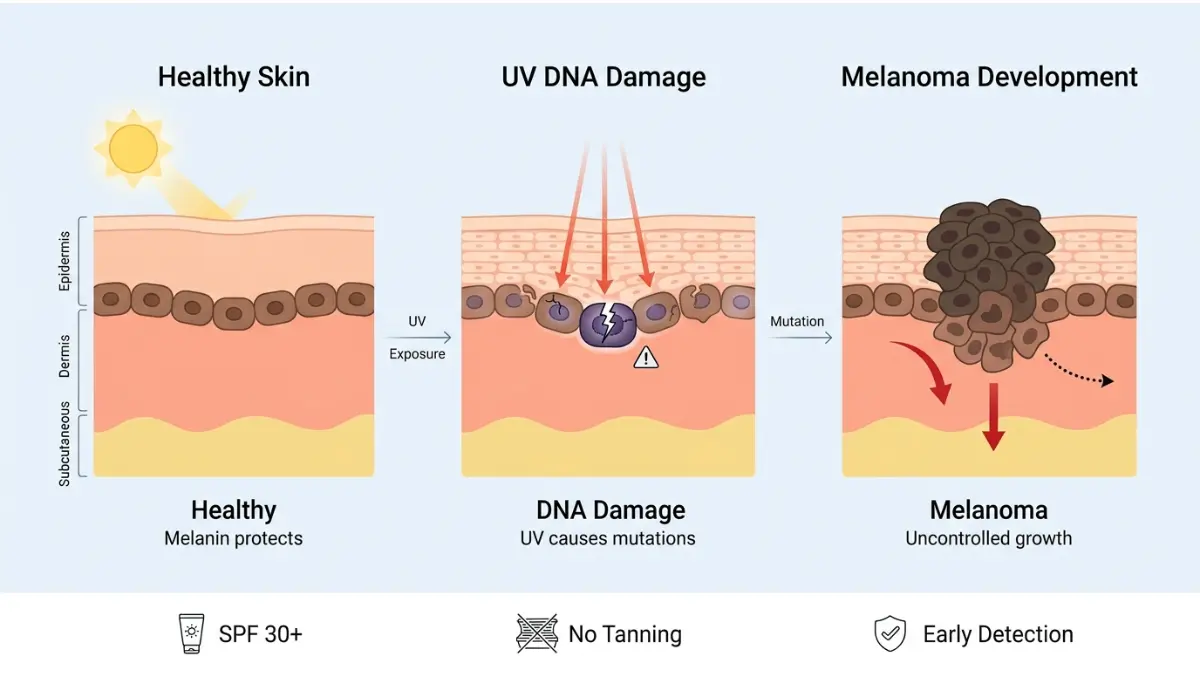
- UV radiation exposure — responsible for ~90% of all melanoma diagnoses
- History of sunburn — 5+ lifetime sunburns doubles your melanoma risk
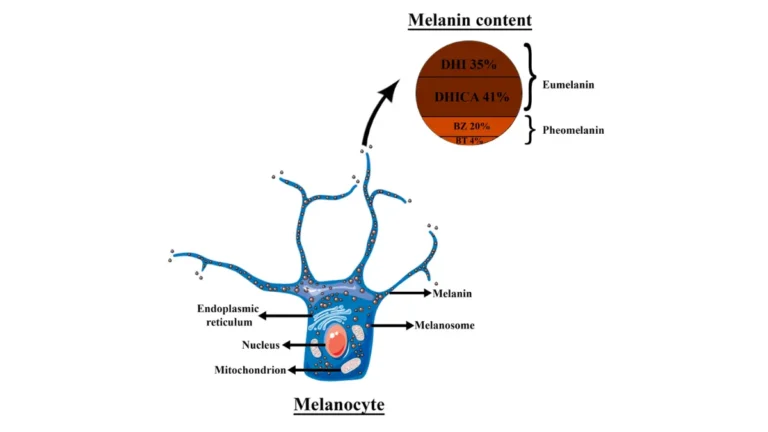
- Fair skin, light hair, light eyes — less melanin = less natural UV protection
- 50+ moles or atypical (dysplastic) moles — each additional atypical mole raises risk
- Personal history of melanoma — survivors face elevated risk of recurrence
- Family history — affects 5–10% of all melanoma patients
- Immunosuppression — organ transplant recipients and those on immunosuppressive drugs
- Age 50+ — incidence rises sharply, especially in men
- Indoor tanning — classified as a Group 1 carcinogen by IARC
- Geographic location — high-altitude, high-UV regions increase cumulative exposure
Indoor Tanning: The Preventable Risk Most People Ignore
The melanoma statistics on indoor tanning are alarming and underreported:
- 7.8 million adult women and 1.9 million adult men in the U.S. still tan indoors
- 52.5% of indoor tanners begin before age 21
- More than 44% of those who started before age 16 did so alongside a family member
Indoor tanning beds emit UV radiation classified as a Group 1 carcinogen by the International Agency for Research on Cancer — the same classification as tobacco. Our deep-dive on skin cancer warning signs covers exactly what UV damage looks like on skin across different ages.
Family History & Genetic Risk
If a first-degree relative has had melanoma, your personal risk increases significantly. Mutations in the CDKN2A gene are the most commonly identified hereditary risk factor, present in ~40% of familial melanoma cases. Use our Genetic Risk Assessment Tool to evaluate whether your family history warrants earlier or more frequent dermatology screening.
What This Means For You: Three things you can do this week — (1) Apply broad-spectrum SPF 30+ daily, (2) never use a tanning bed, (3) schedule a full-body skin exam if you haven’t had one in the last 12 months.
What the 2026 Melanoma Data Means For Prevention & Early Detection
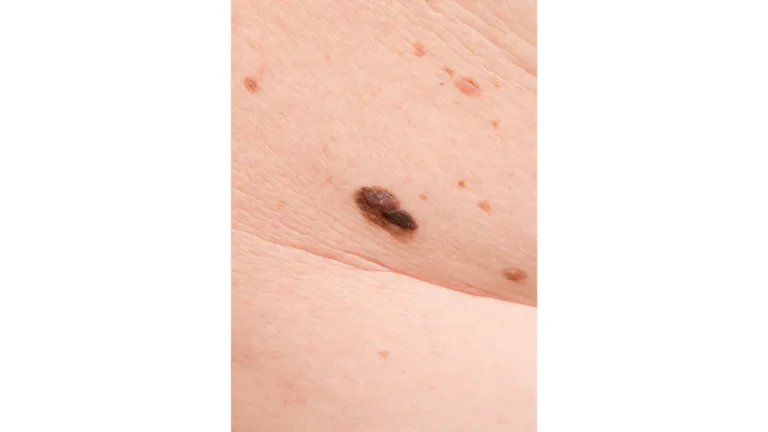
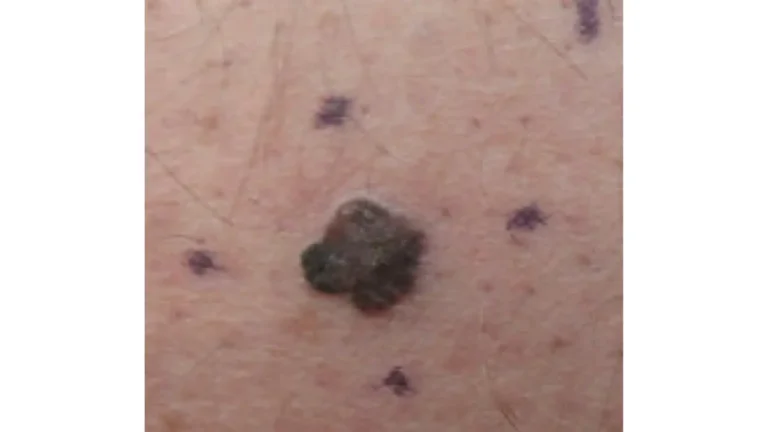
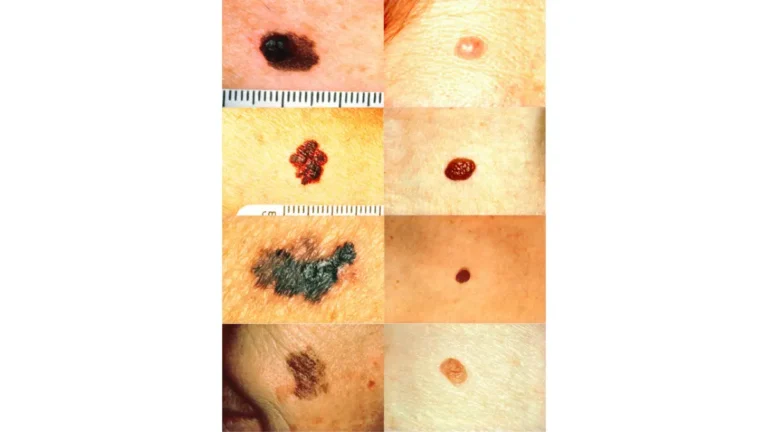
The ABCDE Rule: Your Personal Early Detection Checklist
The most powerful weapon against melanoma is a monthly self-exam using the ABCDE rule — developed by dermatologists and supported by the American Academy of Dermatology:
| Letter | What It Stands For | What to Look For |
|---|---|---|
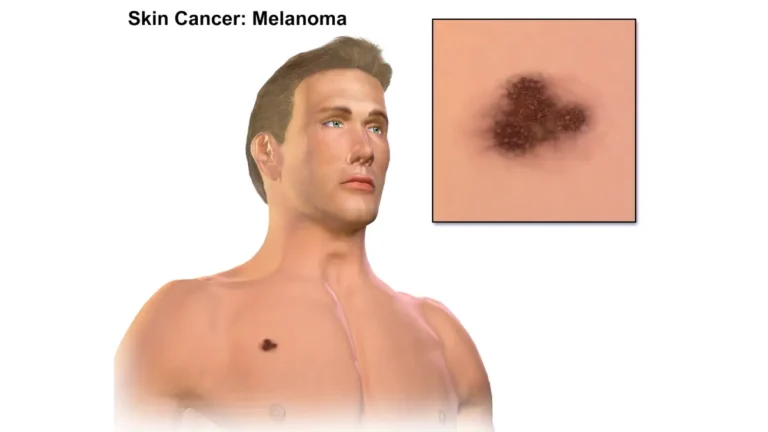
| A | Asymmetry | One half doesn’t match the other |
| B | Border | Irregular, ragged, or blurred edges |
| C | Color | Multiple shades — brown, black, red, white, or blue |
| D | Diameter | Larger than 6mm (about the size of a pencil eraser) |
| E | Evolving | Any change in size, shape, color, or new symptom like bleeding |
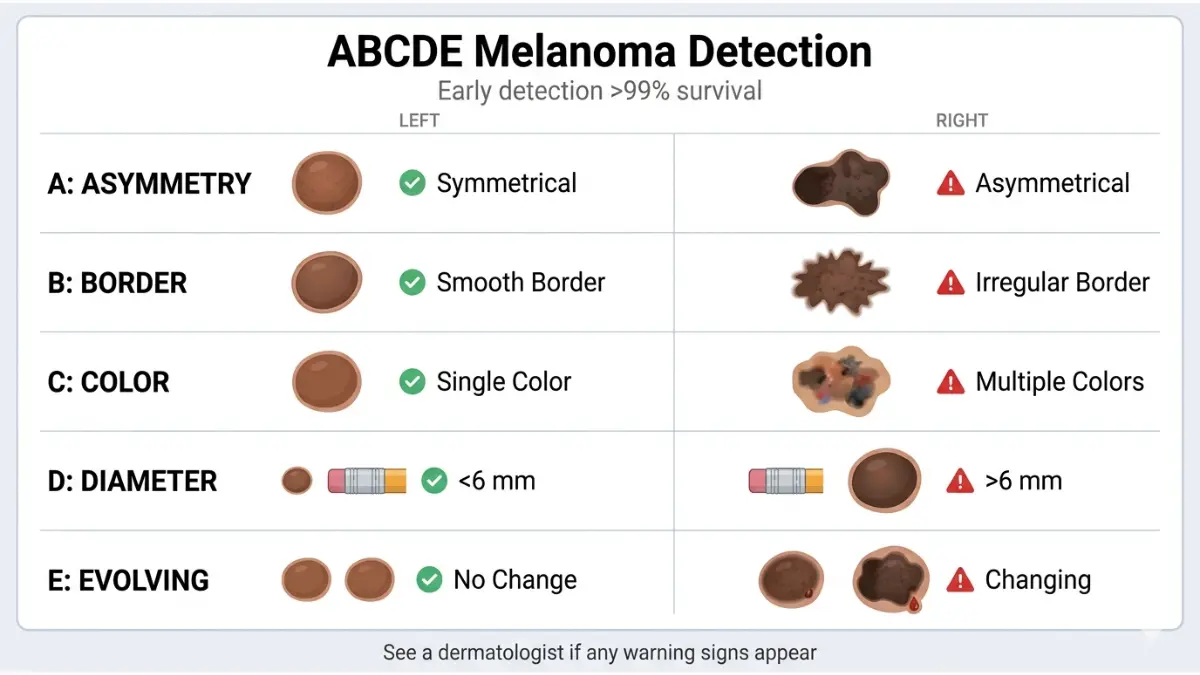
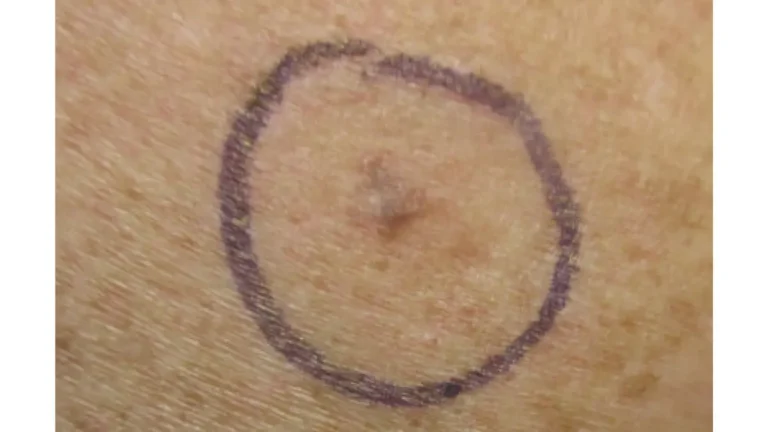
Any mole or skin spot that meets even one of these criteria warrants a dermatologist visit — not a “wait and see” approach. Our Symptom Checker can help you document changes and decide whether to escalate care.
How Often Should You Get a Professional Skin Exam?
Your screening frequency should match your risk profile:
- Low risk (no risk factors): Full-body skin exam every 2–3 years from age 20; annually from age 50
- Moderate risk (fair skin, history of sunburns): Annual full-body exam
- High risk (family history, 50+ moles, prior melanoma, immunosuppressed): Every 6 months, plus self-exam monthly
The 2026 Treatment Breakthrough: What’s Changed?
Melanoma’s treatment landscape has been transformed. Our dedicated article on melanoma in 2026: AI screening and survival advances covers the AI-powered skin detection tools that are now being deployed at scale. Key 2026 milestones:
- 17 new drug approvals for invasive melanoma since 2007
- Metastatic melanoma 5-year survival: from 15% → 35%
- Death rates declining 2–3% per year for the past decade
- AI-assisted dermoscopy now detecting early melanoma with >90% accuracy in clinical trials
Read our complete overview of melanoma symptoms, stages, and all treatment options and understand the full difference between melanoma vs. other skin cancers to make informed decisions about your skin health.
What This Means For You: The survival story for melanoma in 2026 is genuinely hopeful — but only for those who act early. The science is on your side. The ABCDE self-exam takes 5 minutes and can save your life.
⚕️ Medical Disclaimer: This article is for educational and informational purposes only. It does not constitute medical advice, diagnosis, or treatment. Always consult a licensed dermatologist or qualified healthcare provider for any skin concerns, symptoms, or medical decisions. If you notice a suspicious mole or skin change, seek professional evaluation promptly.
Frequently Asked Questions — Melanoma Statistics 2026
1. What is the overall melanoma survival rate in 2026?
The overall 5-year survival rate for melanoma across all stages is approximately 95% in the U.S., based on 2015–2021 SEER data. Early-stage melanoma survival exceeds 99%.
2. How many people are diagnosed with melanoma each year in the U.S.?
In 2026, approximately 234,680 total melanoma cases will be diagnosed — 112,000 invasive and 122,680 non-invasive (in situ), according to the American Cancer Society.
3. What is the survival rate for stage 4 melanoma?
The 5-year survival rate for stage IV (distant metastatic) melanoma is approximately 35% — significantly improved from just 15% in the mid-2000s due to immunotherapy advances.
4. Is melanoma increasing or decreasing in 2026?
Case counts are increasing — up 46% in 15 years. However, death rates are declining by 2–3% per year, reflecting better treatments and earlier detection.
5. Who is most at risk for melanoma?
People with fair skin, personal or family history of melanoma, 50+ moles, history of indoor tanning, and adults over 50 — especially men — face the highest melanoma risk.
6. How does melanoma survival rate differ by race?
White individuals have a 5-year survival rate of 95% versus 70% for Black individuals. This gap is driven by later-stage diagnosis, not biology — making early screening in all populations critical.
7. What is the survival rate for early-stage melanoma?
Stage I melanoma carries a 5-year survival rate exceeding 99% — one of the highest rates of any cancer when detected at the localized stage.
8. Are men or women more likely to die from melanoma?
Men have higher melanoma death rates — driven by less frequent skin self-exams, lower sunscreen use, and delayed medical consultation, not underlying biology.
9. What country has the highest melanoma rate?
Australia and New Zealand have the world’s highest melanoma rates — up to 42 cases per 100,000 annually — due to high UV exposure, fair-skinned populations, and outdoor culture.
10. Can melanoma be prevented?
Approximately 90% of melanoma cases are attributed to UV exposure and are considered potentially preventable. Daily SPF 30+ sunscreen, avoiding tanning beds, and regular self-exams are the most evidence-backed prevention strategies.
11. How has immunotherapy improved melanoma survival?
Immunotherapy has transformed melanoma outcomes — stage IV survival went from 15% to 35% over 20 years. Checkpoint inhibitors (PD-1, CTLA-4) and combination therapies have driven 17 new FDA approvals for invasive melanoma since 2007.
Related Reading:
- Skin Cancer Signs: 12 Warning Symptoms You Must Know
- Melanoma vs. Skin Cancer: Key Differences Explained
- Stage 4 Melanoma: Survival Rates & Therapy Options 2026
- How Immunotherapy Works Against Cancer
- All Melanoma Health Articles
Medical disclaimer
The content on MyMedicineAdvisor is provided for general informational and educational purposes only and is not a substitute for professional medical advice, diagnosis, or treatment. Health information on this website should not be used to diagnose, treat, cure, or prevent any condition without guidance from a qualified healthcare professional. Always seek the advice of your doctor, physician, or another licensed healthcare provider with any questions you may have regarding a medical condition, symptoms, medications, or treatment decisions.