On This Page – Quick Medical Summary
A prostate cancer diagnosis forces a fast decision, and radiation is often one of the main options on the table. This guide explains the types of radiation and their risks in plain language, so you can walk into your next appointment with sharper questions.
Where you are right now shapes what matters most:
- Newly diagnosed and comparing options? Start with when radiation is used and how it compares to surgery.
- Already chose radiation and preparing? Skip ahead to what each type involves and how to lower side-effect risk.
- A caregiver or partner? The side-effects section explains what to expect and what to watch for.
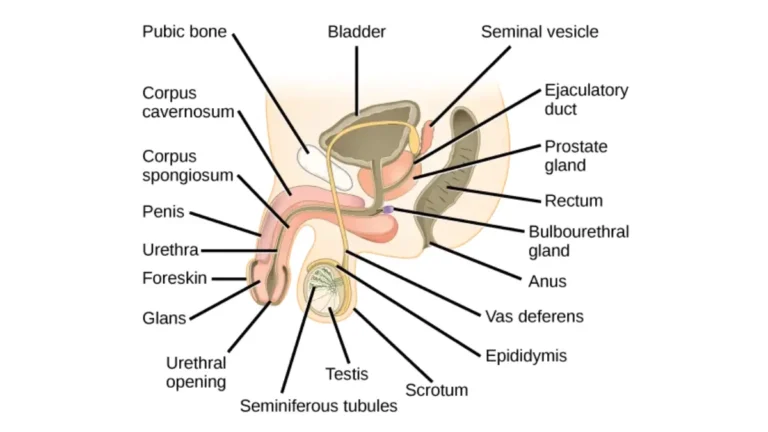
Radiation therapy uses high-energy rays or particles to kill prostate cancer cells. Three categories are used: external beam radiation (aimed at the prostate from a machine outside the body), brachytherapy (radioactive seeds placed inside the prostate), and radiopharmaceuticals (radioactive drugs given by injection). The right choice depends on your stage, risk group, and overall health.
ℹ️ Medical Disclaimer: This article is general education, not medical advice. Decisions about prostate cancer diagnosis, treatment selection, radiation type, medication, or any procedure — and questions about insurance coverage — should be made with your own board-certified urologist, radiation oncologist, and medical oncologist, who can weigh your stage, risk group, and overall health. If you develop new or severe symptoms during or after treatment, contact your care team promptly.
When is radiation used for prostate cancer?
Radiation may be used at several points in prostate cancer care, depending on your stage and risk group. The three main types are:
- External beam radiation — radiation aimed at the prostate from outside the body.
- Brachytherapy — radioactive seeds placed directly into the prostate.
- Radiopharmaceuticals — radioactive drugs injected into a vein to reach cancer that has spread.
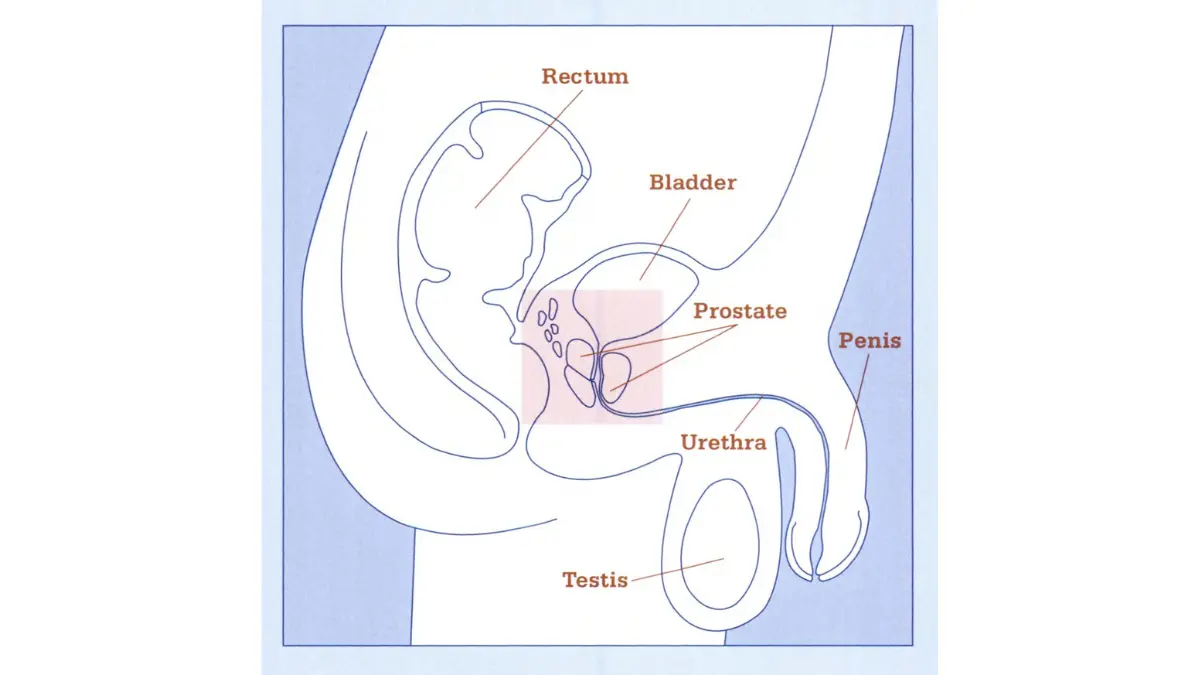
As a first treatment, by risk group
For cancer still confined to the prostate, especially in lower-risk groups, radiation can be a first treatment, with cure rates about the same as surgery (radical prostatectomy), according to the American Cancer Society’s overview of prostate radiation. For higher-risk or locally advanced cancer, radiation is usually combined with hormone therapy. How your risk group and stage are defined guides much of this.
After surgery, or for advanced cancer
Radiation can also be given after surgery if cancer remains or returns, or to control advanced disease, such as easing bone pain when cancer has spread. For some lower-risk men, active surveillance is an alternative to immediate treatment.
The three types at a glance
Which type fits depends on whether the goal is to cure localized disease, add to surgery, or treat cancer that has spread. The next sections walk through each one.
External beam radiation: IMRT, SBRT, proton beam and more
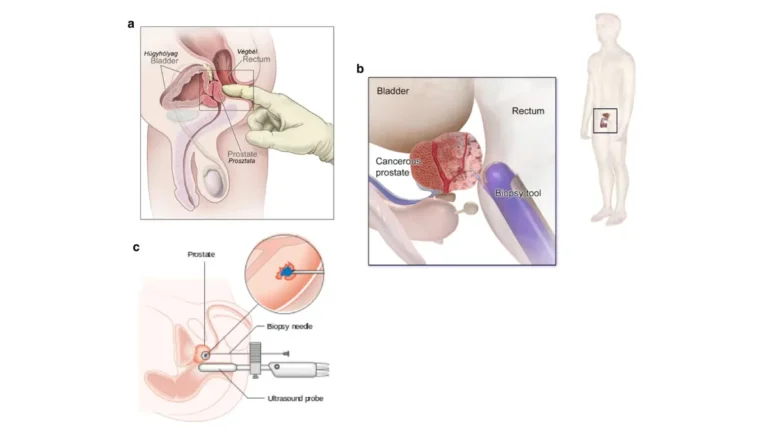
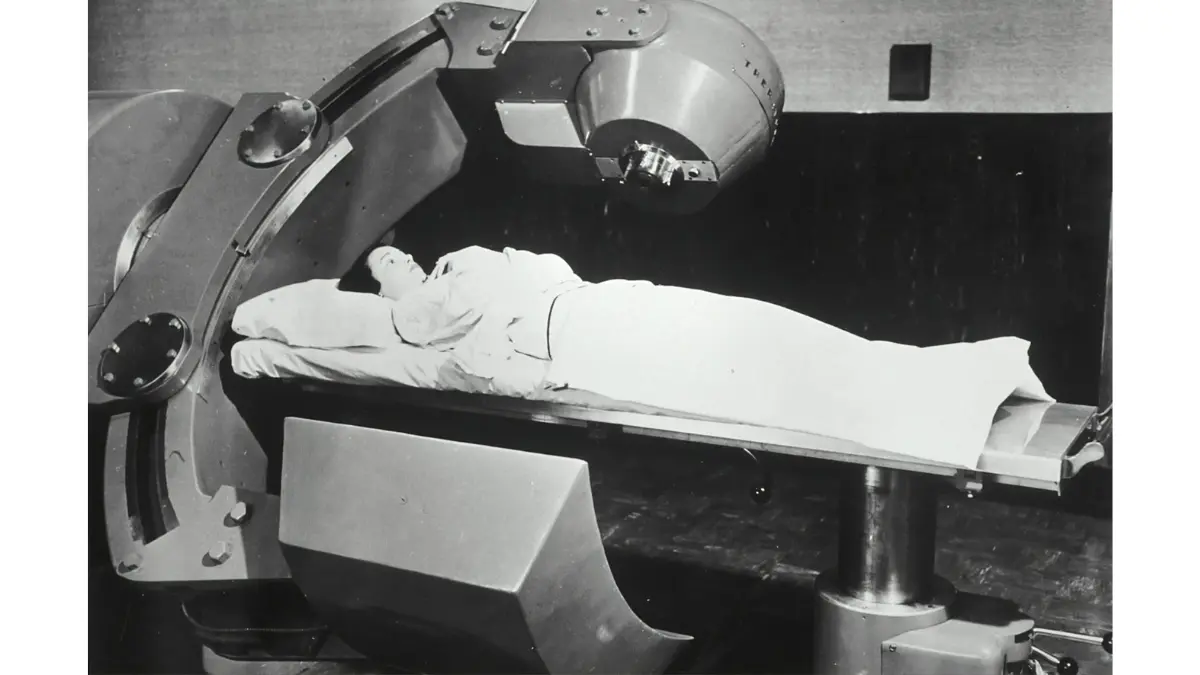
External beam radiation therapy (EBRT) focuses radiation on the prostate from a machine outside the body. Standard courses are given five days a week for several weeks.
IMRT and IGRT (the most common approach)
Intensity-modulated radiation therapy (IMRT) is the most common external radiation for prostate cancer. It shapes the radiation beams and adjusts their strength to limit the dose reaching nearby healthy tissue. It is often paired with image-guided radiation therapy (IGRT), which images the prostate just before each session so the aim can be corrected for small day-to-day shifts.
SBRT and hypofractionation (fewer, larger sessions)
Hypofractionation delivers slightly higher doses over fewer sessions, shortening the course; evidence suggests it works about as well as longer schedules. Stereotactic body radiation therapy (SBRT) takes this further, giving large doses over just a few days. Its main advantage over IMRT is time, though some side effects may be worse.
🩺 Physician Note: Joint guidance from ASTRO, ASCO, and the AUA supports moderately hypofractionated radiation for many men with localized prostate cancer, because trials show similar effectiveness to longer courses with fewer visits.
Proton beam therapy
Proton beam therapy uses protons instead of standard x-rays.
🔬 How It Works: Standard x-rays release energy as they pass through the body, both before and after reaching the tumor. Protons travel a set distance and release most of their energy right at the target, so in theory they spare more tissue beyond the prostate.
In practice, studies have not shown proton therapy is more effective than IMRT for prostate cancer, and it is costly and not widely available.
Brachytherapy and radiopharmaceuticals (internal radiation)
Internal radiation places the radiation source inside the body, either in the prostate (brachytherapy) or in the bloodstream (radiopharmaceuticals).
Brachytherapy: LDR (permanent seeds) vs HDR (temporary)
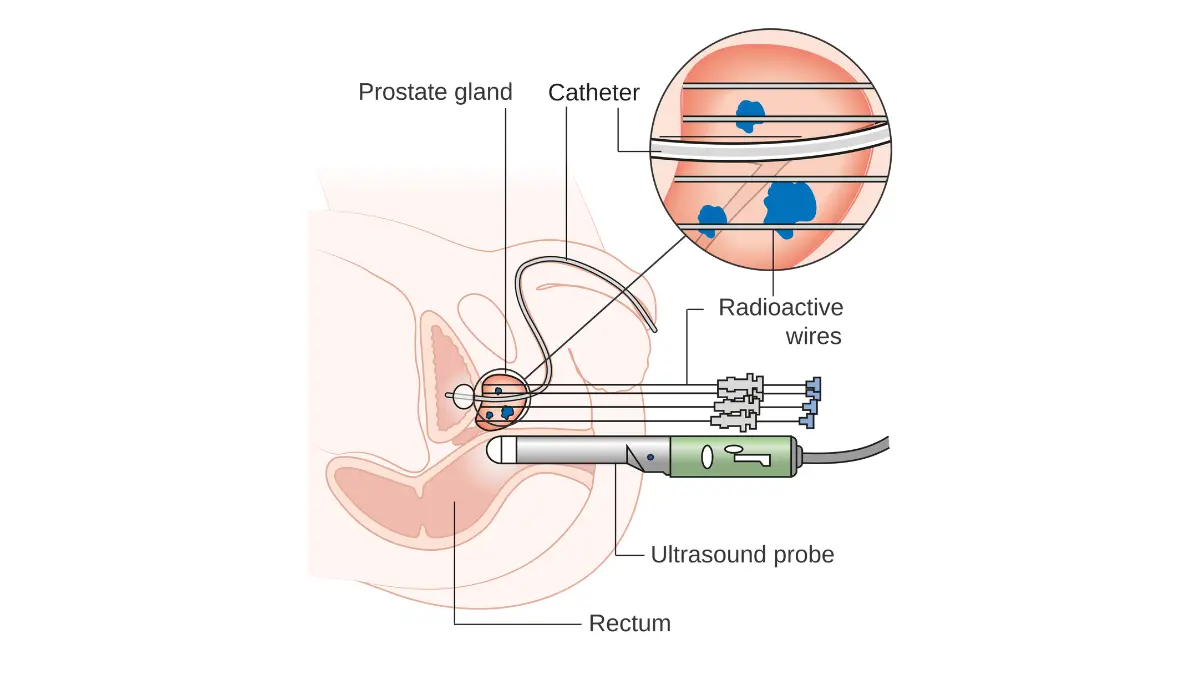
Brachytherapy places small radioactive seeds, each about the size of a grain of rice, into the prostate. Low-dose-rate (LDR) brachytherapy uses permanent seeds (iodine-125 or palladium-103), usually around 100 depending on prostate size, giving off low-dose radiation for weeks to months. High-dose-rate (HDR) brachytherapy is temporary: a higher-dose source (iridium-192 or cesium-137) is placed through catheters for a few minutes per session, about one to four sessions over two days, then removed.
Who brachytherapy suits
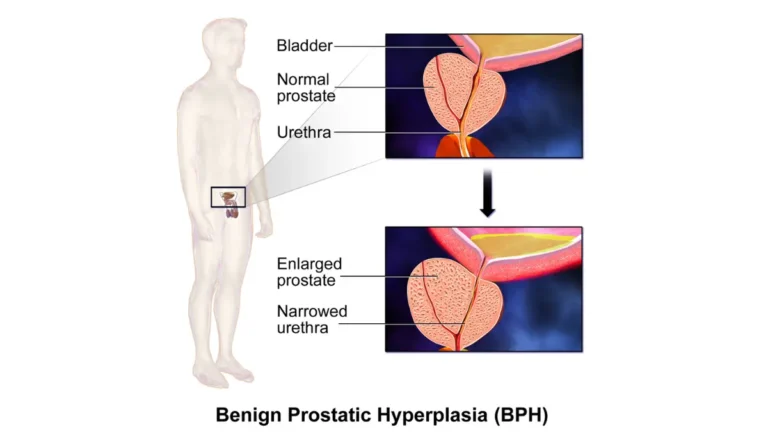
Brachytherapy alone is mainly for early-stage, lower-risk cancer; it can be combined with external beam for higher-risk disease. It may carry more urinary risk after a prior TURP (a procedure that removes prostate tissue) or with existing urinary problems, and it can be harder to perform in a large prostate.
Radiopharmaceuticals, including Pluvicto
Radiopharmaceuticals are injected and travel through the blood to reach cancer that has spread.
🔬 How It Works: Pluvicto (lutetium Lu 177 vipivotide tetraxetan) attaches to PSMA, a protein found on most prostate cancer cells, delivering radiation directly to those cells while limiting exposure elsewhere.
Pluvicto is approved for PSMA-positive metastatic, castration-resistant prostate cancer after treatment with a hormone therapy called an androgen receptor pathway inhibitor, and is given by IV about every six weeks for up to six doses. A PSMA PET scan confirms eligibility, and the FDA’s information on Pluvicto details its use. Bone-targeted options include radium-223, strontium-89, and samarium-153.
Is radiation as good as surgery for prostate cancer?
For early-stage prostate cancer, the short answer is that radiation and surgery offer similar cure rates — most experts consider external radiation, brachytherapy, and radical prostatectomy roughly equivalent for the earliest-stage cancers. The decision usually turns on side-effect trade-offs rather than survival.
Cure rates for early-stage disease
The American Cancer Society notes that for cancer confined to the prostate, especially lower-risk disease, radiation cure rates are about the same as with surgery. This is general information; the right option for you depends on your specific tumor and health.
What the 15-year ProtecT trial found
The 15-year ProtecT trial results followed 1,643 men with localized prostate cancer assigned to active monitoring, surgery, or radiotherapy.
📊 Clinical Data Point: At a median of 15 years, prostate-cancer-specific survival was about 97% across all three groups, with no significant difference in prostate cancer deaths (45 deaths, or 2.7%, overall) — Source: ProtecT trial, New England Journal of Medicine, 2023.
Metastases were more common in the monitoring group at 10 years, so the choice involves trade-offs rather than a clear survival winner. These results apply to localized disease and do not extend to high-risk or already-spread cancer. The NCI’s prostate cancer treatment summary covers the options by stage, and you can compare the recovery after surgery when weighing your choice.
Side effects and risks of radiation for prostate cancer
Radiation side effects depend on the type and dose, and many appear gradually rather than right away. The main categories are:
- Bowel: rectal irritation (radiation proctitis), diarrhea, sometimes blood in the stool.
- Urinary: frequency, burning, or blood in the urine (radiation cystitis); incontinence; rarely a narrowed urethra.
- Sexual: erectile dysfunction that tends to develop slowly over time.
- Other: fatigue, and sometimes leg or genital swelling (lymphedema).
Bowel and urinary effects
A rectal spacer placed between the prostate and rectum can lower the dose to the rectum. Urinary incontinence happens less often after radiation than after surgery, but the risk rises each year for several years. Most urinary and bowel problems improve over time, though occasionally they persist.
Sexual side effects
Unlike surgery, where erection problems appear right away, erectile dysfunction after radiation usually develops slowly, and the long-term risk is about the same as after surgery. Risk rises with age, and treatments can help.
Fatigue, lymphedema, and the question of second cancers
Some studies show a modestly higher relative risk of bladder or rectal cancer years after radiation than after surgery, but the absolute risk is low and a causal link is debated.
⚠️ Clinical Warning: New blood in the urine months or years after prostate radiation should be evaluated by your doctor, not assumed to be radiation cystitis. Rarely, it can signal a bladder problem that needs investigation.
✅ Patient Action: Ask your radiation oncologist which side effects are most likely for you, when they typically appear, which are reversible, and what symptoms should prompt an urgent call.
You can read more about how pelvic radiation affects the bladder and bowel.
How to lower your risk and what to ask your radiation oncologist
You can’t control everything about treatment, but a few steps and the right questions help you get the safest plan for your situation.
Steps that can reduce side-effect risk
- Ask whether a rectal spacer is appropriate to protect your rectum.
- Tell your team about any prior TURP or existing urinary symptoms, which can affect side-effect risk.
- Ask about course length, including whether a shorter, hypofractionated schedule fits your case.
Questions to bring to your consult
- Given my stage and risk group, which radiation type do you recommend, and why over surgery or active surveillance?
- What side effects are most likely for me, and when might they appear?
- Will I also need hormone therapy, and if so, for how long?
✅ Patient Action: Bring this question list to a consult with a board-certified radiation oncologist, and ask them to walk through how your specific risk group shapes the recommendation.
Frequently asked questions about radiation for prostate cancer
1. What are the main types of radiation for prostate cancer?
There are three types of radiation therapy for prostate cancer: external beam radiation (such as IMRT, SBRT, or proton beam), brachytherapy (radioactive seeds placed in the prostate, either permanent LDR or temporary HDR), and radiopharmaceuticals (radioactive drugs injected to treat cancer that has spread). Your care team can advise which fits your situation.
2. How long does radiation treatment take?
Treatment length depends on the type of radiation therapy for prostate cancer. Standard external beam runs five days a week for several weeks; hypofractionated courses use fewer, larger sessions; and SBRT can finish in just a few days. HDR brachytherapy is usually one to four sessions over two days. Your radiation oncologist can confirm your schedule.
3. Is radiation better than surgery for prostate cancer?
For early-stage disease, radiation therapy for prostate cancer and surgery offer similar cure rates. In the 15-year ProtecT trial, prostate-cancer survival was about 97% whether men chose monitoring, surgery, or radiation, with no significant difference. The decision usually turns on side-effect trade-offs. Discuss which option fits your tumor and health with your care team.
4. Does radiation for prostate cancer cause incontinence?
Urinary incontinence after radiation therapy for prostate cancer happens less often than after surgery, but the risk rises each year for several years. Bladder irritation, such as frequency, burning, or blood in the urine, can also occur and usually improves over time. Report any urinary symptoms to your radiation oncologist, who can suggest ways to manage them.
5. Does radiation cause erectile dysfunction?
Radiation therapy for prostate cancer can cause erectile dysfunction. Unlike surgery, where erection problems appear right away, radiation-related problems usually develop slowly, and the long-term risk is about the same as after surgery. Risk increases with age. Treatments, including medication, can help, so ask your doctor which options are appropriate for you.
6. What is brachytherapy and who is it for?
Brachytherapy is a type of radiation therapy for prostate cancer that places small radioactive seeds in the prostate. Used alone, it is mainly for early-stage, lower-risk cancer; combined with external beam for higher risk. It may not suit men with a prior TURP, urinary problems, or a large prostate. Your team can assess your candidacy.
7. Is proton therapy better than IMRT for prostate cancer?
In theory, proton beam therapy spares more nearby tissue, but studies have not shown it is more effective than IMRT as radiation therapy for prostate cancer. It is also more expensive and not widely available. Ask your radiation oncologist whether proton therapy would offer you any real advantage over standard options.
8. What is hypofractionated radiation?
Hypofractionation delivers slightly higher radiation doses over fewer sessions, shortening the overall course of radiation therapy for prostate cancer. Evidence suggests it works about as well as conventional schedules for localized disease, with fewer visits. Whether it suits you depends on your case, so discuss the options with your radiation oncologist before treatment planning.
9. Can you have surgery after radiation if it comes back?
Sometimes, but surgery or other treatments after radiation therapy for prostate cancer carry a higher risk of side effects such as incontinence. Repeat radiation may not be a good option, though brachytherapy is sometimes possible after external beam. Your care team will weigh the safest approach for your situation.
10. Does radiation for prostate cancer cause other cancers?
Some studies link radiation therapy for prostate cancer to a modestly higher relative risk of bladder and rectal cancer years later compared with surgery, but the absolute risk is low and causation is debated. New blood in the urine afterward should be medically checked rather than assumed to be radiation-related.
11. What is Pluvicto and when is it used?
Pluvicto (lutetium Lu 177) is a radiopharmaceutical used in radiation therapy for prostate cancer that has spread and is PSMA-positive, after hormone therapy. A PSMA PET scan confirms eligibility, and it is given by IV about every six weeks for up to six doses. Your oncologist can determine whether you are a candidate.
The bottom line on radiation for prostate cancer
Radiation offers several effective options for prostate cancer, and for early-stage disease its cure rates are comparable to surgery. The real decision is rarely about which treatment cures better — it is about the side-effect trade-offs you are most willing to accept and how they fit your life.
The right plan is the one you build with your urologist, radiation oncologist, and medical oncologist, using your stage, risk group, and priorities. To see how radiation fits the full picture of diagnosis and treatment, return to our complete guide to prostate cancer.
About this content
How this article was put together: researched from recognised health sources, drafted with the help of AI tools, and edited by hand, with sources linked throughout.

Sameer Patel is the founder and editor of My Medicine Advisor. He is not a doctor or medical professional — before starting this site he worked in banking,…
Medical disclaimer
The content on MyMedicineAdvisor is provided for general informational and educational purposes only and is not a substitute for professional medical advice, diagnosis, or treatment. Health information on this website should not be used to diagnose, treat, cure, or prevent any condition without guidance from a qualified healthcare professional. Always seek the advice of your doctor, physician, or another licensed healthcare provider with any questions you may have regarding a medical condition, symptoms, medications, or treatment decisions.