
On This Page – Quick Medical Summary
If you’ve noticed a weaker urine stream or more trips to the bathroom at night, one worry is probably louder than the rest: could this be prostate cancer? Here is the honest answer that shapes everything below — early prostate cancer usually causes no symptoms at all, and when urinary changes do appear, they are far more often caused by a non-cancerous enlarged prostate.
This guide routes you to what you need. If you have urinary symptoms, the next two sections explain which signs can occur and how doctors tell an enlarged prostate apart from cancer. If you’re weighing whether to get tested, skip ahead to what doctors actually check and when screening makes sense. If you’re supporting a partner or parent, the section on when to see a doctor gives you a concrete plan.
For the full picture, see our complete guide to prostate cancer signs, stages, and treatment.
ℹ️ Medical Disclaimer: This article provides general health education, not medical advice, diagnosis, or treatment. It cannot diagnose prostate cancer, interpret your symptoms or test results, or recommend screening, medication, or a procedure for your situation. Decisions about PSA testing, biopsy, or treatment should be made with a board-certified urologist or your primary care physician, who can weigh your personal risk, history, and preferences. If you have blood in your urine or semen, or new persistent bone pain, contact a healthcare provider promptly.
What are the early signs of prostate cancer?
Early prostate cancer usually causes no symptoms. When early signs do appear, they tend to be urinary and may include:
- A slow or weak urine stream, or trouble starting urination
- Needing to urinate more often, especially at night
- A sense that the bladder doesn’t fully empty
Most prostate cancers are found through screening before they cause any noticeable problem, according to the American Cancer Society’s overview of prostate cancer signs and symptoms. When these urinary symptoms do occur, they are usually caused by something other than cancer.
Why early prostate cancer is often silent
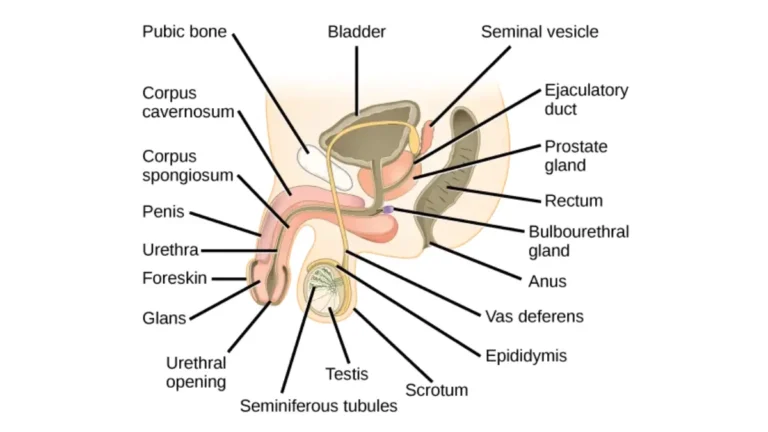
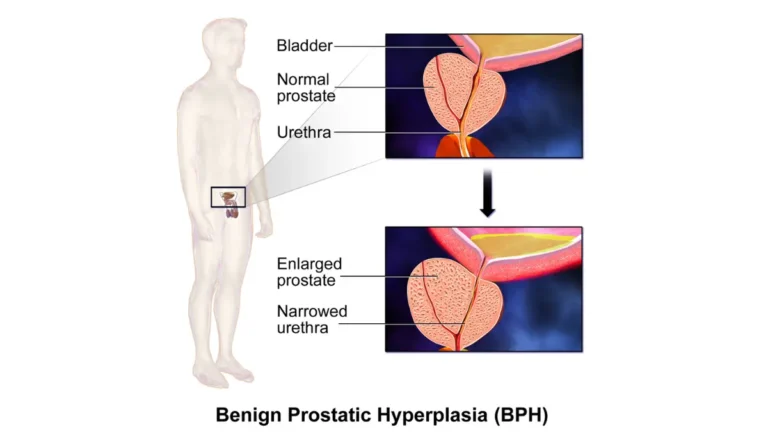
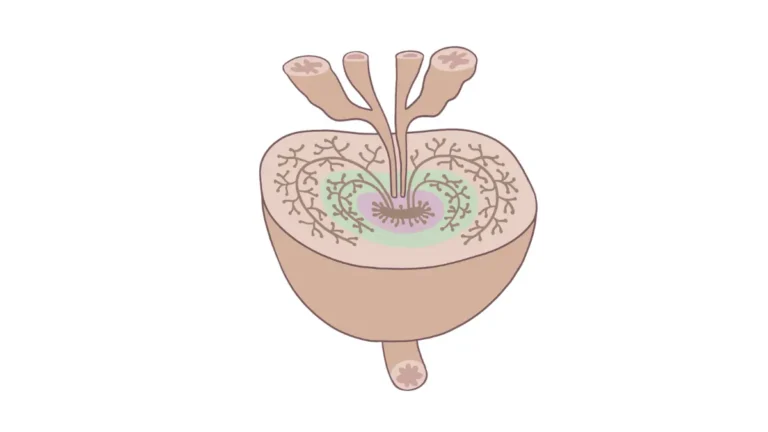
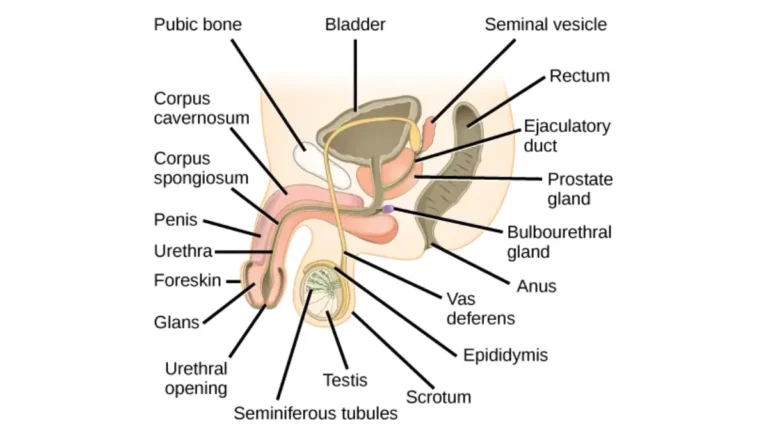
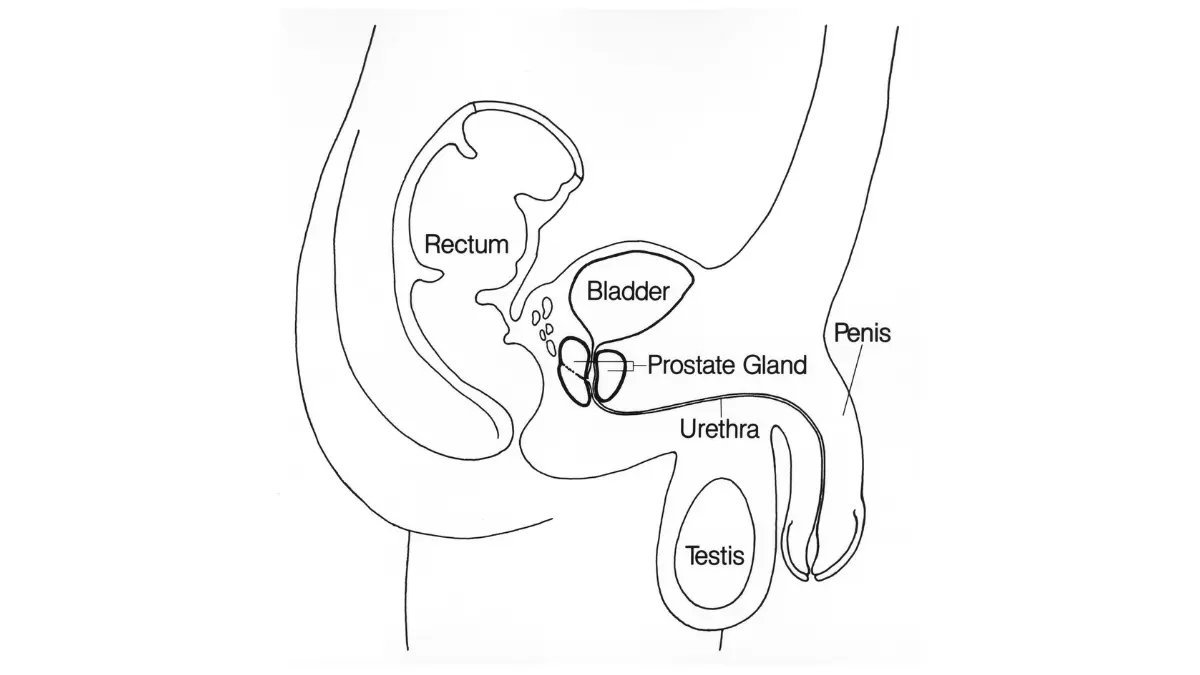
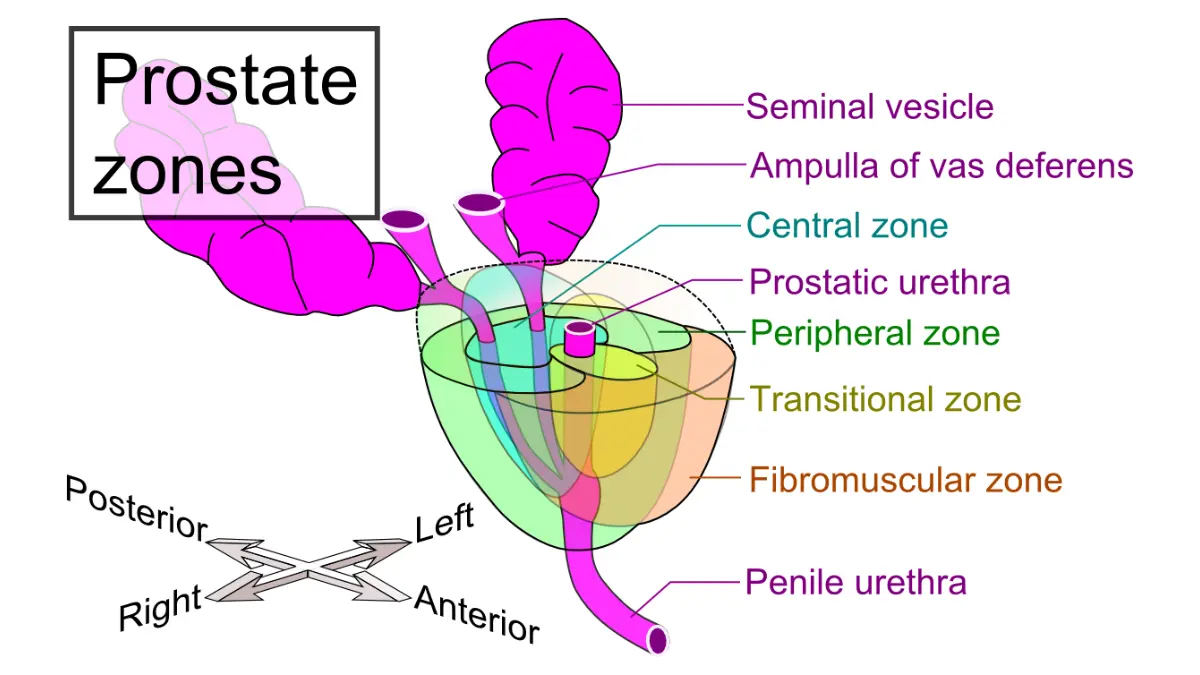
🔬 How It Works: The prostate is a walnut-sized gland that sits below the bladder and wraps around the urethra. A small early tumor often grows in the outer part of the gland, away from the urethra, so it presses on nothing and produces no symptoms — which is why it’s usually found by a test, not a feeling.
Symptoms that point to advanced disease
The louder symptoms belong to advanced prostate cancer, not early disease: blood in the urine or semen, trouble getting an erection, and pain in the hips, back, or ribs if cancer has spread to bone. None of these is an early warning sign.
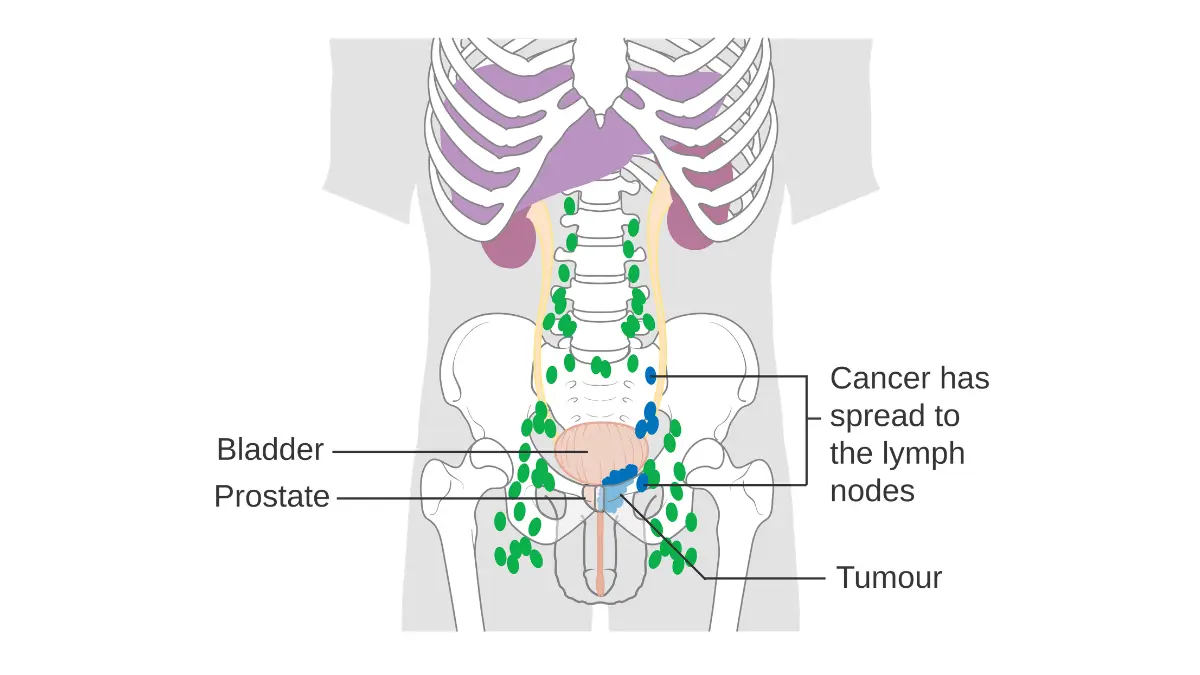
⚠️ Clinical Warning: New, persistent bone pain in the back, hips, or ribs, or blood in the urine or semen, are not typical early signs. They can reflect advanced disease or another condition that needs care, and they warrant a prompt call to your provider rather than watching at home.
| Early-stage signs (uncommon) | Advanced-stage signs | Key clinical detail |
|---|---|---|
| Weak/slow stream, frequency, nighttime urination | Blood in urine or semen, erectile dysfunction | Early urinary signs overlap heavily with non-cancerous causes |
| Often none at all | Bone pain (hips, back, ribs); fatigue, weight loss | Bone pain suggests possible spread, not early disease |
Source: American Cancer Society, Prostate Cancer Signs and Symptoms.
To understand what “advanced” means clinically, see how prostate cancer is staged.
BPH vs. prostate cancer: telling urinary symptoms apart
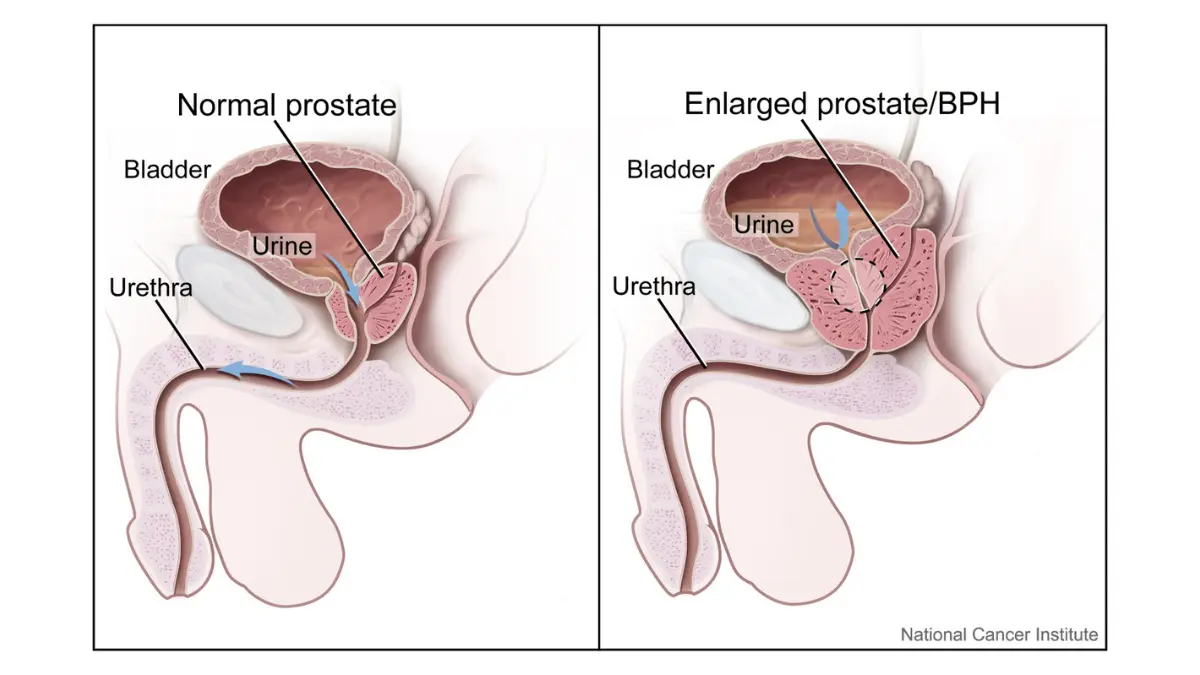
Frequent urination is far more often a sign of an enlarged prostate — benign prostatic hyperplasia (BPH) — than of prostate cancer. BPH is a common, non-cancerous growth of the gland that affects most men as they age.
Why an enlarged prostate causes the same symptoms
🔬 How It Works: Both BPH and a prostate tumor near the urethra can squeeze that tube, producing the same lower urinary tract symptoms — a weaker stream, urgency, and waking at night. Because the mechanism overlaps, the symptoms themselves can’t reveal which condition is behind them.
What symptoms can and can’t tell you
Urinary symptoms cannot confirm or rule out prostate cancer. Most urinary trouble in older men comes from BPH, and most men with early prostate cancer have no symptoms at all. That gap is exactly why doctors rely on tests rather than a symptom checklist.
🩺 Physician Note: A common point of confusion is treating urinary symptoms as a cancer alarm. Current guidance is clear that they are not a reliable way to detect prostate cancer — their presence usually points to BPH, and their absence does not mean cancer can be excluded.
What doctors check to detect prostate cancer
Doctors mainly use two tools to check for prostate cancer:
- A prostate-specific antigen (PSA) blood test
- A digital rectal exam (DRE)
Neither one diagnoses cancer on its own. A concerning result is a reason for further testing, not a diagnosis.
The PSA blood test — and why it isn’t cancer-specific
🔬 How It Works: PSA is a protein made by the prostate. The blood test measures how much is circulating — but PSA rises for many reasons, including BPH, infection, recent ejaculation, and simply getting older.
Because PSA isn’t specific to cancer, an elevated level does not mean you have it, and a lower level does not fully rule it out. There is no single universal “normal” PSA number; an older fixed cutoff is no longer treated as definitive, because the same value can mean different things depending on your age, prostate size, and how your PSA has changed over time.
✅ Patient Action: Ask your primary care clinician or a urologist whether a PSA test is appropriate for you — and ask them to interpret any result in the context of your age, prostate size, and prior PSA values, not as a single pass-or-fail number.
The digital rectal exam and what follows
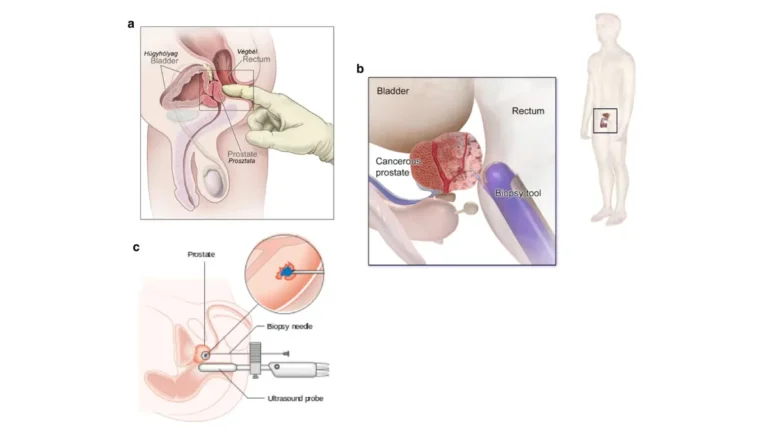
During a DRE, a clinician feels the back surface of the prostate for lumps or firmness; it’s used alongside PSA, not alone. If results are concerning, the next steps may include a repeat PSA, an MRI, or a prostate biopsy to confirm whether cancer is present. You can read more about what your PSA results can and can’t tell you.
When should men start prostate cancer screening?
Major guidelines tie the screening conversation to age and risk rather than to symptoms. The American Cancer Society recommends men discuss screening with a clinician starting at:
- Age 50 — men at average risk who expect to live at least 10 more years
- Age 45 — men at higher risk, including Black men and those with a father or brother diagnosed before 65
- Age 40 — men at the highest risk, such as those with several close relatives diagnosed young
The U.S. Preventive Services Task Force frames PSA screening for men aged 55–69 as an individual, shared decision-making choice, and recommends against routine screening for men 70 and older. The CDC’s summary of whether to get screened for prostate cancer reflects the same approach.
Higher-risk groups: Black men and family history
📊 Clinical Data Point: Black men have the highest prostate cancer incidence of any group in the United States and are about twice as likely to die from the disease as White men. — Source: American Cancer Society, 2026.
Researchers link much of that disparity to differences in access to timely care rather than biology alone, which is why guidelines suggest Black men begin the screening conversation earlier, around 45. A strong family history, or a known BRCA gene change, also raises risk factors enough to start earlier.
The benefits and the harms of screening
Screening is a genuine trade-off, not an automatic yes. It can catch aggressive cancers while they’re still curable, but it also produces false positives and can lead to diagnosing and treating slow-growing cancers that would never have caused harm. The absolute reduction in deaths is modest, which is why the decision is meant to be individual.
🩺 Physician Note: Guidelines emphasize there’s no one-size-fits-all answer here. The benefit depends on your age and risk, and on how you weigh catching an aggressive cancer early against the risk of treating one that never would have threatened you.
✅ Patient Action: Ask your clinician directly: “Given my age, family history, and race, do the benefits of PSA screening outweigh the harms for me?” To map your inherited risk first, our genetic risk assessment tool can help organize that history before the visit.
When to see a doctor — and what to ask
See a healthcare provider if you have urinary symptoms that are new, worsening, or bothersome, blood in your urine or semen, or new bone pain — not because these usually mean cancer, but because they deserve a proper evaluation.
Symptoms that warrant a prompt appointment
- Blood in the urine or semen
- New or worsening difficulty urinating, or a sudden inability to urinate
- New, persistent pain in the lower back, hips, or ribs
Questions to bring to your appointment
- Based on my age and risk, should I consider a PSA test?
- What could be causing my urinary symptoms besides cancer?
- If my PSA is elevated, what would the next step be?
✅ Patient Action: Before your visit, note when your symptoms started, how often they occur, and any family history of prostate, breast, or ovarian cancer — these can signal inherited risk. Bring the list, or build it with our symptom checker. A urologist is the specialist who evaluates abnormal results.
Why catching prostate cancer early matters
Prostate cancer is common but, when found early, highly survivable. For 2026, the American Cancer Society estimates about 333,830 new cases and about 36,320 deaths in the United States, and roughly 1 in 8 men will be diagnosed in his lifetime.
Survival is highest when it’s found early
About 7 in 10 cases are caught while still confined to the prostate, and that early detection is what drives the survival numbers.
📊 Clinical Data Point: When prostate cancer is found while still localized prostate cancer or regional, the 5-year relative survival rate is over 99%. Once it has spread to distant parts of the body — metastatic prostate cancer — that figure falls to roughly a third. — Source: NCI SEER data, via the American Cancer Society and CDC.
Read those figures as population averages, not predictions for any one person. Most prostate cancers grow slowly, survival for advanced disease continues to improve with newer treatments, and your own stage and overall health matter more than any headline percentage. These figures are drawn from the ACS survival rates for prostate cancer and the CDC’s U.S. Cancer Statistics prostate cancer summary.
Frequently asked questions about early prostate cancer signs
1. What are the early signs of prostate cancer?
Early prostate cancer usually causes no symptoms. When early signs appear, they’re typically urinary — a slow or weak stream, trouble starting, or needing to urinate more often, especially at night. These same symptoms are far more often caused by a non-cancerous enlarged prostate than by cancer.
2. Can you have prostate cancer with no symptoms?
Yes. Most early prostate cancers cause no noticeable symptoms, which is why many are found through PSA screening rather than because a man felt unwell. A tumor often grows in the outer gland, away from the urethra, so feeling fine does not confirm you are cancer-free.
3. Is frequent urination a sign of prostate cancer?
Frequent urination is far more often a sign of benign prostatic hyperplasia (BPH), a non-cancerous enlargement of the prostate, than of prostate cancer. Both conditions can press on the urethra and cause the same symptoms, so frequent urination alone cannot tell you whether cancer is present.
4. What’s the difference between BPH and prostate cancer symptoms?
There is no reliable symptom difference. BPH and prostate cancer cause the same lower urinary tract symptoms — weak stream, frequency, and waking at night. Most urinary symptoms in older men come from BPH, but only a clinician can sort them out, usually with a PSA test rather than symptoms alone.
5. What does a doctor check to detect prostate cancer?
Doctors mainly use two tools: a PSA blood test, which measures a protein made by the prostate, and a digital rectal exam, which checks the gland for lumps or firmness. Neither diagnoses cancer alone. Discuss with your primary care clinician or a urologist whether testing is right for you.
6. What is a normal PSA level?
There is no single universal “normal” PSA level. Interpretation depends on your age, prostate size, and how your PSA has changed over time, so the same number can mean different things for different men. Have your result interpreted by a clinician who knows your history.
7. At what age should men start prostate screening?
The American Cancer Society suggests discussing screening at age 50 for average-risk men, 45 for higher-risk men including Black men and those with a close relative diagnosed before 65, and 40 for the highest-risk men. Talk with your clinician about the right timing for your risk.
8. Are Black men at higher risk of prostate cancer?
Yes. Black men have the highest prostate cancer incidence of any group in the United States and are about twice as likely to die from the disease as White men, according to the American Cancer Society. Guidelines suggest beginning the screening conversation earlier, around age 45.
9. What are the symptoms of advanced prostate cancer?
Advanced prostate cancer can cause blood in the urine or semen, trouble getting an erection, and pain in the hips, back, or ribs if it has spread to bone. Fatigue and weight loss can also occur. These are not early signs and should be evaluated promptly by a healthcare provider.
10. When should I see a doctor about prostate symptoms?
See a healthcare provider if you have new or worsening urinary symptoms, blood in your urine or semen, or new bone pain. These symptoms usually have non-cancerous causes, but they deserve evaluation. A primary care clinician can assess them and refer you to a urologist if needed.
11. Is prostate cancer curable if caught early?
When prostate cancer is found while still confined to the prostate or nearby tissue, the 5-year relative survival rate is over 99%, and many of these cancers can be cured. These figures are population averages, not individual predictions. A urologist can explain what your specific stage means for treatment.
The bottom line on early prostate cancer signs
Two facts should stay with you. Early prostate cancer is usually silent, so feeling fine isn’t evidence you’re in the clear — and most urinary symptoms come from a non-cancerous enlarged prostate, not cancer. The most useful step isn’t watching for a warning sign; it’s having an informed conversation about whether screening fits your age and risk.
Ask your primary care clinician or a urologist whether a PSA test makes sense for you, given your age, family history, and personal risk.
About this content
How this article was put together: researched from recognised health sources, drafted with the help of AI tools, and edited by hand, with sources linked throughout.

Sameer Patel is the founder and editor of My Medicine Advisor. He is not a doctor or medical professional — before starting this site he worked in banking,…
Medical disclaimer
The content on MyMedicineAdvisor is provided for general informational and educational purposes only and is not a substitute for professional medical advice, diagnosis, or treatment. Health information on this website should not be used to diagnose, treat, cure, or prevent any condition without guidance from a qualified healthcare professional. Always seek the advice of your doctor, physician, or another licensed healthcare provider with any questions you may have regarding a medical condition, symptoms, medications, or treatment decisions.