
On This Page – Quick Medical Summary
Most men searching for prostate cancer symptoms fall into one of three situations, and where you are changes what to read first:
- Noticed bathroom changes and want to know if they’re serious? Start with the urinary symptoms section below.
- Have back, hip, or bone pain, or blood in your urine? Read the warning signs section now.
- Feel fine but want to know your risk? Skip to the screening section.
Here is what no symptom list tells you plainly. Early prostate cancer usually causes no symptoms at all. The urinary changes most men worry about — a weaker stream, getting up at night — come far more often from a benign enlarged prostate than from cancer.
That is not a reason to ignore symptoms. It is the reason knowing which signs are routine, which warrant a visit, and which need urgent care is what actually protects you. A board-certified urologist wrote this to help you tell them apart.
ℹ️ Medical Disclaimer: The symptoms, diagnostic tests, screening guidelines, and treatment options described here reflect current clinical evidence and are provided for educational purposes only. Whether a specific symptom, PSA result, or risk profile warrants testing or treatment depends on your age, family history, overall health, and a physical examination. Consult a board-certified urologist before acting on any clinical information in this article.
What early prostate cancer actually feels like
In its earliest and most treatable stage, prostate cancer usually causes no symptoms — which is exactly why waiting for them is risky.
Why early prostate cancer often has no symptoms
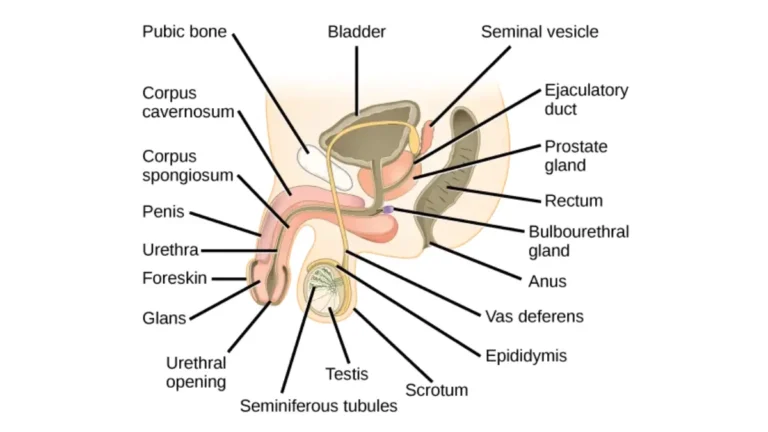
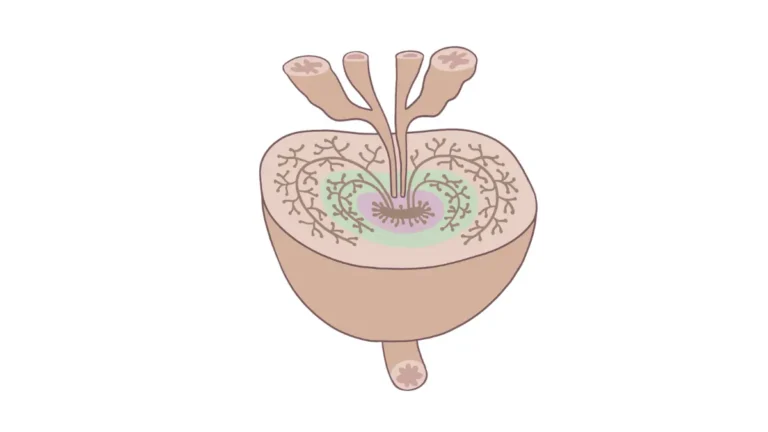
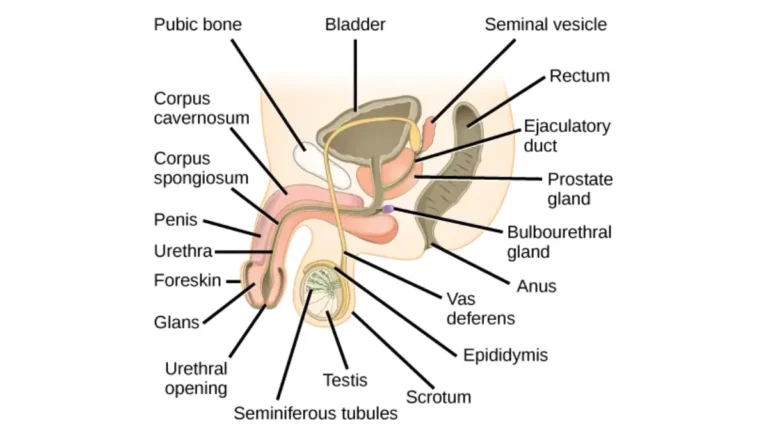
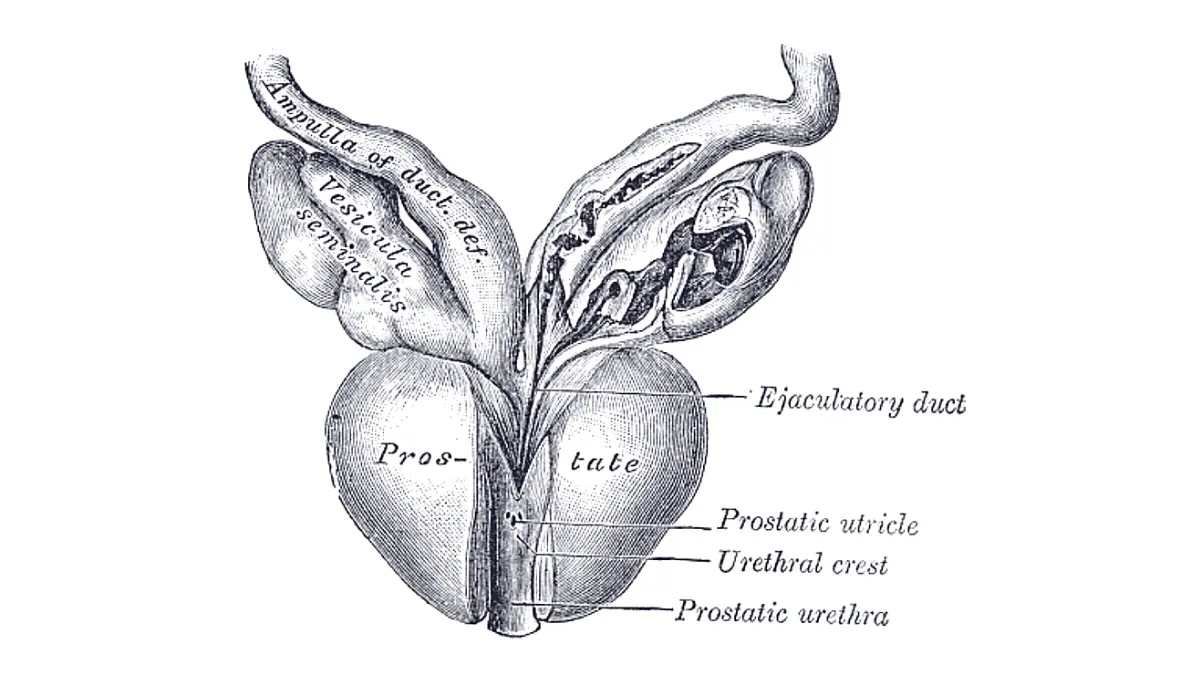
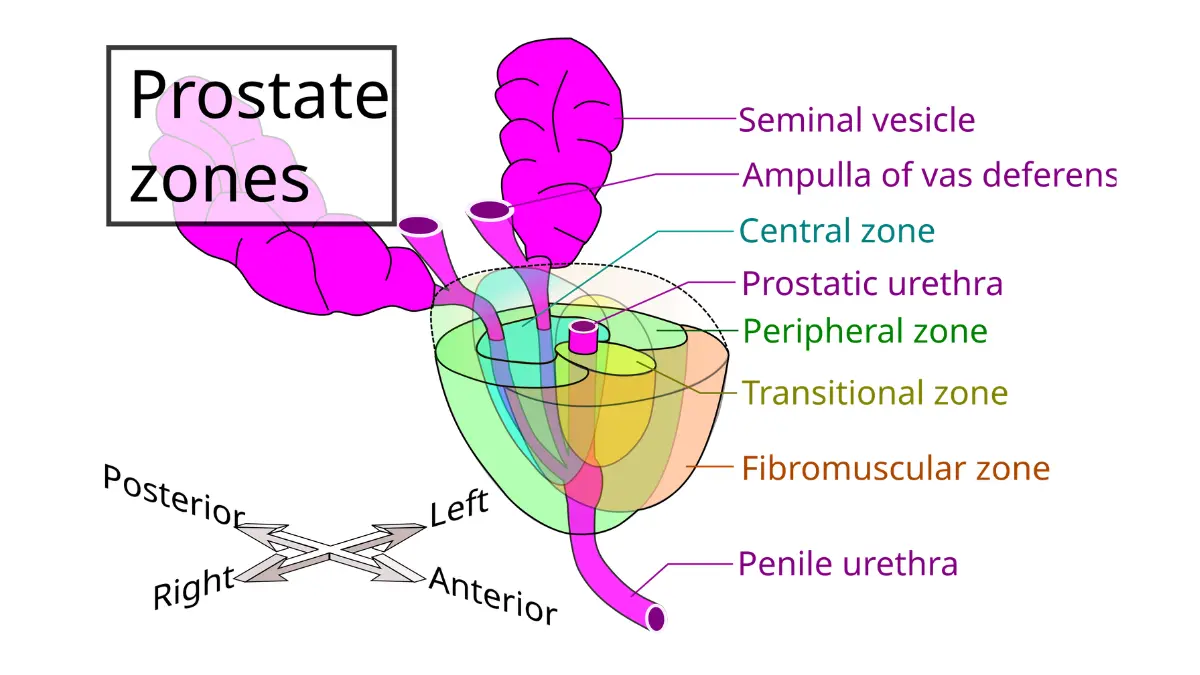
The prostate gland sits below the bladder and wraps around the urethra. Localized prostate cancer — cancer still confined to the gland — usually begins in the outer part of the prostate, away from the urethra. A man can carry meaningful cancer there and feel completely normal.
🔬 How It Works: Most prostate tumors start in the peripheral zone, the outer rim of the gland. Because that zone sits away from the urethra, a tumor can grow for years without pressing on the urinary channel. So urinary symptoms tend to appear late, if at all — not early.
The first signs men do notice
When early signs of prostate cancer appear, they are usually subtle: a stream that starts and stops, mild hesitancy, or more frequent nighttime trips. These overlap almost entirely with benign causes, which is why they are so easy to dismiss.
📊 Clinical Data Point: Prostate cancer is the most commonly diagnosed cancer in U.S. men, with about 333,830 new cases projected for 2026 — and the share found at an advanced, distant stage has been rising. — Source: American Cancer Society, Cancer Statistics 2026.
Urinary symptoms — and how to tell BPH from cancer
Prostate cancer symptoms, when they occur, most often involve urination — but the same symptoms are far more often caused by benign enlargement. Possible prostate cancer symptoms include:
- A weak, slow, or interrupted urine stream
- Difficulty starting urination, or urinary hesitancy
- Frequent urination, especially at night (nocturia)
- A feeling that the bladder doesn’t empty fully
- Blood in the urine (hematuria) or in the semen
- Pain or burning during urination
- New erectile difficulty
BPH vs prostate cancer: the difference
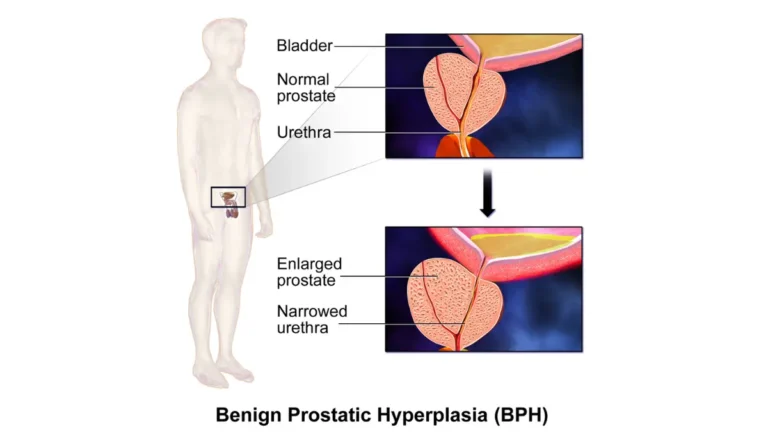
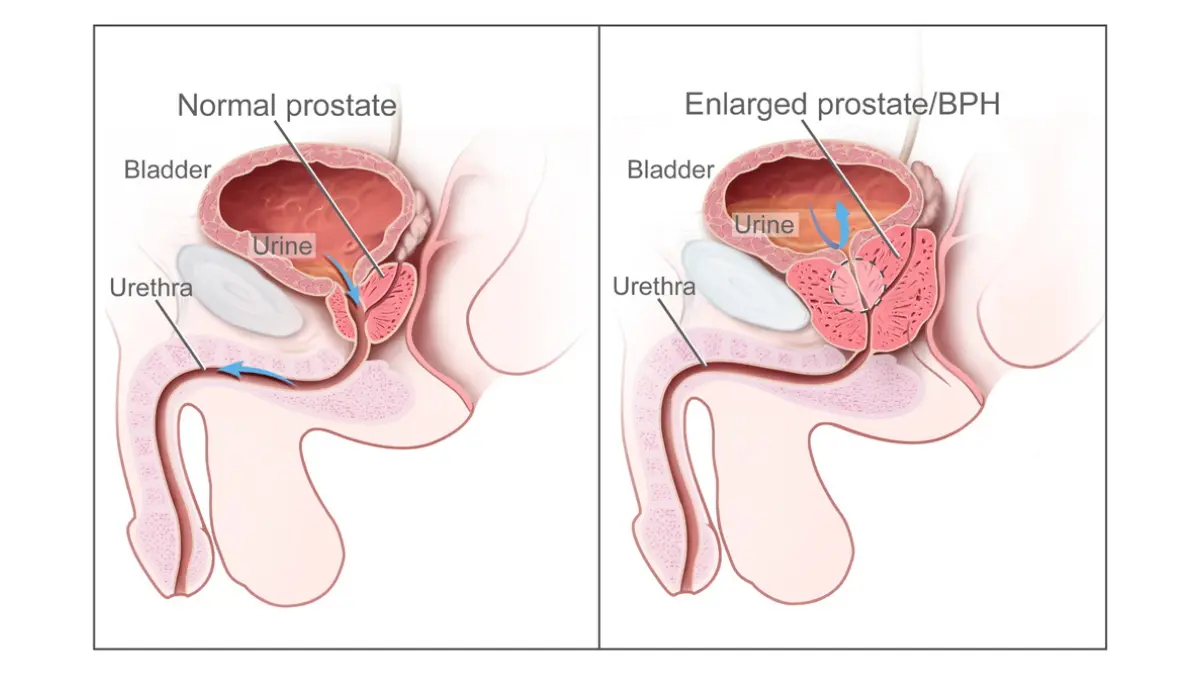
Here is the distinction that matters most. Benign prostatic hyperplasia (BPH) is non-cancerous growth that squeezes the urethra and causes urinary symptoms directly. Prostate cancer usually does not cause urinary symptoms until it is locally advanced. So urinary symptoms alone point more often to BPH than to cancer.
🩺 Physician Note: In my practice, the men who wait longest are the ones who assumed their symptoms were “just aging.” They were often right that it was BPH — but symptoms cannot tell you that on their own. The only way to separate benign enlargement from cancer is a PSA test, an exam, and sometimes imaging or biopsy.
Blood in urine or semen
Blood in the urine or semen is never something to interpret on your own. It is frequently benign, but it can also signal a urinary-tract cancer, so it warrants prompt evaluation — here is why blood in the urine can mean more than a UTI.
✅ Patient Action: If urinary symptoms are new, worsening, or come with blood, ask a board-certified urologist directly: “Do my symptoms and PSA level warrant further testing, and could this be BPH rather than cancer?” It helps to organize your symptoms first with our symptom checker and bring a note of when they started.
Warning signs that need a doctor now
Some symptoms suggest prostate cancer may have spread beyond the gland and need prompt — sometimes emergency — evaluation. Warning signs of advanced prostate cancer include:
- New, persistent pain in the back, hips, or pelvis
- Bone pain that is worse at night or doesn’t ease with rest
- Unexplained weight loss or persistent fatigue
- Swelling in the legs or feet
- Weakness or numbness in the legs

Bone pain and metastatic spread
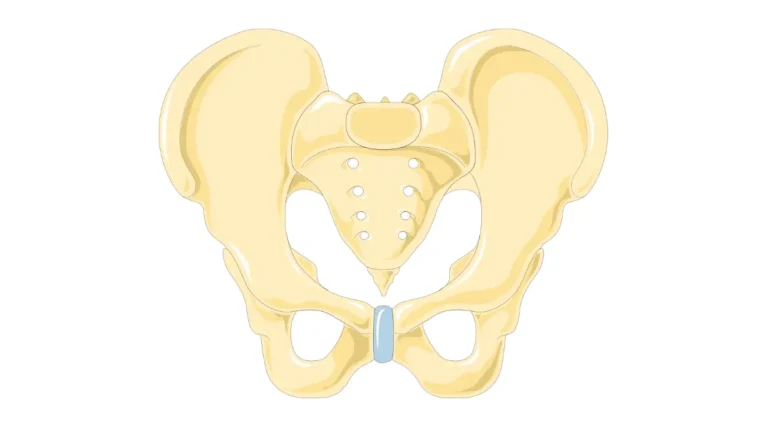
Prostate cancer tends to spread to bone. For some men, bone pain in the back or hips is the first thing they notice, because the cancer was silent in the prostate itself.
🔬 How It Works: Prostate cancer cells have a strong affinity for bone, especially the spine, pelvis, and hips. When they settle there, they disrupt normal bone turnover — producing a deep, aching pain that is often mistaken for arthritis or a back strain. This is why advanced disease and survival outcomes shift sharply by stage.
Emergency symptoms you should never ignore
One pattern is a true emergency. If metastatic prostate cancer presses on the spinal cord, it can cause permanent nerve damage within hours if untreated.
⚠️ Clinical Warning: New leg weakness or numbness, trouble walking, or loss of bladder or bowel control — especially with back pain — can signal spinal cord compression. This is a medical emergency. Go to an emergency department the same day and tell them you have these symptoms.
✅ Patient Action: For new bone pain without an emergency sign, ask a urologist or oncologist: “Given my symptoms, should I have a PSA test and imaging to check whether this could involve my prostate?” For the full staging picture, see our guide to prostate cancer signs, stages, and treatment.
Who’s at higher risk and when to get screened
Because early prostate cancer is usually silent, screening — not symptoms — is how it is caught early.
Risk factors that matter most
The strongest risk factors are age, family history, and ancestry. Most cases occur after age 65, and Black men carry the heaviest burden.
📊 Clinical Data Point: Lifetime risk of a prostate cancer diagnosis is roughly 1 in 8 men. Black men have the highest incidence and an elevated risk of dying from the disease. — Source: American Cancer Society / CDC U.S. Cancer Statistics, 2026.
Screening ages by risk group
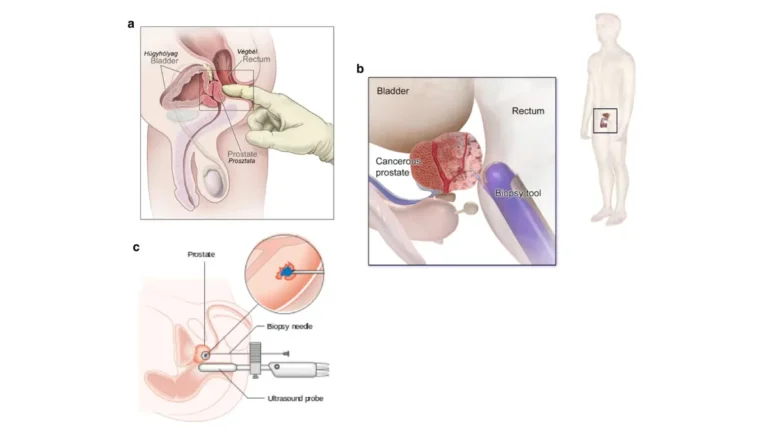
Screening uses a PSA (prostate-specific antigen) blood test, sometimes with a digital rectal exam (DRE).
📊 Clinical Data Point: A baseline PSA test may begin at ages 45–50 for average-risk men, with regular screening every 2–4 years for ages 50–69. Men at higher risk — Black men, a family history, or a known BRCA mutation — may start at ages 40–45. — Source: AUA/SUO Early Detection of Prostate Cancer Guideline, 2026.
A PSA test measures a protein made by the prostate; a high or rising level prompts further evaluation, not an automatic diagnosis. Screening is a shared decision, because it carries real trade-offs including false positives and overdiagnosis — the CDC’s guidance on deciding whether to get screened walks through them.
✅ Patient Action: If you’re 50 or older — or 45 with a family history or Black ancestry, or earlier with a known BRCA mutation — ask a urologist: “Based on my age and risk, should I start PSA screening, and how often?” If inherited risk is a concern, check your family-history risk with our genetic risk assessment tool, and review the early warning signs of prostate cancer.
Helping a man who keeps putting it off
If you’re reading this for a partner, father, or friend who won’t see a doctor, you’re in a common and frustrating spot — and a few approaches genuinely help.
How to start the conversation
Avoid leading with fear. Lead with information: a PSA test is a single blood draw, and most men who get tested do not have cancer. Offer to book the appointment and go with him.
What to bring to the first appointment
Bring a short written list: the symptoms you’ve noticed, when they started, any family history of prostate or breast cancer, and his current medications. That turns a vague visit into a focused one.
✅ Patient Action: Suggest one concrete first step instead of “see a doctor.” For example: “Let’s book a 15-minute visit to ask about a PSA test.” A telehealth visit can be an easier entry point for a man who resists in-person care.
A urologist’s bottom line on prostate symptoms
After years of evaluating men for these exact symptoms, here is what I most want you to take away.
What I tell my patients
Most urinary symptoms are not cancer — but symptoms are a poor screening tool, because the most treatable prostate cancers cause none. The men who do best are not the ones with no symptoms; they’re the ones who got tested before symptoms ever appeared.
🩺 Physician Note: The single most useful thing a man can do is separate two questions in his mind. “Are my symptoms bothering me?” is a quality-of-life question, often BPH. “Am I due for screening based on my age and risk?” is a cancer question. They are not the same — and answering only the first is how men miss the second.
The one mistake to avoid
Don’t self-diagnose from a symptom list, in either direction. Symptoms can falsely reassure as easily as they can frighten.
✅ Patient Action: Whatever your symptoms, ask a board-certified urologist directly whether your age and risk profile warrant a PSA test. That one question matters more than any symptom you can name.
Prostate cancer symptoms: frequently asked questions
1. What are the first signs of prostate cancer?
In its earliest stage, prostate cancer usually causes no signs, because tumors typically start in the outer prostate, away from the urethra. When first signs do appear, they are subtle urinary changes — a weaker stream, hesitancy, or more frequent nighttime urination — that overlap heavily with benign enlargement. Screening, not symptoms, detects early prostate cancer most reliably.
2. Can you have prostate cancer with no symptoms?
Yes, and it’s common. Most early, localized prostate cancer produces no symptoms, which is why it is usually found through a PSA blood test rather than because a man feels unwell. Absence of symptoms does not mean absence of cancer. This is exactly why screening by age and risk matters more than waiting for prostate cancer symptoms to appear.
3. What urinary symptoms does prostate cancer cause?
Prostate cancer symptoms involving urination can include a weak or interrupted stream, hesitancy, frequent nighttime urination, incomplete emptying, blood in the urine or semen, and burning. These same symptoms are far more often caused by benign prostatic hyperplasia. Because symptoms cannot distinguish the two, a PSA test and exam are needed. Consult a board-certified urologist if urinary symptoms are new or worsening.
4. Is back pain a sign of prostate cancer?
Usually not — most back pain is musculoskeletal. But prostate cancer commonly spreads to bone, and for some men persistent back, hip, or pelvic pain is the first noticeable sign of advanced disease. Pain that is constant, worse at night, or paired with leg weakness needs prompt evaluation. Consult a board-certified urologist or oncologist about new, unexplained bone pain.
5. How is prostate cancer different from an enlarged prostate?
An enlarged prostate (BPH) is non-cancerous growth that presses on the urethra and directly causes urinary symptoms. Prostate cancer is malignant and usually causes no urinary symptoms until locally advanced. Symptoms alone cannot tell them apart — both can raise PSA, and only testing and sometimes biopsy can. Consult a board-certified urologist to clarify which is behind your prostate cancer symptoms.
6. At what age should men get screened for prostate cancer?
Most guidelines support a shared screening discussion around age 50 for average-risk men, with a baseline PSA sometimes offered at 45–50. Men at higher risk — Black men, a family history, or a known BRCA mutation — may start at 40–45, and screening generally continues to about age 70. Consult a board-certified urologist about your timing.
7. Does prostate cancer cause erectile dysfunction?
Erectile dysfunction is more often caused by age, cardiovascular disease, or diabetes than by prostate cancer. Advanced prostate cancer can contribute, and erectile dysfunction is also a common side effect of prostate cancer treatment such as surgery or radiation. New erectile difficulty with urinary symptoms is worth checking. Consult a board-certified urologist if erectile changes accompany other prostate cancer symptoms.
8. What are prostate cancer symptoms in men over 50?
In men over 50, prostate cancer symptoms most often overlap with benign enlargement: nighttime urination, a weak stream, and hesitancy. Because risk rises sharply with age, men over 50 are also the group for whom screening matters most. Symptoms stay unreliable for separating cancer from BPH at any age. Consult a board-certified urologist about screening after 50.
9. Are Black men at higher risk of prostate cancer?
Yes. Black men have notably higher prostate cancer incidence, tend to develop it younger, and face a higher risk of dying from it. Because of this, many specialists suggest beginning screening discussions earlier, around age 40–45. Recognizing prostate cancer symptoms matters, but earlier screening matters more for this group. Consult a board-certified urologist about starting screening early.
10. How quickly do prostate cancer symptoms progress?
Most prostate cancers grow slowly, and symptoms, when they occur, often develop gradually over months or years. Some aggressive forms progress faster and can cause bone pain or urinary obstruction more quickly. Because pace tracks with the tumor’s grade (Gleason score), symptoms alone don’t predict it. Consult a board-certified urologist to understand your specific prostate cancer risk.
11. Can early prostate cancer be treated successfully?
Yes — outcomes for early prostate cancer are among the best of any cancer. When it is still localized or regional, 5-year relative survival approaches 100%; once it spreads to distant sites, survival drops sharply. Catching it before symptoms appear, through screening, gives the strongest odds. Consult a board-certified urologist about treatment options for your stage.
The bottom line on the symptoms men ignore
The symptoms men most often ignore — a weaker stream, more nighttime trips, mild hesitancy — are usually benign. The real mistake is treating that as permission to skip screening, because the most treatable prostate cancers cause no symptoms at all.
Know the urinary signs, take bone pain and bleeding seriously, and treat any leg weakness or loss of bladder control as an emergency. Most of all, base your decision to get a PSA test on your age and risk — not on whether you feel a symptom. If you’re due, book a urologist this month and start with the complete guide to prostate cancer signs, stages, and treatment.
About this content
How this article was put together: researched from recognised health sources, drafted with the help of AI tools, and edited by hand, with sources linked throughout.

Sameer Patel is the founder and editor of My Medicine Advisor. He is not a doctor or medical professional — before starting this site he worked in banking,…
Medical disclaimer
The content on MyMedicineAdvisor is provided for general informational and educational purposes only and is not a substitute for professional medical advice, diagnosis, or treatment. Health information on this website should not be used to diagnose, treat, cure, or prevent any condition without guidance from a qualified healthcare professional. Always seek the advice of your doctor, physician, or another licensed healthcare provider with any questions you may have regarding a medical condition, symptoms, medications, or treatment decisions.