
On This Page – Quick Medical Summary
Norovirus usually makes you sick 12 to 48 hours after you are exposed, and most people feel better within 1 to 3 days. The longer problem comes afterward: the virus stays in your stool for 2 weeks or more after you recover, and you can still spread it during that time.
No medicine targets norovirus, so care at home centers on replacing the fluid you lose. Protecting everyone else in the house comes down to two habits: washing your hands with soap and water, and not cooking for or looking after anyone until at least 2 days after your last episode of vomiting or diarrhea.
How long norovirus lasts and stays contagious
Plan on 1 to 3 days of illness, then at least 2 weeks of careful handwashing. Norovirus can already be in vomit or stool before you feel sick, which is how it moves through a household before anyone knows what it is.
The riskiest window for other people is the illness itself and the 2 days that follow. CDC advises waiting at least 48 hours after symptoms stop before you prepare or handle food or care for others. It singles out restaurants, schools, daycare and long-term care facilities (How to Prevent Norovirus).
| Stage | Typical timing | What is happening | What it means for you |
|---|---|---|---|
| Before symptoms | Within 12–48 hours of exposure | Virus can already be in vomit or stool | You may spread it before you know you are sick |
| Illness | 1–3 days | Vomiting, diarrhea, nausea, stomach pain | Stay home and focus on fluids |
| First 2 days after the last symptom | 48 hours | Still highly contagious | Do not prepare food or care for others |
| Recovery | 2+ weeks | Virus still present in stool | Wash hands after the toilet and before touching food |
Source: CDC, About Norovirus and How to Prevent Norovirus.
You can pick up norovirus by caring for someone who is sick, sharing their food or utensils, eating food they handled, or touching a contaminated surface and then your mouth.
How do you know it’s norovirus?

Diarrhea, vomiting, nausea and stomach pain are the most common symptoms, and some people also get a fever, headache or body aches (About Norovirus). A bad case can mean being sick many times a day.
The nickname “stomach flu” misleads people. Norovirus has no connection to influenza, and the flu vaccine does not protect against viral gastroenteritis (NIDDK).
Blood in the stool points somewhere else. Bloody diarrhea, or diarrhea with a fever, can signal a bacterial or parasitic infection. It is a reason to get checked rather than reach for an over-the-counter diarrhea medicine (viral gastroenteritis treatment, NIDDK).
When vomiting and diarrhea become an emergency
Children younger than 5, older adults and people with weakened immune systems are more likely to develop severe norovirus infections (About Norovirus). The main danger is dehydration. It shows up as less urination, a dry mouth and throat, and dizziness when standing; a dehydrated child may cry with few or no tears and seem unusually sleepy or fussy.
Newborns and infants can become severely dehydrated within a day or two of diarrhea. Pregnant women, older adults and adults with other health conditions should get medical care right away for any symptoms (NIDDK). For a healthy adult, these are the signals for a prompt visit:
- diarrhea lasting more than 2 days
- a high fever
- frequent vomiting
- six or more loose stools in a day
- being unable to drink enough to keep up
If you are unsure how these symptoms fit together, the symptom checker walks you through them before you call.
Get emergency care now if:
- someone cannot keep any liquid down and is passing little or no urine
- an adult has a change in mental state, such as unusual irritability or very low energy
- a baby or young child has had no wet diaper for 3 hours or more, cries without tears, or has sunken eyes or cheeks
- anyone stays dizzy on standing even after drinking more
Call 911 if the person is too unwell to travel safely.
Severe dehydration may need treatment in a hospital with fluids given through a vein (About Norovirus).
Fluids first, medicines second
Antibiotics won’t help, because they work against bacteria and norovirus is a virus. No specific medicine treats it either (About Norovirus). Recovery depends on replacing what you lose.
For mild dehydration, an over-the-counter oral rehydration solution (ORS) helps most. Sports drinks and other drinks without caffeine or alcohol also help, though they may not replace the minerals you have lost.
Most adults do well with water, fruit juice, sports drinks or broth, and saltine crackers add back some electrolytes. Use an ORS instead if any of these apply (NIDDK):
- you are older
- your immune system is weakened
- you have severe diarrhea
- you have signs of dehydration
A restricted diet does not help treat viral gastroenteritis, so you can eat when your appetite returns.
Over-the-counter diarrhea medicines
Some adults can take loperamide or bismuth subsalicylate for diarrhea from viral gastroenteritis. Skip both if you have bloody diarrhea or a fever, and have a doctor look at the cause instead (NIDDK).
Note: These medicines can be unsafe for infants and children. Ask the child’s doctor before giving any of them, and ask whether an ORS should come first.
When a child is sick
Give an ORS as directed to replace lost fluid and electrolytes, and talk with a doctor before giving one to an infant. If the child is a newborn, was born prematurely or has other medical conditions, call the doctor as soon as symptoms start (NIDDK). Babies should keep getting breast milk or formula as usual.
What happens if you see a doctor?
A stool test can confirm norovirus by detecting the virus’s genetic material or proteins. Public health laboratories and many clinical labs can run it (About Norovirus).
Treatment still centers on hydration. A doctor may prescribe medicine to control severe vomiting, and severe dehydration may be treated in the hospital (NIDDK).
Before you leave, ask whether an ORS at home is enough or whether you need IV fluids.
You may have blood drawn in the emergency department. Why ER teams run a basic metabolic panel walks through what that panel shows. What a high BUN-to-creatinine ratio means covers one of the numbers used to tell dehydration apart from a kidney problem.
5 to 25 tablespoons of bleach per gallon of water
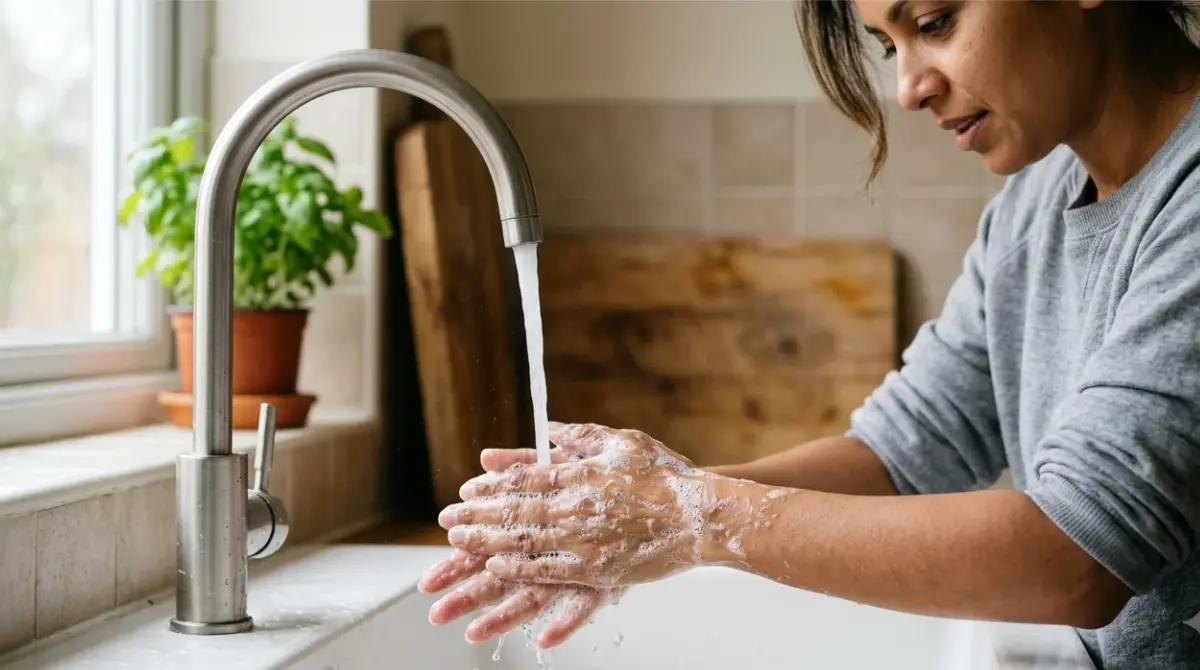
Hand sanitizer does not work well against norovirus. Wash with soap and water for at least 20 seconds, especially after using the toilet or changing diapers. Wash again before you eat, prepare food or give anyone medicine. You can use sanitizer as well, after washing (How to Prevent Norovirus).
Hard surfaces need chlorine bleach at 1,000 to 5,000 parts per million (ppm), which CDC puts at 5 to 25 tablespoons of household bleach per gallon of water. A disinfectant registered with the EPA as effective against norovirus also works. Bottles differ in strength, so the amount you need depends on the percentage printed on your label.
| Bleach strength on the label | Tablespoons per gallon for 1,000 ppm | Tablespoons per gallon for 5,000 ppm |
|---|---|---|
| 5.25% | About 5 | About 24½ (roughly 1½ cups) |
| 6% | About 4¼ | About 21¼ (roughly 1⅓ cups) |
| 8.25% | About 3 | About 15½ (roughly 1 cup) |
Amounts calculated from CDC’s 1,000 to 5,000 ppm range (How to Prevent Norovirus) by simple dilution, then rounded.
After someone vomits or has diarrhea:
- Put on rubber or disposable gloves.
- Wipe up the whole area with paper towels and put them in a plastic trash bag.
- Apply the bleach solution or registered disinfectant and leave it on for at least 5 minutes.
- Clean the area again with soap and hot water.
- Wash the laundry, take out the trash and wash your hands.
Soiled clothes and sheets go straight into the wash. Handle them with gloves and without shaking them. Wash with detergent and hot water on the longest cycle, and machine dry on the highest heat. In the kitchen, oysters and other shellfish need an internal temperature of at least 145°F, and quick steaming does not heat them enough to kill the virus.
Can you catch norovirus again?
A strain called GII.17 caused fewer than 10% of US norovirus outbreaks in the 2022–23 season and 75% of them in 2024–25. It overtook GII.4, which had long been the leading cause (CDC, Emerging Infectious Diseases). That season also began in early October 2024, ahead of the usual early-December start.
Repeat infections happen because there are many types of norovirus, and infection with one type may not protect you against another. People can build some protection against specific types, but how long it lasts is not known (About Norovirus). In the United States, norovirus is more likely to cause infections in winter.
Start fluids now and count 48 hours from the last symptom
Begin an ORS, or another drink without caffeine or alcohol, as soon as vomiting or diarrhea starts. Write down the time of the last episode, because 48 hours after it is the earliest point to go back to preparing food or looking after others. Keep up careful handwashing after the toilet for at least 2 weeks. Get care the same day if any sign from the emergency list appears or an adult’s diarrhea lasts past 2 days.
Found this helpful? See more of our guides on Google.
Want to see our guides first on Google?
Found this helpful? See more of our guides on Google.
About this content
How this article was put together: researched from recognised health sources, drafted with the help of AI tools, and edited by hand, with sources linked throughout.

Dr. Pooja Sahu, MBBS, is a medical reviewer for MyMedicineAdvisor. She is a clinical physician whose experience includes serving as a Junior Resident in Nephrology at Dr. Ram…
Medical disclaimer
The content on My Medicine Advisor is provided for general informational and educational purposes only and is not a substitute for professional medical advice, diagnosis, or treatment. Health information on this website should not be used to diagnose, treat, cure, or prevent any condition without guidance from a qualified healthcare professional. Always seek the advice of your doctor, physician, or another licensed healthcare provider with any questions you may have regarding a medical condition, symptoms, medications, or treatment decisions.