
On This Page – Quick Medical Summary
Under the American Cancer Society guideline released November 12, 2026, a PSA of 3.0 ng/mL or higher counts as elevated for men under 70, and 6.5 ng/mL or higher for men aged 70 to 74 (ACS guideline for prostate cancer early detection). An elevated result is a reason to repeat the test, preferably 2 weeks to 3 months later, and it does not mean you have cancer.
Age matters for two reasons. PSA drifts upward as the prostate grows, so a value that is ordinary at 72 stands out at 45. The level that leads to more testing also changes at 70.
PSA levels by age, from your 40s to your 70s
In a large US study cited by the AUA/SUO guideline, half of men in their 40s had a PSA below 0.68 ng/mL. The table sets that typical value beside two other numbers for each age group: the upper limit seen in healthy men in a 1993 community study, and the level the 2026 ACS guideline treats as elevated.
| Age | Typical (median) PSA | Upper limit in healthy men, 1993 study | ACS 2026: elevated at or above |
|---|---|---|---|
| 40–49 | 0.68 ng/mL | 2.5 ng/mL | 3.0 ng/mL (screening from 45 for higher-risk men) |
| 50–59 | 0.88 ng/mL (50–54); 0.96 ng/mL (55–59) | 3.5 ng/mL | 3.0 ng/mL |
| 60–69 | About 1.0 ng/mL at age 60 | 4.5 ng/mL | 3.0 ng/mL |
| 70–74 | Not reported | 6.5 ng/mL (70–79) | 6.5 ng/mL |
| 75 and older | Not reported | 6.5 ng/mL (to age 79) | Screening not recommended |
Sources: medians from the AUA/SUO early detection guideline, 2023, amended 2026; upper limits from a study of 471 men in Olmsted County, Minnesota; elevated levels from the ACS guideline. Ranges vary by laboratory and test method, so the range printed on your own report is the one your lab uses.
The 1993 upper limits mark the value that 95% of men without known cancer stayed at or below. In the same study, PSA in a healthy 60-year-old rose about 3.2% a year, roughly 0.04 ng/mL.
The ACS levels do a different job. They decide when a result is repeated and followed up, and they come with different schedules by risk: every 2 years from 50 to 69 for men at average risk, and every year from 45 to 69 for Black men. The reasons for the earlier start are set out in how prostate cancer risk and screening timing differ for Black men.
Why does your lab report still say 0 to 4.0?

Sample report (invented values): “PSA, total: 3.4 ng/mL (reference 0.0–4.0).”
A result like that would not normally carry an H flag in the patient portal, because it sits inside the printed range. Under the ACS guideline, the same 3.4 is high enough for a 55-year-old to have the test repeated.
The 4.0 figure is older practice. For years, most doctors treated 4.0 ng/mL or lower as normal, and some still use about 2.5 ng/mL for younger men and about 5 ng/mL for older men. The National Cancer Institute’s PSA fact sheet states that no single threshold separates a normal from an abnormal PSA, partly because no specific level means a person has cancer.
That gap explains most of the confusion. The printed range describes the lab’s reference population, while the level that prompts a repeat test is a guideline decision. Guidelines differ here. The ACS line is 3.0 for men under 70; AUA/SUO guidance uses no single cutoff and bases follow-up on age, PSA level, family risk, life expectancy and general health.
Below 3 ng/mL, 3 and over, and very high levels
Cancer turned up in 15.2% of the 2,950 men in the Prostate Cancer Prevention Trial whose PSA never rose above 4.0 ng/mL (trial results from the National Cancer Institute’s research network). These men, aged 62 to 91, had biopsies after 7 years because the trial called for them, whether or not anything looked wrong.
The rate climbed with each step in PSA: 6.6% at 0.5 ng/mL or less, 10.1% at 0.6 to 1.0, 17.0% at 1.1 to 2.0, 23.9% at 2.1 to 3.0 and 26.9% at 3.1 to 4.0. Of the cancers found, 14.9% had a Gleason score of 7 or higher, which marks higher-grade disease. That works out to about 2 in every 100 men biopsied.
At 3.0 or above, a man under 70 is in the range the ACS calls elevated. Even among men who go on to a biopsy because of a raised PSA, only about 25% are found to have prostate cancer (NCI).
Very high values follow a different path. For a very high PSA, a doctor may recommend going straight to a biopsy instead of repeating the test (ACS). Above 50 ng/mL, with no infection or recent procedure to explain it, a biopsy may be skipped when it would carry significant risk or when treatment is urgent (AUA/SUO guideline).
The same number reads differently at 45 and at 72

Sample results (invented values), each read against the two guidelines above:
| Sample result | Age | How the ACS 2026 guideline reads it | What the AUA/SUO guideline describes |
|---|---|---|---|
| 2.8 ng/mL | 45 | Below 3.0, not elevated | PSA of 1 to 3: re-screen every 1 to 4 years |
| 2.8 ng/mL | 72 | Below 6.5, not elevated; screening at 70 to 74 is a personal decision | Interval set by life expectancy and general health |
| 6.2 ng/mL | 58 | Elevated; repeat the test | Repeat the PSA before MRI, biomarkers or biopsy |
| 6.2 ng/mL | 71 | Under the 6.5 level for this age | No age-specific cutoff; decision based on PSA, risk and health |
| 2.4 ng/mL | 76 | Screening not recommended at 75 and older | May stop or lengthen the interval when PSA is under 3 |
Sources: ACS guideline; AUA/SUO guideline.
The 45-year-old’s 2.8 is about four times the 0.68 ng/mL median for his age group. Neither guideline calls it high, yet it keeps him on the 1-to-4-year re-screening schedule that urology guidance gives for a PSA between 1 and 3. A value under 1, or below the median for his age, would allow a longer gap.
Things that shift the number before you read it
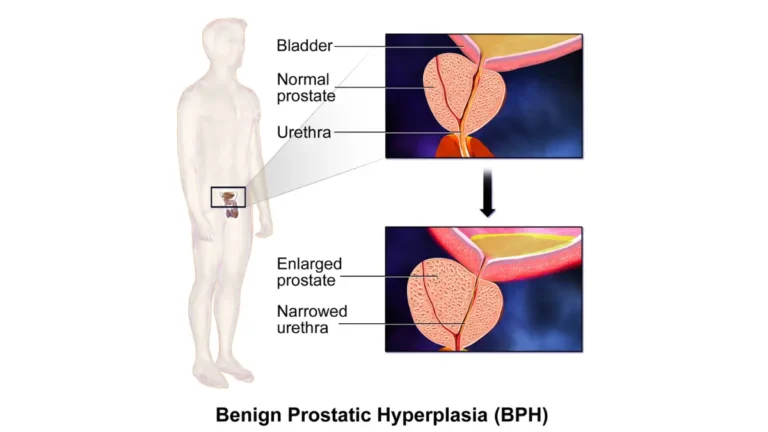
Finasteride and dutasteride, two medicines for an enlarged prostate, usually lower PSA after at least 6 months of use, and doubling the result is an older way to compare it with men not taking them (AUA/SUO guideline). The drop varies from man to man. In one trial, only about a third of patients had a 40% to 60% decline at one year. Ask your doctor whether your result was read with the medicine in mind.
Other rises are short-lived. Ejaculation and vigorous exercise such as cycling can raise PSA briefly, so patients are generally advised to avoid both for 2 days before the test. A prostate infection or inflammation can raise it until the problem settles, and a recent biopsy can keep it raised for a month or two (NCI). The longer list, including an enlarged prostate, is in common causes of a high PSA that turn out not to be cancer.
Get emergency care now if: you cannot pass urine at all; you have fever and chills with painful urination, including in the days after a prostate biopsy; or you have new back pain with leg weakness, numbness or loss of bladder or bowel control. Call 911 or go to an emergency department.
What happens after a high result at your age?
The first step is usually the same blood test again, preferably 2 weeks to 3 months later (ACS). Repeating it is worthwhile because 25% to 40% of newly elevated results return to normal on retest (AUA/SUO guideline).
If the repeat is still elevated, most men are offered a prostate MRI, a biomarker test or both, to help decide whether a biopsy is needed (ACS). PSA velocity, the speed of the rise, should not be the only reason for those tests (AUA/SUO guideline).
Questions to take to that appointment:
- Which cutoff are you using for my age: 3.0, 4.0 or another number?
- Could finasteride, a recent procedure or an infection have changed this result?
- If the repeat is still high, will an MRI or a biomarker test come before any biopsy?
- If it comes back normal, when should I test again?
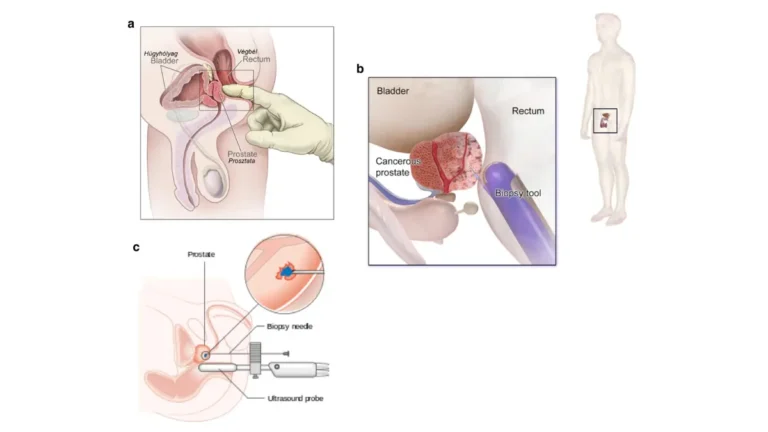
A biopsy is the test that can confirm cancer, and what a prostate biopsy involves and how results are reported walks through it.
Take your past PSA results to the repeat test
Bring every earlier PSA result you can find, with its date and the lab that ran it. A single number tells you where you stand today; a series shows whether this value is new or part of a slow climb that fits your age.
If you have not been told how often to test for your risk group, screening schedules by age and family history lists them, and prostate cancer signs and stages explains how PSA fits with symptoms. If any of the emergency signs listed earlier appear before the repeat test, get care right away instead of waiting for it.
Found this helpful? See more of our guides on Google.
Want to see our guides first on Google?
Found this helpful? See more of our guides on Google.
About this content
How this article was put together: researched from recognised health sources, drafted with the help of AI tools, and edited by hand, with sources linked throughout.

Dr. Pooja Sahu, MBBS, is a medical reviewer for MyMedicineAdvisor. She is a clinical physician whose experience includes serving as a Junior Resident in Nephrology at Dr. Ram…
Medical disclaimer
The content on My Medicine Advisor is provided for general informational and educational purposes only and is not a substitute for professional medical advice, diagnosis, or treatment. Health information on this website should not be used to diagnose, treat, cure, or prevent any condition without guidance from a qualified healthcare professional. Always seek the advice of your doctor, physician, or another licensed healthcare provider with any questions you may have regarding a medical condition, symptoms, medications, or treatment decisions.