
On This Page – Quick Medical Summary
What your Gleason score actually tells you
Seeing a Gleason score on a biopsy report is frightening, especially when no one has explained whether your number is mild or serious. This guide is built to give you a calibrated answer, not a panic. If you just received your prostate cancer results and saw a 6, 7, 8, 9, or 10, start with the score breakdown below. If your report says “3+4” or “4+3” and you want to know why the order matters, the Grade Group section is for you. If you are a partner or caregiver, the survival and questions sections will help you support someone you love. And if you are weighing treatment against monitoring, the risk-group section explains how doctors actually decide.
Here is the idea to hold onto: your Gleason score grades how aggressive the cancer cells look, not how long you will live. It is one of three inputs — alongside your PSA and your stage — that together shape your outlook.
For a fuller picture of the whole journey, see our complete guide to prostate cancer signs, stages, and treatment. One number rarely tells the whole story.
ℹ️ Medical Disclaimer: This article is educational and is not a substitute for personalized medical care. It does not diagnose prostate cancer, recommend a specific treatment, medication, or procedure, or interpret your individual pathology, PSA, or imaging results. Survival statistics are population estimates and cannot predict any one person’s outcome. Discuss your results and options with a board-certified urologist or urologic oncologist before making decisions.
How a Gleason score is calculated
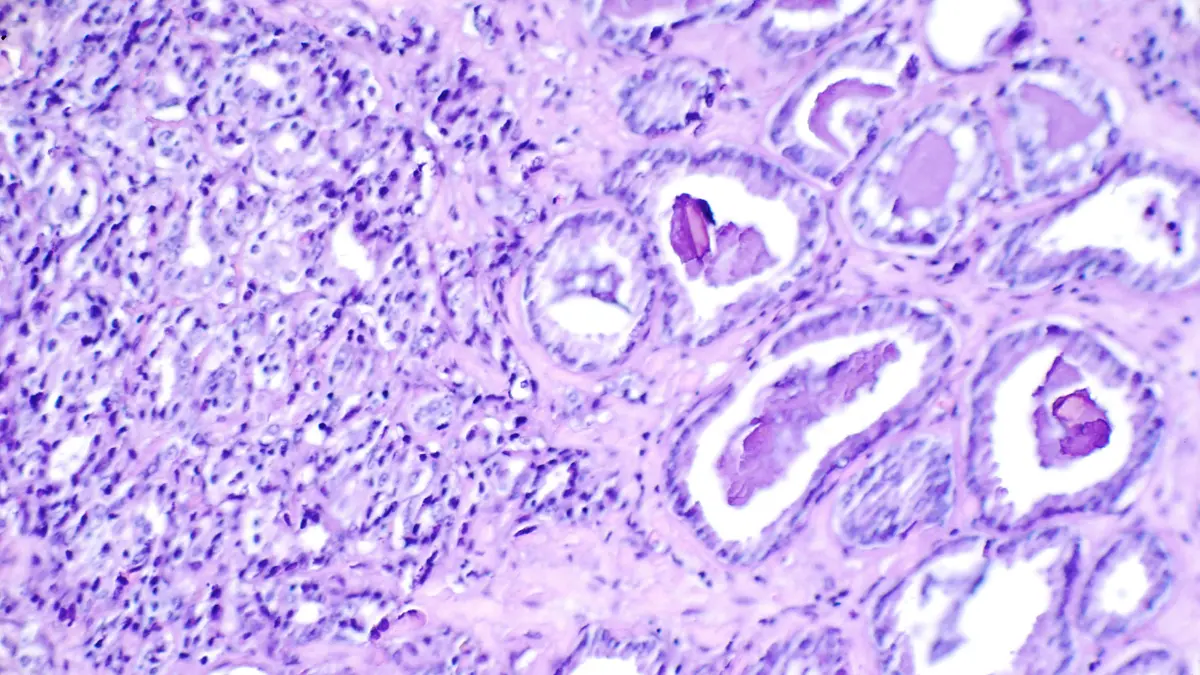
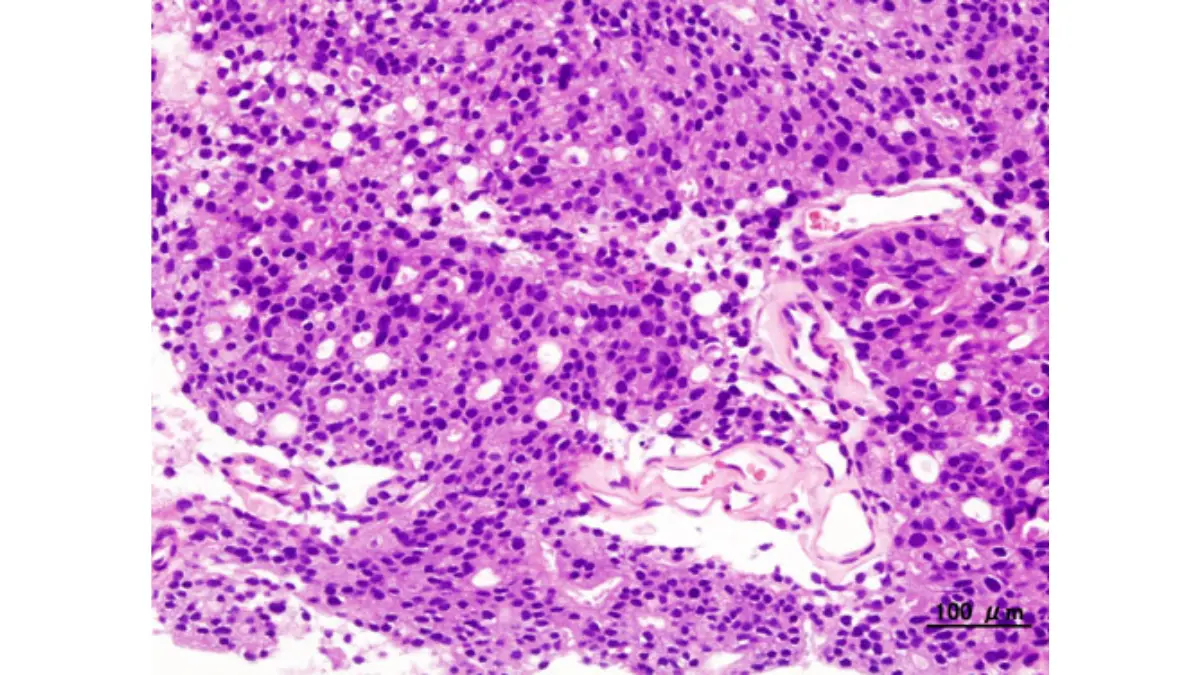
Your Gleason grade comes from a pathologist examining the cells in your prostate biopsy under a microscope. The pathologist judges how abnormal the cancer cells look, assigns a pattern number, then builds your score from the two patterns that make up most of the tumor, as explained in the American Cancer Society’s prostate pathology guide.

The two patterns: primary plus secondary
The first number is the most common pattern in the sample, and the second is the next most common. Written as “3+4=7,” it means most of the tumor is pattern 3 and less of it is pattern 4. On tissue removed during surgery the two most common patterns are added; on a biopsy, the most common pattern is added to the highest-grade pattern present.
Why scores start at 6, not 2
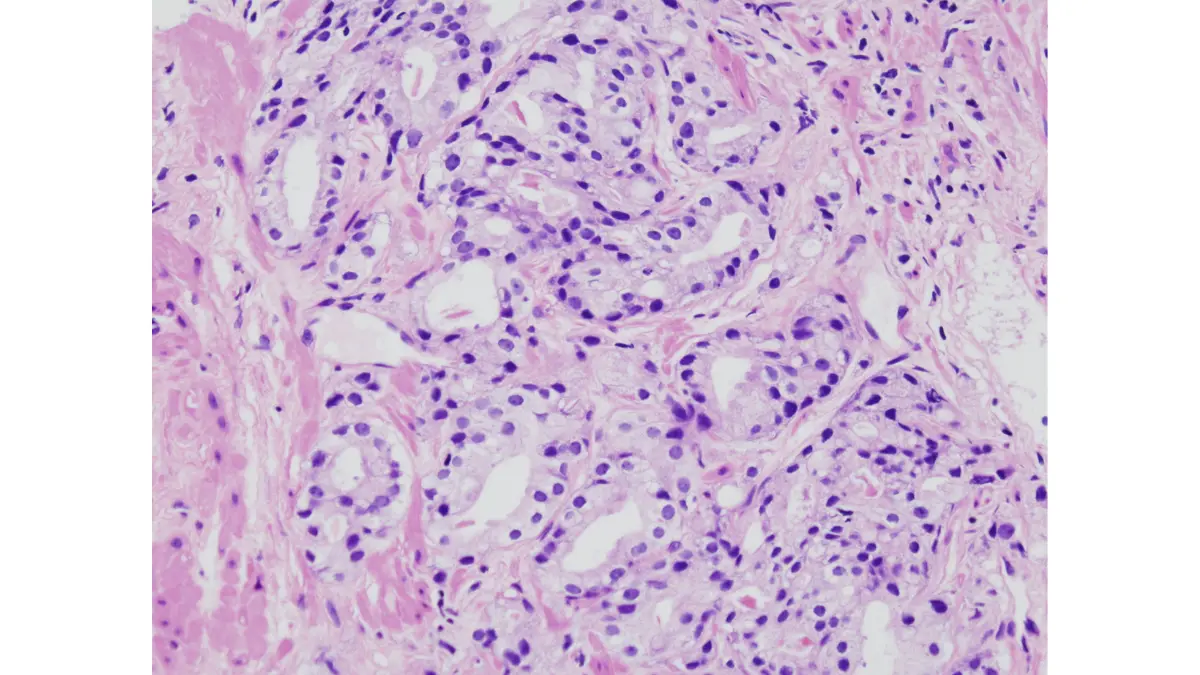
🔬 How It Works: Patterns run from 1 (cells that look almost like normal prostate tissue) to 5 (cells that look very abnormal). In practice, patterns 1 and 2 are essentially never reported as cancer, so the lowest score a prostate cancer receives is 6 (3+3). That is why a “6” sits at the bottom of the scale, not the middle.
Gleason score vs. Grade Group: the conversion
Many reports now show two grading systems, which is a common source of confusion. The Grade Group system was introduced by the International Society of Urological Pathology (ISUP) in 2014 to give a clearer 1-to-5 scale, partly so that a Gleason 6 — the lowest cancer score — is not mistaken for something high on a 2-to-10 range.
The 5 Grade Groups, mapped
| Gleason Score | Grade Group | What It Means |
|---|---|---|
| 6 (3+3) | Grade Group 1 | Lowest-grade; cells still resemble normal tissue |
| 3+4 = 7 | Grade Group 2 | Intermediate, favorable |
| 4+3 = 7 | Grade Group 3 | Intermediate, less favorable |
| 8 | Grade Group 4 | High-grade |
| 9 or 10 | Grade Group 5 | Highest-grade, most aggressive |
Source: American Cancer Society; 2014 ISUP consensus (Epstein et al., American Journal of Surgical Pathology). Verified.
Why a 7 can be a 2 or a 3
🩺 Physician Note: A Gleason 7 is not one thing. When the primary (more common) pattern is 3, the score is written 3+4 and maps to Grade Group 2; when the primary pattern is 4, it is 4+3 and maps to Grade Group 3. The 4+3 tumor carries a higher risk of progression, which is why the order of the two numbers genuinely matters.
What each Gleason score means for you
Your score sorts your cancer into broad risk levels, though the level alone does not dictate your treatment.
Gleason 6 (Grade Group 1): low risk
A Gleason 6 is the lowest-grade prostate cancer, and the cells, while abnormal, still resemble normal tissue. For low-grade disease, active surveillance — close monitoring rather than immediate treatment — is the preferred approach to avoid overtreatment, according to the National Cancer Institute’s prostate cancer treatment summary.
Gleason 7 (Grade Groups 2-3): the intermediate split
A Gleason 7 is intermediate-risk. As noted above, 3+4 (Grade Group 2) is generally less aggressive than 4+3 (Grade Group 3), and that distinction can influence whether monitoring or treatment is recommended.
Gleason 8-10 (Grade Groups 4-5): high grade
A Gleason 8, 9, or 10 is high-grade cancer that is more likely to grow and spread, and it usually prompts active treatment such as prostate cancer surgery or radiation.
⚠️ Clinical Warning: A high-grade result (Grade Group 4 or 5) is not a situation for “watch and wait.” It warrants prompt discussion of treatment with a specialist, because these cancers are more likely to spread if left untreated.
✅ Patient Action: Ask your urologist or urologic oncologist: “Given my Grade Group, is active surveillance appropriate for me, or do you recommend treatment now — and what specifically drives that recommendation?”
How your Gleason score works with PSA and stage
Your grade is one lever, not the whole machine. Doctors combine your Grade Group with your PSA level and your TNM stage to place your cancer into a risk group that guides treatment, as described in the American Cancer Society’s prostate cancer risk-group resource.
The three inputs: grade, PSA, stage
Two men with identical Gleason 7s can have very different outlooks if one has a low PSA and early disease while the other has a high PSA and locally advanced disease. Your prostate cancer stage reflects how far the cancer has spread, your PSA reflects how much prostate-specific antigen is in your blood, and your grade reflects how aggressive the cells look. Risk grouping weighs all three together.
What Gleason score requires treatment?
There is no single Gleason score that automatically triggers treatment. The decision integrates grade, PSA, stage, your age, and your overall health.
✅ Patient Action: Ask: “When you combine my Grade Group, PSA, and stage, what risk group am I in, and how does that change my options?”
Gleason score and prostate cancer survival
This is the question behind the fear, and an honest answer means separating two things: grade measures aggressiveness, while published survival statistics are grouped by stage.
Survival is reported by stage, not by score alone
The American Cancer Society reports 5-year relative survival using the SEER database, grouped as localized, regional, and distant — not by Gleason score or Grade Group.
📊 Clinical Data Point: For men diagnosed 2015–2021, 5-year relative survival was greater than 99% for localized and for regional prostate cancer, 38% for distant (metastatic) disease, and 98% across all stages combined. — Source: American Cancer Society, Cancer Facts & Figures 2026 (verified).
| SEER Stage | 5-Year Relative Survival | Key Clinical Detail |
|---|---|---|
| Localized | >99% | Confined to the prostate |
| Regional | >99% | Spread to nearby structures or lymph nodes |
| Distant | 38% | Spread to distant sites such as bone |
| All stages combined | 98% | Across every stage at diagnosis |
Source: American Cancer Society, based on men diagnosed 2015–2021. Verified.
Does a higher Gleason score mean lower survival?
A higher Gleason score signals more aggressive cancer and a greater chance of spread, but it does not, by itself, equal a low survival number. Within any stage, your grade, PSA, response to treatment, and overall health all shape your outlook, and many men with distant disease live for years — you can read more in our guide to living with stage 4 prostate cancer. The ACS also notes that men diagnosed today may have a better outlook than figures based on patients treated at least five years earlier.
Questions to ask — and when a second opinion helps
Walking into your appointment with the right questions changes the conversation, and it is reasonable to want confidence in the grade itself.
Questions to ask about your Gleason score
- What is my exact Gleason score and Grade Group, and is it 3+4 or 4+3?
- Were any pattern 5 cells found, or features such as perineural invasion?
- When you combine my grade, PSA, and stage, what is my risk group?
- Is active surveillance an option for me, or do you recommend treatment now?
Your Gleason score lives on your pathology report, and learning to read it helps; see our walkthrough on how to read your pathology results.
How accurate is a Gleason score from a biopsy?
A biopsy samples only part of the prostate, so the grade can change after surgery when the whole gland is examined. Because grading also involves some variation between pathologists, a second pathology opinion is a normal, reasonable step for a borderline or treatment-changing result.

✅ Patient Action: If family history concerns you, assess your inherited prostate cancer risk and ask your doctor whether genetic counseling is appropriate — it does not replace grading, but it can inform screening for your relatives.
Gleason score: frequently asked questions
1. What is a Gleason score?
A Gleason score grades prostate cancer by how abnormal the cells look under a microscope, on a scale from 6 to 10. A pathologist adds the two most common cell patterns to produce the score. A higher score means more aggressive-looking cancer.
2. What is the difference between a Gleason score and a Grade Group?
They describe the same thing on different scales. The Gleason score runs from 6 to 10; the Grade Group system runs from 1 to 5 and was introduced in 2014 for clarity. For example, a Gleason 6 equals Grade Group 1, and a Gleason 3+4 equals Grade Group 2.
3. What does a Gleason score of 7 mean?
A Gleason 7 is intermediate-risk prostate cancer, and it comes in two forms. A 3+4 (Grade Group 2) is generally less aggressive, while a 4+3 (Grade Group 3) carries a higher risk of progression because the more abnormal pattern 4 is dominant. Discuss which form you have with your urologist.
4. Is Gleason 4+3 worse than 3+4?
Yes. Although both add up to 7, a 4+3 tumor is mostly the more abnormal pattern 4, so it maps to Grade Group 3 and carries a higher risk of progression than a 3+4 (Grade Group 2). Your specialist can explain what this means for your treatment options.
5. What is a good Gleason score?
The lowest possible score is 6 (Grade Group 1), the least aggressive prostate cancer, which is often monitored rather than treated right away. There is no “normal” Gleason score, because the scale only describes cancer; a 6 simply reflects the slowest-growing form.
6. Can Gleason 6 prostate cancer spread?
Gleason 6 (Grade Group 1) is the lowest-grade prostate cancer and is far less likely to spread than higher grades, which is why active surveillance is commonly chosen. It still requires ongoing monitoring, since a cancer can change over time. Ask your urologist about a surveillance schedule.
7. What Gleason score requires treatment?
No single score automatically requires treatment. The decision combines your Grade Group with your PSA, stage, age, and overall health. A high-grade score (8-10) usually prompts active treatment, while a Gleason 6 is often monitored. Confirm your plan with a urologist or urologic oncologist.
8. Does a higher Gleason score mean lower survival?
A higher score signals more aggressive cancer, but survival statistics are reported by stage, not by score alone. Localized and regional prostate cancer both have greater than 99% 5-year relative survival, while distant disease is 38%. Your full picture matters, so ask your oncologist how these numbers apply to you.
9. Can a Gleason score change after surgery?
Yes. A biopsy samples only part of the prostate, so when the whole gland is examined after surgery, the grade is sometimes higher or lower than the biopsy suggested. This is why your care team may revisit your prognosis after a prostatectomy.
10. How accurate is a Gleason score from a biopsy?
Biopsy grading is generally reliable but imperfect, because it samples limited tissue and involves some variation between pathologists. For a borderline or treatment-changing result, a second pathology opinion is reasonable. Discuss any uncertainty with your urologist before deciding on treatment.
11. What is the highest Gleason score?
The highest Gleason score is 10 (5+5), meaning both the primary and secondary patterns are the most abnormal grade 5. It corresponds to Grade Group 5, the most aggressive category, and typically prompts prompt, active treatment guided by a specialist.
The bottom line on your Gleason score
Your Gleason score grades how aggressive your prostate cancer cells look, on a scale from 6 to 10, and it maps to a Grade Group from 1 to 5. It is meaningful, but it is one of three inputs — with your PSA and your stage — that together shape your prognosis and your options.
A low score often means monitoring rather than immediate treatment, while a high score usually calls for prompt action; either way, the number is a starting point for a conversation, not a verdict. To see where your grade fits in the larger diagnosis-to-treatment picture, read our complete guide to prostate cancer signs, stages, and treatment, and bring your questions to a urologist or urologic oncologist who knows your full history.
About this content
How this article was put together: researched from recognised health sources, drafted with the help of AI tools, and edited by hand, with sources linked throughout.

Sameer Patel is the founder and editor of My Medicine Advisor. He is not a doctor or medical professional — before starting this site he worked in banking,…
Medical disclaimer
The content on MyMedicineAdvisor is provided for general informational and educational purposes only and is not a substitute for professional medical advice, diagnosis, or treatment. Health information on this website should not be used to diagnose, treat, cure, or prevent any condition without guidance from a qualified healthcare professional. Always seek the advice of your doctor, physician, or another licensed healthcare provider with any questions you may have regarding a medical condition, symptoms, medications, or treatment decisions.