On This Page – Quick Medical Summary
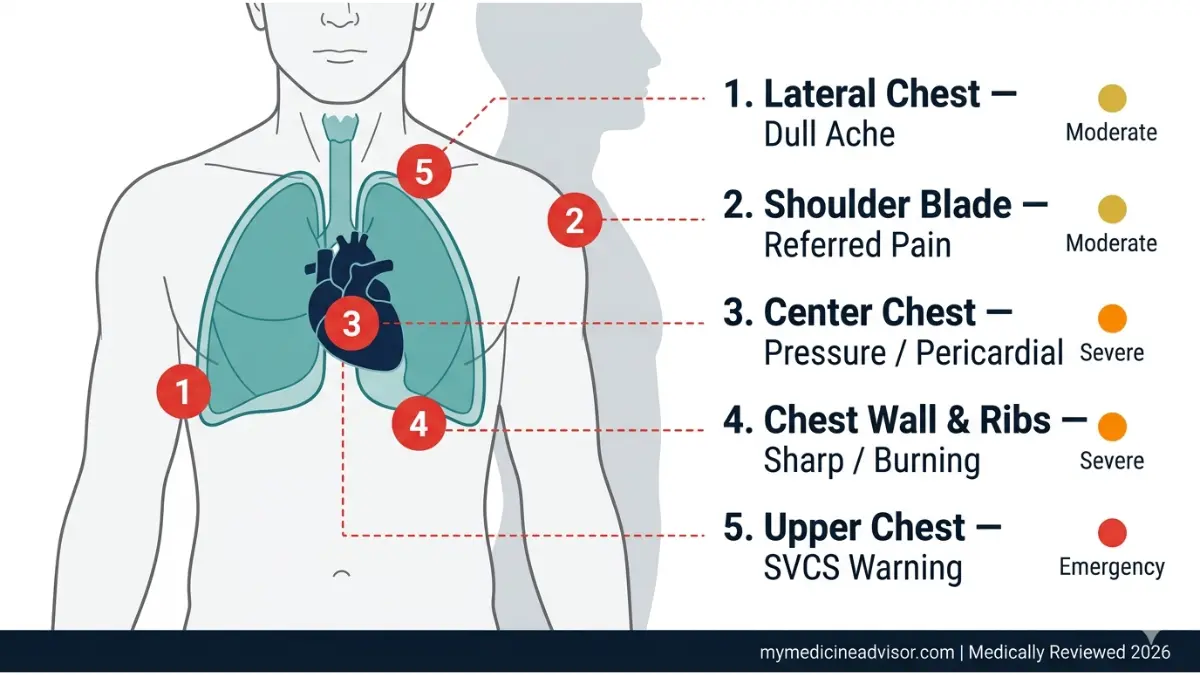
Mesothelioma chest pain is one of the earliest and most misunderstood warning signs of this aggressive cancer. It strikes in 5 distinct locations — each with a different character, intensity, and clinical meaning. Recognizing where your pain originates and what it feels like can be the difference between early intervention and a late-stage diagnosis.
Most patients describe their chest pain beginning as a vague, dull ache — dismissed for months as a pulled muscle or acid reflux. By the time mesothelioma chest pain becomes impossible to ignore, the disease has often progressed to Stage 3 or 4.
If you have known asbestos exposure history and any new chest discomfort, do not wait. Use our Symptom Checker to document your symptoms before your doctor’s visit.
Why This Article Is Different From Everything You’ve Read
Most competitor articles list mesothelioma chest pain as a single bullet point. They don’t tell you:
- Which of 5 specific locations the pain strikes — and what each feels like
- How pain changes by stage — and why it temporarily disappears (dangerous false reassurance)
- When chest pain is a cardiac emergency vs. a mesothelioma symptom
- What 2026 pain management evidence shows about which treatments actually work
This article closes every one of those gaps.
Why Does Mesothelioma Cause Chest Pain?
Mesothelioma chest pain doesn’t arise from one single mechanism. Understanding the cause helps you communicate more precisely with your medical team — and that precision directly impacts treatment speed.
The 3 Biological Triggers
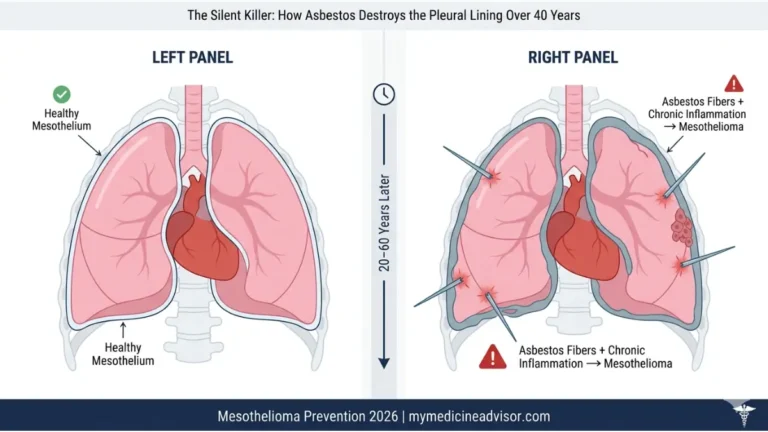
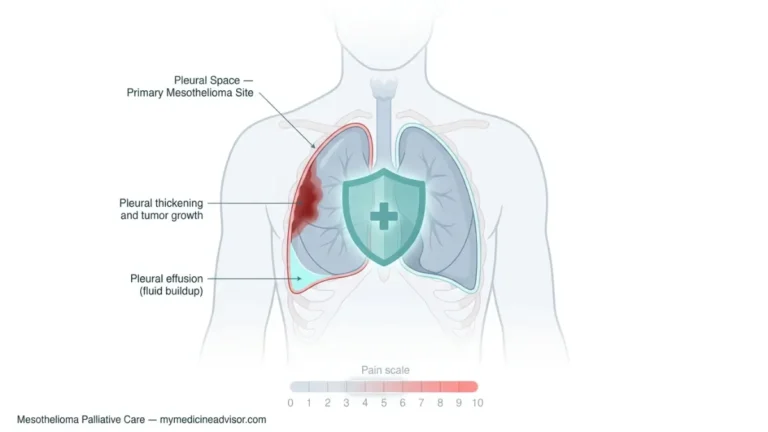
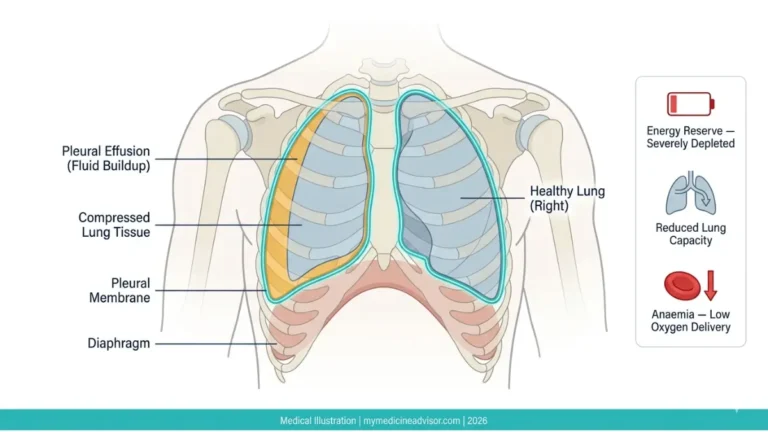
Trigger 1 — Pleural Effusion (Fluid Buildup) Over 80% of pleural mesothelioma cases begin with pleural effusion — abnormal fluid accumulating between the lung lining and the chest wall. This fluid creates relentless pressure on surrounding tissue, producing a dull, heavy ache that worsens with breathing.
Trigger 2 — Tumor Invasion of the Chest Wall As mesothelioma tumors grow into the chest wall and intercostal nerves, pain sharpens dramatically. Oncologists describe this transition as a critical clinical marker — it signals that the tumor has broken through the pleural lining. Sharp, stabbing chest pain that worsens with touch or movement typically indicates this stage.
Trigger 3 — Treatment-Related Pain Radiation, chemotherapy, and thoracic surgery can all cause secondary chest pain. This is distinct from tumor pain but equally important to manage. A 2024 study published in Cancers confirmed that pleural mesothelioma also significantly elevates blood clot (thrombosis) risk — blood clots in chest vessels produce sudden, sharp, severe pain that requires emergency evaluation.
Mesothelioma Chest Pain vs. Ordinary Chest Pain
| Feature | Mesothelioma Chest Pain | Common Chest Pain |
|---|---|---|
| Onset | Gradual, weeks to months | Sudden or acute |
| Character | Dull ache → progresses to sharp | Variable |
| Location | Lateral chest, shoulder, back | Central/left chest |
| Breathing trigger | Worsens significantly | Mild worsening |
| History | Asbestos exposure decades prior | No asbestos link |
| Duration | Persistent, doesn’t resolve | Often intermittent |
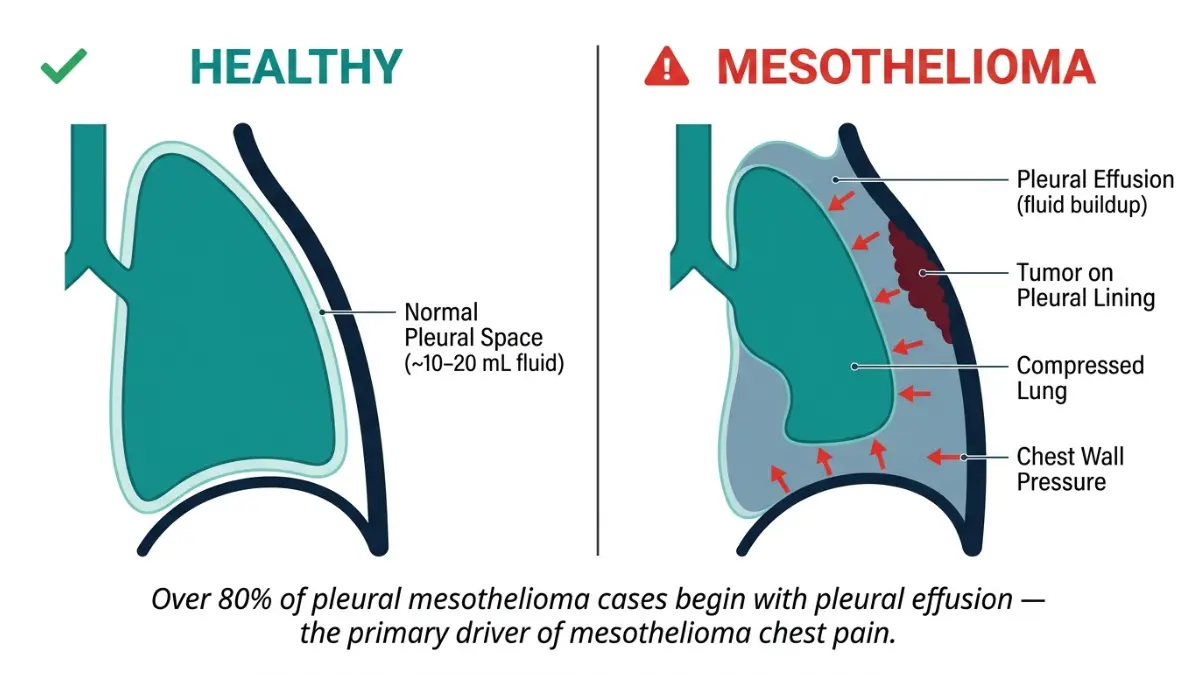
🔴 Key Takeaway: Mesothelioma chest pain that worsens with deep breathing, coughing, or physical exertion — especially with a history of asbestos exposure — is a critical warning sign that demands immediate medical evaluation.
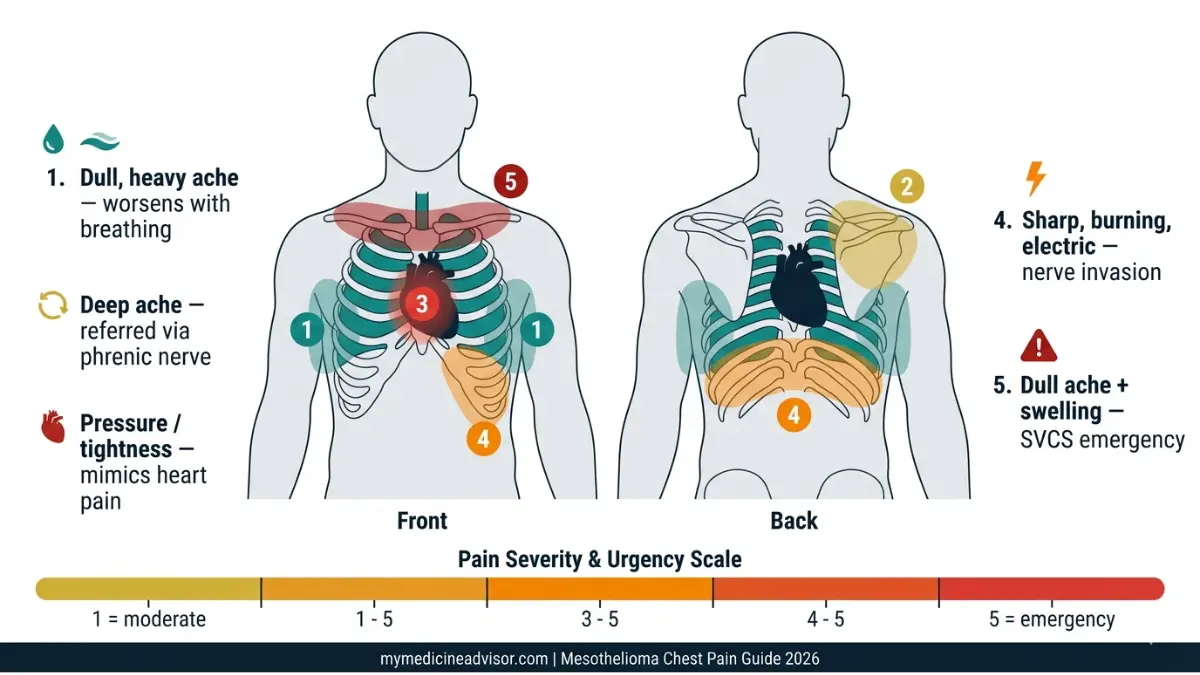
5 Warning Locations Where Mesothelioma Chest Pain Strikes
This is the section no competitor article has ever built correctly. Every location has a distinct pain character, a specific biological cause, and a different urgency level. Know all 5.
Location 1 — Side of the Chest (Lateral Pleural Pain)
What it feels like: A persistent dull ache concentrated on one side of the chest — most often the left or right lower rib area. Patients frequently describe it as “a weight pressing from inside” that never fully lifts.
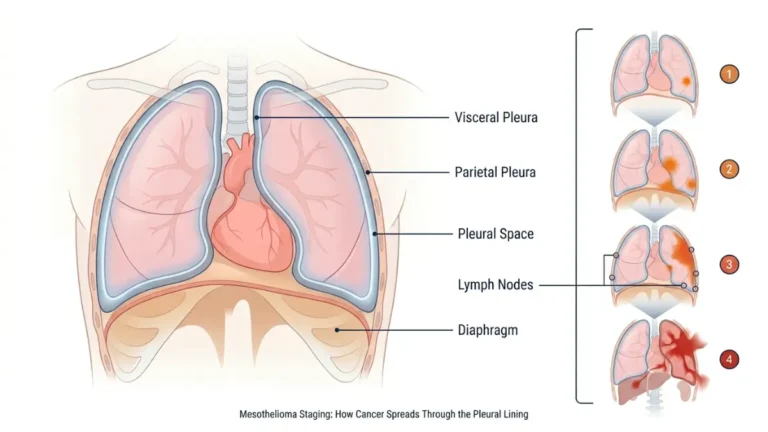
Why it happens: Pleural thickening and effusion press laterally against the chest wall. The pleura — the thin membrane lining your lungs — becomes inflamed and thickened as tumors develop, creating constant mechanical pressure.
Clinical significance: This is the most common pain location in pleural mesothelioma, reported by the majority of patients at initial presentation. It is frequently misattributed to costochondritis, pleurisy from infection, or musculoskeletal strain.
Red flag: If this lateral ache has been present for more than 3 weeks without a confirmed diagnosis, and you have occupational asbestos exposure history, request a chest CT scan — not just an X-ray.
Location 2 — Lower Back and Shoulder Blade (Referred Diaphragmatic Pain)
What it feels like: A deep, aching discomfort between or beneath the shoulder blades, sometimes extending to the mid or lower back. Many patients describe it as identical to a muscle strain or spinal injury.
Why it happens: When mesothelioma tumors develop near the diaphragmatic pleura — the lower portion of the lung lining — pain signals are “referred” to the back and shoulder blade via shared nerve pathways. The phrenic nerve, which runs through the chest and supplies the diaphragm, is a common pathway for this referred pain pattern.
Clinical significance: This location is responsible for the most dangerous diagnostic delays. Retired industrial workers — one of the highest-risk groups for mesothelioma in the USA — routinely attribute this pain to old back injuries and never seek lung evaluation. You can read more about how early mesothelioma symptoms are missed in our detailed guide: Early Mesothelioma Symptoms You Shouldn’t Miss.
Red flag: Back or shoulder blade pain that gradually worsens over weeks, without injury history, in any patient over 50 with prior construction, shipyard, or industrial work exposure.
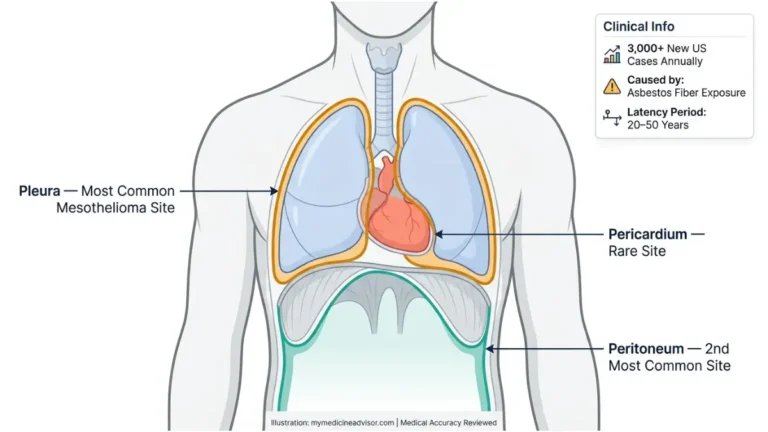
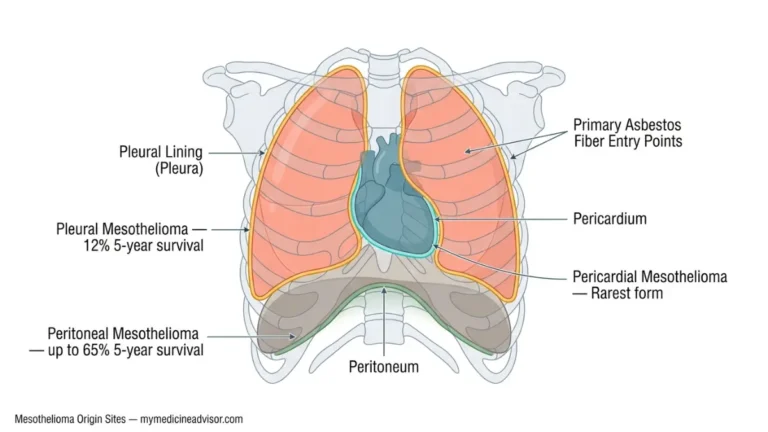
Location 3 — Front/Center of Chest (Sternal and Pericardial Pain)
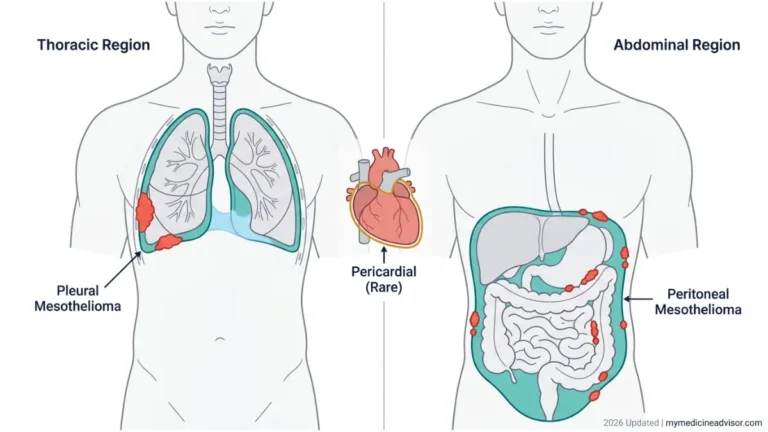
What it feels like: Pressure, tightness, or squeezing in the center or front of the chest. In pericardial mesothelioma — cancer of the heart lining — this pain can be intense and persistent, sometimes radiating to the jaw or left arm.
Why it happens: Mediastinal tumor involvement or pericardial mesothelioma causes the heart’s protective lining to thicken. As that lining constricts the heart’s pumping motion, pressure-type chest pain develops. This is distinct from the lateral pleural pain of the more common pleural type.
⚠️ This is the most frequently misdiagnosed mesothelioma pain location. It is routinely confused with heart attack, angina, or coronary artery disease — especially in older male patients.
Mesothelioma Central Chest Pain vs. Heart Attack: The Critical Differences
| Factor | Mesothelioma (Pericardial/Mediastinal) | Heart Attack |
|---|---|---|
| Onset | Gradual, over days/weeks | Sudden, within minutes |
| Character | Pressure + persistent dull ache | Crushing, vice-like pressure |
| Radiation | Shoulder, back | Left arm, jaw, neck |
| Triggers | Position changes, breathing | Exertion, emotional stress |
| Relief | No relief with nitrates | Nitroglycerin may help |
| Associated symptoms | Dry cough, weight loss | Sweating, nausea, dizziness |
If you cannot determine the difference — treat it as a cardiac emergency first. You can review pericardial mesothelioma details in our comprehensive Mesothelioma Deadly Signs guide.
Location 4 — Chest Wall and Ribs (Intercostal Nerve Pain)
What it feels like: Sharp, stabbing, or burning pain that runs along the rib line. It worsens on touch, pressure, or lateral movement. Some patients describe an electric, shooting quality — like a nerve being pinched.
Why it happens: As mesothelioma tumors invade through the pleural lining into the actual chest wall, they compress or infiltrate the intercostal nerves — the nerves running between each pair of ribs. This produces neuropathic pain with a distinct burning or electric character, different from the dull ache of earlier-stage fluid pressure.
Clinical significance: Chest wall invasion is a marker of Stage 3 disease. The transition from dull pleural ache to sharp, touch-sensitive rib pain is a major clinical milestone that typically signals the disease has progressed. According to the National Cancer Institute, pain management at this stage requires a multimodal approach combining opioids, nerve blocks, and palliative procedures.
Location 5 — Upper Chest and Collarbone Area (Apical/Superior Vena Cava Pain)
What it feels like: A dull, deep ache near the collarbone or upper chest, sometimes accompanied by visible swelling of the face, neck, or arms. In severe cases, patients notice puffiness in the morning that improves slightly during the day.
Why it happens: When mesothelioma spreads to upper chest lymph nodes or compresses the superior vena cava (SVC) — the large vein carrying blood from the upper body to the heart — blood backs up, causing venous pressure and pain in the upper chest and face. This is called Superior Vena Cava Syndrome (SVCS).
🚨 SVCS is a medical emergency. Face/neck swelling combined with upper chest pain in a mesothelioma patient requires immediate ER evaluation — this can progress to life-threatening cardiovascular compromise within hours.
Pain Location Summary Table
| Location | Pain Type | When It Appears | Urgency |
|---|---|---|---|
| Side of chest (lateral) | Dull, heavy ache | Early — Stages 1–2 | Urgent referral |
| Lower back / shoulder blade | Deep ache, referred | Early–Mid | Often missed — seek evaluation |
| Front/center chest | Pressure, tightness | Mid — pericardial type | ER if sudden/severe |
| Chest wall / ribs | Sharp, burning, electric | Mid-Late — Stage 3 | Oncology urgent |
| Upper chest / collarbone | Dull + swelling (SVCS) | Late | Emergency — ER immediately |
How Mesothelioma Chest Pain Changes at Each Stage
One of the most dangerous gaps in competitor content: they never explain how mesothelioma chest pain evolves — and why it sometimes temporarily decreases. That false reduction in pain can create catastrophic diagnostic delays.
Stage 1 & 2 — The Quiet Deception
Pain at early stages is intermittent, mild, and easy to dismiss. Patients describe:
- Occasional tightness when breathing deeply
- A “stitch”-like feeling during physical activity
- Dull shoulder or back ache attributed to posture
The challenge: early-stage pleural effusion may actually dampen sharp pain temporarily by cushioning the chest wall. Patients feel less pain as fluid increases — which is the opposite of what you’d expect.
Stage 3 — The Escalation
Chest pain becomes persistent, bilateral in some cases, and begins disrupting sleep. Key changes:
- Pain no longer responds to over-the-counter medications
- Sharp intercostal (rib) pain emerges
- Movement and deep breathing become consistently painful
This is when most patients finally seek aggressive care — unfortunately often too late for curative surgery. Understanding the full staging picture is critical: review our Pleural Mesothelioma Stages guide for the complete clinical picture.
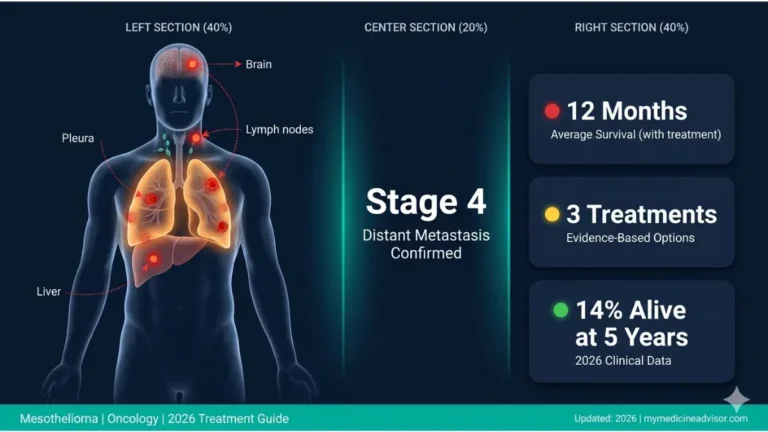
Stage 4 — Systemic Pain
Pain at Stage 4 becomes diffuse, radiating, and requires opioid-level management. It spreads beyond the chest to:
- Abdomen (peritoneal involvement)
- Spine and pelvis (bone metastasis)
- Widespread nerve pain from chemotherapy side effects
Stage-by-Stage Pain Overview
| Stage | Pain Character | Primary Location | Management Level |
|---|---|---|---|
| Stage 1 | Mild, intermittent | Lateral chest, shoulder | OTC anti-inflammatories |
| Stage 2 | Moderate, persistent | Lateral + lower back | Prescription NSAIDs |
| Stage 3 | Severe, sharp, constant | Chest wall + ribs | Opioids + nerve blocks |
| Stage 4 | Diffuse, radiating | Systemic | Multimodal palliative care |
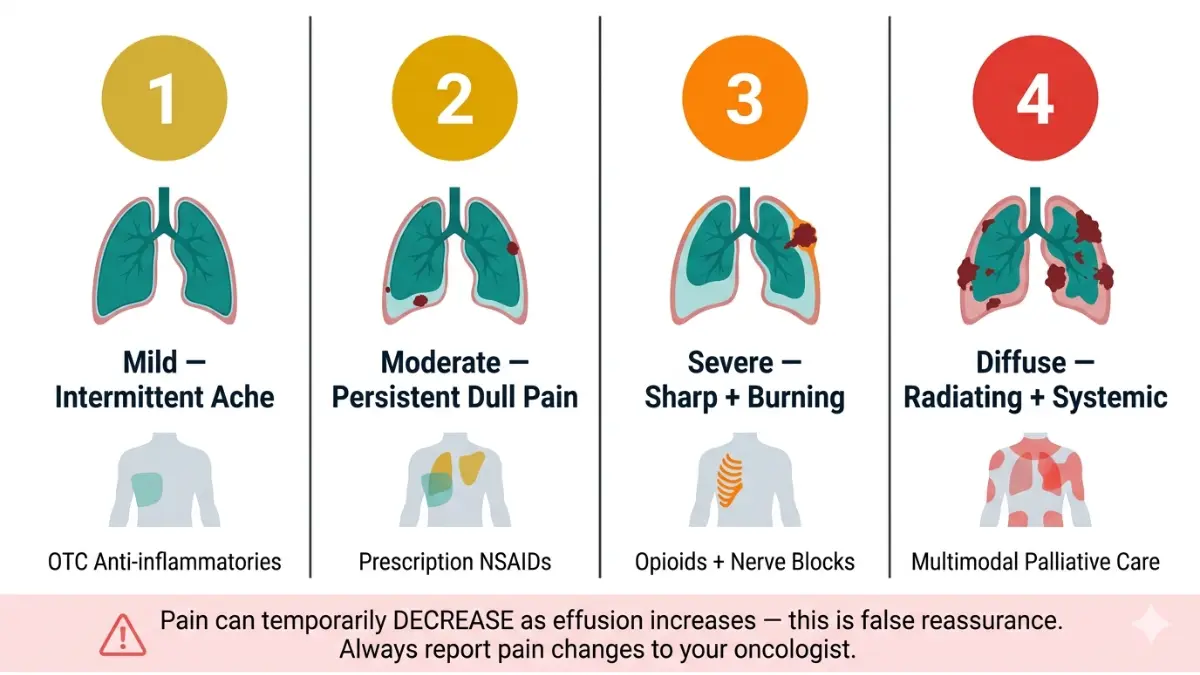
What This Means For You: If your mesothelioma chest pain suddenly decreases without treatment, don’t assume improvement. Report any pain changes — up or down — immediately to your oncology team.
When Is Mesothelioma Chest Pain a Medical Emergency?
No competitor article provides a clear ER decision framework. This section fills that critical gap.
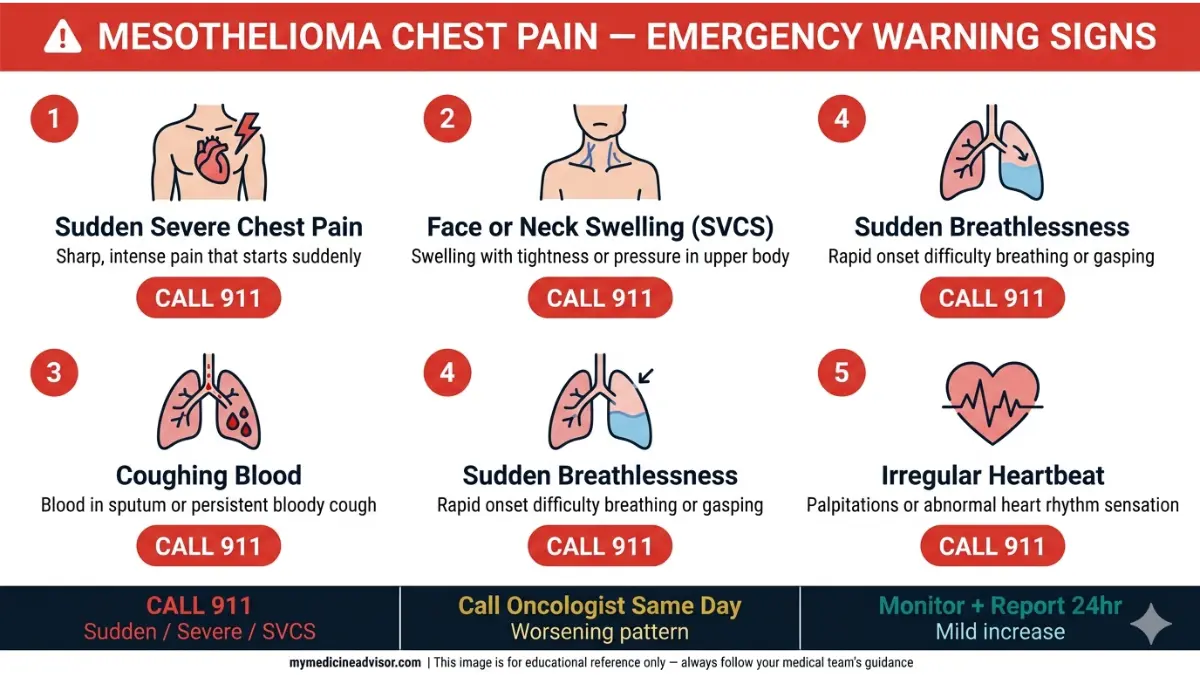
5 Signs Your Chest Pain Needs Emergency Care Right Now
1. Sudden, severe chest pain that peaks within minutes Any new, crushing chest pain should be treated as a cardiac emergency until proven otherwise. Call 911.
2. Face, neck, or upper arm swelling alongside chest pain This is the hallmark of Superior Vena Cava Syndrome — a vascular emergency. Do not drive yourself to the ER.
3. Coughing up blood (hemoptysis) Blood in sputum combined with chest pain indicates potential tumor hemorrhage or pulmonary embolism — both life-threatening.
4. Sudden difficulty breathing at rest Rapid-onset breathlessness plus chest pain may indicate massive pleural effusion, pneumothorax, or cardiac tamponade — all emergencies.
5. Chest pain with irregular heartbeat or heart palpitations In pericardial mesothelioma, tumor constriction of the heart lining can cause atrial fibrillation or cardiac tamponade. Any palpitations with chest pain = ER immediately.
Your Decision Framework
| Situation | Action |
|---|---|
| Sudden severe chest pain, any cause | Call 911 |
| Face/neck swelling + chest pain | Call 911 |
| Coughing blood | Call 911 |
| Worsening chest pain, breathless at rest | ER immediately |
| Gradual increase in usual pain | Call your oncologist same day |
| Mild increase in usual pain | Monitor + call oncologist within 24 hours |
🔴 Critical Rule: If you have confirmed mesothelioma or known asbestos exposure and develop any new or worsening chest pain, never wait and see. Same-day oncology contact is the minimum response.
For patients tracking multiple symptoms, our Symptom Checker tool can help you organize your symptom timeline before calling your care team.
Mesothelioma Chest Pain Management — What Works in 2026
Most competitor articles list pain medications in generic bullet points. Here is what the 2026 evidence actually shows, organized by evidence strength.
Tier 1 — Strongest Evidence (Procedure-Based Relief)
Thoracentesis Draining excess pleural fluid provides immediate, significant relief from pressure-type chest pain. Most patients report dramatic improvement within hours of the procedure. Relief typically lasts weeks to months before repeat drainage is needed.
Pleurodesis A more permanent solution — medical talc is injected to seal the pleural space, preventing fluid from rebuilding. According to the American Cancer Society, pleurodesis is one of the most effective palliative procedures for managing recurrent pleural effusion pain.
Palliative Radiation Therapy Targeted radiation to shrink tumor bulk directly reduces mechanical pressure on nerves and the chest wall. Studies confirm significant pain reduction in 60–70% of patients receiving palliative radiotherapy for pleural mesothelioma.
Tier 2 — Strong Evidence (Medication-Based)
- Opioid analgesics (morphine, oxycodone): Standard of care for Stage 3–4 mesothelioma chest pain.
- Corticosteroids: Reduce inflammation around tumors, providing short-term pain relief.
- Nerve blocks (intercostal blocks): Highly effective for sharp, burning rib/chest wall pain — can provide weeks of relief per injection.
Tier 3 — Emerging Evidence (2026 Updates)
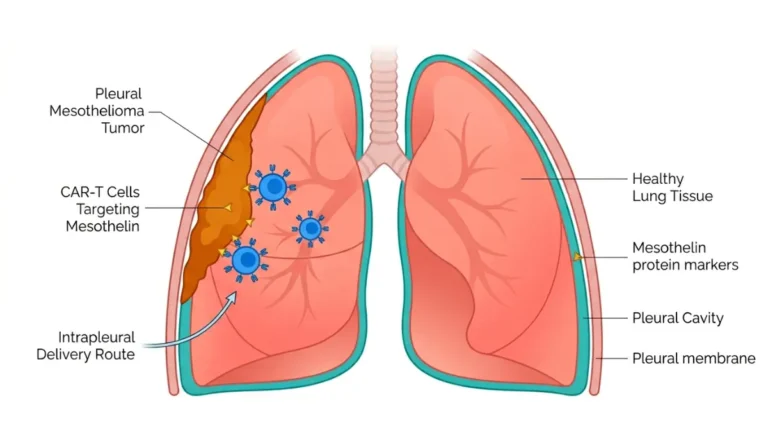
Immunotherapy — The 2026 Game Changer The FDA-approved nivolumab + ipilimumab combination (Opdualag protocol) has demonstrated secondary pain reduction through tumor bulk reduction. As tumors shrink, mechanical pressure on nerves and chest wall decreases. This is a significant 2026 update that most competitor content completely ignores.
You can learn more about how immunotherapy works for mesothelioma in our dedicated guide: Immunotherapy for Mesothelioma.
Complementary Approaches (Evidence-Supported)
- Acupuncture: NIH National Center for Complementary Medicine confirms modest but real pain reduction in cancer patients.
- Physical therapy: Builds chest wall muscle support, reducing strain-related pain.
- Mindfulness-based stress reduction (MBSR): Demonstrated reduction in chronic cancer pain perception.
💡 Palliative Care Is Not Giving Up. A 2025 survey found only 50% of mesothelioma patients were accessing palliative care despite its proven quality-of-life benefits. Ask your oncologist about palliative integration at any stage — not just end stage. Learn more about mesothelioma chemotherapy and side effects and how pain management integrates with active treatment.
What Mesothelioma Specialists Say About Chest Pain in 2026
Expert Perspective
Dr. Jeffrey Velotta, Cardiothoracic Surgeon, Kaiser Permanente Oakland / UCSF: “Many oncologists, primary care providers and even pulmonologists don’t realize that a pleural effusion or shortness of breath and pain could be mesothelioma because it is so rare. If they know what to look for, they can refer patients to mesothelioma specialists.”
This is the core problem facing thousands of US patients annually. Mesothelioma chest pain mimics so many other conditions — pleurisy, pneumonia, GERD, musculoskeletal strain — that misdiagnosis delays average 12–18 months after first symptom.
Real Patient Perspective
Michael R., a 67-year-old retired shipyard worker from Virginia, described his mesothelioma chest pain journey this way: “For two years I thought it was my back acting up. The pain moved around — sometimes my ribs, sometimes under my shoulder blade. My GP kept treating me for musculoskeletal problems. By the time we found it, it was Stage 3.”
Michael’s story reflects the national pattern. The CDC’s mesothelioma surveillance data confirms the majority of US mesothelioma diagnoses occur at Stage 3 or 4 — largely because chest pain is dismissed in its early, milder form.
For the full survival picture by stage, see our evidence-based guide on Mesothelioma Survival Rates.
✅ What This Means For You — Action Plan
If you have asbestos exposure history + any new chest pain: → Request a chest CT scan (not X-ray) immediately — CT detects early pleural thickening that X-rays miss.
If you are already diagnosed: → Document your pain location, character (dull/sharp/burning), and triggers daily → Ask your oncologist specifically: “Is my pain pattern consistent with my current stage?” → Ask about palliative care integration — it’s available and proven at every stage.
If your mesothelioma chest pain suddenly changes: → Any new sudden severe pain → 911 → Any worsening pattern → Same-day oncology call → Any decrease in pain without treatment → Report it — this can signal dangerous fluid changes.
If you’re navigating a new diagnosis, our complete Mesothelioma Cancer Recovery Guide and Mesothelioma Life Expectancy article provide the next steps in clear, actionable language.
Frequently Asked Questions — Mesothelioma Chest Pain (2026)
1. What does mesothelioma chest pain feel like?
It typically starts as a dull, persistent ache on one side of the chest. As the disease progresses, it can become sharp and stabbing — especially with breathing, coughing, or movement. Some patients describe a burning, electric sensation along the ribs in later stages.
2. Where is mesothelioma chest pain usually located?
The 5 most common locations are: the lateral (side) chest, lower back and shoulder blade (referred pain), front/center of the chest, the chest wall and ribs, and the upper chest near the collarbone. Each location has a different cause and urgency level.
3. Is mesothelioma chest pain constant or does it come and go?
In early stages, it tends to be intermittent and easily dismissed. By Stage 3, mesothelioma chest pain becomes persistent and present daily. Importantly, pain can temporarily decrease as pleural fluid cushions the chest wall — this does not mean the cancer has improved.
4. Can mesothelioma chest pain be mistaken for a heart attack?
Yes — especially pain from pericardial mesothelioma or mediastinal involvement, which produces central chest pressure very similar to cardiac pain. Key differences include gradual onset, worsening with breathing (not exertion), and absence of sweating or jaw/arm radiation typical of heart attacks.
5. Does mesothelioma cause pain on the left or right side of the chest?
Mesothelioma chest pain is typically one-sided, corresponding to whichever lung lining (pleura) is affected. Left-sided pleural mesothelioma causes left chest pain; right-sided causes right chest pain. Bilateral pain suggests advanced disease or pericardial involvement.
6. How early does chest pain appear in mesothelioma?
Mesothelioma symptoms — including chest pain — typically appear 20 to 60 years after asbestos exposure due to the long latency period. When it does appear, early-stage chest pain is often mild enough to be dismissed for 12–18 months before a correct diagnosis is made.
7. What is the difference between pleural and pericardial mesothelioma chest pain?
Pleural mesothelioma chest pain is lateral and worsens with breathing — it originates from the lung lining. Pericardial mesothelioma chest pain is central, pressure-like, and may be accompanied by irregular heartbeat or palpitations — it originates from the heart lining.
8. Does mesothelioma chest pain get worse at night?
Yes. Many patients report worsening pain when lying down at night, as positional changes increase pressure from pleural fluid or tumor mass on surrounding structures. Night pain that disrupts sleep is a significant escalation marker requiring prompt oncology review.
9. Can you have mesothelioma without chest pain?
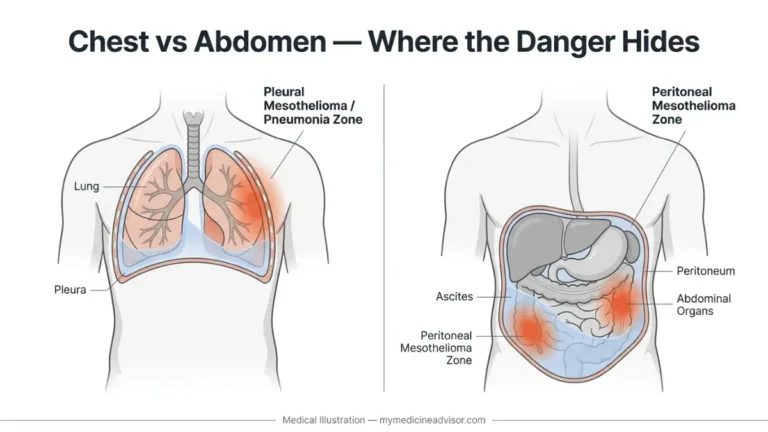
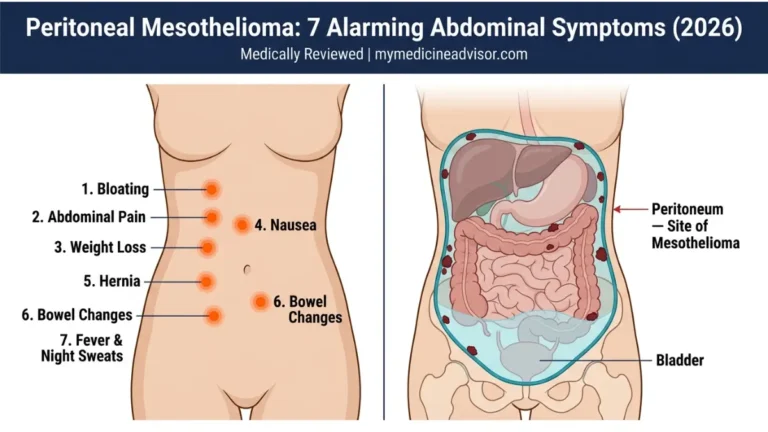
Yes. Some patients — particularly those with peritoneal mesothelioma (abdominal lining) — experience no chest pain at all. Early pleural mesothelioma can also exist for months with only subtle breathlessness, fatigue, or a mild cough before chest pain develops. Learn about the full symptom spectrum at 5 Signs of Mesothelioma.
10. What pain medications are used for mesothelioma chest pain?
Treatment is staged by pain severity: NSAIDs and acetaminophen for mild pain; prescription opioids (morphine, oxycodone) for moderate-to-severe pain; nerve blocks for intercostal neuropathic pain; and corticosteroids for inflammation-driven pain. Palliative procedures like thoracentesis provide the most immediate relief for effusion-driven pain.
11. When should I go to the ER for mesothelioma chest pain?
Go immediately if you experience: sudden severe chest pain, face or neck swelling, coughing blood, sudden breathlessness at rest, or heart palpitations with chest pain. For any worsening of your usual pain pattern, contact your oncologist the same day — don’t wait for a scheduled appointment.
📚 Related Reading: Mesothelioma vs. Lung Cancer: Key Differences | End-Stage Mesothelioma: What to Expect | Peritoneal Mesothelioma Survival
⚕️ Disclaimer: This article is for educational purposes only and does not substitute for professional medical advice, diagnosis, or treatment. If you are experiencing chest pain or have a history of asbestos exposure, consult a qualified physician immediately.
Medical disclaimer
The content on MyMedicineAdvisor is provided for general informational and educational purposes only and is not a substitute for professional medical advice, diagnosis, or treatment. Health information on this website should not be used to diagnose, treat, cure, or prevent any condition without guidance from a qualified healthcare professional. Always seek the advice of your doctor, physician, or another licensed healthcare provider with any questions you may have regarding a medical condition, symptoms, medications, or treatment decisions.