
On This Page – Quick Medical Summary
The Critical 2-4 Week Window – Why Every Hour Matters
“I thought it was just a bad flu. The fever, exhaustion, swollen glands—I’d felt sick before, but never like this.” This is how Maria, a 32-year-old educator, described her experience with HIV symptoms that appeared three weeks after potential exposure. Her story mirrors thousands of others who face the crucial decision: recognize early warning signs or miss the narrow window for life-changing intervention.
HIV symptoms typically emerge within 2 to 4 weeks after infection, marking what medical professionals call acute HIV infection or acute retroviral syndrome. During this critical period, recognizing early HIV symptoms can literally save your life and protect others, as this is when the virus multiplies most aggressively and transmission risk peaks dramatically.
Why the 2-4 Week Window Demands Immediate Attention
The acute phase of HIV infection represents both the most dangerous and most treatable period of the disease. Within days of exposure, HIV invades your bloodstream and begins attacking CD4 cells—the very immune cells designed to protect you from infections. According to the National Institutes of Health, acute HIV symptoms generally develop within 2 to 4 weeks as your immune system launches a fierce but ultimately insufficient counterattack against the virus.
During these critical weeks, viral load skyrockets to extraordinarily high levels—sometimes reaching millions of copies per milliliter of blood. This explosive replication means two urgent realities: you’re highly contagious to sexual or needle-sharing partners, and HIV symptoms 2-4 weeks post-exposure signal your body’s desperate attempt to fight an invader it cannot defeat alone.
Research indicates that 40% to 90% of newly infected individuals experience flu-like symptoms during acute infection, though manifestations vary significantly between people. Some experience severe, debilitating illness lasting weeks, while others notice only mild discomfort for a few days. Crucially, up to 50% may have early HIV symptoms so subtle they dismiss them entirely—yet their viral load and transmission risk remain dangerously elevated.
From Fear to Empowerment: What This Means for You
Recognizing acute HIV symptoms transforms uncertainty into action. If you’ve had potential HIV exposure through unprotected sex, shared needles, or occupational exposure, early symptom recognition connects you to post-exposure prophylaxis (PEP)—a medication regimen that can prevent HIV infection if started within 72 hours. The Centers for Disease Control and Prevention emphasizes that even after symptoms appear, immediate testing and treatment initiation dramatically improves long-term health outcomes.
Using tools like a comprehensive symptom checker can help you document what you’re experiencing and determine if your symptoms align with HIV symptoms patterns or other illnesses. However, self-assessment never replaces professional HIV testing—the only definitive way to know your status.
Modern antiretroviral therapy has revolutionized HIV care, transforming a once-fatal diagnosis into a manageable chronic condition. People who start treatment during acute infection can achieve undetectable viral loads within months, meaning they cannot transmit HIV to sexual partners and can expect normal life expectancy. This remarkable medical reality depends entirely on one factor: recognizing early HIV symptoms and acting immediately rather than waiting until the immune system sustains irreparable damage.
The 11 Signs You Can’t Ignore – Symptom Deep Dive
Understanding Acute HIV Infection Symptoms
When HIV enters your bloodstream, your immune system launches an aggressive counterattack that produces the constellation of first signs of HIV known medically as acute retroviral syndrome. This immunological battle creates inflammation throughout your body, triggering symptoms that 50% to 90% of newly infected individuals experience within the critical 2-4 week window. Understanding HIV seroconversion symptoms—the physical manifestations that occur as your body produces HIV antibodies—empowers you to distinguish these warning signs from ordinary illnesses and seek immediate testing.
The acute HIV symptoms mirror severe flu or mononucleosis because they reflect similar immune responses, yet critical differences exist. Unlike seasonal flu that resolves within days, early HIV symptoms persist for one to two weeks or longer, often involving multiple symptom clusters appearing simultaneously. Research from the National Center for Biotechnology Information documents that recognizing specific symptom patterns significantly increases the likelihood of early diagnosis and treatment initiation.

The 11 Critical Signs: What Your Body Is Telling You
1. Persistent High Fever (100.4°F/38°C or Higher)
HIV fever symptoms represent one of the most common signs of HIV during acute infection, affecting 57% to 80% of individuals within 2-4 weeks post-exposure. Unlike typical viral fevers that spike and resolve within 3-5 days, fever from acute HIV infection persists for one to two weeks, often accompanied by drenching night sweats that soak through bedding. This sustained elevation occurs as your immune system battles exponentially multiplying virus particles, with your body temperature reflecting the intensity of immunological warfare.
When it appears: Days 7-21 post-exposure
What it means for you: Persistent fever lasting beyond one week, especially with known HIV exposure, warrants immediate testing according to CDC guidelines.
2. Severe Swollen Lymph Nodes (Lymphadenopathy)
HIV swollen lymph nodes manifest as enlarged, tender lumps in your neck, armpits, or groin—the body’s frontline defense stations where immune cells concentrate to fight infection. These nodes may feel like firm beans under your skin and often appear in multiple locations simultaneously, distinguishing them from the localized swelling typical of common infections. According to research published in NCBI databases, lymphadenopathy occurs in 40% to 70% of acute HIV cases and may persist for weeks even as other symptoms resolve.
When it appears: Days 3-10 post-exposure
What it means for you: Painless, widespread lymph node swelling represents a hallmark sign of HIV in men and women that should never be ignored.
3. Distinctive Non-Itchy Rash (Maculopapular)
HIV rash symptoms typically present as flat or slightly raised red or dark purple spots across your trunk, face, neck, or limbs that don’t itch intensely like allergic reactions. The National Institutes of Health explains that this rash develops as your immune system releases inflammatory chemicals while fighting the virus, appearing in 20% to 50% of acute cases between days 10-14 post-exposure. HIV skin symptoms during acute infection may resemble heat rash or viral exanthems but persist longer and resist over-the-counter treatments.
When it appears: Days 10-14 post-exposure
Clinical significance: Early rash appearance often correlates with higher viral loads and more pronounced immune activation.

4. Extreme, Debilitating Fatigue
HIV fatigue symptoms extend far beyond ordinary tiredness—affecting 59% to 70% of acute infection cases with exhaustion so profound that routine activities become overwhelming challenges. This crushing fatigue results from your immune system diverting massive energy resources to combat viral replication while inflammation disrupts normal cellular function. Tracking your energy levels using tools like a sleep calculator can help document the severity and duration of this symptom for healthcare providers.
Duration: 1-4 weeks
What distinguishes it: Unlike post-viral fatigue that gradually improves, acute HIV symptoms involving extreme tiredness may intensify during the second and third weeks.
5. Severe Sore Throat and Pharyngitis
Throat inflammation affects 36% to 50% of individuals with acute HIV infection, often described as more severe than typical strep throat or cold-related soreness. HIV oral symptoms may include painful swallowing, redness extending to the tonsils, and sometimes white patches resembling thrush. The NCBI medical literature documents that oral manifestations during acute infection can include painful ulcerations lasting several weeks.
6. Drenching Night Sweats
HIV night sweats occur in 39% to 55% of acute cases, characterized by perspiration so profuse it requires changing sheets and clothing multiple times nightly. These episodes differ from hormonal night sweats by their intensity, frequency, and association with other signs of HIV in women and men such as fever and lymphadenopathy.
7. Severe Muscle and Joint Pain (Myalgia and Arthralgia)
Affecting 53% of acute HIV cases, HIV muscle pain manifests as deep, aching discomfort throughout your body resembling severe flu or overexertion without physical cause. This pain results from widespread inflammation as your immune system releases cytokines that sensitize nerve endings and inflame joint spaces.
8. Persistent Headache
HIV headache symptoms appear in 46% to 61% of acute infections, often described as throbbing pain resistant to standard over-the-counter pain relievers. These headaches may accompany fever and neck stiffness, reflecting the neuroinflammatory processes that occur during acute HIV infection.
9. Gastrointestinal Symptoms (Diarrhea, Nausea)
HIV diarrhea symptoms and nausea affect approximately 32% of individuals during acute infection, sometimes causing significant dehydration requiring medical intervention. These digestive disturbances occur as HIV infects cells throughout your gastrointestinal tract, disrupting normal gut immunity and function.
10. Unexplained Rapid Weight Loss
HIV weight loss during the acute phase typically ranges from 5-10 pounds over 2-3 weeks, resulting from reduced appetite, gastrointestinal symptoms, and metabolic changes driven by inflammatory processes. Monitoring your body composition using a BMI calculator helps document these changes accurately.
11. Painful Mouth Ulcers (Oral Lesions)
HIV symptoms mouth manifestations include shallow, painful ulcers on the tongue, inner cheeks, or gums that make eating and drinking uncomfortable. These lesions may signal opportunistic infections like herpes simplex that exploit your temporarily weakened immune defenses during acute infection.
Symptom Frequency & Timeline Reference
| Symptom | Frequency in Acute HIV | Typical Onset | Duration | Severity Indicator |
|---|---|---|---|---|
| Fever (>100.4°F) | 57-80% | Days 7-21 | 1-2 weeks | 🔴 High Priority |
| Swollen Lymph Nodes | 40-70% | Days 3-10 | 2-6 weeks | 🔴 High Priority |
| Skin Rash | 20-50% | Days 10-14 | 1-3 weeks | 🔴 High Priority |
| Fatigue | 59-70% | Days 7-21 | 2-4 weeks | 🟡 Moderate |
| Sore Throat | 36-50% | Days 7-14 | 1-2 weeks | 🟡 Moderate |
| Night Sweats | 39-55% | Days 10-21 | 2-3 weeks | 🟡 Moderate |
| Muscle/Joint Pain | 48-53% | Days 7-21 | 1-3 weeks | 🟡 Moderate |
| Headache | 46-61% | Days 7-21 | 1-2 weeks | 🟡 Moderate |
| Diarrhea | 30-32% | Days 7-21 | 1-2 weeks | 🟢 Common |
| Weight Loss | 20-30% | Days 14-28 | Ongoing | 🟢 Common |
| Mouth Ulcers | 10-20% | Days 10-21 | 1-3 weeks | 🟢 Common |
Critical reminder: These HIV symptoms in men and HIV symptoms in women often appear in clusters of 3-5 symptoms simultaneously, distinguishing acute HIV infection from common illnesses that typically present with isolated symptoms. If you’re experiencing multiple symptoms from this list with known HIV exposure in the past 2-4 weeks, visit a healthcare provider or use a comprehensive symptom checker before seeking immediate professional evaluation.
Men vs Women – Gender-Specific Symptom Patterns
Do HIV Symptoms Differ By Gender?
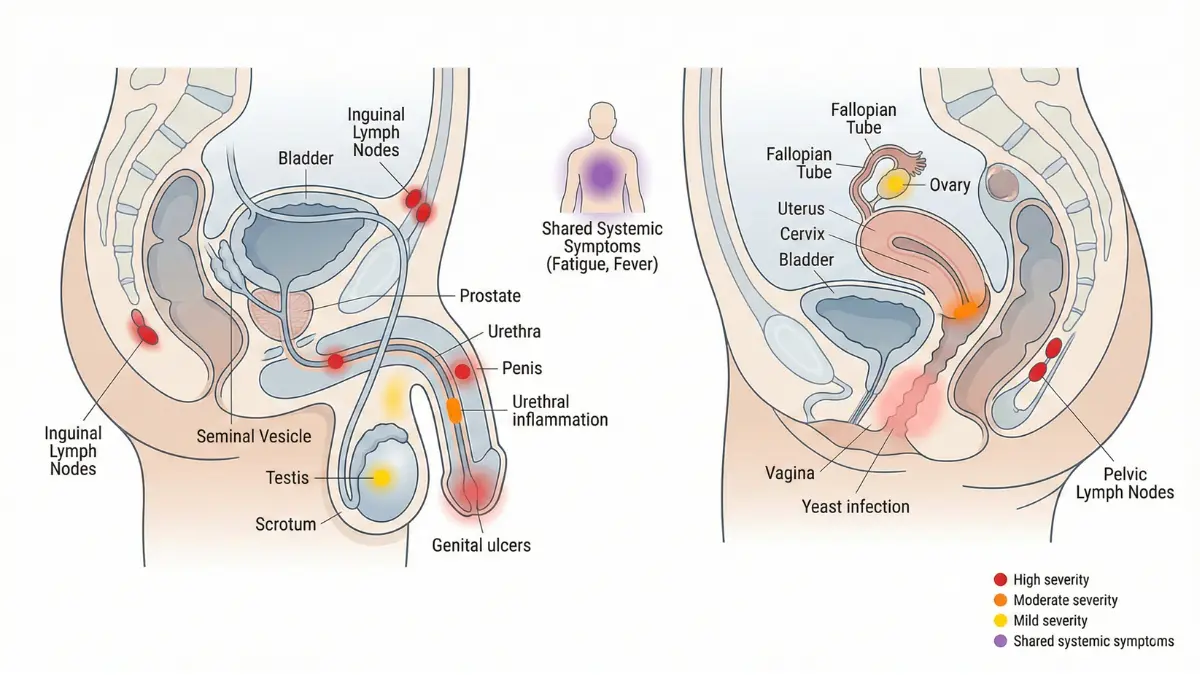
While the core HIV symptoms during acute infection affect all individuals regardless of biological sex, emerging research reveals important gender-specific variations that can influence symptom recognition and diagnosis timing. Understanding these distinctions helps both men and women identify early HIV symptoms more accurately, particularly when certain reproductive or hormonal manifestations appear alongside classic fever, rash, and lymph node swelling patterns documented by the Centers for Disease Control and Prevention.
The biological differences in immune response, hormonal influences, and anatomical factors create unique symptom presentations that healthcare providers increasingly recognize as critical for early detection strategies. Women assigned female at birth may experience HIV symptoms in women that overlap with other gynecological conditions, sometimes delaying diagnosis, while men assigned male at birth often present with HIV symptoms in men affecting the urogenital tract that can be mistaken for sexually transmitted infections.
HIV Symptoms in Men & Signs of HIV in Men
Signs of HIV in men during the acute 2-4 week window frequently include genital manifestations that appear alongside systemic symptoms like fever and fatigue. Painful genital ulcers occur more commonly and with greater severity in men experiencing acute HIV infection, sometimes accompanied by urethral discharge that resembles gonorrhea or chlamydia. These HIV symptoms in males may also include testicular pain or swelling as the virus affects lymphatic drainage in the groin region.
Research indicates that HIV symptoms in men often present with more pronounced lymphadenopathy in the inguinal (groin) region compared to women, particularly when transmission occurred through sexual contact. Men may also experience more severe muscle wasting and rapid weight loss during acute infection, though the mechanisms behind this difference remain under investigation. Additionally, oral thrush and esophageal candidiasis—fungal infections indicating immune compromise—appear slightly more frequently as early HIV symptoms in men during the acute phase.
Monitoring overall health metrics using tools like an ideal weight calculator can help men track unexplained weight changes that may signal HIV symptoms in males requiring immediate medical evaluation.
HIV Symptoms in Women & Signs of HIV in Women
HIV symptoms in women during acute infection often include gynecological manifestations that may be attributed to other causes, creating diagnostic challenges. Severe or recurrent vaginal yeast infections occurring during the 2-4 week acute phase represent distinctive signs of HIV in women, as the virus rapidly depletes CD4 cells that normally prevent fungal overgrowth. These infections may resist standard antifungal treatments and recur within days of apparent resolution.
HIV symptoms in females can also include menstrual cycle disruptions during acute infection, with some women experiencing unusually heavy periods, irregular timing, or severe cramping coinciding with other systemic symptoms like fever and swollen lymph nodes. The hormonal fluctuations and immune changes triggered by acute HIV infection may temporarily alter normal menstrual patterns, though this symptom remains underreported in medical literature.
Pelvic inflammatory disease (PID) symptoms—including lower abdominal pain, abnormal vaginal discharge, and pain during intercourse—may emerge or worsen during acute HIV infection as the virus compromises local immune defenses in the reproductive tract. According to guidelines from the National Institutes of Health, women with acute HIV symptoms and concurrent pelvic pain should receive comprehensive STI screening including HIV testing.
Women tracking reproductive health using an ovulation calculator or pregnancy due date calculator should note any sudden changes in cycle regularity coinciding with flu-like illness, as these may indicate HIV symptoms in women requiring urgent testing.
Gender-Specific Manifestation Comparison
| Symptom Category | HIV Symptoms in Men | HIV Symptoms in Women | Shared Symptoms |
|---|---|---|---|
| Genital/Reproductive | Painful penile ulcers, urethral discharge, testicular swelling | Recurrent vaginal yeast infections, menstrual irregularities, PID symptoms | Genital lesions, pelvic lymph node swelling |
| Systemic Symptoms | More pronounced muscle wasting, severe inguinal lymphadenopathy | Hormonal fluctuations affecting symptom perception | Fever, night sweats, fatigue, headache |
| Oral Manifestations | Slightly higher thrush incidence | Oral ulcers, candidiasis | Severe sore throat, mouth lesions |
| Skin Changes | Rash patterns similar | Rash patterns similar | Non-itchy maculopapular rash on trunk |
| Weight Changes | Rapid muscle loss (5-10 lbs) | Moderate weight fluctuation | Unexplained weight reduction |
Key Takeaway: While fever, lymph node swelling, rash, and fatigue represent the most common signs of HIV across all genders, paying attention to reproductive system symptoms helps identify HIV symptoms in men and HIV symptoms in women during the critical acute infection window when treatment intervention proves most effective. Both men and women should seek immediate HIV testing if experiencing any combination of these symptoms within 2-4 weeks of potential exposure, rather than attributing reproductive symptoms solely to common infections.
Timeline Breakdown – Week-by-Week Symptom Evolution
The Acute HIV Infection Timeline: Understanding What Happens When
Recognizing HIV symptoms timeline patterns empowers you to understand the progression from initial exposure through acute infection to the critical testing windows that determine diagnosis accuracy. Unlike many viral illnesses with predictable symptom onset within 24-72 hours, HIV symptoms after exposure follow a distinctive pattern that unfolds across 4-6 weeks, with dramatic variations between individuals based on viral load, immune response strength, and other biological factors.
Week 0-1: The Silent Period (HIV Window Period Symptoms)
The first 7-10 days following HIV exposure represent the most deceptive phase of infection—a period when HIV window period symptoms remain completely absent despite explosive viral replication occurring throughout your bloodstream and lymphatic system. During these silent days, HIV invades CD4 cells and commandeers their genetic machinery to produce millions of new virus particles daily, yet most people feel entirely normal.
This asymptomatic window creates profound public health challenges: infected individuals have no idea they carry the virus, cannot detect it through standard antibody tests, yet possess extraordinarily high viral loads making them highly contagious to sexual or needle-sharing partners. According to the National Institutes of Health, transmission risk during this symptom-free period actually exceeds later infection stages because viral concentrations reach their lifetime peak.
Critical action step: If you’ve had potential HIV exposure through unprotected sex, shared needles, or occupational blood contact, post-exposure prophylaxis (PEP) medication must begin within 72 hours—ideally within 24 hours—to prevent infection establishment. Resources available through HIV.gov provide PEP location services and eligibility guidance for this life-saving intervention.
Week 2-3: Symptom Onset Peak (HIV Symptoms After 2 Weeks)
Between days 10-21 post-exposure, 50% to 90% of infected individuals begin experiencing the constellation of acute HIV symptoms as their immune system finally recognizes and responds to the viral invasion. HIV symptoms after 2 weeks typically begin with sudden high fever (100.4°F-104°F), severe fatigue, and painful swollen lymph nodes in the neck, armpits, or groin—the hallmark triad signaling acute retroviral syndrome.
The characteristic HIV rash symptoms usually emerge during days 10-14, appearing as flat or slightly raised reddish spots across your trunk, neck, and face that don’t itch intensely. This timing reflects your immune system’s production of inflammatory cytokines and initial antibody responses that create the visible HIV skin symptoms distinguishing acute infection from ordinary flu.
Viral load peaks during week 2-3, sometimes reaching 10 million copies per milliliter of blood—levels that make transmission through sexual contact extremely efficient. Using a heart rate zone calculator may reveal elevated resting heart rates reflecting the fever and metabolic stress your body experiences during this acute phase.
Week 3-4: Full Symptom Manifestation (Acute HIV Symptoms)
When do HIV symptoms appear in their most pronounced form? Research documents that weeks 3-4 represent the symptomatic peak when multiple first signs of HIV converge simultaneously. Individuals who will develop symptoms now experience the full spectrum: persistent fever, drenching HIV night sweats requiring clothing changes, HIV muscle pain throughout the body, severe sore throat, HIV headache, and sometimes HIV diarrhea symptoms causing dehydration.
This period often resembles severe mononucleosis or influenza, leading many people to self-diagnose with common illnesses rather than considering acute HIV symptoms. The critical distinction lies in duration and exposure history: flu symptoms resolve within 5-7 days, while HIV flu-like symptoms persist for 1-2 weeks or longer, especially when recent high-risk exposure occurred.
Critical testing window: Fourth-generation antigen/antibody HIV tests can detect infection during this period with high accuracy, as both viral proteins (antigens) and initial antibody responses become measurable. The Centers for Disease Control and Prevention recommends immediate testing for anyone experiencing these symptom clusters with potential exposure history.
Week 4-6: Symptom Resolution (HIV Seroconversion Symptoms)
How long for HIV symptoms to disappear? Most acute HIV symptoms begin fading during weeks 4-6 as your immune system reaches temporary equilibrium with the virus through a process called seroconversion—the production of HIV-specific antibodies now detectable on standard tests. HIV seroconversion symptoms gradually diminish: fever breaks, lymph nodes shrink (though may remain slightly enlarged), fatigue lessens, and rash fades.
DANGER ZONE WARNING: Symptom disappearance does NOT mean the virus has been defeated or cleared from your body. This represents the transition from acute infection to the chronic latent phase, where HIV continues replicating at lower levels while systematically destroying CD4 cells over years. Many people mistakenly believe symptom resolution indicates recovery and never seek testing—a tragic missed opportunity when treatment during acute infection provides optimal long-term outcomes.
Documenting your recovery using tools like a sleep calculator to track improving sleep quality or a BMR calculator to monitor metabolic recovery can help, but these improvements should prompt HIV testing rather than reassurance.

Week-by-Week Symptom Timeline Reference
| Timeframe | What’s Happening | Symptoms Present | Transmission Risk | Testing Accuracy | Action Required |
|---|---|---|---|---|---|
| Days 0-7 | Rapid viral replication, no immune response yet | None (asymptomatic HIV) | EXTREMELY HIGH | Very low (RNA tests only) | Start PEP within 72 hours if exposed |
| Days 7-14 | Immune activation begins, viral load peaks | Fever, swollen nodes begin | HIGHEST | Moderate (4th gen tests) | Seek testing if exposure known |
| Days 14-21 | Full immune response, multiple symptoms | Rash, fever, fatigue, throat pain, night sweats | VERY HIGH | Good (4th gen tests) | Urgent testing recommended |
| Days 21-28 | Symptom peak, early antibodies forming | All symptoms maximal | HIGH | Excellent (4th gen tests) | Testing essential |
| Days 28-42 | Seroconversion completing, symptoms fade | Gradual improvement | Moderate-High | Excellent (all tests) | Confirm with testing despite improvement |
Essential Understanding: The HIV symptoms timeline follows predictable patterns in most cases, but 10-50% of infected individuals experience minimal or no acute symptoms—making exposure-based testing far more reliable than symptom-based assessment. Whether you develop severe early HIV symptoms or remain completely asymptomatic, the virus replicates identically and requires the same urgent intervention through testing and treatment initiation guided by healthcare providers familiar with current protocols outlined by organizations like the NIH HIV treatment guidelines.
HIV vs Flu vs Other Conditions – Critical Distinctions
Can You Have HIV Without Symptoms? Understanding Asymptomatic HIV
One of the most dangerous misconceptions about HIV infection involves the assumption that you’ll always “feel sick” during acute infection. Medical evidence reveals that 10% to 50% of people infected with HIV experience minimal or no recognizable acute HIV symptoms during the critical 2-4 week window. This phenomenon—asymptomatic HIV—means the virus replicates to peak levels, damages CD4 cells, and creates maximum transmission risk while you feel completely normal and have no reason to suspect infection.
Can you have HIV without symptoms? Absolutely, and these asymptomatic cases remain just as infectious to sexual or needle-sharing partners as symptomatic cases with severe fever and rash. This reality underscores why the Centers for Disease Control and Prevention emphasizes exposure-based testing rather than symptom-based testing as the gold standard for HIV diagnosis. If you’ve had unprotected sex, shared needles, or experienced occupational blood exposure, testing becomes essential regardless of whether early HIV symptoms appear or not.
HIV Flu-Like Symptoms vs Actual Flu: Critical Distinctions
The similarity between HIV flu-like symptoms and seasonal influenza causes dangerous diagnostic confusion during acute infection, yet several distinguishing features help differentiate these conditions. Understanding HIV symptoms vs flu patterns empowers you to recognize when apparently common illness actually signals something requiring urgent HIV testing.
Timing represents the first critical distinction. Seasonal flu symptoms appear 1-4 days after respiratory exposure to influenza virus, while HIV symptoms timeline places symptom onset 2-4 weeks after sexual contact or blood exposure. If your “flu” began exactly 2-3 weeks after potential HIV exposure rather than days after being around sick people, this timing should raise immediate concern.
Duration provides the second key difference. Uncomplicated influenza resolves within 5-7 days even without antiviral treatment, while acute HIV symptoms persist for 1-2 weeks or longer with symptoms often intensifying during the second week rather than improving. HIV fever symptoms lasting beyond 10 days fundamentally differ from flu and warrant comprehensive evaluation.
Lymph node involvement offers another distinguishing feature. Seasonal flu rarely causes significant lymph node swelling, whereas HIV swollen lymph nodes appear prominently in multiple locations (neck, armpits, groin) during acute infection, often as the most noticeable symptom. These nodes feel firm, rubbery, and may reach marble or grape size.
Comparison Table: HIV vs Common Illnesses
| Clinical Feature | Acute HIV Infection | Seasonal Influenza | Mononucleosis | COVID-19 |
|---|---|---|---|---|
| Incubation Period | 2-4 weeks post-exposure | 1-4 days | 4-6 weeks | 2-14 days |
| Fever Duration | 1-2+ weeks | 3-5 days | 1-2 weeks | 3-10 days variable |
| Fever Intensity | 100.4°F-104°F persistent | 100°F-103°F resolving | 100°F-103°F | 99°F-103°F |
| Lymph Node Swelling | Severe, widespread, multiple sites | Minimal or absent | Severe, primarily neck | Uncommon |
| Rash Pattern | Non-itchy, trunk/face, flat red spots | Rare | Occasional, drug-related | Common, variable |
| Sore Throat | Severe pharyngitis | Moderate | Very severe with white patches | Moderate |
| Night Sweats | Drenching, clothing-soaking | Mild if present | Common | Uncommon |
| Muscle Pain | Severe, persistent | Moderate, improving | Moderate | Variable |
| Headache | Persistent, severe | Moderate | Moderate-severe | Common |
| Known Exposure | Sexual/blood contact 2-4 weeks prior | Respiratory contact days prior | Saliva contact weeks prior | Respiratory contact days prior |
| Response to OTC Meds | Poor symptom relief | Moderate relief | Poor relief | Variable relief |
When to Suspect HIV vs Common Illness: Red Flag Combinations
HIV symptoms checklist indicators requiring immediate testing include experiencing three or more of these patterns simultaneously:
- Fever lasting >7 days occurring 2-4 weeks after unprotected sex or needle sharing
- Painful swollen lymph nodes in multiple body locations (not just throat-related)
- Non-itchy rash on trunk appearing during second week of “flu-like” illness
- Night sweats requiring clothing/bedding changes coinciding with fever
- Severe fatigue not improving after one week of rest
- Sore throat more severe than typical strep throat
- Multiple symptoms appearing simultaneously rather than sequentially
According to resources available through HIV.gov, the combination of known exposure history plus symptom cluster creates far higher HIV probability than any single symptom alone. HIV symptoms after exposure within the 2-4 week window transform vague flu-like complaints into urgent red flags demanding immediate fourth-generation HIV testing.
Essential Takeaway: The only definitive way to distinguish HIV symptoms vs flu involves HIV testing, never symptom evaluation alone. Using a comprehensive symptom checker can document your symptoms for healthcare providers, but self-diagnosis based on HIV symptoms checklist comparisons cannot replace laboratory testing. Modern fourth-generation tests detect HIV as early as 2-3 weeks post-exposure with excellent accuracy, making prompt testing the cornerstone of early diagnosis regardless of symptom presence or severity.
What to Do NOW – Testing, Treatment & Living Forward
Immediate Action Steps If You Have Symptoms
Recognizing HIV symptoms transforms fear into empowerment through decisive action. If you’re experiencing multiple symptoms from this article’s checklist within 2-4 weeks of potential HIV exposure, follow this evidence-based protocol immediately:
1. Within 72 Hours of Exposure: Get PEP Immediately
Post-exposure prophylaxis (PEP) consists of antiretroviral medications that can prevent HIV infection when started within 72 hours—ideally within 24 hours—of exposure through unprotected sex, shared needles, or occupational blood contact. Resources available through HIV.gov provide emergency PEP location services at hospitals, sexual health clinics, and emergency departments nationwide. Even if symptoms haven’t appeared yet, PEP remains your most powerful prevention tool during the critical window period.
2. After 2-4 Weeks With Symptoms: Get Tested NOW
Fourth-generation antigen/antibody HIV tests detect infection as early as 2-3 weeks post-exposure by identifying both viral proteins and antibodies your immune system produces. The Centers for Disease Control and Prevention maintains a testing site locator helping you find confidential, often free testing at health departments, community clinics, and specialized HIV testing centers. HIV testing after symptoms appear provides faster diagnosis than waiting for symptom resolution, which only delays lifesaving treatment.
3. Document Your Symptoms Accurately
Create a detailed HIV symptoms checklist recording when each symptom began, its severity, and duration. Use comprehensive tools like a symptom checker to organize this information for healthcare providers. Track weight changes with a BMI calculator and sleep disruptions with a sleep calculator to provide objective data supporting your symptom reports.
4. Inform Recent Partners Ethically
If you test positive, informing sexual or needle-sharing partners from the past 2-4 weeks allows them to access PEP if still within the 72-hour window or seek early testing and treatment themselves.
5. Start Planning, Not Panicking
Early HIV diagnosis in 2025 carries dramatically different implications than even a decade ago.
Understanding HIV Treatment Today: From Crisis to Chronic Condition
Modern antiretroviral therapy (ART) has revolutionized HIV from a terminal diagnosis to a manageable chronic condition with near-normal life expectancy. Treatment initiated during acute infection provides optimal outcomes: faster viral suppression, better immune system preservation, and reduced risk of chronic HIV symptoms or progression to AIDS symptoms.
The concept of Undetectable = Untransmittable (U=U) means people achieving undetectable viral loads through consistent ART cannot sexually transmit HIV to partners—a scientific breakthrough transforming intimate relationships. According to the National Institutes of Health treatment guidelines, individuals starting treatment early can expect life expectancies approaching those of HIV-negative people.
Without treatment, acute infection transitions to chronic HIV symptoms (often asymptomatic for years) before eventually progressing to late stage HIV symptoms and AIDS. Understanding the HIV AIDS symptoms difference emphasizes treatment urgency: HIV represents the viral infection manageable with medication, while AIDS describes advanced immune system failure occurring only when HIV remains untreated for years.
Beyond the Acute Phase: Your Health Journey Ahead
The acute symptoms you’re experiencing will resolve within 2-6 weeks regardless of whether you receive treatment. However, symptom disappearance without treatment simply marks transition to the chronic phase where HIV symptoms without treatment remain minimal while the virus silently destroys immune function over 8-10 years.
Early intervention prevents this progression entirely. Maintaining overall wellness through proper nutrition tracked with a calorie deficit calculator, exercise monitored via a heart rate zone calculator, and sleep optimization supports immune health during treatment initiation.
Empowering Conclusion: Recognizing early HIV symptoms represents the crucial first step toward a healthy, fulfilling life. Modern medicine has transformed HIV from a death sentence to a manageable condition where people live, love, work, and thrive for decades. Testing equals power—power over your health, your future, and your ability to protect partners. If you suspect HIV exposure or recognize these first signs of HIV, seek testing today through your healthcare provider, local health department, or the comprehensive resources available at HIV.gov and the CDC HIV information portal.
For additional health monitoring and wellness resources, explore our comprehensive collection of health tools at mymedicineadvisor.com/health supporting your overall wellness journey.
Medical Disclaimer
This article is for educational purposes only and does not constitute medical advice, diagnosis, or treatment recommendations. The information provided describes general HIV symptom patterns but cannot replace professional medical evaluation. If you suspect HIV exposure or are experiencing symptoms described in this article, consult a qualified healthcare provider immediately for proper testing, diagnosis, and treatment. HIV testing remains the only definitive method to confirm or rule out infection. Early medical intervention provides the best health outcomes. Always seek professional medical guidance for any health concerns.
11 Frequently Asked Questions About HIV Symptoms
1. What are the first signs of HIV?
The first signs of HIV typically include high fever (100.4°F or higher), swollen lymph nodes in multiple locations, extreme fatigue, and sore throat appearing 2-4 weeks after exposure. These early HIV symptoms often resemble severe flu but persist longer than typical viral infections, usually lasting 1-2 weeks or more.
2. When do HIV symptoms appear after exposure?
HIV symptoms typically appear 2 to 4 weeks after initial infection during the acute phase, though some people experience symptoms as early as 7 days or as late as 6 weeks post-exposure. However, 10-50% of infected individuals remain completely asymptomatic during acute infection, making exposure-based testing essential regardless of symptom presence.
3. Can you have HIV without any symptoms?
Yes, asymptomatic HIV occurs in 10-50% of cases during acute infection, and most people experience no symptoms during the chronic phase that can last 8-10 years. The virus continues replicating and damaging the immune system even without noticeable HIV symptoms, which is why testing based on exposure risk rather than symptoms is critical.
4. How do HIV symptoms differ from the flu?
HIV symptoms vs flu can be distinguished by timing (2-4 weeks after exposure vs 1-4 days), duration (1-2+ weeks vs 3-5 days), and lymph node involvement (severe widespread swelling vs minimal). HIV flu-like symptoms also include drenching night sweats and a distinctive non-itchy rash that typical influenza rarely causes.
5. What does HIV rash look like?
HIV rash symptoms appear as flat or slightly raised red or dark purple spots primarily on the trunk, face, and neck that typically don’t itch intensely. This rash usually develops 10-14 days after exposure and lasts 1-3 weeks, distinguishing it from allergic reactions or other viral rashes.
6. Do HIV symptoms differ between men and women?
Yes, HIV symptoms in men often include more severe genital ulcers and urethral discharge, while HIV symptoms in women frequently involve recurrent vaginal yeast infections, menstrual irregularities, and pelvic inflammatory disease symptoms. Both genders experience the core symptoms of fever, swollen lymph nodes, rash, and fatigue.
7. How long do acute HIV symptoms last?
Acute HIV symptoms typically persist for 1 to 2 weeks, though some individuals experience symptoms for up to 4-6 weeks before they gradually resolve. Symptom disappearance does NOT mean the virus is gone—it simply indicates transition to the chronic infection phase where the virus continues replicating silently.
8. What are HIV swollen lymph nodes like?
HIV swollen lymph nodes feel like firm, rubbery lumps (marble to grape-sized) in the neck, armpits, or groin that may be slightly tender but are often painless. They appear in multiple locations simultaneously in 40-70% of acute HIV cases and may persist for weeks even after other symptoms resolve.
9. Can HIV symptoms appear in one week?
10. What should I do if I have HIV symptoms?
Get tested immediately with a fourth-generation HIV test, which can detect infection as early as 2-3 weeks after exposure. If you’re within 72 hours of potential HIV exposure, seek post-exposure prophylaxis (PEP) at an emergency room or sexual health clinic, as this medication can prevent infection.
11. What’s the difference between HIV and AIDS symptoms?
HIV symptoms refer to signs during active viral infection stages (acute, chronic, or advanced), while AIDS symptoms indicate severe immune system failure occurring only when untreated HIV progresses for years. AIDS develops when CD4 cell counts drop below 200 cells/mm³, causing opportunistic infections like pneumonia, certain cancers, and severe weight loss that don’t occur in earlier HIV stages.
About this content
How this article was put together: researched from recognised health sources, drafted with the help of AI tools, and edited by hand, with sources linked throughout.

Sameer Patel is the founder and editor of My Medicine Advisor. He is not a doctor or medical professional — before starting this site he worked in banking,…
Medical disclaimer
The content on MyMedicineAdvisor is provided for general informational and educational purposes only and is not a substitute for professional medical advice, diagnosis, or treatment. Health information on this website should not be used to diagnose, treat, cure, or prevent any condition without guidance from a qualified healthcare professional. Always seek the advice of your doctor, physician, or another licensed healthcare provider with any questions you may have regarding a medical condition, symptoms, medications, or treatment decisions.