On This Page – Quick Medical Summary
You’ve been told you have options — and that’s not a simple thing to hear
Being told “you have options” immediately after a lumpectomy vs mastectomy conversation can feel like standing at a crossroads with no map and no time.
This article explains exactly what surgeons evaluate before making a recommendation — the clinical criteria, the survival data, and the questions to bring to your appointment. It is your pre-consultation guide, not a replacement for specialist care.
Start here based on your situation:
- Just diagnosed and unsure what either procedure involves → begin at Section 2
- Want to know what makes you eligible for one option vs. the other → go to Section 3
- Your surgeon made a recommendation and you want to understand the reasoning → go to Section 4
- Want to know whether survival rates actually differ → go directly to Section 5
You deserve to walk into that appointment understanding the clinical language your surgeon will use. This article makes that possible.
ℹ️ Medical Disclaimer: The surgical eligibility criteria, procedure descriptions, survival data, recovery timelines, treatment options, and genetic risk information discussed in this article reflect current clinical guidelines and are provided for educational purposes only. Individual recommendations — including the choice between lumpectomy and mastectomy, reconstruction planning, radiation therapy sequencing, and BRCA-related surgical decisions — depend on pathology results, tumor biology, imaging, comorbidities, and direct specialist assessment. This article does not constitute a diagnosis, surgical recommendation, or treatment plan for any individual patient. Consult a board-certified surgical oncologist or gynecologic oncologist before making any decision related to breast cancer surgery.
What lumpectomy and mastectomy actually remove from your body
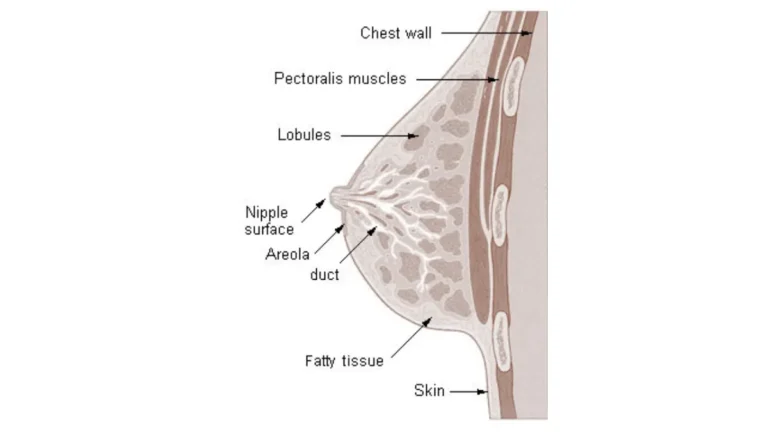
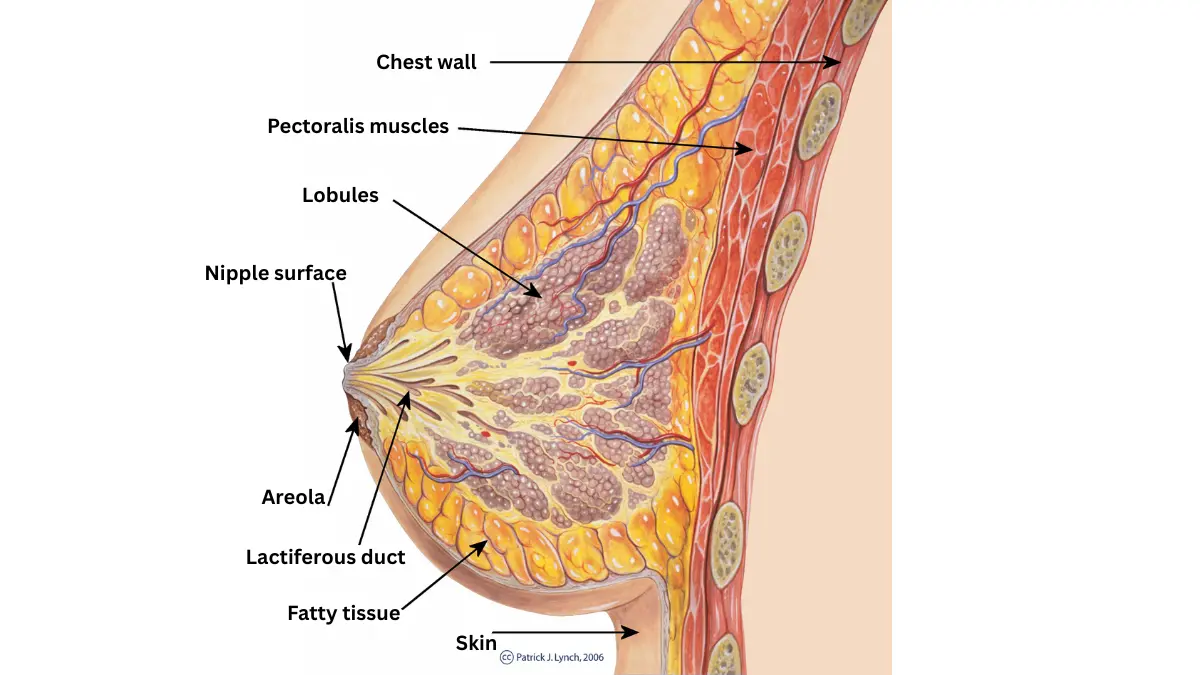
A lumpectomy removes only the tumor and a surrounding margin of healthy tissue, preserving the breast structure. A mastectomy removes the entire breast — including all breast tissue, the nipple, and the areola in most cases. For early-stage breast cancer (Stage I and Stage II), published clinical data demonstrates equivalent overall survival between these two approaches, a finding that reshapes how most patients should think about this decision.
The surgery type is not automatically a survival decision. For most early-stage patients, it is a candidacy and quality-of-life decision.
Lumpectomy: removing the tumor and a margin of healthy tissue
Lumpectomy — also called breast-conserving surgery — removes the tumor plus a rim of surrounding healthy tissue called the surgical margin, measured in millimeters on final pathology.
If the pathology report shows cancer cells at or near the margin edge, a second surgical procedure called re-excision may be required. This is not a complication — it is standard clinical management, and it occurs in a meaningful percentage of lumpectomy cases even in high-volume surgical centers.
Most lumpectomy patients will require radiation therapy after surgery to eliminate any microscopic cancer cells remaining in the breast tissue. For patients considering this option, understanding the commitment that radiation requires is part of the candidacy evaluation — not a footnote.
Mastectomy: full breast removal and the types surgeons offer
A mastectomy removes all breast tissue. The specific type depends on your tumor characteristics, lymph node involvement, and reconstruction goals.
| Type | What Is Removed | Key Clinical Detail |
|---|---|---|
| Total/Simple Mastectomy | All breast tissue, nipple, areola | No axillary lymph node removal; used when nodes are not involved |
| Modified Radical Mastectomy | All breast tissue + axillary lymph nodes | Standard when lymph node involvement is confirmed on imaging or biopsy |
| Skin-Sparing Mastectomy | All breast tissue; skin envelope preserved | Enables immediate reconstruction at the same surgery |
| Nipple-Sparing Mastectomy | All breast tissue; nipple and skin preserved | Requires tumor not involving or near the nipple; demands specialized surgical judgment |
| Bilateral Mastectomy | Both breasts removed | BRCA1/BRCA2 carriers; strong bilateral risk profile; patient preference after full genetic counseling |
For detailed information on what the mastectomy procedure involves — including what surgeons do not always cover in the initial consultation — what patients should know before mastectomy surgery covers those specifics in full.
Why survival rates are equivalent for early-stage disease
This is the clinical fact that reframes the entire decision for most patients with early-stage breast cancer.
For Stage I and Stage II disease, multiple large randomized controlled trials and decades of follow-up data demonstrate equivalent overall survival between lumpectomy with radiation and mastectomy. This finding is reflected in current national oncology guidelines.
📊 Clinical Data Point: For Stage I and Stage II breast cancer, lumpectomy with radiation produces overall survival outcomes equivalent to mastectomy across multiple decades of randomized trial follow-up data — consistent with findings affirmed in 2026 clinical oncology literature. Verify specific survival percentages against NCI SEER 2026 data release at publish time.
Mastectomy is not the more aggressive choice in a survival sense. It is a different choice — with different candidacy criteria, different recovery demands, and different quality-of-life implications.
🔬 How It Works: Surgical margin adequacy — not the size of the incision — is what determines whether a lumpectomy is oncologically complete. Pathologists measure the distance between the outermost cancer cells in the removed specimen and the edge of the tissue. When cancer cells sit at or very close to that edge, the margin is classified as positive or close, and re-excision is typically recommended. A clean margin, not the physical scope of surgery, is the goal.
✅ Patient Action: Before your surgical consultation, ask: “Based on my tumor size and breast anatomy, what is your estimate of my margin clearance probability — and what is my re-excision risk?” This specific question signals to your surgeon that you want a realistic candidacy assessment, not a simplified binary recommendation.
Who is a candidate for lumpectomy — and who typically is not
Surgeons evaluate the following clinical criteria when determining lumpectomy candidacy, per NCCN 2026 guidelines for breast cancer surgical management:
- Tumor size relative to breast volume — adequate tissue remaining for cosmetically acceptable result after excision
- Single tumor focus — unifocal disease in one quadrant of the breast
- Achievable clear surgical margins — based on tumor location and breast anatomy
- No prior radiation to the same breast (which would rule out additional radiation after lumpectomy)
- No inflammatory breast cancer — a clinical presentation that requires mastectomy as standard of care
- No contraindication to post-surgical radiation — including certain connective tissue disorders, pregnancy in the first or second trimester, or inability to complete the radiation course
When none of these exclusion criteria apply, lumpectomy is generally the eligible option — and the decision shifts to patient preference within the clinical framework.
Tumor size and breast size: the ratio that determines eligibility
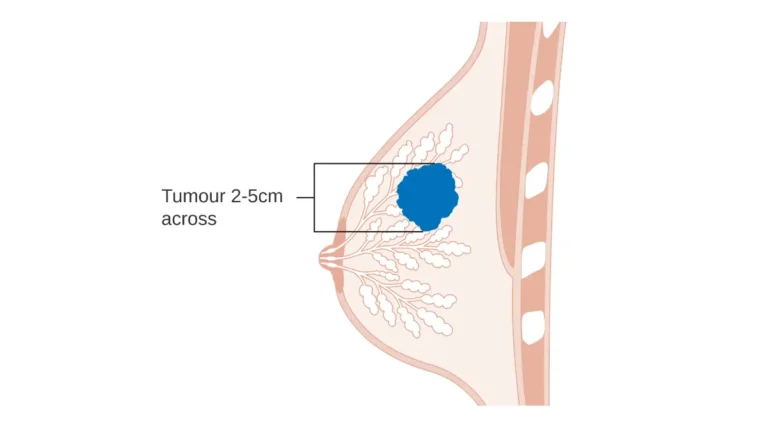
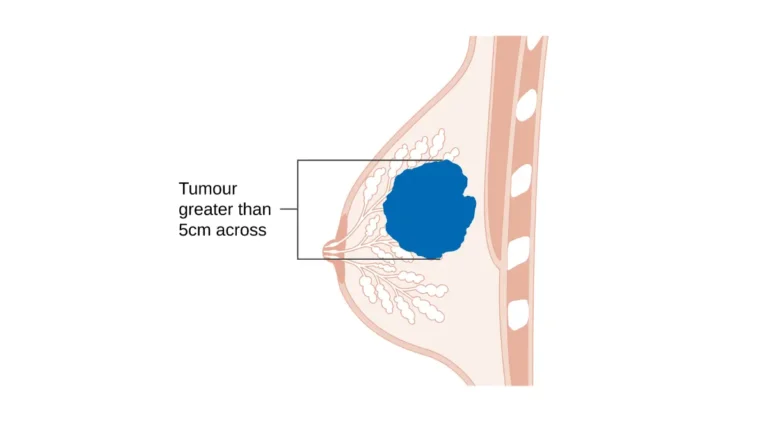
Surgical eligibility is not determined by tumor size alone. It is determined by the tumor-to-breast ratio — a dynamic clinical calculation that considers how much healthy tissue will remain after the tumor and its margin are removed.
A 3-centimeter tumor in a large-breasted patient may be an entirely straightforward lumpectomy candidate. The same tumor in a smaller-breasted patient may produce an unacceptable cosmetic result or inadequate margin clearance, shifting the recommendation toward mastectomy.
This ratio is surgeon-assessed — it is not a fixed centimeter threshold, and NCCN 2026 does not define a single universal tumor-size cutoff that automatically triggers mastectomy. Patients who receive a “your tumor is too large” explanation deserve a specific, anatomy-based rationale, not a simplified rule.
Multifocal disease and other factors that rule out lumpectomy
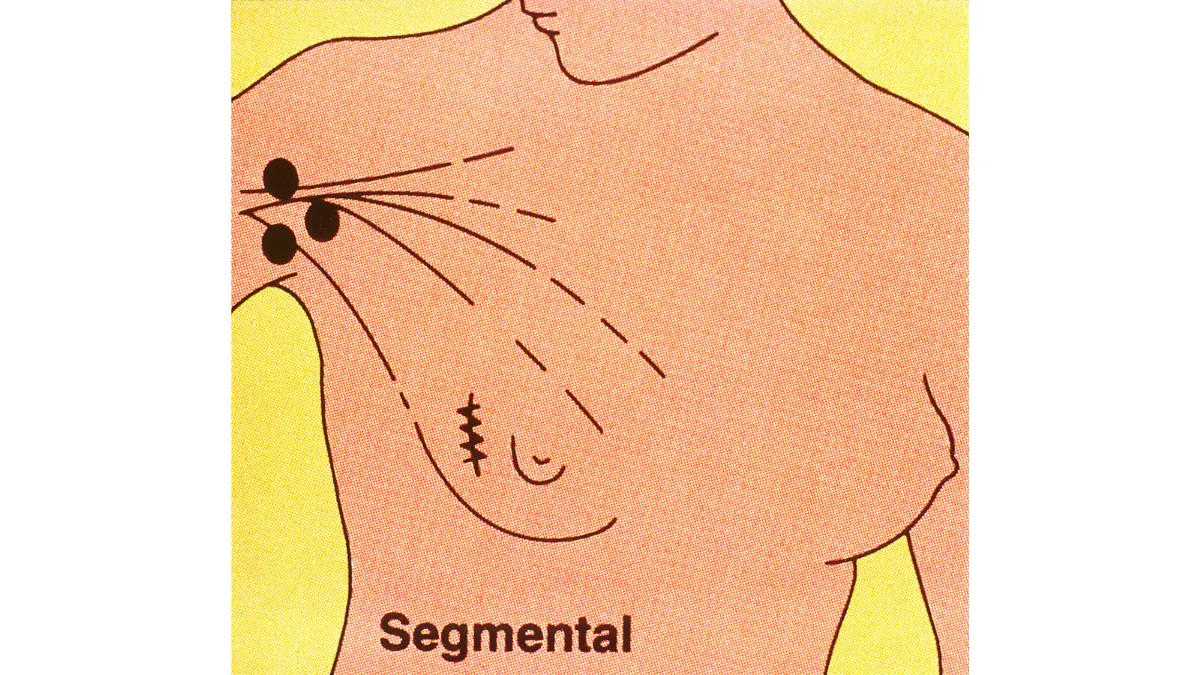
Multifocal breast cancer — defined as two or more tumor foci in separate quadrants of the same breast — is a standard indication for mastectomy in most cases.
Achieving oncologically adequate margins for multiple spatially separated tumors while preserving cosmetically acceptable breast volume is frequently not clinically achievable. The surgical math does not work in most multifocal presentations.
Additional factors that typically indicate mastectomy include: inflammatory breast cancer, a prior lumpectomy with persistently positive margins after re-excision, prior therapeutic radiation to the same breast, and certain collagen vascular diseases that make radiation unsafe.
For patients wanting to understand how early detection affects surgical options, recognizing the first signs of breast cancer before tumors advance beyond lumpectomy candidacy range is clinically relevant.
How BRCA mutation status changes the entire decision
BRCA1 and BRCA2 mutation carriers face a fundamentally different risk calculation than the general breast cancer patient population.
The surgical eligibility question for BRCA carriers is not only whether a lumpectomy can adequately treat the current tumor — it is whether the patient’s lifetime risk of developing a second primary cancer in the same breast or the opposite breast is high enough to warrant bilateral mastectomy even when lumpectomy would technically clear the presenting tumor.
NCCN 2026 guidelines address BRCA-specific surgical decision-making as a separate clinical category from standard candidacy criteria. The conversation about lumpectomy vs. mastectomy for a BRCA carrier involves a genetic counselor, a surgical oncologist, and sometimes a gynecologic oncologist working together — not a single-appointment surgical recommendation.
Patients who have received BRCA test results and want to understand what those numbers mean can use our genetic risk assessment tool to evaluate their hereditary cancer risk profile before their specialist appointment. For a detailed breakdown of BRCA result interpretation, reading your BRCA results in 60 seconds provides a clinical framework.
✅ Patient Action: Before accepting or declining lumpectomy, ask your surgical oncologist: “Given my tumor location, my breast anatomy, my margin probability, and my BRCA status — what is the specific clinical reasoning behind this recommendation?” If your surgeon cannot articulate each of these factors in your answer, a second opinion is clinically appropriate.
How your surgeon weighs all the factors and makes a recommendation
Surgeons recommend mastectomy when one or more of the following clinical conditions apply, per NCCN 2026 guidelines for breast cancer surgical management:
- Multifocal or multicentric disease — tumor foci in separate breast quadrants
- Tumor-to-breast ratio unfavorable for cosmetically acceptable breast conservation
- Persistently positive margins after two lumpectomy re-excision attempts
- Prior radiation to the ipsilateral breast, making additional radiation unsafe
- Inflammatory breast cancer — requires mastectomy as standard of care
- BRCA1/BRCA2 mutation with patient decision favoring bilateral risk reduction
When none of these indications is present, lumpectomy with radiation is typically the NCCN-endorsed first option — not mastectomy.
The five clinical factors surgeons weigh simultaneously
The surgical recommendation is never a single-variable decision. Five factors are evaluated together:
Tumor biology: Receptor status, HER2 status, and grade affect how aggressively the tumor behaves and what adjuvant therapy follows surgery. Patients managing HER2-positive breast cancer may have specific margin and neoadjuvant sequencing considerations that affect surgical timing and candidacy.
Anatomic feasibility: Tumor location, size, and breast volume determine whether adequate margins can be achieved without a cosmetically unacceptable result.
Lymph node status: Sentinel lymph node biopsy results inform whether additional axillary surgery is required and how surgical planning integrates with systemic therapy.
Radiation eligibility: A patient who cannot complete a full course of post-lumpectomy radiation — due to geographic access, comorbidities, or pregnancy — may find mastectomy more practical even when lumpectomy is oncologically achievable.
Genetic risk profile: BRCA carrier status triggers a separate bilateral risk conversation that can change the recommendation even when the presenting tumor is technically a lumpectomy candidate.
🩺 Physician Note: In my practice, the question I am asked most often is: “Which surgery gives me the best chance?” For most Stage I and Stage II patients, the honest clinical answer is: both. The follow-up question — “Then how do I choose?” — is where the real consultation begins. That conversation centers on your specific anatomy, your radiation access, your genetic risk, and your own values around the trade-offs involved.
When chemotherapy before surgery changes your options
Neoadjuvant chemotherapy — chemotherapy given before surgery rather than after — can reduce tumor size sufficiently to convert a mastectomy-required patient into a lumpectomy candidate.
This process, called tumor downstaging, is a standard pre-surgical strategy for locally advanced tumors or cases where initial tumor size makes breast conservation unlikely. When a patient achieves a pathologic complete response — meaning no residual cancer is found in the surgical specimen — lumpectomy outcomes are comparable to mastectomy outcomes in those who downstaged successfully.
This is why surgical planning and oncology planning are sequential, not parallel. A patient who believes mastectomy is their only option should ask specifically whether neoadjuvant chemotherapy changes that calculation before consenting to surgery.
How your own preferences enter the surgical decision
The shared decision model is not a clinical courtesy. It is a recognized standard of care in surgical oncology.
When both lumpectomy and mastectomy are clinically equivalent options for a specific patient, the patient’s own values are a legitimate clinical input. Anxiety about locoregional recurrence, concerns about the radiation commitment, preferences about body image, and life circumstances that affect recovery logistics all factor into a responsible shared decision.
Patients who feel pressured toward one option without having their preferences explicitly elicited are not experiencing a complete surgical consultation. Asking your surgeon directly — “If I were your family member, what would you recommend and why?” — is a clinically appropriate question.
✅ Patient Action: If mastectomy has been recommended and you have not been told specifically which of the NCCN 2026 mastectomy indications applies to your case, ask your surgeon to name it before you consent. If no clear indication exists, breast conservation with radiation may still be an eligible option worth evaluating.
Survival rates: does the choice of surgery change your odds?
For early-stage breast cancer (Stage I and Stage II), published clinical data consistently demonstrates equivalent overall survival between lumpectomy with radiation and mastectomy. This is not a contested finding — it has been replicated across multiple large randomized controlled trials with decades of follow-up and is reflected in 2026 oncology guidelines.
Choosing mastectomy over lumpectomy does not improve your survival odds for most early-stage presentations.
Overall survival: what the long-term clinical data shows
The equivalence finding has a critical qualifier: it applies to patients who complete the full post-lumpectomy radiation therapy course and achieve clear surgical margins.
A patient who undergoes lumpectomy without adequate margin clearance, or who cannot complete radiation, is in a different clinical category. For that patient, the survival equivalence argument no longer holds in the same way.
For a complete picture of how breast cancer stage affects long-term survival outcomes, breast cancer survival rates by stage provides stage-matched outcome data in full detail.
📊 Clinical Data Point: For Stage I and Stage II breast cancer, peer-reviewed clinical trial data — affirmed in 2026 oncology literature — demonstrates equivalent overall survival between lumpectomy with radiation and mastectomy across 10–20 year follow-up periods. Verify specific survival percentages against NCI SEER 2026 data at publish time; omit any figure not confirmed from a 2026 source.

Local recurrence rates after lumpectomy vs. mastectomy
This is where the two procedures genuinely differ — and where many patients misread the data.
Local recurrence rate after lumpectomy with radiation is measurably higher than after mastectomy at 10 years. This is a real clinical difference.
What it does not mean is that lumpectomy patients die at a higher rate. Local recurrence after lumpectomy is almost always treatable — typically with mastectomy at that point, followed by systemic therapy as indicated. The higher recurrence rate does not translate into reduced overall survival at the population level, which is why the equivalence finding holds.
🔬 How It Works: Local recurrence is the return of cancer in the same breast or the original surgical site. It is distinct from distant metastasis — the spread of cancer to other organs. Local recurrence after lumpectomy is a treatable event in most cases; it is not the same clinical event as systemic progression. Patients conflating these two outcomes often overestimate the survival risk of choosing breast conservation.
When mastectomy does improve survival outcomes
There are specific clinical scenarios where mastectomy may confer a survival advantage over breast conservation.
Inflammatory breast cancer — characterized by rapid skin and lymphatic involvement — requires mastectomy as standard of care; lumpectomy is not an eligible option. Locally advanced disease that does not respond to neoadjuvant therapy may require mastectomy for adequate locoregional control. BRCA carriers with a very high bilateral cancer risk may reduce their lifetime cancer risk through bilateral mastectomy, though the survival impact of prophylactic contralateral mastectomy for non-BRCA-carrier early-stage patients is not established in current data.
✅ Patient Action: Ask your surgical oncologist: “Can you walk me through the local recurrence rate for lumpectomy at my stage, and explain how that is different from my overall survival risk?” The clinical distinction between these two numbers is the most important piece of information you can leave that appointment with.
Recovery and long-term trade-offs: what each surgery actually requires
The oncologic outcomes may be equivalent for early-stage disease, but the recovery demands, complication risks, and long-term quality-of-life implications of lumpectomy and mastectomy are not the same. Understanding the practical differences is essential to making a decision that fits your life, not just your pathology report.
Lumpectomy recovery and the radiation commitment that follows
Lumpectomy itself carries a relatively short physical recovery — most patients return to normal activities within 2–3 weeks, with wound care, drains rarely required, and surgical pain that resolves within days to weeks in most cases.
The recovery commitment is not the surgery. It is the radiation therapy course that follows.
Standard whole-breast radiation after lumpectomy typically requires 3–5 weeks of daily treatment sessions at a radiation oncology center. Accelerated partial-breast irradiation (APBI) is an option for select patients with specific tumor characteristics and is delivered over a shorter course — discuss eligibility with your radiation oncologist. Patients who cannot realistically commit to the radiation schedule — due to distance from a treatment center, comorbidities, or life circumstances — should discuss this honestly with their surgeon before selecting lumpectomy.
Mastectomy recovery: timeline, reconstruction, and lymphedema risk
Mastectomy carries a more involved physical recovery. Surgical drains are typically in place for 1–3 weeks post-operatively. Most patients return to normal activities within 4–6 weeks, though reconstruction procedures add significant complexity and additional recovery phases.
Breast reconstruction — when desired — must be planned before the mastectomy, not after. Reconstruction options include tissue expanders placed at the time of mastectomy followed by implant exchange, implant-based immediate reconstruction, or autologous flap reconstruction using the patient’s own tissue. Each has different surgical complexity, recovery timelines, and suitability profiles.
Lymphedema risk depends on which lymph node procedure accompanies the mastectomy. For patients undergoing sentinel lymph node biopsy only, the lymphedema risk is substantially lower than for patients who require full axillary lymph node dissection. The distinction between these two procedures — and which applies to your case — is a direct question to bring to your surgeon.
Patients recovering from breast surgery who want to monitor arm swelling, wound changes, or post-operative symptoms can use our symptom checker tool to track signs that warrant a call to their surgical team.
Body image, sexual health, and what the quality-of-life data shows
This is the section most patients research privately and rarely ask their surgeon about — and that silence can lead to decisions made without full information.
Mastectomy produces permanent changes in breast sensation in most patients, including in cases where the nipple is preserved. Sexual self-image, the emotional experience of breast loss, and the relationship between reconstruction outcomes and psychological wellbeing are all documented in quality-of-life research comparing the two procedures. Neither surgery produces universally superior quality-of-life outcomes — the findings are individualized, and what matters most varies significantly between patients.
Body image concerns are legitimate clinical inputs. If cosmetic outcome matters to you — and there is no version of this situation in which that concern is trivial — say so directly to your surgical team. It changes the conversation in clinically productive ways.
✅ Patient Action: Before deciding on mastectomy, consult a board-certified plastic surgeon alongside your surgical oncologist to discuss reconstruction timing, options, and realistic outcomes. Reconstruction must be planned before surgery — it cannot be added back afterward without significantly more complex procedures.
For a comprehensive patient-facing overview of reconstruction options and long-term recovery expectations for both procedures, the American Cancer Society’s breast cancer surgery guide covers post-surgical planning in full detail (verify at publish).
What I tell my patients when they cannot decide between these two surgeries
There is a moment in every surgical consultation where a patient says, quietly, “Just tell me what to do.”
I understand that moment. And I want to give you the honest answer I give my patients.
The question patients rarely ask but always need answered
Most patients ask: Which surgery is safer?
The question they actually need answered is different: Given my specific tumor, my specific body, my specific life — what does this choice actually cost me in each direction?
For a patient with Stage I, node-negative, hormone receptor-positive breast cancer who lives fifteen minutes from a radiation center — lumpectomy with radiation is typically equivalent to mastectomy in every meaningful clinical metric, and the breast is preserved. For a patient with the same pathology who cannot travel daily for six weeks — or who carries unresolved recurrence anxiety that would affect her quality of life for years regardless of surgical outcome — mastectomy may be the more functional choice, even without a clinical indication.
Both of those decisions can be right. The difference is that the second patient needs to name what is actually driving her decision, and a good surgical consultation gives her the space to do that.
Getting a second surgical opinion is not disloyalty
The American Society of Breast Surgeons recognizes second surgical opinions as standard practice for major breast cancer surgical decisions — not as a sign of distrust, not as a delay that endangers the patient, but as a clinically appropriate step that frequently produces more complete information.
If you leave your surgical consultation feeling more uncertain than when you arrived, that is a signal the consultation was incomplete — not that you are incapable of understanding the information. Seek a second opinion from another board-certified surgical oncologist.
Telehealth oncology second opinion platforms have made this possible without travel, within days rather than weeks. For patients interested in contributing to the research that will shape future surgical standards, active clinical trials comparing breast cancer surgical outcomes may offer enrollment opportunities (verify at publish).
🩺 Physician Note: In twenty years of practice in gynecologic oncology, I have never once regretted encouraging a patient to seek a second opinion before consenting to breast cancer surgery. I have had patients come back to me after a second consultation with a different recommendation — and I have had patients come back more confident in the original plan. Both outcomes are good outcomes. The goal is not loyalty to a single surgeon. The goal is the right surgery for your body.
Lumpectomy vs. mastectomy: your questions answered
1. Is lumpectomy safer than mastectomy?
For Stage I and Stage II lumpectomy vs mastectomy decisions, published clinical data shows equivalent overall survival between lumpectomy with radiation and mastectomy — mastectomy does not improve survival odds for most early-stage patients. The procedures carry different local recurrence rates and different recovery demands, but not different survival rates for eligible early-stage candidates. Consult a board-certified surgical oncologist to evaluate which applies to your specific pathology.
2. What tumor size typically requires a mastectomy?
There is no single centimeter threshold that triggers mastectomy. Eligibility depends on the tumor-to-breast ratio — how much healthy tissue remains after removal — along with tumor location, multifocality, and margin achievability. Per NCCN 2026 guidelines, a large tumor in a larger breast may still be a lumpectomy candidate, while a smaller tumor in certain locations may not. Ask your surgeon to explain the specific anatomic calculation for your case.
3. Does lumpectomy always require radiation after surgery?
In most cases, yes. Standard lumpectomy is followed by a course of whole-breast radiation therapy, typically delivered over 3–5 weeks. Accelerated partial-breast irradiation is an option for select patients with specific tumor characteristics. Patients with certain comorbidities, prior chest radiation, or who cannot complete the radiation course may not be appropriate lumpectomy candidates. Discuss radiation eligibility and scheduling specifics with a board-certified radiation oncologist before making your surgical decision.
4. Can you have a lumpectomy with stage 2 breast cancer?
Yes, in many cases. Stage 2 breast cancer does not automatically disqualify a patient from lumpectomy. Eligibility depends on tumor size relative to breast volume, lymph node status, margin achievability, and whether the tumor responds to neoadjuvant chemotherapy if recommended. NCCN 2026 guidelines support breast conservation for Stage II patients who meet candidacy criteria and who can complete post-surgical radiation. Consult a board-certified surgical oncologist for a candidacy assessment specific to your pathology.
5. What are the main disadvantages of lumpectomy?
The primary disadvantages of lumpectomy vs mastectomy include: a higher local recurrence rate (though not a lower overall survival rate) compared to mastectomy; the requirement for post-surgical radiation in most cases; the possibility of re-excision surgery if margins are not clear on pathology; and — for BRCA carriers — the ongoing bilateral cancer risk in the preserved breast tissue. These trade-offs should be discussed explicitly in your surgical consultation.
6. How long does recovery take for lumpectomy vs. mastectomy?
Lumpectomy wound recovery typically takes 2–3 weeks; the larger commitment is the 3–5 week radiation course that follows in most cases. Mastectomy wound recovery typically takes 4–6 weeks, with surgical drains in place for 1–3 weeks post-operatively. Reconstruction procedures add additional recovery phases that vary significantly by technique. Individual recovery timelines depend on overall health, lymph node procedure performed, and whether reconstruction is planned. Consult your surgical oncologist for a recovery timeline specific to your planned procedure.
7. What is the local recurrence rate after lumpectomy?
Local recurrence after lumpectomy with radiation is measurably higher than after mastectomy at 10 years — but does not translate into lower overall survival at the population level. Specific 10-year local recurrence rates vary by tumor biology, stage, margin status, and radiation adherence; verify current figures against NCI SEER 2026 data at publish time. A board-certified surgical oncologist can provide a stage- and biology-specific recurrence estimate for your individual case.
8. Can BRCA-positive patients choose lumpectomy?
Technically, yes — a BRCA1 or BRCA2 mutation does not automatically disqualify a patient from lumpectomy if the presenting tumor meets standard candidacy criteria. However, BRCA carriers face a substantially higher lifetime risk of developing a second primary cancer in the same or opposite breast, which changes the risk-benefit calculation significantly. NCCN 2026 guidelines recommend BRCA-specific surgical counseling with a genetic counselor before finalizing any surgical decision. Consult both a board-certified surgical oncologist and a certified genetic counselor before deciding.
9. Does mastectomy eliminate the need for chemotherapy?
No. Mastectomy is a locoregional treatment — it addresses the primary tumor and nearby tissue, but does not eliminate the need for systemic therapy when chemotherapy is indicated based on tumor biology, receptor status, lymph node involvement, or genetic risk. Chemotherapy, hormone therapy, and targeted therapy decisions are made based on pathology results independent of which surgery was performed. Consult a board-certified medical oncologist to understand your systemic treatment plan.
10. Is bilateral mastectomy the better choice for BRCA carriers?
For confirmed BRCA1 or BRCA2 carriers, bilateral mastectomy is associated with significant reduction in lifetime risk of developing breast cancer in either breast. Whether this translates into an overall survival benefit compared to lumpectomy with close surveillance depends on the individual patient’s age, cancer stage, receptor status, and risk profile. This decision requires a formal consultation with both a surgical oncologist and a certified genetic counselor — not a single-appointment recommendation.
11. What questions should I ask my surgeon before deciding?
Before your surgical consultation for lumpectomy vs mastectomy, bring these questions: What is my tumor-to-breast ratio and my estimated margin clearance probability? What is my local recurrence risk at my specific stage with each option? Does my BRCA status change this recommendation? Would neoadjuvant chemotherapy change my candidacy for lumpectomy? What are my reconstruction options if I choose mastectomy? Who on this team handles radiation planning, and when does that conversation happen?
The right surgery is the one that fits your tumor, your body, and your life
Both lumpectomy and mastectomy are evidence-based, guideline-supported treatments for early-stage breast cancer. For most Stage I and Stage II patients, they produce equivalent overall survival outcomes. The right choice is not the more aggressive-sounding one — it is the one made with a complete clinical picture, a specialist who has reviewed your pathology, and your own values explicitly on the table.
Bring your questions. Name your concerns. Request the specific clinical reasoning behind every recommendation.
✅ Patient Action: Before any final decision, schedule a consultation with a board-certified surgical oncologist — bring your pathology report, your imaging results, and the questions from the FAQ above. If the first consultation leaves you uncertain, a second opinion is not disloyalty. It is standard of care.
About this content
How this article was put together: researched from recognised health sources, drafted with the help of AI tools, and edited by hand, with sources linked throughout.

Sameer Patel is the founder and editor of My Medicine Advisor. He is not a doctor or medical professional — before starting this site he worked in banking,…
Medical disclaimer
The content on MyMedicineAdvisor is provided for general informational and educational purposes only and is not a substitute for professional medical advice, diagnosis, or treatment. Health information on this website should not be used to diagnose, treat, cure, or prevent any condition without guidance from a qualified healthcare professional. Always seek the advice of your doctor, physician, or another licensed healthcare provider with any questions you may have regarding a medical condition, symptoms, medications, or treatment decisions.