
On This Page – Quick Medical Summary
If your doctor has ordered a PSMA PET scan, you are probably asking one question above all others: has my prostate cancer spread? This scan exists to answer that more precisely than the imaging that came before it.
Where you are in your journey shapes what the scan means for you:
- If you were recently diagnosed with higher-risk prostate cancer, your team may use it to check whether cancer has reached lymph nodes or bone — part of how doctors stage prostate cancer — before you choose treatment.
- If your PSA is rising after surgery or radiation, the scan looks for where the cancer has returned.
- If you have advanced prostate cancer, the same scan can help show whether a newer targeted treatment is an option.
This guide explains what the scan is, how accurate it is, what to expect, and — just as important — what it cannot tell you. Your urologist or oncologist remains your decision partner; the goal here is to make your questions sharper.
ℹ️ Medical Disclaimer: This article is general health education, not medical advice, and does not diagnose disease, interpret your imaging, or recommend treatment. PSMA PET results must be read by qualified radiologists and nuclear-medicine physicians, and decisions about staging, treatment, or eligibility for any therapy belong to you and your board-certified urologist, radiation oncologist, or medical oncologist. Consult them before acting on anything you read here.
What a PSMA PET scan is and how it works
A PSMA PET scan is an imaging test that uses a small amount of a radioactive tracer to find prostate cancer cells anywhere in the body. The tracer is built to stick to a protein called prostate-specific membrane antigen, which sits on the surface of most prostate cancer cells. Because the tracer seeks out that protein, the scan can light up cancer that ordinary scans miss.
What PSMA is and why it matters
Prostate-specific membrane antigen is a protein that most prostate cancer cells make in large amounts. That heavy presence is what makes it such a useful target. A tracer designed to bind it will gather where the cancer is, and far less anywhere else.
🔬 How It Works: A radioactive tracer — such as gallium-68 PSMA-11 or piflufolastat F-18 — is given through a vein. It travels through the body and locks onto PSMA on prostate cancer cells, which absorb it. A PET scanner then detects the tracer’s signal, and the spots that glow show where prostate cancer is active.
How the scan shows where cancer is
The PET images are almost always paired with a CT scan (PET/CT), and sometimes MRI (PET/MRI), so doctors can match each glowing spot to its exact location. These tracers are FDA-approved tools, not experimental ones. Gallium-68 PSMA-11 was cleared in December 2020, and piflufolastat F-18 (Pylarify) followed in 2021 — you can read the FDA’s announcement approving PSMA-targeted PET imaging and the National Cancer Institute’s overview of PSMA-targeted imaging for more.
PSMA PET vs CT and bone scans: what the evidence shows
A PSMA PET scan is more accurate at finding prostate cancer spread than the standard combination of CT and bone scans. In the proPSMA trial — a randomized study of 300 men with high-risk prostate cancer — PSMA PET/CT correctly identified the extent of disease 92% of the time, compared with 65% for conventional imaging.
📊 Clinical Data Point: In proPSMA, PSMA PET/CT reached 92% accuracy versus 65% for CT plus bone scan, with higher sensitivity (85% vs 38%) and specificity (98% vs 91%) for detecting spread — Source: proPSMA randomized trial, The Lancet, 2020.
How much more accurate it is
| Measure | PSMA PET/CT | CT + bone scan | What it means for you |
|---|---|---|---|
| Overall accuracy | 92% | 65% | How often the scan got the extent of spread right |
| Sensitivity | 85% | 38% | How well it catches real spread that is present |
| Specificity | 98% | 91% | How well it avoids false alarms |
Source: proPSMA randomized trial, The Lancet, 2020 (300 men with high-risk prostate cancer).
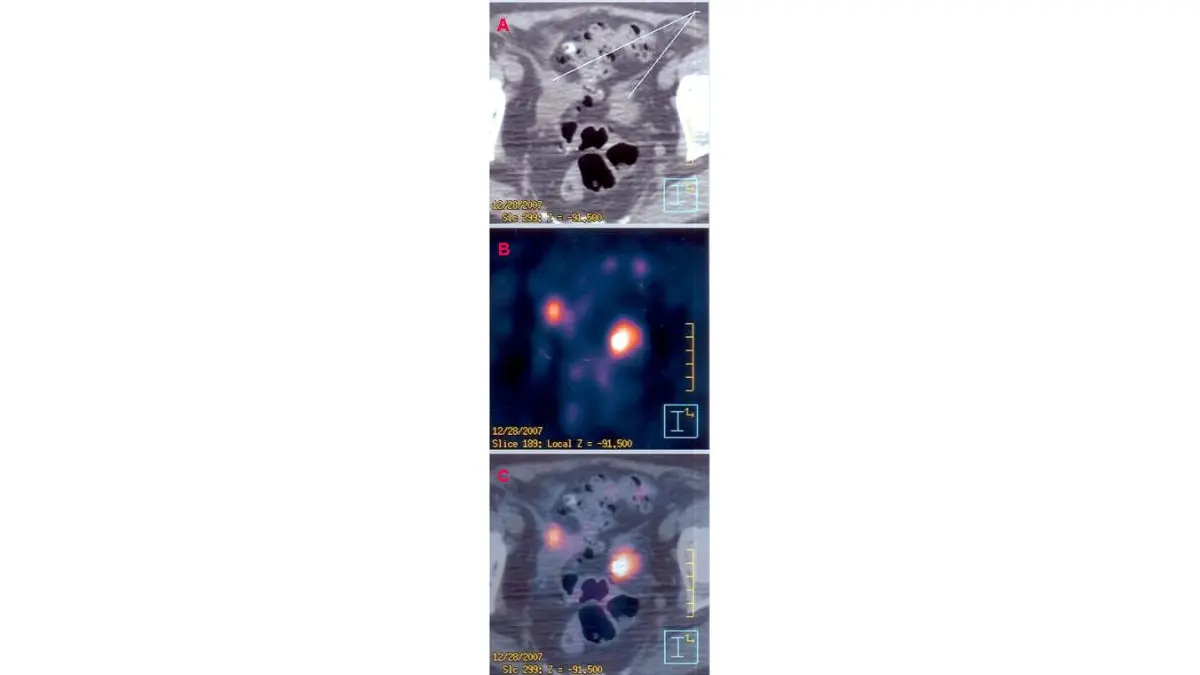
In patient terms, sensitivity is how well a scan catches cancer that is truly there, and specificity is how well it avoids flagging things that are not. PSMA PET scored higher on both.
Why it finds smaller, earlier spread
The scan’s advantage is that it can reveal tiny deposits of cancer — in lymph nodes or bone — that are too small for a CT or bone scan to see. In proPSMA, first-line PSMA PET changed the planned treatment for 28% of men, versus 15% with conventional imaging, and left far fewer results uncertain. Finding spread earlier and more clearly can change which treatment makes sense.
When doctors order a PSMA PET scan
Doctors most often order a PSMA PET scan in two situations: to stage higher-risk prostate cancer at diagnosis, and to find where cancer has returned when PSA rises after treatment.
For initial staging of higher-risk prostate cancer
If your cancer is unfavorable-intermediate, high, or very-high risk — based on factors like your Gleason score and PSA — your team may use this scan to check for spread before choosing surgery or radiation. Knowing the true stage of the cancer up front helps match you to the right treatment.
🩺 Physician Note: Current NCCN guidance recognizes PSMA PET for staging unfavorable-intermediate, high, and very-high-risk prostate cancer, and states that an older-style CT and bone scan is not a required step beforehand. The aim is to find any spread before a treatment plan is locked in.
For a rising PSA after treatment (recurrence)
After surgery or radiation, a rising PSA can signal that cancer has returned — called biochemical recurrence. A PSMA PET scan looks for exactly where, which guides whether targeted (salvage) treatment is possible. In the CONDOR trial, the scan changed the intended treatment for about 64% of men whose standard scans had shown nothing.
What PSA level the scan tends to need
There is no single cutoff, but how well the scan finds recurrence rises sharply with the PSA level. European guidelines suggest a PSMA PET scan when PSA is above 0.2 ng/mL after treatment and the result would change the plan — and what your PSA means by age is part of that conversation.
📊 Clinical Data Point: After prostatectomy, PSMA PET detection rose from about 45% when PSA was under 0.25 ng/mL to roughly 96% when PSA was above 10 ng/mL — Source: prospective multicenter study of 2,005 patients, Journal of Nuclear Medicine, 2021.
✅ Patient Action: Ask your urologist or oncologist: “Given my PSA and risk group, is a PSMA PET scan right for me now, and how would the result change my treatment plan?”
For the broader set of tests used at diagnosis, the American Cancer Society’s guide to prostate cancer tests is a useful overview.
What to expect during a PSMA PET scan
A PSMA PET scan is an outpatient test, and most of the appointment is spent waiting, not scanning.
Before and during the scan
Your imaging center will give you specific preparation instructions — follow theirs over any general guide. In broad strokes:
- A small dose of radioactive tracer is injected into a vein, usually in your arm.
- You rest quietly for a while as the tracer spreads through your body.
- You lie still on a table as the PET/CT scanner takes images, typically for about 20 to 30 minutes.
Radiation and safety
The tracer is radioactive, but the dose is small. In the proPSMA trial, a PSMA PET scan delivered substantially less radiation than the conventional CT-plus-bone-scan approach it can replace, and the tracer clears from your body within a day or two.
After the scan
You can usually return to normal activities right away. A nuclear-medicine physician reviews the images, and your own doctor discusses what they mean with you. For a plain-language refresher on the basics, MedlinePlus has an overview of PET scans.
What a PSMA PET scan can and can’t tell you
A PSMA PET scan is highly accurate, but it is not perfect. It can produce both false positives and false negatives, which is why results are always read alongside your full clinical picture.
Why a “hot spot” isn’t always cancer
Despite its name, PSMA is not found only in prostate cancer. It can appear in some other cancers and in non-cancer conditions — for example, certain bone and degenerative changes — which can create a false positive. Faint signals in places like the ribs are a known trap, and radiologists weigh how strongly a spot glows, its SUV value on the report, along with its location and your history before calling it cancer.
Why a negative scan doesn’t always mean all-clear
A clear scan is reassuring, but it does not guarantee there is no cancer. At low PSA levels the scan misses some recurrences, and a negative result is best read as “nothing visible now,” not “definitely nothing.”
📊 Clinical Data Point: Compared with what surgery later confirms, PSMA PET detects roughly 40% of the small pelvic lymph-node deposits that are actually present — very trustworthy when it flags disease, but real limits when deposits are tiny — Source: prospective surgical-correlation data summarized in the SNMMI Appropriate Use Criteria.
What your results mean and what comes next
Your scan report will describe where, if anywhere, the tracer collected — and your care team translates that into next steps.
Reading a positive vs negative result
A PSMA-positive result means the tracer found active prostate cancer in one or more places; the report notes the locations, which shapes whether treatment targets a single area or the whole body. A negative or limited result may support a more focused plan. Either way, the images are interpreted in the full context of your PSA, biopsy, and overall health — not on their own.
When the scan also guides treatment (theranostics)
Beyond finding cancer, a PSMA PET scan can sometimes help decide treatment. Because the same PSMA target that lights up on the scan can also be hit by therapy, the scan is used to check eligibility for PSMA-targeted radioligand therapy in certain men with advanced, treatment-resistant prostate cancer.
🔬 How It Works: A PSMA PET scan shows whether a man’s cancer carries enough PSMA to be targeted. If it does, a matched treatment — such as Pluvicto (lutetium Lu 177 vipivotide tetraxetan) — can deliver radiation directly to those PSMA-positive cells. Pairing a scan with a treatment that hits the same target is called theranostics.
This option applies only to specific advanced (stage 4) prostate cancer cases, not to most people who have a PSMA PET scan. In the VISION trial, adding this PSMA-targeted therapy to standard care improved overall survival for men with advanced, PSMA-positive disease.
✅ Patient Action: If your cancer is advanced, ask your medical oncologist: “Does my PSMA PET scan suggest I’m a candidate for PSMA-targeted therapy, or is that not relevant at my stage?”
PSMA PET scan: frequently asked questions
1. What is a PSMA PET scan?
A PSMA PET scan is an imaging test that uses a small radioactive tracer to find prostate cancer cells throughout the body. The tracer binds to prostate-specific membrane antigen, a protein on most prostate cancer cells, making areas of cancer visible on the scan. It is usually combined with a CT scan for precise location.
2. Is a PSMA PET scan better than a CT or bone scan?
For finding prostate cancer spread, yes. In the proPSMA trial, a PSMA PET scan was correct about the extent of disease 92% of the time, versus 65% for CT plus bone scan, and it found smaller, earlier spread those scans missed. Your doctor decides which imaging fits your situation.
3. How accurate is a PSMA PET scan?
In the proPSMA randomized trial, a PSMA PET scan reached 92% accuracy for detecting spread, with 85% sensitivity and 98% specificity — meaning it both caught real cancer well and rarely raised false alarms. Accuracy is highest when cancer is clearly present; very small deposits can still be missed.
4. When do doctors order a PSMA PET scan?
Doctors order a PSMA PET scan mainly to stage higher-risk prostate cancer at diagnosis and to locate cancer when PSA rises after treatment. Guidelines now accept it as a front-line imaging option. Ask your urologist or oncologist whether it fits your risk group and PSA before treatment planning.
5. What PSA level is needed for a PSMA PET scan?
There is no single cutoff, but the scan finds more as PSA rises. European guidelines suggest a PSMA PET scan when PSA is above 0.2 ng/mL after treatment and the result would change the plan; detection climbs steeply from there. Discuss your specific PSA with your oncologist.
6. How much radiation is in a PSMA PET scan, and is it safe?
A PSMA PET scan uses a small dose of radioactive tracer. In the proPSMA trial it delivered substantially less radiation than the conventional CT-plus-bone-scan approach, and the tracer clears from the body within a day or two. As with any scan, your doctor weighs the benefit against the small exposure.
7. How do I prepare for a PSMA PET scan?
Preparation is usually simple, but it varies by imaging center and tracer, so follow the instructions your center gives you. Generally, a PSMA PET scan involves a tracer injection into a vein, a short rest while it spreads, then about 20 to 30 minutes of scanning. Bring your prior imaging and reports.
8. Can a PSMA PET scan be wrong (false positive)?
Yes. PSMA appears in some non-prostate conditions, so a PSMA PET scan can show a false positive — faint rib signals are a known example. It can also miss tiny deposits, a false negative. That is why a glowing spot may need a follow-up scan or biopsy before any treatment changes.
9. What does a “PSMA-positive” result mean?
A PSMA-positive result means the tracer found active prostate cancer in one or more locations, which the report lists. It helps show whether treatment should target one spot or the whole body. The result is read alongside your PSA, biopsy, and health — discuss what yours means with your oncologist.
10. Does a PSMA PET scan hurt?
A PSMA PET scan is not painful. The only discomfort is the small needle prick when the tracer is injected into a vein, similar to a routine blood draw. The scan itself is painless; you simply lie still on a table while the images are taken.
11. Can a PSMA PET scan help decide treatment?
Yes, in specific cases. Because the PSMA target on the scan can also be hit by therapy, a PSMA PET scan can check eligibility for PSMA-targeted radioligand therapy in advanced, treatment-resistant prostate cancer. This applies to a minority of patients — ask your medical oncologist whether it is relevant for you.
The bottom line on PSMA PET scans
A PSMA PET scan gives your care team a clearer, more accurate picture of where prostate cancer is than older scans could — which is why guidelines now lean on it for staging higher-risk disease and for finding cancer when PSA rises. It is a powerful tool, but not an infallible one: a hot spot may need confirming, and a clear scan does not rule out every cell. Use what you have learned to ask sharper questions and to read your results in context with the people treating you. For the full picture of how this disease is staged and treated, see our guide to prostate cancer signs, stages, and treatment.
About this content
How this article was put together: researched from recognised health sources, drafted with the help of AI tools, and edited by hand, with sources linked throughout.

Sameer Patel is the founder and editor of My Medicine Advisor. He is not a doctor or medical professional — before starting this site he worked in banking,…
Medical disclaimer
The content on MyMedicineAdvisor is provided for general informational and educational purposes only and is not a substitute for professional medical advice, diagnosis, or treatment. Health information on this website should not be used to diagnose, treat, cure, or prevent any condition without guidance from a qualified healthcare professional. Always seek the advice of your doctor, physician, or another licensed healthcare provider with any questions you may have regarding a medical condition, symptoms, medications, or treatment decisions.