
On This Page – Quick Medical Summary
Sarcoma cancer has an 83% five-year survival rate when detected before spreading, according to the most recent data from the American Cancer Society. This rare cancer forms in bones and soft tissues like muscle, fat, and blood vessels. Early detection remains the single most powerful factor determining whether patients survive—and why understanding the warning signs could save your life.
Real Patient Impact: Jennifer Martinez, a 42-year-old teacher from Austin, discovered a painless lump on her thigh in March 2025. Within six weeks of diagnosis, she underwent successful limb-sparing surgery. Today, she’s cancer-free—a testament to the life-saving power of catching sarcoma early.
The landscape of sarcoma treatment has transformed dramatically in 2026, with new FDA-approved therapies and precision medicine approaches offering unprecedented hope for patients diagnosed with this challenging disease.
What Is Sarcoma Cancer? Understanding This Rare Disease
Definition & Basics
Sarcoma is a malignant tumor that develops in connective tissues throughout your body. Unlike carcinomas (which start in organ tissues), sarcomas originate in the structural tissues that support and connect your body’s systems.
These rare cancers account for only 1% of adult cancer diagnoses but represent 15% of childhood cancers. The National Cancer Institute estimates approximately 16,000 new sarcoma cases in the United States annually—roughly 13,000 soft tissue sarcomas and 3,000 bone sarcomas.
70+ Types of Sarcoma Explained
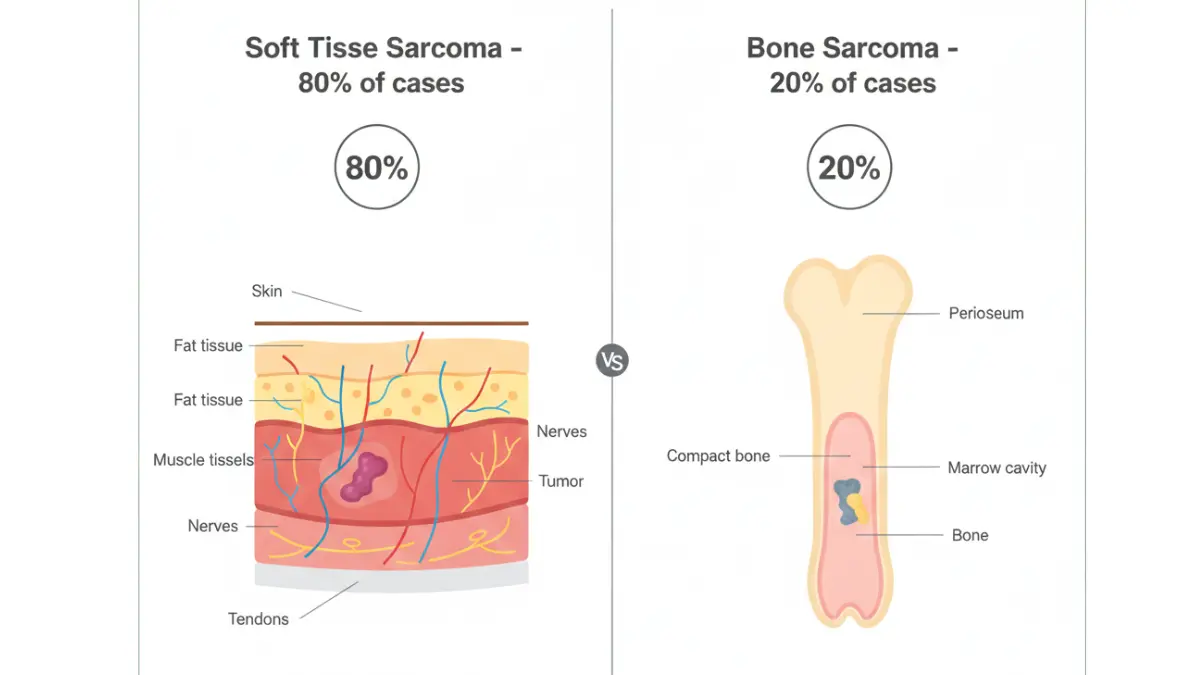
Sarcomas divide into two primary categories, each with dozens of subtypes:
Soft Tissue Sarcomas (80% of all sarcomas):
- Liposarcoma (develops in fat tissue)
- Leiomyosarcoma (forms in smooth muscle)
- Synovial sarcoma (near joints)
- Undifferentiated pleomorphic sarcoma
- Angiosarcoma (blood vessel tissue)
- Gastrointestinal stromal tumor (GIST)
Bone Sarcomas (20% of all sarcomas):
- Osteosarcoma (most common bone cancer)
- Ewing sarcoma (primarily affects children/teens)
- Chondrosarcoma (cartilage cells)
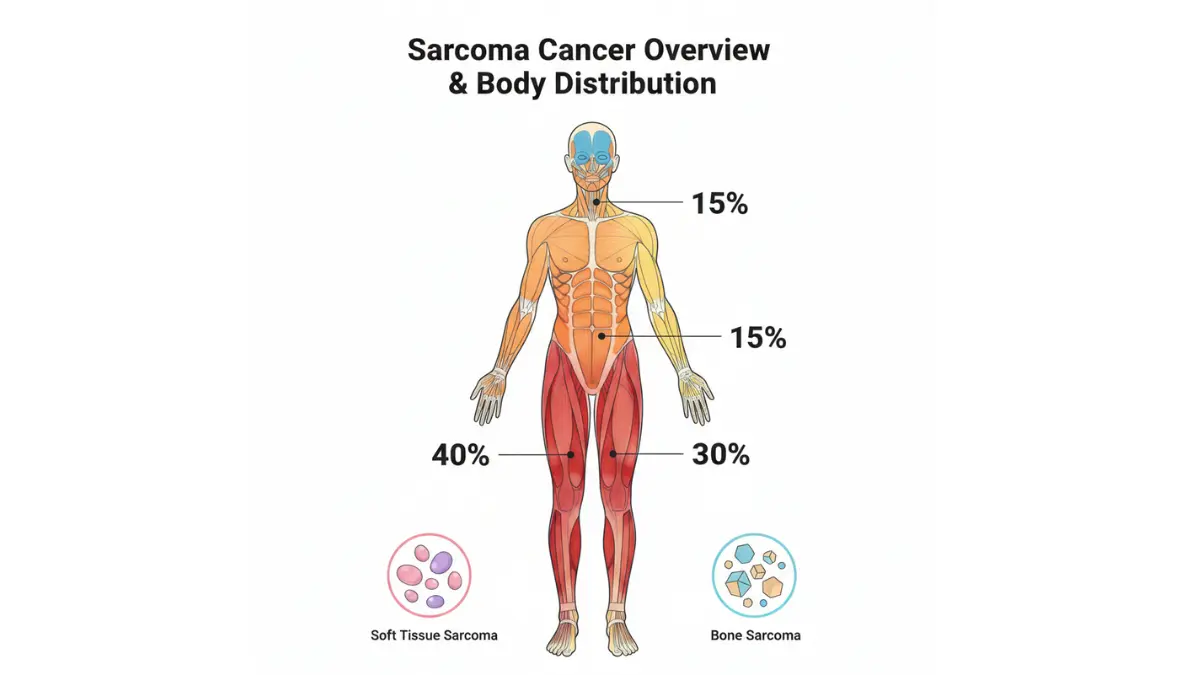
Location Breakdown:
- 40% occur in lower extremities (legs, ankles, feet)
- 30% develop in trunk, chest wall, abdomen, or pelvis
- 15% appear in upper extremities (arms, shoulders, hands)
- 15% form in head and neck regions
Sarcoma vs. Other Cancers
Understanding the differences helps patients navigate diagnosis and treatment:
| Feature | Sarcoma | Carcinoma | Lymphoma |
|---|---|---|---|
| Origin | Connective tissue | Organ/epithelial cells | Lymphatic system |
| Frequency | 1% adult cancers | 85% adult cancers | 4% adult cancers |
| Primary Treatment | Surgery + radiation | Surgery/chemo varies | Chemotherapy |
| Early Detection Rate | Challenging | Moderate to good | Moderate |
What This Means For You: If you’ve noticed an unexplained lump larger than a golf ball (5cm), persistent bone pain unrelated to injury, or unusual swelling in your limbs, use our Symptom Checker to evaluate whether you should seek immediate medical evaluation.
Sarcoma Warning Signs: How to Catch It Early
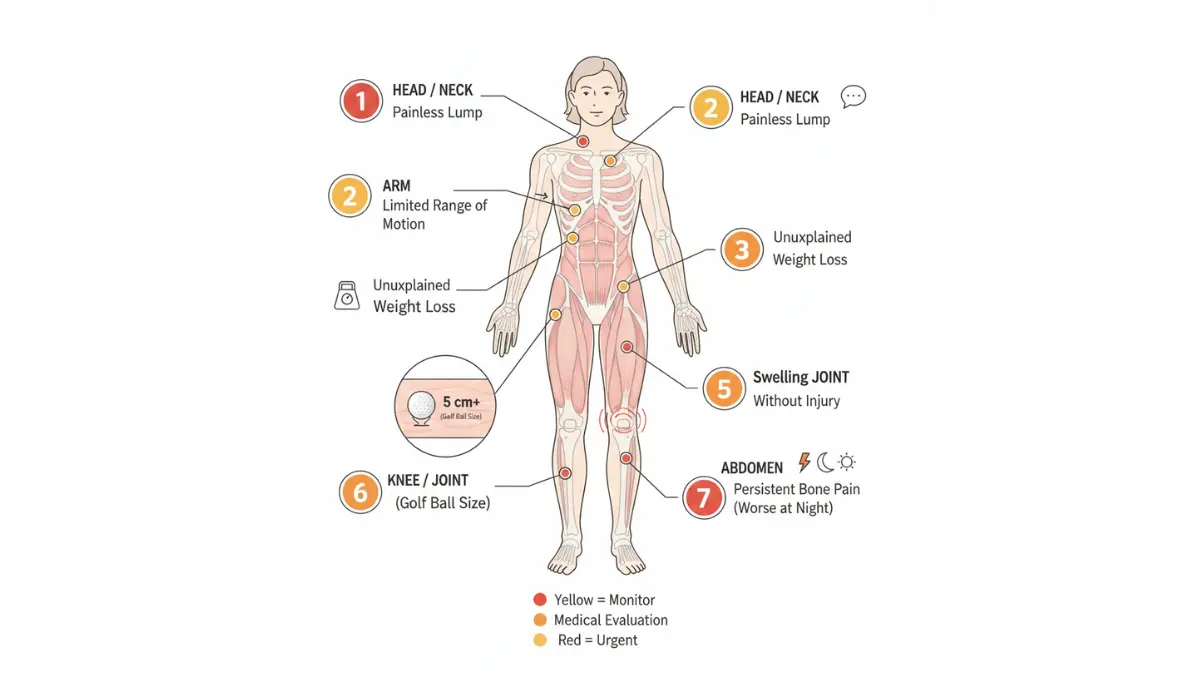
7 Early Symptoms You Shouldn’t Ignore
The challenge with sarcoma is that early-stage tumors often cause no symptoms. However, being vigilant about these warning signs can be life-saving:
1. Painless Lump or Mass Most sarcomas (approximately 60%) present as a painless lump that grows slowly over weeks or months. This is precisely why they’re often dismissed—people assume painful lumps are more concerning.
2. Persistent Bone Pain Unlike arthritis pain that improves with rest, sarcoma-related bone pain worsens at night. Many patients initially attribute this to overexertion or age. If you’re experiencing this, understanding the difference between bone cancer pain vs. arthritis is crucial.
3. Unexplained Fractures Bone sarcomas weaken structural integrity, sometimes causing breaks from minor trauma or no apparent injury.
4. Swelling Without Injury Swelling that appears without a clear cause and persists beyond two weeks warrants investigation.
5. Limited Range of Motion Tumors near joints can restrict movement—particularly noticeable in hips, knees, or shoulders.
6. Abdominal Pain or Fullness Retroperitoneal sarcomas (developing behind abdominal organs) may cause unexplained bloating, early satiety, or digestive changes.
7. Unintentional Weight Loss Losing more than 10 pounds without dietary changes could signal advanced disease. Our Weight Loss Calculator helps distinguish healthy weight changes from concerning patterns.
When a Lump Needs Medical Attention
The Golf Ball Rule: Any lump larger than 5 centimeters (about the size of a golf ball) requires immediate evaluation, regardless of pain level.
Red Flag Characteristics:
- Hard or firm texture
- Deep beneath skin surface
- Growing larger over time
- Fixed to underlying tissue (doesn’t move when pressed)
- Located on trunk or extremities
Real Case Study: Marcus Chen, a 29-year-old software engineer, noticed a “marble-sized” lump on his forearm in January 2025. He monitored it for eight weeks. When it doubled in size, he sought evaluation. Biopsy revealed stage 1 synovial sarcoma. Thanks to early detection, Marcus underwent successful surgery and remained cancer-free through his 12-month follow-up.
Diagnostic Tests & Procedures Explained
Initial Evaluation: Your physician will perform a physical exam and order imaging studies. According to Johns Hopkins Medicine, the diagnostic pathway typically includes:
1. Imaging Studies (2-3 days)
- X-rays identify bone abnormalities
- MRI provides detailed soft tissue visualization
- CT scans detect metastasis
2. Biopsy (1-2 weeks for results) Core needle biopsy or surgical biopsy extracts tissue for pathological analysis. This confirms whether cells are cancerous and identifies the specific sarcoma subtype.
3. Staging Work-up (1 week) PET scans and additional imaging determine disease extent.
Timeline Reality: From first doctor visit to definitive diagnosis typically spans 3-6 weeks. This feels lengthy when you’re anxious, but thorough evaluation ensures accurate treatment planning.
Quick Answer: How is sarcoma diagnosed? Diagnosis requires tissue biopsy analyzed by specialized sarcoma pathologists. Imaging studies (MRI, CT) help visualize tumor size and location, but only biopsy confirms malignancy and subtype—critical for treatment planning.
Sarcoma Survival Rates: The Power of Early Detection
2026 Survival Statistics Breakdown
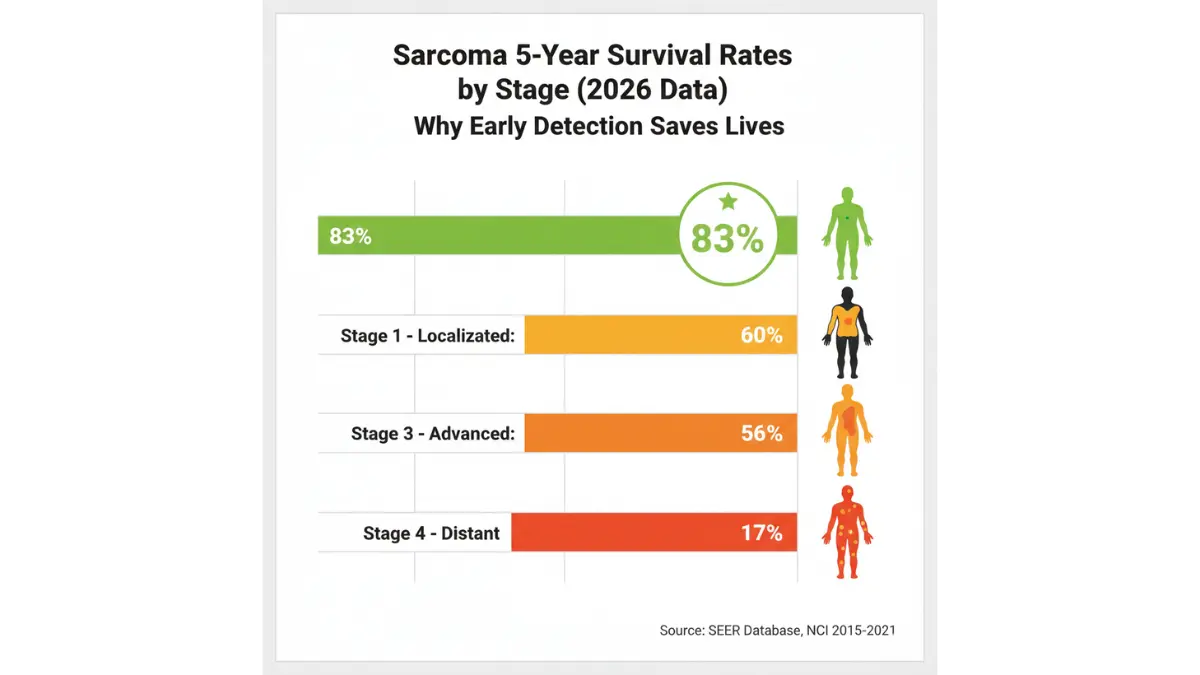
The survival gap between early and late detection is dramatic:
| Stage | 5-Year Survival Rate | Description |
|---|---|---|
| Localized | 83% | Cancer confined to origin site |
| Regional | 60% | Spread to nearby lymph nodes/tissues |
| Distant | 17% | Metastasized to lungs or other organs |
| Unknown/Unstaged | 56% | Insufficient staging information |
Source: SEER Database, National Cancer Institute (2015-2021 data)
Critical Insight: Patients diagnosed at the localized stage have nearly 5 times better survival odds than those diagnosed after metastasis. This underscores why recognizing early warning signs across all cancer types can be life-saving.
Factors That Affect Your Prognosis
Age and Survival: Pediatric sarcoma patients often have superior outcomes. Osteosarcoma in patients under 15 shows 70-75% five-year survival, while patients over 60 face 50-55% survival rates for comparable stages.
Tumor Location: Extremity sarcomas (arms/legs) carry better prognoses than retroperitoneal (abdominal) or head/neck tumors. Limb-sparing surgery succeeds in 95% of extremity cases, preserving both life and function.
Tumor Grade:
- Low-grade (slow-growing): 85-90% survival
- Intermediate-grade: 65-70% survival
- High-grade (aggressive): 45-55% survival
Sarcoma Subtype Variations:
- Liposarcoma (well-differentiated): 95% five-year survival
- Leiomyosarcoma: 65% five-year survival
- Undifferentiated pleomorphic sarcoma: 50% five-year survival
What This Means For You: Your individual prognosis depends on multiple factors working together. Age, overall health (assess with our BMI Calculator), tumor characteristics, and treatment access all influence outcomes. Never rely solely on statistics—discuss your specific case with oncology specialists.
Quick Answer: Can sarcoma cancer be cured? Yes, sarcoma can be cured, especially when caught early. Localized sarcomas have 83% five-year survival rates, and many patients achieve complete remission with no evidence of disease after treatment. However, “cure” depends on stage, type, and individual response to therapy.
Stage-by-Stage Survival Data
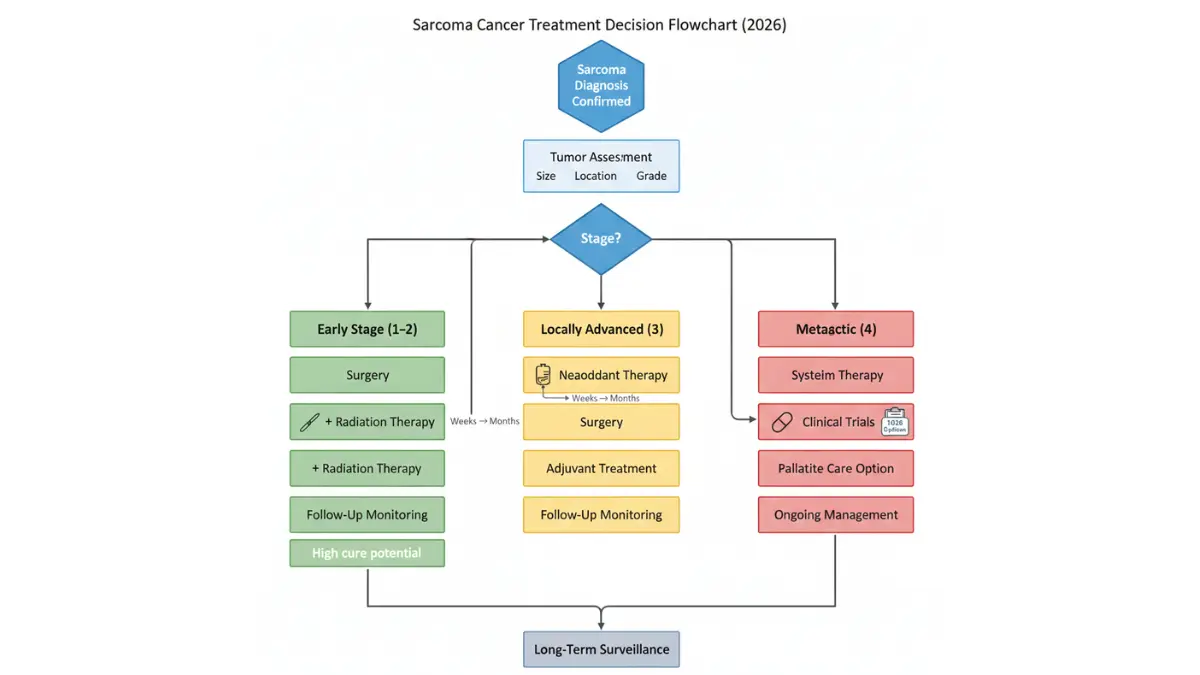
Stage 1 (Low-grade, small tumors): 90-95% five-year survival. Treatment typically involves surgery alone.
Stage 2 (High-grade, localized tumors): 70-80% five-year survival. Requires surgery plus radiation/chemotherapy.
Stage 3 (Larger or deeper tumors): 50-65% five-year survival. Aggressive multimodal treatment essential.
Stage 4 (Metastatic disease): 15-25% five-year survival. Focus shifts to extending life and maintaining quality through targeted therapies and clinical trials.
Long-Term Outcomes: Research from the American Cancer Society shows that patients surviving five years often maintain similar survival rates at 10 years, suggesting many achieve durable remission.
Quick Answer: Can you survive stage 4 sarcoma? While challenging, stage 4 sarcoma survival is possible. Approximately 17% of patients survive five years with metastatic disease. New immunotherapy and targeted treatments in 2026 are improving these odds. Some patients with limited lung metastases achieve remission through aggressive surgical metastasectomy combined with systemic therapy.
Sarcoma Treatment in 2026: Your Complete Options Guide
Surgery: The Primary Treatment Approach
Surgery remains the cornerstone of sarcoma treatment, with the goal of removing all cancer cells while preserving maximum function.
Limb-Sparing Surgery: Modern techniques save limbs in 95% of extremity sarcoma cases. Surgeons remove tumors with wide margins (surrounding healthy tissue) to ensure no microscopic disease remains. Reconstruction may involve:
- Metal implants replacing bone sections
- Tissue grafts restoring muscle function
- Vascular repairs maintaining blood flow
Amputation: Now reserved for only 5% of cases where tumors extensively invade nerves, blood vessels, or bones beyond salvage potential.
Success Rates: Clean surgical margins (no cancer cells at edges) predict excellent outcomes—85-90% local control rates at five years.
Radiation & Chemotherapy Explained
Radiation Therapy: Delivered before surgery (neoadjuvant) to shrink tumors or after surgery (adjuvant) to eliminate remaining cells. Modern techniques like intensity-modulated radiation therapy (IMRT) target tumors while sparing healthy tissue. Patients maintaining optimal nutrition during treatment—track needs with our Protein Intake Calculator—often tolerate therapy better.
Chemotherapy: Effectiveness varies by sarcoma subtype:
- Highly responsive: Ewing sarcoma, rhabdomyosarcoma (pediatric)
- Moderately responsive: Synovial sarcoma, undifferentiated pleomorphic sarcoma
- Minimally responsive: Well-differentiated liposarcoma, chondrosarcoma
Common regimens include doxorubicin, ifosfamide, and gemcitabine/docetaxel combinations.
2026 Breakthrough Treatments
FDA-Approved Advances:
1. LP-284 (Orphan Drug Designation): The FDA granted orphan drug status to LP-284 in January 2026 for soft tissue sarcoma treatment. This PARP/Tankyrase inhibitor shows promise in treatment-resistant cases.
2. Immunotherapy Expansion: Checkpoint inhibitors (pembrolizumab, nivolumab) now demonstrate efficacy in specific sarcoma subtypes with high tumor mutational burden. Response rates reach 15-20% in previously untreatable patients.
3. Targeted Therapy:
- Pazopanib for metastatic soft tissue sarcoma
- Olaratumab combined with doxorubicin
- Trabectedin for advanced liposarcoma
4. Precision Medicine: Genomic profiling identifies targetable mutations. Tumors with NTRK gene fusions respond to larotrectinib with 70-80% response rates.
What This Means For You: Treatment selection increasingly depends on molecular characteristics, not just tumor location. Comprehensive genomic testing—potentially combined with insights from genetic risk assessment—guides optimal therapy choices.
Choosing the Right Treatment Team
Essential Team Members:
- Surgical oncologist specializing in sarcoma
- Medical oncologist with sarcoma expertise
- Radiation oncologist
- Pathologist experienced in sarcoma diagnosis
- Physical therapist for rehabilitation
High-Volume Centers Matter: Research consistently shows better outcomes at facilities treating 50+ sarcoma cases annually. The National Comprehensive Cancer Network maintains lists of designated sarcoma centers.
Clinical Trial Access: Approximately 25% of sarcoma patients benefit from clinical trial participation. Search current trials at ClinicalTrials.gov.
Treatment Duration & Costs:
| Treatment Type | Duration | Average US Cost |
|---|---|---|
| Surgery alone | 1 day + recovery | $45,000-$125,000 |
| Radiation therapy | 5-7 weeks | $15,000-$50,000 |
| Chemotherapy | 4-6 months | $30,000-$100,000 per cycle |
| Immunotherapy | Ongoing | $150,000-$200,000/year |
Insurance typically covers medically necessary treatments, though out-of-pocket costs vary significantly by plan.
Quick Answer: How long is sarcoma treatment? Treatment duration ranges from 6 weeks (surgery plus short-course radiation) to 12-18 months for complex cases requiring chemotherapy, surgery, and adjuvant therapy. Follow-up surveillance continues for 5-10 years with periodic imaging to detect recurrence early.
Real Success Story: Diana Patel, a 51-year-old marathon runner, was diagnosed with a 12cm undifferentiated pleomorphic sarcoma in her thigh in February 2025. After neoadjuvant radiation, successful limb-sparing surgery, and six months of chemotherapy, she completed a 10K race in December 2025—proving that aggressive treatment combined with determination can restore quality of life.
Living Well With Sarcoma: Expert Guidance for 2026
Risk Factors You Can Control
While some sarcoma risk factors are genetic, others are modifiable:
Controllable Risk Factors:
Chemical Exposure:
- Vinyl chloride (PVC manufacturing)
- Arsenic (contaminated water, pesticides)
- Dioxins (industrial emissions)
- Wood preservatives (chlorophenols)
Occupational health regulations in the United States, enforced by OSHA, mandate protective equipment for workers in high-risk industries.
Radiation Exposure: Previous cancer treatment with radiation increases sarcoma risk 10-20 years later. Patients who received childhood radiation face 2-3 times higher risk. Modern radiation techniques minimize exposure to healthy tissues.
Lymphedema Management: Chronic arm or leg swelling (often after breast cancer treatment) raises angiosarcoma risk. Compression garments and lymphedema therapy reduce this risk.
Non-Modifiable Risk Factors:
- Genetic syndromes (Li-Fraumeni, neurofibromatosis type 1)
- Previous radiation therapy
- Inherited retinoblastoma
- Family history in first-degree relatives
What This Means For You: If you have genetic syndromes associated with sarcoma risk, annual screening with physical exams and periodic imaging can detect tumors at the most treatable stages. Consider comprehensive evaluation with our Genetic Risk Assessment Tool.
Follow-Up Care & Monitoring
Surveillance Schedule:
Years 1-2 Post-Treatment:
- Physical exams every 3-4 months
- Chest imaging (CT or X-ray) every 3-6 months
- MRI of primary site every 6 months
Years 3-5:
- Physical exams every 6 months
- Chest imaging every 6 months
- MRI of primary site annually
Beyond 5 Years:
- Annual physical exams
- Chest X-rays as clinically indicated
Recurrence Warning Signs:
- New lumps at or near original surgical site
- Persistent cough or shortness of breath (lung metastasis)
- Unexplained weight loss
- Bone pain in new locations
Quick Answer: What is the survival rate for sarcoma cancer? Overall sarcoma survival rates are 65% at five years across all stages. However, this varies dramatically: localized disease shows 83% survival, regional spread drops to 60%, and metastatic disease averages 17%. Individual outcomes depend on sarcoma type, location, grade, and treatment response.
Quality of Life After Treatment
Physical Recovery: Most patients regain 80-90% of pre-diagnosis function within 12-18 months. Physical therapy accelerates recovery—maintaining consistent sleep patterns with our Sleep Calculator supports healing.
Emotional Well-Being: Approximately 30-40% of cancer survivors experience anxiety or depression. Support resources include:
- Sarcoma Foundation of America (patient support groups)
- CancerCare counseling services
- Online communities (Inspire, Smart Patients)
Long-Term Effects:
- Lymphedema (10-15% of patients)
- Radiation-related tissue changes
- Chemotherapy-related neuropathy
- Fertility concerns in younger patients
Survivor Perspective: Robert Kim, now six years post-treatment for Ewing sarcoma diagnosed at age 16, runs a support group for young adult survivors. “The hardest part wasn’t the treatment—it was adjusting to a new normal afterward. Having a community that understood made all the difference.”
Support Organizations:
- Sarcoma Foundation of America
- National Organization for Rare Disorders
- American Cancer Society support programs
- Liddy Shriver Sarcoma Initiative
These organizations provide educational resources, financial assistance programs, and connections to specialized treatment centers nationwide.
Key Takeaways: Your Sarcoma Action Plan
If You’re Concerned About Symptoms:
- Document the size, location, and duration of any unusual lumps
- Schedule evaluation with a primary care physician within 2 weeks
- Request imaging if lumps exceed 5cm or persist beyond 6 weeks
- Use our Symptom Checker to prepare for your appointment
If Recently Diagnosed:
- Obtain second opinion from sarcoma specialty center
- Request comprehensive pathology review by sarcoma pathologist
- Ask about clinical trial eligibility
- Assemble multidisciplinary treatment team
- Consider genomic profiling for targeted therapy options
For Long-Term Survivors:
- Maintain regular surveillance imaging schedules
- Report new symptoms immediately—don’t wait for scheduled appointments
- Optimize overall health with balanced nutrition and appropriate exercise
- Connect with survivor communities for peer support
Most Important Reminder: Sarcoma caught early offers 83% five-year survival. Every month matters. If something feels wrong with your body, trust that instinct and seek expert evaluation. Early action saves lives.
Related Resources
For more information on cancer detection and treatment:
- Understanding Cancer Warning Signs
- Comprehensive Cancer Screening Guide
- Genetic Cancer Risk Assessment
Connect With Expert Care: Visit MyMedicineAdvisor Health Resources for comprehensive cancer information, symptom assessment tools, and evidence-based treatment guides.
About this content
How this article was put together: researched from recognised health sources, drafted with the help of AI tools, and edited by hand, with sources linked throughout.

Sameer Patel is the founder and editor of My Medicine Advisor. He is not a doctor or medical professional — before starting this site he worked in banking,…
Medical disclaimer
The content on MyMedicineAdvisor is provided for general informational and educational purposes only and is not a substitute for professional medical advice, diagnosis, or treatment. Health information on this website should not be used to diagnose, treat, cure, or prevent any condition without guidance from a qualified healthcare professional. Always seek the advice of your doctor, physician, or another licensed healthcare provider with any questions you may have regarding a medical condition, symptoms, medications, or treatment decisions.