On This Page – Quick Medical Summary
Measles Symptoms 2025: 1,958 Cases, Rash & Vaccine
Measles symptoms include high fever, persistent cough, runny nose, red watery eyes, and a characteristic red-brown rash that spreads from the face downward. As of December 16, 2025, the United States has confirmed 1,958 measles cases across 49 outbreaks—the highest annual count in over two decades—making early recognition of measles symptoms critical for preventing further transmission.
⚠️ Medical Disclaimer
This article is for educational purposes, not medical advice. Consult licensed healthcare providers for diagnosis, treatment, or questions about measles symptoms and vaccination status.
Real-World Alert: A Parent’s Wake-Up Call
Sarah noticed her 4-year-old daughter Mia developed a fever of 103°F, followed by persistent coughing and watery eyes. Three days later, tiny white spots appeared inside Mia’s mouth—a telltale early warning. By day four, a red rash emerged on her face and rapidly spread downward. Sarah’s pediatrician confirmed measles, tracing exposure to an international traveler at a local playground during the 2025 measles outbreak. Mia’s case illustrates why understanding measles symptoms early can prompt faster isolation and care.
Quick Measles Symptoms Summary
- Early signs appear 7-14 days after exposure during the incubation period
- Prodromal symptoms: High fever (101-104°F), severe cough, runny nose, red eyes
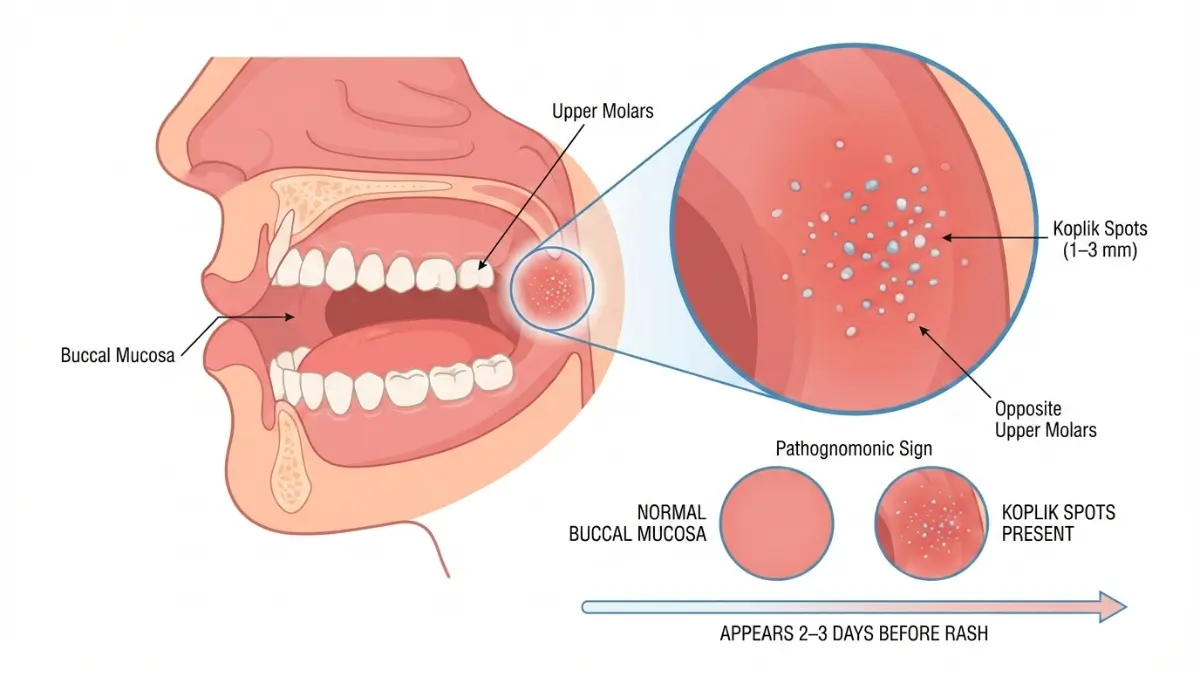
- Koplik spots: Small white spots inside the mouth appear 2-3 days before the rash
- Measles rash: Red-brown blotchy rash starts on the face, spreads to trunk and limbs
- Contagious period: 4 days before and 4 days after rash onset
Recognizing Early Signs of Measles
The measles virus operates on a predictable timeline, making early detection possible when you know what to watch for. Measles symptoms don’t appear immediately—the measles incubation period typically spans 10-14 days from exposure to the first visible signs.
Prodromal Stage (Days 1-4):
Before the measles rash appears, infected individuals experience what physicians call the “prodromal phase.” This stage brings measles fever ranging from 101-104°F, accompanied by the “three Cs”: cough, coryza (runny nose), and conjunctivitis (red, watery eyes). Many parents mistake these early measles symptoms for a common cold or seasonal flu, delaying medical evaluation.
Koplik Spots—The Diagnostic Clue:
One to two days before the measles rash emerges, distinctive Koplik spots appear inside the mouth—small white or grayish-blue spots on a red background, typically opposite the upper molars. These pathognomonic markers appear in 50-70% of measles cases when examination timing is optimal. If you suspect measles exposure and notice unusual mouth spots, use our Symptom Checker to evaluate your risk profile before contacting your healthcare provider.
The Characteristic Measles Rash:
Approximately 14 days post-exposure (3-4 days after initial symptoms), the measles rash appears as flat red spots that quickly become raised bumps. The rash follows a distinct head-to-toe pattern: starting at the hairline and face, spreading to the neck and trunk within 24 hours, then reaching the arms and legs by day three. The rash typically lasts 5-6 days before fading in the same sequence it appeared.
Understanding When Measles Is Contagious:
Measles remains one of the most contagious viral infections known—one infected person can transmit measles to 90% of unvaccinated close contacts. The virus spreads through respiratory droplets when an infected person coughs or sneezes, and remarkably, the airborne virus can linger in enclosed spaces for up to two hours.
Critically, individuals become contagious 4 days before the measles rash appears and remain infectious until 4 days after rash onset. This 8-day window means people unknowingly spread measles during the fever and cough phase, before realizing they have the disease. During the current 2025 outbreak, 88% of the 1,958 confirmed cases have been outbreak-associated, with 96% occurring in unvaccinated individuals or those with unknown vaccination status.
Monitoring your overall health status, including maintaining healthy body composition and adequate sleep, supports immune system function that may influence how your body responds to viral exposures. For comprehensive preventive health strategies, explore our health resources covering vaccination, nutrition, and disease prevention.
Understanding Measles Rash and How Measles Spreads
The measles rash represents the most recognizable symptom of infection, yet understanding how measles spreads and what causes measles helps prevent transmission before the rash even appears.
What the Measles Rash Looks Like
The measles rash emerges 3-4 days after initial symptoms begin, appearing as small, flat red or pink spots that may merge into larger blotchy patches. Unlike some viral rashes, the measles rash follows a predictable progression pattern that assists clinical diagnosis.
Rash Timeline and Appearance:
- Day 1: Small red spots appear at the hairline, behind the ears, and on the upper face
- Day 2-3: The rash spreads downward to the neck, trunk, arms, and upper legs
- Day 4-5: Rash reaches hands and feet while facial rash begins to fade
- Day 6-7: Rash fades in the same head-to-toe sequence, sometimes leaving temporary brown discoloration or fine skin peeling

Variations Across Skin Tones:
On lighter skin, the measles rash appears bright red or pink. On medium skin tones, it may present as deeper red or brownish-red. On darker skin, the rash can be more challenging to visualize, appearing as darker brown, purple, or subtle changes in skin texture rather than obvious color change. Healthcare providers examining patients with darker skin tones often rely more heavily on palpation (feeling for raised bumps) and the accompanying symptoms like high fever and respiratory signs.
The measles rash typically lasts 5-6 days before fading. During the rash phase, measles fever may persist or even spike higher, sometimes reaching 104-105°F.
How Measles Spreads: Airborne Transmission Explained
What causes measles is the measles virus (scientific name: Morbillivirus from the Paramyxoviridae family), a highly contagious RNA virus that spreads through respiratory transmission similar to other common respiratory viruses but with far greater infectivity.
Transmission Mechanisms:
Measles spreads through airborne droplets when an infected person coughs, sneezes, talks, or even breathes. The virus remains infectious in the air for up to 2 hours after the infected person has left the area. This extended airborne survival makes measles contagious in ways few other viruses can match.
Why Measles Is So Contagious:
The basic reproduction number (R₀) for measles ranges from 12-18, meaning one infected person typically infects 12-18 unvaccinated individuals in a susceptible population. Up to 90% of unvaccinated people exposed to someone with measles will develop the infection.
Measles exposure risk extends beyond direct contact. Simply being in the same room, airplane cabin, or waiting area where an infected person was present within the previous 2 hours constitutes significant exposure. This explains why outbreak-associated cases in 2025 have included individuals with no known direct contact with infected persons.
Measles Contagious Period and Exposure Risks
Understanding when measles is contagious helps identify exposure windows and implement proper quarantine measures. Infected individuals become contagious approximately 4 days before the measles rash appears and remain infectious until 4 days after rash onset—an 8-day total infectious period.
This pre-rash contagious phase creates particular challenges because people spread measles while experiencing only fever, cough, and cold-like symptoms before they or their healthcare providers suspect measles. During the current 2025 measles outbreak, poor ventilation in indoor spaces has increased transmission rates to 87.4% in some settings.
Measles Quarantine Guidelines:
- Infected individuals: Isolation for 4 days after rash onset (Day 0 = first day of rash)
- Exposed unvaccinated individuals: Quarantine from day 7 through day 21 after exposure
- Healthcare settings: Airborne precautions with negative pressure rooms when available
Maintaining overall health through proper nutrition, adequate hydration, and immune system support may influence infection severity, though vaccination remains the only reliable preventive measure.
Measles vs Rubella: Key Differences
| Feature | Measles (Rubeola) | Rubella (German Measles) |
|---|---|---|
| Contagiousness | Extremely high (R₀ 12-18) | Moderate (R₀ 6-7) |
| Rash Onset | Day 3-4 after symptoms | Day 1-2 after symptoms |
| Rash Pattern | Starts at hairline, spreads downward | Starts on face, spreads quickly |
| Fever | High (103-105°F) | Low-grade (99-100°F) |
| Koplik Spots | Present (diagnostic sign) | Absent |
| Complications | Pneumonia, encephalitis, death | Mild except in pregnancy |
| Duration | 7-10 days | 3-5 days |
While both conditions cause fever and rash, measles symptoms are significantly more severe than rubella, and measles complications carry far greater health risks.
Measles Complications: From Pneumonia to Encephalitis
While many associate measles with fever and rash, measles complications can range from mild ear infections to life-threatening neurological damage and death. Understanding these risks emphasizes why measles prevention through vaccination remains critical public health policy.
Common Complications
Respiratory Complications:
Measles pneumonia develops in approximately 1 out of every 20 children with measles, making it the most common cause of measles death in young children. The measles virus damages the respiratory tract’s protective lining, creating vulnerability to secondary bacterial infections. Bronchitis and croup occur frequently, particularly in children under 5 years old.
Ear Infections and Diarrhea:
About 1 in 10 children with measles develops middle ear infections (otitis media), which can lead to permanent hearing loss if untreated. Diarrhea occurs in less than 1 in 10 cases but poses dehydration risks, especially in children and individuals with compromised health status.
Severe Life-Threatening Complications
Measles Encephalitis:
Acute encephalitis (brain inflammation) occurs in approximately 1 out of every 1,000 measles cases and often results in permanent brain damage, seizure disorders, or intellectual disability. Symptoms include severe headache, high fever, confusion, seizures, and loss of consciousness. Measles encephalitis requires immediate hospitalization and intensive neurological monitoring.
Measles Death Rate:
The case fatality rate ranges from 1-3 deaths per 1,000 reported measles cases in children, primarily from respiratory complications like measles pneumonia and neurological complications like measles encephalitis. During the 2025 outbreak through April, three deaths had been reported among 1,958 cases, with 11% requiring hospitalization.
Subacute Sclerosing Panencephalitis (SSPE):
This rare but fatal progressive brain disorder develops 7-11 years after measles infection in approximately 4-11 per 100,000 measles cases. SSPE causes gradual neurological deterioration, behavioral changes, seizures, and ultimately death. No cure exists for subacute sclerosing panencephalitis, and it predominantly affects individuals who contracted measles before age 2.

Who Is at Highest Risk?
Certain populations face dramatically elevated risks for severe measles complications and death.
Measles in Children Under 5:
Young children, especially those under 12 months who are too young for vaccination, experience the highest complication rates. Their developing immune systems struggle to mount effective responses against the measles virus. Infants born to mothers without measles immunity (either from vaccination or previous infection) have no passive antibody protection.
Measles in Adults Over 20:
Adults who contract measles face higher complication rates than school-age children. Measles pneumonia occurs more frequently in adults, and the overall case fatality rate increases with age. Adults may also experience more severe fever and prolonged recovery periods.
Pregnant Individuals:
Measles during pregnancy increases risks for miscarriage, premature labor, low birth weight, and maternal death. The virus can cross the placenta, potentially affecting fetal development. Pregnant women exposed to measles should immediately contact their healthcare provider for evaluation.
Immunocompromised Patients:
Individuals with weakened immune systems from conditions like HIV/AIDS, leukemia, lymphoma, or those receiving chemotherapy or immunosuppressive medications face catastrophic measles complications. These patients may develop giant cell pneumonia and progressive measles encephalitis with mortality rates exceeding 30%.
| Age/Risk Group | Pneumonia Risk | Encephalitis Risk | Death Rate | SSPE Risk |
|---|---|---|---|---|
| Children <5 years | 1 in 20 | 1 in 1,000 | 1-2 per 1,000 | 4-11 per 100,000 |
| Adults >20 years | 1 in 6 | 1 in 1,000 | 2-3 per 1,000 | Rare |
| Immunocompromised | >30% | High | >30% | Variable |
| Pregnant women | Elevated | 1 in 1,000 | 2-3 per 1,000 | N/A |
| Healthy 5-19 years | 1 in 20 | 1 in 1,000 | <1 per 1,000 | 4-11 per 100,000 |
What This Means For You
Recognize Emergency Warning Signs:
- Difficulty breathing or shortness of breath
- Persistent chest pain or pressure
- Altered mental status or confusion
- Severe or persistent headache
- Seizures or loss of consciousness
- Signs of dehydration (decreased urination, dry mouth, lethargy)
If you or your child develop these symptoms during or after measles infection, seek immediate emergency care. Maintaining proper hydration and nutritional status during illness supports recovery, though medical supervision remains essential for monitoring complications.
Understanding measles complications reinforces why vaccination schedules exist and why public health officials respond aggressively to outbreaks. The risks extend far beyond temporary fever and rash.
Measles Vaccine: Your Best Defense Against Infection
The measles vaccine stands as one of modern medicine’s greatest public health achievements, preventing an estimated 57 million deaths globally between 2000 and 2022. Understanding vaccination options, timing, and effectiveness helps individuals make informed decisions about measles prevention.
MMR Vaccine vs MMRV Vaccine: What’s the Difference?
Two primary measles vaccination options exist in the United States, each offering proven protection through slightly different formulations.
MMR Vaccine (Measles, Mumps, Rubella):
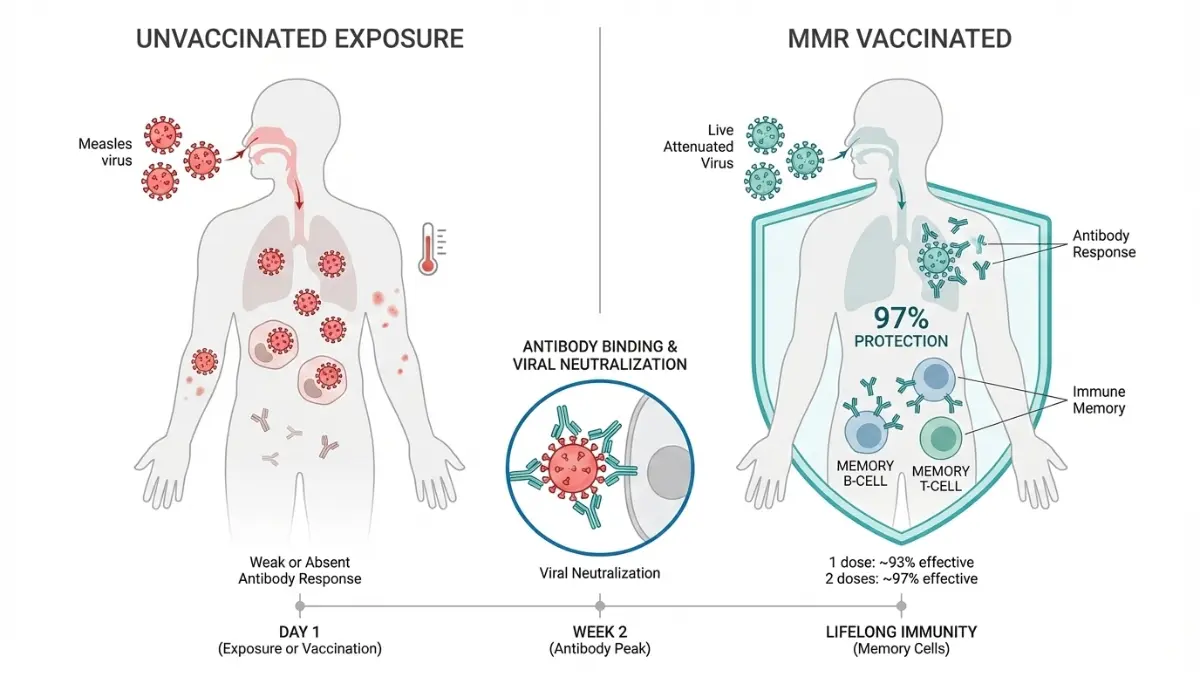
The MMR vaccine combines live attenuated (weakened) viruses for three diseases: measles, mumps, and rubella. CDC recommends two doses of MMR vaccine for routine vaccination starting at 12-15 months of age. This formulation has demonstrated remarkable effectiveness and safety across decades of widespread use.
MMRV Vaccine (Measles, Mumps, Rubella, Varicella):
The MMRV vaccine adds protection against varicella (chickenpox) to the MMR components. Approved for children ages 12 months through 12 years, MMRV offers the convenience of one injection instead of two separate shots. However, studies show slightly higher fever rates with MMRV compared to separate MMR and varicella vaccines given at the same visit.
| Feature | MMR Vaccine | MMRV Vaccine |
|---|---|---|
| Components | Measles, mumps, rubella | Measles, mumps, rubella, varicella |
| Age Range | 12 months–adult | 12 months–12 years |
| Doses Required | 2 doses | 2 doses |
| Effectiveness (2 doses) | 97% against measles | 97% against measles |
| Fever Risk (First Dose) | 14.9% | 21.5% |
| Febrile Seizure Risk | 1 in 3,000-4,000 | 1 in 2,300-2,600 |
| Administration | Separate MMR + varicella shots | Single combination shot |
Healthcare providers typically discuss which option best suits individual circumstances, considering factors like fever history and parental preference.
Vaccination Schedule for Children and Adults
Routine Childhood Measles Immunization:
- First dose: 12-15 months of age
- Second dose: 4-6 years of age (before kindergarten entry)
Children can receive the second dose earlier than 4-6 years, provided at least 28 days have elapsed since the first dose. This accelerated schedule may be appropriate before international travel or during outbreaks.
Adults Without Evidence of Immunity:
Adults born during or after 1957 who lack evidence of measles immunity should receive at least one dose of MMR vaccine. Adults at higher risk—including healthcare personnel, international travelers, and students at post-high-school educational institutions—should receive two doses separated by at least 28 days.
International Travel Considerations:
Infants 6-11 months old traveling internationally should receive one dose of MMR vaccine before departure. This early dose does not count toward the routine two-dose series, meaning these children still need two additional doses starting at 12-15 months.
Vaccine Effectiveness and Side Effects
How Well Does the Measles Vaccine Work?
Measles vaccine effectiveness ranks among the highest of any vaccine. One dose provides approximately 93% protection against measles, while two doses offer 97% effectiveness. This means fewer than 3 in 100 fully vaccinated individuals will contract measles if exposed.
The MMR vaccine also provides 78% effectiveness against mumps (two doses) and 97% effectiveness against rubella (one dose). These protection rates translate to substantial community immunity when vaccination coverage exceeds 95%.
Common Measles Vaccine Side Effects:
Most measles vaccine reactions are mild and temporary:
- Sore arm at injection site (approximately 1 in 4 people)
- Fever above 103°F (1 in 20 children)
- Mild rash (1 in 20 children)
- Temporary joint pain, mostly in adolescent and adult women (1 in 4)
Serious Side Effects Are Rare:
Severe allergic reactions occur in fewer than 1 in 1 million doses. Temporary low platelet count (causing bruising or bleeding) happens in approximately 1 in 30,000 doses. The scientifically debunked claim linking MMR vaccine to autism has been thoroughly disproven through multiple large-scale studies involving millions of children.
Post-Exposure Prophylaxis and Emergency Vaccination
72-Hour Vaccine Window:
Unvaccinated individuals exposed to measles can receive measles vaccine within 72 hours of exposure to potentially prevent or reduce illness severity. This post-exposure vaccination works because the vaccine generates immunity faster than the wild measles virus completes its incubation period.
Immunoglobulin for High-Risk Individuals:
People who cannot receive measles vaccine (infants under 6 months, pregnant women, severely immunocompromised individuals) may receive immune globulin within 6 days of exposure. This provides temporary passive immunity through antibodies from donated blood products.
Addressing Vaccine Hesitancy with Science
The 2025 measles outbreak demonstrates real consequences of declining vaccination rates. In outbreak-associated cases analyzed through April 2025, 96% occurred in unvaccinated or unknown vaccination status individuals, while only 4% had received two MMR doses.
Herd Immunity Threshold:
Measles requires approximately 95% population immunity to prevent sustained transmission. When vaccination rates fall below this threshold, outbreaks occur, endangering those too young for vaccination, medically unable to receive vaccines, or among the small percentage in whom vaccines don’t provide immunity.
What This Means For You
Verify Your Vaccination Status:
Check vaccination records or discuss immunity testing with healthcare providers. If you lack documentation of two measles vaccine doses or laboratory evidence of immunity, consider vaccination—especially before travel or during outbreaks.
Pre-Travel Checklist:
- Confirm measles vaccination completion at least 2 weeks before departure
- Infants 6-11 months need early vaccination before international travel
- Consult travel medicine specialists for destination-specific guidance
Understanding how comprehensive vaccination programs protect against preventable diseases demonstrates the broader value of immunization across the lifespan.
Measles Outbreak 2025: Understanding the Current Crisis
The United States faces its most severe measles outbreak in over two decades, with public health officials warning that cases may continue rising into early 2026.
1,958 Cases and Counting: 2025 US Outbreak Data
As of December 16, 2025, the CDC has confirmed 1,958 measles cases across the United States, comprising 49 distinct outbreaks nationwide. This represents the highest annual measles count since the early 2000s and marks a dramatic reversal of elimination progress achieved through decades of vaccination efforts.
Outbreak Demographics and Distribution:
- 26% of cases occurred in children under 5 years old
- 41% affected individuals aged 5-19 years
- 32% developed in adults aged 20 and older
- 1,888 cases reported by 43 US states and jurisdictions
- 24 cases occurred among international visitors to the US
Geographic Hotspots:
The outbreak has concentrated in several regions experiencing sustained community transmission. Arizona reported 176 confirmed cases, with 172 clustered in Mohave County along the Arizona-Utah border. South Carolina documented 126 cases centered in the northwestern part of the state, with 15 new cases confirmed between December 10-12 alone. Additional significant outbreaks have emerged in New Mexico, Oklahoma, and Texas, where a multi-state cluster identified 654 related cases.
Vaccination Status and Severity:
Among confirmed 2025 measles cases, 92% occurred in unvaccinated individuals or those with unknown vaccination status, while only 7% developed in people who received one or more MMR vaccine doses. The outbreak has resulted in 218 hospitalizations (11% of all cases), with the highest hospitalization rate observed among children under 5 years (21% required hospital care). Three measles-related deaths have been confirmed through December.
This outbreak pattern mirrors similar viral disease transmission seen when community immunity drops below protective thresholds.
How Measles Is Diagnosed
Healthcare providers use clinical evaluation combined with laboratory testing to confirm measles diagnosis.
Clinical Diagnosis:
Physicians initially assess measles based on characteristic symptoms—high fever, cough, runny nose, red eyes, and the distinctive measles rash pattern. The presence of Koplik spots (white spots inside the mouth) strongly suggests measles before the rash appears.
Laboratory Confirmation:
Definitive measles diagnosis requires laboratory testing using blood samples or respiratory specimens. Two primary testing methods exist:
IgM Antibody Testing:
Blood tests detect measles-specific IgM antibodies, which appear approximately 3 days after rash onset and remain detectable for 4-8 weeks. Samples collected too early (within 72 hours of rash) may produce false-negative results due to insufficient antibody development.
RT-PCR (Real-Time Polymerase Chain Reaction):
This molecular test detects measles virus RNA in nasopharyngeal swabs, throat swabs, or urine samples. RT-PCR demonstrates 80% sensitivity within 3 days of rash onset and remains effective 10-14 days after symptoms begin, making it superior to viral culture methods.
Public health laboratories prioritize testing to identify outbreak sources, track virus genotypes, and distinguish wild-type measles from vaccine-strain virus.
Measles Treatment Options and Home Care
No specific antiviral medication exists to cure measles. Measles treatment focuses on supportive care to manage symptoms and prevent complications while the immune system clears the infection.
Medical Interventions:
Vitamin A Supplementation:
The World Health Organization recommends vitamin A administration for all children diagnosed with measles, particularly in areas with vitamin A deficiency or malnutrition. Studies demonstrate that vitamin A reduces measles complication rates and mortality by supporting immune function and protecting epithelial barriers. Recommended doses are 200,000 IU for children over 1 year and 100,000 IU for infants 6-12 months, given as oral doses on consecutive days.
Fever and Pain Management:
Acetaminophen or ibuprofen help reduce fever and relieve discomfort. Aspirin should never be given to children or teenagers with viral infections due to Reye’s syndrome risk.
Home Care Strategies:
- Rest: Adequate sleep supports immune function during viral illness recovery
- Hydration: Fever increases fluid loss; maintaining proper hydration prevents dehydration complications
- Humidification: Cool-mist humidifiers ease respiratory symptoms and cough
- Light sensitivity management: Dim lighting or sunglasses provide comfort for photophobia
- Nutrition: Soft, easy-to-digest foods maintain nutrition despite decreased appetite
When to Seek Emergency Care:
- Difficulty breathing or rapid breathing
- Persistent chest pain
- Severe headache or altered consciousness
- Signs of dehydration (decreased urination, dry mouth, lethargy)
- Seizures or neurological changes
Measles Quarantine Guidelines
Isolation Requirements:
Infected individuals must isolate for 4 days after the measles rash appears. During this period, they should avoid contact with unvaccinated individuals, pregnant women, infants, and immunocompromised people.
Exposure Quarantine:
Unvaccinated individuals exposed to measles should quarantine from day 7 through day 21 after exposure (the incubation period window). Vaccinated individuals with documented immunity typically do not require quarantine unless they develop symptoms.
What This Means For You
If You’re Exposed to Measles:
- Contact your healthcare provider immediately to discuss vaccination status
- Unvaccinated individuals may receive post-exposure MMR vaccine within 72 hours or immunoglobulin within 6 days
- Monitor for symptoms during the 7-21 day window following exposure
- Avoid contact with high-risk individuals during the quarantine period
The 2025 outbreak demonstrates that measles remains a significant public health threat when vaccination coverage declines. Understanding diagnosis and treatment protocols helps individuals respond appropriately to potential exposure or infection.
Measles Prevention: Protect Yourself and Your Community
The most effective measles prevention strategy remains vaccination, but understanding transmission risks and implementing protective measures helps safeguard vulnerable populations during outbreaks.
Frequently Asked Questions About Measles
1. What are the first signs of measles?
The earliest measles symptoms include high fever (101-104°F), severe cough, runny nose, and red watery eyes appearing 10-14 days after exposure. Koplik spots (tiny white spots inside the mouth) emerge 2-3 days before the characteristic measles rash develops.
2. How long after exposure do measles symptoms appear?
The measles incubation period typically ranges from 7-21 days, with most individuals developing symptoms 10-14 days after exposure to the measles virus. Infected persons become contagious 4 days before the rash appears.
3. Can you get measles twice?
Contracting measles once typically provides lifelong immunity. Reinfection remains extremely rare, occurring primarily in severely immunocompromised individuals whose immune systems cannot maintain protective antibody levels.
4. Is measles airborne?
Yes, measles spreads through airborne respiratory droplets when infected individuals cough, sneeze, or breathe. The virus survives in the air and on surfaces for up to 2 hours after the infected person leaves the area.
5. What’s the difference between measles and rubella?
Measles causes higher fever (103-105°F), more severe symptoms, and greater complication risks including pneumonia and encephalitis. Rubella produces milder symptoms with low-grade fever and shorter illness duration (3-5 days vs. 7-10 days for measles).
6. Can vaccinated people get measles?
Breakthrough infections occur rarely. While two MMR vaccine doses provide 97% effectiveness, approximately 3% of fully vaccinated individuals may still contract measles if exposed. These breakthrough cases typically present milder symptoms and fewer complications.
7. How deadly is measles?
The measles death rate ranges from 1-3 deaths per 1,000 reported cases in children, with higher mortality in infants under 12 months, adults over 20, pregnant women, and immunocompromised individuals.
8. What is the measles incubation period?
The incubation period spans 7-21 days from measles exposure to symptom onset, with most cases developing symptoms around day 10-14. Individuals remain asymptomatic but may become contagious during the final 4 days of this period.
Essential Prevention Action Steps
Vaccination Verification:
- Confirm your MMR vaccination status through medical records or immunity testing
- Adults born after 1957 without documentation need at least one dose; high-risk groups need two doses
- International travelers should complete vaccination at least 2 weeks before departure
Outbreak Response Measures:
- Avoid crowded indoor spaces in outbreak-affected areas when possible
- Practice respiratory hygiene: cover coughs and sneezes with tissues or elbows
- Hand hygiene: wash hands frequently with soap and water for 20 seconds
- Symptom monitoring: use our Symptom Checker if you develop fever and rash after potential exposure
Protecting High-Risk Individuals:
- Pregnant women should verify immunity before conception when possible
- Infants under 6 months rely on community immunity; limit exposure to unvaccinated individuals
- Immunocompromised persons should consult healthcare providers about additional precautions during outbreaks
What This Means For You
The 2025 measles outbreak demonstrates that vaccination gaps create real health consequences. Community immunity protects those unable to receive vaccines—infants, pregnant women, and immunocompromised individuals. When vaccination rates drop below 95%, outbreaks emerge.
Verify your family’s vaccination status today and consult healthcare providers about catch-up doses if needed. Maintaining overall health through proper nutrition, adequate sleep, and preventive care supports immune function, though vaccination remains the only reliable measles prevention method.
For comprehensive information about recommended immunizations across all ages, review our complete vaccine schedule guide to ensure your family maintains optimal protection against vaccine-preventable diseases.
About this content
How this article was put together: researched from recognised health sources, drafted with the help of AI tools, and edited by hand, with sources linked throughout.

Sameer Patel is the founder and editor of My Medicine Advisor. He is not a doctor or medical professional — before starting this site he worked in banking,…
Medical disclaimer
The content on MyMedicineAdvisor is provided for general informational and educational purposes only and is not a substitute for professional medical advice, diagnosis, or treatment. Health information on this website should not be used to diagnose, treat, cure, or prevent any condition without guidance from a qualified healthcare professional. Always seek the advice of your doctor, physician, or another licensed healthcare provider with any questions you may have regarding a medical condition, symptoms, medications, or treatment decisions.