
On This Page – Quick Medical Summary
What hearing “HER2-positive” means for your care
Are you newly diagnosed and trying to understand what HER2-positive means for your treatment?
If you’ve noticed unexplained breast changes and haven’t yet seen a physician, use our Symptom Checker to document what you’re experiencing before your appointment.
HER2-positive breast cancer is one of four major molecular subtypes of breast cancer, affecting approximately 15–20% of all patients diagnosed. The word “aggressive” — which your doctor may have used — describes how the cancer behaves without treatment. With the targeted therapies available in 2026, HER2-positive breast cancer is among the most treatment-responsive subtypes in oncology.
🩺 Physician Note: “When a patient hears ‘aggressive’ in the same sentence as their diagnosis, the fear response is immediate and understandable. What I tell them is this: aggressive without treatment is not the same as incurable with treatment. In 2026, patients with early-stage HER2-positive breast cancer have access to drugs specifically engineered to shut down the exact signaling pathway driving their tumor. The prognosis picture is fundamentally different from what it was even five years ago.” — Dr. Nathaniel J. Hargrove, MD, Oncology
Understanding your diagnosis, treatment options, and prognosis starts with understanding what stage your breast cancer is and how staging affects your treatment path.
📊 Clinical Data Point: HER2-positive breast cancer accounts for approximately 15–20% of all newly diagnosed breast cancer cases in the United States — Source: American Cancer Society, 2026.
ℹ️ Medical Disclaimer: The diagnostic criteria, treatment options, drug information, and survival statistics discussed in this article reflect current clinical guidelines and published 2026 data and are provided for educational purposes only. Individual diagnostic conclusions — including HER2 test interpretation, treatment selection, drug eligibility, and prognosis — depend on factors including tumor stage, hormone receptor status, prior treatment history, comorbidities, and specialist assessment.
The information on this page does not replace the evaluation of a board-certified oncologist with access to your complete pathology report and medical history. Consult a board-certified oncologist before making any treatment or medication decision based on information in this article.
What is HER2-positive breast cancer, exactly?
HER2-positive breast cancer is a subtype in which the ERBB2 gene — located on chromosome 17 — produces excess HER2 protein (human epidermal growth factor receptor 2) on the surface of cancer cells, causing them to grow and divide more rapidly than normal breast cells. This overexpression bypasses the normal growth-signal checkpoints that healthy cells rely on to regulate division.
🔬 How It Works: HER2 receptors are proteins that sit on the outer surface of cells. In a healthy breast cell, HER2 receptors receive growth signals from outside the cell and relay them inside — but only when needed. In HER2-positive cancer, the ERBB2 gene has been amplified (duplicated many times), flooding the cell surface with HER2 receptors. These receptors fire continuously without needing an external signal, telling the cell to keep dividing. Targeted HER2 drugs work by either blocking these receptors from the outside or delivering cell-killing agents directly into HER2-overexpressing cells.
How the ERBB2 gene drives HER2 protein overexpression
ERBB2 gene amplification means the gene has been copied far more times than normal — sometimes 20 to 30 extra copies per cell — producing a corresponding flood of HER2 protein on the cell membrane. This is a somatic mutation, meaning it develops in the tumor cell itself. It is not an inherited gene change passed from parent to child in the way BRCA1 and BRCA2 mutations are.
The downstream signaling cascade activated by excessive HER2 activity — including the PI3K/AKT and RAS/MAPK pathways — drives both rapid cell proliferation and resistance to programmed cell death. This is the biological mechanism behind the “aggressive” behavior clinicians observe without targeted therapy.

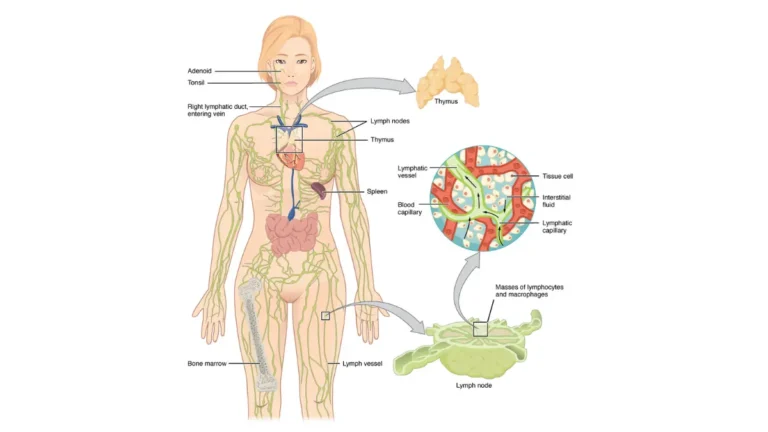
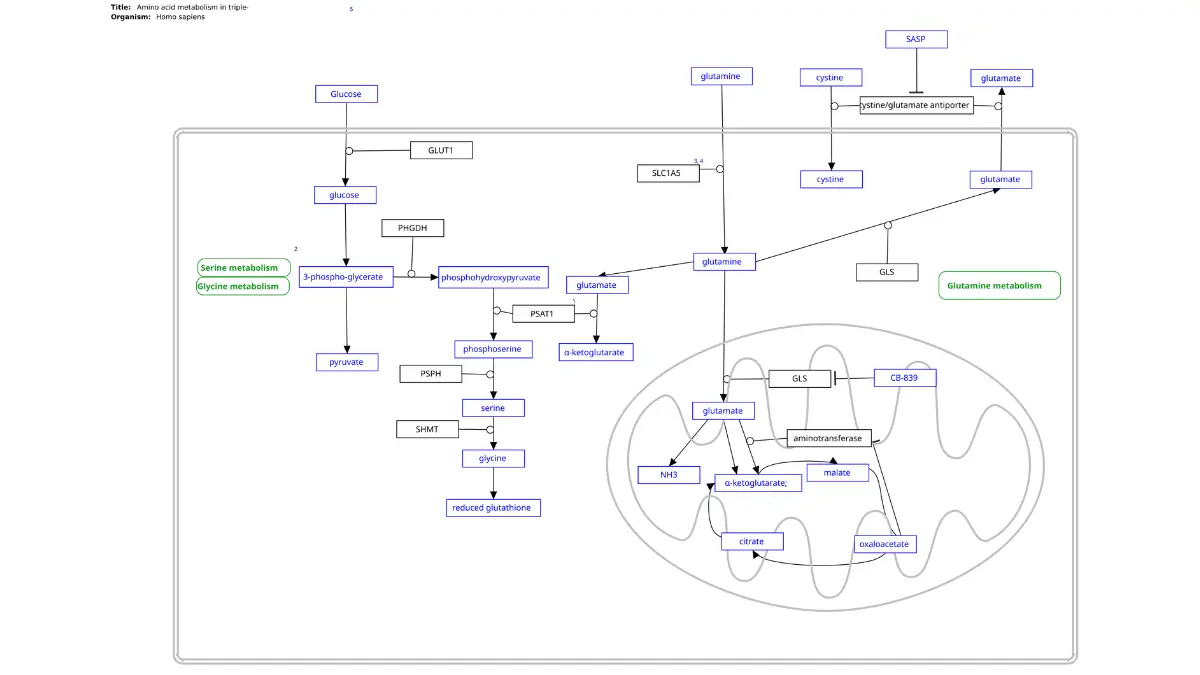
Adapted from Wikimedia Commons Lymph Node (NIH BioArt 304), licensed under Public Domain.
HER2-positive vs. HER2-negative vs. triple-positive: what the subtypes mean
| Subtype | HER2 | Estrogen Receptor (ER) | Progesterone Receptor (PR) | Key Clinical Detail |
|---|---|---|---|---|
| HER2-positive / HR-positive | Positive | Positive | Positive or negative | HER2-targeted therapy + hormone therapy — dual-pathway treatment |
| HER2-positive / HR-negative | Positive | Negative | Negative | HER2-targeted therapy only — no hormone therapy component |
| Triple-positive | Positive | Positive | Positive | Both HER2 and hormone pathways active — most complex treatment planning |
| HR-positive / HER2-negative | Negative | Positive | Positive | Hormone therapy is primary — no HER2-targeted therapy indicated |
Unlike triple-negative breast cancer, which lacks all three receptors and has fewer targeted treatment options, HER2-positive tumors have a rapidly expanding roster of precision drugs that directly block HER2 signaling or deliver cytotoxic agents into HER2-overexpressing cells.
The full spectrum of breast cancer types and how each is classified molecularly is worth reviewing alongside this guide to understand where HER2-positive sits within the broader classification system.
Who gets HER2-positive breast cancer and what raises risk?
HER2-positive breast cancer does not follow the same hereditary pattern as BRCA-linked cancers. Most patients who ask “Did I pass this to my children?” or “Did I inherit this from my mother?” are relieved to learn that ERBB2 amplification is almost always a somatic change — a mutation that arises in breast tissue during a person’s lifetime, not one inherited at conception.
That distinction matters clinically. Understanding your broader breast cancer risk profile — including family history — is still important, but a HER2-positive diagnosis in a family member does not directly increase your own HER2-positive risk.
Age, sex, and demographic risk factors for HER2-positive breast cancer
HER2-positive breast cancer tends to present at a younger median age than hormone receptor-positive, HER2-negative subtypes. Recognized clinical risk factors include:
- Age: Most common in women aged 35–55, though it occurs across all adult ages
- Sex: Predominantly affects women; male breast cancer can be HER2-positive but is rare
- First full-term pregnancy after age 30: Associated with elevated breast cancer risk broadly
- Dense breast tissue: Increases mammographic detection difficulty and is associated with elevated overall breast cancer risk
- Prior radiation to the chest: A recognized risk modifier for breast cancer development
- Overweight or obesity: Body weight is a clinically recognized modifiable risk factor for breast cancer; check your BMI using our free BMI calculator to understand your current weight classification
Is HER2-positive breast cancer hereditary? What the evidence says
ERBB2 amplification in HER2-positive tumors is a somatic mutation — it arises in the tumor cell itself and is not a germline change you were born with or can pass to children. This is a fundamentally different biological mechanism from BRCA1 and BRCA2 mutations, which are germline variants inherited through families and dramatically increase lifetime breast cancer risk.
Even though HER2 positivity itself is not inherited, your overall breast cancer family history still matters for long-term risk assessment. Evaluate your personal genetic risk for breast cancer using our Genetic Risk Assessment Tool — particularly if a first-degree relative has had any breast cancer subtype.
The full spectrum of known breast cancer risk factors — including modifiable and hereditary contributors — is worth reviewing with your oncology team.
✅ Patient Action: If you have a first-degree relative (mother, sister, daughter) who had breast cancer at any age, ask a board-certified genetic counselor: “Should I be tested for BRCA1, BRCA2, PALB2, or other high-risk germline mutations? And does my family member’s HER2-positive diagnosis change my personal testing priority?” These are different clinical questions — and both deserve a specific answer.
How doctors test for HER2-positive breast cancer
HER2 status is confirmed through a two-step laboratory process starting with immunohistochemistry (IHC) testing of biopsy tissue — and the score your pathology report shows directly determines your treatment eligibility, including which drugs are available to you.
🔬 How It Works: The IHC test applies a chemical stain to a sample of your tumor tissue. A pathologist scores the staining intensity on a scale of 0 to 3+, which reflects how much HER2 protein is present on the cell surfaces. A score of 3+ means a large amount of HER2 protein is present — this is definitively HER2-positive. A score of 2+ is called “equivocal,” meaning the result is borderline and cannot confirm or rule out HER2-positive status on its own. A score of 0 or 1+ means HER2-negative (or HER2-low at 1+).
IHC testing: what the 0 to 3+ scores mean for your treatment path
| IHC Score | Interpretation | Clinical Action |
|---|---|---|
| 0 | HER2-negative | No HER2-targeted therapy indicated |
| 1+ | HER2-low (negative by classical threshold) | May qualify for T-DXd in certain HR+/HER2-low settings — discuss with oncologist |
| 2+ | Equivocal — borderline result | Mandatory ISH reflex test required before any treatment decision |
| 3+ | HER2-positive | Full HER2-targeted therapy regimen indicated — T-DXd and trastuzumab eligible |
Source: FDA companion diagnostic guidance, May 2026
When your result is “equivocal”: the ISH reflex test explained
An IHC 2+ result does not mean your cancer is or isn’t HER2-positive. It means the pathology laboratory cannot make that determination from the IHC stain alone. In this case, a second test — in situ hybridization (ISH) — is mandatory before any treatment decision is made.
ISH testing looks directly at the ERBB2 gene under a microscope to count how many gene copies are present. An IHC 2+/ISH-positive result means HER2-positive; IHC 2+/ISH-negative means HER2-negative (or HER2-low). Do not accept a treatment plan if you received a 2+ IHC result and your oncologist has not confirmed whether ISH testing was completed.
Companion diagnostic devices: the FDA-approved tests for Enhertu eligibility (2026)
The FDA’s May 15, 2026 approval of fam-trastuzumab deruxtecan (T-DXd / Enhertu) for early-stage HER2-positive breast cancer included simultaneous approval of two companion diagnostic devices specifically for confirming HER2 eligibility for T-DXd therapy: the PATHWAY anti-HER-2/neu (4B5) Rabbit Monoclonal Primary Antibody and the VENTANA HER2 Dual ISH DNA Probe Cocktail. The full companion diagnostic approval details are documented in the FDA’s official approval announcement for Enhertu in early-stage HER2-positive breast cancer.
If you want to understand how to read every section of your biopsy report beyond HER2 status, our step-by-step guide to decoding your pathology report: what every field means covers each element in plain language.
✅ Patient Action: If your pathology report shows an IHC 2+ result, ask your pathologist or oncologist directly: “Has the ISH reflex test been ordered, and what is the result? Does my final HER2 designation meet the threshold for T-DXd eligibility under the May 2026 FDA approval?” Do not accept a treatment plan until ISH results have confirmed your final HER2 status.
Every FDA-approved drug for HER2-positive breast cancer in 2026
Seven FDA-approved drugs currently target HER2-positive breast cancer, grouped into three mechanism classes. Understanding which class each drug belongs to — and why — helps you follow your oncologist’s reasoning and ask better questions about your specific treatment plan.
🩺 Physician Note: “When a patient asks me why we’re using two drugs at once — trastuzumab and pertuzumab — my answer is always the same: they bind to different parts of the HER2 receptor, and that combination blocks the signaling pathway more completely than either drug alone. And when I’m choosing between T-DM1 and T-DXd for a patient with residual disease after neoadjuvant therapy, the DESTINY-Breast05 data from 2026 has materially shifted what I recommend — the IDFS numbers are not marginal, they’re clinically decisive.” — Dr. Nathaniel J. Hargrove, MD, Oncology
Monoclonal antibodies: trastuzumab and pertuzumab
| Drug (Brand) | Mechanism | Line of Therapy | Key Clinical Detail |
|---|---|---|---|
| Trastuzumab (Herceptin) | Binds HER2 extracellular domain IV — blocks downstream growth signaling | First-line neoadjuvant, adjuvant, metastatic | Foundation of most HER2+ treatment regimens; given with chemotherapy and/or pertuzumab |
| Pertuzumab (Perjeta) | Binds HER2 extracellular domain II — blocks dimerization with HER3 | First-line neoadjuvant + adjuvant (high-risk) | Synergistic with trastuzumab because it blocks a different HER2 domain — not redundant |
Trastuzumab and pertuzumab bind to different epitopes on the HER2 receptor’s extracellular domain — this is why their combination produces greater pathway inhibition than either drug alone. Trastuzumab targets domain IV and blocks constitutive HER2 signaling; pertuzumab targets domain II and prevents HER2 from pairing (dimerizing) with other HER receptors, particularly HER3.
Antibody-drug conjugates (ADCs): Kadcyla and Enhertu — what changed in May 2026
| Drug (Brand) | Mechanism | Line of Therapy | 2026 Trial Data | Key Warning |
|---|---|---|---|---|
| T-DM1 / Trastuzumab emtansine (Kadcyla) | Delivers cytotoxic payload (DM1) directly into HER2+ cells | Adjuvant — residual disease after neoadjuvant THP | DESTINY-Breast05: 3-yr IDFS 83.7% | Thrombocytopenia, hepatotoxicity |
| T-DXd / Fam-trastuzumab deruxtecan (Enhertu) | Delivers cytotoxic payload (DXd) with high drug-to-antibody ratio + bystander killing effect | Neoadjuvant + adjuvant (May 2026 FDA approval); metastatic 2nd line | pCR 67.3% (neoadjuvant, DESTINY-Breast11); 3-yr IDFS 92.4% vs. 83.7% T-DM1 (adjuvant, DESTINY-Breast05) | Boxed warning: interstitial lung disease (ILD) and pneumonitis — monitor throughout treatment |
⚠️ Clinical Warning: Enhertu (T-DXd) carries an FDA boxed warning for interstitial lung disease (ILD) and pneumonitis, including fatal cases. Patients on T-DXd must be monitored for new or worsening respiratory symptoms — shortness of breath, cough, or fever — throughout the entire treatment course. Report any new respiratory symptom to your oncologist immediately; do not wait for a scheduled appointment.
📊 Clinical Data Point: In the DESTINY-Breast05 trial, T-DXd produced a 3-year invasive disease-free survival (IDFS) rate of 92.4% vs. 83.7% for T-DM1, with a hazard ratio of 0.47 (95% CI: 0.34–0.66; p<0.0001) — Source: FDA approval announcement, May 15, 2026.
The full clinical trial data supporting the May 2026 dual approval — including DESTINY-Breast11 neoadjuvant results and DESTINY-Breast05 adjuvant IDFS outcomes — is documented in the FDA’s official approval announcement for Enhertu in early-stage HER2-positive breast cancer. The individual trial registries can also be reviewed at the DESTINY-Breast clinical trial registry on ClinicalTrials.gov.
Tyrosine kinase inhibitors (TKIs): tucatinib, neratinib, and lapatinib
| Drug (Brand) | Mechanism | Line of Therapy | Key Clinical Detail |
|---|---|---|---|
| Tucatinib (Tukysa) | Intracellular HER2 kinase domain inhibitor — crosses blood-brain barrier | 2nd/3rd line metastatic; brain metastasis setting | Only HER2 TKI with meaningful CNS penetration — preferred for HER2+ brain metastases |
| Neratinib (Nerlynx) | Irreversible pan-HER kinase inhibitor | Extended adjuvant (after trastuzumab-based therapy) | Reduces late recurrence in HR+/HER2+ patients — notable diarrhea management required |
| Lapatinib (Tykerb) | Reversible dual HER1/HER2 kinase inhibitor | Later-line metastatic | Now largely superseded by tucatinib and T-DXd in clinical practice |
Tyrosine kinase inhibitors work differently from monoclonal antibodies — they penetrate inside the cell and block the HER2 kinase domain from phosphorylating and activating downstream growth signals. This intracellular mechanism is why tucatinib specifically is the preferred TKI in patients with HER2-positive breast cancer that has spread to the brain: it crosses the blood-brain barrier at clinically meaningful concentrations, a property trastuzumab and pertuzumab do not share.
What the DESTINY-Breast05 trial means for patients with residual disease
Residual invasive disease after neoadjuvant chemotherapy and HER2-targeted therapy is a recognized high-risk feature. Until 2026, T-DM1 (Kadcyla) was the standard adjuvant choice for these patients. The DESTINY-Breast05 trial — whose data directly supported the May 15, 2026 FDA approval — established that T-DXd (Enhertu) produces a statistically and clinically superior 3-year IDFS compared to T-DM1 in this population: 92.4% vs. 83.7%, hazard ratio 0.47.
This means patients who did not achieve a pathological complete response (pCR) to neoadjuvant therapy should now specifically ask their oncologist whether T-DXd is appropriate for their adjuvant plan.
✅ Patient Action: Before accepting any post-neoadjuvant adjuvant treatment plan, ask your board-certified oncologist: “Did I achieve a pathological complete response? If not, am I a candidate for adjuvant T-DXd (Enhertu) based on the DESTINY-Breast05 data and the May 2026 FDA approval — and what is my ILD risk profile?” Drug selection in this class requires specialist-level judgment about your full treatment history and pulmonary status.
Survival rates and prognosis for HER2-positive breast cancer
Survival rates for HER2-positive breast cancer depend on both stage at diagnosis and hormone receptor (HR) status. The table below presents current NCI SEER data — and understanding how to read it correctly is as important as the numbers themselves.
5-year survival rates by stage: HR-positive/HER2-positive vs. HR-negative/HER2-positive
| Stage | HR+/HER2+ 5-Year Relative Survival | HR–/HER2+ 5-Year Relative Survival | Clinical Context |
|---|---|---|---|
| Localized (confined to breast) | 99.1% | 97.2% | Excellent prognosis with modern therapy |
| Regional (spread to nearby lymph nodes) | 89.8% | 84.0% | Strong prognosis; neoadjuvant therapy standard |
| Distant (metastatic) | 45.6% | 39.5% | Treatment has significantly extended median OS in modern ADC era |
| All stages combined | 91.0% | 85.6% | Combined figure weighted by stage distribution at diagnosis |
📊 Clinical Data Point: 5-year relative survival rates by HER2 subtype — Source: NCI SEER database, breast cancer subtype survival statistics (cancer.gov). SEER data reflects patients diagnosed 2013–2021. Patients treated in 2026 with T-DXd-based regimens are expected to have meaningfully better outcomes, as these cohorts have not yet matured in the SEER database.
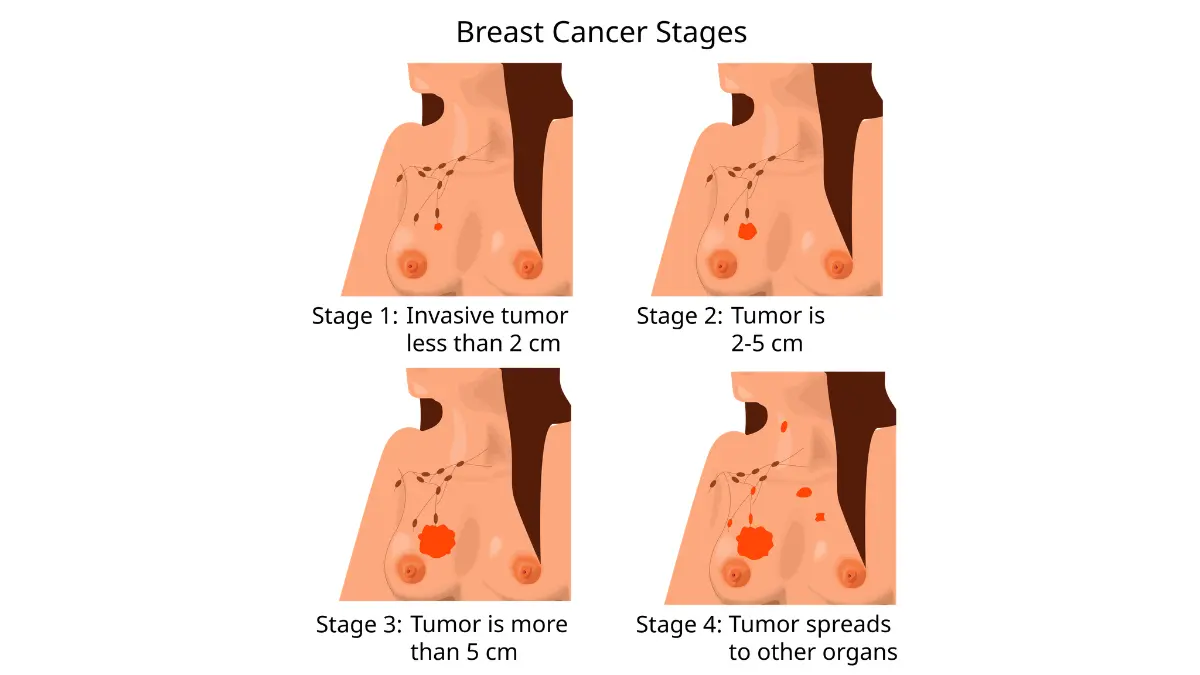
Adapted from Wikimedia Commons Breast cancer stages by hariadhi, licensed under CC BY-SA 4.0.
Why 2026 survival data will look better than what SEER currently reports
The SEER survival table above reflects patients treated primarily between 2013 and 2019 — before antibody-drug conjugates became standard of care and before the 2026 FDA approval of T-DXd for early-stage disease. The 92.4% 3-year IDFS rate reported in DESTINY-Breast05 for T-DXd-treated patients with residual disease already exceeds the regional-stage survival figures in the current SEER table.
This is a clinically critical context. A patient treated with T-DXd adjuvant therapy starting in 2026 cannot and should not interpret their prognosis using a SEER cohort from patients who had no access to that drug.
Metastatic HER2-positive breast cancer: what “living longer” means in 2026
Metastatic HER2-positive breast cancer — stage IV, or distant disease — carries a 39.5–45.6% 5-year survival rate in SEER data, but this figure already reflects a population that benefited from first-generation HER2-targeted therapy. Median overall survival for HER2-positive metastatic breast cancer has extended significantly with successive lines of ADC therapy.
The HER2-positive metastatic subtype now has multiple sequenced treatment lines — trastuzumab/pertuzumab as first-line, T-DXd as second-line, and tucatinib-based combinations for brain-metastatic disease — that did not exist when the SEER cohort underpinning the 39.5% figure was treated.
For a broader comparison of survival rates across all breast cancer subtypes and stages, see how breast cancer survival rates compare by subtype, stage, and year of diagnosis.
📊 Clinical Data Point: 5-year relative survival rates for HR−/HER2+ localized breast cancer: 97.2%; regional: 84.0%; distant: 39.5% — Source: NCI SEER, 2026 breast cancer subtype statistics.
What an oncologist wants you to know right now about HER2 treatment in 2026
The most significant development in HER2-positive breast cancer treatment since trastuzumab’s original approval is what happened on May 15, 2026. The FDA granted two separate approvals for fam-trastuzumab deruxtecan (T-DXd / Enhertu): one for neoadjuvant use in early-stage HER2-positive breast cancer, and one for adjuvant use in patients with residual disease after neoadjuvant therapy. Both approvals are supported by Phase III DESTINY-Breast trial data.
🩺 Physician Note: “What the DESTINY-Breast11 and DESTINY-Breast05 data tell me clinically is that we now have a drug that can both increase the rate of pathological complete response before surgery and reduce the risk of recurrence after surgery in patients who didn’t achieve pCR. That’s a two-stage intervention in the same drug class, which is unprecedented for early-stage HER2-positive disease. Patients being staged and treated right now in 2026 are entering the best treatment era this diagnosis has ever seen.” — Dr. Nathaniel J. Hargrove, MD, Oncology
The question that matters most before your first oncology appointment
Pathological complete response (pCR) — meaning no residual invasive cancer is found at surgery after neoadjuvant treatment — is the most powerful early prognostic marker in HER2-positive breast cancer. In the DESTINY-Breast11 trial, the T-DXd neoadjuvant arm achieved a pCR rate of 67.3% compared to 56.3% in the ddAC-THP arm.
Patients who do not achieve pCR are now the primary candidates for T-DXd adjuvant therapy. This makes the question “Did I achieve pCR?” one of the most important clinical decision points in your entire HER2-positive treatment journey.
What caregivers and family members should bring to the first appointment
Caregivers attending a first oncology appointment with a newly diagnosed HER2-positive patient can add the most value by ensuring these three questions are asked and answered before leaving:
- What is the exact HER2 IHC score, and has ISH reflex testing been completed if the score was 2+?
- Is the tumor also hormone receptor-positive, and how does that change the treatment plan?
- Based on the stage and HR status, is neoadjuvant T-DXd (Enhertu) being considered under the May 2026 FDA approval?
Understanding the early symptoms and warning signs of breast cancer can also help caregivers support family members who may still be in the diagnostic phase.
✅ Patient Action: Before your first oncology appointment, write down your IHC score from your pathology report and whether ISH testing was recommended. Ask your oncologist: “Given my stage, HR status, and IHC score, which of the seven FDA-approved HER2-targeted drugs is being considered for my treatment — and am I a candidate for T-DXd under the May 2026 FDA approval?” A specific question gets a specific answer.
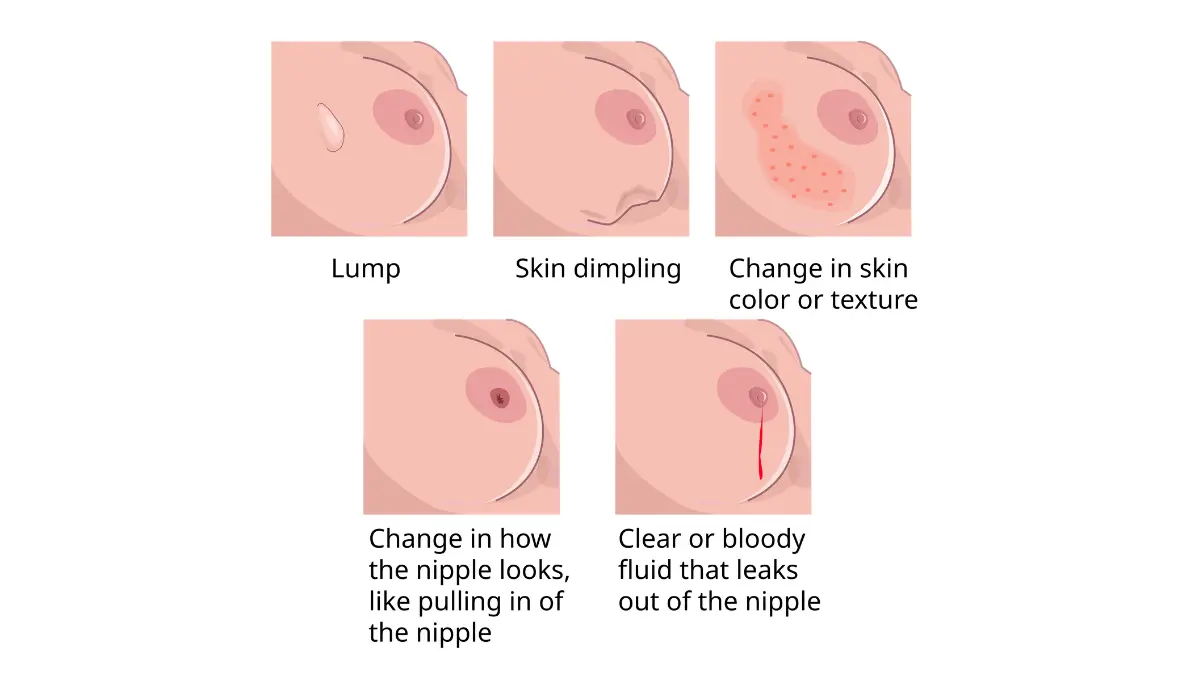
Adapted from Wikimedia Commons Early signs of breast cancer hariadhi svg, licensed under CC BY-SA 4.0.
Frequently asked questions about HER2-positive breast cancer
1. What is HER2-positive breast cancer?
HER2-positive breast cancer is a subtype in which the ERBB2 gene is amplified, causing overexpression of HER2 protein on cancer cell surfaces. This protein overexpression drives continuous, uncontrolled cell division. HER2-positive tumors account for approximately 15–20% of all breast cancer diagnoses. The subtype is treated with HER2-targeted drugs — including trastuzumab, pertuzumab, and T-DXd — rather than hormone therapy alone. Consult a board-certified oncologist for a full evaluation of your HER2 test results and treatment options.
2. Is HER2-positive breast cancer aggressive?
HER2-positive breast cancer grows more rapidly than hormone receptor-positive, HER2-negative subtypes when untreated — which is what oncologists mean by “aggressive.” With 2026-era targeted therapy, however, it is among the most treatment-responsive subtypes. The DESTINY-Breast11 trial reported a pathological complete response rate of 67.3% with neoadjuvant T-DXd. “Aggressive” describes behavior without treatment — not the prognosis with it. Consult a board-certified oncologist to discuss what aggressiveness means for your specific stage and tumor biology.
3. What drugs are used to treat HER2-positive breast cancer?
Seven FDA-approved drugs target HER2-positive breast cancer in 2026, across three classes: monoclonal antibodies (trastuzumab, pertuzumab), antibody-drug conjugates (T-DM1/Kadcyla, T-DXd/Enhertu), and tyrosine kinase inhibitors (tucatinib, neratinib, lapatinib). The May 15, 2026 FDA approval expanded T-DXd (Enhertu) indications to include neoadjuvant and adjuvant early-stage use. Drug selection depends on stage, hormone receptor status, prior treatment history, and residual disease status. Consult a board-certified oncologist to determine which agent is appropriate for your specific case.
4. What is the survival rate for HER2-positive breast cancer?
HER2-positive breast cancer survival rates vary by stage and hormone receptor status. For HR+/HER2+ tumors: 99.1% (localized), 89.8% (regional), 45.6% (distant). For HR−/HER2+: 97.2% (localized), 84.0% (regional), 39.5% (distant), per NCI SEER data. These figures reflect patients treated before the 2026 T-DXd era — current patients are expected to have better outcomes. Consult a board-certified oncologist to understand what these population-level statistics mean for your individual prognosis.
5. What is the difference between trastuzumab and pertuzumab?
Both drugs target the HER2 receptor, but they bind to different sites. Trastuzumab (Herceptin) binds domain IV of the HER2 extracellular domain, blocking constitutive growth signaling. Pertuzumab (Perjeta) binds domain II, preventing HER2 from pairing with other HER receptors — a process called dimerization. Because they block HER2 signaling through different mechanisms, their combination provides more complete pathway inhibition than either drug alone. Consult a board-certified oncologist about whether dual HER2 blockade is appropriate for your stage and treatment setting.
6. Can HER2-positive breast cancer be cured?
HER2-positive breast cancer diagnosed at an early or regional stage is considered curable in the clinical sense — meaning long-term disease-free survival is achievable and expected with appropriate treatment. Localized HR+/HER2+ breast cancer has a 99.1% 5-year survival rate. The term “remission” is more commonly used clinically; complete remission following treatment, particularly when pathological complete response is achieved, is associated with excellent long-term outcomes. Consult a board-certified oncologist to discuss your specific remission and recurrence risk profile.
7. What does HER2 3+ mean on a pathology report?
An IHC score of 3+ on a pathology report means the tumor cells have a high density of HER2 protein on their surface — this is the definitively HER2-positive threshold. An IHC 3+ result qualifies a patient for the full range of HER2-targeted therapies, including trastuzumab, pertuzumab, and T-DXd (Enhertu) under the May 2026 FDA approvals. No reflex ISH testing is required at 3+. Consult a board-certified oncologist to confirm your treatment eligibility based on your complete pathology report.
8. Is Enhertu (trastuzumab deruxtecan) approved for early-stage HER2-positive breast cancer?
Yes. On May 15, 2026, the FDA approved fam-trastuzumab deruxtecan (T-DXd / Enhertu) for two early-stage indications: neoadjuvant treatment in combination with pertuzumab and chemotherapy (based on DESTINY-Breast11 pCR data), and adjuvant treatment for patients with residual invasive disease after neoadjuvant therapy (based on DESTINY-Breast05 IDFS data showing 92.4% vs. 83.7% 3-year IDFS). T-DXd carries a boxed warning for interstitial lung disease. Consult a board-certified oncologist about whether you qualify under these approvals.
9. What is the difference between HER2-positive and triple-negative breast cancer?
HER2-positive breast cancer overexpresses the HER2 protein and responds to HER2-targeted therapies, with localized 5-year survival rates above 97%. Triple-negative breast cancer lacks HER2 overexpression and both hormone receptors (ER and PR), eliminating both HER2-targeted and hormonal treatment options — its localized 5-year survival rate is approximately 91%. HER2-positive cancers, particularly early-stage, carry a substantially better prognosis than triple-negative in most staging categories when treated with modern targeted regimens. Consult a board-certified oncologist to understand how your specific subtype affects your treatment pathway.
10. What is pathological complete response (pCR) and why does it matter?
Pathological complete response (pCR) means no residual invasive cancer is found in the breast or lymph nodes at surgery after neoadjuvant treatment. In HER2-positive breast cancer, pCR is the strongest early indicator of long-term disease-free survival. The DESTINY-Breast11 trial reported a pCR rate of 67.3% in the T-DXd neoadjuvant arm. Patients who do not achieve pCR are the primary candidates for T-DXd adjuvant therapy under the May 2026 FDA approval. Consult a board-certified oncologist about your pCR status and what it means for your adjuvant plan.
11. What is HER2-low breast cancer and is it treated differently?
HER2-low breast cancer is defined as an IHC score of 1+ or IHC 2+/ISH-negative — below the classical HER2-positive threshold (IHC 3+ or IHC 2+/ISH+) but above zero. HER2-low tumors do not respond to trastuzumab or pertuzumab but may qualify for T-DXd therapy in certain HR-positive or HR-negative settings under separate FDA approvals. HER2-low is a distinct therapeutic category that requires specific discussion with your oncologist — it is not simply “HER2-negative.” Consult a board-certified oncologist if your IHC score was 1+ or 2+/ISH-negative.
Your next step after reading this guide
HER2-positive breast cancer in 2026 is a diagnosis that comes with more targeted treatment options, more clinical trial data, and more reason for genuine optimism than at any prior point in oncology. The May 15, 2026 FDA dual approval of T-DXd has expanded early-stage treatment eligibility in a way that directly affects patients being staged and treated right now.
Your most productive next step is a specific, prepared conversation with a board-certified oncologist — not a general specialist, but one experienced in HER2-positive breast cancer treatment. Bring your IHC score, your HR status, and the questions raised in this guide. The breast cancer stages and survival guide provides the staging context that frames every treatment conversation. And for patients who haven’t yet confirmed whether first-degree family members need genetic risk evaluation, assess your personal hereditary breast cancer risk — a five-minute tool that helps clarify whether BRCA counseling is warranted.
Knowledge does not replace specialist care. It makes specialist care better.
About this content
How this article was put together: researched from recognised health sources, drafted with the help of AI tools, and edited by hand, with sources linked throughout.

Sameer Patel is the founder and editor of My Medicine Advisor. He is not a doctor or medical professional — before starting this site he worked in banking,…
Medical disclaimer
The content on MyMedicineAdvisor is provided for general informational and educational purposes only and is not a substitute for professional medical advice, diagnosis, or treatment. Health information on this website should not be used to diagnose, treat, cure, or prevent any condition without guidance from a qualified healthcare professional. Always seek the advice of your doctor, physician, or another licensed healthcare provider with any questions you may have regarding a medical condition, symptoms, medications, or treatment decisions.