On This Page – Quick Medical Summary
What you need to know about triple-negative breast cancer
If you or a family member just received a triple-negative breast cancer diagnosis, this article was written for the hours and days that follow — when the questions arrive faster than any single appointment can answer them.
Triple-negative breast cancer treatment has advanced more rapidly in the past five years than in the prior two decades. FDA-approved immunotherapy now forms part of the standard treatment plan for eligible patients — a development this article covers in clinical detail. For a complete overview of how all breast cancer subtypes are staged and what those stages mean for survival, see our breast cancer staging guide.
ℹ️ Medical Disclaimer: The diagnostic criteria, treatment options, drug names, and survival statistics in this article reflect 2026 clinical guidelines and are provided for educational purposes only. Individual diagnostic conclusions, treatment decisions, and medication choices for triple-negative breast cancer — including pembrolizumab eligibility, PARP inhibitor access, BRCA genetic testing, surgical planning, and insurance coverage — depend on tumor stage, receptor expression levels, mutation status, comorbidities, and specialist assessment. Consult a board-certified oncologist or gynecologic oncologist before acting on any clinical information in this article.
What does triple-negative breast cancer actually mean?
Triple-negative breast cancer (TNBC) is defined by the absence of three biological targets on tumor cells: estrogen receptors (ER), progesterone receptors (PR), and the HER2 protein. Under 2026 NCCN Breast Cancer Guidelines, negativity is defined as ER staining below 1%, PR staining below 1%, and HER2 scored at 0 or 1+ by immunohistochemistry — or ISH-negative by FISH testing. These criteria are confirmed on biopsy tissue by a pathologist before any treatment plan begins.
The three receptors that are missing — and why it matters
That receptor profile eliminates two entire drug categories immediately. Hormone-blocking therapy — tamoxifen, aromatase inhibitors, ovarian suppression — only works on tumor cells that carry estrogen or progesterone receptors. HER2-directed therapy — trastuzumab, pertuzumab, T-DM1 — requires the HER2 protein as a binding target. TNBC has none of these entry points. Treatment must work through entirely different mechanisms, which is precisely why chemotherapy and immunotherapy carry the full treatment burden.
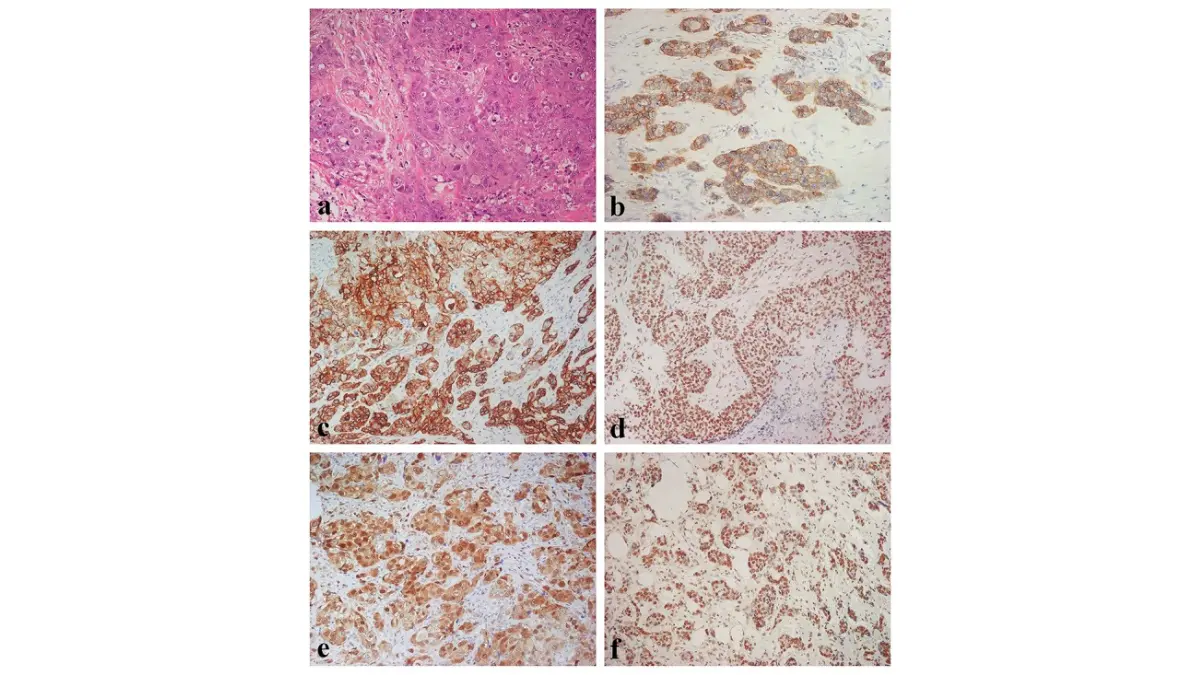
Adapted from Wikimedia Commons Morphologic and immunohistochemical features of Triple Negative Breast Cancer, licensed under CC BY 4.0
How TNBC compares to other breast cancer subtypes
Understanding the differences between breast cancer types makes TNBC’s clinical distinctiveness clearer — hormone receptor-positive subtypes can often be managed for years with daily oral pills. TNBC cannot. It accounts for approximately 10–15% of all breast cancers diagnosed annually, but it disproportionately affects women under 50, Black women, and those with BRCA1 germline mutations.
🔬 How It Works: TNBC tumor cells lack the molecular “locks” that make hormone therapies and HER2-directed drugs effective. They tend to divide faster — reflected in a high Ki-67 proliferation index — but also respond more dramatically to chemotherapy than many slower-growing subtypes. This high chemosensitivity is the biological basis for why achieving pathologic complete response (pCR) — no detectable cancer remaining at surgery — is a more powerful survival predictor in TNBC than in most other breast cancer subtypes.
✅ Patient Action: Ask your oncologist to confirm your exact IHC staining percentages for ER, PR, and HER2 — not just the “triple-negative” label. These specific numbers underpin every downstream treatment eligibility decision in the first weeks after diagnosis. A board-certified gynecologic or medical oncologist with breast cancer specialization should review the full pathology report before your treatment plan is finalized.
How triple-negative breast cancer is diagnosed
Most TNBC diagnoses begin with a palpable breast mass — a lump the patient or a clinician detects on physical examination. Because TNBC grows faster than hormone receptor-positive subtypes, it more commonly presents between scheduled mammograms rather than being caught at routine screening. Recognizing early breast cancer warning signs and pursuing prompt diagnostic workup significantly improves the likelihood of an earlier-stage diagnosis.
The tests that confirm triple-negative receptor status
TNBC is confirmed through a four-step diagnostic pathway:
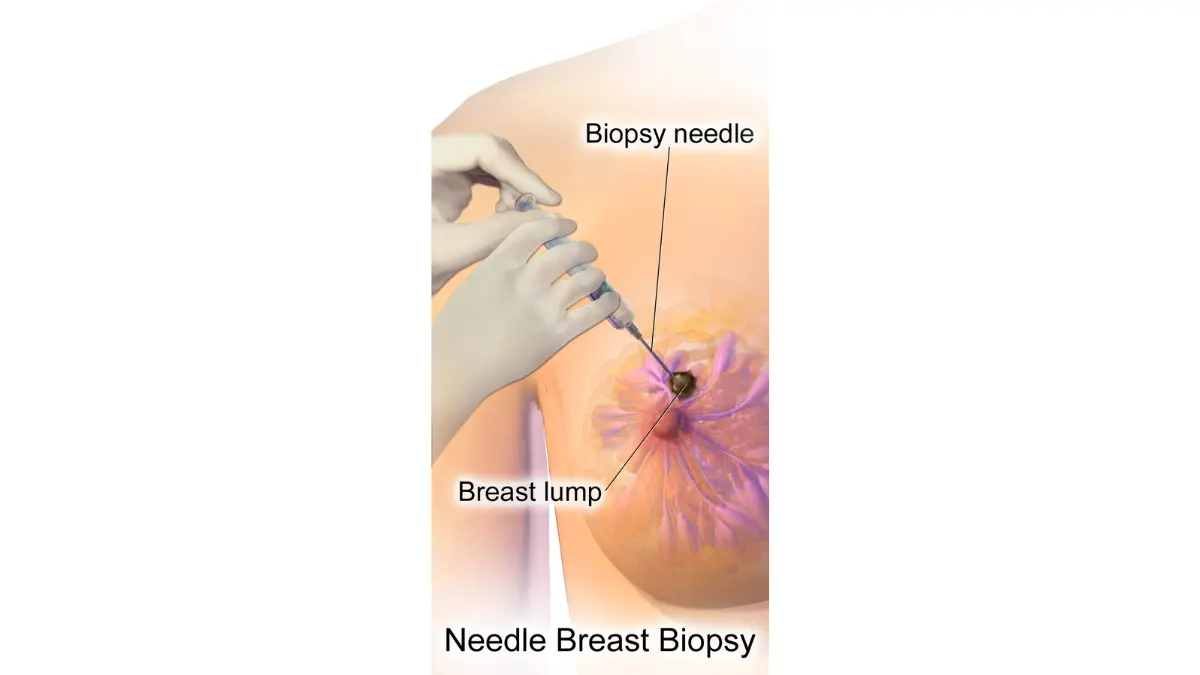
Adapted from Wikimedia Commons Needle Breast Biopsy, licensed under CC BY-SA 3.0
- Core needle biopsy of the suspicious mass — provides tissue for all downstream receptor and genetic testing
- Immunohistochemistry (IHC) testing — measures ER, PR, and HER2 receptor expression against 2026 NCCN-defined negativity cutoffs
- Staging workup — typically breast MRI, CT of chest/abdomen/pelvis, and/or PET imaging to assess local and distant spread
- Germline BRCA1/2 testing — now recommended by 2026 NCCN guidelines for all newly diagnosed TNBC patients, regardless of family history or age at diagnosis
BRCA genetic testing: who needs it and why it changes treatment
Approximately 10–20% of TNBC patients carry a germline BRCA1 or BRCA2 pathogenic variant — making TNBC one of the strongest clinical triggers for genetic testing across all cancer diagnoses. A positive BRCA1 result does two distinct things: it opens eligibility for PARP inhibitor therapy (olaparib, talazoparib) in patients with advanced or metastatic disease, and it triggers cascade testing recommendations for first-degree relatives. Patients can assess their genetic risk factors using our Genetic Risk Assessment Tool as a starting point before their genetic counseling appointment. Once results are available, our clinical guide to reading your BRCA results explains exactly what each result category means for treatment and family screening.
📊 Clinical Data Point: Per 2026 NCCN Breast Cancer Guidelines, germline BRCA1/2 testing is recommended for all patients with newly diagnosed TNBC at any age — a change from earlier guidance that tied genetic testing to age thresholds or documented family history. Source: NCCN Breast Cancer Guidelines, 2026.
✅ Patient Action: If germline BRCA1/2 testing has not yet been ordered as part of your diagnostic workup, ask your oncologist directly — a positive result changes both your treatment options and your family members’ recommended screening protocols. For a validated overview of what germline testing involves and who qualifies for insurance coverage, see NCI’s information on BRCA genetic testing and hereditary breast cancer.
Triple-negative breast cancer survival rates by stage
Survival rates for TNBC are more directly shaped by treatment response than in most other breast cancer subtypes — particularly by whether a patient achieves pathologic complete response (pCR) after neoadjuvant chemotherapy. The table below reflects 2026 NCI SEER data for TNBC-specific 5-year relative survival rates.
| Stage | 5-Year Relative Survival Rate | Key Clinical Context |
|---|---|---|
| Stage I | ~91% | Most favorable — tumor confined to breast, no lymph node involvement; pCR rates are highest |
| Stage II | ~65–70% | Regional spread possible; pCR achievement is the single most important intermediate milestone |
| Stage III | ~46–52% | Locally advanced; immunotherapy eligibility evaluation is critical before treatment begins |
| Stage IV (Metastatic) | ~12–15% | Managed as a chronic condition; pembrolizumab and sacituzumab govitecan are active agents |
Source: NCI SEER Database, 2026 — NCI’s triple-negative breast cancer treatment summary | American Cancer Society breast cancer statistics 2026
Why pathologic complete response is the survival milestone to track
Pathologic complete response (pCR) — the absence of viable invasive cancer in the breast tissue and lymph nodes at surgery after neoadjuvant chemotherapy — is a more powerful prognostic signal in TNBC than in any other breast cancer subtype. Patients who achieve pCR have event-free survival rates that substantially exceed those of patients with residual disease at surgery. This intermediate milestone matters because it provides a real-time signal about tumor biology while treatment is still ongoing — and because in TNBC, achieving pCR reflects the fundamental biological aggressiveness that also makes the tumor most susceptible to cytotoxic and immunologic attack.
Factors that affect survival outlook beyond stage
Three variables modify individual survival trajectory beyond raw stage: BRCA1/2 mutation status (germline BRCA positivity opens PARP inhibitor eligibility, which changes the metastatic treatment equation); age at diagnosis (TNBC diagnosed under age 40 carries distinct biological behavior); and race. For a detailed breakdown of how staging is formally determined using the TNM classification system, see how breast cancer stages are determined. For a full comparison of TNBC survival data against hormone receptor-positive and HER2-positive subtypes, see breast cancer survival rates by subtype.
📊 Clinical Data Point: Black women develop TNBC at approximately twice the rate of white women, at younger average ages, and present at later stages at initial diagnosis at higher rates. The disparity is documented across biological, healthcare-access, and socioeconomic dimensions. Source: American Cancer Society, 2026.
✅ Patient Action: Population-level survival figures do not predict your individual outcome. Before interpreting any survival statistic from any source, ask a board-certified oncologist to contextualize it against your specific pathology report, stage, BRCA result, and PD-L1 score — four variables that collectively determine where your situation sits within the population data.
Treatment options for triple-negative breast cancer in 2026
TNBC treatment in 2026 is determined by three clinical variables: stage at diagnosis, PD-L1 expression level, and germline BRCA1/2 mutation status. No single treatment protocol applies to all TNBC patients — these biomarkers determine which drug categories are available and in what sequence they are deployed.
Neoadjuvant and adjuvant chemotherapy: the backbone regimens
For most early-stage and locally advanced TNBC, treatment begins before surgery — called neoadjuvant chemotherapy. Per 2026 NCCN Breast Cancer Guidelines, the standard neoadjuvant backbone is carboplatin plus paclitaxel (or nab-paclitaxel), followed by AC (doxorubicin plus cyclophosphamide). The primary treatment goal is achieving pathologic complete response at surgery — not tumor shrinkage, but complete eradication of viable disease. For a day-by-day clinical guide to what this process involves, see what to expect during breast cancer chemotherapy.
PARP inhibitors for BRCA-mutated TNBC
For patients with confirmed germline BRCA1 or BRCA2 pathogenic variants and HER2-negative locally advanced or metastatic breast cancer, olaparib (Lynparza) and talazoparib (Talzenna) are FDA-approved oral PARP inhibitors. These drugs are not indicated for all TNBC — only for germline BRCA-mutated disease. Patients who have not yet completed germline BRCA testing should request it before their systemic treatment plan is locked in.
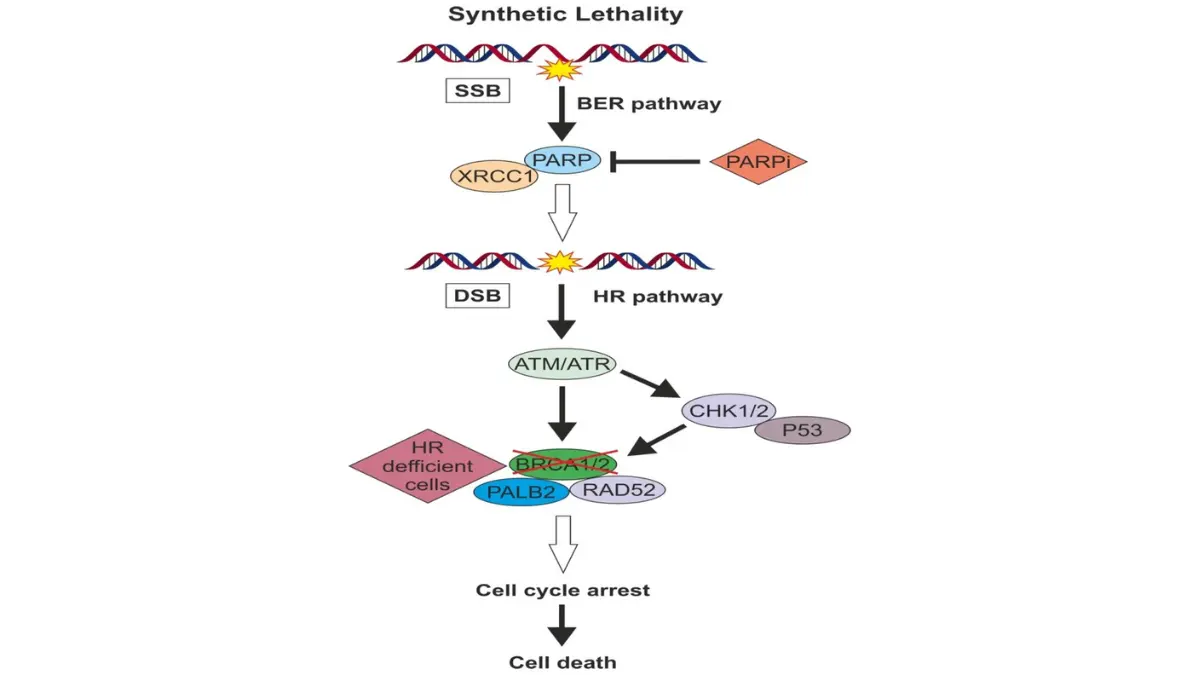
Adapted from Wikimedia Commons Synthetic lethality principle, licensed under CC BY 4.0
Clinical trials: when standard treatment needs to be supplemented
Patients whose tumors do not achieve pCR after neoadjuvant therapy, or who have metastatic disease that has not responded to first- or second-line treatment, may be eligible for investigational agents. Searching active clinical trials for triple-negative breast cancer through the national registry is a concrete first step to identify open studies at NCI-designated cancer centers.
✅ Patient Action: Before your first treatment infusion, ask your medical oncologist three specific questions: (1) Has my tumor been tested for PD-L1 expression, and what is my combined positive score (CPS)? (2) Has germline BRCA1/2 testing been completed? (3) Does my stage and risk profile qualify me for neoadjuvant pembrolizumab under the KEYNOTE-522 protocol? These three answers confirm whether your treatment plan reflects 2026 standard of care for your specific TNBC profile.
Immunotherapy and targeted drugs now approved for TNBC
Pembrolizumab (Keytruda) is the most clinically significant addition to the TNBC treatment landscape in recent years — FDA-approved in two distinct settings with eligibility criteria that are not interchangeable and are frequently misunderstood by patients reading about immunotherapy eligibility online.
Pembrolizumab: who qualifies and what the evidence shows
The two FDA approvals apply to different patient populations:
- Metastatic TNBC (first-line): Pembrolizumab plus chemotherapy is approved for patients whose tumors express PD-L1 at a combined positive score (CPS) of 10 or higher, per KEYNOTE-355 trial data. PD-L1 CPS must be tested and confirmed before initiating this regimen.
- High-risk early-stage TNBC (neoadjuvant): Pembrolizumab plus chemotherapy before surgery is approved regardless of PD-L1 status under the KEYNOTE-522 protocol — eligibility is based on stage and clinical risk profile, not PD-L1 score.
This distinction matters enormously. A patient with early-stage TNBC and a low PD-L1 score may still be eligible for neoadjuvant pembrolizumab — but would not be eligible for first-line pembrolizumab in the metastatic setting with the same score. The FDA approval record for pembrolizumab in breast cancer details both indications. For a cellular-level explanation of how checkpoint inhibition works in cancer, see how immunotherapy works against cancer.
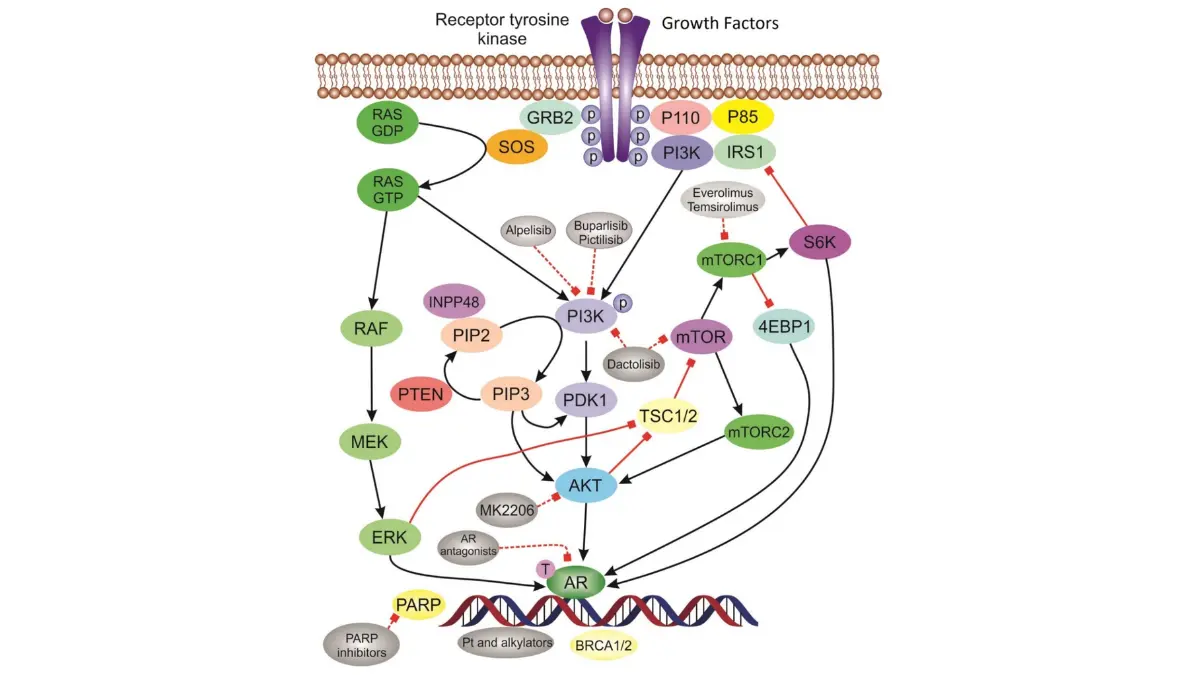
Adapted from Wikimedia Commons Targeted Pathways in TNBC, licensed under CC BY 4.0
Sacituzumab govitecan (Trodelvy): third-line metastatic TNBC
For patients with unresectable locally advanced or metastatic TNBC who have received at least two prior systemic therapies, sacituzumab govitecan (Trodelvy) is FDA-approved. It is a Trop-2-directed antibody-drug conjugate (ADC) — a precision delivery system that attaches chemotherapy directly to cancer cells overexpressing the Trop-2 protein, which is present in most TNBC tumors. This is a third-line option that remains clinically active when earlier regimens have been exhausted; it is not a last resort — it is a planned component of the metastatic treatment sequence.
🩺 Physician Note: “When I explain pembrolizumab eligibility to a newly diagnosed TNBC patient, the first thing I clarify is that the PD-L1 score and the KEYNOTE-522 protocol are two different conversations. In the neoadjuvant setting, we do not require a CPS of 10 to consider pembrolizumab — we consider it based on stage and risk. Patients who read about immunotherapy eligibility online and assume they must have a high PD-L1 score to qualify for any form of pembrolizumab therapy often come to that first appointment with an incorrect understanding of their own options.” — Dr. Carolyn D. Fairweather, MD (Gynecologic Oncology)
✅ Patient Action: Before starting any systemic therapy, ask your medical oncologist: What is my tumor’s PD-L1 combined positive score? Am I eligible for neoadjuvant pembrolizumab under KEYNOTE-522? If my BRCA test is positive, am I a candidate for olaparib or talazoparib? A board-certified medical oncologist or gynecologic oncologist specializing in breast cancer should review your full biomarker profile — PD-L1 CPS, BRCA status, and Ki-67 — before any targeted therapy is initiated.
A gynecologic oncologist’s message to newly diagnosed TNBC patients
The three questions I hear most often from patients in the first week after a TNBC diagnosis are always the same: Is this curable? Did I miss this? Should I have done something differently?
I want to answer those questions directly.
The three questions I hear most often at diagnosis
TNBC is not a single prognosis — it is a biological category that encompasses patients with very different trajectories, determined by stage, BRCA status, PD-L1 expression, and treatment response. Early-stage TNBC with pathologic complete response carries 5-year survival rates that are clinically comparable to many hormone receptor-positive breast cancers. This is not reassurance — it is a documented clinical fact that your oncologist should be explaining to you at your first appointment.
TNBC does not develop because of delayed screening. Its faster growth rate means it can present between annual mammograms even in fully compliant patients. Nothing you did or did not do caused this.
What I want every TNBC patient to know before their first treatment session
Ask whether pembrolizumab is being considered before you start chemotherapy — not after. Ask what your PD-L1 CPS score is. Ask what your BRCA result shows. These are first-appointment questions, not second-appointment questions. The treatment sequencing decisions made in the first two weeks carry consequences for the entire course of care.
Next steps: using this information at your next appointment
Bring the three questions from Section 5 to your oncology appointment printed out. Know your PD-L1 and BRCA results before any plan is finalized. And because TNBC carries implications for first-degree relatives, start the conversation about family screening — our guide to breast cancer screening age and mammogram guidelines is a starting point for that discussion. A board-certified gynecologic or medical oncologist specializing in breast cancer is the most important resource you have right now — not because the information in this article is insufficient, but because your specific pathology report requires a specialist’s interpretation that no article can replicate.
Frequently asked questions about triple-negative breast cancer
1. What does triple-negative mean in breast cancer?
Triple-negative breast cancer is confirmed when tumor cells test negative for estrogen receptors (ER), progesterone receptors (PR), and the HER2 protein — determined by immunohistochemistry (IHC) testing on biopsy tissue. This receptor profile eliminates hormone-blocking therapies and HER2-directed drugs as treatment options. TNBC represents approximately 10–15% of all breast cancers diagnosed annually, per 2026 American Cancer Society data.
2. Is triple-negative breast cancer curable?
For early-stage TNBC, meaningful cure rates exist. Patients diagnosed at Stage I or II who achieve pathologic complete response after neoadjuvant chemotherapy have substantially higher 5-year survival rates than those with residual disease at surgery. Stage IV disease is managed as a chronic condition requiring ongoing treatment rather than a curative approach. Consult a board-certified medical oncologist to understand what your specific stage, BRCA status, and treatment response mean for your individual prognosis.
3. What is the survival rate for triple-negative breast cancer?
Per 2026 NCI SEER data, TNBC 5-year relative survival rates range from approximately 91% at Stage I to 12–15% at Stage IV (metastatic). Stage II carries approximately 65–70%; Stage III, approximately 46–52%. These are population-level averages — they do not predict individual outcomes. Your stage, BRCA status, PD-L1 expression, and treatment response collectively determine your trajectory. Consult a board-certified oncologist for individualized interpretation.
4. What are the treatment options for triple-negative breast cancer?
TNBC treatment in 2026 includes four categories: (1) chemotherapy — carboplatin plus paclitaxel or nab-paclitaxel, followed by AC; (2) pembrolizumab (Keytruda) for eligible patients based on stage and PD-L1 status; (3) PARP inhibitors — olaparib or talazoparib — for germline BRCA-mutated disease; and (4) sacituzumab govitecan (Trodelvy) for later-line metastatic TNBC. Consult a board-certified medical oncologist to confirm which options apply based on your stage, PD-L1 combined positive score, and BRCA mutation status.
5. Is triple-negative breast cancer hereditary?
TNBC itself is not inherited, but germline BRCA1 mutations significantly increase the lifetime risk of developing it. Approximately 10–20% of newly diagnosed TNBC patients carry a BRCA1 or BRCA2 pathogenic variant — which is why 2026 NCCN guidelines recommend germline BRCA testing for all TNBC patients at diagnosis, regardless of family history. Consult a board-certified genetic counselor or oncologist to discuss testing and what a positive result means for cascade screening in your family.
6. What is pembrolizumab used for in breast cancer?
Pembrolizumab (Keytruda) is FDA-approved for TNBC in two distinct settings: as neoadjuvant therapy combined with chemotherapy for high-risk early-stage disease under the KEYNOTE-522 protocol, regardless of PD-L1 status; and as first-line therapy for PD-L1-positive metastatic TNBC with a combined positive score (CPS) of 10 or higher. It works by blocking the PD-1 immune checkpoint, allowing T cells to recognize and attack cancer cells. Ask your oncologist whether your TNBC meets the specific eligibility criteria for each indication.
7. What stage is triple-negative breast cancer usually diagnosed at?
TNBC is diagnosed across all stages, but its faster growth rate compared to hormone receptor-positive subtypes means it more commonly presents as a palpable mass between scheduled mammograms rather than at screening. Per 2026 ACS data, a higher proportion of TNBC cases present at Stage II or III compared to hormone receptor-positive subtypes. Black women and women under 40 account for a disproportionate share of diagnoses. A board-certified oncologist confirms staging through imaging and pathology review.
8. How is triple-negative breast cancer diagnosed?
TNBC is confirmed through a four-step pathway: (1) core needle biopsy of the suspicious mass; (2) immunohistochemistry (IHC) testing for ER, PR, and HER2 receptor status against 2026 NCCN-defined thresholds; (3) staging workup using MRI, CT, and/or PET imaging; and (4) germline BRCA1/2 testing, now recommended for all newly diagnosed TNBC patients under 2026 NCCN guidelines regardless of age. A board-certified pathologist and oncologist jointly interpret biopsy and receptor testing results to confirm the diagnosis.
9. Is triple-negative breast cancer the worst kind of breast cancer?
TNBC is more biologically aggressive than hormone receptor-positive subtypes, but it is also more chemosensitive — tumors that respond to treatment do so more completely. Early-stage TNBC patients who achieve pathologic complete response have long-term survival outcomes that are clinically comparable to many hormone receptor-positive breast cancers. FDA-approved immunotherapy has meaningfully changed outcomes for eligible patients since KEYNOTE-522. A board-certified oncologist can explain what your specific pathology means for your individual prognosis.
10. What is pathologic complete response in TNBC?
Pathologic complete response (pCR) is the absence of viable invasive cancer in the breast tissue and lymph nodes at surgery, after completing neoadjuvant chemotherapy. In TNBC specifically, achieving pCR is strongly associated with improved event-free and overall survival — more so than in any other breast cancer subtype. Ask your surgical oncologist whether your response to neoadjuvant therapy will be formally assessed for pCR at the time of your planned surgery.
11. Are Black women more likely to get triple-negative breast cancer?
Yes. Black women develop TNBC at approximately twice the rate of white women, at younger average ages, and present at later stages at initial diagnosis more frequently, per 2026 American Cancer Society data. The disparity is documented across biological, environmental, and healthcare-access dimensions and is the subject of active 2026 clinical research. Black women should discuss personalized breast cancer screening start dates and intervals with a board-certified oncologist, particularly if diagnosed before age 50 or with a family history of breast cancer.
About this content
How this article was put together: researched from recognised health sources, drafted with the help of AI tools, and edited by hand, with sources linked throughout.

Sameer Patel is the founder and editor of My Medicine Advisor. He is not a doctor or medical professional — before starting this site he worked in banking,…
Medical disclaimer
The content on MyMedicineAdvisor is provided for general informational and educational purposes only and is not a substitute for professional medical advice, diagnosis, or treatment. Health information on this website should not be used to diagnose, treat, cure, or prevent any condition without guidance from a qualified healthcare professional. Always seek the advice of your doctor, physician, or another licensed healthcare provider with any questions you may have regarding a medical condition, symptoms, medications, or treatment decisions.