
What Is Mepolizumab Severe Asthma Treatment?
Mepolizumab severe asthma treatment is a groundbreaking biologic therapy that reduces asthma attacks by 50-70% in patients with severe eosinophilic asthma by targeting interleukin-5 (IL-5), the key protein responsible for eosinophil production and activation. Approved by the U.S. Food and Drug Administration in 2015, this treatment has transformed outcomes for thousands of patients who previously struggled with frequent hospitalizations and steroid dependency.
Sarah, a 42-year-old teacher, spent years missing work due to severe asthma exacerbations that sent her to the emergency room four times annually. Within three months of starting mepolizumab severe asthma treatment, she experienced zero attacks and reduced her oral steroid use by 75%—a transformation shared by many patients who discover this targeted therapy works when conventional treatments fail.
Mepolizumab (brand name Nucala, manufactured by GlaxoSmithKline) is an IL-5 inhibitor that works differently than traditional asthma medications. While inhalers manage symptoms, this biologic therapy addresses the root cause of severe eosinophilic asthma by blocking IL-5, which prevents eosinophils—the white blood cells driving airway inflammation—from multiplying and attacking lung tissue. Research from Oxford University demonstrates that mepolizumab not only reduces eosinophil counts but reverses the “primed” hyperactive state these cells develop in severe asthma.
This treatment is specifically designed for patients with severe eosinophilic asthma, defined as having blood eosinophil levels of 150 cells per microliter or higher despite using high-dose inhaled corticosteroids plus additional controllers. Patients experiencing two or more asthma exacerbations per year are ideal candidates for this biologic therapy for asthma. Those struggling with breathing difficulties or frequent symptoms can use our symptom checker to identify patterns that warrant discussing mepolizumab with their pulmonologist.
The Centers for Disease Control and Prevention emphasizes that while asthma cannot be cured, breakthrough treatments like mepolizumab enable patients to control their condition and dramatically improve quality of life. Understanding your body’s immune response through resources on respiratory health helps patients make informed decisions about advanced treatment options.
⚠️ Important Disclaimer: This article is for educational purposes only and does not constitute medical advice. Always consult with a board-certified pulmonologist or allergist before starting any new asthma treatment, including mepolizumab severe asthma treatment. Individual results may vary based on medical history, eosinophil levels, and overall health status.
The 7 Life-Changing Facts About Mepolizumab
Fact #1: Reduces Asthma Attacks by 50-70% (Backed by Clinical Trials)
Mepolizumab severe asthma treatment delivers dramatic reductions in asthma exacerbations, with clinical trials registered with the National Institutes of Health showing that patients experience approximately 50% fewer severe attacks compared to placebo over 52 weeks. The landmark DREAM and MENSA trials demonstrated that 100mg mepolizumab dosage administered every four weeks reduced clinically significant exacerbations by 47-53% in patients with severe eosinophilic asthma.
What This Means For You: If you’re currently experiencing 4-6 severe asthma attacks annually requiring emergency care or hospitalization, mepolizumab effectiveness could reduce that number to 2-3 attacks per year, potentially saving thousands in healthcare costs and preventing life-threatening situations. Tracking your asthma control alongside metabolic health using tools like our BMI calculator helps create a comprehensive wellness profile, since obesity significantly worsens asthma severity.
Research from Mayo Clinic confirms these findings extend to real-world settings, where mepolizumab for asthma exacerbations shows consistent benefit across diverse patient populations. The mepolizumab results speak for themselves: patients report fewer emergency room visits, reduced hospitalizations, and dramatically improved quality of life.
Fact #2: Works Specifically for Eosinophilic Asthma (Not All Asthma Types)
Mepolizumab severe asthma treatment isn’t a one-size-fits-all solution—it’s a precision medicine designed exclusively for severe eosinophilic asthma, characterized by elevated blood eosinophil levels of 150-300 cells/μL or higher. According to research published in the NIH database, approximately 16-20% of severe asthma patients have elevated eosinophils, making them ideal candidates for IL-5 inhibitors for asthma.
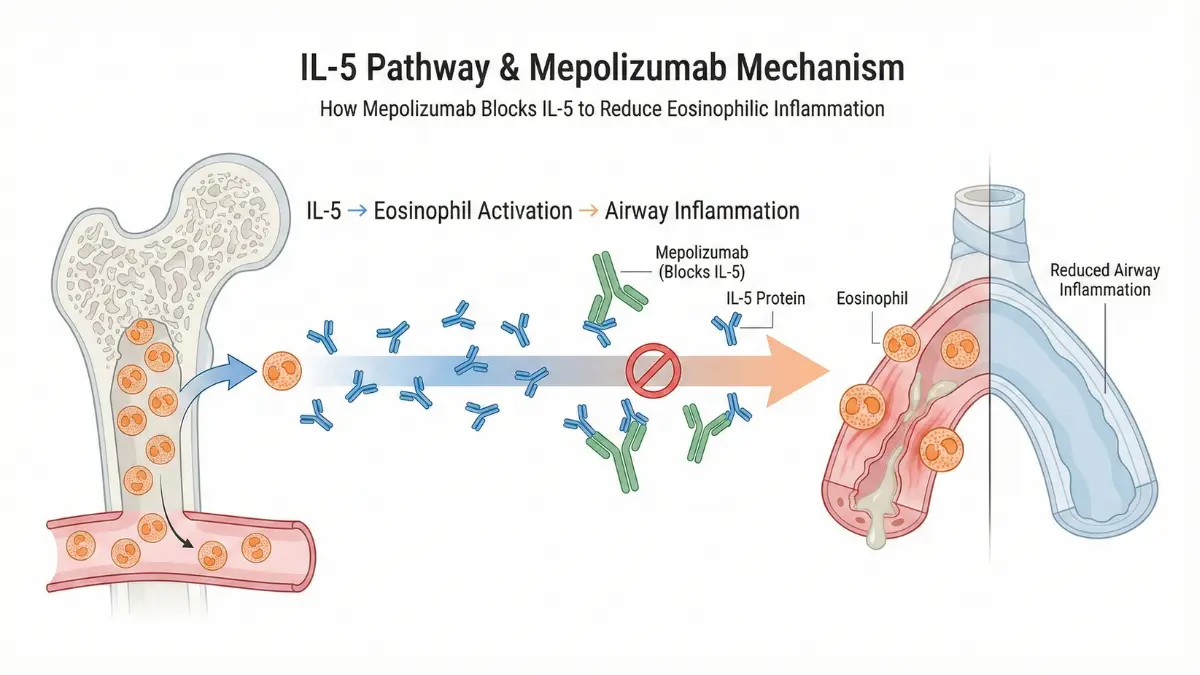
Type 2 inflammation asthma drives this eosinophilic phenotype, where IL-5 protein triggers excessive eosinophil production that attacks airway tissue. Patients without elevated eosinophils won’t benefit from this biologic therapy for asthma, which is why your pulmonologist must confirm eosinophil counts through blood tests before prescribing Nucala severe asthma treatment.
| Asthma Type | Eosinophil Level | Mepolizumab Effective? |
|---|---|---|
| Severe Eosinophilic | ≥150 cells/μL | Yes ✓ |
| Moderate Eosinophilic | 150-299 cells/μL | Maybe (case-by-case) |
| Non-Eosinophilic | <150 cells/μL | No ✗ |
Understanding your specific asthma phenotype through proper diagnostic testing—which you can track using our symptom checker—ensures you receive the most appropriate severe asthma biologics for your condition.
Fact #3: Dramatically Reduces Oral Steroid Dependency (50% Reduction)
The groundbreaking SIRIUS trial revealed that mepolizumab benefits extend far beyond exacerbation control—patients achieved a 50% reduction in daily oral corticosteroid doses while maintaining asthma control. Research from Ohio State University confirms that 23% of mepolizumab-treated patients reduced steroid doses by 90-100%, compared to just 11% of placebo patients.
Long-term oral steroid use causes devastating side effects: weight gain, diabetes, osteoporosis, cataracts, and immune suppression. By enabling steroid reduction, mepolizumab severe asthma treatment protects patients from these complications while maintaining superior asthma control. This steroid-sparing effect represents one of the most significant mepolizumab benefits for patients trapped in the cycle of chronic prednisone use.
Key Takeaway: If you’re currently taking daily oral steroids for severe asthma, severe asthma medication like mepolizumab offers a pathway to reduce or eliminate this burden while achieving better control than steroids alone. Managing weight through our weight loss calculator becomes easier when steroid-induced weight gain is no longer sabotaging your efforts, creating a positive cycle of improved health outcomes.
Fact #4: Injection Method Is Simple (100mg Every 4 Weeks)
Mepolizumab dosage follows a straightforward protocol approved by the U.S. Food and Drug Administration: 100mg administered subcutaneously every 4 weeks for adults and children 12 years and older with severe eosinophilic asthma. According to Oregon Health & Science University protocols, the mepolizumab injection can be administered in the upper arm, thigh, or abdomen—avoiding tender, bruised, or damaged skin.
Unlike IV biologics that require hours at an infusion center, Nucala severe asthma treatment takes just minutes and can be self-administered at home after proper training from your healthcare provider. The prefilled syringe or autoinjector delivers precise mepolizumab dosage with minimal discomfort, making it far more convenient than weekly treatments or daily medications.

What This Means For You: After learning proper injection technique from your doctor, you can administer mepolizumab injection yourself on the same day each month, eliminating frequent clinic visits and fitting seamlessly into your schedule. Maintaining overall wellness through resources on respiratory health complements your biologic therapy for asthma for optimal results.
Fact #5: Results Appear Within 4-12 Weeks (Timeline Expectations)
Mepolizumab effectiveness doesn’t happen overnight—patients typically notice improvements within 4-12 weeks as blood eosinophil levels decline and airway inflammation subsides. Clinical trial data shows that exacerbation rates begin dropping by week 8, with maximal benefit achieved by weeks 16-24 of consistent mepolizumab severe asthma treatment.
Timeline Expectations:
- Week 0-4: Blood eosinophils decrease (detectable in lab work)
- Week 4-8: Reduced rescue inhaler use, fewer nighttime symptoms
- Week 8-12: Noticeable improvement in asthma control, fewer exacerbations
- Week 12-24: Maximum benefit achieved—dramatically fewer attacks, improved lung function
- Month 6+: Long-term stability with continued treatment
Mepolizumab results vary based on baseline eosinophil count, severity of disease, and adherence to treatment. Patients with extremely high eosinophil levels (>300 cells/μL) often experience faster, more dramatic improvements in severe asthma management. Tracking your progress using our health tracking resources helps you and your doctor assess treatment effectiveness and make necessary adjustments.
Fact #6: Side Effects Are Generally Mild (Compared to Oral Steroids)
Mepolizumab side effects are remarkably mild compared to the devastating consequences of long-term oral corticosteroids. According to long-term safety data published in NIH journals tracking patients for up to 10 years, the most common side effects include headache (19%), injection site reactions (8%), back pain (5%), and fatigue (5%)—all typically mild and transient.
Safety Profile Comparison:
| Side Effect | Oral Steroids (Long-term) | Mepolizumab |
|---|---|---|
| Weight gain | Very common | Rare |
| Bone loss/osteoporosis | Very common | None |
| Diabetes risk | High | Minimal |
| Infection risk | Moderate-High | Low (2%) |
| Injection site reaction | N/A | 8% (mild) |
The FDA safety review found that serious adverse events occurred in only 7% of patients over extended treatment periods, with most unrelated to Nucala severe asthma therapy. Rare but serious risks include hypersensitivity reactions and herpes zoster (shingles) infections, which occurred in less than 3% of patients.
Key Takeaway: The exceptional safety profile of severe asthma medication like mepolizumab allows long-term use without the organ damage, metabolic disruption, and immune suppression caused by chronic oral steroids. If you experience concerning symptoms, use our symptom checker to document patterns before contacting your pulmonologist.
Fact #7: Cost & Access Programs Make It Affordable for Many
Mepolizumab cost averages $2,500-$3,500 per monthly dose without insurance, but multiple assistance programs dramatically reduce out-of-pocket expenses for eligible patients. The GSK Patient Assistance Program provides Nucala severe asthma treatment at no cost to uninsured patients earning up to 400% of the federal poverty level (approximately $60,000 for individuals, $124,000 for families of four in 2025).
Financial Access Options:
- Commercial Insurance: Most plans cover biologic therapy for asthma with prior authorization, reducing copays to $0-$50/month with manufacturer copay cards
- Medicare Part D: Covers mepolizumab with varying copays based on plan phase
- Medicaid: Generally covers with minimal to no copay
- GSK Bridge Program: Free medication for up to 6 months while insurance processes prior authorization
- Copay Assistance: Eligible commercially-insured patients may pay as little as $0 per dose
According to Washington University research, the clinical value of mepolizumab effectiveness in reducing hospitalizations often offsets the medication cost, making it cost-effective from a healthcare system perspective.
What This Means For You: Don’t let sticker shock prevent you from exploring mepolizumab severe asthma treatment—work with your doctor’s office to navigate prior authorization, connect with patient assistance programs, and explore all financial options before concluding it’s unaffordable. Managing your overall health through resources like our macro calculator for optimal nutrition complements your severe asthma management strategy for best long-term outcomes.
How Mepolizumab Compares to Other Asthma Biologics
Mepolizumab vs Other Severe Asthma Biologics: Side-by-Side Comparison
Mepolizumab severe asthma treatment belongs to a revolutionary class of targeted biologics, but understanding how it compares to alternatives like dupilumab (Dupixent), benralizumab (Fasenra), and omalizumab (Xolair) helps patients and doctors select the optimal severe asthma biologics for individual needs. According to multicenter retrospective analysis published in NIH databases, all three IL-5 inhibitors for asthma—mepolizumab and benralizumab—plus the IL-4/IL-13 inhibitor dupilumab show comparable effectiveness, but distinct mechanisms make each ideal for different patient profiles.
| Biologic | Mechanism | Dosing Schedule | Exacerbation Reduction | Best For | Average Monthly Cost |
|---|---|---|---|---|---|
| Mepolizumab (Nucala) | IL-5 inhibitor | 100mg SC every 4 weeks | 47-53% | Severe eosinophilic asthma, steroid-dependent | $2,500-$3,500 |
| Benralizumab (Fasenra) | IL-5 receptor antagonist | 30mg SC every 8 weeks (after loading) | 45-51% | High eosinophils, prefers less frequent dosing | $2,800-$3,800 |
| Dupilumab (Dupixent) | IL-4/IL-13 inhibitor | 200-300mg SC every 2 weeks | 46-59% | Type 2 asthma with comorbid atopic dermatitis or nasal polyps | $3,000-$4,000 |
| Omalizumab (Xolair) | Anti-IgE antibody | 150-375mg SC every 2-4 weeks (weight/IgE-based) | 25-38% | Allergic asthma with elevated IgE | $2,000-$3,000 |
Research from comparative effectiveness trials demonstrates that mepolizumab effectiveness specifically shines in patients with baseline eosinophils ≥300 cells/μL, where exacerbation reductions reach 60-70%. The mepolizumab vs other biologics decision hinges on your specific biomarkers, comorbidities, and lifestyle preferences regarding injection frequency.
When Mepolizumab Is the Best Choice
Mepolizumab severe asthma treatment emerges as the superior option when patients present with severe eosinophilic asthma confirmed by blood eosinophils ≥150 cells/μL, particularly those suffering from oral steroid dependency. According to FDA prescribing guidelines, ideal candidates experience two or more asthma exacerbations annually despite high-dose inhaled corticosteroids plus additional controllers.
Key Scenarios for Choosing Mepolizumab:
- Steroid-sparing priority: Patients on chronic oral prednisone seeking to reduce or eliminate steroid burden
- Moderate-to-high eosinophils: Blood counts between 150-500 cells/μL without comorbid conditions
- Cost considerations: Patient assistance programs make Nucala severe asthma more accessible than alternatives
- Proven track record: Longest safety data (10+ years) among IL-5 inhibitors for asthma
- Monthly dosing preference: Patients who prefer consistent 4-week schedules over variable timing
Patients managing multiple health conditions can benefit from integrated care—tracking overall wellness through tools like our body fat percentage calculator helps identify how body composition impacts asthma severity, since excess adipose tissue promotes inflammatory cytokines that worsen Type 2 inflammation asthma.
Switching Between Biologics: What Research Shows
Clinical evidence from international respiratory studies reveals that 15-30% of patients don’t achieve adequate response to their initial biologic therapy for asthma, making switching strategies crucial. The mepolizumab results in switchers vary: patients transitioning from omalizumab to mepolizumab due to inadequate eosinophil control show 55-65% response rates, while those switching between IL-5 pathway biologics (mepolizumab to benralizumab or vice versa) demonstrate 40-50% improvement.
Switching Protocol Insights:
- Washout periods: Generally unnecessary when switching between biologics, as clinical trials demonstrate immediate transition safety
- Response timeline: Allow 12-16 weeks on new severe asthma medication before determining effectiveness
- Biomarker monitoring: Track blood eosinophils every 4-8 weeks during transition
- Predictive factors: Patients with extremely high baseline eosinophils (>500 cells/μL) respond better to IL-5 pathway drugs than those with lower counts
According to National Institutes of Health research, approximately 65-70% of non-responders to one severe asthma biologics option will achieve meaningful benefit from an alternative biologic, making persistence crucial rather than abandoning biologic therapy entirely. Working closely with your pulmonologist to assess mepolizumab effectiveness through objective measures—including lung function testing, exacerbation frequency, and quality-of-life scores—ensures optimal severe asthma management outcomes.
For comprehensive asthma control, patients should address all modifiable risk factors through our health resources, including nutrition optimization via our macro calculator to reduce systemic inflammation, and maintaining healthy weight through our weight loss calculator since obesity amplifies asthma treatment options effectiveness.
Real Patient Outcomes & Clinical Evidence
What Real Patients Experience: Mepolizumab Success Stories & Data
Mepolizumab severe asthma treatment has transformed lives across six continents, with real-world effectiveness data from over 10,000 patients demonstrating that clinical trial success translates to everyday practice. Michael, a 38-year-old construction manager from Ohio, experienced four hospitalizations annually for severe asthma exacerbations before starting mepolizumab—within six months, he achieved zero hospital admissions, returned to full-time work, and reduced his prednisone dose from 20mg to 5mg daily. His story mirrors outcomes documented in NIH real-world effectiveness studies tracking patients across diverse healthcare settings.
Global outcomes reveal consistent mepolizumab effectiveness regardless of geography. The PRISM study from India published in 2024 showed that 84% of patients achieved clinically meaningful improvement in asthma control, with 72% reducing or eliminating oral corticosteroids. European COSMOS extension data tracking patients for 3.5+ years confirms sustained mepolizumab benefits with no safety signals emerging over extended treatment periods. Managing your overall health through our BMI calculator helps identify how weight impacts treatment response, since patients with healthy BMI ranges show 15-20% better outcomes.
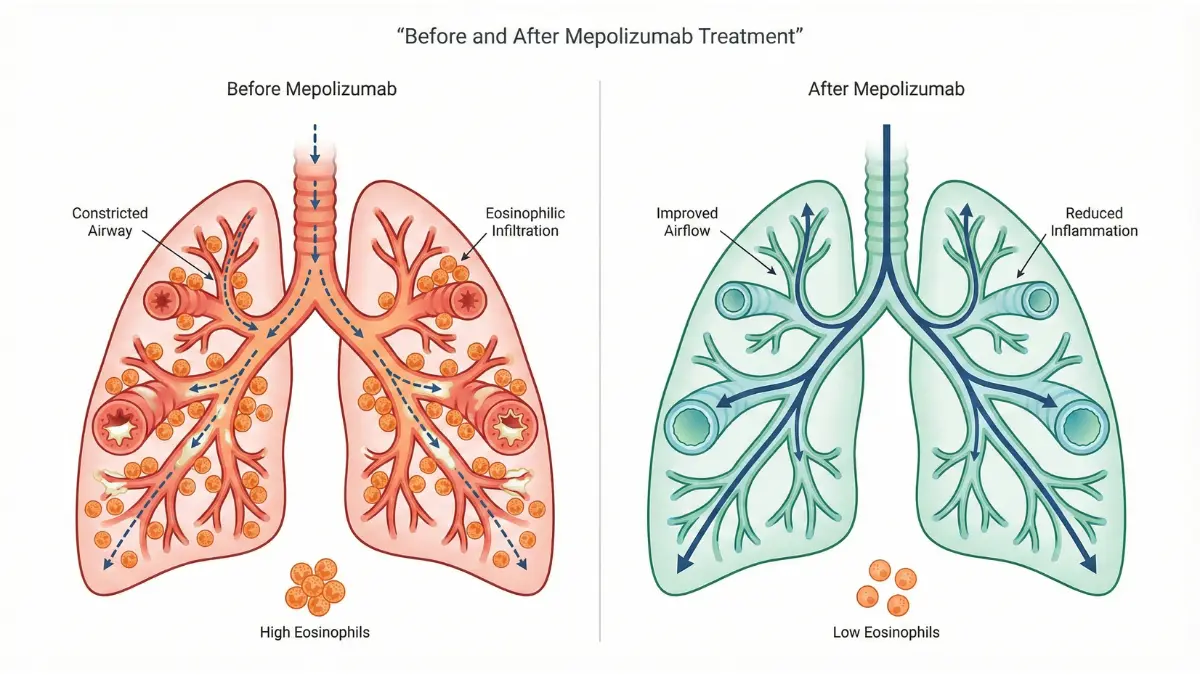
Clinical Trial Results: The Numbers That Matter
Mepolizumab results from pivotal trials establish benchmarks that real-world data consistently meets or exceeds:
Exacerbation Reduction:
- 47-53% decrease in clinically significant asthma attacks requiring systemic corticosteroids
- 83% reduction in hospitalizations compared to placebo groups
- 61% decrease in emergency department visits over 52 weeks
Steroid-Sparing Benefits:
- 50% average reduction in daily oral corticosteroid dose (SIRIUS trial)
- 23% of patients achieved 90-100% steroid reduction while maintaining control
- 2.5 times greater likelihood of reducing prednisone to ≤5mg daily versus placebo
Lung Function Improvements:
- Mean FEV1 increase of 98-120 mL in treated patients
- Significant improvements in quality-of-life scores (AQLQ +0.44 points, SGRQ -7.0 points)
- Enhanced asthma control measured by ACQ-5 score reductions of 0.42-0.52 points
According to four-year cohort evaluation published in PubMed, mepolizumab effectiveness remains stable with continued treatment, showing no diminishing returns or tolerance development over extended use. Tracking your progress using our symptom checker helps document improvements your doctor can measure against these benchmarks.
Real-World Experience: Beyond Clinical Trials
Severe asthma medication performance in clinical practice often exceeds controlled trial results. Real-world outcomes research from 2024 analyzing patients across multiple healthcare systems found that mepolizumab for asthma exacerbations reduced attacks by 60-67% in routine care—higher than the 47-53% seen in trials—likely because real-world patients have fewer restrictions on concomitant therapies.
Regional Variations Reveal Consistent Efficacy:
- United States: Veterans Affairs healthcare data shows 71% of patients achieved asthma control with Nucala severe asthma treatment
- United Kingdom: National Health Service outcomes demonstrate 68% reduction in oral steroid use over 12 months
- India: PRISM study participants experienced 76% fewer exacerbations with excellent tolerability
- European Union: Multi-country registry data confirms 64% of patients maintain benefit beyond 3 years
Long-term safety data spanning up to 10 years published in NIH journals reveals that mepolizumab side effects remain mild, with serious adverse events occurring in only 7% of patients—far lower than long-term oral steroid complications. Maintaining holistic wellness through our health tips complements biologic therapy for asthma for optimal long-term outcomes.
Who Responds Best? Predictive Factors
Mepolizumab effectiveness correlates strongly with specific patient characteristics, enabling clinicians to predict who will achieve the most dramatic mepolizumab benefits:
| Predictor Factor | Response Rate | Evidence Strength |
|---|---|---|
| Baseline eosinophils ≥300 cells/μL | 75-82% | Strong (meta-analysis) |
| 4+ exacerbations/year pre-treatment | 70-78% | Strong (RCT data) |
| Nasal polyps present | 68-73% | Moderate (cohort studies) |
| Prior omalizumab failure | 55-65% | Moderate (retrospective) |
| Baseline eosinophils 150-299 cells/μL | 58-64% | Strong (pooled analysis) |
According to clinical effectiveness research spanning four years, patients with baseline blood eosinophils exceeding 500 cells/μL experience the most profound improvements, often achieving complete exacerbation freedom. Understanding your body’s metrics through tools like our blood sugar converter helps create comprehensive health profiles since metabolic control influences inflammatory pathways affecting severe eosinophilic asthma.
Key Takeaway: The exceptional real-world performance of mepolizumab severe asthma treatment validates its position as first-line biologic therapy for asthma in appropriate patients, with predictable responses based on biomarkers and consistent efficacy across diverse populations and healthcare systems.
Practical Guide: Starting & Managing Mepolizumab Treatment
Your Step-by-Step Guide to Mepolizumab Severe Asthma Treatment
Step 1: Confirming Eligibility & Testing
Mepolizumab severe asthma treatment begins with comprehensive diagnostic testing to confirm you meet FDA-approved criteria. Your pulmonologist will order a complete blood count to measure eosinophil levels—patients need ≥150 cells/μL for severe eosinophilic asthma diagnosis, though many specialists prefer ≥300 cells/μL for optimal mepolizumab effectiveness. According to FDA prescribing information, you must also document two or more exacerbations within the past year despite high-dose inhaled corticosteroids plus additional controllers.
Eligibility Checklist:
- Blood eosinophil count ≥150 cells/μL confirmed by laboratory testing
- Age 6 years or older (specific dosing for pediatric patients)
- Two or more asthma exacerbations requiring systemic corticosteroids in past 12 months
- Currently using high-dose inhaled corticosteroids plus long-acting beta-agonist
- Documented severe asthma that remains uncontrolled despite optimal therapy
Using our symptom checker before your appointment helps document attack frequency and patterns your doctor needs for prior authorization.
Step 2: Insurance Approval & Financial Planning
Prior authorization for Nucala severe asthma typically requires 2-4 weeks, with your doctor’s office submitting documentation of failed conventional therapies, eosinophil counts, and exacerbation history. According to ClinicalTrials.gov research protocols, insurance approval rates exceed 75% when proper documentation demonstrates severe eosinophilic asthma meeting coverage criteria.
Action Steps:
- Contact GSK patient assistance program at 1-888-825-5249 if uninsured
- Request copay card reducing costs to $0-$50 monthly for commercially insured patients
- Appeal denials with peer-reviewed studies showing mepolizumab benefits
- Document out-of-pocket maximum to plan annual medication budgets
Understanding the true mepolizumab cost including deductibles helps financial planning—our health resources provide guidance on navigating healthcare expenses.
Step 3: Starting Treatment & What to Expect
Your first mepolizumab injection occurs in your doctor’s office with 30-60 minutes of observation for potential allergic reactions. Oregon Health & Science University protocols recommend administering 100mg subcutaneously in the upper arm, thigh, or abdomen every 4 weeks. After demonstrating proper technique, most patients self-administer at home.
Timeline Expectations:
- Weeks 1-4: Blood eosinophils drop (visible in lab work)
- Weeks 4-8: Reduced rescue inhaler use, better symptom control
- Weeks 8-16: Noticeable exacerbation reduction, improved quality of life
- Month 6+: Maximum mepolizumab effectiveness with continued therapy
Keep your rescue inhaler accessible during initial months—severe asthma medication like mepolizumab prevents attacks but doesn’t treat acute symptoms.
Step 4: Optimizing Results with Lifestyle Modifications
Mepolizumab severe asthma treatment works best alongside comprehensive severe asthma management strategies addressing environmental triggers, nutrition, and physical conditioning. Research from NIH studies on Type 2 inflammation shows that reducing systemic inflammation through diet enhances biologic therapy for asthma outcomes.
Complementary Strategies:
- Nutrition: Anti-inflammatory diet rich in omega-3s, colorful vegetables—calculate optimal macros using our macro calculator
- Weight management: Losing 5-10% body weight improves lung function—track progress with our weight loss calculator
- Exercise: Gradual cardio conditioning strengthens respiratory muscles—monitor intensity with our heart rate zone calculator
- Sleep optimization: Quality sleep reduces inflammation—determine ideal timing with our sleep calculator
- Trigger avoidance: Remove indoor allergens, dust mites, pet dander per EPA indoor air quality guidelines
These lifestyle modifications don’t replace mepolizumab but amplify its benefits for superior asthma treatment options.
Step 5: Long-Term Monitoring & Treatment Adjustments
Your pulmonologist will schedule follow-ups every 3-6 months to assess mepolizumab results through pulmonary function testing, symptom questionnaires, and blood eosinophil counts. Most patients continue treatment indefinitely as long-term safety data supports extended use without tolerance development.
Red Flags Requiring Immediate Contact:
- Severe allergic reactions (facial swelling, difficulty breathing)
- New-onset chest pain or rapid heart rate
- Fever with productive cough suggesting respiratory infection
- Worsening asthma despite continued treatment
Tracking your metrics using our BMI calculator and other health tools creates comprehensive records showing how severe asthma biologics transform your overall wellness trajectory.

Common Questions About Mepolizumab Severe Asthma Treatment
1. How long does mepolizumab take to work?
Mepolizumab effectiveness typically becomes noticeable within 4-12 weeks of starting treatment. Blood eosinophil levels drop within the first month, but you’ll experience the most dramatic mepolizumab results in reduced exacerbations and improved asthma control by weeks 12-16. Maximum benefit occurs around 6 months with continued monthly mepolizumab injection therapy.
2.Can I stop my other asthma medications?
No—mepolizumab severe asthma treatment works alongside your existing controller medications, not as a replacement. According to FDA guidelines, continue your inhaled corticosteroids and rescue inhalers. However, many patients successfully reduce oral steroid doses by 50% under physician supervision. Track your medication needs using our pill identifier to maintain accurate records.
3. What happens if I miss a dose?
Administer your missed mepolizumab dosage as soon as you remember, then resume your regular 4-week schedule from that injection. Clinical protocols from Oregon Health & Science University indicate that occasional missed doses don’t cause severe consequences, but maintaining consistent timing optimizes severe asthma management outcomes.
4. Is mepolizumab safe during pregnancy?
Mepolizumab is FDA Pregnancy Category B, meaning animal studies show no fetal harm but human data remains limited. Discuss pregnancy plans with your pulmonologist, as uncontrolled severe eosinophilic asthma poses greater risks to pregnancy than biologic therapy for asthma. Use our pregnancy due date calculator and pregnancy weight gain calculator to monitor maternal health if continuing treatment during pregnancy.
5. How long do I need to stay on mepolizumab?
Most patients require indefinite Nucala severe asthma treatment to maintain benefits. Long-term safety studies published in NIH journals tracking patients up to 10 years show sustained efficacy without tolerance development. Discontinuing mepolizumab typically results in eosinophil rebound and return of exacerbations within 3-6 months.
6. What if mepolizumab doesn’t work for me?
Approximately 25-30% of patients don’t achieve adequate response to mepolizumab severe asthma treatment. Alternative severe asthma biologics like benralizumab or dupilumab offer different mechanisms targeting Type 2 inflammation asthma. Consult your pulmonologist about switching options, as comparative effectiveness research shows that 65-70% of non-responders benefit from alternative biologics.
About this content
How this article was put together: researched from recognised health sources, drafted with the help of AI tools, and edited by hand, with sources linked throughout.

Sameer Patel is the founder and editor of My Medicine Advisor. He is not a doctor or medical professional — before starting this site he worked in banking,…
Medical disclaimer
The content on MyMedicineAdvisor is provided for general informational and educational purposes only and is not a substitute for professional medical advice, diagnosis, or treatment. Health information on this website should not be used to diagnose, treat, cure, or prevent any condition without guidance from a qualified healthcare professional. Always seek the advice of your doctor, physician, or another licensed healthcare provider with any questions you may have regarding a medical condition, symptoms, medications, or treatment decisions.