
On This Page – Quick Medical Summary
A Stage 4 diagnosis doesn’t mean treatment has stopped
A metastatic breast cancer diagnosis does not mean treatment has ended. It means your treatment strategy is now driven by three specific data points: your tumor’s hormone receptor status, HER2 status, and in many cases, BRCA mutation status. These results determine which of five FDA-approved treatment categories applies to your situation in 2026.
For a full picture of where Stage 4 fits within the breast cancer staging framework, read our guide to breast cancer stages and treatment.
ℹ️ Medical Disclaimer: The diagnostic criteria, treatment options, medication information, and survival statistics in this article reflect current clinical guidelines and are provided for educational purposes only. Individual diagnostic conclusions, treatment decisions, and medication choices depend on your specific receptor status, prior treatment history, organ function, comorbidities, and specialist assessment. Consult a board-certified medical oncologist specializing in breast cancer before acting on any clinical information in this article.
Drug names, FDA approval status, and clinical trial eligibility described here are general — your eligibility depends on factors only your oncology team can evaluate. Insurance coverage and out-of-pocket costs vary significantly by plan and by drug; consult your insurance provider or an oncology patient navigator for individual guidance. If you are experiencing a medical emergency, call 911 immediately.
What metastatic breast cancer means — and how doctors confirm it
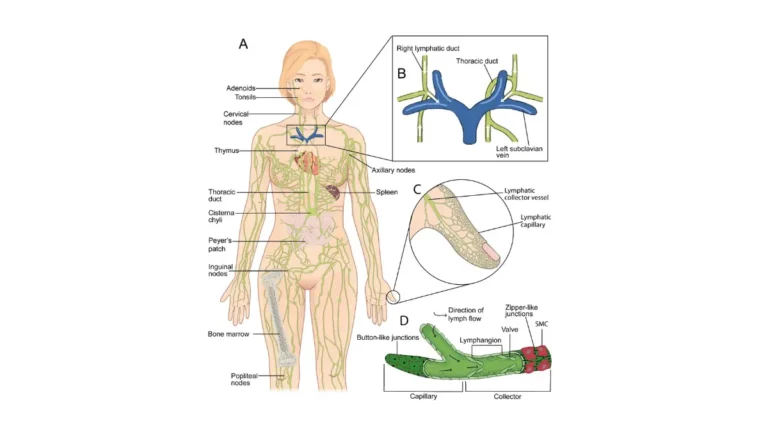
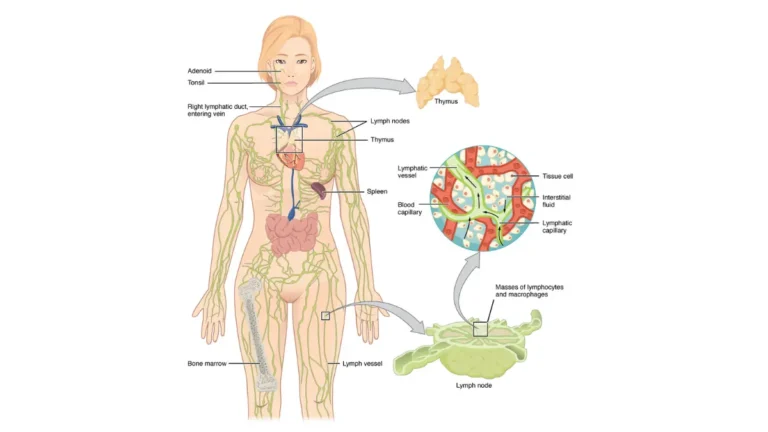
Metastatic breast cancer and Stage 4 breast cancer are two clinical terms for the same condition — cancer that originated in the breast and has spread through the bloodstream or lymphatic system to distant organs, most commonly the bones, lungs, liver, or brain.
What makes breast cancer “metastatic”
Cancer becomes metastatic when cells from the primary tumor travel through the body and establish secondary tumors at a distant site. This is distinct from locally advanced breast cancer, which may involve nearby lymph nodes but has not spread to distant organs.
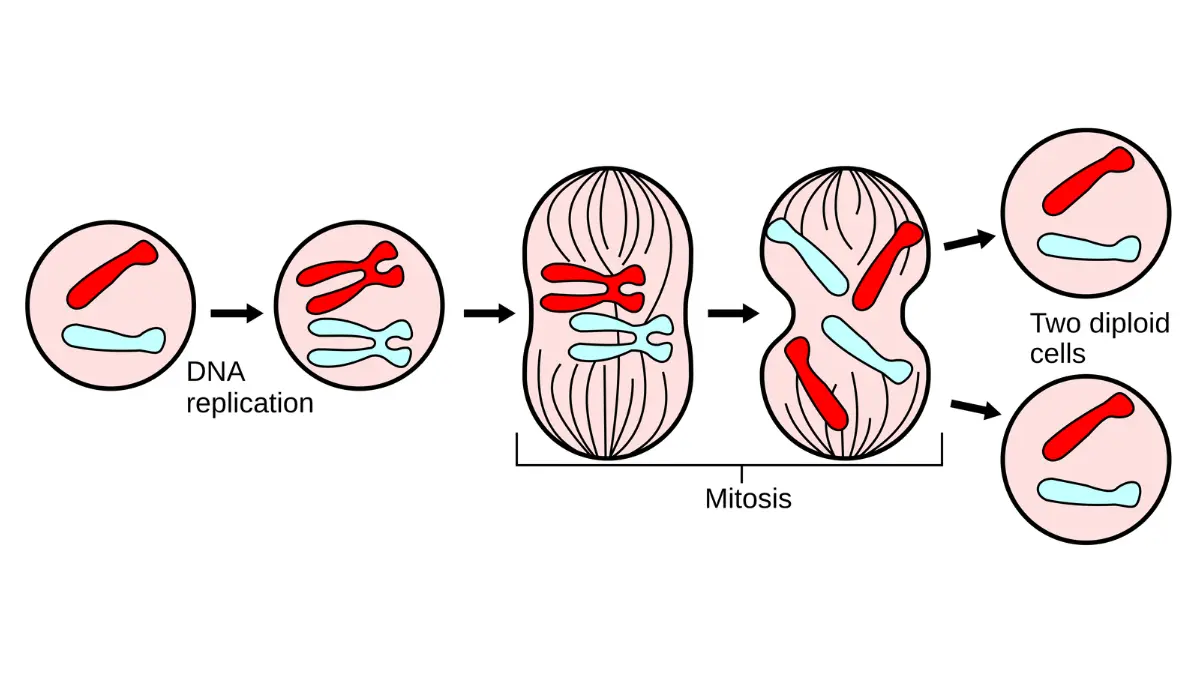
Adapted from Wikimedia Commons Major Events in Mitosis, licensed under CC BY-SA 3.0.
The location of metastatic spread determines which symptoms appear first and which treatment strategies are prioritized alongside systemic therapy.
Where does Stage 4 breast cancer most commonly spread?
Bone is the most frequent site of spread, followed by the lungs, liver, and brain. Patients with hormone receptor-positive disease tend to develop bone and soft-tissue metastases. Triple-negative breast cancer carries a higher rate of lung and brain involvement relative to other subtypes.
If you are experiencing new or worsening symptoms, use our Symptom Checker to identify when to contact your oncology team. For a complete review of breast cancer symptoms from early-stage to advanced disease, see our guide to breast cancer symptoms and warning signs.
How doctors confirm a metastatic diagnosis
Imaging — a CT scan, bone scan, or PET-CT — identifies spread to distant organs. A biopsy of the metastatic site then confirms cancer cells and, critically, re-tests receptor status.
🔬 How It Works: Receptor status — the ER, PR, and HER2 results that determine your treatment — can change between your original breast tumor and the metastatic site. A tumor that tested hormone receptor-positive at your original surgery may become receptor-negative at metastasis, or vice versa. Re-testing receptor status at the metastatic biopsy is standard of care in 2026 before any systemic therapy begins, because the results from your original surgery may no longer reflect your tumor’s current biology.
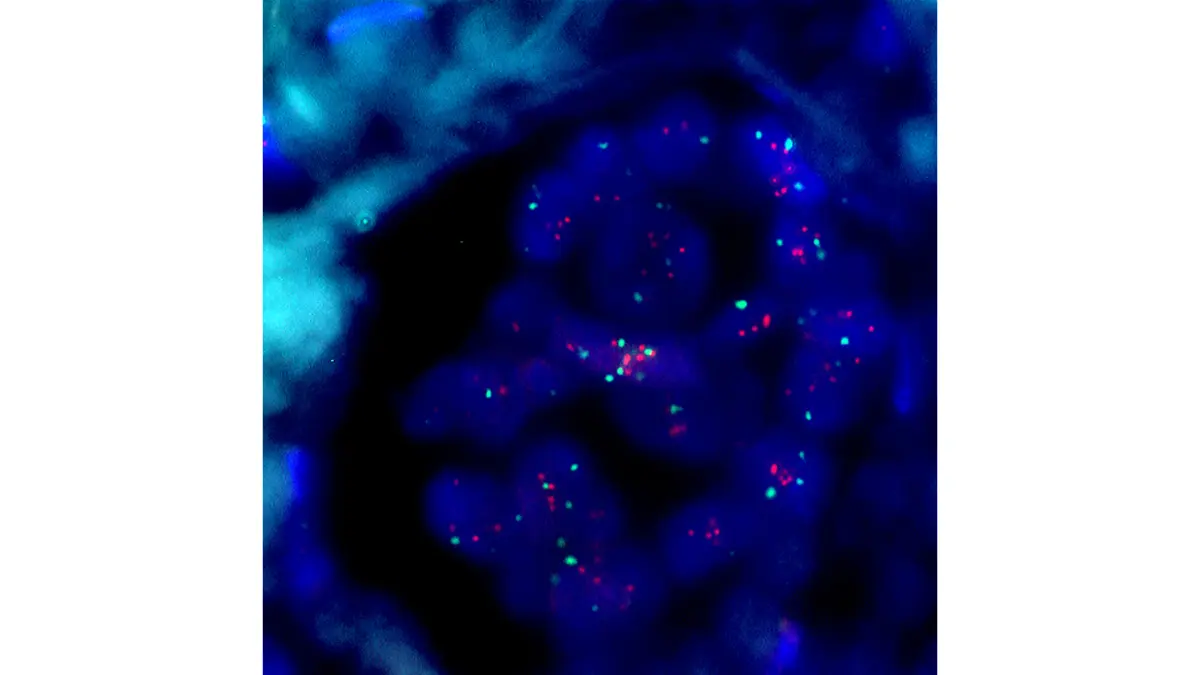
Adapted from Wikimedia Commons FISH Her2, licensed under CC BY-SA 3.0.
✅ Patient Action: Ask your board-certified breast oncologist whether a biopsy of the metastatic site has been performed and whether ER, PR, and HER2 results have been re-tested at that specific site. The receptor results from your original surgery may not reflect your tumor’s current biology — and that difference directly determines which treatment you are eligible for.
FDA-approved treatments for metastatic breast cancer in 2026
Treatment for metastatic breast cancer in 2026 falls into five evidence-based categories, each matched to the tumor’s molecular profile. Your oncologist selects from these based on your receptor status, prior treatment history, and organ function.
- Endocrine therapy combined with CDK4/6 inhibitors — for hormone receptor-positive, HER2-negative disease
- HER2-directed targeted therapy — for HER2-overexpressing tumors
- Chemotherapy — used across subtypes, often combined with targeted agents
- Immunotherapy — for triple-negative tumors with PD-L1 expression
- Antibody-drug conjugates (ADCs) — tumor-targeting antibodies that deliver chemotherapy directly to cancer cells
Endocrine therapy and CDK4/6 inhibitors
For hormone receptor-positive, HER2-negative metastatic disease, the first-line backbone in 2026 combines a CDK4/6 inhibitor — palbociclib (Ibrance), ribociclib (Kisqali), or abemaciclib (Verzenio) — with an aromatase inhibitor or fulvestrant.
🔬 How It Works: CDK4/6 inhibitors block cyclin-dependent kinases 4 and 6, halting cancer cell division at the G1-to-S phase transition of the cell cycle. Combined with endocrine therapy, they prevent tumor cells from proliferating in a way that endocrine therapy alone cannot — which is why this combination has become the first-line standard for hormone receptor-positive metastatic disease.
Chemotherapy, immunotherapy, and antibody-drug conjugates
Chemotherapy remains active across all metastatic breast cancer subtypes and is used both as a combination partner to targeted agents and as a standalone option after other therapies have been exhausted. For a complete guide to what to expect during treatment, see our article on what to expect from chemotherapy.
Immunotherapy is now FDA-approved for specific patients — those with PD-L1–positive triple-negative metastatic breast cancer. To understand the biological mechanism, read our guide on how immunotherapy works against cancer.
Adapted from Wikimedia Commons Monoclonal Antibodies, licensed under CC BY-SA 3.0.
Antibody-drug conjugates — including trastuzumab deruxtecan (T-DXd / Enhertu) and sacituzumab govitecan (Trodelvy) — function as guided delivery systems. A tumor-targeting antibody carries a cytotoxic payload directly to cancer cells, concentrating the drug where it is needed and reducing exposure to normal tissue.
📊 Clinical Data Point: Trastuzumab deruxtecan (T-DXd / Enhertu) has demonstrated significant overall survival benefit in HER2-positive and HER2-low metastatic breast cancer compared to prior standard-of-care regimens in Phase 3 trial data published through 2025.
✅ Patient Action: Before agreeing to any systemic treatment, ask your oncologist: “Has my tumor been tested for ER, PR, HER2 status, PD-L1 expression, and BRCA1/2 germline mutation?” These five results determine which FDA-approved therapies in 2026 have the strongest evidence base for your specific case.
For the complete list of FDA-approved regimens organized by line of therapy, refer to NCI’s treatment guidelines for metastatic breast cancer and the FDA’s approved therapies for advanced breast cancer.
Which treatment matches your type of breast cancer?
Your treatment pathway in metastatic breast cancer is determined by three receptor results: estrogen receptor (ER) and progesterone receptor (PR) status, HER2 status, and BRCA1/2 germline mutation status. The following maps those results directly to current treatment protocols.
Hormone receptor-positive, HER2-negative: the CDK4/6 inhibitor era
For HR-positive, HER2-negative metastatic breast cancer — the most common molecular subtype — the 2026 first-line standard combines a CDK4/6 inhibitor with an aromatase inhibitor or fulvestrant. At progression after CDK4/6 inhibitor therapy, options include trastuzumab deruxtecan (T-DXd) for HER2-low tumors, and capivasertib (Truqap) plus fulvestrant for tumors harboring PI3K, AKT1, or PTEN alterations.
HER2-positive metastatic breast cancer: targeted therapy first
For HER2-positive metastatic disease, the standard first-line regimen combines trastuzumab (Herceptin) plus pertuzumab (Perjeta) plus a taxane chemotherapy. At progression, trastuzumab deruxtecan (T-DXd / Enhertu) is the preferred second-line agent. For a complete breakdown of HER2-directed treatment sequencing, see our guide to HER2-positive breast cancer treatment.
Triple-negative breast cancer: immunotherapy, ADCs, and BRCA testing
Triple-negative breast cancer (TNBC) lacks hormone receptors and HER2 overexpression, making CDK4/6 inhibitors and trastuzumab-based regimens inapplicable. Treatment follows a separate pathway determined by two additional tests: PD-L1 expression and BRCA germline mutation status.
- PD-L1–positive TNBC (CPS ≥10): Pembrolizumab (Keytruda) combined with chemotherapy is the FDA-approved first-line option
- BRCA1/2-mutated TNBC: Olaparib (Lynparza) or talazoparib (Talzenna) are FDA-approved PARP inhibitors
- All TNBC at progression: Sacituzumab govitecan (Trodelvy) is an FDA-approved antibody-drug conjugate
For a full breakdown of TNBC-specific regimens, see our guide to triple-negative breast cancer treatment options.
🔬 How It Works: PARP inhibitors such as olaparib work only in tumors with BRCA1 or BRCA2 mutations. BRCA proteins normally repair damaged DNA — when BRCA is mutated, that repair mechanism is already compromised. PARP inhibitors then block a second DNA repair pathway, leaving cancer cells with no viable repair route and forcing cell death. This mechanism has no activity in tumors without BRCA mutations, which is why germline testing is required before PARP inhibitor therapy begins.
BRCA mutation status must be confirmed before PARP inhibitor eligibility can be assessed. Use our Genetic Risk Assessment Tool to explore how inherited gene variants may affect your treatment options. For help interpreting your results, read our guide to understanding your BRCA test results.
✅ Patient Action: Ask your board-certified breast oncologist to walk you through your ER, PR, and HER2 results from your metastatic biopsy specifically, and confirm whether BRCA1/2 germline testing has been completed. Your eligibility for PARP inhibitor therapy — and which clinical trials you qualify for — depends directly on these results.
How to find a clinical trial for metastatic breast cancer
Clinical trials for metastatic breast cancer are not a last resort. They are a standard treatment option at every line of therapy — including first line — and are actively recommended by oncologists in 2026.
Why clinical trials are a standard-of-care option in Stage 4 disease
A Phase 3 clinical trial provides the same level of medical monitoring as standard treatment, with access to therapies not yet commercially available. Phase 1 trials evaluate safety. Phase 2 trials generate initial efficacy signals in small populations. Phase 3 trials compare new agents to current standards of care — participation is equivalent to receiving standard treatment with additional oversight.
In 2026, the most active clinical trial areas for metastatic breast cancer include next-generation antibody-drug conjugates, PI3K/AKT pathway inhibitors for HR-positive disease, bispecific antibodies targeting HER2, and novel combination immunotherapy regimens for triple-negative disease.
How to search for open metastatic breast cancer trials in 2026
- Confirm your molecular subtype and prior treatment history before searching — eligibility criteria are subtype-specific and depend on which therapies you have already received
- Search active clinical trials for metastatic breast cancer by condition, location, and prior treatment history using the ClinicalTrials.gov registry
- Share the results list with your oncologist to evaluate full eligibility criteria — inclusion and exclusion requirements are complex and require specialist review
✅ Patient Action: Ask your board-certified medical oncologist at every treatment visit — including before your first-line therapy begins — whether you are currently eligible for any open clinical trials. Eligibility criteria change as your disease evolves, and the enrollment window for some trials closes once a specific prior treatment has been received.
Stage 4 breast cancer survival rates: what the data actually shows
Every patient who receives a metastatic breast cancer diagnosis asks some version of the same silent question. The survival data deserves an honest answer — not a raw number stripped of the context that makes it clinically meaningful.
5-year survival rates for Stage 4 breast cancer: what the numbers show
📊 Clinical Data Point: According to the most current available ACS breast cancer survival statistics, the 5-year relative survival rate for Stage 4 (distant) breast cancer is approximately 29% across all molecular subtypes combined. This figure reflects patients who were diagnosed and treated years before 2026 — before the widespread clinical availability of trastuzumab deruxtecan, sacituzumab govitecan, and CDK4/6 inhibitor combinations. Patients being treated in 2026 are not yet captured in these estimates. Source: ACS breast cancer survival statistics.
The SEER database estimates survival from patients diagnosed 5 to 10 years before the reporting year. That lag means current figures do not yet reflect the outcomes of patients treated with therapies approved after 2020.
What factors influence prognosis in Stage 4 breast cancer?
Prognosis varies substantially by molecular subtype and sites of spread. Patients with hormone receptor-positive, bone-only metastatic disease treated with CDK4/6 inhibitor combinations have achieved median overall survival measured in years in Phase 3 trial populations — a meaningful departure from historical estimates. Triple-negative metastatic disease carries a shorter median survival in published trial data, though outcomes have improved with sacituzumab govitecan and immunotherapy combinations.
🩺 Physician Note: When I discuss survival statistics with patients and families in my clinic, I make one point consistently: the patients in current SEER figures were treated years ago — before T-DXd, before sacituzumab govitecan, before CDK4/6 inhibitor combinations were widely available. The patients being treated in 2026 are not yet in those numbers. Population statistics describe what happened to people treated in the past. They are not a sentence for the person sitting across from me today.
For a full breakdown of breast cancer survival rates by stage and subtype, see our guide to breast cancer survival rates by stage.
✅ Patient Action: Consult a board-certified medical oncologist specializing in breast cancer to understand how your specific disease characteristics — molecular subtype, sites of spread, and treatment history — affect your individual prognosis. Survival statistics are population-level estimates; they cannot predict what will happen in your specific case.
What to ask your oncologist about Stage 4 breast cancer
In my practice, the patients who navigate metastatic breast cancer most effectively are those who arrive at their first treatment consultation with specific questions. Not because they need to direct their oncologist — but because having the right questions opens the clinical conversation and ensures that no critical diagnostic result is left unaddressed before treatment begins.
Questions about your diagnosis and molecular test results
- What is my exact receptor status — ER, PR, and HER2 — from the biopsy of the metastatic site specifically, not my original surgery?
- Has BRCA1/2 germline testing been completed, and does my result affect my eligibility for PARP inhibitor therapy?
- Has my tumor been tested for PD-L1 expression, and what was the combined positive score (CPS)?
Questions about your treatment plan and ongoing monitoring
- What first-line treatment are you recommending, and why does my molecular profile support that choice over other FDA-approved options?
- Am I currently eligible for any open clinical trials — and at what point in my treatment course should we revisit that question?
- How will you monitor whether treatment is working, and at what imaging interval?
- When is the right time to involve the palliative care team alongside active treatment — and what does that involvement look like at this stage?
Understanding the types of breast cancer and how subtype affects treatment can help you follow this conversation with greater confidence.
✅ Patient Action: Bring this question list to your first appointment with a board-certified medical oncologist specializing in breast cancer. Every question above has a specific, actionable clinical answer — and the answers will directly shape your treatment plan.
Metastatic breast cancer treatment: your questions answered
Q1: Is Stage 4 breast cancer curable?
Metastatic breast cancer is not currently considered curable in most patients, but it is actively treatable. Many patients with hormone receptor-positive metastatic disease live for several years with ongoing treatment — some for a decade or more when disease is confined to bone and responds to CDK4/6 inhibitor therapy. Research into curative approaches continues in 2026 clinical trials. Consult a board-certified medical oncologist to understand realistic treatment goals for your specific subtype and stage.
Q2: How long can you live with metastatic breast cancer?
Survival with metastatic breast cancer varies significantly by molecular subtype, sites of spread, and treatment response. Patients with hormone receptor-positive, bone-only disease treated with CDK4/6 inhibitor combinations have achieved median overall survival of several years in Phase 3 trial populations. Triple-negative metastatic disease has historically shorter median survival, though antibody-drug conjugates have improved outcomes. Consult a board-certified breast oncologist to understand prognosis specific to your subtype and disease characteristics.
Q3: What is the first-line treatment for HER2-positive metastatic breast cancer?
For HER2-positive metastatic breast cancer, the 2026 standard first-line regimen combines trastuzumab (Herceptin) plus pertuzumab (Perjeta) plus a taxane chemotherapy. At progression, trastuzumab deruxtecan (T-DXd / Enhertu) is the preferred second-line agent. Treatment selection also depends on prior therapy exposure, cardiac function, and current 2026 NCCN guideline updates. Consult a board-certified oncologist with subspecialty experience in HER2-directed therapy before starting or modifying treatment.
Q4: Can triple-negative metastatic breast cancer be treated?
Yes — triple-negative metastatic breast cancer has multiple FDA-approved treatment options. Pembrolizumab combined with chemotherapy is approved for PD-L1–positive tumors with a combined positive score of 10 or above. Sacituzumab govitecan is approved for previously treated patients. Olaparib or talazoparib are approved for BRCA1/2-mutated disease. BRCA and PD-L1 testing determines which pathway applies. Consult a board-certified oncologist to confirm your molecular profile before treatment begins.
Q5: What are CDK4/6 inhibitors and how do they work for breast cancer?
CDK4/6 inhibitors — palbociclib (Ibrance), ribociclib (Kisqali), and abemaciclib (Verzenio) — block cyclin-dependent kinases 4 and 6, halting tumor cell division at the G1-to-S cell cycle transition. Combined with endocrine therapy, they are the standard first-line treatment for hormone receptor-positive, HER2-negative metastatic breast cancer and have extended progression-free survival significantly compared to endocrine therapy alone. Ask your board-certified oncologist whether CDK4/6 inhibitor therapy is appropriate for your receptor profile.
Q6: What is the difference between metastatic and Stage 4 breast cancer?
Metastatic breast cancer and Stage 4 breast cancer are the same clinical condition. Both describe cancer that originated in the breast and has spread to distant organs — most commonly the bones, lungs, liver, or brain. “Metastatic” refers to the biological process of distant spread; “Stage 4” is the AJCC staging designation that reflects that process. Treatment approach and clinical management are identical regardless of which term your oncologist uses.
Q7: Are there clinical trials for metastatic breast cancer?
Yes — clinical trials for metastatic breast cancer are available at every line of treatment, including first line, and are actively recommended in 2026 oncology practice. Research areas include next-generation antibody-drug conjugates, PI3K/AKT pathway inhibitors, bispecific antibodies, and novel combination immunotherapy regimens for triple-negative disease. Search the ClinicalTrials.gov registry by condition and location to find open studies. Ask your board-certified oncologist at every visit whether your current molecular profile qualifies you for any open trial.
Q8: What does it mean when breast cancer spreads to the bones?
Bone metastasis is the most common pattern of spread in metastatic breast cancer and causes bone pain, elevated fracture risk, and in some cases abnormally high blood calcium levels. It does not place the disease beyond systemic treatment reach — bone metastasis is managed with systemic therapy targeting the cancer alongside bone-protective agents such as bisphosphonates or denosumab, which reduce fracture risk. Ask your board-certified oncologist whether bone-directed therapy has been incorporated into your overall treatment plan.
Q9: How is metastatic breast cancer diagnosed?
Metastatic breast cancer is confirmed through imaging — CT scan, bone scan, or PET-CT — identifying spread to distant organs, followed by a biopsy of the metastatic site. The biopsy confirms cancer cells and retests receptor status, which can differ from the original tumor results. These new receptor results determine which systemic treatment is appropriate. Ask your board-certified breast oncologist to confirm that a metastatic site biopsy has been performed and that ER, PR, and HER2 results from that specific site have been reviewed before treatment begins.
Q10: What immunotherapy drugs are approved for metastatic breast cancer?
Pembrolizumab (Keytruda) is FDA-approved for metastatic breast cancer specifically in triple-negative tumors with PD-L1 expression at a combined positive score of 10 or above, given in combination with chemotherapy as a first-line treatment. Immunotherapy is not a standard-of-care option for hormone receptor-positive or HER2-positive metastatic breast cancer outside of clinical trials. PD-L1 immunohistochemistry testing is required before pembrolizumab eligibility can be assessed. Consult a board-certified oncologist to confirm your PD-L1 status before making any treatment decision.
Q11: What questions should I ask my oncologist at my first Stage 4 appointment?
At your first appointment after a metastatic breast cancer diagnosis, ask these six questions: What is my receptor status — ER, PR, HER2 — from the metastatic biopsy specifically? Has BRCA1/2 germline testing been completed? What first-line treatment are you recommending and why does my molecular profile support that choice? Am I eligible for any open clinical trials now? How will you monitor whether treatment is working? When should palliative care be involved? Consult a board-certified breast oncologist for specific answers to each question.
Your next step after a metastatic breast cancer diagnosis
Metastatic breast cancer in 2026 has more FDA-approved treatment options than at any prior point — but every pathway begins with the same three results: your receptor status from the metastatic biopsy, your HER2 status, and whether BRCA1/2 germline testing has been completed.
Take three specific steps before your next oncology appointment:
- Confirm that your receptor status results come from the metastatic site biopsy — not your original surgery
- Bring the question list from the physician commentary section above to your consultation
- Ask your oncologist whether you are currently eligible for any open clinical trials — this question should be asked at every visit, not just at diagnosis
The most important next action is working with a board-certified medical oncologist who specializes in breast cancer and can match your molecular profile to the therapies with the strongest evidence base for your specific situation.
About this content
How this article was put together: researched from recognised health sources, drafted with the help of AI tools, and edited by hand, with sources linked throughout.

Sameer Patel is the founder and editor of My Medicine Advisor. He is not a doctor or medical professional — before starting this site he worked in banking,…
Medical disclaimer
The content on MyMedicineAdvisor is provided for general informational and educational purposes only and is not a substitute for professional medical advice, diagnosis, or treatment. Health information on this website should not be used to diagnose, treat, cure, or prevent any condition without guidance from a qualified healthcare professional. Always seek the advice of your doctor, physician, or another licensed healthcare provider with any questions you may have regarding a medical condition, symptoms, medications, or treatment decisions.